2026-01-22 05:57
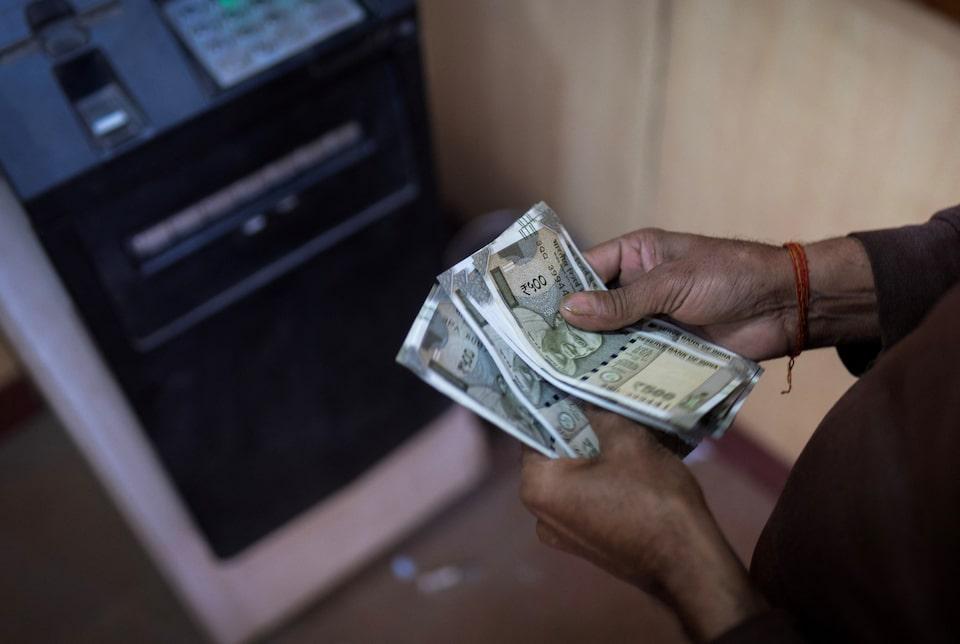
MUMBAI, Jan 22 (Reuters) - The Indian rupee staged a modest recovery on Thursday, buoyed by an improvement in risk appetite after U.S. President Donald Trump stepped back from tariff threats against Europe linked to the Greenland dispute. The rupee opened higher at 91.53 and has since traded largely rangebound, with pressure still tilted against it. That is a pattern seen repeatedly in recent days, where recoveries have struggled to hold. Sign up here. The currency was last quoted at 91.59. The rupee plunged 0.8% on Wednesday to hit an all-time low of 91.7425 to the U.S. dollar. The slide came despite intermittent central bank dollar selling in the latter half of Wednesday's session, though several said the price action did little to suggest meaningful intervention. U.S. equities and Treasuries rallied after Trump said the U.S. would not proceed with tariffs on Europe that were scheduled to take effect from February 1, speaking at the World Economic Forum in Davos. His remarks provided relief for Asian currencies, including the struggling rupee, as they ruled out an immediate flare up in trade tensions and followed comments dismissing the use of force to capture Greenland. Meanwhile, the traders were largely indifferent to Trump's separate comment stating that the U.S. was going to have a good deal with India, signalling movement on trade talks between the two countries. They noted that similar broad statements on a trade deal have been made repeatedly in the past. Volatility in the rupee is likely to persist in the near term, said Radhika Rao, a senior economist at DBS, adding that depreciation, however, is expected to be more measured than the recent sharp moves. Dollar demand and capital flows will continue to dominate, with domestic growth and inflation remaining supportive and progress on EU and U.S. trade talks potentially improving sentiment toward the rupee, she said. https://www.reuters.com/world/india/relief-rupee-risk-rally-after-trump-walks-back-europe-tariff-threat-2026-01-22/
2026-01-22 05:55
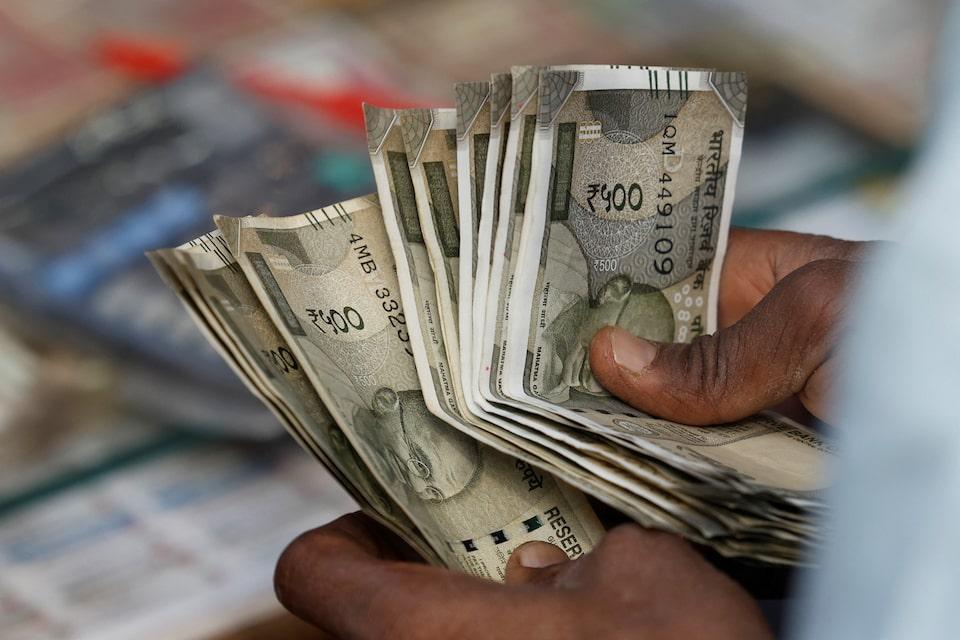
MUMBAI, Jan 22 (Reuters) - The Reserve Bank of India has conducted more than $2 billion in FX swaps over the last two days to offset the drain in liquidity caused by spot dollar sales, four bankers said, suggesting a focus on containing currency pressures without exacerbating banking liquidity tightness. The central bank has stepped up spot market intervention amid equity outflows, higher demand linked to bullion imports and increased hedging pile up pressure on the rupee. The currency plunged 0.8% on Wednesday to an all-time low of 91.7425. Sign up here. Spot intervention drains rupee liquidity, an effect the RBI can counter through dollar/rupee buy-sell FX swaps, in which the first leg is settled at the spot date and the second at a future date. Bankers said the central bank conducted such swaps on Tuesday and Wednesday across various maturities. While views on the total size differed, one banker pegged it at more than $3 billion, with estimates starting at around $2 billion. The bankers requested anonymity since they were not authorised to speak publicly. The RBI did not immediately respond to an emailed request for comment. While the RBI regularly uses FX swaps alongside spot intervention, bankers said the volume of buy-sell swaps this week was unusually large compared with past episodes. "It looks like they (RBI) will have to do it (the buy-sell swaps) on a regular basis, considering how frequently they are needing to intervene (in spot) and the liquidity scarcity," a senior treasury official at a private sector bank said. Liquidity in India's banking system has intermittently slipped into deficit in recent weeks despite the central bank's bond purchases and FX swap operations. Bankers said cash conditions have come under increasing pressure from spot FX intervention. Banking system liquidity slipped into a deficit of around 60 billion rupees ($655.4 million) on Wednesday. The RBI's swap lowered dollar/rupee hedging costs, countering the upward pressure on forward premiums that would normally accompany a fall in the currency. Implied yield on the one-year dollar/rupee premium fell by about 10 basis points over the last two days, slipping further on Thursday. ($1 = 91.5400 Indian rupees) https://www.reuters.com/world/india/indias-rbi-taps-2-billion-plus-fx-swaps-blunt-liquidity-hit-spot-intervention-2026-01-22/
2026-01-22 05:45
Tengiz oil field shutdown due to fire at power unit Production halt may last another 7-10 days, sources say Tengizchevroil declares force majeure on CPC Blend supplies MOSCOW, Jan 22 - Kazakhstan's energy ministry said on Thursday that a special commission was investigating the causes of the January 18 incident which forced the shutdown of the vast Tengiz oil field. Oil production at the Tengiz oil field, one of the world's largest, was halted after a fire at power unit. It is unclear what caused the fire. Sign up here. Reuters reported on Tuesday that production at the field, the world’s deepest producing supergiant oil field and the largest single-trap producing reservoir, could be halted for another 7-10 days. "The commission is currently conducting a detailed technical analysis of the causes of the incident," the energy ministry said. The commission will "clarify all the circumstances of the technological violation that occurred on January 18 (shutdown of gas turbine installations)," it said. Production was halted, it said, to protect personnel and equipment. Tengizchevroil (TCO), operated by Chevron, issued a force majeure on CPC Blend supplies after the fire and subsequent power outage, the sources told Reuters. https://www.reuters.com/business/energy/kazakhstan-says-special-commission-investigating-tengiz-incident-2026-01-22/

2026-01-22 05:39
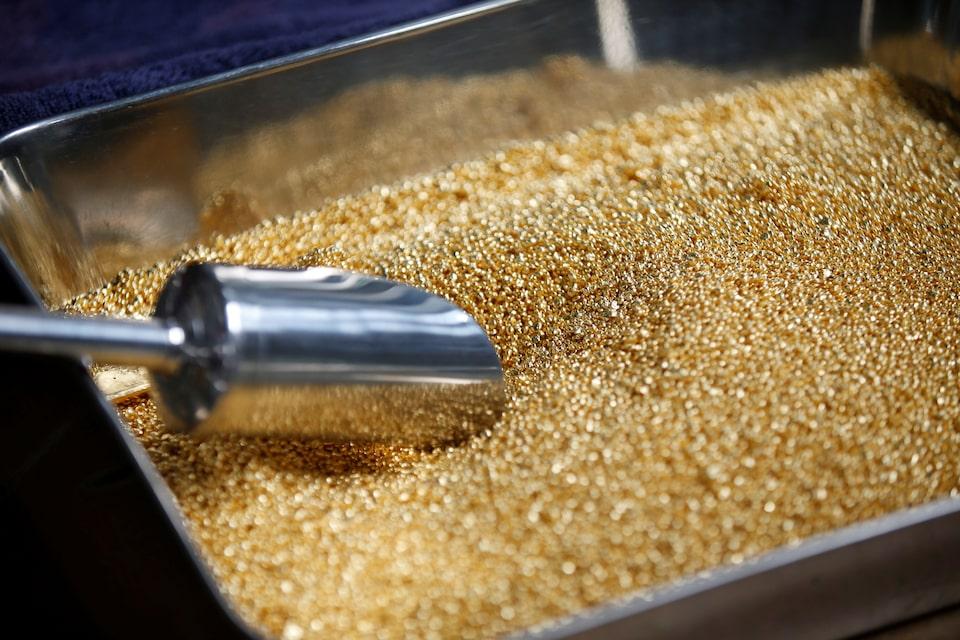
Spot gold hit all-time high of $4,887.82/oz on Wednesday Silver, platinum ease off record peaks Trump close to choosing new Fed chair Jan 22 (Reuters) - Gold prices ticked down on Thursday, pausing a three-session rally to record highs, as easing tensions over Greenland boosted risky assets, with bullion further pressured by fading expectations of U.S. interest rate cuts in the near term. Spot gold eased 0.2% to $4,825.22 per ounce, as of 1201 GMT, after falling nearly 1% earlier in the session. Sign up here. U.S. gold futures for February delivery lost 0.2% to $4,827.80 per ounce. Bullion is already up more than 12% this year, having hit a record of $4,887.82 per ounce on Wednesday, on a bullish momentum driven by persisting geopolitical tensions and concerns over Fed independence. "The return of risk appetite is weighing on demand for the safe-haven metal, while a modest recovery in the U.S. dollar is adding further headwinds for gold," said ActivTrades analyst Ricardo Evangelista. U.S. President Donald Trump abruptly stepped back on Wednesday from threats to impose tariffs as leverage to seize Greenland, ruled out the use of force and suggested a deal was in sight to end a dispute over the Danish territory. Meanwhile, U.S. Supreme Court justices signaled skepticism on Wednesday toward Trump's unprecedented bid to fire Federal Reserve Governor Lisa Cook in a case with the central bank's independence at stake. Trump on Wednesday indicated he was close to choosing the new chair of the Fed, adding he liked the idea of keeping White House economic adviser Kevin Hassett in his current post. The Fed will hold its key interest rate through this quarter and possibly until Chair Jerome Powell's tenure ends in May, according to a Reuters poll. Investors are now looking out for weekly jobless claims and November's Personal Consumption Expenditures (PCE) data, the Fed's preferred inflation gauge, for further clues on monetary policy. "The overall trend (for gold) remains upward – even price levels above $5,000, up to the range of $5,200 per troy ounce, appear possible even in the short-term," said Henrik Marx, global head of trading at Heraeus Precious Metals. Elsewhere, spot silver was up 0.1% at $93.29 an ounce, after hitting a record high of $95.87 on Tuesday. Spot platinum rose 0.8% to $2,502.45 per ounce after touching a record peak of $2,511.80 on Wednesday, while palladium gained 1% to $1,857.02. https://www.reuters.com/world/india/gold-falls-easing-geopolitical-tensions-dampen-safe-haven-demand-2026-01-22/
2026-01-22 05:12
US equity indexes rally with European stocks Investor focus on geopolitics rather than economic data US dollar retreats while euro rises with sterling Gold hits fresh record high on safe-haven appeal NEW YORK/ LONDON, Jan 22 (Reuters) - MSCI's global equities gauge rose on Thursday and the dollar dipped as investors leaned into riskier bets a day after U.S. President Donald Trump dropped tariff threats against eight European countries and ruled out seizing Greenland by force. Trump said on Thursday that the details of a U.S. agreement over Greenland are still being worked out after he stepped back from threats to seize the Danish territory. Sign up here. In an interview on Fox Business Network from the World Economic Forum in Davos, Trump said any deal would allow the U.S. "total access" to Greenland, including for the military, "at no cost." U.S. ECONOMY GREW FASTER THAN EXPECTED Data from the Commerce Department's Bureau of Economic Analysis showed the U.S. economy grew a bit faster than initially thought in the third quarter, and corporate profits were also revised higher. The upwardly revised 4.4% annualized growth rate in U.S. GDP was the fastest pace since the third quarter of 2023, while U.S. consumer spending increased solidly in November and October. The number of Americans filing new applications for unemployment benefits increased marginally last week, suggesting the labor market likely maintained a steady pace of job growth in January. After the sharp selloff in U.S. stocks earlier in the week on Greenland concerns, Wall Street indexes erased most of their losses for the second straight day of gains as investors took U.S. economic data in stride on Thursday, as they digested Trump's turnaround. "Overwhelming all other news is the Greenland story, and the suggestions that are now withdrawn of military action or tariffs," said Rick Meckler, partner at Cherry Lane Investments in New Vernon, New Jersey. "The market tends to react to emergencies, and it seems the emergency aspect of this is over for now." Meckler said, however, that Thursday was "more a relief rally ... than an understanding whether there's a material change in the world economic order and how the U.S. is going to interact with its traditional trading partners." On Wall Street, the major indexes closed higher. The Dow Jones Industrial Average (.DJI) , opens new tab rose 306.78 points, or 0.63%, to 49,384.01, the S&P 500 (.SPX) , opens new tab gained 37.73 points, or 0.55%, to 6,913.35 and the Nasdaq Composite (.IXIC) , opens new tab rose 211.20 points, or 0.91%, to 23,436.02. MSCI's gauge of stocks across the globe (.MIWD00000PUS) , opens new tab rose 7.38 points, or 0.72%, to 1,036.03. Earlier, the pan-European STOXX 600 (.STOXX) , opens new tab index closed up 1.03%. In currencies, the safe‑haven dollar slipped on Thursday, while risk‑sensitive currencies such as the euro and sterling firmed after Trump's turnaround helped calm a jittery market. The dollar index , which measures the greenback against a basket of currencies including the yen and the euro, fell 0.61% to 98.29. The euro was up 0.61% at $1.1753, while against the Japanese yen , the dollar strengthened 0.09% to 158.39. Sterling strengthened 0.57% to $1.3501 while the Australian dollar strengthened 1.17% versus the greenback to $0.6839. In U.S. Treasuries, yields were a mixed bag with shorter-dated rates edging higher and longer maturities slipping, as investors braced for bouts of volatility and awaited further clarity on the Greenland framework deal negotiated by President Trump with European leaders. "A little bit of the policy shock has been taken off the table, but only for the moment. And it is a relief, but at the same time, it increased the market's wariness around the potential for this to happen again," said Tony Rodriguez, head of fixed income strategy at Nuveen. The yield on benchmark U.S. 10-year notes fell 0.4 basis points to 4.249%, from 4.253% late on Wednesday, while the 30-year bond yield fell 2.7 basis points to 4.8427% from 4.87%. The 2-year note yield, which typically moves in step with interest rate expectations for the Federal Reserve, rose 1.5 basis points to 3.612%, from 3.597%. In energy markets, oil prices fell more than $1, reversing the previous session's gains, after Trump softened threats against Greenland and Iran, and while investors hoped for progress on a solution to end Russia's war in Ukraine. U.S. crude settled down 2.08%, or $1.26 at $59.36 a barrel, and Brent settled the session at $64.06 per barrel, down 1.81%, or $1.18. In precious metals, safe-haven gold pushed past $4,900 per ounce for the first time, powered by ongoing geopolitical tensions, a softer U.S. dollar, and expectations of Federal Reserve interest rate cuts, while silver and platinum prices also hit fresh record highs. Spot gold rose 1.83% to $4,924.49 an ounce. U.S. gold futures gained 1.57% to $4,907.90 an ounce. In cryptocurrencies, bitcoin fell 0.83% to $89,450.21. Ethereum declined 2.81% to $2,945.75. https://www.reuters.com/world/china/global-markets-wrapup-1-pix-2026-01-22/
2026-01-22 05:09
Human oversight required in high-impact AI such as healthcare, nuclear safety Products and services using generative or high-impact AI must be clearly labelled Startups complain the laws' language is vague SEOUL, Jan 22 (Reuters) - South Korea introduced on Thursday what it says is the world's first comprehensive set of laws regulating artificial intelligence, aiming to strengthen trust and safety in the sector, but startups fretted that compliance could hold them back. Aiming to become one of the world's top three AI powerhouses, South Korea is hoping that its new AI Basic Act will help position the country as a leader in the field. The laws in their entirety have taken effect sooner than the EU's AI Act which is being applied in phases through 2027. Sign up here. Global divisions remain over how to regulate AI, with the U.S. favouring a more light-touch approach to avoid stifling innovation. China has introduced some rules and proposed creating a body to coordinate global regulation. Under South Korea's laws, companies must ensure there is human oversight in so-called "high-impact" AI which includes fields like nuclear safety, the production of drinking water, transport, healthcare and financial uses such as credit evaluation and loan screening. Other rules stipulate that companies must give users advance notice about products or services using high-impact or generative AI, and provide clear labelling when AI-generated output is difficult to distinguish from reality. The Ministry of Science and ICT has said the legal framework was designed to promote AI adoption while building a foundation of safety and trust. The bill was prepared after extensive consultation and companies will be given a grace period of at least a year before authorities begin imposing administrative fines for infractions. The penalties can be hefty. A failure to label generative AI in South Korea, for example, could leave a company facing a fine of up to 30 million won ($20,400). That said, potential penalties in the EU are much higher. Non-compliance with rules there can result in fines that range from as much as 1% of global turnover for smaller violations to as much as 7% for breaking bans on the use of high-risk AI. GLOBAL AI POWER Lim Jung-wook, co-head of South Korea's Startup Alliance, said many founders were frustrated that key details of the law remain unsettled. "There's a bit of resentment — why do we have to be the first to do this?" he said. One concern of the group is that the law's language is vague and companies may default to safe but less innovative approaches to avoid regulatory risk. President Lee Jae Myung on Thursday was sympathetic to such concerns. He urged policymakers to listen to the concerns of industry and ensure that venture companies and startups have enough support. "It is essential to maximise the industry’s potential through institutional support, while pre-emptively managing anticipated side effects," Lee said during a meeting with aides. The Ministry of Science and ICT is planning a guidance platform and dedicated support centre for companies during the grace period. "Additionally, we will continue to review measures to minimise the burden on industry," a spokesperson said, adding that authorities were looking at extending the grace period if domestic and overseas industry conditions warranted such a measure. ($1 = 1,468.7500 won) https://www.reuters.com/world/asia-pacific/south-korea-launches-landmark-laws-regulate-ai-startups-warn-compliance-burdens-2026-01-22/