2025-06-23 04:42
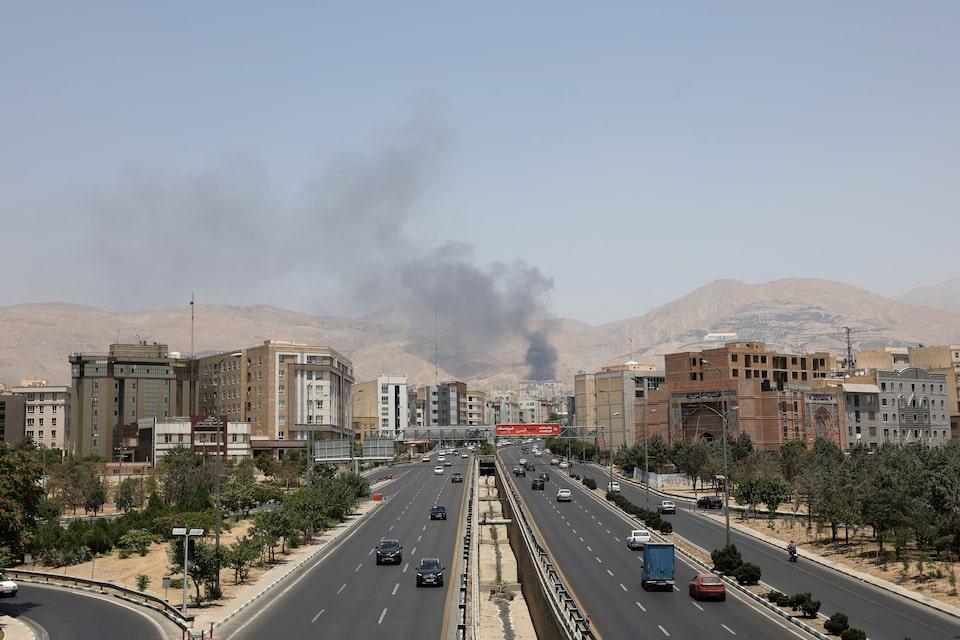
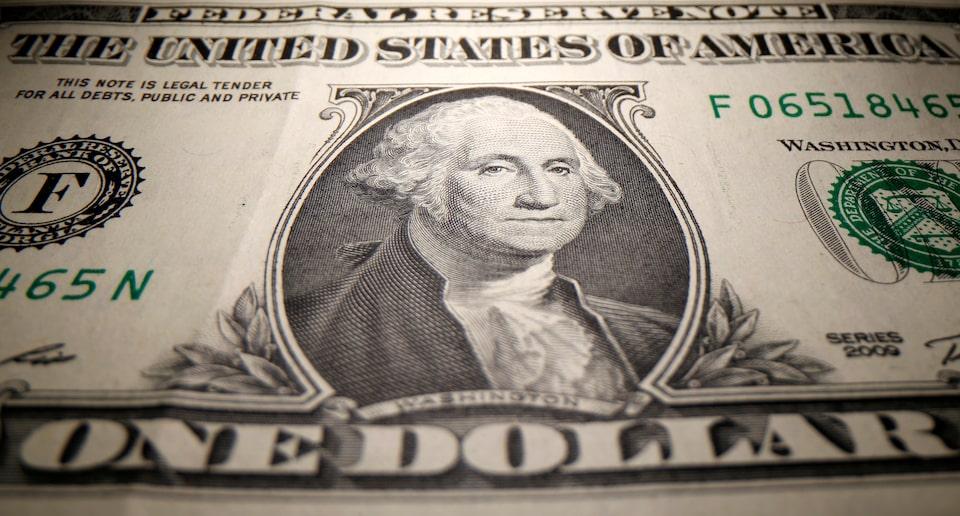
Fed's Bowman says rate cuts may need to come soon Iran response to US bombings seen limited Fed's Powell to testify to US Congress this week NEW YORK, June 23 (Reuters) - The dollar fell on Monday after Federal Reserve policy maker Michelle Bowman said the U.S. central bank should consider interest rate cuts soon, and on rising expectations that Iran's response to the U.S. bombing of some nuclear sites in Iranwill be limited. Bowman, the Fed's vice chair for supervision, said the time to cut interest rates may be fast approaching as she has grown more worried about risks to the job market and less concerned that tariffs will cause an inflation problem. Sign up here. "Bowman is a well-known hawk, so any indication that she's giving as to moving towards easing and lower interest rates is going to put the dollar on the back foot," said Helen Given, director of trading at Monex USA in Washington. Fed funds futures are now pricing in 58 basis points of cuts this year, indicating expectations that two 25 basis points in cuts are certain, with a rising chance of a third reduction. Traders raised bets on more rate cuts after Fed Governor Christopher Waller said on Friday that the U.S. central bank should consider cutting rates at its next meeting, on July 29-30. They were pricing in 46 basis points of cuts this year before Waller's comments. Chicago Fed President Austan Goolsbee also said on Monday that thus far the surge in tariffs has had a more modest impact on the economy relative to what was expected. The dollar was boosted by the Fed’s “hawkish hold” on Wednesday, when the U.S. central bank left interest rates unchanged while Chair Jerome Powell said policymakers expect inflation to rise over the summer due to the Trump administration’s tariffs. Powell will testify before the U.S. Congress on Tuesday and Wednesday. The dollar also came under pressure on Monday as it appeared more likely that Iran's retaliation to the U.S. bombings would be limited. "It doesn't look like at the moment that Iran is going to get military support from Russia or China to retaliate," said Given. Iran's military said it carried out a missile attack on the Al Udeid U.S. airbase in Qatar on Monday. Iran said the attack was "devastating and powerful," but U.S. officials said no U.S. personnel were killed or injured. The U.S. currency was lifted earlier as investors unwound riskier positions on concerns about an expanding conflict in the Middle East. The dollar gains were largely due to traders unwinding trades that had used it as a funding currency, said Marc Chandler, chief market strategist at Bannockburn Global Forex in New York. These included trades betting on strength in riskier emerging market currencies. The Japanese yen also pared most earlier weakness that was based on concerns about higher oil costs for Japan. Bank of America strategists said the dollar/yen can reprice higher if oil prices remain elevated, noting that Japan imports almost all of its oil, more than 90% of which comes from the Middle East, while the U.S. is largely energy-independent. The Japanese currency was last down 0.09% against the greenback at 146.22 per dollar and reached 148.02, the weakest since May 13. The dollar index fell 0.32% to 98.45. It earlier rose to 99.42, the highest since May 30. The euro gained 0.39% to $1.1567. The euro zone economy flatlined for a second month in June as the bloc's dominant services industry showed only a small sign of improvement and manufacturing displayed none at all, a survey showed on Monday. Sterling strengthened 0.51% to $1.3517 after earlier falling to $1.3367, the lowest since May 20. Data on Monday showed British business activity expanded modestly in June as new orders grew for the first time this year but employers cut jobs more quickly and worried about the conflict in the Middle East. In cryptocurrencies bitcoin gained 3.49% to $103,040. https://www.reuters.com/world/africa/dollar-firms-markets-brace-iran-response-us-attacks-2025-06-23/
2025-06-23 02:58
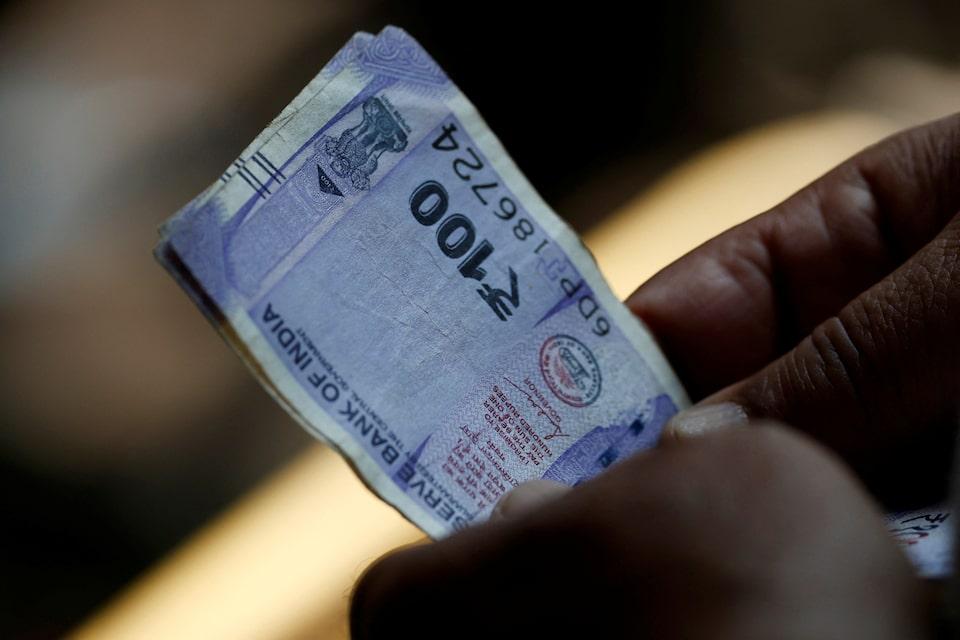
MUMBAI, June 23 (Reuters) - The Indian rupee is set to open weaker on Monday, pressured by the rise in crude oil prices and risk-off sentiment following the U.S. military action against Iran. Non-deliverable forwards indicate the currency will open around 86.75-86.80 per dollar, compared to 86.5850 in the previous session. Sign up here. Oil prices jumped to their highest level since January after the U.S. joined Israel in attacking Iranian nuclear facilities over the weekend, increasing concerns over the potential impact on energy supply. Tehran vowed to defend itself. The attack came just after U.S. President Donald Trump said on Friday that such a decision would come “within the next two weeks". Fears that Iran may disrupt traffic through the Strait of Hormuz, a key conduit for about a fifth of world crude flows, lifted oil prices and weighed on risk assets. Goldman Sachs warned that if oil flows through the Strait of Hormuz — a key chokepoint for crude shipments — were halved for a month and remained down by 10% for the following 11 months, Brent could temporarily spike to $110. Brent crude hit a high of $81.40, before retracing a part of its rally. The rupee, which had caught a bit of a breather on Friday, unfortunately has to contend with the U.S.-Iran news, a currency trader at a bank said, "and we’re back to watching if 87 breaks". An FX trader at another bank noted that the rise in oil prices was milder than expected, and attention now shifts to how Iran chooses to respond. "While Iran may feel it needs to retaliate to US strikes, blocking the Hormuz might be a step too far," ING Bank said in a note, and said that the price action in Asian trading suggests markets do not yet believe crude flows through Hormuz will be blocked. KEY INDICATORS: ** One-month non-deliverable rupee forward at 86.90; onshore one-month forward premium at 10.25 paisa ** Dollar index up at 98.92 ** Brent crude futures up 1.8% at $78.4 per barrel ** Ten-year U.S. note yield at 4.39% ** As per NSDL data, foreign investors bought a net $235.3 million worth of Indian shares on June 19 ** NSDL data shows foreign investors bought a net $34.4 million worth of Indian bonds on June 19 https://www.reuters.com/world/india/rupee-under-fire-after-us-strikes-iran-jolt-oil-stoke-risk-aversion-2025-06-23/
2025-06-23 01:35
MUMBAI, June 23 (Reuters) - The Indian rupee and government bonds are poised to face pressure this week following a U.S. strike on Iran, raising concerns of higher oil prices and potential retaliation that could deepen the conflict in the Middle East. The rupee had closed at 86.5850 against the U.S. dollar on Friday, down 0.6% on the week. Sign up here. U.S. President Donald Trump said late on Saturday that the country had struck Iran's main nuclear sites, aligning with an Israeli offensive in a significant escalation of the ongoing Middle East tensions. Tehran called the attack a grave violation of international law and vowed to defend itself. In a televised address, Trump warned Iran against retaliating, stating that any response would trigger further attacks unless Iran agreed to pursue peace. Concerns over a potential escalation of the conflict had already driven oil prices higher this month, and analysts now anticipate an additional increase of $3 to $5 per barrel in reaction to the U.S. strikes. Brent crude oil futures closed at $77 per barrel on Friday, up nearly 4% on week. Elevated energy prices are a pain point for the Indian rupee and government bonds, as oil is a major component of India's import bill. A "flight to safety is likely to reinforce the dollar's strength against the Indian rupee and other major currencies," said Dilip Parmar, a foreign exchange research analyst at HDFC Securities. The rupee could weaken towards 87.50 in the near-term, Parmar added. Traders reckon that the Reserve Bank of India would likely step in to curb excessive volatility. The rupee may find immediate support around 87.50-87.60 but will remain acutely sensitive to developments in the Middle East, said a trader at a state-run bank. Foreign portfolio flows related to a upcoming large IPO alongside remarks from U.S. Federal Reserve Chair Jerome Powell, scheduled for Tuesday, will be among other cues in focus for the rupee this week. Meanwhile, India's 10-year benchmark 6.33% 2035 bond yield ended at 6.3087% on Friday. Traders expect it to move in a range of 6.30% to 6.40% this week. "A $10 per barrel rise in crude could widen India's current account deficit by 0.3% of GDP and elevate inflation, eroding real yields," CR Forex said. Earlier this month, the RBI reduced its inflation forecast for the current fiscal year to 3.7% and cut its key lending rate by a steeper-than-expected 50 basis points. A big rate cut would assure stakeholders of India's focus on economic growth and aid in faster transmission, members of rate setting panel wrote in the June policy minutes. However, it reverted to a "neutral" stance from "accommodative", prompting analysts to forecast an end to the monetary easing cycle. "International uncertainties make RBI think it is necessary to front load the monetary easing to boost growth. But RBI may take longer to see the impact before implementing another cut going forward. Looking forward, we see RBI to stay on hold for next few months, said Alaa Bushehri, head of emerging market Debt, BNP Paribas Asset Management. KEY EVENTS: ** June HSBC India manufacturing, services and composite Flash PMI - June 23, Monday (10:30 a.m. IST) U.S. ** June S&P Global manufacturing, services and composite Flash PMI - June 23, Monday (7:15 p.m. IST) ** May existing home sales - June 23, Monday (7:30 p.m. IST) ** June consumer confidence - June 24, Tuesday (7:30 p.m. IST) ** May new home sales units - June 25, Wednesday (7:30 p.m. IST) ** May durable goods - June 26, Thursday (7:30 p.m. IST) ** January-March GDP final - June 26, Thursday (6:00 p.m. IST)(Reuters poll -0.2%) ** Initial weekly jobless claims for week to June 16 - June 26, Thursday (6:00 p.m. IST) ** May personal consumption expenditure index, core PCE index - June 27, Friday (6:00 p.m. IST) ** June U Mich sentiment final - June 27, Friday (7:30 p.m. IST) https://www.reuters.com/world/india/indian-rupee-bonds-under-pressure-us-strike-iran-deepens-middle-east-conflict-2025-06-23/
2025-06-23 00:15
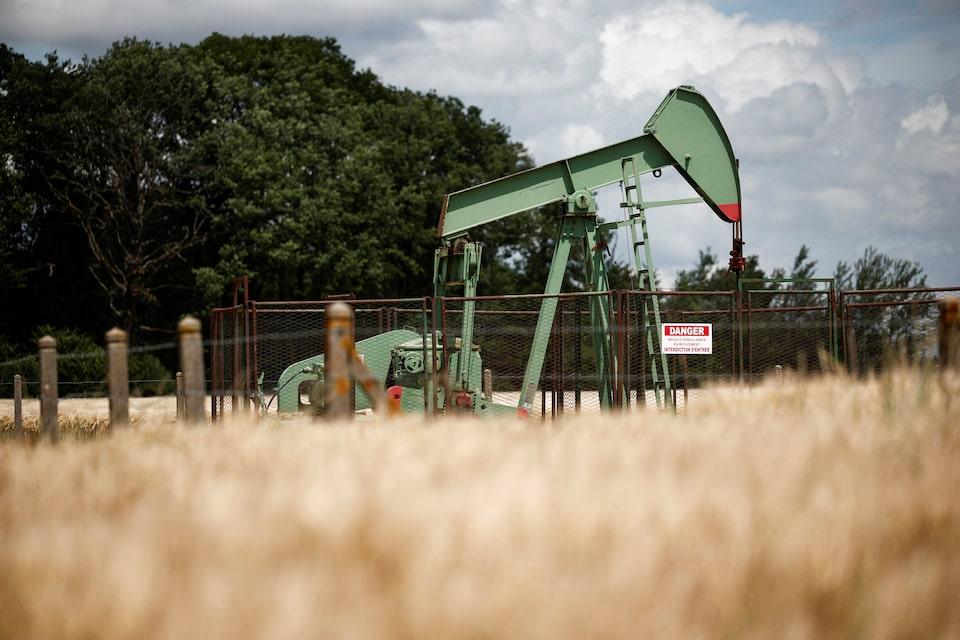
Sell off after Iran refrains from disrupting oil supplies through Strait of Hormuz Oil gives up early 5% gain Trump tells everyone to work to keep oil price down HOUSTON, June 23 (Reuters) - Oil prices settled down more than 7% on Monday, losing more than $5 a barrel after Iran took no action to disrupt oil and gas tanker traffic through the Strait of Hormuz, but instead attacked a U.S. military base in Qatar in retaliation for U.S. attacks on its nuclear facilities. Brent crude futures closed down $5.53, or 7.2%, at $71.48 a barrel, while U.S. West Texas Intermediate crude (WTI) eased $5.53, or 7.2%, to $68.51. Sign up here. Brent's 7.2% drop was the steepest since August 2022. The benchmark traded in a $10 range, the widest since July 2022. Both benchmarks were down nearly 9% in after-hours trading. "Oil flows for now aren't the primary target and are likely not to be impacted, I think it's going to be military retaliation on U.S. bases and/or trying to hit more of the Israeli civilian targets," said John Kilduff, a partner at Again Capital. Oil fell sharply after Iran retaliated against U.S. airstrikes on its main nuclear sites with a missile attack on the Al Udeid U.S. airbase in Qatar, the largest U.S. military installation in the Middle East. No U.S. personnel were killed or injured in Iran's attack, two U.S. officials told Reuters. In early trade in Asia, Brent rose almost 6% as investors worried the Iranian retaliation would involve disrupting oil exports from the Middle East Gulf. Iran has threatened to shut the Strait of Hormuz, a narrow channel off southern Iran that around a fifth of global oil supply passes through on its way to refineries worldwide. Iran, OPEC's third-largest crude producer, said the U.S. attack on its nuclear sites expanded the range of legitimate targets for its armed forces. A telegraphed attack on a well-defended U.S. base could be a first step in reducing tensions provided there are no U.S. casualties, Energy Aspects said in a post. "Unless there are indications of further Iranian retaliation or escalation by Israel/the US then we may see some geopolitical risk premium come out of the price in subsequent days," it said. There was no interruption to QatarEnergy shipments or production after the attack, a source with direct knowledge of the matter said, and no other Iranian attack detected at any U.S. military base other than in Qatar, a U.S. military official told Reuters. Qatar is one of the world's largest exporters of liquefied natural gas, and all its shipments pass through the Strait. Iraq's state-run Basra Oil Company said international oil majors including BP (BP.L) , opens new tab, TotalEnergies (TTEF.PA) , opens new tab and Eni (ENI.MI) , opens new tab had evacuated some staff members working in oilfields. "In one sense, we've seen this movie before. All the geopolitical tensions we've seen in the Middle East, whether it's Israel, Iran or others, we have yet to see the closure of the Strait of Hormuz, even though the issue always rears its ugly head," said Andy Lipow, president of Lipow Oil Associates. At least two supertankers made U-turns near the strait following the U.S. military strikes on Iran, ship tracking data shows, as more than a week of violence in the region prompted vessels to speed, pause, or alter their journeys. U.S. President Donald Trump expressed a desire to see oil prices kept down amid fears that ongoing fighting in the Middle East could cause them to spike. On his Truth Social platform, he addressed the U.S. Department of Energy, encouraging "drill, baby, drill" and saying, "I mean now. Investors are still weighing up what geopolitical risk premium to put on oil prices. HSBC expects Brent prices to spike above $80 a barrel to factor in a higher probability of a strait closure, but to recede again if the threat of disruption does not materialise, the bank said on Monday. https://www.reuters.com/business/energy/oil-hits-five-month-high-after-us-hits-key-iranian-nuclear-sites-2025-06-23/
2025-06-22 23:37
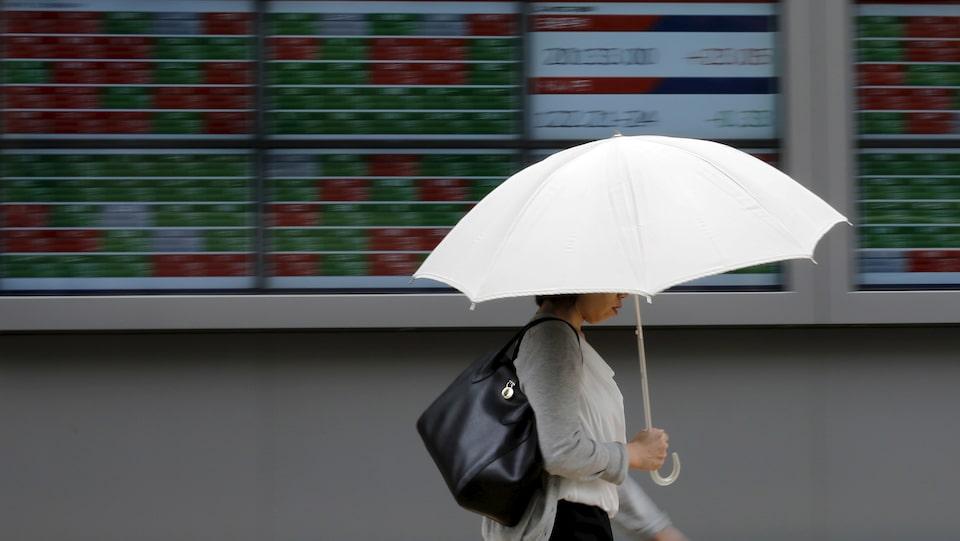
Crude prices settle lower, retreating from multi-month highs after Iran retaliates Wall Street stocks finish higher, European shares fall Dollar advances against yen, falls against franc; euro rebounds Safe-haven gold pares losses NEW YORK, June 23 (Reuters) - Global equity markets advanced on Monday while oil prices settled sharply lower after hitting multi-month highs, as markets shrugged off the effects of the escalating Middle East conflict, with Iran firing retaliatory airstrikes against U.S. bases in Qatar. Wall Street's main indexes finished higher, with 10 out of 11 of the benchmark S&P 500 subsectors advancing. Energy stocks (.SPNY) , opens new tab were the biggest losers on the session. Sign up here. Equities had pared gains following news on Monday that the Qatari government had closed its airspace as it braced for an Iranian air strike against U.S. forces stationed in the country. Iran's military said it carried out a missile attack on the Al Udeid U.S. airbase in Qatar. But U.S. officials said no U.S. personnel were killed or injured in the attack on the airbase, the largest U.S. military installation in the Middle East. Iran's attacks were in retaliation against U.S. air strikes against Persian nuclear sites in support of an Israeli military campaign. The Dow Jones Industrial Average (.DJI) , opens new tab rose 0.89% to 42,581.78, the S&P 500 (.SPX) , opens new tab rose 0.96% to 6,025.17 and the Nasdaq Composite (.IXIC) , opens new tab rose 0.94% to 19,630.98. European shares (.STOXX) , opens new tab finished down 0.28%. MSCI's broadest index of Asia-Pacific shares outside Japan(.MIAPJ0000PUS) , opens new tab fell 0.70% overnight. MSCI's gauge of stocks across the globe (.MIWD00000PUS) , opens new tab rose 0.49%. Israel bombed Evin prison in northern Tehran on Monday, a potent symbol of Iran's governing system, and Revolutionary Guard command centers responsible for internal security in the Tehran area. The Iranian parliament had approved the closure of the Strait of Hormuz, a major shipping lane in the global oil trade. "The market being higher signals a risk-on sentiment, which is somewhat surprising considering that we had a series of very volatile events over the weekend with U.S. participation in the (Iran) bombing efforts with Israel," said Andrew Wells, chief investment officer at SanJac Alpha in Houston. "The lesson we take from this is that these headline events are having less and less effect on the market since tariffs went on - the so-called Liberation Day - which was the big volatile event," Wells said. Brent Crude futures closed down 7.2% at $71.48 a barrel, while U.S. West Texas Intermediate crude eased 7.2% to $68.51. The Brent and WTI crude benchmarks touched five-month highs of $81.40 and $78.40, respectively. Iran's attacks are seen as an effort at de-escalation, as it informed the U.S. via diplomatic channels ahead of attacks on its Qatar base, a senior regional source told Reuters. It has also not taken action to disrupt shipping traffic going through the Strait of Hormuz - which is only about 33 km (21 miles) wide at its narrowest point with around a quarter of global oil trade and 20% of liquefied natural gas supplies passing through it. Federal Reserve Vice Chair for Supervision Michelle Bowman said on Monday the time to cut interest rates appeared imminent as she was increasingly worried about labor market risks and was less concerned that high import taxes would cause an ongoing inflation problem. The dollar strengthened 0.08% to 146.15 against the Japanese yen and weakened 0.68% to 0.81260 against the Swiss franc. The euro was up 0.49% at $1.157675, rebounding from earlier losses following Bowman's comments. The dollar index , which measures the greenback against a basket of currencies including the yen and the euro, fell 0.5% to 98.39. Gold prices pared early losses and settled higher. Spot gold rose 0.23% to $3,375.71. U.S. gold futures settled 0.3% higher at $3,395. https://www.reuters.com/world/china/global-markets-wrapup-1-2025-06-22/
2025-06-22 23:00
US strikes on Iran spur fear of disruption to Middle East oil exports Iran able to block the Strait of Hormuz, has tried in the past Disruptions likely to be met by swift response from US Navy LONDON, June 22 - U.S. strikes on several Iranian nuclear sites represent a meaningful escalation of the Middle East conflict that could lead Tehran to disrupt vital exports of oil and gas from the region, sparking a surge in energy prices. But history tells us that any disruption would likely be short-lived. Investors and energy markets have been on high alert since Israel launched a wave of surprise airstrikes across Iran on June 13, fearing disruption to oil and gas flows out of the Middle East, particularly through the Strait of Hormuz , opens new tab, a chokepoint between Iran and Oman through which around 20% of global oil and gas demand flows. Sign up here. Benchmark Brent crude prices have risen by 10% to over $77 a barrel since June 13. While Israel and Iran have targeted elements of each other's energy infrastructure, there has been no significant disruption to maritime activity in the region so far. But President Donald Trump's decision to join Israel by bombing three of Iran's main nuclear sites in the early hours of Sunday could alter Tehran's calculus. Iran, left with few cards to play, could retaliate by hitting U.S. targets across the region and disrupting oil flows. While such a move would almost certainly lead to a sharp spike in global energy prices, history and current market dynamics suggest any move would likely be less damaging than investors may fear. CAN THEY DO IT? The first question to ask is whether Iran is actually capable of seriously disrupting or blocking the Strait of Hormuz. The answer is probably yes. Iran could attempt to lay mines across the Strait, which is 34 km (21 miles) wide at its narrowest point. The country's army or the paramilitary Islamic Revolutionary Guard Corps (IRGC) could also try to strike or seize vessels in the Gulf, a method they have used on several occasions in recent years. Moreover, while Hormuz has never been fully blocked, it has been disrupted several times. During the 1980s Iran-Iraq war, the two sides engaged in the so-called "Tanker Wars" in the Gulf. Iraq targeted Iranian ships, and Iran attacked commercial ships, including Saudi and Kuwaiti oil tankers and even U.S. navy ships. Following appeals from Kuwait, then-U.S. President Ronald Reagan deployed the navy between 1987 and 1988 to protect convoys of oil tankers in what was known as Operation Earnest Will. It concluded shortly after a U.S. navy ship shot down Air Iran flight 655, killing all of its 290 passengers on board. Tensions in the strait flared up again at the end of 2007 in a series of skirmishes between the Iranian and U.S. navies. This included one incident where Iranian speedboats approached U.S. warships, though no shots were fired. In April 2023, Iranian troops seized the Advantage Sweet crude tanker, which was chartered by Chevron, in the Gulf of Oman. The vessel was released more than a year later. Iranian disruption of maritime traffic through the Gulf is therefore certainly not unprecedented, but any attempt would likely be met by a rapid, forceful response from the U.S. navy, limiting the likelihood of a persistent supply shock. HISTORY LESSON Indeed, history has shown that severe disruptions to global oil supplies have tended to be short-lived. Iraq's invasion of neighbouring Kuwait in August 1990 caused the price of Brent crude to double to $40 a barrel by mid-October. Prices returned to the pre-invasion level by January 1991 when a U.S.-led coalition started Operation Desert Storm, which led to the liberation of Kuwait the following month. The start of the second Gulf war between March and May 2003 was even less impactful. A 46% rally in the lead-up to the war between November 2002 and March 2003 was quickly reversed in the days preceding the start of the U.S.-led military campaign. Similarly, Russia's invasion of Ukraine in February 2022 sparked a sharp rally in oil prices to $130 a barrel, but prices returned to their pre-invasion levels of $95 by mid-August. These relatively quick reversals of oil price spikes were largely thanks to the ample spare production capacity available at the time and the fact that the rapid oil price increase curbed demand, says Tamas Varga, an analyst at oil brokerage PVM. Global oil markets were also rocked during the 1973 Arab oil embargo and after the 1979 revolution in Iran, when strikes on the country's oilfields severely disrupted production. But those did not involve the blocking of Hormuz and were not met with a direct U.S. military response. SPARE CAPACITY The current global oil market certainly has spare capacity. OPEC+, an alliance of producing nations, today holds around 5.7 million barrels per day in excess capacity, of which Saudi Arabia and the United Arab Emirates hold 4.2 million bpd. The concern today is that the vast majority of the oil from Saudi Arabia and the UAE is shipped via the Strait of Hormuz. The two Gulf powers could bypass the strait by oil pipelines, however. Saudi Arabia, the world's top oil exporter, producing around 9 million bpd, has a crude pipeline that runs from the Abqaiq oilfield on the Gulf coast in the east to the Red Sea port city of Yanbu in the west. The pipeline has capacity of 5 million bpd and was able to temporarily expand its capacity by another 2 million bpd in 2019. The UAE, which produced 3.3 million bpd of crude oil in April, has a 1.5 million bpd pipeline linking its onshore oilfields to the Fujairah oil terminal that is east of the Strait of Hormuz. But this western route could be exposed to attacks from the Iran-backed Houthis in Yemen, who have severely disrupted shipping through the Suez Canal in recent years. Additionally, Iraq, Kuwait and Qatar currently have no clear alternatives to the strait. It is possible that Iran will choose not to take the dramatic step of blocking the strait in part because doing so would disrupt its own oil exports. Tehran may also consider any further escalation fruitless in light of U.S. involvement and will instead try to downplay the importance of the U.S. strikes and come back to nuclear negotiations. In the meantime, spooked energy markets, fearing further escalation, are apt to respond to the U.S. strikes with a sharp jump in crude prices. But even in a doomsday scenario where the Strait of Hormuz is blocked, history suggests markets should not expect any supply shock to be persistent. Enjoying this column? Check out Reuters Open Interest (ROI), , opens new tab your essential new source for global financial commentary. ROI delivers thought-provoking, data-driven analysis. Markets are moving faster than ever. ROI , opens new tab can help you keep up. Follow ROI on LinkedIn , opens new tab and X. , opens new tab (This June 22 story has been corrected to clarify that the width of the Strait of Hormuz at its narrowest point is 34 km (21 miles), not 55 km (34 miles), in paragraph 8) https://www.reuters.com/markets/commodities/iran-oil-doomsday-hormuz-may-be-more-fear-than-reality-bousso-2025-06-22/