2025-06-22 17:52
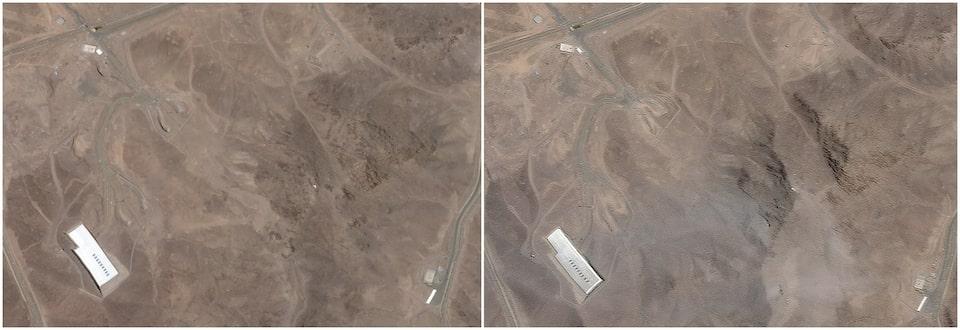
NEW DELHI, June 22 (Reuters) - India will take measures to safeguard domestic fuel supplies, oil minister Hardeep Singh Puri said on Sunday, after U.S. attacks on Iran's nuclear sites raised the risk of disruption of Middle Eastern oil and gas and soaring energy prices. Energy markets and investors were already on high alert since Israel launched airstrikes across Iran on June 13, fearing disruption particularly through the Strait of Hormuz. Sign up here. Around 20% of global oil and gas demand flows through the Strait that Iran has long threatened to close it to exert pressure on the West. "We have been closely monitoring the evolving geopolitical situation in the Middle East since the past two weeks... we have diversified our supplies in the past few years and a large volume of our supplies do not come through the Strait of Hormuz now," Puri said on social media platform X. "Our Oil Marketing Companies have supplies of several weeks and continue to receive energy supplies from several routes. We will take all necessary steps to ensure stability of supplies of fuel to our citizens," he said. India, the world's third biggest oil importer and consumer, gets less than half of its average 4.8 million barrels per day of oil imports from the Middle East. Separately Puri told local news agency ANI that India would increase crude supplies from other sources if required. "We are in touch with all possible actors... It is our hope, and we all expect that the situation will result in calm and de-escalation rather than further escalation," he said. Earlier in the day Indian Prime Minister Narendra Modi received a phone call from Iranian President Masoud Pezeshkian, in which he was briefed about the conflict between Iran and Israel, India's foreign ministry said. https://www.reuters.com/business/energy/india-pledges-secure-fuel-supply-amid-middle-east-turmoil-2025-06-22/

2025-06-22 17:07
June 22 (Reuters) - Indian Prime Minister Narendra Modi received a phone call from Iranian President Masoud Pezeshkian, where he was briefed about the conflict between Iran and Israel, India's foreign ministry said on Sunday. Modi emphasised the need for immediate de-escalation, dialogue and diplomacy as the way forward and reiterated India's support for early restoration of regional peace, security and stability, the Ministry of External Affairs statement read. Sign up here. https://www.reuters.com/world/india/indias-modi-irans-pezeshkian-hold-phone-call-indias-foreign-ministry-says-2025-06-22/

2025-06-22 15:35
DUBAI, June 22 (Reuters) - Iran's Supreme National Security Council must make the final decision on whether to close the Strait of Hormuz following U.S. bombing raids, Iran's Press TV said on Sunday, after parliament was reported to have backed the measure. Iran has long used the threat of closing the Strait, through which around 20% of global oil and gas demand flows, as a way to ward off Western pressure which is now at its peak after the overnight U.S. strikes on its nuclear facilities. Sign up here. The decision to close the strait is not yet final and it was not officially reported that parliament had in fact adopted a bill to that effect. Instead, a member of parliament's national security commission Esmail Kosari was quoted on other Iranian media as saying: "For now, [parliament has] come to the conclusion we should close the Strait of Hormuz, but the final decision in this regard is the responsibility of the Supreme National Security Council." Kosari, who is also a Revolutionary Guards Commander, had earlier on Sunday told the Young Journalist Club that closing the strait was on the agenda and "will be done whenever necessary". Asked about whether Tehran would close the waterway, Foreign Minister Abbas Araqchi dodged the question on Sunday and replied: "A variety of options are available to Iran." The strait lies between Oman and Iran and links the Mideast Gulf north of it with the Gulf of Oman to the south and the Arabian Sea beyond. It is 21 miles (33 km) wide at its narrowest point, with the shipping lane just 2 miles (3 km) wide in either direction. https://www.reuters.com/world/middle-east/irans-top-security-body-decide-hormuz-closure-press-tv-reports-2025-06-22/
2025-06-22 15:03
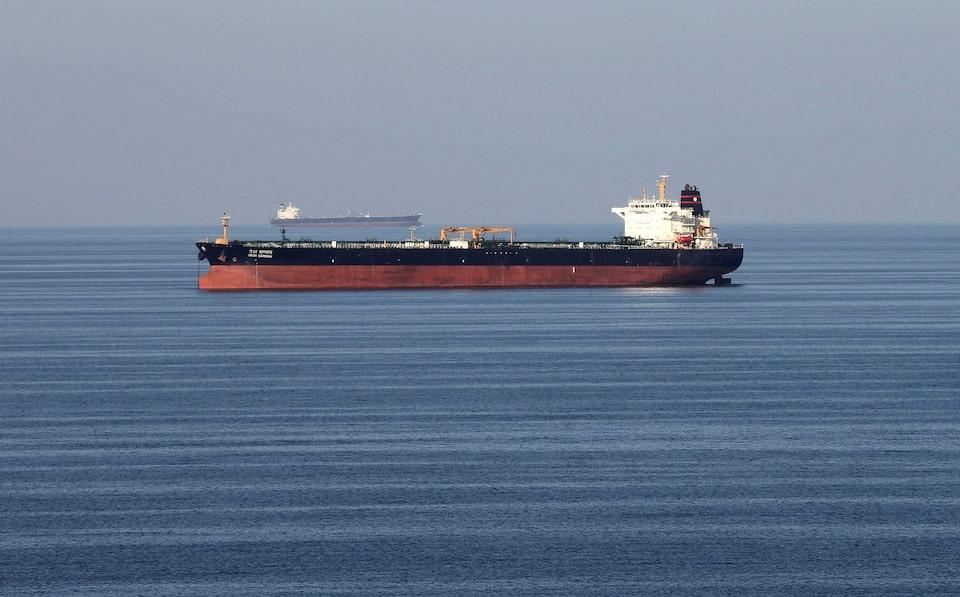
June 22 (Reuters) - Bitcoin, the world's largest cryptocurrency by market value, was down by 4.13% at $99,237 at 10:52 a.m. ET (1452 GMT) on Sunday. Ether, the second-largest cryptocurrency, was down by around 8.52% at $2,199. Sign up here. https://www.reuters.com/business/finance/bitcoin-falls-4-99237-2025-06-22/

2025-06-22 12:42
OSLO, June 22 (Reuters) - Maersk (MAERSKb.CO) , opens new tab vessels continue to sail through the Strait of Hormuz but the company was ready to re-evaluate this based on available information, the group said in a statement on Sunday, following U.S. strikes on Iranian nuclear facilities overnight. "We will continuously monitor the security risk to our specific vessels in the region and are ready to take operational actions as needed," the Danish container shipping company said. Sign up here. https://www.reuters.com/business/autos-transportation/maersk-continues-sail-through-strait-hormuz-company-says-2025-06-22/
2025-06-22 12:19
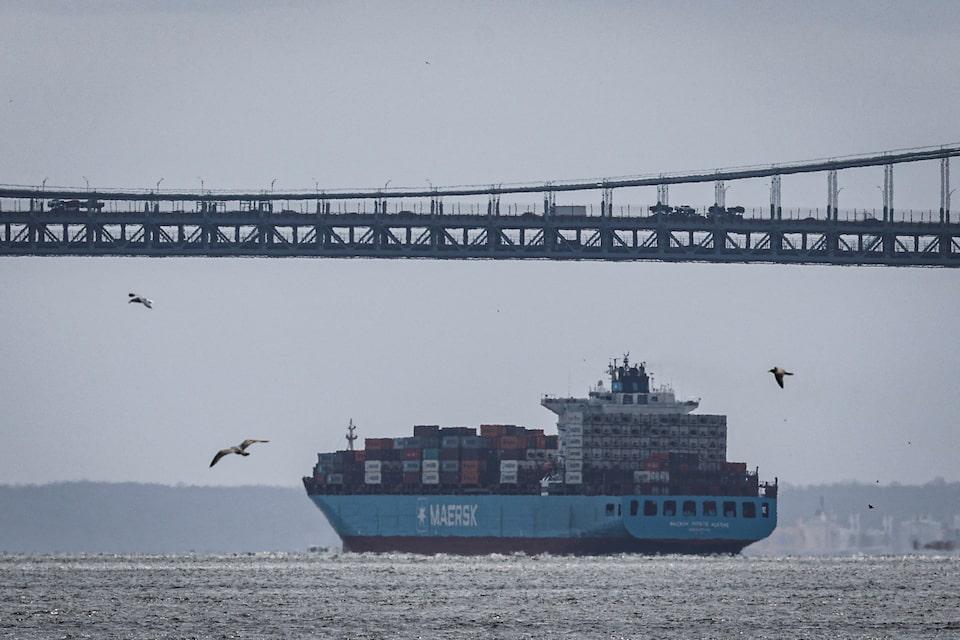
You can bomb away sites but not knowledge, experts warn Exact impact from latest strikes remains to be seen Status of Iran's enriched uranium stock is still unclear North Korea-style race for bomb is one possible scenario Many open questions on programme's present and future VIENNA/PARIS, June 22 (Reuters) - U.S. military strikes overnight in which President Donald Trump said Iran's main nuclear sites were "obliterated" will put to the test the widely held view that such attacks can delay a nuclear programme but not kill a determined push for atom bombs. As Iran's nuclear programme has expanded and become more sophisticated over the past two decades, many officials and nuclear experts have warned: You can destroy or disable a nuclear programme's physical infrastructure but it is very hard or impossible to eliminate the knowledge a country has acquired. Sign up here. Western powers including the United States have publicly suggested as much, complaining of the "irreversible knowledge gain" Iran has made by carrying out activities they object to. "Military strikes alone cannot destroy Iran's extensive nuclear knowledge," the Washington-based Arms Control Association said in a statement after the U.S. strikes with massive bunker-busting bombs on sites including Iran's two main underground enrichment plants at Natanz and Fordow. "The strikes will set Iran's programme back, but at the cost of strengthening Tehran's resolve to reconstitute its sensitive nuclear activities, possibly prompting it to consider withdrawing from the nuclear Non-Proliferation Treaty, and possibly proceeding to weaponisation." Israel has also said it has killed Iranian nuclear scientists but, while little is known about the personnel side of Iran's nuclear programme, officials have said they are sceptical about that having a serious impact on Iran's nuclear knowledge, even if it might slow progress in the near term. The West says there is no civilian justification for Iran's enrichment of uranium to near weapons-grade fissile purity. Iran says its nuclear objectives are solely peaceful and it has the right to enrich as much as it wants. Iran's nuclear programme has made rapid advances since Trump pulled the United States out of a 2015 nuclear deal between Tehran and major powers that placed strict limits on its atomic activities in exchange for sanctions relief. After the U.S. withdrawal in 2018 and the re-imposition of U.S. sanctions, Iran pushed past and then far beyond the limits imposed by the deal on items like the purity to which it can enrich uranium and how much it can stockpile. URANIUM STOCK At least until Israel's first strikes against its enrichment installations on June 13, Iran was refining uranium to up to 60% purity, a short step from the roughly 90% that is bomb-grade, and far higher than the 3.67% cap imposed by the 2015 deal, which Iran respected until the year after Trump pulled out. The last report on May 31 by the International Atomic Energy Agency, the U.N. nuclear watchdog that inspects Iran's nuclear facilities, showed Iran had enough uranium enriched to up to 60%, if enriched further, for nine nuclear weapons, according to an IAEA yardstick. It has more at lower levels like 20% and 5%. The exact impact of Israeli and U.S. strikes on Iran's nuclear facilities and materials has yet to be determined. In addition to the enrichment sites, the U.S. struck Isfahan, where officials have said much of Iran's most highly enriched uranium stock was stored underground. One important open question is how much highly enriched uranium Iran still has and whether it is all accounted for. A senior Iranian source told Reuters on Sunday most of the highly enriched uranium at Fordow, the site producing the bulk of Iran's uranium refined to up to 60%, had been moved to an undisclosed location before the U.S. attack there. Deputy Foreign Minister Kazem Gharibabadi told state TV last weekend Iran would take measures to protect nuclear materials and equipment that would not be reported to the IAEA, and it would no longer cooperate with the IAEA as before. NORTH KOREA LOOMS LARGE The IAEA has not been able to carry out inspections in Iran since the first Israeli strikes nine days ago, but has said it is in contact with the Iranian authorities. What Iran will do next in terms of its nuclear programme is also unclear. Its threat to pull out of the nuclear Non-Proliferation Treaty hints at a race for nuclear weapons, but Iran has maintained it has no intention of doing so. The only other country to announce its withdrawal from the NPT is North Korea in 2003. It expelled IAEA inspectors and went on to test nuclear weapons. "Our biggest concern is that we end up with a North Korea scenario whereby these strikes convince the Iranians that the only way to save the regime is to go for the bomb. Nobody is bombing North Korea now, are they?" a European official said. Even if inspections continue, because of Trump's withdrawal in 2018 Iran had already scrapped extra IAEA oversight provided for by the 2015 deal. That means the agency no longer knows how many centrifuges Iran has at undeclared locations. The IAEA says that while it cannot guarantee Iran's aims are entirely peaceful, it also has no credible indication of a coordinated nuclear weapons programme. The Israeli and now U.S. strikes have already raised fears among diplomats and other officials, however, that Iran will use those centrifuges to set up a secret enrichment site, since one could be built inside a relatively small and inconspicuous building like a warehouse. "It is quite possible that there are enrichment sites that we don't know about. Iran is a big country," a Western official said, while adding that Iran could also choose to bide its time. "In two years, if Iran were to start from scratch, they would only need a few months to reconstitute a new programme and to get back to where they were yesterday." https://www.reuters.com/world/middle-east/us-strikes-iran-nuclear-sites-are-real-life-test-hard-powers-limits-2025-06-22/