2025-06-20 20:41
Heat dome causes extreme temperatures across US Midwest and East Coast Chicago and NYC open cooling centers, urge residents to seek relief Heat exhaustion and heatstroke pose serious health risks during high temperatures June 20 (Reuters) - Major cities across the United States are preparing for extreme temperatures caused by a heat dome that hit the U.S. Plains on Friday and is expected to expand to much of the rest of the country over the coming days. Potentially dangerous temperatures of 105 degrees Fahrenheit (40 Celsius) or over are expected this weekend in parts of the Midwest, including Chicago, before spreading to the Ohio Valley and much of the East Coast towards the start of next week, according to the National Weather Service. Sign up here. A heat dome is a ridge of high-pressure air in the upper atmosphere that stalls and traps hot air while keeping cooler air away even at night. In preparation, Chicago is opening cooling centers across the city, Mayor Brandon Johnson told a news conference on Friday. City workers are also checking on people who are homeless living in camps, urging them to go to a cooling center. "Chicago knows better than any other city in America of the danger of extreme weather, particularly extreme heat," said Johnson, referring to the upcoming 30-year anniversary of a heat wave that killed 700 Chicagoans. New York City Mayor Eric Adams urged residents to locate their nearest cooling center. Adams said the city would open up an extensive network of cooling centers and was working to distribute heat safety information to vulnerable residents. Heat affects health in several ways. Heat exhaustion, which can include dizziness, headaches, shaking and thirst, can affect anyone, and is not usually serious, providing the person cools down within 30 minutes. The more serious version is heatstroke, when the body's core temperature goes above 105 degrees Fahrenheit (40.6 degrees Celsius). It is a medical emergency and can lead to long-term organ damage and death. Symptoms include rapid breathing, confusion or seizures, and nausea. Heat advisories were already in effect across cities in Colorado, Nebraska and Kansas on Friday, with temperatures in Denver, Colorado, expected to rise to 100 degrees Fahrenheit by 3 p.m. Some of the highest temperatures on Friday are expected in towns close to the Nebraska-Kansas border, with those in Kansas's St. Francis and Oberlin, and McCook, Nebraska, likely to rise to 105 degrees and over before the end of the day, according to the National Weather Service. Forecasters say it is difficult to link record-breaking heat experienced across the United States in recent years to human-induced climate change, but such extremes are becoming more frequent because of global warming. https://www.reuters.com/business/environment/us-cities-prepare-extreme-temperatures-heat-dome-blankets-country-2025-06-20/

2025-06-20 20:35
ORLANDO, Florida, June 20 (Reuters) - - TRADING DAY Making sense of the forces driving global markets Sign up here. By Jamie McGeever, Markets Columnist I'd love to hear from you, so please reach out to me with comments at [email protected] , opens new tab. You can also follow me at @ReutersJamie and @reutersjamie.bsky.social. Cautious optimism around a possible de-escalation in the week-long war between Israel and Iran helped foster a relatively positive tone across world markets on Friday, lifting most stock markets and sealing oil's biggest decline in over a month. You'll note a high degree of equivocation there. President Donald Trump taking up to two weeks to decide on America's involvement offers no immediate clarity, even if he is open to direct talks, and negotiations between Iran's foreign minister and his European counterparts in Geneva are at the early stage. However, Wall Street didn't feel much of the earlier optimism on Friday. Tehran insists it will not talk directly to Washington about a new nuclear deal until Israel ceases its attacks. The bombing and retaliatory strikes continue. It's a fluid and fragile situation, but compared to a week ago when the conflict started, it's perhaps less bleak, which explains why many markets have regained their footing. It's worth remembering that Wall Street and world stocks earlier this week were a whisker away from their record highs. Developments in the war and on the diplomatic field over the weekend will go a long way to setting the tone for markets on Monday. And investors will continue to digest what was, in many ways, a pretty monumental week for central banks. To recap, the Federal Reserve took a hawkish turn in its projected interest rate path even though Chair Jerome Powell signaled policymakers are flying blind, while the Bank of Japan took a dovish turn in its balance sheet reduction plans. The Swiss National Bank cut rates to zero and admitted, albeit reluctantly, that rates could go negative, Norway's central bank delivered a surprise rate cut, and Brazil's central bank defied expectations by raising rates to the highest since 2006 and signaling it could tighten policy further. A raft of Fed officials are on the stump next week, and investors will be looking through the blizzard of headlines to see how the consensus stacks up against the new, less dovish 'dot plots'. Top of the bill will be Powell's semi-annual testimony to Congress on Tuesday and Wednesday. Fed Governor Christopher Waller told CNBC on Friday that a rate cut should be on the table next month because inflation is tame and unlikely to be boosted on a lasting basis by import tariffs. But Richmond Fed President Thomas Barkin told Reuters in an interview there's no rush to cut rates because tariffs could indeed fuel inflation. What's more, the economy and labor market are holding up well right now. It's gone pretty quiet on the trade front, an indication that the Trump administration is finding it harder than it imagined to secure the dozens of trade deals it promised - Trump himself has said that China and Japan are "tough" in their negotiations. China is not blinking, and why should it? As CIBC economists point out, China holds all the cards when it comes to global rare earths and pharmaceuticals supply, the U.S. is a much smaller market for its exports than it used to be, and Beijing has a wider array of retaliatory tools at its disposal than it did in 2018. Last but not least, "the tolerance to pain in autocratic China is notably higher than in the (still) democratic US," they note. The next few weeks will be pivotal for markets as investors eye the half-year point, the July 9 expiry of Trump's pause on 'reciprocal' tariffs, and Trump's two-week window to decide on the level of U.S. involvement in the Iran-Israel war. This Week's Key Market Moves Chart of the Week Two charts again, and they are related. The first is from Goldman Sachs and shows wage pressures in the developed G10 countries noticeably cooling (admittedly from elevated levels). This helps explain the second, from economist Phil Suttle, which shows developed and emerging market interest rate paths are diverging sharply - interest rates are coming down in DM, not so in EM. How long will that divergence last? Here are some of the best things I read this week: What could move markets on Monday? Opinions expressed are those of the author. They do not reflect the views of Reuters News, which, under the Trust Principles , opens new tab, is committed to integrity, independence, and freedom from bias. Trading Day is also sent by email every weekday morning. Think your friend or colleague should know about us? Forward this newsletter to them. They can also sign up here. https://www.reuters.com/business/autos-transportation/global-markets-trading-day-graphic-2025-06-20/
2025-06-20 19:54
LONDON, June 20 (Reuters) - Canada's Teck Resources (TECKb.TO) , opens new tab is weighing options to expand production of germanium, a strategic metal key to chipmaking, and is currently talking with governments, including Canada and the United States, on available funding, said Doug Brown, VP communications & government affairs. Teck's plan comes amid growing efforts to diversify supplies of critical minerals needed for the tech and defence sectors, as geopolitical tensions and trade barriers complicate access to materials mainly produced or refined in China. Sign up here. "We are examining options and market support for increasing production capacity of germanium," he told Reuters. China, which supplies around 60% of the world's refined germanium, restricted exports of the metal - along with gallium and antimony, all having broad military applications - to the United States, further escalating trade tensions between the world's two largest economies following Washington's crackdown on Beijing's chip sector. The export curbs were part of a broader effort launched in 2023, when China began imposing restrictions on critical mineral shipments, citing national security concerns. By controlling the export of these minerals, China aims to exert influence over the industries that use them, including renewable energy, defence, and chip manufacturing. Germanium is also used in semiconductors and infrared technology, fibre optic cables and solar cells. Teck is exploring ways to add to the current processing line using existing technology as one of the options, Brown said. Teck is North America's biggest germanium producer, and the fourth largest globally. Most of its germanium, a by-product of zinc ore concentrate at its Red Dog operations in Alaska, goes to the United States, via smelting and refining in British Columbia. Canada's germanium exports to the United States are currently exempt from tariffs as they comply with the USMCA (United States, Mexico, Canada) trade agreement. In a speech in Washington last January, Canada's Energy and Natural Resources Minister Jonathan Wilkinson welcomed partnerships with the United States to invest in critical minerals, including germanium. Canada's Energy Ministry declined to comment on funding for Teck, while saying that the prime minister is leading broader trade negotiations with the United States. https://www.reuters.com/world/china/teck-resources-eyes-output-boost-chipmaking-metal-germanium-2025-06-20/
2025-06-20 19:52
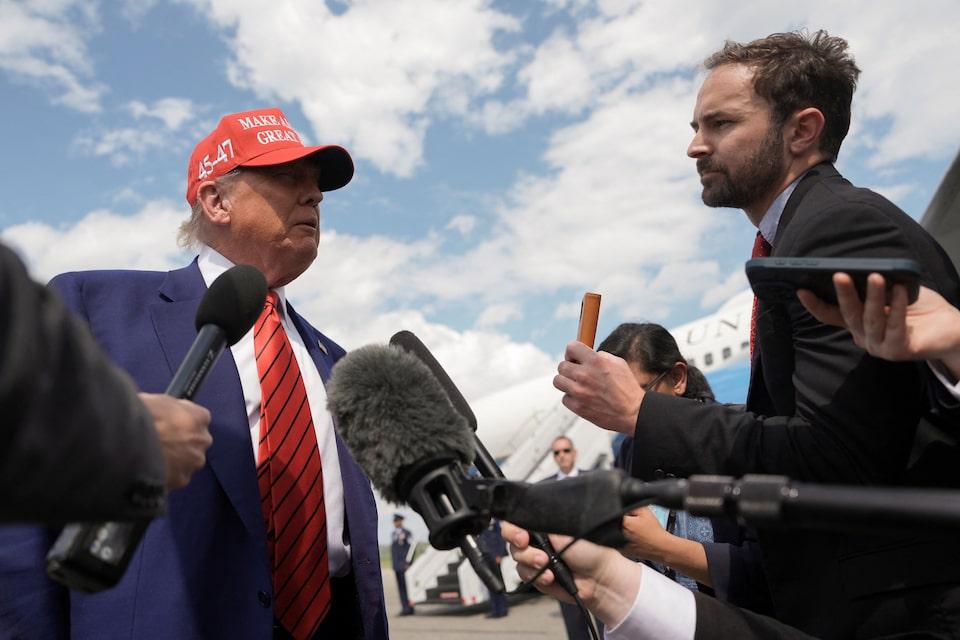
WASHINGTON, June 20 (Reuters) - President Donald Trump predicted on Friday that the United States will be able to negotiate trade deals with both India and Pakistan. Speaking to reporters as he arrived in New Jersey, Trump spoke optimistically about the potential for trade agreements with the two countries. Sign up here. https://www.reuters.com/world/china/trump-predicts-trade-deals-with-india-pakistan-2025-06-20/
2025-06-20 19:35
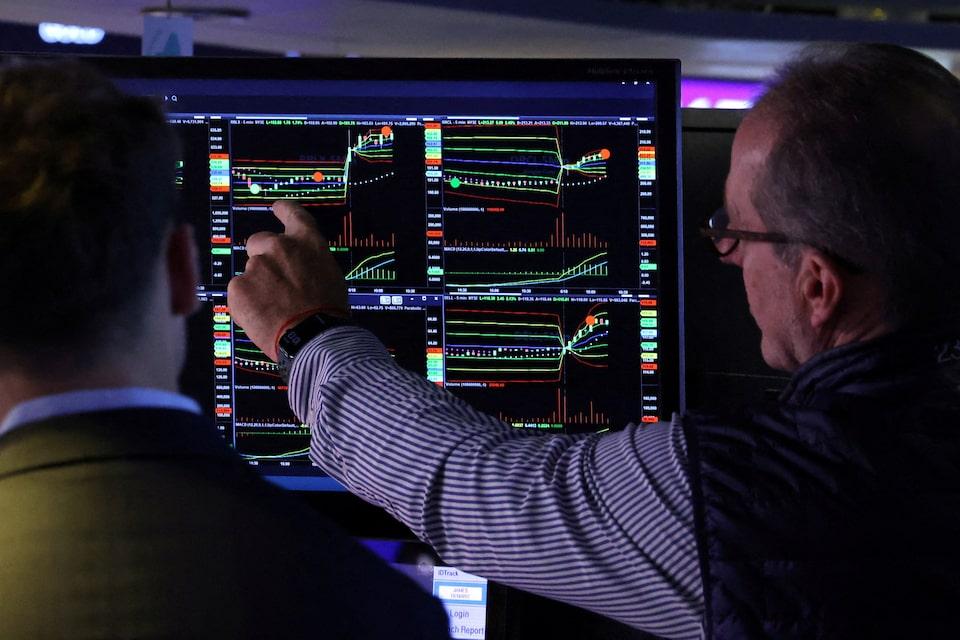
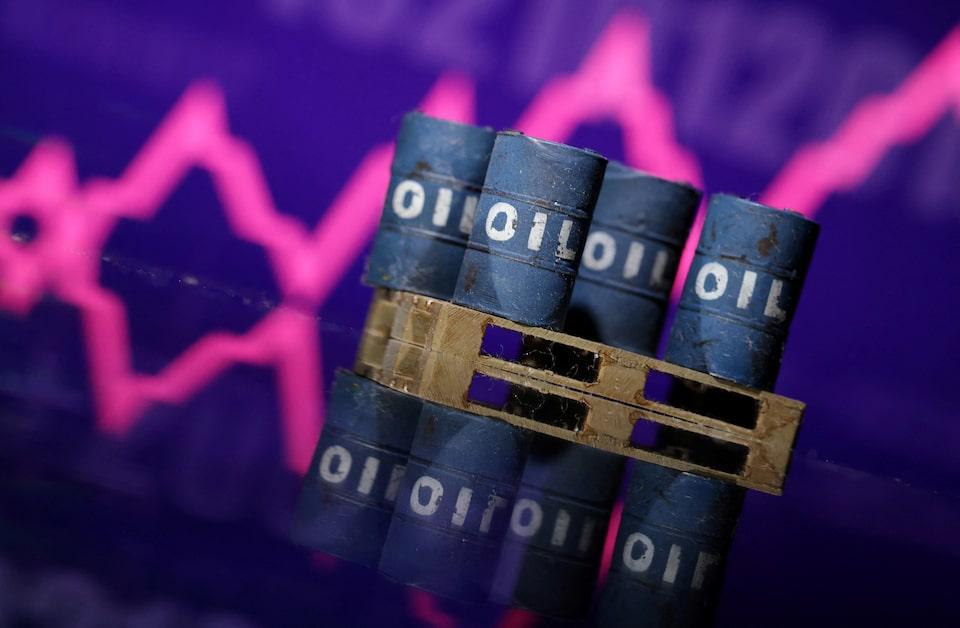
Hedging activity spikes as producers lock in higher prices US crude futures jump after Israel strikes Iran Oil producers need $65 a barrel on average to profitably drill HOUSTON, June 20 (Reuters) - Israel's surprise attack on Iran last week had oil prices spiking which sent U.S. producers scrambling to lock in the price gain, driving record hedging volumes that will help shield them from future price swings. West Texas Intermediate crude futures rose further this week, closing on Friday at around $75 a barrel. This prompted U.S. producers to secure additional price gains through 2026, having already driven hedging activity on the Aegis Hedging platform to a record high last Friday. Sign up here. Aegis Hedging, which handles hedging for roughly 25-30% of U.S. output, according to internal estimates, saw a record volume and greatest number of trades done on its trading platform on June 13. The U.S. produces some 13.56 million barrels per day of oil, according to the latest government figures. U.S. crude futures jumped 7% on June 13 to around $73 a barrel, after Israel struck Iran, the largest single day rise since July 2022. Prices had been hovering under where many producers would opt to hedge, hitting a four-year low of $57 a barrel in May as OPEC+ started hiking output while U.S. President Donald Trump waged a trade war. The jump on June 13 gave traders an opportunity to lock in prices for their barrels not seen in several weeks. When prices react to risk-related events - such as Israel's attack on Iran - as opposed to supply-and-demand fundamentals, the front of the oil futures curve rises more than later contracts, influencing whether producers opt for short- or long-term hedging strategies, according to Aegis Hedging. "In this case it was probably a six-month effect," said Matt Marshall, president of Aegis Hedging. Oil producers need a price of $65 a barrel on average to profitably drill, according to the first quarter 2025 Dallas Federal Reserve Survey. U.S. crude futures closed below $65 every day from April 4 to June 9, according to LSEG. "We stay disciplined and pay close attention to market volatility. We watch for accretive pricing to our existing hedges and layer in hedges to reduce risk to our asset revenue as well as meet our reserve-based lending covenants," said Rhett Bennett, chief executive at Black Mountain Energy, a producer with operations in the Permian Basin. A reserve-based lending covenant refers to a type of loan producers can obtain, based on the value of the company's oil and gas reserves. "Producers recognized that this could be a fleeting issue and so they saw a price that was above their budget for the first time in a few months, and instead of doing a structure that would give them a floor which is below market, they opted to be aggressive and lock in," said Aegis' Marshall. Aegis' customers often have hedging policies in which a certain amount of production must be hedged by a certain time in the year. "Producers had two months of hedges that they needed to catch up on," Aegis' Marshall said. Traders on June 13 exchanged the most $80 West Texas Intermediate crude oil call options since January on the Chicago Mercantile Exchange, expecting more upside to prices. A total of 33,411 contracts of August-2025 $80 call options for WTI crude oil were traded that day on a total trading volume of 681,000 contracts, marking the highest volume for these options this year, according to CME Group data. https://www.reuters.com/business/energy/oil-hedging-volumes-hit-new-records-us-producers-rush-lock-soaring-prices-2025-06-20/
2025-06-20 18:58
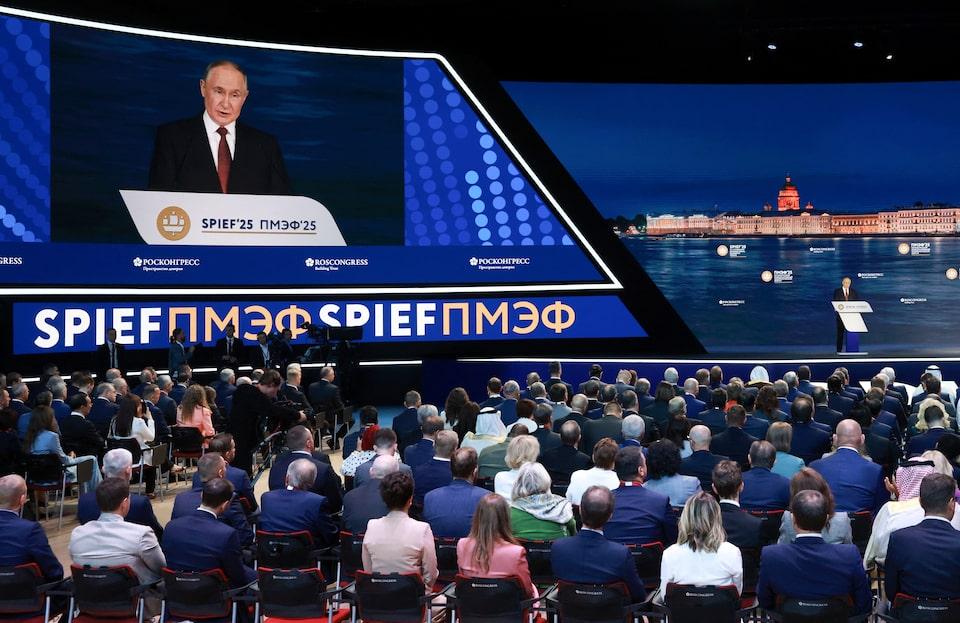
Putin says Russia must not let economy slip into recession Tells officials to ensure balanced growth for cooling economy Pressure mounting on central bank to cut rates more quickly Sberbank says it has financed no new projects this year ST PETERSBURG, Russia, June 20 (Reuters) - Russian President Vladimir Putin on Friday dismissed claims the war in Ukraine is devastating the Russian economy, citing continued growth, low debt and economic diversification as signs of resilience, while business leaders voiced concern about the economy's health. Speaking at the closing session of the Saint Petersburg Economic Forum, Putin responded to a moderator’s statement that credible reports suggest the war is “killing” the Russian economy. “As a well-known writer once said: ‘The reports of my death are greatly exaggerated,’” Putin said, quoting Mark Twain. Sign up here. Putin said 43% of Russia’s GDP is now unrelated to the energy or defence sectors, underscoring efforts to diversify the economy. The three-day forum featured intense debate over the risks of economic stagnation. Inflation remains high at 9.59% annually, more than double the central bank’s 4% target, but it has been gradually easing since late April, according to the economy ministry. In October, the Bank of Russia raised its key interest rate to its highest level since the early 2000s to combat inflation. Earlier this month, it cut the rate by one percentage point to 20%. But the Kremlin has criticised the move as insufficient, warning that the economy could cool too rapidly after two years of war-driven growth. “Our most important task is to ensure the economy’s transition to a balanced growth trajectory,” Putin said in a keynote address. He defined balanced growth as moderate inflation, low unemployment and sustained economic momentum. "At the same time, some specialists and experts point to the risks of stagnation and even recession. This should not be allowed under any circumstances," Putin said. Striking a more pessimistic tone, Economy Minister Maxim Reshetnikov warned on Thursday that Russia is teetering on the edge of a recession. He said future monetary policy decisions will determine whether the country avoids a downturn. Central Bank Governor Elvira Nabiullina, who has led the institution through multiple crises since 2013, has faced criticism over high interest rates and currency volatility. She remains in her post with Putin's personal support. Deputy Prime Minister Alexander Novak said: "It's time to cut the rate and start heating up the economy. Demand for credit is weak, said German Gref, CEO of Russia's largest lender, Sberbank (SBER.MM) , opens new tab, and called for faster rate cuts. "It is especially worrying that we, as the largest bank, which finances ... almost 60% of all investment projects in the country, have not financed a single new project since the new year," Gref said on Friday. Alexey Mordashov, majority shareholder of steelmaker Severstal, warned of a looming credit crisis and rising bankruptcies. He noted that steel consumption fell 14% in the first five months of 2025 compared to the same period last year. "This cooling is a serious problem right now,” Mordashov said. “Continuing with the current monetary policy could worsen these negative consequences.” https://www.reuters.com/markets/europe/russia-must-not-let-economy-slip-into-recession-says-putin-2025-06-20/