2025-06-20 11:17
TOKYO, June 20 (Reuters) - An executive from Malaysian state energy firm Petroliam Nasional said on Friday that the first cargo from its portion of supply from the LNG Canada project will be delivered to its customer, Japanese city gas provider Toho Gas, in July. Speaking at an energy conference in Tokyo, Shamsairi Ibrahim, Petronas' vice president of LNG marketing and trading, also said that the company's third floating LNG project is set to commence production in 2027. Sign up here. https://www.reuters.com/business/energy/petronas-deliver-its-first-lng-canada-cargo-japans-toho-gas-july-2025-06-20/

2025-06-20 11:14
BERLIN, June 20 (Reuters) - Volkswagen's premium brand Audi could build a plant at a new location in the United States under scenarios being considered to placate President Donald Trump in the tariff conflict, the Spiegel news magazine reported on Friday. Audi is considering building a plant in the southern U.S., which would be the more expensive option out of a number of scenarios being considered, with company sources estimating costs of up to 4 billion euros ($4.6 billion), the report said. Sign up here. An Audi spokesperson said that the company aims to build up more of a presence in the United States. "We are currently examining various scenarios for this. We are confident that we will make a decision this year in consultation with the (Volkswagen) group on how this will look in concrete terms," she said in an emailed statement, reaffirming earlier comments made by the company. Audi has no production of its own in the U.S., but Volkswagen has a plant in Chattanooga, Tennessee and one under construction near Columbia, South Carolina. Trump's announcement of sweeping tariffs has already racked up hundreds of millions of euros in costs for German carmakers heavily reliant on their export business, according to an industry representative. BMW (BMWG.DE) , opens new tab, Mercedes-Benz (MBGn.DE) , opens new tab and Volkswagen are in talks with Washington over a possible import tariff deal, seeking to use their U.S. investments and exports as leverage to soften any blow, sources have told Reuters. ($1 = 0.8678 euros) https://www.reuters.com/business/autos-transportation/audi-could-build-plant-us-placate-trump-spiegel-reports-2025-06-20/

2025-06-20 11:02
NEW DELHI/JAKARTA, June 20 (Reuters) - Indonesia's Pertamina on Friday sought 200,000 barrels per month of 90-octane grade of gasoline for July-September delivery, according to a document seen by Reuters. It is the state-run company's third term tender between May and June, issued by its trading arm Pertamina Patra Niaga, Reuters record shows. Sign up here. There are no restrictions on the origin of the cargo. Some of the earlier tenders had excluded Singapore-origin cargoes. The tender closes on June 23 and is valid till June 27, the document showed. The earlier tender that was valid till June 16 sought to buy up to 1.2 million barrels of term gasoline cargoes monthly. Another set of term tenders that were valid till May 30 and had restrictions of Singapore-origin cargoes was awarded to multiple suppliers in China, at least one Indian supplier and a few international traders, market sources said. Pertamina Patra Niaga did not immediately respond to a Reuters request for comment. https://www.reuters.com/business/energy/indonesias-pertamina-seeks-more-term-gasoline-document-shows-2025-06-20/

2025-06-20 10:51
LONDON, June 20 (Reuters) - What matters in U.S. and global markets today I'm excited to announce that I'm now part of Reuters Open Interest (ROI) , opens new tab, an essential new source for data-driven, expert commentary on market and economic trends. You can find ROI on the Reuters website , opens new tab, and you can follow us on LinkedIn , opens new tab and X. , opens new tab Sign up here. Last month's China-U.S. trade showdown turned world markets' focus to Geneva, and that's where attention is yet again, only this time for European talks with Iran, as President Donald Trump has delayed a decision on direct U.S. involvement in the Israel-Iran war to allow a two-week window for negotiations. It's Friday, so I'll provide a quick overview of what's happening in global markets and then offer you some weekend reading suggestions away from the headlines. Today's Market Minute * Iran said on Friday it would not discuss the future of its nuclear programme while under attack by Israel, as Europe sought to draw Tehran back into negotiations and the United States considers whether to get involved in the conflict. * Investor unease about an increasingly uncertain environment is rising, as Norway's shock rate cut on Thursday highlights how U.S. tariffs, Middle East conflict and a shaky dollar make global monetary policy and inflation even harder to predict. * The Federal Reserve took a slightly hawkish turn on Wednesday, indicating it is worried more about rising inflation than slowing growth. But Chair Jerome Powell suggested this outlook should be taken with a large grain of salt, writes ROI markets columnist Jamie McGeever. * The Israel-Iran conflict has boosted global diesel prices, with gains outstripping the jump in crude prices, highlighting the vulnerability of diesel-heavy European consumers even as the region’s refiners get a windfall. Read the latest from ROI energy columnist Ron Bousso. * UK finance minister Rachel Reeves insists higher economic growth is her top priority, but the government's current plan to address the country's chronically low investment is unlikely to be ambitious enough. What may be needed is a structural rethink of the finance ministry itself, argues Mike Peacock, the former head of communications at the Bank of England. Relief at two-week Middle East window Even though U.S. markets were closed for the Juneteenth holiday on Thursday, Wall St futures fell sharply during the day as tensions over the Israel-Iran war boiled. But those losses were mostly reversed before the market re-opened on Friday after Trump gave Tehran a fortnight to come up with a compromise before he decides whether to add U.S. firepower to Israel's air attacks on Iranian nuclear installations. Drone and missile attacks between the two warring sides continue, however. As is always the case with Middle East conflicts, the price of oil is the lodestar. Iran is OPEC's third-largest producer. U.S. crude came within a whisker of five-month highs on Thursday before falling back today to just over $75 per barrel. While a major concern, the rise in energy prices is still shy of a "shock", with crude prices down 7% year-on-year despite the tense situation. Foreign ministers from Britain, France and Germany along with the European Union's foreign policy chief were due to meet their Iranian counterpart Abbas Araqchi in Geneva on Friday to try to de-escalate the conflict. If Trump goes to the wire with his decision about direct U.S. involvement in the war, this will coincide with the expiration of his 90-day pause on "reciprocal" tariff hikes across the world, further fogging up the windscreen for world markets. Treasury yields were steady going into Friday's open, as investors juggled the energy picture and this week's relatively hawkish Federal Reserve meeting. The dollar fell back (.DXY) , opens new tab from Thursday's highs. While the median forecast from Fed policymakers is still two interest rate cuts over the rest of the year, inflation forecasts were nudged higher and 7 of the 19 central bankers now expect no further easing in 2025. But confident forecasting is next to impossible now for the major central banks as they try to balance edgy oil prices, uncertain tariff hikes and multiple geopolitical risks. The Bank of England and Bank of Japan also left their key policy rates unchanged this week, largely for those reasons. Two rate cuts did emerge this week, however. Swiss interest rates returned to zero as expected as the Swiss National Bank battles the deflationary effects of currency strength , largely due to the franc's "safe haven" appeal. Norway surprised with a quarter point cut as well, taking the heat out of an oil-driven crown that had hit two-year highs this week. Stock markets (.STOXX) , opens new tab, (.HSI) , opens new tab around the world rallied on Friday as the oil price fell back, with Japan's Nikkei (.N225) , opens new tab bucking that trend and ending slightly in the red again. A relatively thin trading session is expected on Wall Street later following the holiday on Thursday, though unfolding events in the Middle East will continue to create considerable trepidation before the close. The Philadelphia Fed's June business survey tops the data diary. Next week's events are led by Fed boss Jerome Powell's semi-annual congressional testimony on Tuesday and Wednesday and the release of the Fed's favored inflation gauge - the personal consumption expenditures measure - on Friday. A NATO summit in The Hague on Wednesday adds to the geopolitical focus. Elsewhere, sterling was firmer in the wake of the BOE decision, even with a surprisingly poor UK retail sales readout for May. There was some marginally better news from UK public borrowing numbers. While slightly above forecasts for May, the government has borrowed 37.7 billion pounds over the first two months of the 2025/26 fiscal year, less than the 40.7 billion pounds the Office for Budget Responsibility had predicted. In China, foreign direct investment from January to May fell 13.2% from the same period last year, more than had been forecast. And the European Union said it will bar Chinese companies from participating in EU public tenders for medical devices worth 60 billion euros or more ($68.9 billion) per year after concluding that EU companies are not given fair access in China. Weekend reading suggestions * MONETIZING DEBT: With no end in sight for outsize U.S. deficits and debt accumulation, the Fed "will almost certainly" be forced to monetize enough federal debt to prevent a default at some point , opens new tab, according to former Bank of England policymaker Willem Buiter and Professor Anne Sibert. Higher inflation and interest rates "are all but assured", they wrote in a column on Project Syndicate. "The Fed will have no choice but to engage in sovereign debt purchases that it knows to be incompatible with its monetary-policy objectives," they concluded. "The inflation surge could be no more than three years away." * EMOTIONAL FED?: Central bank communication is one of the most closely watched signals by markets, but it is not just what is said, but how it is said, , opens new tab argue economists Dimitris Anastasiou, Apostolos Katsafados, Christos Tzomakas and Steven Ongena in a paper on CEPR's VoxEU site. "Even subtle emotional cues can shift expectations and pricing behaviour in financial markets," they wrote. "Portfolio managers, particularly in the banking sector, may need to recalibrate models to include emotional tone as a market-moving variable." * US FIRMS MUSCLE IN: U.S. defense giants, backed by a Congressional delegation, used this week's Paris Airshow to showcase their cutting-edge technology and court European partners as they seek to tap into the rising regional military spending. Reuters' Joe Brock, Giulia Segreti, Paul Sandle and Tim Hepher show how despite the pledges by many European nations to boost military self-sufficiency, the continent remains heavily reliant on U.S. defense firms such as Lockheed Martin, Raytheon, Boeing, Anduril, Palantir and Elon Musk's SpaceX. * G6-PLUS?: President Trump's early departure from this week's G7 summit in Canada left the group without an overarching agreed communique and raised questions about the future shape of the group , opens new tab. Writing on the Chatham House site, the RIIA's economy and finance director Creon Butler outlines different formats that could be considered, including "G6-plus" without the full attendance of the United States or "G7-plus" with invited guests and limited issue-specific statements. * REFINING OKLAHOMA: Nestled beneath Oklahoma's Wichita Mountains sits a warehouse containing the only machine in the United States capable of refining nickel, a crucial energy transition metal now dominated by China. President Donald Trump has said he wants to boost U.S. production of minerals and, as Reuters' Ernest Scheyder shows, Oklahoma's push into minerals processing marks a turn in efforts to wean America off Chinese rivals. The state houses the country's only nickel refinery, its largest lithium refinery, two lithium-ion battery recycling plants, a rare earths magnet facility, and several electronic waste collection facilities. That's more than in any other state. Chart of the day During the parade of central bank meetings this week, Swiss interest rates returned to zero, and Norway's central bank surprised markets with a quarter point cut. Both decisions were currency-related and have been influenced by the swooning dollar and rising geopolitical tensions. The supercharged Swiss franc has drawn safe-haven demand and threatens Switzerland with deflation, as it flirts with 10-year highs against the green back. The Norwegian crown is highly linked to the oil price and hit its strongest level in two years this month as crude shot higher on Middle East worries. The major central banks all held the line, largely due to growing uncertainty over trade, oil prices and war. Today's events to watch * Philadelphia Federal Reserve's June business survey (8:30 a.m. EDT), May leading indicator (10:00 a.m. EDT); Canada May house prices, retail sales and producer prices (8:30 a.m. EDT) * European foreign ministers meet Iranian counterpart in Geneva * European Union finance ministers meet in Luxembourg, European Central Bank Vice President Luis de Guindos attends * U.S. corporate earnings: Accenture, Kroger, Carmax, Vertex Pharmaceuticals, Darden Restaurants Opinions expressed are those of the author. They do not reflect the views of Reuters News, which, under the Trust Principles , opens new tab, is committed to integrity, independence, and freedom from bias. Want to receive the Morning Bid in your inbox every weekday morning? Sign up for the newsletter here. https://www.reuters.com/business/finance/global-markets-view-usa-2025-06-20/
2025-06-20 10:47
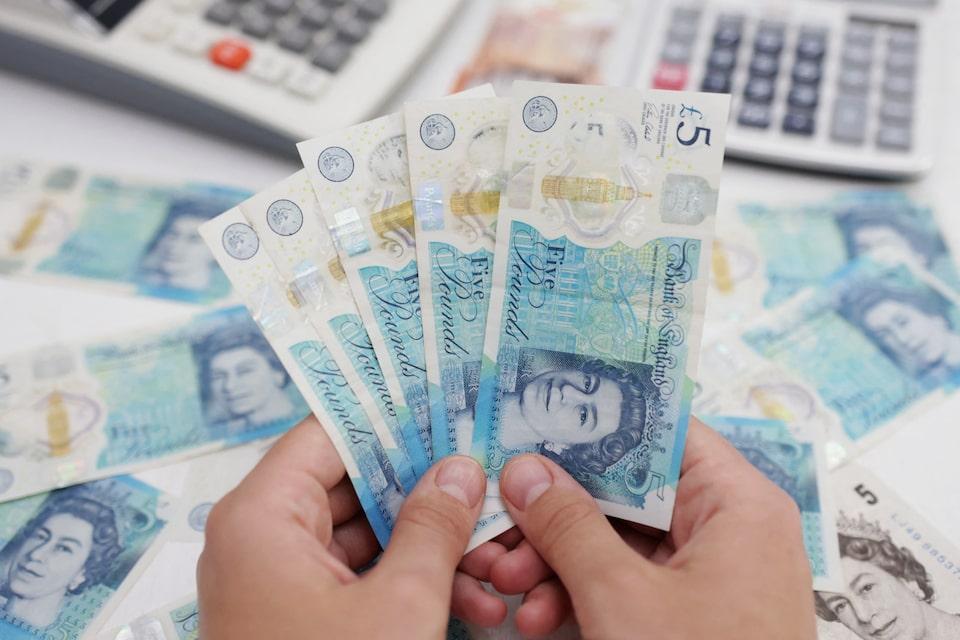
June 20(Reuters) - Sterling gained slightly against the dollar on Friday but was set for a loss on the week as uncertainty over the Israel-Iran conflict fuelled demand for traditional safe havens such as the greenback. Weak UK retail data earlier in the session and the Bank of England's decision on Thursday to keep rates unchanged had little effect on the pound. Sign up here. Sterling was 0.2% higher at $1.3495 but eased 0.6% against the dollar on the week, after two consecutive weeks of gains. The dollar was set for its biggest weekly rise in more than a month on Friday. The BoE said it was monitoring risks from a weaker labour market and higher energy prices on the back of the conflict as it held interest rates at 4.25% as expected on Thursday, sending the pound down briefly against the U.S. dollar. "The pound was only lightly touched by a consensus Bank of England hold yesterday," ING FX Strategist Francesco Pesole wrote in a note to clients. "Yesterday's 6-3 vote split for a cut can be interpreted marginally on the dovish side and is allowing markets to reinforce their conviction call on an August cut." Markets now priced in a near-60% chance for a quarter-point cut at the BoE's next policy meeting. The euro was marginally up to 85.43 pence on Friday, set for its second week of gains in a row. Sterling briefly pared some earlier gains against the U.S. dollar after weak British retail sales data, which saw volumes recording their sharpest drop since December 2023 last month, as demand fell after shoppers splurged on food, summer clothes and home improvements the month before. "Retail sales in May brought significant payback" after a "hard to explain" strength in the previous four months, Allan Monks, chief U.K. economist at J.P. Morgan, said. The figures came alongside government borrowing figures which showed a slightly larger than expected budget deficit of 17.7 billion pounds ($23.88 billion) for May. Britain's economy grew at a faster-than-expected pace in the first quarter of 2025 but shrank in April, as a property tax break ended and U.S. tariffs started to sting. The BoE forecasts overall growth of 1% for 2025. ($1 = 0.7413 pounds) https://www.reuters.com/world/uk/sterling-set-weekly-loss-middle-east-conflict-overshadows-domestic-data-2025-06-20/
2025-06-20 10:35
US attacks on Iran raise concerns over oil, retaliation S&P 500 near February highs but showing signs of stagnation Rising oil prices spark worries about inflation and Fed policy Investors look to upcoming U.S. economic data for market direction NEW YORK, June 22 (Reuters) - Investors are bracing for a knee-jerk selloff in stock markets on Monday after the weekend's U.S. attack on Iran raised the specter of retaliation and higher oil prices. The Middle East situation takes center-stage for markets, overshadowing U.S. economic data releases this week, as investors assess the impact of President Donald Trump's sudden decision to join Israel's military campaign against Iran on sentiment, inflation and interest rates. Sign up here. Trump called the attack "a spectacular military success" in a televised address to the nation and said Iran's nuclear enrichment facilities had been "obliterated". He said the U.S. military could go after other targets in Iran if the country did not agree to peace. Iran said it reserved all options to defend itself, warned of "everlasting consequences", and stepped up its strikes on Israel. "It’s hard to imagine stocks not reacting negatively and the question is how much. It will depend on Iranian reaction and whether oil prices spike," said Steve Sosnick, chief market strategist at Interactive Brokers in Connecticut. "Really what we’re looking at is secondary order effects – the price of oil, market stability, price hikes through the economy. No globally important stock is directly affected by what happened tonight.” The S&P 500 (.SPX) , opens new tab is hovering just below its February highs but has rebounded sharply from its early-April selloff, as tariff-related tensions have eased. However, the U.S. benchmark index appears to be taking a breather at some 2.7% below its February closing high. The index has gone 27 trading sessions since coming within 5% of its February high but has not yet set a new record. The Israel-Iran conflict has already sent oil prices sharply higher and led to caution in markets. So far, the oil market has absorbed most of the impact from geopolitical turmoil, with equities relatively stable. Yet stock investors remain concerned that higher oil prices could stoke inflation and upset plans for interest rate cuts from the Federal Reserve. On Wednesday, the Fed held rates steady and policymakers signaled borrowing costs are still likely to fall this year. But they estimated the overall pace of expected future rate cuts would be slower than they saw at their March meeting. They cited expectations that higher inflation would flow from President Donald Trump's tariff plans. "The question is oil prices and what that does to inflation – which has implications for monetary policy and how long the Fed keeps rates "meaningfully restrictive"," said Sonu Varghese, global macro strategist at Carson Group. While investors expect the Middle East tensions to spur a near-term bout of nervousness in stock markets and a rush to safer assets such as the dollar and Treasuries, some also envisage a de-escalation in the situation. "I think it’s going to be very positive for the stock market," said Mark Malek, chief investment officer of Siebert Financial, referring to how investors had been primed for two weeks of uncertainty based on White House statements that Trump would take that long to decide on his next move. "So this will be reassuring, especially since it seems like a one and done situation and not as if (the U.S.) is seeking a long-drawn out conflict." Investors will also parse a slew of incoming data releases, including U.S. business activity and housing sales on Monday, consumer confidence numbers on Tuesday and the PCE Price Index on Friday. U.S. consumer confidence plunged in the past few months, with households fearing tariffs could prompt a recession and higher inflation. However, with inflation in check and the U.S. reaching a truce in its trade fight with China, investors were expecting to see a pickup in sentiment. "Remember, the survey-based data all got crushed in the March, April, May time frame ... my expectation is we're still going to see an improvement," Mark Hackett, chief market strategist at Nationwide said before the U.S. struck Iran. https://www.reuters.com/business/wall-st-week-ahead-stocks-take-breather-investors-assess-geopolitics-economic-2025-06-20/