2025-06-20 06:36
LONDON, June 21 (Reuters) - Rising oil prices, Middle East tensions, a NATO meeting and a testimony by the U.S. Federal Reserve chief vie for market attention in the days ahead. Here's your heads up on the week in world markets from Alden Bentley in New York, Kevin Buckland in Tokyo, Amanda Cooper and Lucy Raitano in London and Andrew Gray in Brussels. Sign up here. 1/ STRAIT UP WORRIED The Israel/Iran war has lit the fuse for a possible oil supply shock for investors. The U.S. at the weekend attacked key Iranian nuclear sites, adding to unease. Brent crude has topped $75 for the first time since January and was higher on Monday. For now, there are no signs of disruption to output. Iran produces around 3.3 million barrels a day and exports around half that, according to Reuters and LSEG calculations, a fraction of the world's roughly-100 million barrels in daily consumption. A shortfall in Iranian barrels, while jarring to markets, could be offset by other OPEC countries tapping spare capacity to fill that void. What markets are more worried about is Iran blocking the Strait of Hormuz, through which some 20% of total daily crude supply passes. Analysts say it's unlikely. But a lot of things that were considered unlikely six months ago and are now a reality. Market volatility has room to pick up. 2/ GO BIG NATO aims to keep Donald Trump happy, hold the alliance together and agree a big new spending target in The Hague. It's also hoping the Israel-Iran conflict won't overshadow Wednesday’s summit. Trump lambasted NATO members in his first term and threatened to quit the military alliance if they did not raise defence spending. Now, NATO boss Mark Rutte wants all allies to commit to Trump’s proposed target of 5% of GDP. To do that, NATO will interpret defence more broadly. It would hike its current target of spending 2% of GDP on traditional defence – weapons, troops etc – to 3.5%. And members would spend at least 1.5% of GDP on broader measures such as adapting roads, bridges and ports to handle military vehicles and protecting against cyber-attacks. Only Spain is publicly opposing the new target. Due to the focus on pleasing Trump, Ukrainian President Volodymyr Zelenskiy may have to settle for a seat at the pre-summit dinner rather than the meeting itself. 3/ NEXT QUESTION Markets will look to Fed boss Jerome Powell to elaborate on what his expectation for "meaningful" inflation means for the rate outlook when he testifies before Senate and House committees on Tuesday and Wednesday. Powell told reporters after the Fed's June meeting that goods price inflation is coming as tariffs work their way to consumers. Having stressed that a solid expansion continues, Powell could also be asked how a further Middle East escalation impacts inflation. Thursday's final read on first quarter GDP meanwhile should confirm that the economy shrank. The Fed's favorite inflation indicator, the Personal Consumption Expenditures Price Index for May on Friday, will be read through the lens of the Fed's decision to leave rates alone, while predicting two cuts this year. 4/ STRONG BONDS? A month ago, Japanese government bond yields surged to record peaks as investors baulked at auctions and the prime minister ill-advisedly compared Japan's fiscal predicament to Greece's. Now, things couldn't look more different thanks to some deft team play between the Bank of Japan and Ministry of Finance. Just days after the BOJ tweaked its bond taper plans to keep buying more of the super-long debt at the heart of the yield spike, the finance ministry presents a plan to cut issuance of the longest-dated securities. The BOJ's dovish tone on future rate hikes has also helped keep yields in check this week, although Governor Kazuo Ueda left the door open to policy tightening this year by highlighting the risks from broadening price pressures. Tokyo CPI for this month and published on June 27 will give fresh hints on how soon the central bank may need to act. 5/ HOLDING UP? U.S. President Donald Trump’s reciprocal tariffs initially led to order front-loading, supporting global business activity, but that is fading fast with global recession creeping back up. With little forward guidance from companies, economic indicators are more vital than ever for markets, and a raft of them hit screens in days to come. Monday brings the first release of June business activity for a host of economies including the euro area, Britain and the United States. Hopes are for better news from the euro zone after May's PMI slipped to 50.2 from 50.4 in April, moving closer to the 50 mark that separates a contraction from an expansion. Particularly concerning was the bloc's dominant services sector contracting for the first time since November. Meanwhile in the UK, the May PMI showed the services sector returning to tepid growth. https://www.reuters.com/business/take-five/global-markets-themes-graphic-2025-06-20/
2025-06-20 06:23
OSLO, June 20 (Reuters) - Norway's Equinor (EQNR.OL) , opens new tab said on Friday its Johan Castberg oilfield in the Arctic Barents Sea was producing at peak capacity of 220,000 barrels of oil per day. Production at the field commenced on March 31 but was briefly offline in May for repairs following an outage. Sign up here. The initial reserves for Johan Castberg are estimated at 450-650 million barrels, but could rise by another 250-550 million barrels with new wells continuing to be drilled, Equinor said. Equinor is the operator of the Castberg field and owns a 46.3% stake, while Vaar Energi, controlled by Eni (ENI.MI) , opens new tab, and Norway's Petoro have 30% and 23.7%, respectively. https://www.reuters.com/business/energy/equinor-says-arctic-castberg-oilfield-producing-peak-capacity-2025-06-20/
2025-06-20 06:21
Gold down 2.5% so far this week Trump to decide on US action in Israel-Iran war within two weeks Gold likely to extend current consolidation phase, analyst says June 20 (Reuters) - Gold prices fell on Friday and were poised for their worst weekly performance in more than a month after the Federal Reserve tempered expectations for rate cuts and on a temporary easing of concerns about an imminent U.S. attack on Iran. Spot gold slipped 0.7% to $3,347.80 an ounce, as of 1201 GMT, and was down 2.5% for the week so far. U.S. gold futures shed 1.3% to $3,364.00. Sign up here. The dollar was up 0.5% so far this week and poised for its biggest weekly gain in over a month, making gold more expensive for holders of other currencies. President Donald Trump will decide in the next two weeks whether the U.S. will get involved in the Israel-Iran air war, the White House said on Thursday. Israel and Iran's conflict entered a second week on Friday. Trump's two-week deadline "indicates that things could have a little bit more hope to cool down before the U.S. involvement in that military strike. And I think that's easing some of the anxiety in markets, allowing gold prices to deflate a little", said Nitesh Shah, commodities strategist at WisdomTree. Gold, a safe-haven asset during times of political and economic uncertainty, also tends to thrive in a low interest rate environment. On Wednesday, the Federal Reserve held interest rates in the central bank's current 4.25%-4.50% range, but slowed its overall outlook for rate cuts in response to a more challenging economic outlook. Trump reiterated his calls for the Fed to cut interest rates, saying on Thursday the rates should be 2.5 percentage points lower. "Gold, silver, and platinum all suffered setbacks as traders booked profits after Wednesday's FOMC meeting," said Ole Hansen, head of commodity strategy at Saxo Bank. "Gold is likely to extend its current consolidation phase with support around $3,320 followed by $3,245." Elsewhere, spot silver slipped 1.1% to $35.99 per ounce, while palladium lost 0.2% to $1,048.33. Platinum fell 1.7% to $1,285.58, after hitting its highest level in over 10 years in the previous session. https://www.reuters.com/world/india/gold-heads-weekly-fall-fewer-fed-rate-cut-prospects-weigh-2025-06-20/

2025-06-20 06:18
SINGAPORE, June 20 (Reuters) - Oil prices fell on Friday after the White House delayed a decision on U.S. involvement in the Israel-Iran conflict yet they remained on course for a third consecutive weekly rise. Brent crude futures were down $2.57, or around 3.3%, to $76.28 a barrel by 1204 GMT but still set to gain nearly 3% on the week. Sign up here. U.S. West Texas Intermediate crude for July - which did not settle on Thursday as it was a U.S. holiday and expires on Friday - was up marginally at $75.19. The more liquid August contract was up around 0.4%, or 31 cents, to $73.19. On Thursday prices jumped almost 3% after Israel bombed nuclear targets in Iran, while Iran - OPEC's third-largest producer - fired missiles and drones at Israel. Neither side showed any sign of backing down in the week-old war. Brent prices retreated after the White House said President Donald Trump would decide whether the U.S. will get involved in the Israel-Iran conflict in the next two weeks. "However, while Israel and Iran carry on pounding away at each other there can always be an unintended action that escalates the conflict and touches upon oil infrastructure," PVM analyst John Evans said. Iran has in the past threatened to close the Strait of Hormuz, a vital route for Middle East oil exports. However, oil exports so far have not been disrupted and there is no shortage of supply, said Giovanni Staunovo, an analyst at UBS. "The direction of oil prices from here will depend on whether there are supply disruptions." An escalation of the conflict in such a way that Israel attacks export infrastructure or Iran disrupts shipping through the strait could lead to $100 per barrel of oil being a reality, said Panmure Liberum analyst Ashley Kelty. https://www.reuters.com/world/middle-east/oil-set-rise-third-week-escalating-israel-iran-conflict-2025-06-20/
2025-06-20 05:54
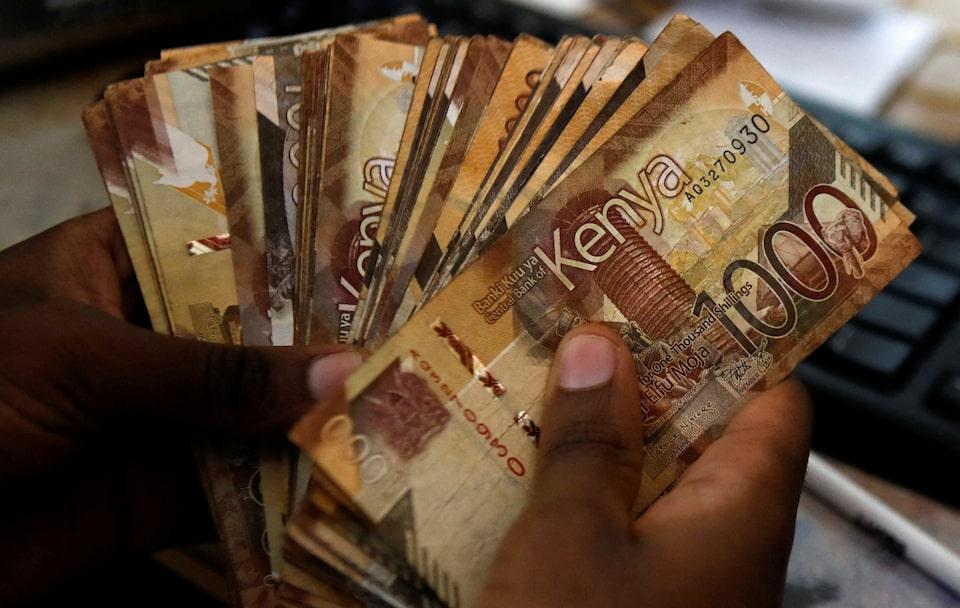
PAPSS payment system allows trade settlement in local currencies Experts says move aims of lowering trade costs South Africa using G20 presidency to advance local payments US President Trump warns against de-dollarisation efforts NAIROBI, June 20 (Reuters) - Africa's push for local currency payments systems - once little more than an aspiration - is finally making concrete gains, bringing the promise of less costly trade to a continent long hobbled by resource-sapping dollar transactions. But efforts to move away from the dollar face strong opposition and the threat of retaliation from U.S. President Donald Trump, who is determined to preserve it as the dominant currency for global trade. Sign up here. The move by Africa to create payments systems that do not rely on the greenback mirrors a push by China to develop financial systems independent of Western institutions. Countries like Russia, which face economic sanctions, are also keen for an alternative to the dollar. But while that movement has gained a sense of urgency due to shifting trade patterns and geopolitical realignments following President Trump's return to the White House, African advocates for payment alternatives are making their case based on costs. "Our goal, contrary to what people might think, is not de-dollarisation," said Mike Ogbalu, chief executive of the Pan-African Payments and Settlements System, which allows parties to transact directly in local currencies, bypassing the dollar. "If you look at African economies, you'll find that they struggle with availability for third-party global currencies to settle transactions," he said. Africa's commercial banks typically rely on overseas counterparts, through so-called correspondent banking relationships, to facilitate settlements of international payments. That includes payments between African neighbours. That adds significantly to transaction costs that, along with other factors like poor transport infrastructure, have made trade in Africa 50% more expensive than the global average, according to the UN Trade and Development agency. It is also among the reasons so much of Africa's trade - 84%, according to a report by Mauritius-based MCB Group - is with external partners rather than between African nations. "The existing financial network that is largely dollar-based has essentially become less effective for Africa, and costlier," said Daniel McDowell, a professor at Syracuse University in New York specialising in international finance. HOMEGROWN SYSTEMS According to data compiled by PAPSS, under the existing system of correspondent banks, a $200 million trade between two parties in different African countries is estimated to cost 10% to 30% of the value of the deal. The shift to homegrown payments systems could cut the cost of that transaction to just 1%. Systems like PAPSS allow a business in one country, Zambia for example, to pay for goods from another like Kenya, with both buyer and seller receiving payment in their respective currencies rather than converting them into dollars to complete the transaction. Using currencies like the Nigerian naira, Ghanaian cedi or South Africa's rand for intra-Africa trade payments could save the continent $5 billion a year in hard currency, Ogbalu told Reuters. Launched in January 2022 with just 10 participating commercial banks, PAPSS is today operational in 15 countries including Zambia, Malawi, Kenya and Tunisia, and now has 150 commercial banks in its network. "We have also seen very significant growth in our transactions," Ogbalu said, without providing usage data. The International Finance Corporation, the World Bank's private sector lending arm, has, meanwhile, started issuing loans to African businesses in local currencies. It views the switch as imperative for their growth, relieving them from the currency risks of borrowing in dollars, said Ethiopis Tafara, IFC's vice-president for Africa. "If they are not generating hard currency, a hard-currency loan imposes a burden that makes it difficult for them to succeed," he said. GEOPOLITICS AND THE TRUMP FACTOR Africa's campaign to boost regional payments systems has found a platform at the Group of 20 major economies, with South Africa leading the charge as holder of the G20's rotating presidency. It held at least one session on boosting regional payments systems when South Africa hosted a meeting of G20 finance ministers and central bank governors. And South Africa wants it to follow up the talk with concrete actions. The next meeting of G20 finance officials is scheduled for mid-July. "Some of the most expensive corridors for cross-border payments are actually found on the African continent," Lesetja Kganyago, South Africa's central bank governor, told Reuters during a G20 meeting in Cape Town in February. "For us to function as a continent, it's important that we start trading and settling in our own currencies." Talk of moving away from the dollar - either for trade or as a reserve currency - has drawn aggressive reactions from President Trump, however. After BRICS - a grouping of nations including Russia, China, India and Brazil along with Africans like South Africa, Egypt and Ethiopia - weighed reducing dollar dependence and creating a common currency, Trump responded with threats of 100% tariffs. "There is no chance that BRICS will replace the U.S. Dollar in International Trade, or anywhere else, and any Country that tries should say hello to Tariffs, and goodbye to America!," he wrote on Truth Social in January. In the months since, Trump has demonstrated his willingness to use tariffs to pressure and punish allies and foes alike, a strategy that has upended global trade and geopolitics. No matter its intentions in moving to more local currency transactions, Syracuse University's McDowell said Africa will struggle to distance itself from more politically motivated de-dollarisation efforts, like those led by China and Russia. "The perception is likely to be that this is about geopolitics," he said. https://www.reuters.com/world/africa/under-shadow-trump-warning-africa-pioneers-non-dollar-payments-systems-2025-06-20/
2025-06-20 05:42
Dollar rises to three-week high vs yen Fears of US involvement in Middle East conflict spark dollar demand Iran rejects nuclear discussions while under fire But it backs further talks with Europe Oil prices, war and tariffs cloud central banks' policy outlooks June 20 (Reuters) - The U.S. dollar rose to a three-week high against the safe-haven yen and gained ground on the Swiss franc on Friday amid signs tension in the Middle East is easing after Iran backed continued discussions with Europe on its conflict with Israel. Iran's Foreign Minister Abbas Araqchi said Tehran backed further talks with Germany, France, Britain and the EU and would be prepared to meet again in the near future following talks in Geneva. Sign up here. Israel and Iran have been waging a week-long air battle as the Israeli government seeks to thwart Tehran's nuclear ambitions, and market participants are nervous about possible U.S. attacks on Iran, sparking a surge in the greenback. The dollar index, which measures the U.S. currency against six peers, including the Swiss franc, the Japanese yen, and the euro, is poised to rise 0.6% this week. On the day, however, the index remains flat after a Federal Reserve governor said rate cuts should be considered as soon as July, given recent inflation data. "The market's already expecting two rate cuts. That was just confirmed by the Fed this week. So, Mr. (Chris) Waller coming out and saying that, would indicate that it's coming sooner rather than later," said Joseph Trevisani, senior analyst at FX Street. Iran said on Friday it would not discuss the future of its nuclear programme while under attack by Israel, as Europe tried to coax Tehran back into negotiations. Meanwhile, the White House said on Thursday that President Donald Trump would decide on the potential involvement of the United States in the conflict in the next two weeks. That helped soothe nervous investors worried about an imminent U.S. attack on Iran, even though the prospect of a broadening Middle East conflict kept risk appetite in check. Brent crude fell more than 2%, but at around $77 a barrel, it was close to the January peak it hit last week. The drop supported the currencies of net oil-importing economies such as the euro and the yen. The euro rose 0.3% at $1.1534, while the yen fell 0.29% to 145.88 per dollar. The recent spike in oil prices added a new layer of inflation uncertainty for central banks across regions, which have been grappling with the potential impact of U.S. tariffs on their economies. Although the Federal Reserve this week stuck with its forecast of two interest rate cuts this year, Chair Jerome Powell warned of "meaningful" inflation ahead. Analysts saw the central bank's delivery as a "hawkish tilt" further underpinning the greenback's gains this week. The Swiss franc was flat at 0.8166 per dollar but was set for its largest weekly drop since the third week of April, after the country's central bank lowered interest rates to 0%. Investors were, however, taken aback by an unexpected 25-basis-point interest rate cut by Norges Bank, and the krone is down more than 2% against the dollar this week. Though geopolitical tensions were the main market focus this week, concerns about a trade war and the impact it may have on costs, corporate margins, and overall growth are ever-present, as Trump's early July tariff deadline looms. These concerns have weighed on the dollar, which is down about 9% this year. Currencies positively correlated to risk sentiment, such as the Australian and New Zealand dollars, were down 0.3% against the buck. Elsewhere, the yuan was flat at 7.1820 after China kept benchmark lending rates unchanged as expected. Sterling was flat at $1.3471, paring earlier gains after British retail sales data showed volumes recorded their sharpest drop since December 2023 last month. "The default setting may be position adjusting," said Marc Chandler, chief market strategist at Bannockburn Global Forex. https://www.reuters.com/world/middle-east/dollar-set-finish-week-upbeat-note-buoyed-by-safe-haven-appeal-2025-06-20/