2025-06-19 12:00
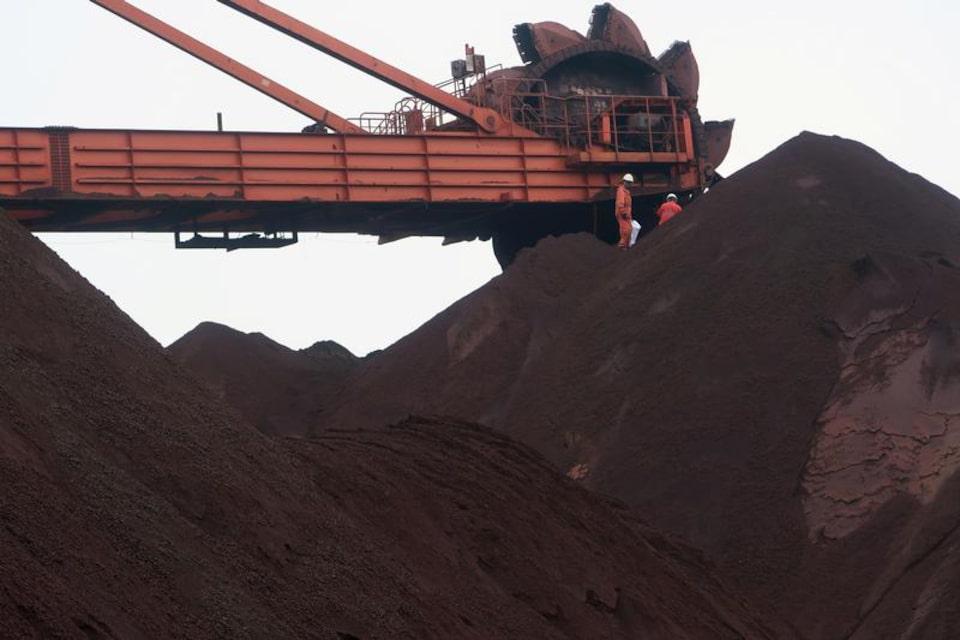
LAUNCESTON, Australia, June 19 (Reuters) - China's iron ore imports are on track in June for their strongest month this year, showing a resilience that isn't being mirrored in the sluggish steel sector. China, which buys about 75% of global seaborne iron ore, is expected to import almost 110 million metric tons of the key steel raw material, according to commodity analysts LSEG and Kpler. Sign up here. Arrivals in June are estimated by Kpler at 109.56 million tons, while LSEG is forecasting 109.1 million. This would be up about 11% from May's official imports of 98.13 million tons and would be the strongest month since December's 112.49 million, which was the second-highest on record. The question is why are Chinese steel mills and traders buying more iron ore even as the steel sector shows signs of slowing amid both domestic and foreign headwinds? The answer likely lies in price moves, with spot iron ore slipping to the lowest in eight months early in June. Iron ore futures on the Singapore Exchange have been trending lower since the high so far in 2025 of $107.81 a ton on Feb. 12. They dropped to $94.17 a ton on June 18, the lowest since Sept. 30, before recovering slightly to end at $94.30 on Wednesday. The low in June is too late to have any impact on imports this month, given the lag between when cargoes are arranged and when they are delivered, but it's worth noting that the Singapore price has been dropping steadily since its last peak in the middle of May. Another factor that may have driven higher imports in June is re-stocking of inventories, which have been trending lower. Port stockpiles monitored by consultants SteelHome fell to a 16-month low of 132 million tons in the week to June 6. The strong imports seen so far this month have helped lift inventories to 133.4 million tons in the week to June 13, but this is still 9% below the 146.6 million from the same week in 2024. While there may still be some scope to add to inventories in coming weeks, there have to be questions as to how long iron ore imports can continue to show strength if the steel sector is soft. STEEL SAGS China's steel output dropped sharply in May to 85.55 million tons, down 6.9% from the same month last year, according to official data released on June 16. For the first five months of the year steel production has slipped 1.7% to 431.63 million tons. It may also continue to decline in coming months, with the state-backed China Iron and Steel Association saying last week that output is expected to decline 4% this year from 2024. China's steel demand is being crimped by the ongoing struggles of the key property sector, which is showing little sign of responding positively to recent stimulus measures. China's new home prices fell 0.2% month-on-month in May after showing no growth the previous month, according to Reuters calculations based on data released on June 16 by the National Bureau of Statistics. There are also worries about the export-focused manufacturing sector, which is facing higher tariffs from the United States, with the latest statements from President Donald Trump suggesting up to 55% will be levied on all imports. Steel prices have also been trending lower, with Shanghai Exchange rebar contracts ending at 2,982 yuan ($414.74) a ton on Wednesday, down 14% from the peak so far this year of 3,466 yuan on Feb. 5. The contract hit the lowest since February 2020 on June 3 when it dropped to 2,912 yuan a ton. The steel sector would probably be doing worse if it wasn't for the strength in exports, which jumped almost 10% year-on-year in May to 10.58 million tons. For the first five months of the year steel exports rose 8.9% to 48.47 million tons, a record for this period. The problem for China's steel exports is that they may become a victim of their own success as other countries ramp up protectionism, with India and the United States being current examples. Enjoying this column? Check out Reuters Open Interest (ROI), your essential new source for global financial commentary. ROI delivers thought-provoking, data-driven analysis of everything from swap rates to soybeans. Markets are moving faster than ever. ROI can help you keep up. Follow ROI on LinkedIn , opens new tab and X , opens new tab. The views expressed here are those of the author, a columnist for Reuters. https://www.reuters.com/markets/commodities/chinas-iron-ore-imports-rise-even-steel-struggles-2025-06-19/
2025-06-19 11:51
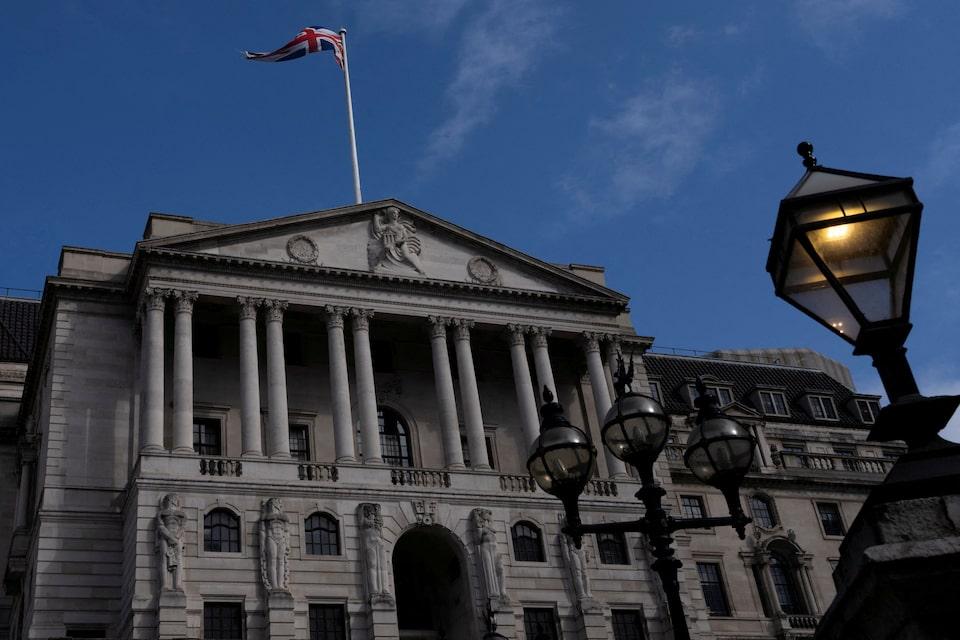
By Suban Abdulla and David Milliken LONDON, June 19 (Reuters) - The Bank of England held interest rates at 4.25% as expected on Thursday but said it was focused on risks from a weaker labour market and higher energy prices as conflict in the Middle East escalates. Sign up here. Noting the elevated global uncertainty and persistent inflation, the Monetary Policy Committee voted 6-3 to keep rates on hold, with Deputy Governor Dave Ramsden joining Swati Dhingra and Alan Taylor to vote for a quarter-point reduction. A Reuters poll of economists had forecast an 7-2 vote to keep rates on hold after the central bank cut borrowing costs last month for the fourth time since August 2024. "Interest rates remain on a gradual downward path," BoE Governor Andrew Bailey said, although policymakers added that interest rates were not on a pre-set path. "The world is highly unpredictable. In the UK we are seeing signs of softening in the labour market. We will be looking carefully at the extent to which those signs feed through to consumer price inflation," he added. The central bank said rising tensions in the Middle East as it held its meeting over the past week had not been key to June's decision to hold rates but would be closely monitored going forward. "Energy prices had risen owing to an escalation of the conflict in the Middle East. The committee would remain vigilant about these developments and their potential impact on the UK economy," the BoE said. Nearly all 60 economists polled by Reuters before the BoE's June meeting had predicted it would keep Bank Rate on hold at 4.25% with the next cut likely in August with a further reduction in the final three months of this year. Before Thursday's rate decision, investors were pricing in around two more quarter-point rate cuts by the BoE to 3.75% by December 2025. The central bank kept its guidance saying it would take a "gradual and careful" approach to further rate cuts. But Bank staff analysis struck a less pessimistic tone about the potential impacts of U.S. President Donald Trump's tariffs on the global economy, saying it might be less severe than thought in May. Trade uncertainty would still continue to have an impact on the UK economy, the central bank added. The BoE left its forecast for inflation broadly unchanged for the second half of this year, seeing a peak rate of 3.7% in September and an average of just under 3.5% for the rest of the year. The economy is now expected to grow around 0.25% in the second quarter of this year, slightly stronger than in its May forecast, though it said the underlying pace was weak. Since the middle of last year the BoE has cut interest rates by 1 percentage point, the same as the U.S. Federal Reserve - which on Wednesday held interest rates at the 4.25%-4.50% range - but only half as much as the European Central Bank, which has had less persistent inflation. Markets see just under half a percentage point more easing by the Fed this year and a further quarter-point cut by the ECB. The Fed on Wednesday cut its economic growth forecasts for 2025, raised its inflation projection and said the uncertainty hanging over the economy had diminished but remained elevated. Earlier on Thursday, the Swiss National Bank cut rates by 25 basis points to zero as inflation inflationary pressures decreased and it focused the risk of trade wars for inflation and the global economy. (([email protected] , opens new tab)) Keywords: BRITAIN BOE/ https://www.reuters.com/world/uk/bank-england-keeps-rates-steady-sees-further-loosening-jobs-market-weakens-2025-06-19/
2025-06-19 11:45
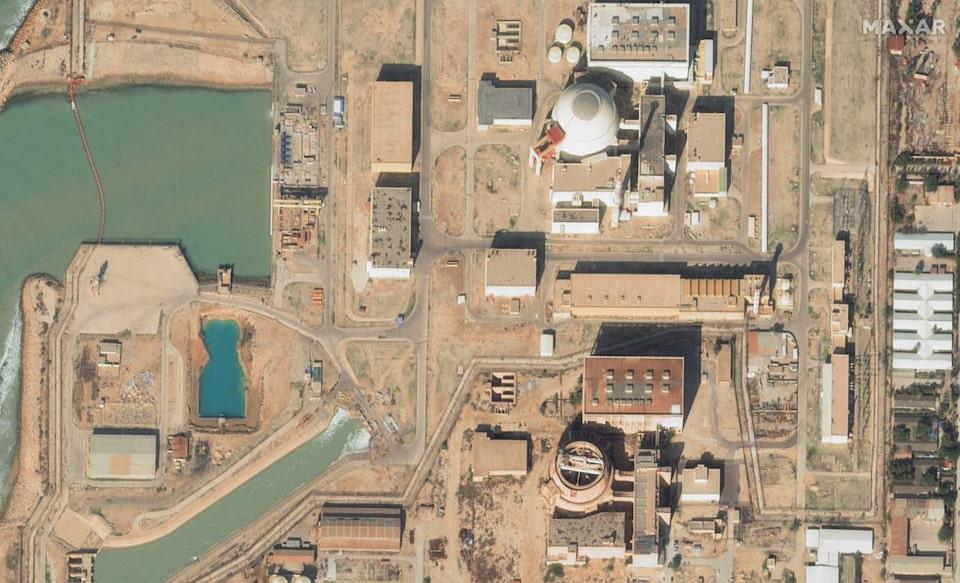
DUBAI/JERUSALEM, June 19 (Reuters) - An Israeli military official said on Thursday that "it was a mistake" for a military spokesperson to have said earlier in the day that Israel had struck the Bushehr nuclear site in Iran. The official would only confirm that Israel had hit the Natanz, Isfahan and Arak nuclear sites in Iran. Sign up here. Pressed further on Bushehr, the official said he could neither confirm or deny that Israel had struck the location, where Iran has a reactor. The potential consequences of an attack on the plant -- contaminating the air and water -- have long been a concern in the Gulf states. Qatar's prime minister, in March, warned that an attack on Iran's nuclear facilities would "entirely contaminate" the waters of the Gulf and threaten life in Qatar, the UAE and Kuwait. Sheikh Mohammed bin Abdulrahman Al Thani warned that an attack on Iran's nuclear sites would leave the Gulf with "no water, no fish, nothing ... no life". Qatar, the UAE and Kuwait, facing Iran on the opposite side of the Gulf, have minimal natural water reserves and are home to more than 18 million people whose only supply of potable water is desalinated water drawn from the Gulf. Bushehr is Iran's only operating nuclear power plant, which sits on the Gulf coast, and uses Russian fuel that Russia then takes back when it is spent to reduce proliferation risk. Russian President Vladimir Putin on Wednesday said that Moscow had agreed with Israeli leaders that the safety of Russian workers at the site would be guaranteed. "Our specialists are on site. This is more than two hundred people. And we agreed with the leadership of Israel that their safety will be ensured," Putin told journalists. The Russian embassy in Iran said in a statement earlier on Thursday that Bushehr was operating normally and that it did not see any security threats. A source familiar with the matter told Reuters that contamination from any attack on Bushehr was the worst case Gulf countries were preparing for. The source stated that Gulf countries, in cooperation with the U.N. nuclear watchdog, had prepared a contingency plan for any attack on any nuclear plant in the region. https://www.reuters.com/world/middle-east/israeli-military-says-it-struck-nuclear-sites-including-bushehr-gulf-coast-2025-06-19/
2025-06-19 11:33
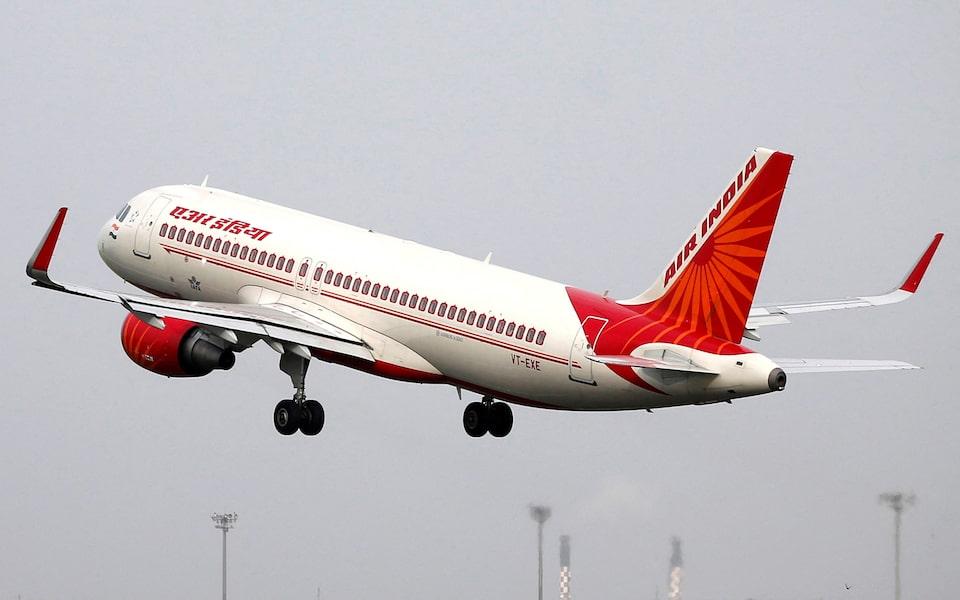
Regulator warns Air India over delayed checks on three planes The planes had unverified emergency equipment, regulator says Some Air India aircraft also had outdated registration paperwork Airline also facing fallout from recent plane crash in India NEW DELHI, June 19 (Reuters) - India's aviation regulator has warned Air India for breaching safety rules after three of its Airbus (AIR.PA) , opens new tab planes flew despite being overdue checks on emergency equipment, and for being slow to address the issue, government documents show. The warning notices and an investigation report - both reviewed by Reuters - were not in any way related to last week's crash of an Air India Boeing (BA.N) , opens new tab 787-8 plane that killed all but one of the 242 people onboard, and were sent days before that incident. Sign up here. In the report, the Directorate General of Civil Aviation said spot checks in May on three Air India Airbus planes found that they were operated despite mandatory inspections being overdue on the "critical emergency equipment" of escape slides. In one case, the watchdog found that the inspection of an Airbus A320 jet was delayed by more than a month before being carried out on May 15. AirNav Radar data shows that during the delay the plane flew to international destinations such as Dubai, Riyadh and Jeddah. Another case, involving an Airbus A319 used on domestic routes, showed checks were over three months late, while a third showed an inspection was two days late. "The above cases indicate that aircraft were operated with expired or unverified emergency equipment, which is a violation of standard airworthiness and safety requirements," the DGCA report said. Air India "failed to submit timely compliance responses" to deficiencies raised by the DGCA, "further evidencing weak procedural control and oversight," it added. Air India, which was taken over by the Tata Group in 2022 from the government, said in statement that it was "accelerating" verification of all maintenance records, including dates of the escape slides, and would complete the process in the coming days. In one of the cases, Air India said, the issue came to light when an engineer from AI Engineering Services "inadvertently deployed an escape slide during maintenance". The DGCA and Airbus did not respond to Reuters queries. Checks on escape slides are "a very serious issue. In case of accident, if they don't open, it can lead to serious injuries," said Vibhuti Singh, a former legal expert at the government's Aircraft Accident Investigation Bureau. The DGCA said in its report that the certificates of airworthiness for aircraft that miss mandatory checks were "deemed suspended". The warning notices and the report were sent by Animesh Garg, a deputy director of airworthiness in the Indian government, to Air India CEO Campbell Wilson as well as the airline's continuing airworthiness manager, quality manager and head of planning, the documents showed. An Indian aviation lawyer said such breaches typically attract monetary and civil penalties on both individual executives and the airline. Wilson told Reuters last year that global parts shortages were affecting most airlines, but the problem was "more acute" for Air India as its "product is obviously a lot more dated", with many planes not refreshed since they were delivered in 2010-2011. 'SYSTEMIC CONTROL FAILURE' The Indian regulator, like many abroad, often fines airlines for compliance lapses. India's junior aviation minister in February told parliament that authorities had warned or fined airlines in 23 instances for safety violations last year. Around half of them - 12 - involved Air India and Air India Express, including in one case for "unauthorised entry into cockpit". The biggest fine was $127,000 on Air India for "insufficient oxygen on board" during a flight to San Francisco. Last week's crash, the causes of which are still being investigated, will further challenge Air India's attempts to rebuild its image, after years of criticism from travellers for poor service. Air India's Chairman N. Chandrasekaran on Monday told staff the crash should be a catalyst to build a safer airline, urging employees to stay resolute amid any criticism. In its report, the DGCA also said several Air India aircraft checked by officials had outdated registration paperwork. Air India told Reuters all but one aircraft complied with such requirements and this "poses no impact" to safety. The DGCA investigation report pulled up the airline for what it described as "inadequate internal oversight." "Despite prior notifications and identified deficiencies, the organization’s internal quality and planning departments failed to implement effective corrective action, indicating systemic control failure," it said. https://www.reuters.com/world/india/air-india-warned-flying-airbus-planes-with-unchecked-escape-slides-2025-06-19/
2025-06-19 11:28
COPENHAGEN, June 19 (Reuters) - Denmark will continue preparing Ukraine for EU membership in the face of Hungary blocking negotiations, when the Nordic country takes over the presidency of the European Council from July 1, its European affairs minister said on Thursday. "Unfortunately, Hungary is blocking and we are trying to put as much pressure there as we can and also do everything we can to make Ukraine continue with the necessary reform work," European affairs minister Marie Bjerre told a press conference in Copenhagen. Sign up here. Hungarian Prime Minister Viktor Orban has strongly opposed providing NATO military and EU aid to Ukraine, saying the country's EU membership would destroy Hungarian farmers and the wider economy. Ukraine had already initiated the necessary reforms and is ready to speed up the negotiations. "When we get to the point where we can actually open the specific negotiation chapters, we can be ready to close them very quickly," Bjerre said. Denmark will also seek to reach agreement among EU nations on the bloc's planned 2040 climate goals. The European Commission plans to propose in July a legally binding target to cut EU countries' emissions by 90% by 2040, from 1990 levels. Faced with pushback from governments, however, Brussels is assessing options including setting a lower target for domestic industries, and using international carbon credits to make up the gap to 90%. https://www.reuters.com/sustainability/climate-energy/denmark-seek-deal-2040-climate-goals-during-its-eu-presidency-2025-06-19/

2025-06-19 11:16
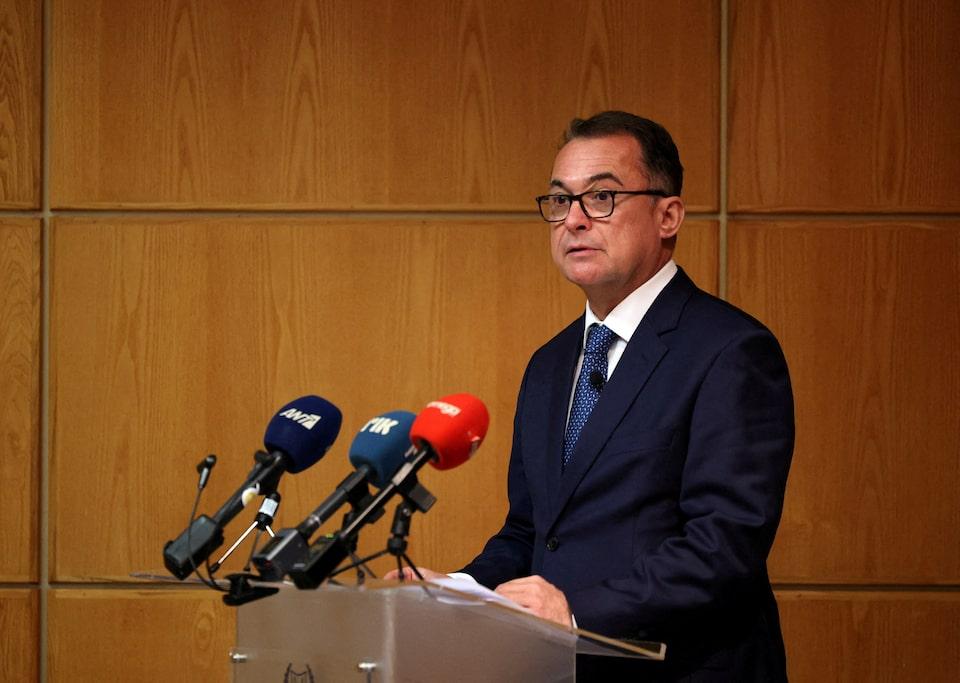
Nagel says price stability mission nearly accomplished De Guindos says ECB to have flexible, data dependent approach Villeroy de Galhau: if ECB moves again it is likely to cut MILAN, June 19 (Reuters) - The European Central Bank will keep doing all that is necessary to complete its nearly accomplished mission on inflation, one of its top policymakers, Bundesbank President Joachim Nagel, said on Thursday. Data this week showed euro zone inflation fell to an annual 1.9% in May from 2.2% in April, and fellow policymaker Fabio Panetta on Wednesday pointed to projections indicating it would undershoot the ECB's 2% target for an extended period of time. Sign up here. The ECB has signalled a pause in policy easing this month despite the dampening effect on price growth of the strong euro and low oil prices. Bank of France Governor Francois Villeroy de Galhau on Thursday said that if the ECB decided to move on interest rates in the next six months, it would most likely cut them. Vice President Luis de Guindos was more cautious, saying the ECB would retain a flexible approach in the face of risks from Washington's trade policy and geopolitics, echoing a message delivered the previous day by Panetta, who leads Italy's central bank. Milan's annual Young Factor conference on financial literacy this week gathered students from all over Europe to meet with a host of central bankers and bank CEOs. De Guindos said growing uncertainty held back investments and could damage job creation. Under this backdrop, the ECB would stick to a "meeting-by-meeting, data dependent" approach to monetary policy decisions. Nagel, however, stressed that bringing euro zone inflation to target was the best thing the ECB could do to promote economic growth. With price stability as its sole mandate, the ECB can only provide a stable base, laying the ground for politicians to do the rest. "I guess this year we are coming close to our target, 2% on average, that is more or less mission accomplished," the German central banker said, adding that the ECB has been shown to be good at using a wide range of tools to achieve price stability. "We are now in the neutral territory of monetary policy," he said. "So I believe that we are on the right track when it comes to monetary policy... We will do what is necessary, we did it in the past." On Wednesday, Bank of Portugal Governor Mario Centeno warned that weak economic growth in the euro zone could prevent inflation from hitting the ECB's target. https://www.reuters.com/markets/europe/ecb-will-keep-doing-all-is-needed-meet-inflation-goal-nagel-says-2025-06-19/