2025-06-18 23:14
Seventh straight rate hike defies economists' forecasts Benchmark rate climbs to 15%, highest since July 2006 Policymakers stress long pause, discouraging rate-cut bets BRASILIA, June 18 (Reuters) - Brazil's central bank raised interest rates by 25 basis points on Wednesday and signaled it will keep borrowing costs steady for an extended period, defying expectations that it had already reached the end of its tightening cycle. The bank's rate-setting committee, known as Copom, decided unanimously to lift the benchmark Selic rate to 15%, the highest since July 2006, marking a seventh consecutive hike as unanchored inflation expectations and resilient activity in Latin America's largest economy kept policymakers on alert. Sign up here. Of economists polled by Reuters, 27 out of 39 had expected the bank to hold rates at 14.75%. Interest rate futures, however, showed divided expectations, pricing in roughly even odds between a pause and one final hike. In its statement, the central bank indicated that, after lifting rates by 450 basis points since last September, it now plans to maintain rates at current levels while monitoring inflation's path back toward the bank's 3% official target. "The Committee foresees an interruption of the rate hiking cycle to examine its yet-to-be-seen cumulative impacts, and then evaluate whether the current interest rate level, assuming it stable for a very prolonged period, will be enough to ensure the convergence of inflation to the target," policymakers wrote. Adding a hawkish tone, the central bank said it will remain vigilant and won't hesitate to resume rate hikes if needed. "The committee wants to steer the conversation away from any premature discussion about rate cuts at this point," said Rafaela Vitoria, chief economist at Banco Inter, who still sees a chance of a cut at the December policy meeting. In May, the central bank had stressed that a "significantly contractionary" stance would be needed for a "prolonged period" to bring inflation back to target, scrapping prior references to needing a "more contractionary" posture. Policymakers had also removed any form of forward guidance, emphasizing a strictly data-dependent approach. That had led many to bet that the central bank was done with its tightening cycle. But those views were tempered in recent days after central bank officials flagged that the cycle remained open, citing concerns about unanchored inflation expectations and a desire to keep options on the table as they digested data to calibrate the terminal rate. On the same day that the U.S. Federal Reserve left rates unchanged but signaled cuts this year, the Brazilian central bank said in its policy statement that economic activity in the country is still showing some strength, despite "some moderation in growth." Although the Brazilian real has strengthened since the central bank's last meeting, policymakers raised their 2025 inflation forecast to 4.9% from the 4.8% projected in May. For the end of 2026, the period most influenced by current monetary policy decisions, policymakers held their 12-month inflation outlook at 3.6%. Economists surveyed in a weekly central bank poll have lowered their inflation forecasts for this year. Still, their latest estimate is well above the bank's projection, at 5.25%. Longer-term expectations show no improvement, staying far from target as many anticipate the leftist administration of President Luiz Inacio Lula da Silva will pursue stimulus ahead of the 2026 election, potentially undermining the central bank's efforts to cool demand and bring inflation down. https://www.reuters.com/world/americas/brazil-central-bank-raises-rates-by-25-bps-seventh-straight-hike-2025-06-18/
2025-06-18 23:10
June 19 (Reuters) - India's clean industrial projects pipeline worth $89 billion is facing financing bottlenecks as only one project has reached a final investment decision in the past six months, a report by a clean industry alliance showed. The South Asian nation has 41 clean industry projects spanning green ammonia, hydrogen production and sustainable aviation fuels, yet faces challenges in converting announcements into operational facilities, the report by Mission Possible Partnership and Industrial Transition Accelerator said. Sign up here. The alliance is focused on advancing decarbonisation in high-emission sectors. India's clean industry projects have secured $13 billion in committed investment, far below China's $61 billion and the United States' $54 billion, according to the report. The slow development of the market for clean commodities at the right price point was a major bottleneck for investments in India, said Faustine Delasalle, CEO of MPP. "The higher costs of capital is an issue stifling investment across emerging and developing economies. We need to leverage the growing appetite from development and private finance institutions for clean industry developments," Delasalle said. The report also highlights a global pipeline of about $1.6 trillion in projects that have been announced but not financed, with 692 of 826 commercial-scale clean industrial projects across 69 countries still awaiting financing. "Less than 15 projects are currently reaching (a) final investment decision every year, delaying the climate, economic and social benefits associated with clean industrial developments," the report said, adding that policy uncertainty is also hampering progress. https://www.reuters.com/sustainability/climate-energy/indias-89-billion-clean-industry-pipeline-struggles-attract-financing-report-2025-06-18/

2025-06-18 22:33
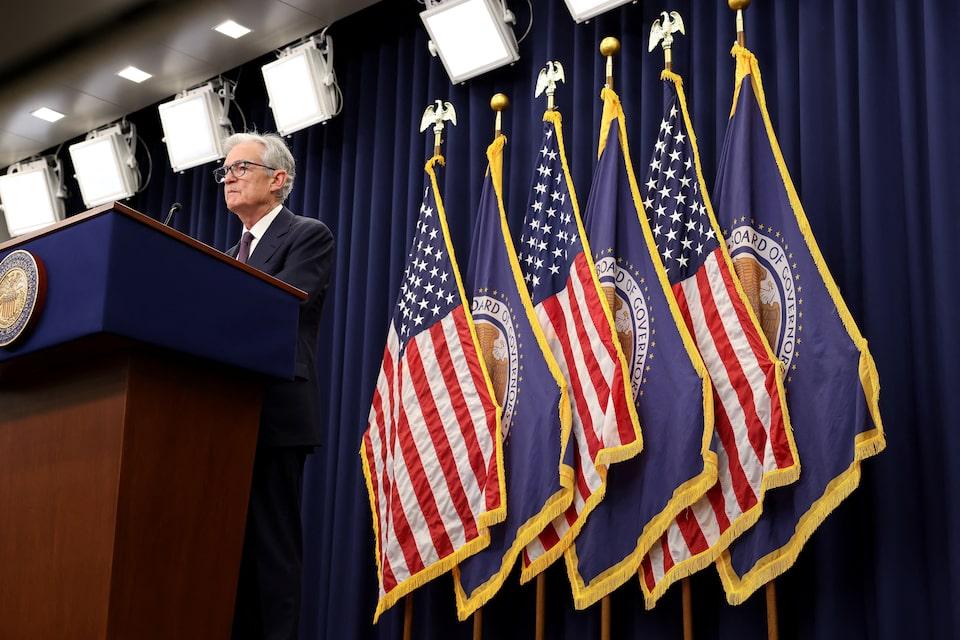
Powell urges against aggressive government cuts to collection of economic data Data cutbacks could degrade key economic surveys, Powell warns Concerns rise over data integrity amid government cutbacks June 18 (Reuters) - Federal Reserve Chair Jerome Powell made a plea on Wednesday for the government not to cut back too aggressively on its efforts to collect data on the economy because the information it collects strongly benefits the entire nation. “The data we get right now, we can do our jobs. I'm not concerned that we can't do our jobs," Powell said at a press conference following the latest gathering of the central bank's interest-rate setting Federal Open Market Committee. But he suggested that at some point that may no longer be the case. Sign up here. Powell said he worried that staff cuts and changes in government reports over time will degrade the information the government produces. "From our standpoint, and I think the standpoint of businesses and governments and everyone: Having really good data on the state of the economy at any given time is a huge public good," Powell said. It does not just help the Fed, "it helps the government, it helps Congress, it helps the executive branch" and it helps private businesses. Calling the United States a global leader in government-produced economic data, Powell said, "I hate to see us cutting back on that." This data "is a real benefit to the general public" because it ensures people "have the best possible understanding of what's happening in the economy, and hence, what's likely to happen." Cutbacks have been an area of considerable focus as the Trump administration has targeted huge parts of the government for reductions amid a belief that it will save money. Many outsiders view the costs of these sorts of endeavors as relatively small while paying huge dividends. Concerns over the issue flared after the Bureau of Labor Statistics earlier this month announced a pullback in the work to collect information for the closely-watched Consumer Price Index. A measure tracking wholesale prices is also to be changed. Data like the CPI is of particular note because it helps set cost-of-living adjustments for things like Social Security retirement benefits, as well as union contracts. A CPI index based on reduced inputs is one that is less likely to capture what is really going on with price pressures, and that can have big real-world consequences. Some in the Fed are less happy with the state of data integrity. In a recent interview, soon-to-retire Philadelphia Fed President Patrick Harker said, "We're increasingly flying blind, or at least half blind ... and I'm worried about that." The numbers that central bankers rely upon to understand the economy are "not good" and they are not improving, Harker said. The issue, he said, goes beyond mere inflation numbers. https://www.reuters.com/business/feds-powell-says-central-bank-still-has-needed-data-do-its-work-2025-06-18/
2025-06-18 22:11
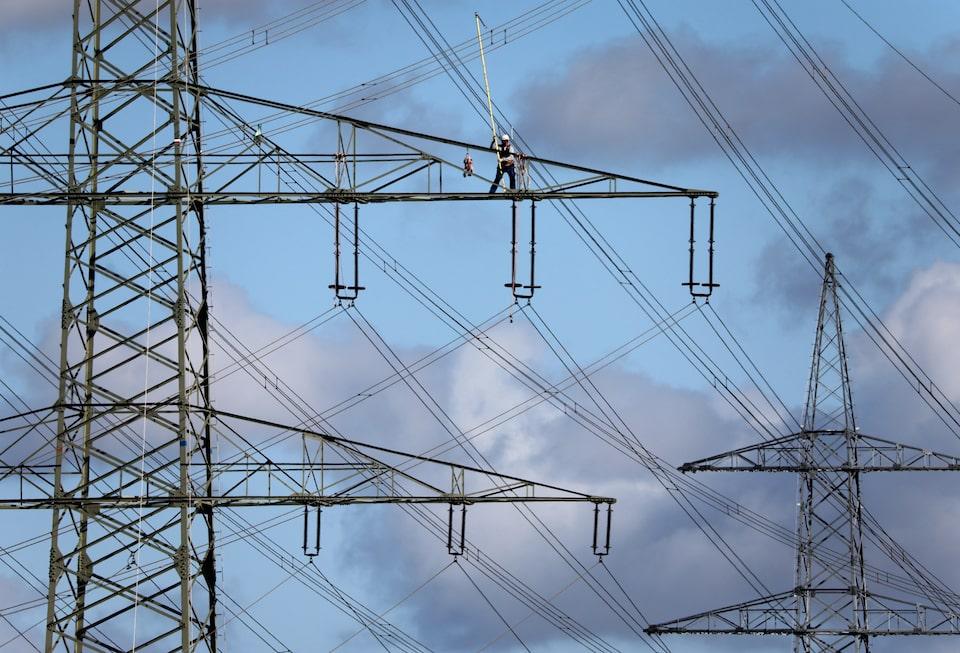
PARIS, June 19 (Reuters) - Europe's leading data centre hubs face a major shift as developers will go wherever connection times are shortest, unless there is more proactive electricity grid planning, a report on Thursday by energy think-tank Ember showed. Data centre buildout has exploded in recent years as tech companies race to put together the strongest offering of competitive artificial intelligence (AI) models, which rely on a new generation of power-hungry data centres. Sign up here. This could lead to a geographical shift in investment in Europe as developers look for new places with easier power access and shorter lead times, the report said. By 2035, half of Europe's data centre capacity could be located outside the current main hubs Frankfurt, London, Amsterdam, Paris and Dublin, the report said. This could leech billions of euros in investments from the congested countries, as data centres in Germany contributed 10.4 billion euros ($12 billion) in GDP in 2024 which should more than double by 2029, and it could slow job growth, it said. Only France, is expected to maintain continued data centre investment as the grid remains relatively unconstrained, the report said. Connecting a new data centre to the grid in legacy hubs can take an average of 7–10 years, with some projects facing delays of up to 13 years, the report said. However, wait times in newer markets are much shorter, with Italy taking just three years, it said. "Grids are ultimately deciding where investments go ... they are now effectively a tool to attract investment," said Elisabeth Cremona, Senior Energy Analyst at Ember. "In Europe's push for competitiveness and economic growth, it now needs to be taking into account grids and driving investment to that infrastructure if it wants to see other projects materialise," she said. She added that this is not unique to data centres but covers all industry, as any kind of industry that is either new or looking to electrify is going to go through the same process. In Sweden, Norway and Denmark, data centre electricity demand is expected to triple already by 2030. In Austria, Greece, Finland, Hungary, Italy, Portugal and Slovakia data centre consumption is projected to increase by three to five times by 2035 compared to 2024. ($1 = 0.8692 euros) https://www.reuters.com/technology/poor-grid-planning-could-shift-europes-data-centre-geography-report-says-2025-06-18/
2025-06-18 21:48
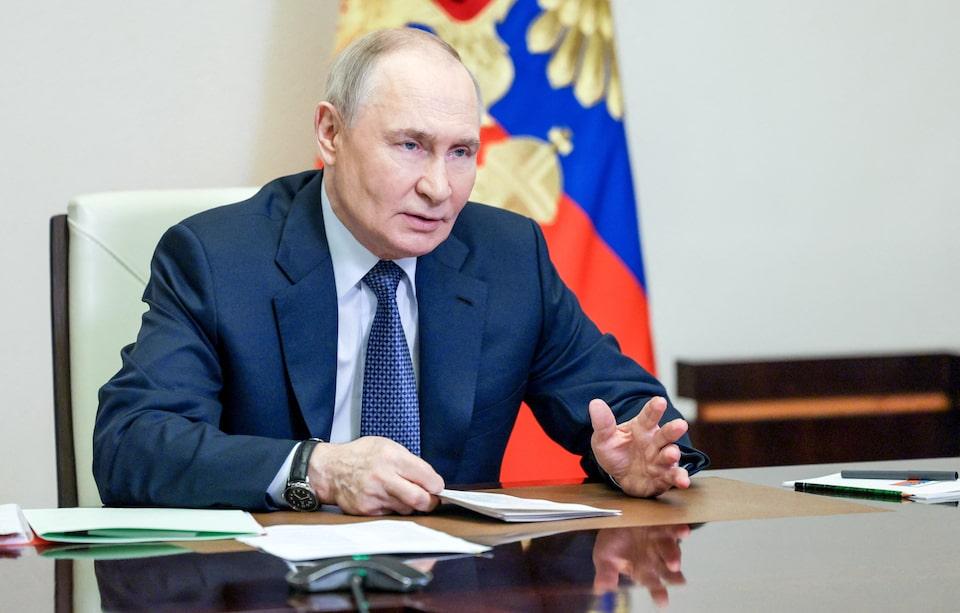
Putin says Iran is consolidating around leadership Russia has conveyed its ideas about ending the fighting Iran has a right to peaceful nuclear power, Putin says Putin says Russia has specialists at Bushehr plant ST PETERSBURG, Russia, June 18 (Reuters) - President Vladimir Putin on Thursday refused to discuss the possibility that Israel and the United States would kill Iranian Supreme Leader Ayatollah Ali Khamenei and said the Iranian people were consolidating around the leadership in Tehran. Israeli Prime Minister Benjamin Netanyahu has openly speculated that Israel's military attacks could result in regime change in Iran while U.S. President Donald Trump said on Tuesday that the U.S. knew where Khamenei was "hiding" but that Washington was not going to kill him "for now". Sign up here. Asked what his reaction would be if Israel did kill Khamenei with the assistance of the United States, Putin said: "I do not even want to discuss this possibility. I do not want to." When pressed, Putin said he had heard the remarks about possibly killing Khamenei but that he did not want to discuss it. "We see that today in Iran, with all the complexity of the internal political processes taking place there...that there is a consolidation of society around the country's political leadership," Putin told senior news agency editors in the northern Russian city of St Petersburg. Putin said all sides should look for ways to end hostilities in a way that ensured both Iran's right to peaceful nuclear power and Israel's right to the unconditional security of the Jewish state. Putin was speaking as Trump kept the world guessing whether the U.S. would join Israel's bombardment of Iranian nuclear and missile sites and as residents of Iran's capital streamed out of the city on the sixth day of the air assault. Putin said he had been in touch with Trump and with Netanyahu, and that he had conveyed Moscow's ideas on resolving the conflict while ensuring Iran's continued access to civil nuclear energy. IRANIAN NUCLEAR FACILITIES Questioned about possible regime change in Iran, Putin said that before getting into something, one should always look at whether or not the main aim is being achieved before starting something. He said Iran's underground uranium enrichment facilities were still intact. "These underground factories, they exist, nothing has happened to them," Putin said. "It seems to me that it would be right for everyone to look for ways to end hostilities and find ways for all parties to this conflict to come to an agreement with each other," Putin said. "In my opinion, in general, such a solution can be found." Asked if Russia was ready to provide Iran with modern weapons to defend itself against Israeli strikes, Putin said a strategic partnership treaty signed with Tehran in January did not envisage military cooperation and that Iran had not made any formal request for assistance. Russian Deputy Foreign Minister Sergei Ryabkov said on Wednesday that Moscow was telling the United States not to strike Iran because it would radically destabilise the Middle East. A spokeswoman for the Russian Foreign Ministry also warned that Israeli strikes on Iranian nuclear facilities risked triggering a nuclear catastrophe. Putin said that Israel had given Moscow assurances that Russian specialists helping to build two more reactors at the Bushehr nuclear power plant in Iran would not be hurt in air strikes. Putin said that Moscow had "a very good relationship with Iran" and that Russia could ensure Iran's interests in nuclear energy. Russia has offered to take enriched uranium from Iran and to supply nuclear fuel to the country's civil energy programme. "It is possible to ensure Iran's interests in the field of peaceful nuclear energy. And at the same time, to address Israel's concerns about its security," Putin said. "We have outlined them (our ideas) to our partners from the USA, Israel and Iran." https://www.reuters.com/world/europe/regime-change-tehran-putin-says-iran-is-consolidating-around-its-leaders-2025-06-18/
2025-06-18 21:42
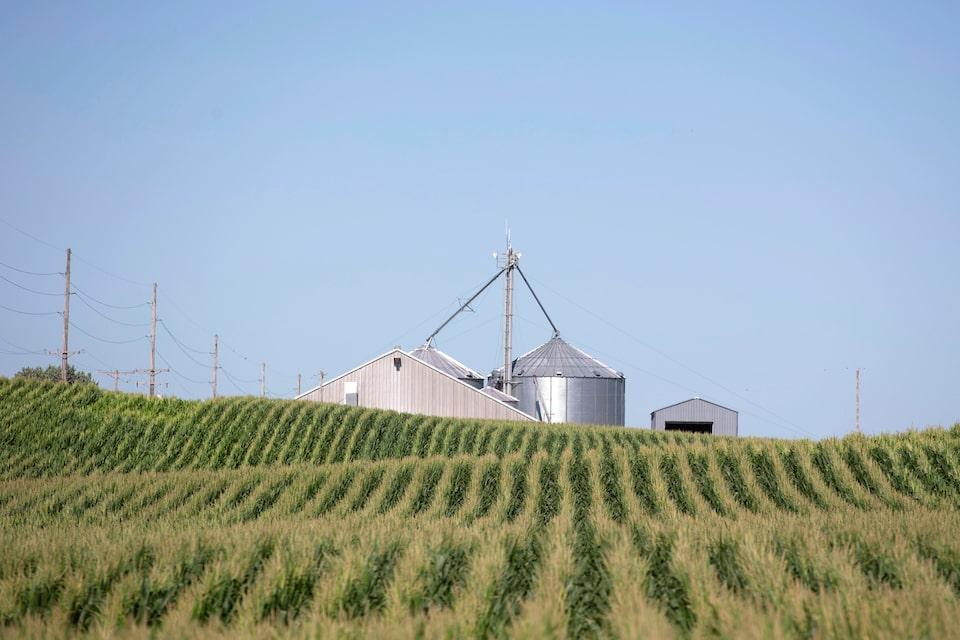
NAPERVILLE, Illinois, June 18 (Reuters) - Although the U.S. Corn Belt is in for a scorching weekend, June weather has been mostly supportive of crop development, with corn health ratings improving for three consecutive weeks. But how much bearing might that have on final corn yields or weather outcomes for the pivotal month of July? Sign up here. As early as last year, meteorologists warned that the U.S. Corn Belt could be due for drought in 2025, though that has yet to unfold. A mid- or late-summer drought could still be in the cards, of course, and the yield impacts would vary depending on timing. Recently, new-crop CBOT corn futures appeared to be carrying minimal weather premium as prices sank to six-month lows this week. December corn has since bounced with this weekend’s hot forecast in focus, though prices remain well off the year’s peak. WEATHER VERSUS YIELDS Recent weather models suggest that both temperatures and precipitation for June will be above average across the Midwestern United States. While warm Junes are more likely to feature dry conditions, this warm-wet combination is similar to last year. Corn yield outcomes have varied widely in relation to observed June weather. But July temperatures are where things start to separate. In the past quarter-century, the worst corn yield outcomes all coincided with warmer-than-normal Midwestern Julys. The truly good years featured cool Julys, but slightly warm temperatures were also passable a couple of times (2016, 2017). Big corn yields have resulted from abnormally dry Julys (2014), though this works only if July is cool and June and/or August rainfall is ample. The strongest corn yields all resulted in years where July-August Midwestern rainfall was near or above normal. Near-average yields have coincided with dry July-Augusts, but only when July temperatures were cool. Obviously, a hot July plus a dry July-August is the very worst combination for yields, which was seen in 2011 and 2012. Interestingly, 2011 is the last time that corn conditions improved over the same three weeks in June as the 2025 ones. But the fact that June 2025 will likely feature above-average rainfall doesn’t tell us much about what’s coming next. July and August have been both wet and dry following wet Junes, though warm Julys are more likely to follow warm Junes. Current extended forecasts suggest the next four weeks could be warmer than average across the central Corn Belt, featuring pockets of both wet and dry weather. Uncertainty is always high when it comes to long-range forecasts, but the current outlook should warrant some caution. SOYBEANS VERSUS AUGUST August matters for U.S. soybean yields like July matters for corn. Last year, the market was harshly reminded of the need for August rains to support large soybean yields. August 2024 rainfall across the Midwest amounted to just 87% of normal, the driest August since 2013. But 2024 U.S. soybean yield forecasts were still easily at record levels as late as October. The government’s yield estimate plunged 4.5% between October and January, the largest decline for that period since 1993, emphasizing the significance of the August rainfall deficit. That occurred despite above-average June and July rains, meaning the range of possibilities for U.S. soybean yields is even wider than those for corn given that August is still several weeks away. Karen Braun is a market analyst for Reuters. Views expressed above are her own. Enjoying this column? Check out Reuters Open Interest (ROI) , opens new tab, your essential new source for global financial commentary. ROI delivers thought-provoking, data-driven analysis of everything from swap rates to soybeans. Markets are moving faster than ever. ROI , opens new tab can help you keep up. Follow ROI on LinkedIn , opens new tab and X. , opens new tab https://www.reuters.com/markets/commodities/what-late-june-sizzle-could-mean-us-corn-yields-braun-2025-06-18/