2025-06-18 21:02
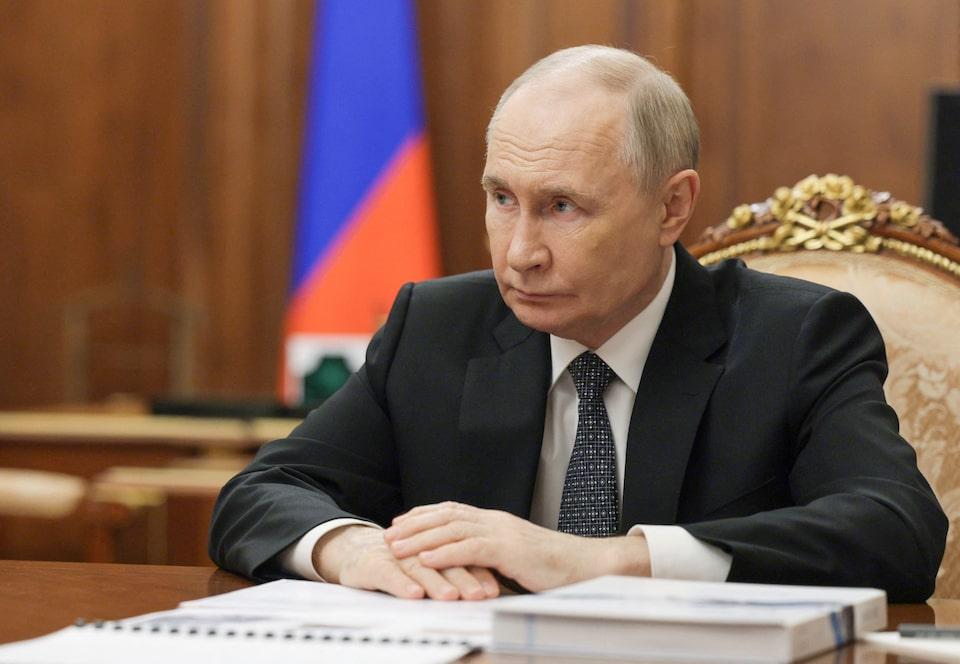
ST PETERSBURG, Russia, June 18 (Reuters) - Russian President Vladimir Putin said on Wednesday that Russia will hold joint military exercises with China in 2025. Sign up here. https://www.reuters.com/business/media-telecom/putin-says-russia-will-hold-military-exercises-with-china-2025-2025-06-18/
2025-06-18 20:57
Fed eyes changes to leverage ratio Lower capital requirements may not be enough to boost Treasuries Swap spreads tighter on Wednesday NEW YORK, June 18 (Reuters) - U.S. Treasury market participants hoping for a long-awaited shift in bank leverage rules may be in for a letdown if U.S. regulators choose to ease capital requirements rather than exclude U.S. government bonds from leverage calculations. The Federal Reserve said this week it would weigh proposals to ease leverage requirements for large banks at a June 25 meeting, launching what's likely to be a wider review of banking regulations. The agenda includes potential changes to the "supplementary leverage ratio," a rule that mandates banks hold capital against all assets, irrespective of risk. Sign up here. Regulators including the Fed, the Federal Deposit Insurance Corporation and the Office of the Comptroller of the Currency have been considering whether to tweak the rule's formula to reduce big banks' burdens or provide relief for extremely safe investments, like Treasury bonds, Reuters has reported. Currently, all banks are required to hold 3% of their capital against their leverage exposure, which is their assets and other off-balance sheet items like derivatives. The largest global banks must hold an extra 2% as well in what is known as the "enhanced supplementary leverage ratio." The Fed is expected to propose tweaks to that ratio in a bid to reduce the overall burden of that requirement, as opposed to broadly exempting categories of assets from the requirement, such as Treasury bonds, according to two industry officials. However, it is possible the Fed could seek input on some exemptions, the officials said. The FDIC announced its own meeting next Thursday, where the agency will also discuss proposed changes to that ratio. On Tuesday, Bloomberg reported that regulators plan to reduce by up to 1.5 percentage points the enhanced ratio for the biggest banks, bringing it down to a range of 3.5% to 4.5%. "Lowering the capital requirements instead of a Treasury carve-out from the SLR is a weaker form of regulatory easing, and in my view it doesn’t fully address the constraint dealers face during intense market stress," said Steven Zeng, U.S. rates strategist at Deutsche Bank. "In our view, the news is moderately underwhelming," analysts at Wells Fargo said in a note. "We think that many market participants were anticipating a carve out of UST assets from the denominator." The Fed did not immediately respond to a request for comment. Spreads between long-term swap rates and Treasury yields tightened on Wednesday, turning more negative, even as earlier in the year they had been widening amid hopes that regulatory shifts in bank capital rules would bolster demand for Treasuries. The move likely reflected disappointment on the news that regulators plan to lower the requirements, said Zeng. "I still think a full carve-out is the most effective way to bolster market liquidity and compress the spread between Treasuries and swaps, but understandably it’s also a significant jump for Fed regulators," he said. The 10-year swap spreads were last at minus 54 basis points from minus 53 on Tuesday, while 30-year swap spreads were last at minus 88 bps from minus 86.5 bps on Tuesday. Banks have argued for years that the SLR, established after the 2007-2009 financial crisis, should be reformed. They say it was meant to serve as a baseline, requiring banks to hold capital against even very safe assets, but has grown over time to become a constraint on bank lending. U.S. Treasury Secretary Scott Bessent has said in a Bloomberg interview last month that a shift in the ratio could bring Treasury yields down significantly. Treasury market participants have come to see it as a major obstacle to banks providing liquidity to traders, particularly at times of heightened volatility, but there are doubts over whether an easing of the requirement will boost Treasury prices. "We’re skeptical that lowering SLR will trigger a massive round of buying in U.S. Treasuries from major U.S. banks," BMO Capital Markets analysts said in a note on Wednesday. https://www.reuters.com/sustainability/boards-policy-regulation/regulators-plans-us-bank-leverage-relief-may-underwhelm-us-treasury-market-2025-06-18/
2025-06-18 20:51
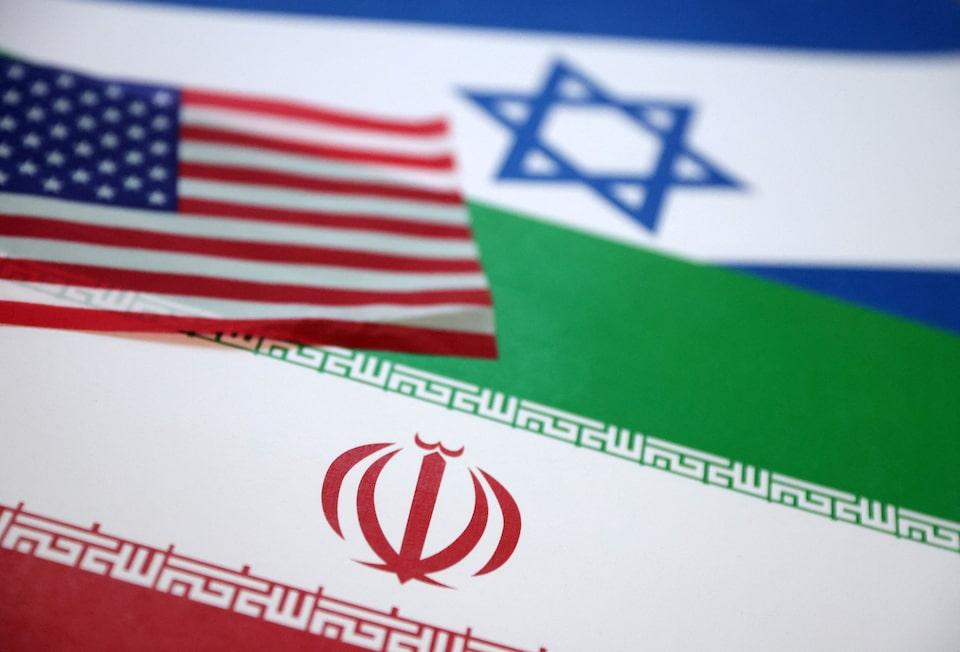
Investors fear U.S. involvement in Israel-Iran conflict could affect stock markets Oil prices may rise sharply if U.S. attacks Iran, impacting global economy Dollar gains as investors seek safe haven June 18 (Reuters) - Financial markets may be in for a "knee-jerk" selloff if the U.S. military attacks Iran, with economists warning that a dramatic rise in oil prices could damage a global economy already strained by President Donald Trump's tariffs. Oil prices fell nearly 2% on Wednesday as investors weighed the chance of supply disruptions from the and potential direct U.S. involvement. The price of crude remains up almost 9% since Israel launched attacks against Iran last Friday in a bid to cripple its ability to produce nuclear weapons. Sign up here. With major U.S. stock indexes trading near record highs despite uncertainty about Trump's trade policy, some investors worry that equities may be particularly vulnerable to sources of additional global uncertainty. Chuck Carlson, chief executive officer at Horizon Investment Services, said U.S. stocks might initially sell off should Trump order the U.S. military to become more heavily involved in the Israel-Iran conflict, but that a faster escalation might also bring the situation to an end sooner. "I could see the initial knee-jerk would be, 'this is bad'," Carlson said. "I think it will bring things to a head quicker." Wednesday's dip in crude, along with a modest 0.3% increase in the S&P 500, (.SPX) , opens new tab came after Trump reporters' questions about whether the U.S. was planning to strike Iran but said Iran had proposed to come for talks at the White House. Adding to uncertainty, Iranian Supreme Leader Ayatollah Ali Khamenei rejected Trump's demand for unconditional surrender. U.S. Treasury yields fell as concerns over the war in Iran boosted safe haven demand for the debt. The U.S. military is also bolstering its presence in the region, Reuters reported, further stirring speculation about U.S. intervention that investors fear could widen the conflict in an area with critical energy resources, supply chains and infrastructure. With investors viewing the dollar as a safe haven, it has gained around 1% against both the Japanese yen and Swiss franc since last Thursday. On Wednesday, the U.S. currency took a breather, edging fractionally lower against the yen and the franc. “I don't think personally that we are going to join this war. I think Trump is going to do everything possible to avoid it. But if it can't be avoided, then initially that's going to be negative for the markets,” said Peter Cardillo, Chief Market Economist at Spartan Capital Securities in New York. "Gold would shoot up. Yields would probably come down lower and the dollar would probably rally." Barclays warned that crude prices could rise to $85 per barrel if Iranian exports are reduced by half, and that prices could rise about $100 in the "worst case" scenario of a wider conflagration. Brent crude was last at about $76. Citigroup economists warned in a note on Wednesday that materially higher oil prices "would be a negative supply shock for the global economy, lowering growth and boosting inflation—creating further challenges for central banks that are already trying to navigate the risks from tariffs." Trump taking a "heavier hand" would not be a surprise to the market, mitigating any negative asset price reaction, Carlson said, while adding that he was still not convinced that the U.S. would take a heavier role. Trades on the Polymarket betting website point to a 63% expectation of "U.S. military action against Iran before July", down from as much as an 82% likelihood on Tuesday, but still above a 35% chance before the conflict began last Friday. The S&P 500 energy sector index (.SPNY) , opens new tab has rallied over 2% in the past four sessions, lifted by a 3.8% gain in Exxon Mobil and 5% rally in Valero Energy. That compares to a 0.7% drop in the S&P 500 over the same period, reflecting investor concerns about the impact of higher oil prices on the economy, and about growing global uncertainty generated by the conflict. Turmoil in the Middle East comes as investors are already fretting about the effect of Trump's tariffs on the global economy. The World Bank last week slashed its global growth forecast for 2025 by four-tenths of a percentage point to 2.3%, saying that higher tariffs and heightened uncertainty posed a "significant headwind" for nearly all economies. Defense stocks, already lifted by Russia's conflict with Ukraine, have made modest gains since Israel launched its attacks. The S&P 500 Aerospace and Defense index (.SPLRCAED) , opens new tab hit record highs early last week in the culmination of a rebound of over 30% from losses in the wake of Trump's April 2 "Liberation Day" tariff announcements. Even after the latest geopolitical uncertainty, the S&P 500 remains just 2% below its February record high close. "Investors want to be able to look past this, and until we see reasons to believe that this is going to be a much larger regional conflict with the U.S. perhaps getting involved and a high chance of escalating, you're going to see the market want to shrug this off as much as it can,” Osman Ali, global co-head of Quantitative Investment Strategies, said at an investor conference on Wednesday. https://www.reuters.com/world/middle-east/investors-see-quick-stock-market-drop-if-us-joins-israel-iran-conflict-2025-06-18/
2025-06-18 20:47
CHISINAU, June 18 (Reuters) - Moldova's pro-Russian separatist Transdniestria region faces a dire economic crisis triggered by this year's halting of gas supplies from Russia and a collapse in industrial and farm production, a senior minister in the enclave said on Wednesday. WHY IT'S IMPORTANT Moldova's pro-European President Maia Sandu has warned that Russia could use instability in Transdniestria to sow chaos and influence a September election to secure a parliament and government more favourable to Moscow. Sign up here. Sandu is seeking European Union membership by 2030. KEY QUOTES "Forecasts for Transdniestria's economy are not encouraging, based on uncertainty over gas supplies, a lack of a contract on power exports from the thermal plant and the fact that major industrial plants are idle," Economic Development Minister Sergei Obolonik told a government session on Wednesday. "There remains a risk that Moldova could introduce new sanctions and restrictive regulations," he said, according to local media. CONTEXT Transdniestria broke from Soviet Moldova in 1990. Other than a brief 1992 conflict, it has lived alongside the rest of the now-independent state with little upheaval for more than 30 years thanks largely to assistance provided by Moscow. But Russia halted supplies of virtually free gas in January after Ukraine shut a transit pipeline. Separatist authorities secured alternative gas through a Hungarian supplier with Russian funding, but that supply has proved insufficient to keep the economy afloat. BY THE NUMBERS Obolonik forecast a 12% drop in gross domestic product in the second half of the year from a year ago, a 30% plunge in industrial output, a 6% slide in agricultural production, a 20% slide in foreign trade and inflation of 16%. Improvement next year, he said, depended on finding reliable gas sources and on Moldova introducing no punitive measures. "We can expect no real growth in the economy," Obolonik said. "The best scenario is for indicators to remain at this year's levels." https://www.reuters.com/business/energy/separatist-moldovan-region-facing-crisis-without-russian-gas-minister-says-2025-06-18/

2025-06-18 20:37
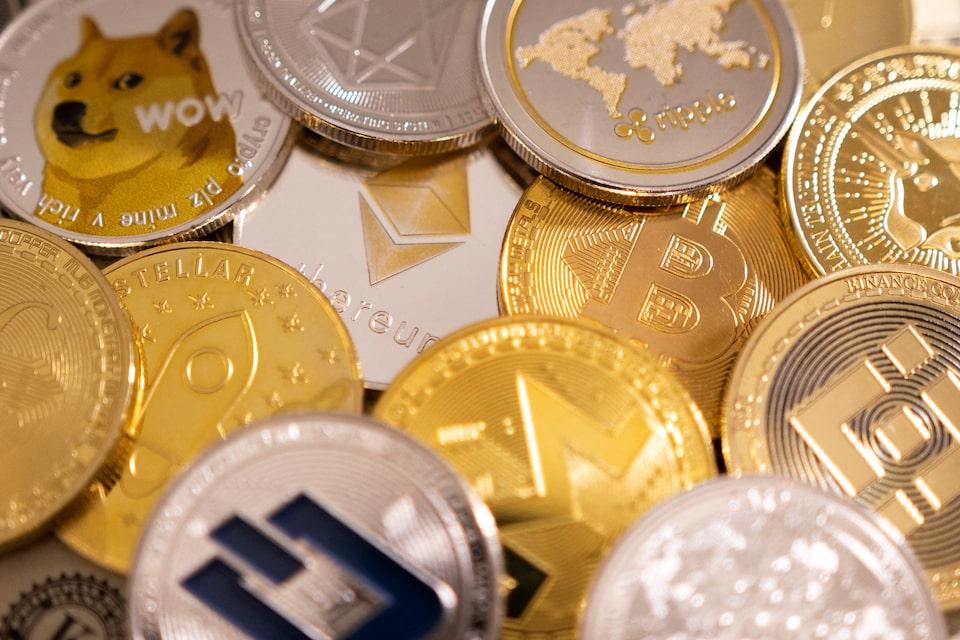
June 18 (Reuters) - The total market capitalization of stablecoins surged to a record high on Wednesday, data showed, as the U.S. Senate passed a bill to regulate the sector, a major step towards legitimising a once-niche but now fast-growing corner of the crypto market. According to CoinDesk data, the market capitalization of stablecoins hit an all-time high of $251.7 billion, up 22% so far this year. Sign up here. Stablecoins are a type of cryptocurrency designed to maintain a constant value, usually via a 1:1 peg with the U.S. dollar. They are commonly used by crypto traders to move funds between tokens. Their use has soared in recent years, and analysts expect the market to grow further once the U.S. legislation has passed. Proponents say stablecoins could be used to send payments instantly, while others worry they will lead to closer ties between the crypto world and traditional financial markets. If the U.S. bill is eventually signed into law, stablecoins would be required to be backed by liquid assets such as U.S. dollars and short-term Treasury bills, and for issuers to publicly disclose the composition of their reserves on a monthly basis. https://www.reuters.com/business/finance/stablecoins-market-cap-surges-record-high-us-senate-passes-bill-2025-06-18/
2025-06-18 20:10
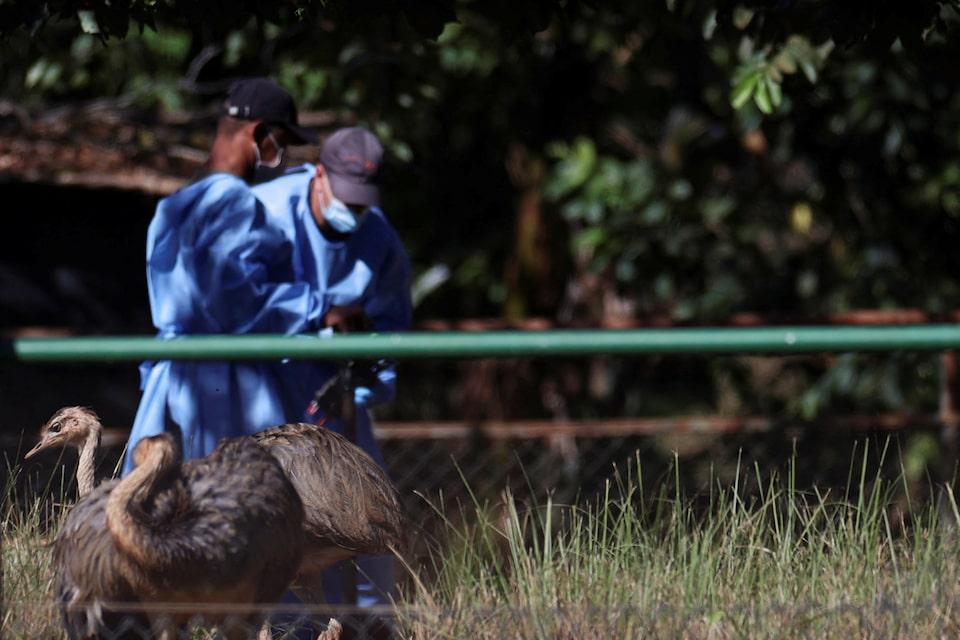
Brazil aims to resume chicken exports with trade partners Reclaiming disease-free status requires WOAH confirmation 17,000 birds culled in first outbreak in Montenegro Brazil accounts for 39% of global chicken trade SAO PAULO, June 18 (Reuters) - The world's largest poultry exporter has declared itself free of the bird flu virus on commercial flocks after observing a 28-day period without any new commercial farm outbreaks, the Brazilian ministry of agriculture said on Wednesday. The countdown for reclaiming the country's disease-free status began on May 22 following the complete disinfection of the farm where Brazil's only commercial outbreak was detected last month, in the state of Rio Grande do Sul. Sign up here. Under existing trade protocols, China and other importers banned chicken imports from Brazil, which accounts for 39% of global chicken trade, pending measures to control the disease and prevent entrance on other commercial chicken facilities. Now, Brazil aims at resuming chicken exports with its trade partners, but that will require talks with each one of them, Agriculture Minister Carlos Favaro said in a statement. Earlier, a Rio Grande do Sul state official had said Brazil had taken all the steps under health protocols to once again declare itself a free of highly pathogenic avian influenza (HPAI) virus. Reclaiming Brazil's status as free HPAI is not automatic and must be confirmed by the World Organization for Animal Health (WOAH), according to guidelines from the body. Brazil's first outbreak hit a chicken breeder farm in the town of Montenegro, where 17,000 birds were culled. https://www.reuters.com/business/healthcare-pharmaceuticals/brazil-poised-declare-itself-bird-flu-free-state-official-says-2025-06-18/