2025-06-18 07:01
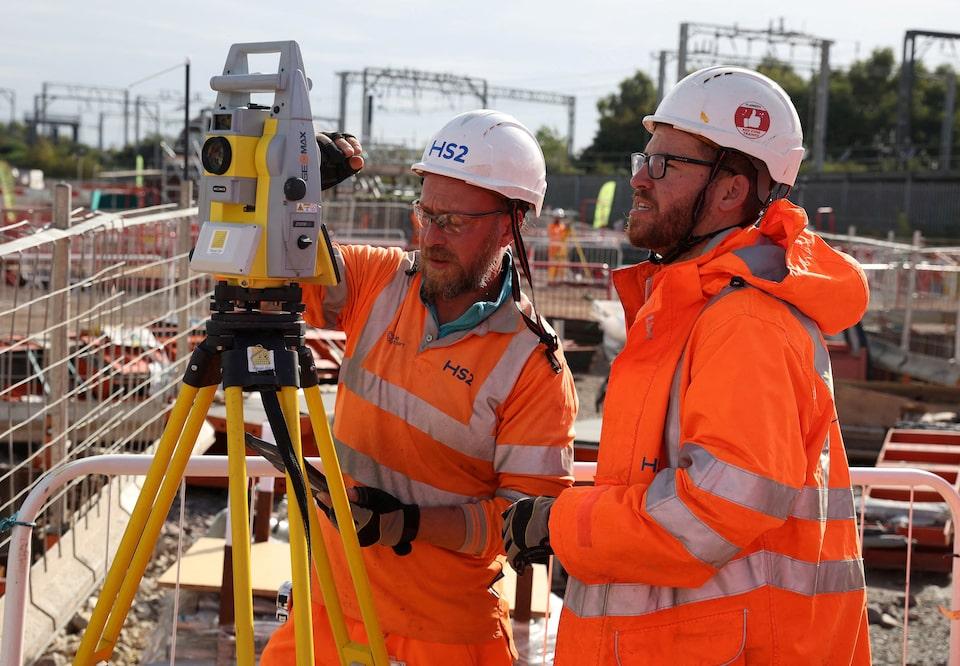
LONDON, June 18 (Reuters) - Britain's new high speed railway line, HS2, which will connect London to the central English city of Birmingham, will be delayed from the 2033 opening date targeted, the BBC reported on Wednesday. It is the latest blow for the project, which has been plagued by cost over-runs. Two years ago, its ballooning budget forced the previous government to cancel the northern half of the project between Birmingham and Manchester. Sign up here. Back when construction was approved in 2012, HS2 was expected to open by 2026 and cost 33 billion pounds ($44 billion). Its cost has spiralled to over 100 billion pounds now. Transport minister Heidi Alexander is expected to tell Parliament on Wednesday that the route will open later than the already delayed 2033 plan, without giving new guidance on when trains will start running, the BBC said it understood. The Department for Transport did not immediately respond to a request for comment. HS2, proposed in 2010, was designed to add capacity and help Britain's infrastructure catch up with other European countries which have extensive high speed tracks. Alexander is expected to release two reports into the problems which have affected HS2, as part of a reset into how Britain builds major infrastructure, the BBC added. Elected in 2024, the Labour government has put speeding up the planning process to deliver new energy and transport projects at the heart of its growth agenda. It has backed expansion at London's Heathrow and Gatwick airports. ($1 = 0.7431 pounds) https://www.reuters.com/world/uk/uk-say-opening-troubled-hs2-rail-link-delayed-bbc-reports-2025-06-18/
2025-06-18 06:54
UK inflation cools to 3.4% as expected Bank of England likely to hold interest rates on Thursday Energy prices, Middle East conflict raise uncertainty Rate-setters likely to emphasise 'careful' policy approach Inflation fall reflects airfares, correction of tax data error June 18 (Reuters) - British inflation cooled in May as expected by the Bank of England, which is set to keep interest rates on hold this week while it assesses international energy markets rocked by escalating conflict in the Middle East. Consumer prices rose in annual terms by 3.4% in May, the Office for National Statistics said on Wednesday, in line with a Reuters poll of economists. Sign up here. The data are unlikely to shift interest rate expectations among economists and investors who think the BoE will leave borrowing costs on hold when it announces its June policy decision on Thursday. Sterling rose slightly against the U.S. dollar after the ONS data release and British government bond yields fell, outperforming German and U.S. debt. Britain now has the highest rate of inflation out of the 16 Western European economies that have reported comparable EU-harmonised data for May, according to a Reuters analysis. The British central bank, which is taking a "careful" approach to cutting interest rates, is likely to double down on that language as the conflict between Israel and Iran enters a sixth day. Oil prices have risen about 14% in just over a week. "The focus now will turn to geopolitical events and the rise in energy prices," Deutsche Bank chief UK economist Sanjay Raja said. "This will undoubtedly complicate the (BoE's) task. Higher energy prices will mean higher inflation expectations." However, Britain's weakening jobs market could cool inflation pressures, he said. Services price inflation - a crucial metric for the BoE - cooled to 4.7% from 5.4% in April, matching the BoE's forecast for May. The Reuters poll had pointed to a reading of 4.8%. Raja said the BoE would be heartened by a drop in its preferred core measure of inflation, which strips out indexed and volatile components as well as rents and holidays and fell below 4% for the first time since February 2022. Earlier this month the ONS said April's headline consumer price inflation reading of 3.5% had been overstated by 0.1 percentage points due to an error in car tax data from the government. April's figures were not amended, but the correct data was used for May's readings. Air fares fell sharply after an Easter holiday spike in April's readings. Gas, electricity and water prices rose in April alongside higher taxes on employers, causing inflation to leap from 2.6% in March. Food prices rose by 4.4% in the 12 months to May, the biggest increase in over a year, the ONS said, a blow for low-income households. Overall goods prices rose by the most since November 2023, up by 2.0%. Some BoE officials have said they disagree with the central bank's key assumption at its May meeting that the recent climb in inflation will not have longer-running effects on pricing behaviour. Market pricing on Wednesday pointed to a 90% chance that the BoE will leave rates on hold this week, with two 0.25 percentage-point cuts priced in by the year's end. The BoE lowered rates by a quarter point to 4.25% on May 8 in a three-way split vote, with two Monetary Policy Committee members favouring a bigger cut and two favouring a hold. The central bank said in May it expects inflation to peak at about 3.7% later this year. Some economists think April might prove to be the high point, although the conflict in the Middle East poses a risk of stronger price pressures. https://www.reuters.com/world/uk/uk-inflation-was-34-may-ons-says-2025-06-18/

2025-06-18 06:34
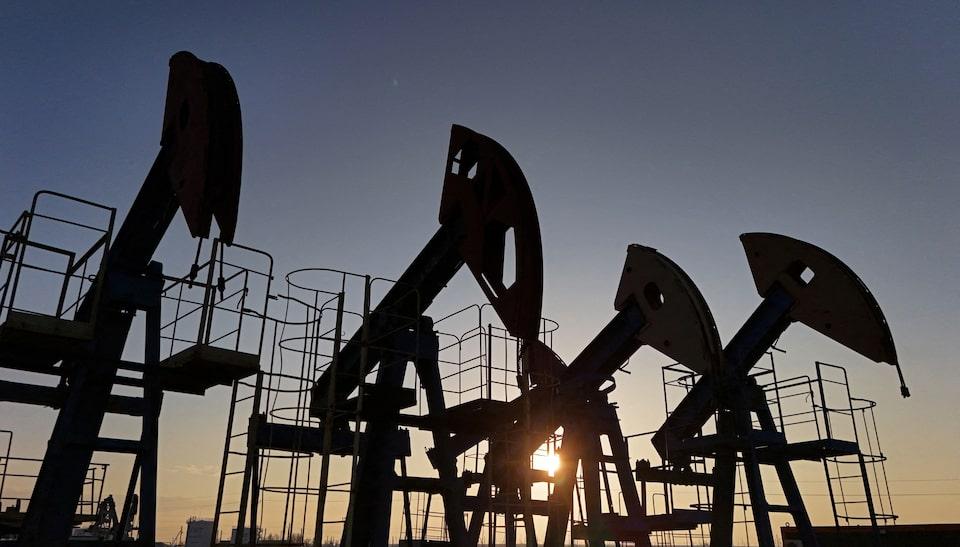
US involvement in Israel-Iran conflict could risk energy infrastructure Strait of Hormuz disruption could push oil prices to $120 US crude stocks fall by more than expected, EIA data shows NEW YORK, June 18 (Reuters) - Oil prices settled higher on Wednesday in a volatile session as investors weighed the chance of supply disruptions from the Iran-Israel conflict and potential direct U.S. involvement. Brent crude futures settled 25 cents higher at $76.70 a barrel. U.S. West Texas Intermediate crude rose 30 cents at $75.14. Earlier in the session, prices were down around 2%. On Tuesday, prices jumped over 4%. Sign up here. Iranian Supreme Leader Ayatollah Ali Khamenei rejected U.S. President Donald Trump's demand for unconditional surrender, and Trump said his patience had run out but did not indicate what his next step would be. Speaking to reporters outside the White House, Trump declined to say whether he had made any decision on joining Israel's bombing campaign against arch-enemy Iran. "I may do it. I may not do it. I mean, nobody knows what I'm going to do," he said. Trump said Iranian officials had reached out about negotiations including a possible meeting at the White House but "it's very late to be talking," he said. A source familiar with internal discussions said one option Trump and his team were considering included joining Israel in strikes against Iranian nuclear sites. "The crude markets remain in a wait-and-see mode with the Israeli/Iran conflict still offering an array of question marks that could either spike Brent to as high as $83/bbl or prompt a plunge back to about the $68 area," analysts at energy advisory firm Ritterbusch and Associates said in a note. HIGHER RISK Direct U.S. involvement would widen the conflict, putting energy infrastructure in the region at higher risk of attack, analysts say. "The biggest fear for the oil market is the shutdown of the Strait of Hormuz," ING analysts said in a note. "Almost a third of global seaborne oil trade moves through this chokepoint. A significant disruption to these flows would be enough to push prices to $120 (a barrel)." Iran is OPEC's third-largest producer, extracting about 3.3 million barrels per day (bpd) of crude oil. Iran's ambassador to the United Nations in Geneva said Tehran has conveyed to Washington that it will respond firmly to the U.S. if it becomes directly involved in Israel's military campaign. The U.S. Federal Reserve held interest rates steady on Wednesday and policymakers signaled borrowing costs are still likely to fall this year, but slowed the overall pace of expected future rate cuts in the face of estimated higher inflation flowing from the Trump administration's tariff plans. While policymakers still anticipate cutting rates by half a percentage point this year, as they projected in March and December, they slightly slowed the pace from there to a single quarter-percentage-point cut in each of 2026 and 2027 in a protracted fight to return inflation to the central bank's 2% target. Lower interest rates generally boost economic growth and demand for oil. In U.S. supply, crude stocks fell by 11.5 million barrels to 420.9 million barrels last week, the Energy Information Administration said on Wednesday. Analysts had expected a 1.8 million-barrel draw. https://www.reuters.com/business/energy/oil-prices-extend-rise-iran-israel-conflict-enters-sixth-day-2025-06-18/
2025-06-18 06:28
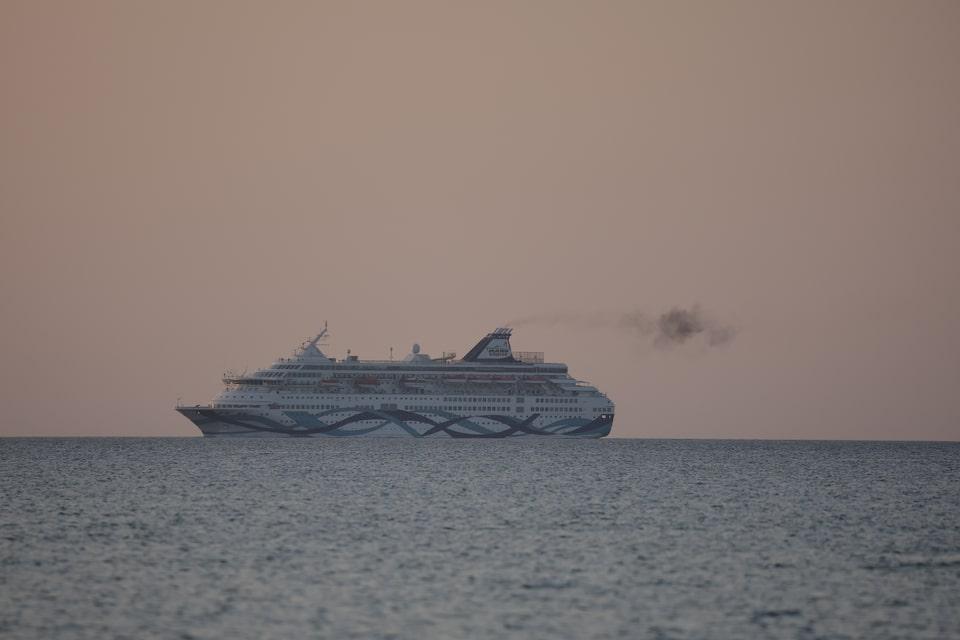
TEL AVIV, June 18 (Reuters) - Israel began flying home citizens stranded abroad on Wednesday, launching a phased airlift operation after the country's surprise military strike on Iran left tens of thousands of Israelis stuck overseas. The first rescue flight, operated by national carrier El Al (ELAL.TA) , opens new tab, touched down at Ben Gurion Airport early Wednesday morning, bringing home passengers from Larnaca, Cyprus. Sign up here. Worldwide, Israel's transport ministry estimates that more than 50,000 stranded Israelis are trying to come home. El Al has said repatriation flights are already scheduled from Athens, Rome, Milan and Paris. Smaller rivals Arkia and Israir (ISRG.TA) , opens new tab are also taking part in the operation. "We are preparing for the airlift to bring all Israelis home," Transportation Minister Miri Regev told the captain of the arriving El Al flight before it landed, according to a statement released by the Israeli Aviation Authority. "We are very emotional about receiving the first rescue flight as part of 'Safe Return'. Land safely," she added. Tel Aviv's airport has been closed to passenger traffic since Israel launched its attack on Friday. The Airports Authority reinforced staffing on Wednesday to ensure the arriving passengers exited the airport quickly. They were shuttled to their parked vehicles or transported via train and bus to city centres nationwide. The operation is being carried out in stages, based on risk levels and security assessments, with an emphasis on the safety of passengers, flight crews, and aircraft, a spokesperson for the airports authority said. Relatives were advised to avoid travelling to airports for security reasons. Iran has fired more than 400 ballistic missiles at Israel since Friday, a large number of them targeting the Tel Aviv area. At least 24 people have died so far in the strikes. There are still be no passenger flights leaving Israel, meaning up to 40,000 tourists are stranded in the country. El Al has cancelled all scheduled flights through to June 23. Large numbers of Israelis seeking to get home have converged on Cyprus, the European Union member state closest to Israel. Flights from the coastal city of Larnaca to Tel Aviv take 50 minutes. Nine flights were expected to depart Cyprus Wednesday for Haifa, and four for Tel Aviv, carrying about 1,000 people, sources in Cypriot airport operator Hermes said. Cruise operator Mano Maritime, whose "Crown Iris" ship carries 2,000 passengers, has said it will make two crossings from Cyprus to Israel's Mediterranean port city of Haifa. Earlier on Wednesday, a cruise ship arrived in Cyprus carrying 1,500 participants to a Jewish heritage programme who had left Israel on Tuesday. https://www.reuters.com/world/europe/israel-launches-airlift-bring-home-stranded-citizens-after-iran-strike-2025-06-18/
2025-06-18 06:14
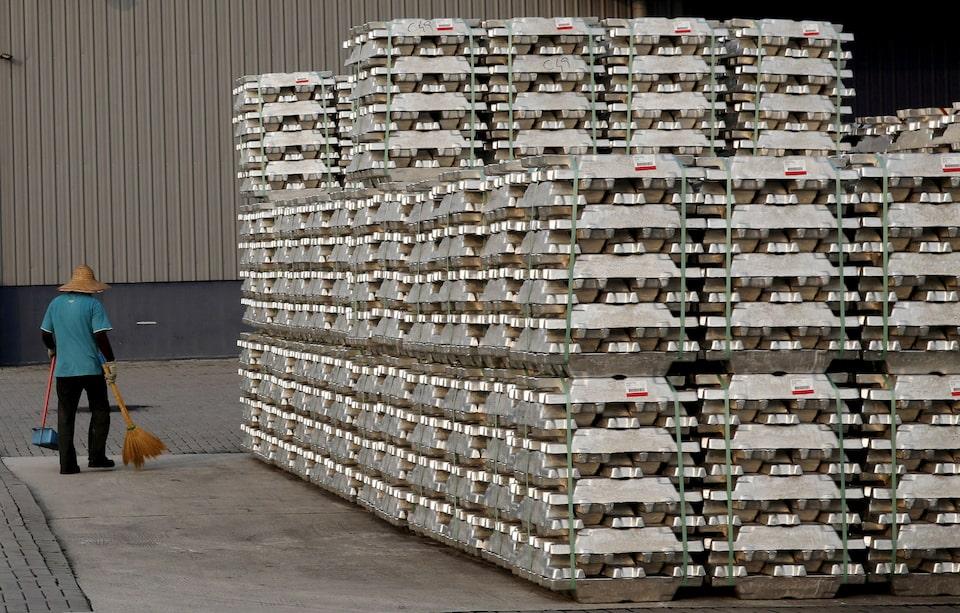
LONDON, June 18 (Reuters) - Where's all the aluminium gone? Two years ago there were over 1.3 million metric tons of the light metal sitting in London Metal Exchange (LME) warehouses. Inventory has since almost halved and is now at levels last seen in 2022. As traders fight over what's left, the London market has become increasingly turbulent, even if it's not apparent from the deceptively calm surface. Sign up here. While the outright LME three-month price has been sedately treading water around the $2,500-per ton level, short-dated spreads have turned tight and volatile. The LME aluminium market is no stranger to titanic tussles for metal by traders with deep pockets. Indeed, the game's taken on a whole new dimension since the exchange banned deliveries of new Russian aluminium in April last year. This latest power play echoes previous LME stocks battles but this time around the LME noise may be masking an important market signal. LARGE MARKET, LARGE POSITIONS Aluminium is the biggest global base metals market with annual consumption of around 100 million tons and aluminium traders have a history of taking outlandishly large positions in the London market. The latest manifestation is the mega long position that has being roiling nearby spread structures over the last month. The benchmark cash-to-three-months period has shifted from a comfortable contango of over $42 per ton in April to small backwardation. The "tom-next" spread, the cost of rolling a position overnight and a reliable indicator of market stress, traded out to a $12.30-per ton backwardation last week. Someone is clearly looking to scoop up a significant volume of aluminium but there are only 321,800 tons of available metal left in LME warehouses and two-thirds of that is Russian. Russian metal was banned , opens new tab in the United States and United Kingdom in April last year and is subject to quotas in Europe , opens new tab prior to a full ban at the end of 2026, making it less desirable than other material. It's not possible to know how much of the 323,000 tons sitting in LME off-warrant storage is also Russian but there has been no sign of this metal moving on to warrant to alleviate the spread tightness. Similarly, if the purpose of the squeeze was to entice metal out of the deep non-LME storage shadows, it doesn't seem to be working. Arrivals have amounted to a negligible 150 tons so far this month. The LME's ban on the delivery of Russian metal produced after April 13, 2024 may be hindering the normal working of the LME stocks grab trade, which is to tighten spreads to force holders to release metal. But that assumes there is a lot of aluminium, whether Russian or anything else, that is available for LME delivery. CHINA'S IMPORT APPETITE GROWS That assumption is starting to look a little questionable, given the conspicuous absence of any significant arrivals of any sort of aluminium in the LME warehouse system since March. Even Russian metal appears to be in hot demand, judging by China's imports so far this year. The country has been soaking up Russian aluminium shunned by Western buyers since the start of the war in Ukraine in 2022. Chinese imports of Russian primary aluminium surged from 291,000 tons in 2021 to 1.13 million tons in 2024. The pace has accelerated again in 2025. Imports jumped by another 48% year-on-year to 741,000 tons in January-April. China's appetite for imported metal results from one of the big structural shifts playing out on aluminium's supply side. The country's smelters are running close to the government's annual capacity cap of 45 million tons. The national annualised run-rate has held steady around the 44-million ton level since the start of the year. Against a backdrop of robust demand, particularly from the solar energy sector, the domestic market for primary metal looks tight. Shanghai Futures Exchange stocks have fallen to a 16-month low of 110,000 tons and the forward curve is in backwardation. SCRAP WARS China's stated policy is to ramp up secondary production from recyclable sources to compensate for the cap on primary metal production. However, that may prove increasingly challenging as recyclable material flows to the United States because it is exempt from the 50% tariffs imposed by the Donald Trump administration. This second big structural shift risks tightening the global supply of scrap, which in turn means processors outside of the United States have to use more primary metal. Scrap flows to China, the world's largest buyer, are in danger of being further disrupted if the European Union decides to impose export tariffs to stem what it terms "scrap leakage". The threat was originally China but now it's the United States. TESTING AVAILABILITY This squeeze on the LME aluminium contract is the latest in a long history of mega trades intended to grab a slice of available stocks. But it doesn't appear to be drawing metal into the system. There may be a Russian kink in this story but this is a test of broader market availability and so far supply has been found wanting. The longer the LME inventory downtrend continues, the more it will look like a market signal rather than the usual LME stocks churn noise. The opinions expressed here are those of the author, a columnist for Reuters https://www.reuters.com/markets/commodities/is-battle-lme-aluminium-stocks-noise-or-signal-2025-06-18/
2025-06-18 06:12
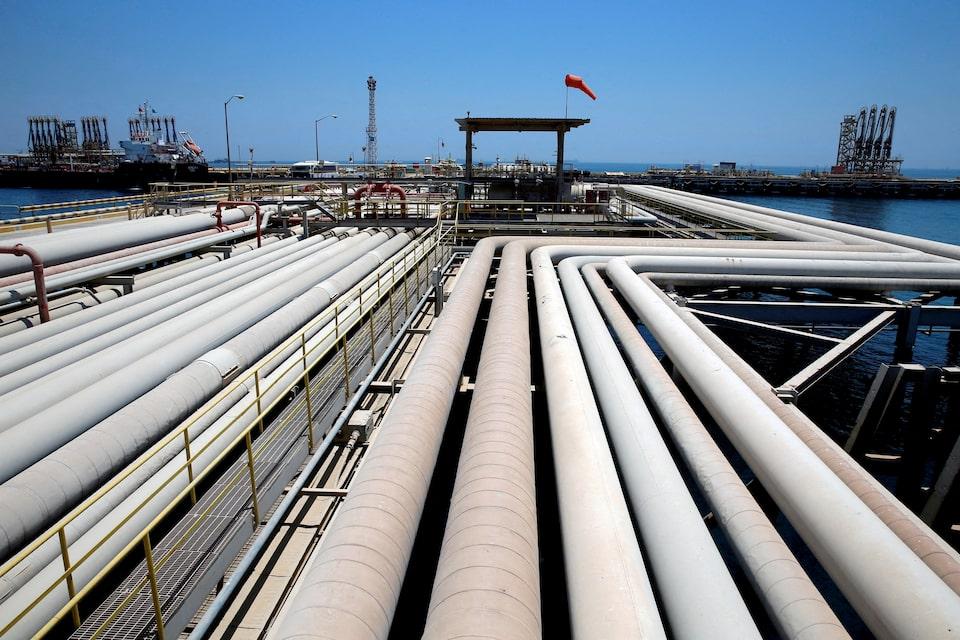
Mideast tanker rates soar by 40% since June 13 Rates in other region rise, reflecting Mideast tensions Ship navigation systems in Gulf face heavy interferences LONDON, June 18 - While global energy markets are not yet pricing in worst-case scenarios for the Israel-Iran war, oil tanker rates are providing a good real-time gauge of the escalating risks. Geopolitical risk has spiked following Israel's surprise bombardment of the Islamic Republic last Friday and Iran's retaliatory ballistic missile strikes, leading to a rally in global energy prices, with Brent crude rising 8% to roughly $75 a barrel. Sign up here. But markets and investors now appear to be in a holding pattern as the conflict unfolds, with possible scenarios spanning everything from an imminent ceasefire and strengthened nuclear deal to a joint U.S.-Israel effort to destroy Iran’s nuclear programme and potentially bring about regime change. For oil markets, the central risk remains the blocking or disruption of maritime traffic through the Strait of Hormuz, a narrow waterway between Iran and Oman through which one-fifth of the world's oil and gas consumption flows. Iranian strikes on energy infrastructure in Saudi Arabia or the United Arab Emirates – both U.S. allies – would represent another major escalation. Current oil prices suggest the market is still largely discounting such extreme scenarios, but trends in the oil tanker market show that oil shipping activity is being impacted even without direct action by Tehran. The benchmark daily rate for a ‘very large crude carrier’ (VLCC) moving oil from the Middle East to China has risen by 40% since June 13, reflecting the higher risk premium tanker owners are now charging to move through the strait. LSEG shipping market analysts anticipate further rate increases in the coming days. Tanker rates in other regions have also risen. For example, VLCC rates between West Africa and China have also jumped by over 40% since Friday. This is partly due to an expectation that crude buyers will seek to secure supplies from regions outside the Middle East in order to reduce the risk of disruption to their refining or trading operations. In another sign of the conflict’s indirect impact on shipping, Qatar’s national energy company instructed liquefied natural gas and oil tankers to stay outside Hormuz and to enter the Gulf only the day before loading, Reuters reported. SPOOFING While no physical attacks have occurred in Hormuz, tensions in the Gulf were heightened on Tuesday after two oil tankers collided and caught fire near the Strait of Hormuz. One of the tankers, the Front Eagle, which was destined for China, was loaded with 2 million barrels of Iraqi crude oil, according to monitoring service TankerTrackers.com , opens new tab. The exact cause of the collision, which resulted in no injuries or spills, is still unclear. But it coincided with a surge in electronic interference among commercial ship navigation systems in recent days around Hormuz and the wider Gulf. This electronic disruption is affecting vessels’ ability to accurately transmit positional data via automated identification systems (AIS), which poses operational and navigational challenges for maritime traffic, the U.S.-led Joint Maritime Information Center said in an advisory , opens new tab. The source of the interference, known as jamming, was unclear. LSEG analysts noted that more than 260 vessels in the Gulf had their AIS positions corrupted at one point in recent days, as they appeared to be “sailing” on the land around the South Pars Central Power Plant in southern Iran. Similar incidents have been recorded in other parts of the world in the past. For example, signal disruptions affecting AIS and GPS signals rose sharply in the Baltic Sea , opens new tab following Moscow's invasion of Ukraine in 2022. The physical oil market, where real-world trade activity overlaps with political and military activity, can often help investors assess risk levels at moments of heightened geopolitical tension. Amid the current fog of war, the tanker market in the Middle East is flashing warning lights. Enjoying this column? Check out Reuters Open Interest (ROI), opens new tab, opens new tab , opens new tab, your essential new source for global financial commentary. ROI delivers thought-provoking, data-driven analysis. Markets are moving faster than ever. ROI, opens new tab, opens new tab , opens new tab can help you keep up. Follow ROI on LinkedIn, opens new tab, opens new tab , opens new tab and X. , opens new tab https://www.reuters.com/markets/commodities/oil-tanker-market-signals-more-middle-east-energy-disruption-ahead-2025-06-18/