2025-06-17 04:42
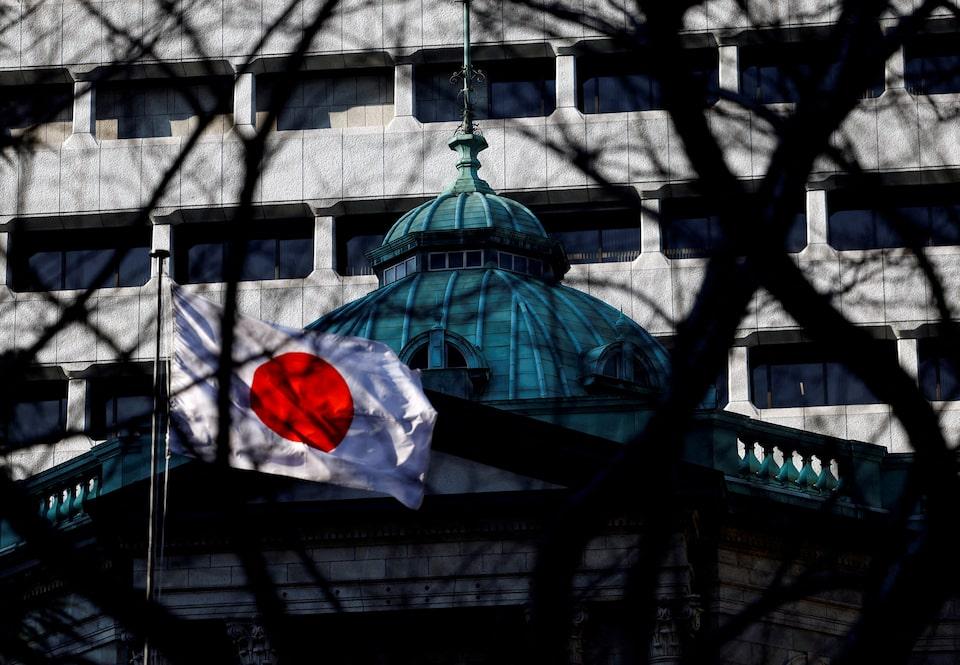
TOKYO, June 17 (Reuters) - The normally sedate Japanese government bond (JGB) market has attracted global attention in recent weeks as a surge in yields sounded warnings for deeply indebted governments. Yields on super-long JGBs touched record levels last month, meaning higher borrowing costs for the government and creating urgency for the Bank of Japan (BOJ) and Ministry of Finance to steady the market. Sign up here. The BOJ on Tuesday laid out a new plan to decelerate the pace of its balance sheet drawdown next year in the face of rising risks such as the Middle East conflict and U.S. tariffs. Here's what you need to know: WHAT DID THE BOJ CHANGE? After many years of monetary stimulus to prop up Japan's flagging economy, the BOJ had bought more than half of all JGBs and is now trying to gracefully shrink , opens new tab those holdings in a process called quantitative tightening. Under a plan laid out last July, the BOJ has been slowing its monthly bond purchases by around 400 billion yen ($2.76 billion) steps each quarter. So in the current quarter, the central bank is buying 4.1 trillion yen of JGBs each month, down from 4.5 trillion yen each month from January through March. The BOJ said on Tuesday the tapering pace will slow to 200 billion yen step changes per quarter from next April. The central bank also decided to allow investors to keep more varieties of 10-year notes they borrow through its lending facility. The measure is expected to improve liquidity in the market and speed up the BOJ's divestiture of bonds. HOW DID WE GET HERE? Japan has about 1.3 quadrillion yen ($9.07 trillion) in outstanding debt securities, the world's second-biggest amount after the $28.2 trillion U.S. Treasuries market. Persistent fiscal deficits have caused Japan's ratio of debt to gross domestic product (GDP) to expand to about 250%, the highest in the developed world. Prime Minister Shigeru Ishiba said last month the nation's fiscal situation was worse than that of Greece. But unlike Greece, whose debt-to-GDP ratio was around 150% when the nation was bailed out in 2010, about 90% of Japan's debt is held domestically. That makes the JGB market less vulnerable to global investors who punish profligate governments by selling their debt, so-called bond vigilantes. WHAT TRIGGERED THE JGB SELL-OFF? Long-dated bonds have sold off around the world in recent weeks as investors grew wary about widening fiscal deficits and debt piles among major issuers, concerns encapsulated by Moody's downgrade of the United States on May 17. But Japan has some unique issues. Lawmakers are mulling cash handouts and other stimulus to woo voters ahead of an upper house election slated for July. Also, demand has fallen off for super-long bonds among traditional buyers. Japan's life insurers, for example, have steadily bought the securities over recent years to comply with new solvency regulations. With that buying mostly complete, insurers are now shifting into higher-yielding debt. A 20-year JGB auction last month laid bare the precarious situation. Demand was the weakest since 1987, as indicated by the auction's tail - the difference between the lowest and average accepted prices. That triggered a long-term debt sell-off That sent 40-year yields to a record high 3.675%, 30-year rates to an all-time peak of 3.185%, and 20-year yields to 2.595%, the highest since October 2020. Subsequent sales of 30- and 40-year securities also saw weak demand, sparking concerns of a runaway increase in borrowing costs. WHAT WAS THE RESPONSE? The rapid run-up in JGB yields spooked policymakers. In years past, Japan's central bank has come to the rescue in volatile markets by buying bonds and stocks. However, under Governor Kazuo Ueda, the BOJ has committed to shrinking its balance sheet, leaving the finance ministry to take the lead in calming markets. Finance Minister Katsunobu Kato warned that higher rates could further imperil Japan's finances and pledged "appropriate" debt management. The government issued rare warnings about rising yields in its economic roadmap last Friday. Ueda acknowledged views that demand for super-long bonds had declined and that volatility in those yields could impact shorter rates, which have a more direct economic impact. The finance ministry is now planning on trimming issuance of 20-, 30-, and 40-year bonds, balancing those reductions with increases of shorter-term notes, Reuters has reported. The ministry is also considering buying back some super-long JGBs. The rise in yields means JGBs are increasingly attractive for overseas investors, especially those looking to decrease dollar exposure. But foreign holders are more likely to dip in and out of the market, creating volatility. Kato has in recent days talked up the importance of domestic ownership of national debt and proposed a new type of floating-rate note and allowing unlisted companies to buy bonds designed for individual investors. WHAT'S NEXT? The finance ministry will meet market participants later this month, which will inform its decisions on bond issuance and buyback changes. An auction of 20-year JGBs on June 24 will be the next key test of demand for super-long bonds. ($1 = 144.8200 yen) https://www.reuters.com/business/finance/why-is-boj-tweaking-its-buying-japanese-government-bonds-2025-06-17/
2025-06-17 04:32
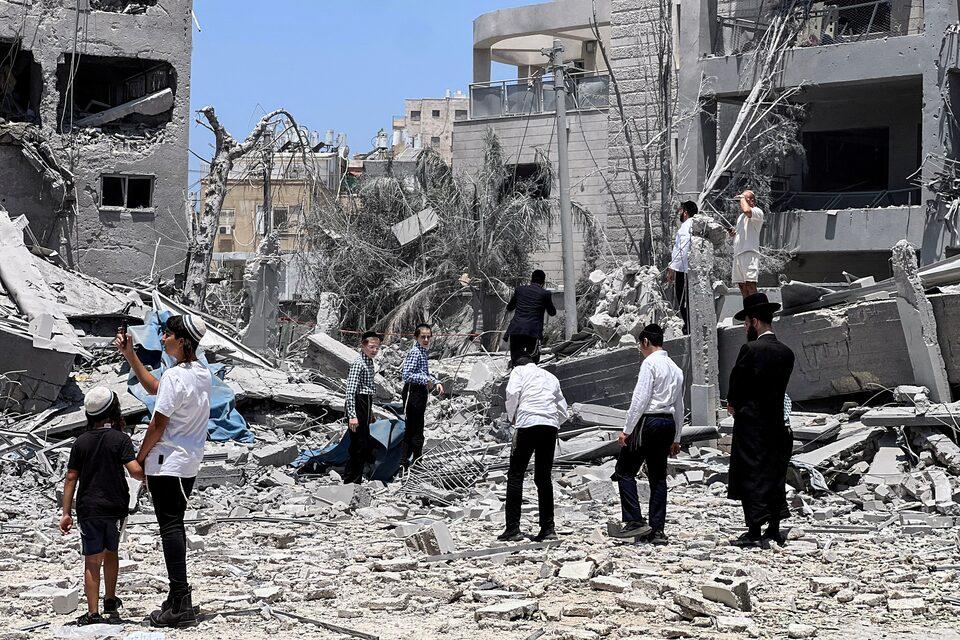
A look at the day ahead in European and global markets from Ankur Banerjee Investor hope of a quick resolution to the Israel-Iran conflict was swiftly dashed after the long-time rivals attacked each other again and U.S. President Donald Trump urged Iranians to evacuate Tehran. Sign up here. That, along with Trump reportedly calling the U.S. national security council and cutting short his visit to the Group of Seven summit, rattled investors leading to major risk-off moves. European markets are set to open deep in the red, futures indicated, while oil prices , jumped nearly 2% in Asian hours, taking gains to 7.5% since the conflict started on Friday. U.S. futures also fell but currencies were relatively stable - with the U.S. dollar reprising its role as a safe haven. The worry for markets and the world remains that of possible U.S. involvement, broadening the conflict. A White House aide said it was not true the U.S. was attacking Iran. Defense Secretary Pete Hegseth told Fox News that Trump was aiming for a deal with Iran on the latter's nuclear-related activity, and said the U.S. would defend its assets in the region. Markets have generally been resilient to Israel-Iran developments since initial bouts of knee-jerk selling as investors look beyond the conflicts around the globe, keeping benchmark U.S. and European stock indexes close to record highs. Amid the geopolitical noise, investors are bracing for a slate of central bank meetings this week, starting with the Bank of Japan which held interest rates as widely expected. The focus was rather on what the BOJ would do to its bond-tapering programme. The BOJ decided to slow the pace of reduction of bond purchases from next fiscal year, signalling its preference to move cautiously in normalising still-easy monetary policy. The central bank faces fresh challenges in weaning the economy off decade-long stimulus that has kept rates ultra-low and left the bank with an economy-sized balance sheet. Market reaction to the BOJ's meeting outcome was muted, with the yen and bond yields glacial. As UBS analysts put it, "It's lots of mulling for not so much change." Key developments that could influence markets on Tuesday: Economic events: Germany's ZEW economic sentiment for June Trying to keep up with the latest tariff news? Our new daily news digest offers a rundown of the top market-moving headlines impacting global trade. Sign up for Tariff Watch here. https://www.reuters.com/world/europe/global-markets-view-europe-2025-06-17/
2025-06-17 04:02
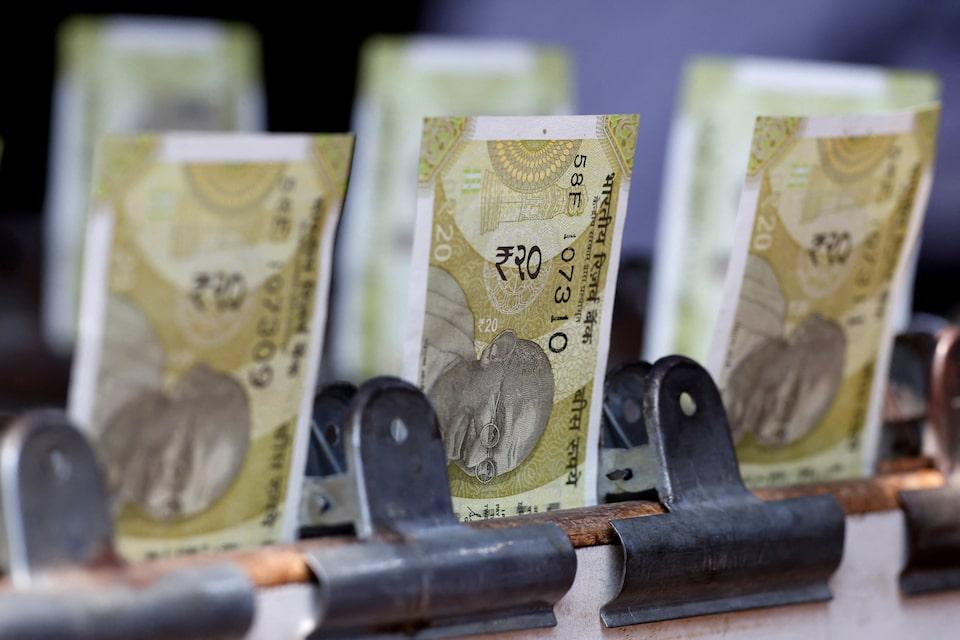
MUMBAI, June 17 (Reuters) - The Indian rupee is likely to dip at the open on Tuesday, weighed down by rising oil prices and a decline in U.S. equity futures after U.S. President Donald Trump called for the evacuation of Tehran. The non-deliverable forward market indicated a open in the 86.12-86.16 range, versus 86.0650 in the previous session. The Indian currency traded in a 85.94-86.23 band on Monday, finding support once again near the 86.20 level, which held firm on Friday too. Sign up here. The 86.20–86.25 range is "proving difficult" to take out for dollar bulls and the probability of it being breached on Tuesday are low, said a currency trader at a Mumbai-based bank. While the dollar/rupee pair is expected to open higher, it will likely run into offers "almost immediately". Brent crude rose more than 1.5% on Tuesday, while U.S. equity futures declined on concerns over escalations in the Iran-Israel conflict, now in its fifth day. Sentiment was rattled by a report that Trump had asked the national security council to convene in the situation room. He cut short his visit to the Group of Seven summit in Canada. Earlier, Trump had called for the immediate evacuation of Tehran and reiterated that Iran should have signed a nuclear agreement with the United States. Some analysts said these events have fuelled speculation that the U.S. could be on the verge of launching military operations in Iran. This comes after U.S equity markets had rallied and oil prices softened on Monday amid reports that Iran was looking to dial down its conflict with Israel. "How the U.S. may get involved and how Iran may respond moving forward will certainly be crucial for the path of markets," MUFG Bank said in a note. KEY INDICATORS: ** One-month non-deliverable rupee forward at 86.12; onshore one-month forward premium at 8.50 paise ** Dollar index at 98.24 ** Brent crude futures up 1.7% at $74.4 per barrel ** Ten-year U.S. note yield at 4.43% ** As per NSDL data, foreign investors sold a net $43.4 million worth of Indian shares on June 13 ** NSDL data shows foreign investors bought a net $31.7 million worth of Indian bonds on June 13 https://www.reuters.com/world/india/rupee-faces-pressure-fresh-middle-east-jitters-after-trump-warning-2025-06-17/
2025-06-17 00:49
Brent and WTI benchmarks resume climb War risk continues to underpin market IEA global oil supply forecast revised upwards HOUSTON, June 17 (Reuters) - Oil prices climbed over 4% on Tuesday as the Iran-Israel conflict raged with no end in sight, though major oil and gas infrastructure and flows have so far been spared from substantial impact. Brent crude futures settled at $76.45 a barrel, $3.22, or 4.4%. U.S. West Texas Intermediate crude finished at $74.84 a barrel, up $3.07 or 4.28%. Sign up here. While there was no noticeable interruption to oil flows, Iran partially suspended gas production at the South Pars field it shares with Qatar after an Israeli strike started a fire there on Saturday. Israel also hit the Shahran oil depot in Iran. The continuing exchange of airstrikes between Israel and Iran returned geopolitical risk to oil markets already aware of a tight supply and demand balance, said Phil Flynn, senior analyst with the Price Futures Group. "This is not a one-and-done; it's probably much more similar to Russia and Ukraine," Flynn said. A collision of two oil tankers near the Strait of Hormuz, where electronic interference has increased during the conflict, highlighted the possibility that the vital waterway for oil shipments could be cut off. "The market is largely worried about disruption through (the Strait of) Hormuz, but the risk of that is very low," said Saxo Bank analyst Ole Hansen. There is no appetite for closing the waterway, given that Iran would lose revenue and the U.S. wants lower oil prices and lower inflation, Hansen added. Uncertainty led market participants on Tuesday to wonder how Iran's leadership would react if they thought they were losing their grip on power, said John Kilduff, partner at Again Capital. "We're talking a security premium upwards of $10 a barrel that's now built into the price," Kilduff said. Despite the potential for disruption, there were signs oil supplies remain ample amid expectations of lower demand. In its monthly oil report on Tuesday, the International Energy Agency revised its world oil demand estimate downwards by 20,000 barrels per day from last month's forecast and increased the supply estimate by 200,000 bpd to 1.8 million bpd. Investors were also focused on central bank interest rate decisions, PVM Associates analyst Tamas Varga said in a note, with the U.S. Federal Open Market Committee set to discuss rates later on Tuesday. https://www.reuters.com/business/energy/oil-prices-rise-iran-israel-conflict-fans-supply-worries-2025-06-17/
2025-06-17 00:28
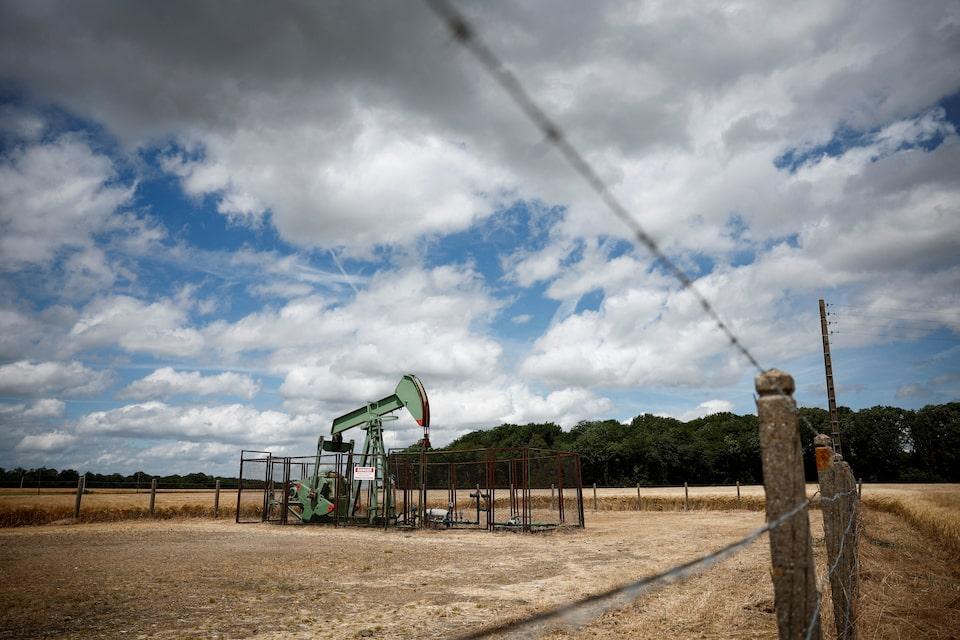
Oil retreats after previous week's surge U.S. Steel up as Trump approves $14.9 bln Nippon Steel bid Fed expected to keep interest rates unchanged this week Indexes up: Dow 0.75%, S&P 500 0.94%, Nasdaq 1.52% NEW YORK, June 16 (Reuters) - U.S. stocks closed higher on Monday, as oil prices retreated after the Israel-Iran attacks left crude production and exports unaffected, easing investor concerns about the potential for higher energy prices to stoke inflation. Crude prices , settled down more than 1% on hopes a truce was on the horizon between Israel and Iran after days of missile strikes, as Iran called on U.S. President Donald Trump to force a ceasefire in the four-day-old aerial war, while Israel's prime minister said his country was on the "path to victory." Sign up here. Oil prices had surged more than 7% on Friday after Israel began bombing Iran. Tehran has asked Qatar, Saudi Arabia and Oman to press Trump to use his influence with Israel to agree to an immediate ceasefire, in return for Iran's flexibility in nuclear negotiations, sources told Reuters. "The wild card is really what's going to happen to oil prices ... any little geopolitical move can have pretty big impacts on that sector and in this economy also," said George Young, portfolio manager with Villere & Co in New Orleans. "The cases that the consumer pulls in their horns and their nerves about inflation and don't spend, well, that's going to have a direct impact on earnings, it doesn't matter which sector of the economy you've invested in." The Dow Jones Industrial Average (.DJI) , opens new tab rose 317.30 points, or 0.75%, to 42,515.09, the S&P 500 (.SPX) , opens new tab gained 56.14 points, or 0.94%, to 6,033.11 and the Nasdaq Composite (.IXIC) , opens new tab gained 294.39 points, or 1.52%, to 19,701.21. The Nasdaq registered its biggest daily percentage gain since May 27. Investors are also awaiting the U.S. Federal Reserve's monetary policy decision on Wednesday, when policymakers are widely expected to keep interest rates unchanged. Money markets are largely not expecting the Fed to cut rates until September, pricing in a 61.1% chance for a cut of at least 25 basis points, according to LSEG data. "Interest rates are still higher and so that one is a bit tough to fathom because perhaps markets are still anticipating some inflation," said Jack Ablin, chief investment officer of Cresset Capital in Chicago. "If nothing else, just the heightened uncertainty, combined with the tariffs is probably keeping the Fed sidelined." Economic data expected this week includes monthly retail sales, import prices and weekly jobless claims. Tech (.SPLRCT) , opens new tab and communication services (.SPLRCL) , opens new tab led S&P sector gains while utilities (.SPLRCU) , opens new tab was the worst performer. The Philadelphia SE Semiconductor index (.SOX) , opens new tab jumped 3.03%, led by an 8.81% surge in Advanced Micro Devices (AMD.O) , opens new tab after Piper Sandler raised its price target on the chipmaker. UPS (UPS.N) , opens new tab and FedEx (FDX.N) , opens new tab gained 1.1% each after the Trump Organization launched a self-branded mobile network, dubbed Trump Mobile, and named the companies as shipping partners. Shares of Sarepta Therapeutics (SRPT.O) , opens new tab plummeted 42.1% after the company disclosed a second case of a patient dying due to acute liver failure after receiving its gene therapy for a rare form of muscular dystrophy. U.S. Steel (X.N) , opens new tab rose 5.1% after Trump approved Nippon Steel's (5401.T) , opens new tab $14.9 billion bid for the company. Advancing issues outnumbered decliners by a 1.97-to-1 ratio on the NYSE and by a 1.9-to-1 ratio on the Nasdaq. The S&P 500 posted 16 new 52-week highs and five new lows, while the Nasdaq Composite recorded 74 new highs and 96 new lows. Volume on U.S. exchanges was 17.86 billion shares, compared with the 18.14 billion average for the full session over the last 20 trading days. https://www.reuters.com/business/us-stock-futures-steady-with-focus-mideast-tensions-fed-meeting-2025-06-16/
2025-06-16 23:26
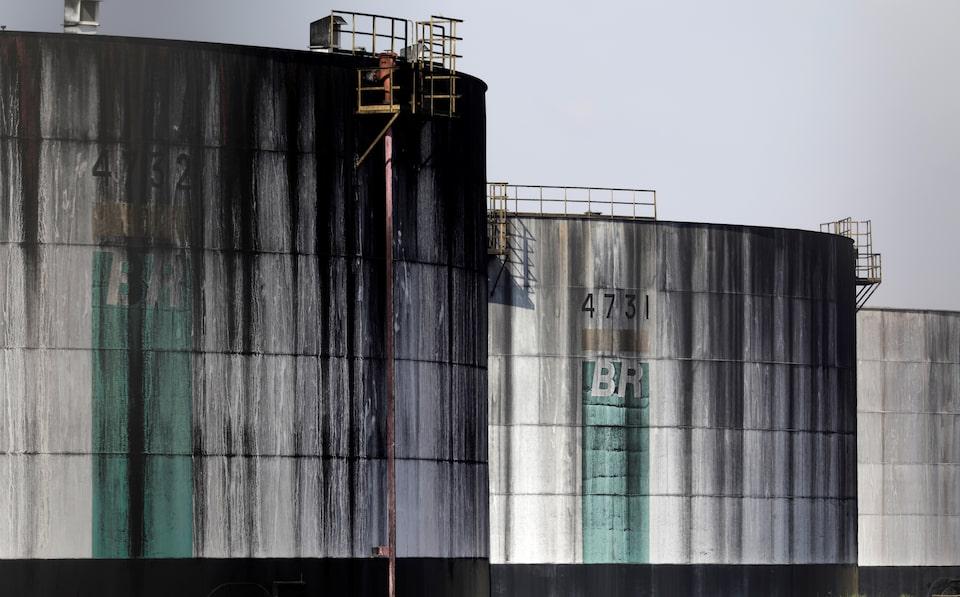
SAO PAULO, June 16 (Reuters) - Brazilian state-run oil firm Petrobras (PETR4.SA) , opens new tab announced on Monday it signed contracts worth approximately 4.9 billion reais ($892.3 million) for the completion of a new refining unit at its RNEST refinery. The agreements, signed with engineering firm Consag, include the construction of associated infrastructure, such as a diesel hydrotreatment unit, Petrobras said in a statement. Sign up here. This initiative is part of Petrobras' strategy to build "Train 2" at RNEST, a new refining unit projected to double the refinery's current installed capacity. The new facilities are expected to become operational in 2029, according to Petrobras. ($1 = 5.4916 reais) https://www.reuters.com/business/energy/petrobras-signs-892-mln-contracts-complete-rnest-refinery-expansion-2025-06-16/