2026-01-21 18:07
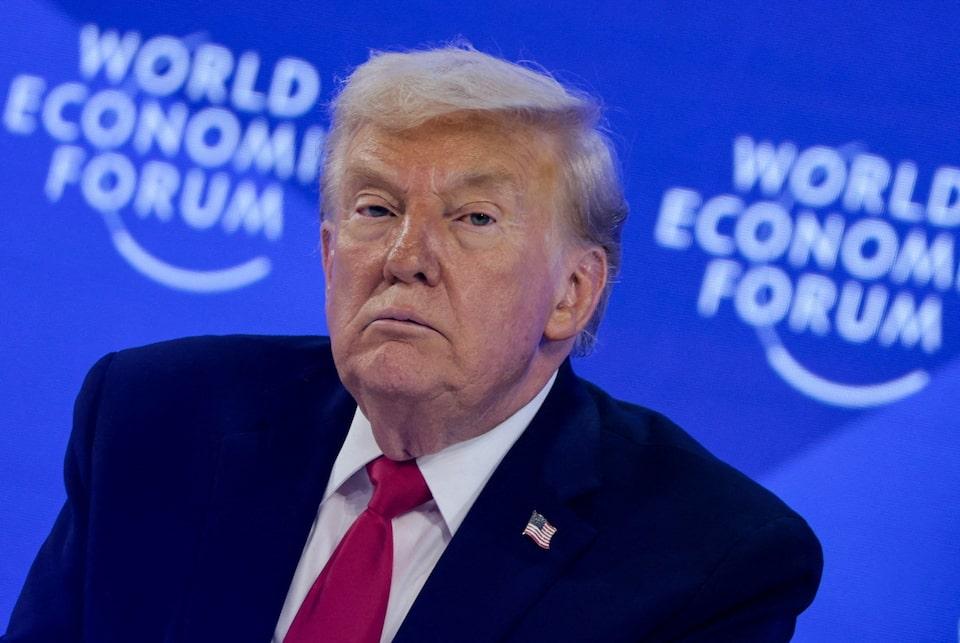
DAVOS, Switzerland, Jan 21 (Reuters) - U.S. President Donald Trump said he has interviewed several strong candidates for Federal Reserve chair, but complained that nominees tend to change once they take office. "Everyone that I interviewed is great. Everyone could do, I think, a fantastic job. Problem is they change once they get the job," Trump said at the World Economic Forum in Davos, Switzerland. Sign up here. The president also renewed his criticism of current Federal Reserve Chair Jerome Powell for not lowering interest rates fast enough and said an announcement on the next Fed chair is coming soon. "I'll be announcing a new Fed chairman in the not too distant future. I think he'll do a very good job. See, I gave away some of it," Trump said. The leading four candidates to succeed Powell are Trump economic adviser Kevin Hassett, Fed Governor Christopher Waller, former Fed Governor Kevin Warsh and BlackRock's chief bond investment manager, Rick Rieder. On Tuesday, Treasury Secretary Scott Bessent said the president has whittled down the field to four candidates. Trump and Bessent have repeatedly taken aim at Powell over his handling of monetary policy and interest rates, as well as his broader leadership of the Federal Reserve. More recently, the Justice Department has issued a subpoena to Powell tied to the renovation of the Fed's headquarters. Trump nominated Powell for the position in 2017, and former President Joe Biden reappointed him. https://www.reuters.com/world/europe/trump-says-fed-chair-candidates-are-great-until-they-get-job-2026-01-21/
2026-01-21 15:43
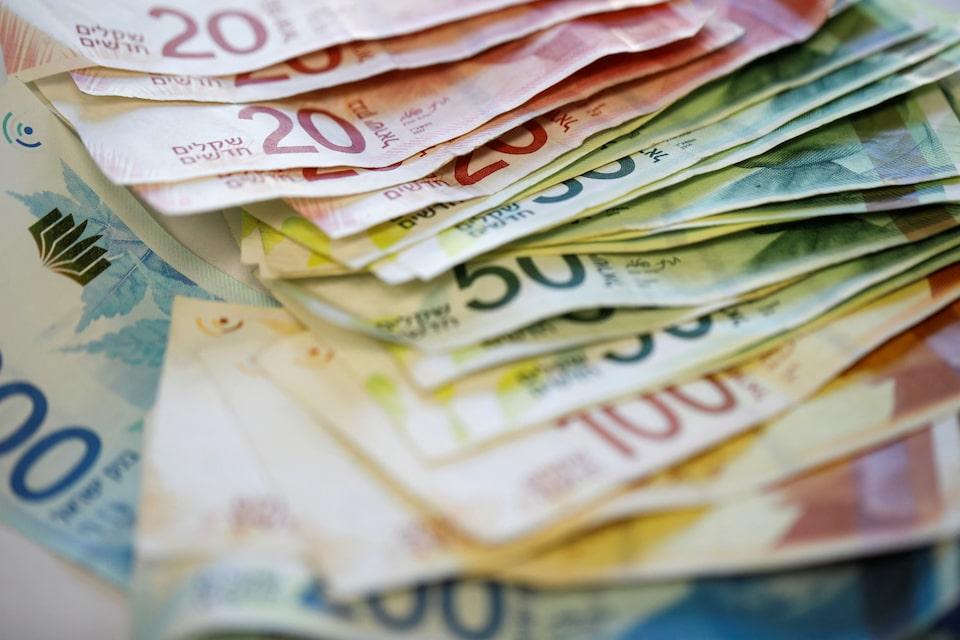
DAVOS, Switzerland Jan 21 (Reuters) - The shekel's rise to around four-year highs against the dollar reflects the resilience of the Israeli economy and comes amid solid export performance, Bank of Israel Governor Amir Yaron said on Wednesday. Speaking to Reuters on the sidelines of the World Economic Forum in Davos, Yaron said the Israeli currency's strength was also acting as a tailwind that was moderating inflation. Sign up here. "The appreciation of the shekel represents a lot of the positive fundamentals in terms of geopolitical developments and certainly post the ceasefire," he said of the October 2025 ceasefire in Gaza. "We understand the appreciation makes it difficult for exports. But we've seen exports of both goods and services rise in the last two readings," he added of the roughly 12% rise in the shekel against the dollar since the start of 2025. Asked at what point the central bank would consider intervention to lower the level of the shekel, Yaron said: "The FX tool is part of the toolbox of the Bank of Israel. We have many tools for facilitating our policies." In the past, the central bank had bought tens of billions of dollars to keep the shekel from appreciating too fast and harming exporters. It sold $8.5 billion of foreign currency at the outset of the Gaza war in October 2023 to defend the shekel, but it has largely stayed out of the market since. The Bank of Israel unexpectedly cut its interest rate by 25 basis points earlier this month, a second successive cut after lowering it in November for the first time in nearly two years. It cited the shekel's strength and an improving inflation environment after the ceasefire, which led to an easing of the supply constraints that emerged during the two-year war. The inflation rate currently stands at 2.6%, within an official 1-3% target range. Yaron underlined that demand in the Israeli economy had remained robust during the conflict and that the bank had not so far seen it surge further as a result of the ceasefire. "We haven't seen demand erupt the way it did post-COVID," he said. He noted that the bank's research department had identified a baseline scenario of a further 50 basis points of cuts down to an official rate of 3.5% by the end of this year, notwithstanding the high level of uncertainty facing all central banks. "We will have to see how much demand picks up, how much supply constraints are mitigating, what is happening with the tailwind from the shekel," he said. https://www.reuters.com/world/europe/shekels-gains-represent-strong-fundamentals-says-bank-israel-2026-01-21/
2026-01-21 14:29
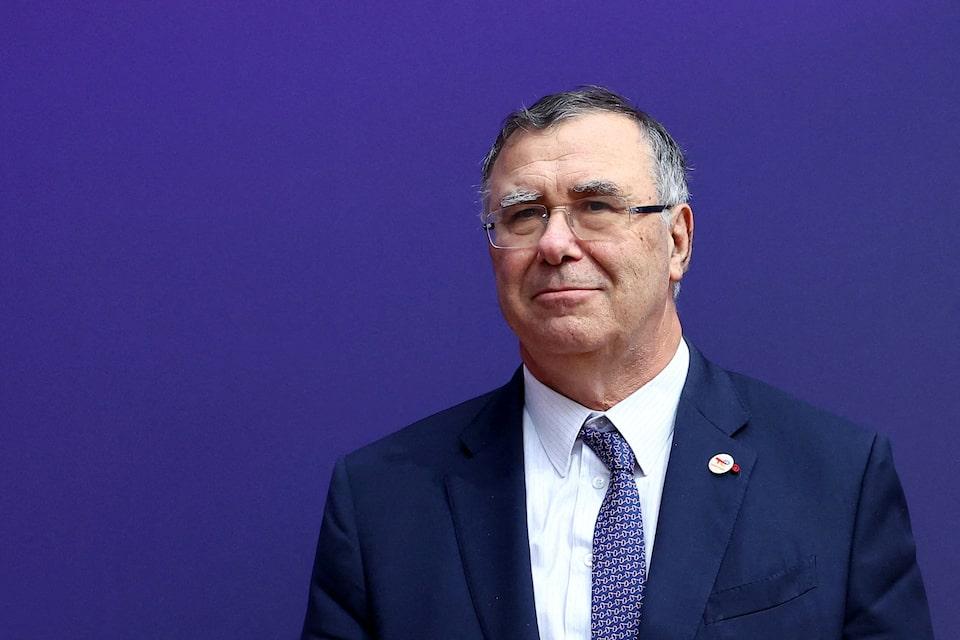
DAVOS/PARIS, Jan 21 (Reuters) - TotalEnergies (TTEF.PA) , opens new tab CEO Patrick Pouyanne said on Wednesday that he expected the European Union to water down its mandate to incorporate sustainable aviation fuel in future, similar to the bloc's recent decision to drop a proposed ban on new combustion-engine cars from 2035. Last year the EU mandated that 2% of jet fuel made available at its airports needed to be SAF, a requirement that will rise to 6% in 2030 and 20% in 2035. Sign up here. "All the airline companies are fighting the 6% SAF mandate, which frankly is easy to reach...I will make a bet today that what happened to the car regulation will happen to the SAF regulation in Europe," Pouyanne said at a World Economic Forum panel on clean fuels. TotalEnergies produces SAF at several refineries with plans to expand, but has delayed investments to increase capacity after finding that its clients were not willing to buy more than what was needed to satisfy EU rules, he said. SAF is three to four times more expensive than jet fuel refined from oil. Airline companies have blamed their lack of uptake on insufficient volumes being produced, which Pouyanne rejected. "Today I am facing customers, my airline companies in Europe, who are making a huge lobby (effort) accusing us of not investing enough, which is completely wrong," Pouyanne said. "I will be able to provide 10% of SAF to the airline companies in Europe by 2030, but...everybody is dreaming they can have these biofuels at the same price as (jet fuel made from) oil, but it's not true." The CEO added that he was likely to lower investments in low-carbon fuels due to regulatory uncertainty. "I'm afraid, as it's a regulated market, if they move the targets, then I will have invested in biorefineries for nothing," he said. https://www.reuters.com/business/davos/totalenergies-ceo-expects-eu-sustainable-aviation-fuel-be-dropped-future-2026-01-21/
2026-01-21 14:02
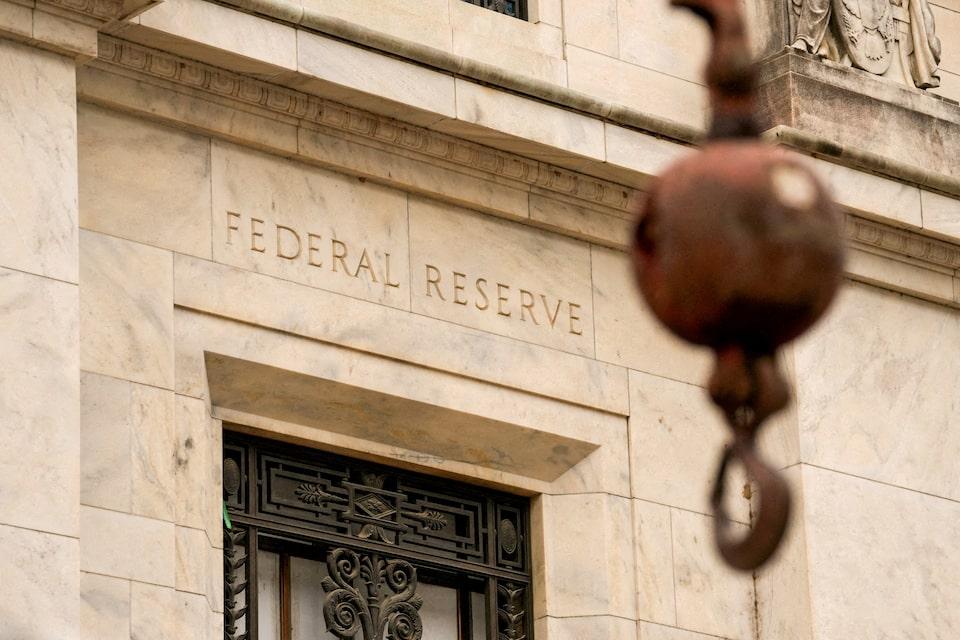
BENGALURU, Jan 21 (Reuters) - The U.S. Federal Reserve will hold its key interest rate through this quarter and possibly until Chair Jerome Powell's tenure ends in May, according to a majority of economists polled by Reuters, a shift from last month when most expected at least one cut by March. Expectations the U.S. economy will continue growing strongly argue against near-term cuts as inflation still remains above the Fed's 2% target. But most economists still expect at least two reductions later this year. Sign up here. Concerns in financial markets and in policy circles are mounting over political interference in the Fed's independent setting of interest rates and Fed policymakers are sharply divided over the outlook. U.S. President Donald Trump has repeatedly criticized Powell for not lowering rates more aggressively and the Justice Department has now threatened a criminal investigation against Powell related to building renovations on the Fed's new headquarters. Trump's attempt to remove Fed Governor Lisa Cook also awaits a Supreme Court hearing. All 100 economists in the January 16-21 poll expect the Fed to keep rates at 3.50%-3.75% at its January 27-28 meeting, with 58% forecasting no change this quarter compared with at least one reduction in last month's poll. "The economic outlook on the surface suggests the Fed should remain on hold, maybe even consider putting hikes on the table sometime later this year or next year," said Jeremy Schwartz, a senior U.S. economist at Nomura, among the most accurate forecasters for the U.S. economy in Reuters polls last year, according to LSEG StarMine calculations. "In reality, though, we think the Fed will remain on hold for the remainder of Powell's term through May, but we suspect the new leadership will likely manage to get another 50 basis points of rate cuts later in the year." There was no clear consensus on rates beyond this quarter but a slight majority of respondents - 55 of 100 - expected rate cuts to resume as soon as Powell's tenure as the Fed chair ends in May. Trump may decide on the next Fed chairman as early as next week, Treasury Secretary Scott Bessent said recently. "There's going to be more pushback than ever on the selection of the next chair, all because of the criminal investigation...I don't expect Trump to be able to really fill the Fed with people who will cut interest rates," said Bernard Yaros, lead U.S. economist at Oxford Economics. Meanwhile, the U.S. economy, which grew at a robust pace of 4.3% in the third quarter, is expected to expand 2.3% this year, up from 2.2% last year, poll medians showed. That was upgraded from 2% predicted last month and above the Fed's estimated non-inflationary rate of 1.8%. Growth is forecast to average 2% through 2028. Yaros, who was the most accurate forecaster in Reuters polls last year, expects growth of 2.8% this year, above consensus. "We are looking for a very strong U.S. GDP growth in 2026 due to further investments in AI, but even more because of the tax cuts under the fiscal bill," added Yaros. "We estimate the boost to the economy from the bill will amount to six-tenths of a percentage point in terms of annual average real GDP growth this year." That may also keep inflation higher for years to come. The change in the Personal Consumption Expenditures index - the Fed's preferred inflation measure - is expected to stay above the 2% target for the remainder of this year and average above it in each calendar year through 2028, the poll showed. The unemployment rate is expected to remain steady, averaging 4.5% this year. (Other stories from the Reuters global economic poll) https://www.reuters.com/business/fed-hold-rates-through-march-possibly-through-powells-tenure-strong-growth-2026-01-21/
2026-01-21 12:57
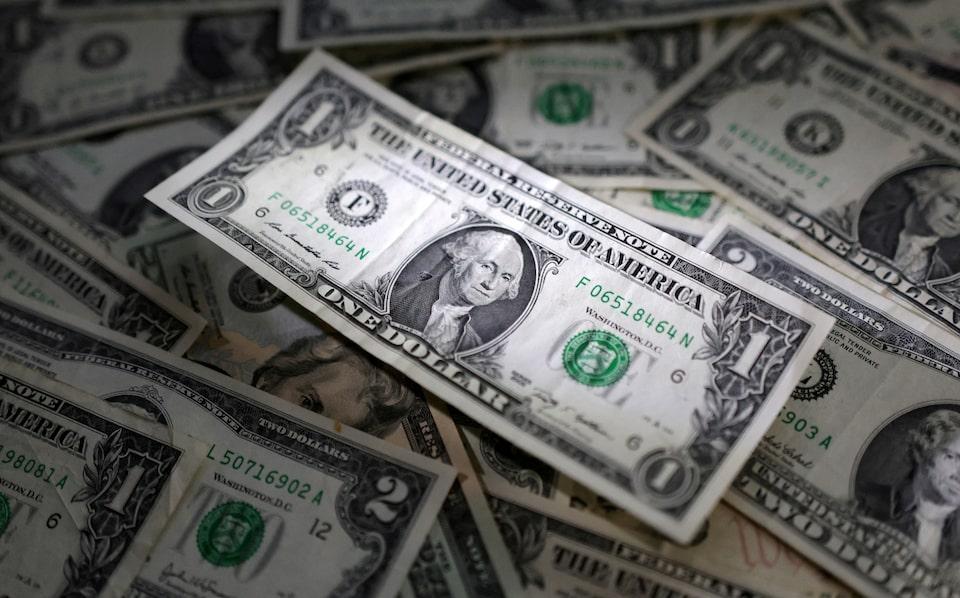
LONDON, Jan 21 (Reuters) - U.S. President Donald Trump's policies around debt, trade, sanctions, security and the country's key institutions are likely to be critical in determining the extent of a shift away from the dollar, Wall Street bank Morgan Stanley has said. In a report on Wednesday ahead of a speech by Trump in Davos where he is expected to reinforce his push to acquire Greenland, the U.S. investment bank said the transition toward a "multipolar world" was raising questions about the dollar's status. Sign up here. "On net, we think these (policy uncertainty) factors are neutral to slightly accelerating this transition away from the dollar, but their evolution over the near term will likely be critical in determining the extent of this shift," it said. While the dollar's international role has been on a gradual downward trajectory for the last 25 years, there was no obvious alternative global reserve currency, and gold, currently trading at record highs, remains its "biggest challenger," the bank said. The doubling of the gold price over the last 18 months means foreign central banks now hold more in gold - at around $4 trillion - than in U.S. Treasuries at $3.9 trillion, for the first time since 1996. The current questions affecting the dollar also include U.S. debt and its sustainability, as well as the pressure being put on the head of the Federal Reserve and the independence of top institutions more broadly. There is also elevated trade uncertainty and Trump's use of tariffs as a means to extract political concessions, now being witnessed in his standoff with several European countries over Greenland, which also strains the NATO military alliance. Such tensions bring both push and pull factors for the dollar. Morgan Stanley said past analysis has shown alliances can boost reserves of the alliance leader's currency held by its partners by approximately 30 percentage points. In that respect, a NATO breakup could be detrimental for the dollar although an increasingly insecure geopolitical backdrop could also produce "a flight to quality" driving demand for dollars as a safe-haven asset, Morgan Stanley said. https://www.reuters.com/business/us-policy-factors-critical-extent-de-dollarisation-shift-morgan-stanley-says-2026-01-21/
2026-01-21 12:54
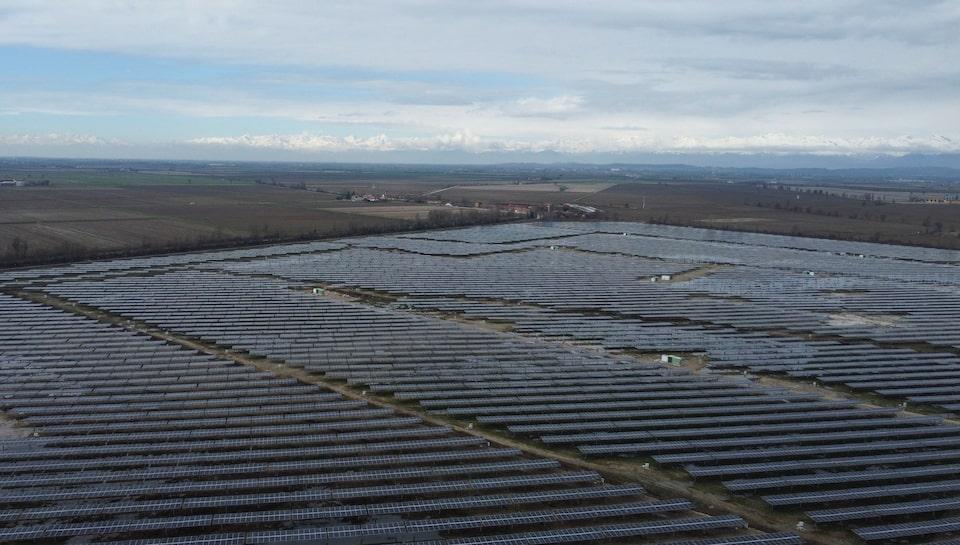
MILAN, Jan 21 (Reuters) - Italian solar power production rose 25% last year compared with 2024 to a new record of 44.3 terawatt hours (TWh), the country's power grid operator Terna (TRN.MI) , opens new tab said on Wednesday. Hydroelectric output, after a bumper 2024, dropped 21% and wind power was slightly down. Overall, power generation from renewables covered 41% of Italian demand, down from 42%. Sign up here. Italy added 7.2 gigawatts (GW) of green energy capacity last year compared with 7.5 GW in 2024, in a sign that the country needs to quicken the roll-out of renewables to meet its decarbonisation targets for 2030. Overall electricity consumption was flat last year to 311.3 TWh, with imports covering around 15%. Battery storage capacity increased by 1.7 GW to reach nearly 18 GW of capacity, Terna added. https://www.reuters.com/sustainability/climate-energy/italy-solar-power-production-hit-new-record-2025-terna-says-2026-01-21/