2025-06-11 06:50
Markets cautious on US-China trade talks outcome Rising supplies remain a key focus Weekly EIA crude and fuel inventory report due at 1430 GMT June 11 (Reuters) - Oil prices softened on Wednesday as markets assessed the outcome of U.S.-China trade talks, yet to be reviewed by President Donald Trump, with weak oil demand from China and OPEC+ production increases weighing on the market. Brent crude futures declined 15 cents, or 0.2%, to trade at $66.72 a barrel, while U.S. West Texas Intermediate crude fell 10 cents, or 0.2%, to $64.88 at 0644 GMT. Sign up here. U.S. and Chinese officials agreed on a framework to put their trade truce back on track and resolve China's export restrictions on rare earth minerals and magnets, U.S. Commerce Secretary Howard Lutnick said on Tuesday at the conclusion of two days of intense negotiations in London. The two countries are world's two largest economies and oil consumers. "The current (price) corrections can be attributed to a mix of technical profit-taking and caution leading up to the US-China (official) announcement," said Phillip Nova, senior market analyst Priyanka Sachdeva. Trump will be briefed on the outcome before approving it, Lutnick added. "In terms of what it means for crude oil, I think it removes some downside risks, particularly to the Chinese economy and steadies the ship for the U.S. economy - both of which should be supportive for crude oil demand and the price," said Tony Sycamore, a market analyst for IG. On the supply side, OPEC+, which includes the Organization of the Petroleum Exporting Countries plus allies such as Russia, plans to increase oil production by 411,000 barrels per day in July as it looks to unwind production cuts for a fourth straight month, with some analysts not expecting regional demand to soak up these excess barrels. "Greater oil demand within OPEC+ economies – most notably Saudi Arabia – could offset additional supply from the group over the coming months and support oil prices," said Capital Economics' climate and commodities economist Hamad Hussain in a note. "However, given that any boost to demand will be seasonal, we still think that Brent crude prices will fall to $60 (a barrel) by the end of this year." Later on Wednesday, markets will be focusing on the weekly U.S. oil inventories report from the Energy Information Administration, the statistical arm of the U.S. Department of Energy. U.S. crude oil stocks fell by 370,000 barrels last week, according to market sources who cited American Petroleum Institute figures on Tuesday. Analysts polled by Reuters on Monday expected that the EIA report will show U.S. crude oil stockpiles fell by 2 million barrels in the week to June 6, while distillate and gasoline inventories likely rose. (This story has been corrected to say 'falls,' not 'gains,' in the headline) https://www.reuters.com/business/energy/oil-prices-down-markets-assess-us-china-trade-talks-outcome-2025-06-11/

2025-06-11 06:15
LONDON, June 11 (Reuters) - Beijing's restrictions on rare earth exports have brutally exposed the West's dependency on Chinese supplies of these esoteric metals and the permanent magnets they help power. But it's not as if we haven't been here before. China did the same in 2010. Sign up here. Western automakers have chosen to ignore the historical precedent and doubled down on a technology that remains almost totally beholden to Beijing's export whims. Now many of them are in full panic mode, with several already forced to halt production lines, demonstrating the outsize economic impact of niche metals such as dysprosium, which is used in neodymium-iron-boron (NdFeB) magnets. China's willingness to weaponise its dominance of the metals that power our modern world will accelerate the West's drive to build out its own supply chains. But part of the solution is to use less rare earth elements. The West can't control supply, but it can move the demand dial. THOSE WHO FORGET THE PAST... Beijing claimed its imposition of rare earth export quotas in 2010 was solely about clamping down on illegal domestic mines. It just happened to come after a collision between a Chinese trawler and a Japanese coast-guard vessel in disputed waters. If Japan was the target, the entire West felt the pain as prices of rare earths went stratospheric. Dysprosium oxide rose 26-fold in price between 2009 and 2012, according to consultancy Adamas Intelligence. China only backed down after a World Trade Organization panel ruled against it , opens new tab in 2014. Some automakers learnt the lesson. Japan's Nissan Motor Co (7201.T) , opens new tab launched a new version of its LEAF electric vehicle in 2012 with a motor containing 40% less , opens new tab dysprosium. Renault (RENA.PA) , opens new tab went further, developing an alternative motor , opens new tab without permanent magnets and therefore rare earths for its ZOE model in the same year. Indeed, Adamas estimates the share of EVs powered by rare-earth-free motors rose from less than 1% of global sales in 2010 to 12% in 2017. That, though, proved the peak. Rare earth prices fell and remained stable in the late 2010s. Western automakers largely pivoted back to permanent magnets. Around 97% of all EVs sold every year since 2017 use rare-earth powered motors, according to Adamas. This not only reflects the exponential growth in the EV market - particularly in China, which for obvious reasons has no rare earths phobia - but also the increasing number of magnets in the average new vehicle, whether pure battery or hybrid. As well as the serious business of actually powering the vehicle, there are multiple magnets in the tiny motors controlling heating, entertainment systems, braking and even reminding the driver to buckle up. This has heightened dependency on a country that not only produces around 95% of the world's NdFeB magnets but also controls the supply chains of the metals required to make them. China may have pulled its rare earth lever too hard this time around, quite possibly due to over-zealous bureaucracy at the Ministry of Commerce, which is responsible for separating out exports for military and civilian applications. Talks between Chinese and U.S. representatives entered their second day on Tuesday in an attempt to find a trade-off between China's restrictions on rare earths and U.S. restrictions on advanced semiconductors. Tariffs loom large in the background. Assuming some sort of deal can be done and Beijing loosens its grip on rare earth exports, the automotive industry's dependency isn't going away. Any wait for Western supply to catch up may be a long one. Although Western governments are pouring money into new projects, building a mine-to-magnet supply chain will take years. Moreover, civilian sectors will be second in line. The U.S. Department of Defense has been the single largest investor in the country's rare earths sector with the stated goal , opens new tab of being able to support "all U.S. defense requirements by 2027". In terms of must-have magnets, the speakers on your car radio don't quite compare with an F-35 fighter, which requires more than 900 pounds of rare earths. DEMAND DESTRUCTION Do new vehicles really require all the rare-earth powered technology currently being deployed in non-critical applications? An even bigger question is whether they require a rare-earth magnet even in the power train. Those companies such as Renault and BMW (BMWG.DE) , opens new tab which learned the lesson from the past have developed alternative solutions , opens new tab for their EV motors, reducing the impact of the current supply shock. Plenty of other car companies have been looking to do the same, but in most cases the technology is still far from commercial production. China's latest rare earths restrictions should be a powerful incentive to accelerate the redesign process. Automakers may find engineered demand destruction works faster than building a new supply chain when it comes to escaping China's chokehold on rare earth magnets. It's not as if they haven't done it before. The opinions expressed here are those of the author, a columnist for Reuters. Enjoying this column? Check out Reuters Open Interest (ROI), your essential new source for global financial commentary. ROI delivers thought-provoking, data-driven analysis of everything from swap rates to soybeans. Markets are moving faster than ever. ROI can help you keep up. Follow ROI on LinkedIn , opens new tab and X , opens new tab. https://www.reuters.com/markets/commodities/demand-destruction-can-help-break-chinas-rare-earths-chokehold-andy-home-2025-06-11/
2025-06-11 06:13
LITTLETON, Colorado, June 11 (Reuters) - U.S. exports of LNG are already at record highs so far in 2025, but forecasts for above-average temperatures across key Asian import markets could lift them even higher this summer. Average temperatures for Japan, South Korea and China are all forecast to hold above normal through the end of August, likely boosting use of power-hungry air conditioners. Sign up here. That higher demand load will in turn spur utilities to lift generation from all available sources, including from natural gas plants fed mainly by imported liquefied natural gas (LNG). That upbeat demand outlook is good news for U.S. LNG exporters, who are riding a wave of strong demand from Europe but face a potential slowdown in European buying this summer. HOT AND STICKY Temperatures across East Asia are already hovering above long-term averages, and are expected to continue trending higher over the next two months. Average temperatures in Japan - the second largest LNG importer after China in 2024 - are expected to register around 6% above the long-term average from now through the end of August, data from LSEG shows. South Korea, Taiwan, Hong Kong and several cities in China are forecast to register similar readings. As the northern hemisphere summer coincides with the rainy season across much of Asia, the forecasted hot temperatures are likely to be mixed with high humidity levels. That in turn will likely spur heavy use of air conditioning systems, which can push power demand levels sharply higher during heatwaves and strain regional power grids. GAS HEAVY Asia's electricity producers are used to the summer climb in electricity demand and adjust output levels accordingly. In 2024, average electricity demand during June, July and August - the hottest months of the year - was around 9% above the monthly average for the year as a whole. To accommodate that higher load, utilities lifted output from all power sources, but especially from fossil fuel plants which supply power that can be dispatched on command when output from renewable sources drops off. Both gas-fired and coal-fired generation across Asia during June, July and August last year averaged around 5% more than the 2024 monthly average, Ember data shows. LNG RELIANCE To feed the higher demand for power anticipated during June, July and August, Asian LNG importers tend to book higher LNG volumes during May, June and July than during other months. Between 2021 and 2024, U.S. LNG exports to Asia during May, June and July averaged around 7.8 million metric tons a month, according to data from commodity intelligence firm Kpler. That compares to an average of 2.23 million tons a month to Asia overall for the 2021 to 2024 period, and underscores how important LNG is as a power fuel during the Asian summer. PRICE POINT A key driver of potential Asian purchases will be the price of LNG, which needs to compete with coal in power generation and has recently proved too dear for many Asian consumers. U.S. LNG export prices have averaged around $8.54 per thousand cubic feet so far in 2025, up 35% from the 2024 average, according to data from LSEG. That said, any rise in Asian LNG purchases would likely come just as LNG orders by Europe tend to retreat to their annual lows, which could apply downward pressure to prices. Over the first half of 2025, European markets accounted for 70% of all U.S. LNG exports, Kpler data shows, while Asian markets accounted for just under 20%. Average monthly volumes of U.S. LNG dispatched to Europe during January to June were around 6 million tons, compared to around 1.6 million tons a month to Asia. A key caveat that will govern Europe's LNG appetite going forward is how quickly gas storage operators there want to replenish inventories, which were depleted over the past winter and must be restocked ahead of next winter. Currently, Europe's gas stockpiles are around half full, which compares to around 70% full at this time of year in 2023 and 2024, according to LSEG. If gas storage operators opt to restock as quickly as possible, then Europe's imports of LNG could remain quite strong over the coming months. But if Europe's storage firms opt instead to wait until the autumn to replenish stocks, or refill tanks from pipelined supplies, then Europe's LNG purchase volumes could drop sharply. Such a sudden wilt in European orders would likely trigger an aggressive markdown in prices, however, and in turn lure fresh buying interest in Asia where power firms are already primed to boost output. That suggests that overall U.S. LNG export volumes should remain fairly robust for the near term at least, regardless of where the buyers reside. The opinions expressed here are those of the author, a columnist for Reuters. Enjoying this column? Check out Reuters Open Interest (ROI), your essential new source for global financial commentary. ROI delivers thought-provoking, data-driven analysis of everything from swap rates to soybeans. Markets are moving faster than ever. ROI can help you keep up. Follow ROI on LinkedIn , opens new tab and X , opens new tab. https://www.reuters.com/markets/commodities/rising-asia-temperatures-bode-well-us-lng-export-prospects-maguire-2025-06-11/

2025-06-11 06:07
BEIJING, June 11 (Reuters) - Chinese rare earths magnet producer JL MAG Rare-Earth (300748.SZ) , opens new tab said on Wednesday it had obtained export licences for rare earths products including magnets, motor rotors and components to regions including the U.S., Europe and Southeast Asia. The company applied for licences after China added several rare earths minerals and associated magnets to an export control list in April, and the applications are being approved "in succession", the company said in a post on the official investor relations platform for the Shenzhen stock exchange. Sign up here. The company did not say when the licences were approved. However, it announced the news shortly after U.S. and Chinese officials reached a deal in London that U.S. Secretary of Commerce Howard Lutnick said would "resolve" the rare earths restrictions. JL MAG Rare-Earth's shares were up 7.9% in late afternoon trading. Fellow rare earths magnet producer Innuovo Technology (000795.SZ) , opens new tab said on Friday it had received a small number of export licences, without saying where the customers were based. China has already offered to speed up approvals for some European companies as thousands of applications pile up for review in the small Ministry of Commerce department tasked with managing the export regime. Beijing's rare earths export curbs have upended supply chains central to automakers, aerospace manufacturers, semiconductor companies and military contractors around the world. https://www.reuters.com/world/china/jl-mag-rare-earth-says-it-obtained-export-licenses-rare-earth-products-us-europe-2025-06-11/

2025-06-11 06:05
FRANKFURT, June 11 (Reuters) - Proxima Fusion, a Munich-based nuclear fusion technology company, said on Wednesday it has raised 130 million euros ($148.8 million) to help it move closer to its goal of developing a novel power plant. WHY DOES IT MATTER? Worldwide, dozens of initiatives are exploring nuclear fusion, a nascent technology that seeks to harness the intense process that powers the sun to generate electricity. Sign up here. Competition has sprung up between state and private companies, between governments in European countries, the United States and China, and between technology options, such as plasma confinement, used by Proxima, or the use of lasers. Germany's new conservative-led government supports the technology within its energy agenda, putting Proxima and domestic sector rivals Gauss, Marvel and Focused Energy on the map. LIST OF INVESTORS Proxima listed venture capital firms Cherry Ventures of Berlin and Balderton Capital of London as lead finance partners, along with 10 other entities. KEY QUOTES "Fusion energy is entering a new era - moving from lab-based science to industrial-scale engineering," said Proxima CEO Francesco Sciortino. "This investment validates our approach and gives us the resources to deliver hardware that is essential to make clean fusion power a reality." Cherry Ventures Founding Partner Filip Dames said: "Proxima Fusion combines Europe's scientific edge with commercial ambition. This is deep tech at its best, and a bold signal that Europe can lead on the world stage." WHAT'S NEXT? Proxima said it will use the funding to complete a major hardware demonstration while continuing to grow its teams in Munich, near Zurich in Switzerland, and at a campus near Oxford in Britain. ($1 = 0.8739 euros) https://www.reuters.com/sustainability/climate-energy/german-nuclear-fusion-company-proxima-raises-130-million-euros-development-2025-06-11/

2025-06-11 06:03
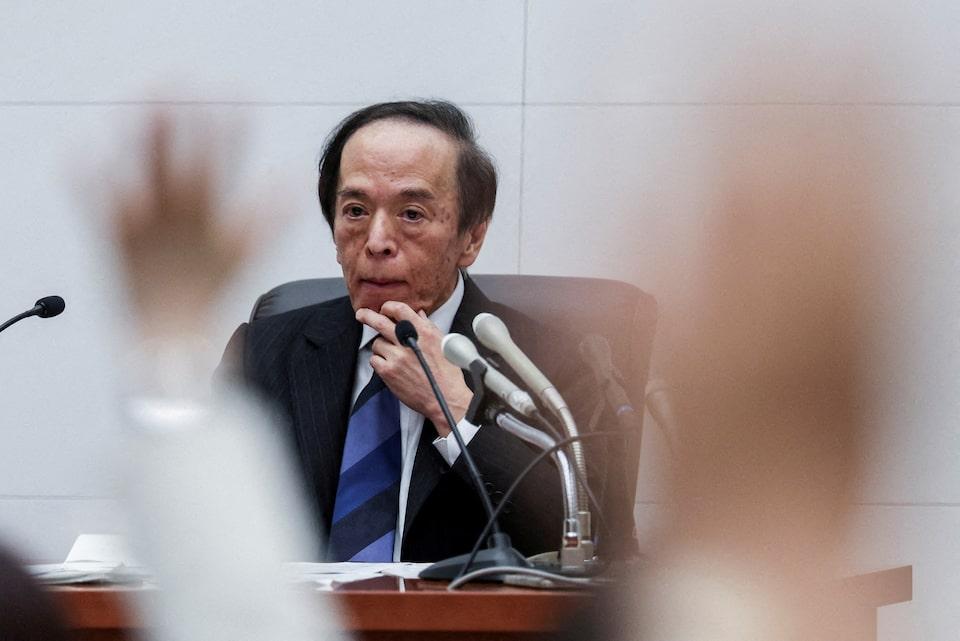
Japan's cashless payment ratio hits 42.8% in 2024 BOJ policymakers call for action to keep settlements attractive CBDC could become critical infrastructure in Japan, Uchida says No guarantee central bank currency will retain key settlement status TOKYO, June 11 (Reuters) - Bank of Japan officials are ramping up calls to keep pace with rapid developments around digital currencies that may accelerate a shift to cashless payments in a country better known for its belief that "cash is king." Once seen as a society favouring physical currency, Japan saw the ratio of cashless payments rise to 42.8% in 2024, up from 13.2% in 2010 and hitting the government's 40% goal a year earlier than targeted, government data showed. Sign up here. While Japan is a global laggard on payment technology, the increase in cashless transactions is forcing policymakers to ensure they are ready to adapt to shifting public preference on payment and settlement means. This includes the option of a central bank digital currency (CBDC). While no decision has been made on whether to issue a digital yen, the BOJ began a pilot programme for developing a CBDC in 2023, and has been consulting with private firms and the government on its framework and design. "Although banknote issuance remains high in Japan, usage of notes could fall significantly in the future amid rapid digitalisation," BOJ Executive Director Kazushige Kamiyama told a meeting last week with private firms on the pilot programme. "As such, Japan must consider what steps it can take now to ensure its retail settlement system is convenient, efficient, accessible universally, while being safe and resilient." BOJ Deputy Governor Shinichi Uchida said a CBDC may become "a critical piece of infrastructure" shaping the future of Japan's payment and settlement systems, but stressed that he did not expect demand for cash to disappear in Japan any time soon. In his speech on Saturday, Uchida spoke about a hypothetical world in which the yen is overtaken by another instrument - such as crypto assets - as the main form of payment in Japan. Such a world would not occur as long as the public believes in the BOJ's ability to keep the value of the yen stable, which could come into question if the central bank fails to fulfil its mission of price stability, Uchida said. "Looking to the future, in a society that has made significant advances in digitalization, there is no guarantee that currency issued by the central bank of a sovereign nation will continue to function as a generally acceptable payment instrument," he said. CBDCs are back in the spotlight after U.S. President Donald Trump issued an executive order in January banning the Federal Reserve from issuing a digital dollar, seemingly as part of a drive to promote cryptocurrencies and stablecoins instead. The growing presence of stablecoins, or cryptocurrencies backed by a hard currency, and the potential risk of an erosion in the U.S. dollar's dominance have also piled pressure on central banks to consider issuing their own digital currencies. The European Central Bank has called for the need to issue a digital euro to respond to Trump's push to promote stablecoins, and develop an electronic means of payment that does not rely on dominant U.S. providers such as Visa. China is racing ahead with global ambitions to internationalise the yuan with transactions of the digital yuan more than tripling between June 2023 and June 2024. https://www.reuters.com/world/china/japans-shift-cashless-society-prods-boj-call-payment-innovation-2025-06-11/