2025-06-09 11:07
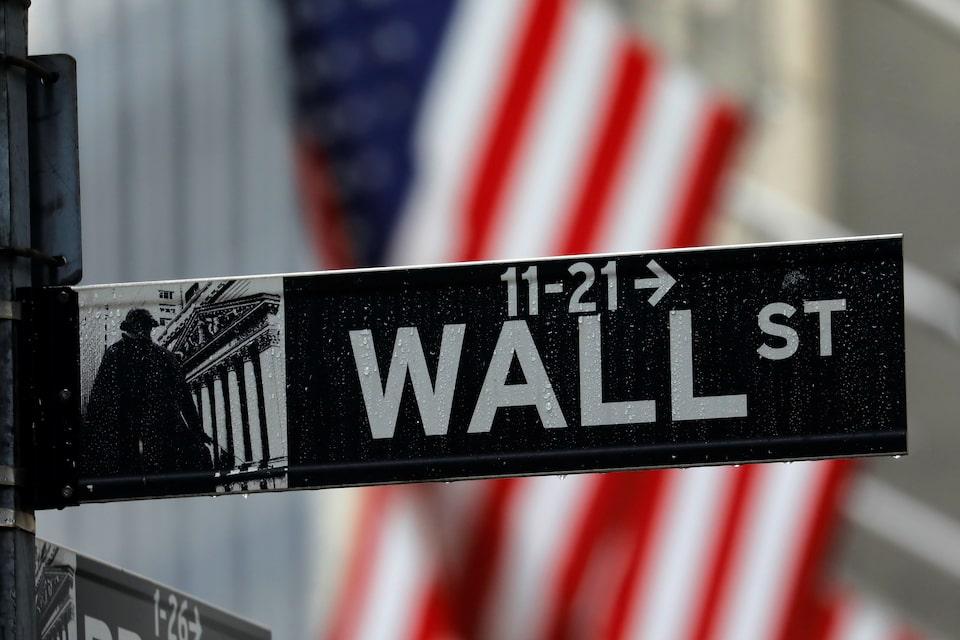
LONDON, June 9 (Reuters) - What matters in U.S. and global markets today I'm excited to announce that I'm now part of Reuters Open Interest (ROI) , opens new tab, an essential new source for data-driven, expert commentary on market and economic trends. You can find ROI on the Reuters website , opens new tab, and you can follow us on LinkedIn , opens new tab and X. , opens new tab Sign up here. Soothed by another resilient U.S. employment report and optimism about trade deal breakthroughs, stocks are continuing to nudge higher as all eyes turn to U.S.-China bilateral trade talks in London on Monday. I'll discuss this and the rest of today's market news below. In today's column, I explore a plan for jointly issued euro zone debt that could be a game-changer. Today's Market Minute * Three of President Donald Trump's top aides will meet with their Chinese counterparts in London on Monday for talks aimed at resolving a trade dispute between the world's two largest economies that has kept global markets on edge. * California National Guard troops were deployed to the streets of Los Angeles on Sunday to help quell a third day of protests over President Trump's immigration enforcement, a step the state's Democratic governor, Gavin Newsom, called unlawful. * Japan is considering buying back some super-long government bonds issued in the past at low interest rates, two sources with direct knowledge of the plan said on Monday. * Trump's move to double tariffs on aluminum imports increases the risk of a full-blown scrap war with the European Union, Reuters Open Interest metals columnist Andy Home says. * Europe's ambition to develop cheap, clean energy has recently received a harsh reality check, Reuters Open Interest energy columnist Ron Bousso argues, as power failures and a string of cancelled renewables projects make clear that the road to inexpensive power will carry a very high price tag. London showdown A top-level U.S. delegation including Treasury Secretary Scott Bessent, Commerce Secretary Howard Lutnick and Trade Representative Jamieson Greer is in the UK to meet with Chinese representatives for trade talks. China's vice premier He Lifeng is also in the UK. The meeting follows a 90-minute phone call between Presidents Donald Trump and Xi Jinping last week to restart the stalled process. Tensions between the countries remain high, but on a positive note, there was some relief on Friday from news that Beijing had granted temporary export licenses to suppliers of rare earth minerals to the top three U.S. automakers: Ford, General Motors and Stellantis. Meanwhile, trade pressures on China's stuttering economy were all too evident in the latest sweep of May export and inflation numbers released on Monday. China's exports to the U.S. plunged 34.5% year-on-year in May, the sharpest drop since February 2020 when the COVID-19 pandemic upended global trade. The decline in imports from America also deepened to an annual drop of 18%. By contrast, Wall Street stocks were buoyed by the April U.S. payrolls report released on Friday, with the S&P500 (.SPX) , opens new tab gaining more than 1% by the close to reach its highest point since February. Both the S&P 500 and the Nasdaq (.IXIC) , opens new tab are now back in positive territory for the year. Nonfarm jobs increased by 139,000 jobs last month, slightly above consensus forecasts, the Bureau of Labor Statistics said. While downward revisions to the two prior months' figures are a cause for some concern, the sweep of the report showed few major cracks. Treasury yields rose after the report, with 30-year yields back within a few basis points of 5% again on Monday ahead of the week's big long bond auction and the May U.S. consumer price inflation data release on Wednesday. Despite President Trump's call for a full percentage point cut in Federal Reserve interest rates on Friday and his statement about naming Fed Chair Jerome Powell's successor soon, Fed easing expectations remain subdued. Futures now only price about a 70% chance of a move by September and expect only 46 bps of cuts by yearend. Outside of the U.S., the Japanese yen firmed to 144.43 per dollar as Japan's economy contracted at a slower-than-expected pace in the January-March period. Japan's government is considering buying back some super-long bonds it issued at low interest rates, according to Reuters sources. The move would come on top of an expected government plan to trim issuance of super-long bonds in the wake of sharp rises in yields. Be sure to check out today's column, which looks at a novel proposal for expanding the size and liquidity of jointly issued euro sovereign bonds. This possible plan comes at a critical juncture when global investors are looking for possible alternatives to the dominant U.S. Treasury market. Chart of the day China's export growth slowed to a three-month low in May as U.S. tariffs slammed shipments, while factory-gate deflation deepened to its worst level in two years, heaping pressure on the world's second-largest economy on both the domestic and external fronts. While the trade story has hogged the spotlight this year, the deflation picture has been brewing for several years, partly because the country's property bust has depressed domestic demand. Today's events to watch * New York Federal Reserve's May survey of consumer expectations, U.S. May employment trends (10:00 AM EDT); Mexico May inflation (8:00 AM EDT) * U.S. Treasury Secretary Scott Bessent, Commerce Secretary Howard Lutnick and Trade Representative Jamieson Greer meet Chinese trade delegation, including China's vice premier He Lifeng, in London * Argentina's President Javier Milei meets with French President Emmanuel Macron in France Opinions expressed are those of the author. They do not reflect the views of Reuters News, which, under the Trust Principles , opens new tab, is committed to integrity, independence, and freedom from bias. https://www.reuters.com/business/finance/global-markets-view-usa-2025-06-09/
2025-06-09 11:06
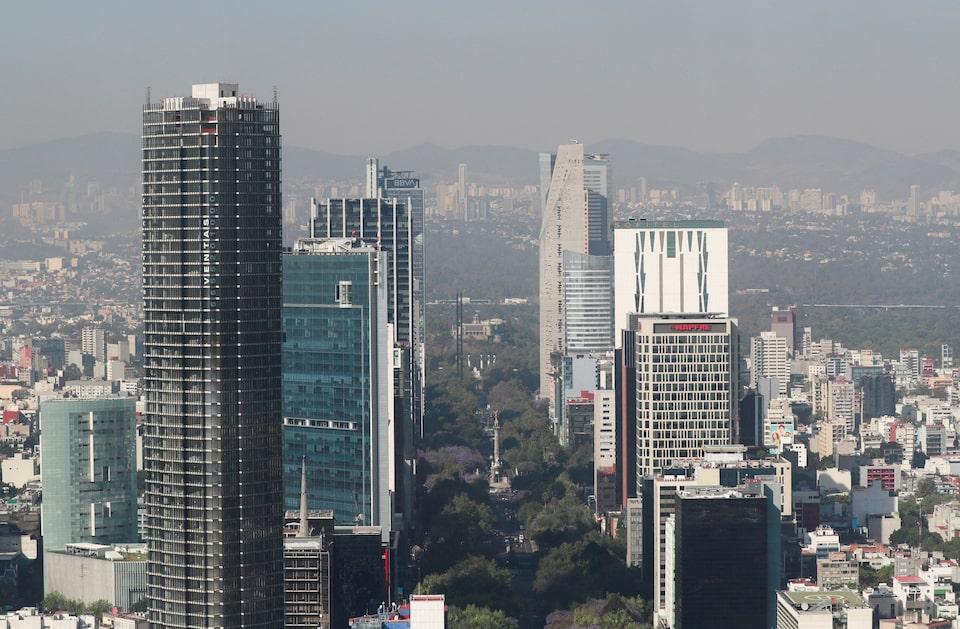
Latin America offers attractive yields amid global trade tensions Brazil and Mexico dominate Latam investment landscape Argentina's market gains interest after capital controls changes NEW YORK, June 9 (Reuters) - Latin America has emerged as a top investing destination as ongoing wars - both of the military and trade variety - make investors seek options in a region they view as refreshingly untroubled by tariffs and major conflicts. Portfolio flows data suggests that investors are largely underexposed to Latin America even as many stock markets - including Brazil's and Mexico's - are trading at or near record highs, while sovereign bonds offer still-attractive yields. Although some prefer not to chase a stock rally, others have focused on the local debt market. Sign up here. "The Latam story is easier to tell now as stocks are cheap and there is a lack of options in emerging markets," said Leonard Linnet, head of equities at Itau BBA. "China is at the epicenter of the trade war, India is more expensive and has some geopolitical issues with Pakistan and investors are avoiding investing in Russia.” Brazil and Mexico are the behemoths where most international investors concentrate their exposure to Latin America. Both carry by far the largest regional weights in global benchmarks for stocks and bonds. Among all emerging markets, however, the two countries are relatively small. Brazil, which is Latin America's largest economy and market, constitutes 60% of the MSCI Latam index (.MILA00000PUS) , opens new tab and just below 5% of the broader EM index (.MSCIEF) , opens new tab. The stock markets of both Brazil and Mexico are trading near record highs and at low valuations, and their bonds offer attractive yields with the backdrop of softening monetary policy. The investment avenues thin out for some institutions as some Latin American markets are comparatively illiquid or lack investment-grade credit ratings. But in that higher-risk environment other investors see returns. "The investment opportunity in Latam does not require large changes in global asset allocations," Rob Citrone, founder of global macro hedge fund Discovery Capital, told his investors recently. "Asset flows, on the margin, dictate much of the price performance, so small changes to large markets, such as the U.S., can have big impacts on smaller markets, such as most in Latam." After a 26% decline in the regional stock index last year, Latam is the best performer for stocks this year. Within the MSCI universe, investors are paying just over $9 for each dollar in earnings across Latam - compared with more than $19 for developed markets (.WORLD) , opens new tab. Although Mexico is closer to the trade war's epicenter, its listed companies are not so exposed to it, so the country's stocks are moving higher. "Price-to-earnings multiples in Latam are low now even when compared with its own historical average," said Itau BBA's Linnet. "Brazil is not only cheaper than China and India, it is trading at a 23% discount from (itself)." Netherlands-based Robeco has been increasing allocation to Latin America, mainly to Mexico, Brazil and Chile, as it has partially shifted away from the U.S., said Wim-Hein Pals, head of emerging markets team at Robeco. The firm is overweight Latam, while it is close to neutral China and underweight India. Both dollar weakness and idiosyncratic stories, including last year's FX selloff, have bolstered the region's currencies. With its benchmark interest rate at 14.75%, Brazil's real has emerged as one of the favored global carry currencies and is up 9% against the greenback this year. The Latin America currency index (.MILA00000CUS) , opens new tab is up nearly 15% this year and last week touched a 14-year high. The outlook for the global economy and the issue of reallocating outside of the United States both face uncertainties and it is far too soon to expect material inflows to Latin America, said Graham Stock, senior emerging market strategist at RBC Global Asset Management. "Having said that, you could always see short-term trades that are dollar-bearish, and you could see some allocation into Latin American currencies, because they're high yielding. The carry is attractive there, and I think that is part of what we've seen." Beyond the region's largest economies, Argentina has been a forbidden fruit of sorts for investors over the past years. Its dollar debt has returned over 100% at the index level since President Javier Milei was elected in late 2023 and the local Argentine stock index (.MERV) , opens new tab rose 173% last year. Yet Argentina remains outside major benchmarks, making the market inaccessible to some of the largest investors - some of whom have grown more curious about Argentine assets since capital controls were all but lifted in mid-April. "We couldn't buy in on Argentina for all practical purposes while they were under the capital controls," said Alison Shimada, head of the Total Emerging Markets Equity team at Allspring Global Investments. "Now that that has changed, we would be interested, and we're doing some work on it, but at the right price." Some investors would like to see more Latam companies listed. Brazil also attracts most of the region's venture capital, with over 1,400 VC-backed startups since 2013 as of the first half of last year, according to the most recent data from LAVCA, while Uruguay, Chile and Colombia emerged as alternative hubs for innovation. Regardless of how many of these startups actually go to market, they will likely find investors thirsty for places to put money to work in the region. Said Allspring's Shimada: "I'd love to see those smaller countries have more listed assets." https://www.reuters.com/business/investors-eye-latin-america-they-diversify-away-wall-street-2025-06-09/
2025-06-09 11:00
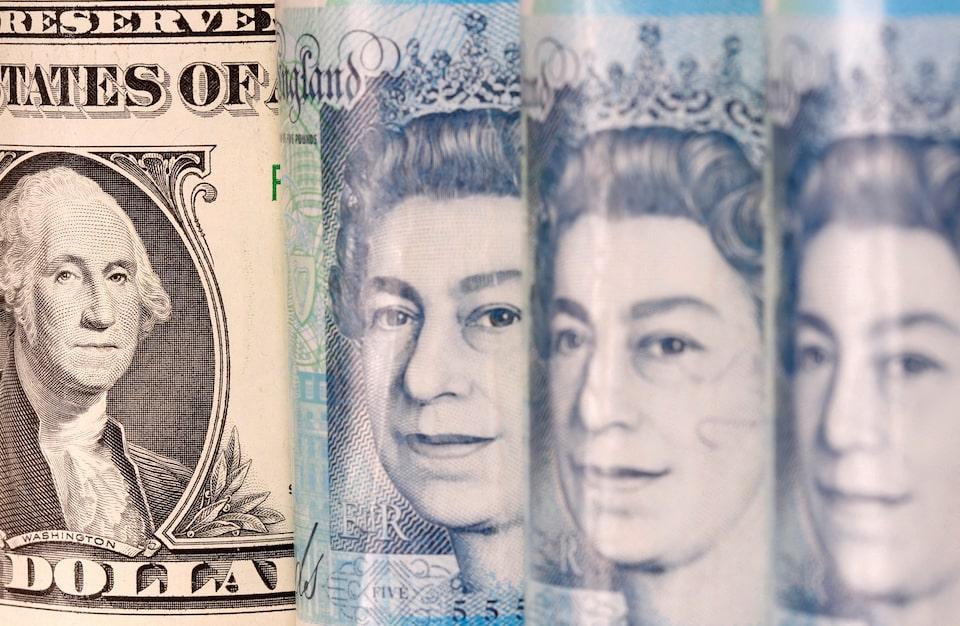
June 9 (Reuters) - Sterling rose against the dollar on Monday, as the greenback weakened after rallying on Friday on the back of a better-than-expected U.S. jobs report and investors eyed a spending plan by Britain's government later this week. The pound has been helped by a UK economy that has proved relatively resilient to global turbulence. Sign up here. Investors will, however, be monitoring a spending review on Wednesday that will set government departments' budgets up to 2029, covering most of the remainder of the Labour Party's term in office, while concerns persist around Britain's sovereign debt levels , opens new tab. The pound gained about 0.4% to $1.3575. It held steady against the euro , which was only marginally lower at 84.21 pence. More upbeat business surveys and strong first-quarter GDP indicated the UK economy is recovering from a weak end to 2024, but the public remains impatient for improvements to living standards, finance minister Rachel Reeves said on Thursday. This week's April data on UK jobs, growth and industrial output will not show much, said Kit Juckes, chief FX strategist at Societe Generale. "I think the economy is vulnerable. The economy will ultimately be sterling's Achilles heel because we have no room for fiscal policy, not much economic momentum." However, decent pay rises on average across the economy have helped, he said. "The UK economy is not growing, but there are people turning up in shops and bars because there's some wage growth. And so I think the world is full of sterling bears who are getting frustrated." Markets effectively fully anticipate that the Bank of England will leave interest rates unchanged on June 19 when it announces the result of its next policy meeting, according to data compiled by LSEG. Many of sterling's gains this year have resulted from broad dollar weakness as investors factor in the risk that President Donald Trump's erratic policymaking could result in a U.S. recession that might spill over to the rest of the world. The pound has appreciated about 8% so far this year against the dollar. https://www.reuters.com/world/uk/sterling-rises-against-weaker-dollar-ahead-uks-spending-plan-2025-06-09/
2025-06-09 10:50
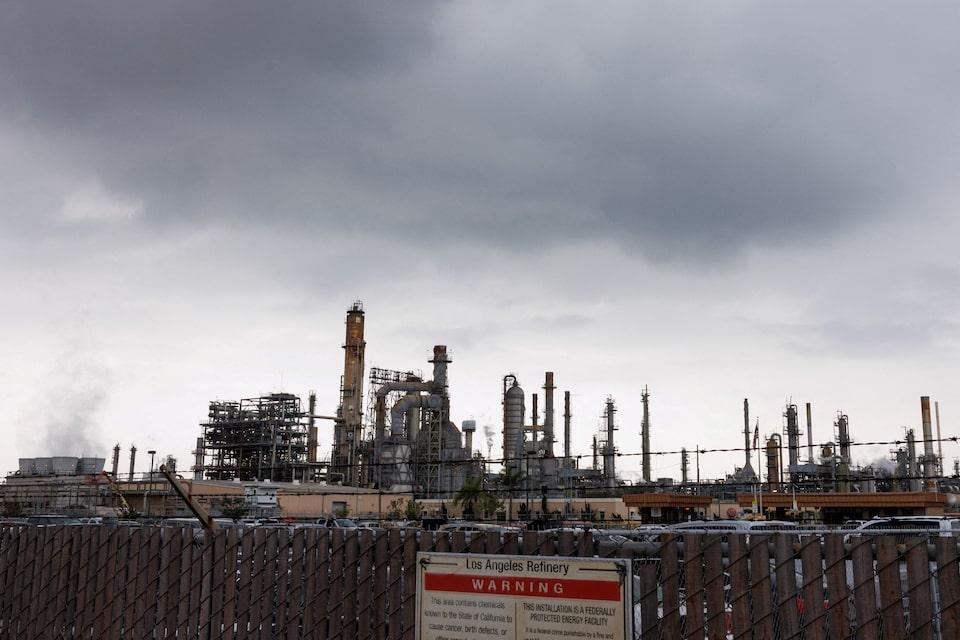
Outages at Chevron, PBF, Valero refineries caused crunch State's reliance on fuel imports may grow amid planned refinery closures Imports mainly from Asia, the Bahamas increase Opening of unusual trade routes could dampen extreme price spikes NEW YORK, June 9 (Reuters) - California's fuel imports rose to the highest in four years in May as refiners turned to historical trading partners in Asia and tapped some unusual routes to make up for shortages in the No.2 U.S. oil consumer state, according to shipping data and traders. The rise in shipments to California offers an early look at the future of the biggest gasoline and jet fuel markets in the U.S., which are expected to become more reliant on imports after Phillips 66(PSX.N) , opens new tab and Valero(VLO.N) , opens new tab close two major refineries in the state by next year, amid growing regulatory and cost pressures, and declining demand for gasoline. Sign up here. "California's refining capacity is shrinking faster than its fuel demand is declining, forcing the state into a long-term import-dependent position," Kpler analyst Sumit Ritolia said. California's total petroleum product imports rose to 279,000 barrels per day (bpd) in May, the highest since June 2021, when a similar volume was imported, according to data from vessel tracker Kpler. About 187,000 bpd, or nearly 70% of the imports came from South Korea and other Asian exporters, who have historically been the top trading partners for California and other West Coast states, which are geographically isolated from major U.S. refining centers along the Gulf Coast. Recent outages in California at refineries owned by Chevron (CVX.N) , opens new tab, PBF Energy (PBF.N) , opens new tab and Valero(VLO.N) , opens new tab caused a supply crunch in markets along the U.S. West Coast that necessitated more imports, traders and analysts said. "We have seen tighter supplies due to several refinery outages," StoneX oil analyst Alex Hodes said. That boosted prices in the U.S. Pacific Northwest substantially and led to increased imports, he said. There were several days where San Francisco gasoline was more than $40 a barrel above Gulf Coast pricing, nearly double the year-to-date average of $21, WoodMac analyst Austin Lin said. UNUSUAL ROUTES California's imports from the Bahamas, a trade route rarely used by West Coast refiners, hit a record high of 38,000 bpd in May, Kpler data showed. The previous record was 29,000 bpd in March. Flows on the route from the Caribbean were sporadic before this year's refining outages, averaging just 6,000 bpd throughout last year, the data showed. The Bahamas does not refine oil but exports fuel and blending components shipped there from the U.S. Gulf Coast refining hub as part of a workaround to a century-old U.S. shipping law to supply fuel to the East Coast when pipeline shipments are insufficient. The Jones Act bars movement of goods between U.S. ports unless carried by ships built domestically and staffed by local crew. However, there were only 55 such petroleum tankers as of the start of 2024, according to a government report, making them expensive and hard to procure. Sailing a tanker from Texas to California via the Bahamas is typically too expensive, but the recent refinery outages opened up the arbitrage to the West Coast from everywhere, a second U.S. gasoline trading source said. Ample availability in the Atlantic Basin of alkylate - a blending component highly sought for California's unique blend of CARBOB gasoline - could have also contributed to the uptick in imports from the Bahamas, Sparta Commodities analyst Philip Jones-Lux said. Meanwhile, California imported 39,000 bpd of gasoline and alkylate from India last month, the highest since January 2024, Kpler data showed. More waterborne imports will raise fuel costs in the most populous U.S. state, GasBuddy analyst Patrick De Haan said. However, the opening up of these unusual trade routes in May shows the state still has options to shield consumers from extraordinary price spikes, he said. Retail gasoline prices averaged $4.68 a gallon in California on Friday, while the national average was $3.12, according to GasBuddy data. https://www.reuters.com/business/energy/california-fuel-imports-hit-4-year-high-amid-refinery-outages-2025-06-09/
2025-06-09 10:31
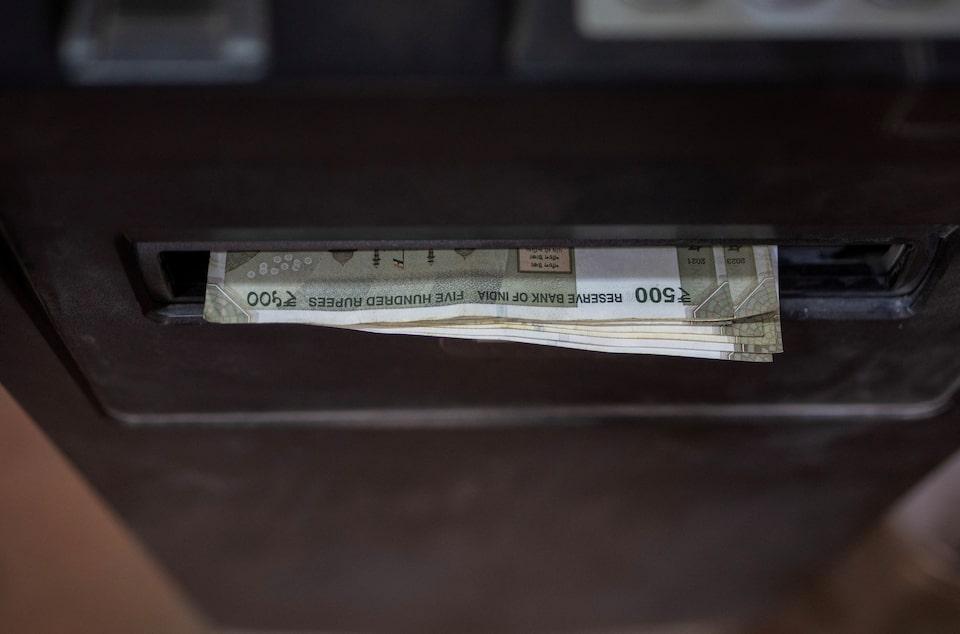
MUMBAI, June 9 (Reuters) - The Indian rupee closed marginally higher on Monday, tracking muted moves in Asian peers even as the dollar weakened ahead of closely watched trade talks between U.S. and China scheduled to take place in London. The rupee closed at 85.62 against the U.S. dollar. It had closed at 85.6250 in the previous session. Sign up here. Dollar-rupee forward premiums, meanwhile, eased to multi-month lows, with analysts pointing out that a fall in forward premiums could leave the currency vulnerable to further depreciation. The dollar index was down 0.2% at 98.9 while most Asian currencies tiptoed higher. Top U.S. and Chinese trade officials will meet for a second round of talks on Monday, days after Presidents Trump and Xi held a call to address escalating trade tensions. The scheduled talks "should keep the risk environment calm and the dollar supported," ING Bank said in a note. "With a speculative market already short dollars, (the dollar index) could drift towards the 99.40/50 area in anticipation of some good news out of U.S.-China trade discussions," the note added. Worries about the economic impact of U.S. trade policies have continued to weigh on the dollar, which is down by around 8.5% against major peers over the year so far. The rupee, meanwhile, is little changed on the year even as its regional peers have benefited from a broadly weaker dollar. Weak capital flows alongside relatively muted demand to hedge against prospective weakness in the dollar has held back the rupee, analysts said. Foreign investors have sold about $11.6 billion of Indian stocks over the year on a net basis so far. On the day, India's benchmark equity indexes, the BSE Sensex (.BSESN) , opens new tab and Nifty 50 (.NSEI) , opens new tab both ended in the green, lifted by the central bank's bumper monetary policy measures and signs of progress in U.S. tariff negotiations with its key trading partners. https://www.reuters.com/world/china/rupee-ends-nearly-flat-tracking-subdued-asia-fx-us-china-talks-focus-2025-06-09/
2025-06-09 10:13
Milei credited with stabilizing economy, taming inflation Government's austerity program has led to public discontent Milei's party leads in polls, opposition Peronists face internal divisions BUENOS AIRES, June 9 (Reuters) - Argentina's firebrand right-wing President Javier Milei has largely tamed runaway inflation with a ruthless austerity plan and he aims to solidify power when his party and its allies take on a divided opposition in legislative elections in October. The trash-tweeting, shaggy-haired economist, who famously handed tech billionaire Elon Musk a chainsaw at an event in Washington earlier this year, has overseen a steady dollar-peso peg but relies on legislative allies in Congress to pass his agenda. Many of the changes he has implemented have been through presidential decrees, like his ideological ally, U.S. President Donald Trump, who called Milei his favorite president. Sign up here. Voters will choose about half the seats in the lower chamber of Argentina's Congress and a third of the upper Senate on October 26. A big victory would not give Milei a legislative majority, but it would offer him leverage to make deals to sell off government-owned companies, cut social spending, change tax and labor policy and embrace social conservatism. That plan is in stark contrast to the program of the parties that are the ideological descendants of General Juan Peron, who ruled the country from 1946-1955 and 1973-1974, and his wife Evita. Their governments nationalized industries, unveiled pro-labor policies and rolled out social programs including free health care. The economic stability spurred by Milei, who took power in late 2023 and quickly slashed spending as part of a shock therapy program to pull the South American country out of a deep crisis, has not translated into across-the-board improvements. Prices of basic goods like jeans and tennis shoes are reportedly double what they are in other parts of the Americas. Pensioners continue to protest the cost of living, and anger over the relatively poor salaries of healthcare workers at a respected pediatric hospital has turned into a months-long saga. Nearly 40% of Argentines remain in poverty, and many of them reject Milei's policies. "I'm not a Peronist, but I'll vote for them because I'd vote for anyone before Milei," said Jorge, a 42-year-old "cartonero" who collects cardboard for recycling, an extremely poor living. The man, who declined to give his last name, said one of his four children was treated at the pediatric hospital where staff are protesting. Posing another threat to Milei's popularity is the possibility that he may in coming months have to further tighten economic policy to meet the terms of a $20 billion International Monetary Fund loan that has boosted Argentina's reputation among investors, whose dollars the country desperately needs. 'RUPTURE IS INEVITABLE' Up for grabs in the election is the vast province surrounding the capital, Buenos Aires, which is the geographic heart of Peronism and home to 40% of the country's voters. A government source told reporters Milei has vowed to defeat Peronist Governor Axel Kicillof there. Milei's candidate unexpectedly placed first in a recent Buenos Aires local election, and consulting firm Observatorio Electoral shows Milei's Libertad Avanza party with a slim 37%-36% advantage over the center-left Peronists. Nationally, 42% of voters favor Milei against 23% for the Peronists. Beating the standard-bearers of Juan Peron's legacy would have seemed impossible a few years ago, but with inflation down to a projected 30% this year, from 118% last year, and Milei credited with cutting corruption, some voters are ready to give the political firebrand more power. "I'll vote for Milei again because he's achieved a degree of normality in the economy," said Federico Segovia, a 22-year-old university student who blamed the last Peronist president, Alberto Fernandez, for leaving the economy in disastrous shape. A recent survey by the consulting firm Synopsis found that the share of those who viewed Milei positively rose to 43.4% in May from 40.9% in April. Perhaps the biggest wind in Milei's sails comes from the power struggle that has pitted Kicillof and his one-time mentor, former President Cristina Fernandez de Kirchner. Kicillof, who served as economy minister in Fernandez de Kirchner's government from 2013 to 2015, is expected to run for president in the 2027 election. "The rupture is inevitable," a Peronist source told Reuters. The two opposition politicians are still debating whether they will join forces for the congressional elections. "If there is no agreement for the legislative elections and Peronism is divided, La Libertad Avanza will win the elections in the province of Buenos Aires," the source said. Milei, meanwhile, has patched over divisions with his closest ideological neighbor, agreeing to offer a combined list of candidates with the center-right PRO party. The Peronists make up the largest party in Congress and have dozens of governors and mayors across the country. Observatorio Electoral pollster Julio Burdman, however, thinks that power base won't be enough to stop Milei's forces. "The ruling party has all the conditions" to win the most votes, he said. "I can't imagine any other result." https://www.reuters.com/world/americas/argentine-leader-milei-licking-his-chops-ahead-october-elections-2025-06-09/