2026-01-21 07:09
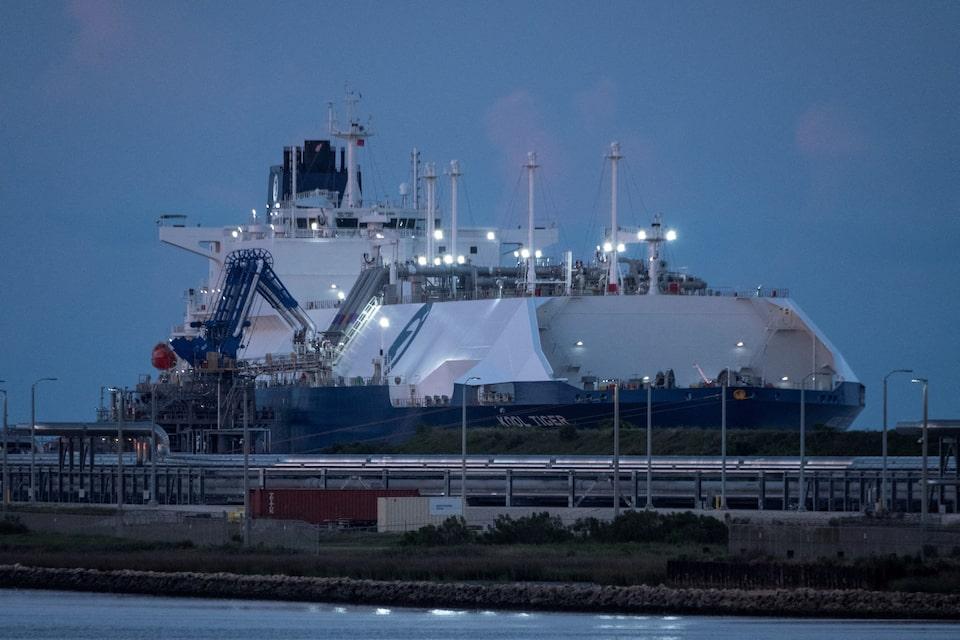
Global supply to rise to as much as 484 million tons in 2026 Asia 2026 demand to rise as much as 7%, led by China and India Europe imports driven by storage needs, higher gas consumption SINGAPORE, Jan 21 (Reuters) - Global liquefied natural gas (LNG) output is set to jump this year, easing constraints seen since the 2022 Ukraine war and dampening prices, which could spur demand including from top importers China and India, analysts say. This year marks the start of a large wave of supply that analysts expect to last until 2029, depressing prices that could drive more demand from emerging economies. Sign up here. "2026 is expected to be a transitional year for the LNG market," said Kpler. "The market is expected to move away from tightness toward ample availability, with sufficient supply even as winter demand and storage needs emerge, particularly in Europe." SUPPLY Estimates from S&P Global Energy, Kpler and Rystad Energy forecast at least 35 million metric tons of new capacity coming online this year, primarily from the U.S. and Qatar. This could lift global LNG supplies by up to 10% year-on-year, with 2026 supply forecasts from Kpler, Rystad, ICIS and Rabobank in a range of 460 million and 484 million metric tons. Projects like Golden Pass LNG on the U.S. Gulf Coast and Qatar's North Field expansion are expected to contribute sizable volumes, while output is set to ramp up from Corpus Christi and Plaquemines LNG in the U.S., LNG Canada and the Greater Tortue Ahmeyim projects offshore Senegal and Mauritania. The additional supply will pressure global prices, with analysts from Rabbobank, Rystad and Kpler predicting a range of averages for Asian spot LNG from $9.50 to $9.90 per million British thermal units (mmBtu) in 2026, down from an average of $12.45 in 2025. Rystad and Kpler gave forecasts for gas prices at the Title Transfer Facility in the Netherlands, the European benchmark, to average in a range of $9.50 to $9.74 per mmBtu this year, down from an average of $14.20 in 2025. With Asia LNG and European gas prices easing, price spreads to U.S. benchmark Henry Hub will narrow, squeezing U.S. LNG export margins at a time when feedgas costs are rising, said analysts at Vortexa, Rabobank and S&P Global Energy. CHINA, INDIA TO DRIVE DEMAND Asia's LNG demand, which slipped in 2025 on price sensitivity and competition from alternative fuels, is forecast to recover by 4% to 7% this year led by China and India as lower prices spur additional spot purchasing, fuel switching and stockpiling, according to a range of outlooks from Rystad, Kpler and S&P Global Energy. New contracts will also add to rising imports, with Chinese demand expected to rise by 6 million to 7 million tons and Indian demand by 5 million tons, said Kpler analyst Nelson Xiong. "Much of the new contracted supply should be absorbed domestically," he said. China's 2025 imports slumped amid weak industrial demand, U.S. tariffs, and strong domestic and piped gas supply. Demand this year is set to rise but may still fall short of 2024 levels, said Rystad Energy analyst Ole Dramdal, forecasting imports at 76.5 million tons this year, up 12% from 2025, as Beijing prioritizes domestic production. However, a substantial surplus of China's contracted volume will likely be remarketed as the country's long-term LNG contracts are expected to reach above 80 million tons per year, Dramdal added, while Turkey, Malaysia and Taiwan will see their combined imports rise by 6.2 million tons in 2026. EUROPE ABSORBS SUPPLY Europe became a driver for global LNG demand after it cut Russian supply following Moscow's full-scale invasion of Ukraine. Kpler sees Europe's 2026 LNG imports rising by 22 million tons while Rystad forecasts an increase of 20 million tons and Energy Aspects and ICIS see gains of around 13 million tons. This is driven by higher storage injection needs after lower end-of-winter inventories, higher domestic gas consumption amid softer average TTF prices, growing Turkish demand, and its role as a balancing market for rising Atlantic basin supply. "Europe has been poised to absorb a large share of the new LNG supply, showing the strongest near-term incremental demand," said Rystad's Dramdal. Europe will begin phasing out Russian piped gas and LNG this year, with analysts expecting LNG cargoes from the Yamal project to find alternative destinations like Turkey and Egypt, while Europe backfills the displaced volumes with Atlantic basin supply. https://www.reuters.com/business/energy/global-lng-supply-set-jump-2026-limiting-prices-spurring-demand-2026-01-21/
2026-01-21 07:08
LONDON, Jan 21 (Reuters) - The White House may shrug off any fallout from the simmering transatlantic trade war on U.S. stocks or even the dollar, but a surge in U.S. Treasury yields could prove especially toxic for Donald Trump's administration in a mid-term election year. Whether that would be enough to make the U.S. president back down - as some believe a Treasury yield spike did after the "Liberation Day" tariff salvo last April- is an open question, one that raises the stakes for investors in U.S. debt and for the administration itself. Sign up here. Financial turbulence surrounding the initial Trump tariff sweep last spring subsided quickly. But global investors may have grown complacent in assuming that deals eventually get done, helped by the unwillingness of European allies to ruffle U.S. relations. Tariff threats from Washington over U.S. demands to take over Denmark-ruled Greenland mean European leaders are fast realizing that capitulation on trade last year merely emboldened Trump to use the trade weapon again for more serious territorial and military objectives. Already Europe has suspended trade talks that underpinned the original trade truce from last year and has retabled more than $100 billion of frozen counter tariffs on U.S. goods if Trump goes ahead with his latest increase in import levies next month. Washington's "endless accumulation" of new tariffs is "fundamentally unacceptable," French President Emmanuel Macron said in Davos, having already called for use of the European Union's draconian "Anti-Coercion Instrument" on trade retaliation. "We do prefer rule of law to brutality." If European countries are now much less likely to buckle on tariffs again, markets will have to price in a potential escalation, with an endgame of tit-for-tat retaliation and possibly investment curbs or financial embargoes that call into question Europe's gigantic holdings of U.S. stocks and bonds. The first reaction on Monday was relatively calm given that Wall Street was closed for a holiday, even though the direction of declines in both U.S. and European stocks and the dollar was clear, as was the new jump in gold prices. But as American markets reopened on Tuesday, there was a sharp jump in Treasury yields to their highest in four months. The unusual sight of U.S. stocks, bond prices and the dollar falling in tandem re-ignited concerns about capital flight from richly-valued U.S. assets - not least due to the vulnerability of America's still ballooning net international investment gap , opens new tab of almost $28 trillion. TOXIC TREASURIES? While that picture may be disturbing in itself, it's the Treasury component that likely rankles most in Washington. Stock markets grab most headlines, but they are at record highs and traditionally more volatile anyway. Stock gyrations may be more easily batted away by government officials, citing a myriad of other influences from bubble-like artificial intelligence and tech themes to earnings season sideswipes. A fresh dollar decline is a possible red flag about the re-emergence of a "Sell America" trade - once again showing its decades-old safe haven status is compromised. But this too can be deflected away, partly as it chimes with political pressure to get Federal Reserve interest rates lower, and mainly because the administration likely wants a cheaper dollar to aid its exports and its wider global trade reset. Rising Treasury yields cause a whole different set of issues - further complicating the funding of mounting U.S. debt piles and torching Trump's big housing "affordability" push ahead of November's mid-term congressional elections. The prospect of rising mortgage rates on the back of higher Treasury yields cuts across much of the president's new-year economic agenda. After Tuesday's jump, for example, 30-year U.S. Treasury yields are 10 basis points above where they were at Trump's inauguration last year - despite three Fed rate cuts in the interim. That comes as U.S. opinion polls show voters think Trump is spending too much time on world affairs and not enough on fixing the economy, let alone risking another import price rise with new tariffs. "Toying with more tariffs won't help," wrote AXA Group chief economist Gilles Moec, adding that the eight European states targeted account for 25% of U.S. imports and a 10% tariff rise would lift the average U.S. tariff rate by 2.5 percentage points. While any direct European divestment of Treasuries may yet be a big catalyst - especially if it involved giant Nordic funds at the epicentre of the Greenland row, such as Norway's $2 trillion sovereign fund , opens new tab - Treasuries are already navigating a host of domestic and global crosswinds. Debt markets are on tenterhooks over the long-term inflation impact of Trump's challenge to Fed independence as well as the price impact of ever higher tariffs. But the Supreme Court's imminent ruling on Trump's use of emergency powers for last year's tariff hikes could also cut Treasury revenues for a period if they are struck down and trigger a wave of rebates. What's more, Tuesday's jump in Treasury yields was amplified by Japan's decision to call a snap election next month, which catapulted Japanese long-term debt yields sharply higher on fears of a new mandate for big fiscal spending, rippling across sovereign bond markets worldwide. Trump seems to feel confident he can ratchet up his domestic economic and geopolitical agendas tenfold this year. The precarious position of U.S. debt markets may yet be one of the few things that could cool his engines. The opinions expressed here are those of the author, a columnist for Reuters. Enjoying this column? Check out Reuters Open Interest (ROI), , opens new tab your essential new source for global financial commentary. Follow ROI on LinkedIn, , opens new tab and X. , opens new tab Plus, sign up for my weekday newsletter, Morning Bid U.S. and listen to the Morning Bid daily podcast on Apple , opens new tab, Spotify , opens new tab, or the Reuters app , opens new tab. Subscribe to hear Reuters journalists discuss the biggest news in markets and finance seven days a week. https://www.reuters.com/markets/us/treasury-jolt-may-be-trumps-kryptonite-2026-01-21/
2026-01-21 07:06
LONDON, Jan 21 (Reuters) - Spiralling trade tensions between the U.S. and Europe over President Donald Trump’s bid to buy Greenlandhave once again left the bloc highly vulnerable in a geopolitical tussle because of its heavy dependence on a single supplier for its critical energy needs. Less than four years ago, Europe’s economy was dealt a harsh blow in the wake of Russia’s full-scale invasion of Ukraine, as nations had to rapidly find alternatives to the abundant Russian natural gas they had relied on for decades. That scramble triggered a severe supply shock and a four-fold increase in European gas prices in the first six months of the conflict. Sign up here. Europe resolved this problem by trading one dependency for another. As Russia's share of European Union gas imports fell to 12% last year, from 45% before the invasion, Europe rapidly turned to U.S. liquefied natural gas (LNG). Imports of U.S. LNG skyrocketed from 18 million metric tons in 2021 to 65 million tons last year, making up 57% of all LNG imported by the EU and Britain in 2025, according to analytics firm Kpler. Today, the U.S. supplies nearly a quarter of the EU's total gas imports. On top of that, in the U.S.-EU trade deal struck last August, Brussels agreed to buy $250 billion of energy from the U.S. between 2026 and 2028, a figure that dwarfs its total purchases of around $75 billion last year. Fast forward to this week, and European leaders now confront the uncomfortable reality that their lopsided energy relationship has left the region vulnerable once again, as Trump could seek to use Europe’s energy dependency as a bargaining chip in the escalating economic battle over Greenland. STRATEGIC LIABILITY Trump on Saturday threatened to impose a 10% levy on imports from multiple European countries that have opposed his plan to seize Greenland. A day later, EU ambassadors hastily met to discuss their potential response. This could include a package of tariffs impacting some 93 billion euros ($107.7 billion) of U.S. imports, or the as-yet-unused "Anti-Coercion Instrument" (ACI), which could restrict trade in services and reduce access to public tenders, investments and financial systems. France said it would support suspending the trade deal if the spat intensified. These tit-for-tat threats risk reigniting an economic war between the two global powers. While it is far too early to know how this clash will play out, two things are clear. First, the showdown marks a low point in the transatlantic relationship between NATO allies that have shared common economic and security interests for decades. And second, Europe’s energy strategy remains a national security liability. LESSON NOT LEARNED European leaders do recognise this vulnerability and are attempting to address it with longer-term solutions. Many are pushing to expand renewable and nuclear power, while some governments are reconsidering the exploitation of remaining domestic oil and gas reserves, reversing years of climate‑driven opposition. And there are also plenty of reasons not to panic in the short term. To begin, despite the significant scale of the bloc’s U.S. LNG imports, they are currently far more secure, even with the escalating tensions between Washington and Brussels. For one thing, U.S. LNG supplies are underpinned by long-term commercial contracts between a multitude of companies that are governed by international trade rules. Russian gas was delivered predominantly through the Kremlin-controlled Gazprom (GAZP.MM) , opens new tab . Furthermore, Europe's heavy dependency cuts both ways. Europe accounted for around half of last year's U.S. LNG exports, which have experienced meteoric growth in recent years to make the U.S. the world's top producer of the super-chilled fuel. Any disruption in exports to Europe would therefore have a demonstrable impact on LNG producers and gas drillers, an industry that the Trump administration has heavily supported over the past year. Using energy as a political weapon has always been a high‑risk strategy that tends to push buyers toward alternative suppliers. Gazprom is a cautionary tale: its profits have shrivelled since 2022 as European customers shifted away. That does not mean Europe can relax, however. The U.S. president does have the authority to restrict exports of energy and other goods for national security reasons under the Energy Policy and Conservation Act , opens new tab. Trump also declared a "national energy emergency" upon his return to the White House last January, which appears to give him further powers. Icy relations between Europe and Washington over the Arctic island may eventually ease, given the long‑standing alliance between the two sides. But Europe’s heavy reliance on U.S. gas will remain a major strategic vulnerability if – or perhaps when – the next dispute with the White House arises. Enjoying this column? Check out Reuters Open Interest (ROI), , opens new tab your essential new source for global financial commentary. Follow ROI on LinkedIn, , opens new tab and X. , opens new tab And listen to the Morning Bid daily podcast on Apple , opens new tab, Spotify , opens new tab, or the Reuters app , opens new tab. Subscribe to hear Reuters journalists discuss the biggest news in markets and finance seven days a week. https://www.reuters.com/markets/commodities/europes-energy-weak-spot-reemerges-greenland-dispute-2026-01-21/
2026-01-21 06:52
Gold scaled all-time high at $4,887.82/oz Platinum touches record high at $2,543.99/oz U.S. Fed to hold interest rates steady this quarter - Reuters poll Jan 21 (Reuters) - Gold prices trimmed gains on Wednesday, retreating from a record peak, after U.S. President Donald Trump backed down from some of his sternest threats over Greenland. Spot gold was up 0.3% at $4,778.51 per ounce by 3:10 p.m. ET (2010 GMT), after scaling an all-time high of $4,887.82 earlier in the session. Sign up here. U.S. gold futures for February delivery settled 1.5% higher at $4,837.50 per ounce. Equity markets rebounded after Trump withdrew a threat to impose tariffs on a number of nations for their stance on Greenland, saying he had reached the outlines of a deal with NATO on the island's future. "So then the announcement on the European tariffs sent the stock market higher, erased most of the gains and put some pressure on metals," said RJO Futures senior market strategist Bob Haberkorn. "You had a liquidation event here just based off the headline here. It doesn't revert the trend at all." Gold, seen as a safe store of value during economic and political instability, soared 64% in 2025 and is up 11% so far in 2026. Meanwhile, conservative and liberal U.S. Supreme Court justices signaled scepticism toward Trump's bid to fire Federal Reserve Governor Lisa Cook in a case with the central bank's independence at stake. The Fed is likely to hold its key interest rate through this quarter and possibly until Chair Jerome Powell's tenure ends in May, according to a majority of economists polled by Reuters. Lower interest rates are favourable for non-yielding gold. Spot silver fell 3.6% to $91.17 an ounce, after hitting a record high of $95.87 on Tuesday. "Silver's rise to a three-digit number is looking quite possible given the price momentum we are seeing, but it will not be a one-way move. There could be some correction in prices and volatility can be higher," said Soni Kumari, ANZ commodity strategist. Spot platinum was down 0.1% to $2,460.20 per ounce after hitting a record $2,543.99 earlier in the day. Palladium fell 2.1% to $1,825.85. https://www.reuters.com/world/india/gold-crosses-4800-first-time-us-eu-spar-over-greenland-2026-01-21/

2026-01-21 06:26
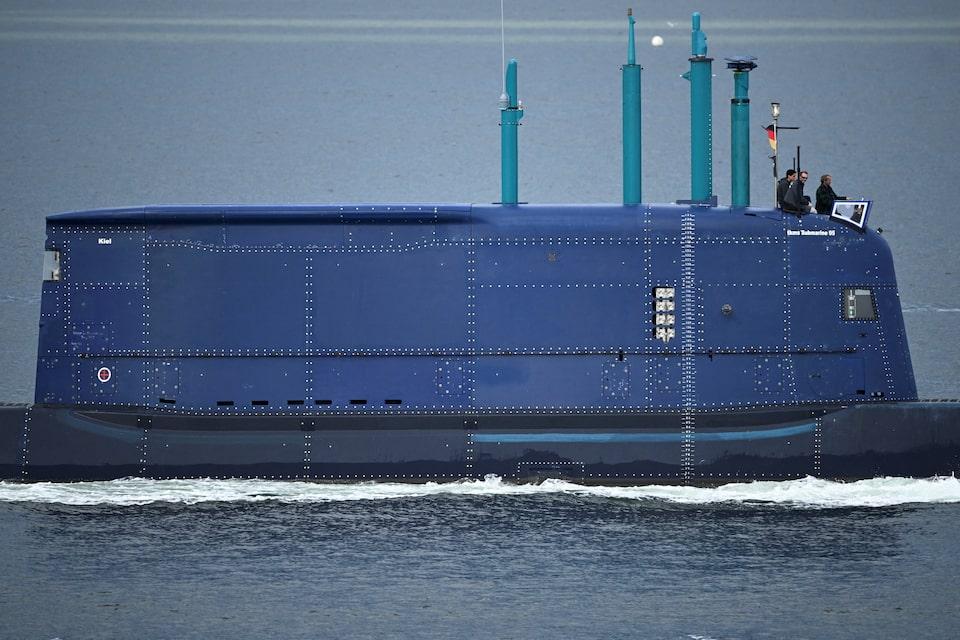
TKMS in race for Canada submarine order Expects Canada to decide in 2026 In talks with companies to offer 'offset obligation' package FRANKFURT/DUESSELDORF, Jan 21 (Reuters) - Warship builder TKMS (TKMS.DE) , opens new tab is in talks with Norwegian and German companies to offer a multi-billion-dollar investment package to Canada in a fiercely competitive submarine tender, its CEO said, seeking to beat a rival South Korean bid. The talks go beyond submarines and cover possible investment commitments in rare earths, mining, artificial intelligence and battery production for the automotive sector, Oliver Burkhard told Reuters. Sign up here. The previously unreported investment package plan could boost TKMS as it vies to win the tender after being short-listed last year along with South Korea's Hanwha Ocean (042660.KS) , opens new tab to supply up to 12 state-of-the-art submarines to Canada's navy. It reflects intensifying efforts by Germany to strengthen defence cooperation in the face of rising geopolitical tensions, with the U.S. seeking to claim Greenland and threatening to impose new import tariffs on European allies while Russia continues its war in Ukraine. INVESTMENT PACKAGE GOES FAR BEYOND SUBMARINES Burkhard said TKMS was in discussion with German space startup Isar Aerospace about the investment initiative but did not name the other companies involved in the talks. The submarine order alone is estimated to be worth more than 10 billion euros ($12 billion), according to industry sources. The total package could be worth significantly more depending on investment pledges from other sectors, according to people briefed on the discussions. "It is no longer just about the submarines. It is primarily about what's beyond," Burkhard told Reuters on the sidelines of an event in Frankfurt, adding the aim was a "broad economic package" to convince the Canadian government of its offer. TKMS is the world's largest maker of non-nuclear submarines and accounts for around 70% of NATO's conventional fleet. Burkhard said TKMS was asking possible partners about foreseeable investment decisions in Canada and whether to include them in so-called offset obligations, or mandatory financial commitments, which are made over 30 years. "Of course that also includes the defence sector," he said. Canada, which has the longest coastline in the world, has said plans to buy new submarines were aimed at maximising economic benefits as part of its defence strategy. Burkhard, who will make his next trip to Canada in March for more talks, said Germany's economy and defence ministries as well as the Chancellery were also part of the discussions, adding he expected Canada to make a decision in 2026. "All defence procurements must advance Canada's national and military interests as well as provide a clear, measurable net benefit to Canada's economy," the country's ministry for innovation, science and economic development said in a statement. Germany's economy ministry referred Reuters to the defence ministry which said it did not comment on confidential consultations as a matter of principle. Germany's Chancellery did not respond to a requests for comment. Hanwha Ocean declined to comment. TKMS, which Burkhard said had between 30 and 40 staff working on the offset obligation package, is offering its 212CD class submarine as part of the tender, which it is also supplying to Norway's navy under a joint modernisation initiative. ($1 = 0.8590 euros) https://www.reuters.com/business/aerospace-defense/germanys-tkms-seeks-investment-package-woo-canada-over-12-billion-submarine-2026-01-20/
2026-01-21 06:22
Trump says no tariffs next month after reaching outline for Greenland deal Wall Street rebounds after selloff US dollar advances Oil settles higher, gold rises NEW YORK/LONDON, Jan 21 (Reuters) - Global shares rebounded on Wednesday from a selloff the previous session after U.S. President Donald Trump said a framework on a future deal over Greenland has been reached. Trump, who is attending the World Economic Forum in Davos, said the U.S. will no longer be imposing tariffs that had been scheduled to take effect from February 1. He had ruled out taking Greenland by force in an earlier speech, which also helped to calm investor nerves. Sign up here. Wall Street stocks jumped following Trump's comments on a Greenland framework. The Dow Jones Industrial Average (.DJI) , opens new tab rose 1.21%, the S&P 500 (.SPX) , opens new tab gained 1.16% and the Nasdaq Composite (.IXIC) , opens new tab added 1.18%. The benchmark S&P 500 registered its biggest daily percentage gain since November 24. "Markets aren’t rallying because they suddenly understand the endgame in Greenland," said Matthew Smart, director of financial planning and portfolio analysis at WWM Investments in Chicago. "They’re rallying because uncertainty just got priced out. The signal from Donald Trump coming out of Davos is coordination, not confrontation, and that matters. Pulling back near-term tariffs, while opening a framework with NATO around Greenland tells investors this is shifting from headline risk to negotiation risk." MSCI's All-World index (.MIWD00000PUS) , opens new tab was up 0.87%, after losing ground in the last session, while Europe's STOXX 600 index (.STOXX) , opens new tab finished a touch lower by 0.02%. Britain's FTSE index (.FTSE) , opens new tab added 0.11%. The VIX index (.VIX) , opens new tab, which measures demand for protection against big swings in the S&P 500, dropped more than 15% to 17, a day after jumping to its highest since November. The index is often used as a proxy for investor nervousness. "The market bounced when he said we wouldn't use force," said Mark Hackett, chief market strategist at Nationwide in Boston. "Following the events of last April, investors are catching on that his negotiating style is very different than past administrations, so uncertainty is a natural outcome." The European Parliament decided to suspend its work on a trade deal between the 27-member bloc and the U.S., a parliament member said, following Trump's repeated requests to take control over Greenland. The European Union will convene an emergency summit in Brussels on Thursday to discuss the matter, with the long-standing U.S.-EU alliance at risk. "You had the Venezuelan thing, you had Greenland and you had Iran and none of these things seemed to be making a huge dent," said James St. Aubin, chief investment officer at Ocean Park Asset Management in Santa Monica, California. "Obviously we had a pretty significant selloff yesterday but in the grand scheme of things it seems the market should have a hard time making new highs and yet it continues to brush off some of these very provocative ideas that Trump likes to throw around." BOND PRICES RALLY The global bond market was still reeling from a brutal selloff, having been caught up in worries over exposure to U.S. assets and a surge in Japanese government borrowing costs. At the epicentre were long-dated Japanese sovereign bonds, which endured their most aggressive selloff in nearly 25 years on Tuesday as fears grew over increased government spending under Japanese Prime Minister Sanae Takaichi. U.S. 30-year Treasury yields neared the 5% threshold for the first time since September, while German government bond yields also rose sharply . By Wednesday, Japanese bond prices rallied as buyers returned, almost entirely reversing the previous day's rise in yields. A similar dynamic played out across U.S. Treasuries, where 30-year bond yields fell 5.1 basis points to 4.8693%. The yield on benchmark U.S. 10-year notes eased 4.4 basis points to 4.251%. In currency markets, the dollar index , which tracks the U.S. currency's performance against six others, rebounded from earlier losses and was up 0.25%. The euro pared earlier gains and was down 0.34% at $1.1686, while the Swiss franc fell, leaving the dollar up 0.69% at 0.7954 francs. The yen was down 0.16% at 158.37 per dollar ahead of a Bank of Japan policy meeting on Friday. No rate hike is expected this time, although policymakers could signal an increase may be coming as soon as April. Oil prices edged higher. Optimism around tighter supply, after a temporary shutdown at two large fields in Kazakhstan, was offset by expectations of a build in U.S. crude inventories. Brent crude futures settled up 0.49% at $65.24 a barrel. Spot gold was up 1.11% to $4,815.93 per ounce. https://www.reuters.com/world/china/global-markets-wrapup-1-pix-2026-01-21/