2025-06-05 02:06
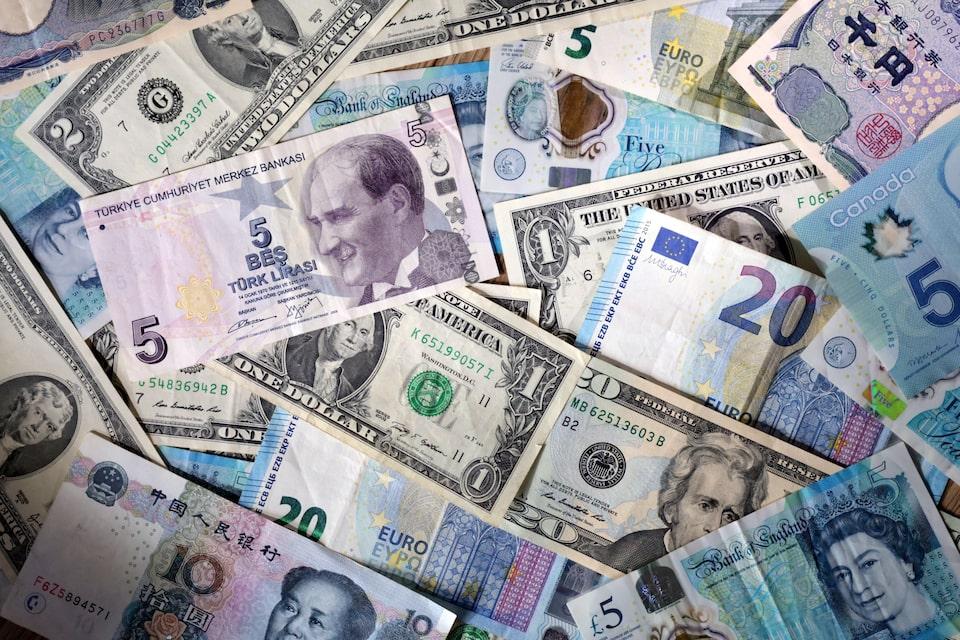
BENGALURU/JOHANNESBURG, June 4 (Reuters) - Most emerging market currencies will hold the gains they have made this year or extend them against a retreating dollar in the next six months as traders ditch the U.S. exceptionalism trade that fuelled the greenback's dream run, a Reuters poll of FX strategists found. At the start of the year, emerging market currencies looked set for a rough ride on expectations of U.S. economic strength and delayed Federal Reserve interest rate cuts as well as trade tensions. Sign up here. But they have since defied expectations as U.S. President Donald Trump's broader-than-expected but erratically implemented tariff together with a deteriorating fiscal outlook have sparked a flight from the dollar and U.S. assets. That is expected to continue, with more than half the currencies polled forecast to trade in tight ranges or gain, while the rest were expected to give back only a small portion of this year's strong gains, according to a May 30–June 4 poll of more than 50 foreign exchange strategists. "The path of least resistance is a mildly weaker dollar at the moment," said Christopher Turner, head of FX strategy at ING. "We think (the decline) will be sort of modest and gradual and that should keep the mindset for investors to buy EM currencies on dips and that's kind of what we're seeing at the moment." Separately, the dollar has become a preferred funding currency as Trump's trade war fuels recession fears and outflows from U.S. assets. The EM carry trade - borrowing in low-yielding currencies to invest in higher-yielding EM ones - has long attracted investors chasing returns. High-yielders like the South African rand and Brazilian real are up around 6.0% and 10.0% respectively this year. The real was predicted to lose only about 2.0%, while the rand is likely to trade in a tight range over the next six months. "I think the trend for emerging market currency outperformance can continue in the second half of this year, but there are downside risks to be wary of as well," said Lee Hardman, senior currency economist at MUFG, referring to trade disruption and the potential hit to global growth. The Turkish lira, the weakest-performing emerging market currency so far this year, is projected to soften by another 8.0% from 39 per dollar to 42.8/dollar over the next six months. In Asia, the heavily managed Chinese yuan is expected to stay rangebound despite widespread concerns about weak demand in its economy, and a standoff with Washington over tariff policy and export controls. The Indian rupee , Korean won and Thai baht are all expected to gain just less than 1% by the end of November, pointing to steady but modest appreciation. "The big risk we see short-term for emerging market currencies is the risk of a turnaround in dollar sentiment," said Nick Rees, head of Macro Research at Monex Europe. "We do expect longer-term depreciation, but by the same token, we think the dollar looks too cheap on a fundamentals basis right now," added Rees. (Other stories from the June Reuters foreign exchange poll) https://www.reuters.com/world/china/most-emerging-market-currencies-set-hold-gains-2025-06-05/
2025-06-05 00:55
Trump says in social media post US and Chinese teams to meet shortly US gasoline, distillate stocks post big weekly builds Saudi Arabia cuts prices for Asian crude buyers to 2-month low Bearish economic outlook weighs on oil prices, analysts say HOUSTON, June 5 (Reuters) - Oil prices settled higher on Thursday, recovering from the previous day's drop, on news that the U.S. and China agreed to more trade talks following a phone call between U.S. President Donald Trump and Chinese leader Xi Jinping. Brent crude futures settled up 48 cents, or 0.7%, at $65.34 a barrel. U.S. West Texas Intermediate crude settled up 52 cents, or 0.8%, at $63.37 a barrel. Sign up here. "If we step back from the brink of a major trade war, it will increase demand expectations for oil both in the U.S. and in China," said Phil Flynn, senior analyst with Price Futures Group. The official Xinhua news agency reported earlier that the talks were held at Trump's request. Trump said on social media his call with Xi focused primarily on trade and led to "a very positive conclusion." He announced further lower-level U.S.-China discussions. "We're in very good shape with China and the trade deal," he told reporters later. Canadian Prime Minister Mark Carney and Trump are also in direct communication as part of Ottawa's bid to persuade Washington to lift tariffs, Industry Minister Melanie Joly said. The news encouraged investors a day after oil fell 1% as data showed U.S. gasoline and distillate stockpiles grew more than expected, reflecting weaker demand in the world's largest economy. Geopolitical events and wildfires in Canada that threaten to reduce oil production are providing further price support, despite a potentially oversupplied market in the second half of the year with expected OPEC+ production hikes, PVM analyst Tamas Varga said. Curbing gains on Thursday, Saudi Arabia, the world's biggest oil exporter, cut its July prices for Asian crude buyers to nearly the lowest level in two months. The Saudi price cut followed a move by OPEC+ last weekend to increase output by 411,000 barrels per day for July. The strategy of Saudi Arabia, OPEC's de facto leader, is partly to punish over-producers by potentially unwinding 2.2 million bpd of cuts between June and the end of October, in a bid to wrestle back market share, Reuters previously reported. In economic news, data on Wednesday showed the U.S. services sector contracted in May for the first time in nearly a year. The number of Americans filing new applications for unemployment benefits increased for the week ending May 31, marking the second straight weekly jump, the Labor Department said on Thursday, citing softening labor market conditions amid mounting economic headwinds from Trump's tariffs. The release on Friday of the U.S. nonfarm payrolls report for May could influence the U.S. Federal Reserve's interest rate policy, while the market's focus will also be on geopolitical tensions in the Middle East, UBS analyst Giovanni Staunovo said. https://www.reuters.com/business/energy/oil-slips-us-stockpile-build-saudi-arabia-price-cuts-2025-06-05/

2025-06-05 00:14
WASHINGTON, June 4 (Reuters) - Ukraine and the United States have discussed how to make a minerals fund operational by the end of the year and the fund's first meeting is expected in July, Ukraine's First Deputy Prime Minister, Yulia Svyrydenko, said in Washington on Wednesday. The agreement on developing Ukraine's mineral resources, heavily promoted by U.S. President Donald Trump, was signed by Svyrydenko in Washington in April after weeks of tough negotiations made the terms more favorable to Kyiv. Sign up here. Ukraine's parliament then ratified the deal. On Wednesday, Svyrydenko held meetings with U.S. Treasury Secretary Scott Bessent and the Development Finance Corporation, which would be a partner of the minerals fund, "and we discussed very concrete steps how to make this fund operational during this year," she told reporters. "So we plan to have the first board meeting of this fund in July and we will discuss what will be the seed capital to start operating this fund. And actually, too, we should adopt the investment strategy for this fund for the next few years." The negotiations leading to the clinching of the minerals fund deal followed a heated exchange at the White House between Trump and Ukrainian President Volodymyr Zelenskiy over how to work towards ending Ukraine's three-year-old war with Russia. The agreement was critical to Zelenskiy mending ties with Trump. The two men met briefly at the Vatican in April during the funeral of Pope Francis to help put their relations back on track. https://www.reuters.com/world/europe/ukraine-us-discuss-how-make-minerals-fund-operational-by-year-end-2025-06-05/
2025-06-05 00:03
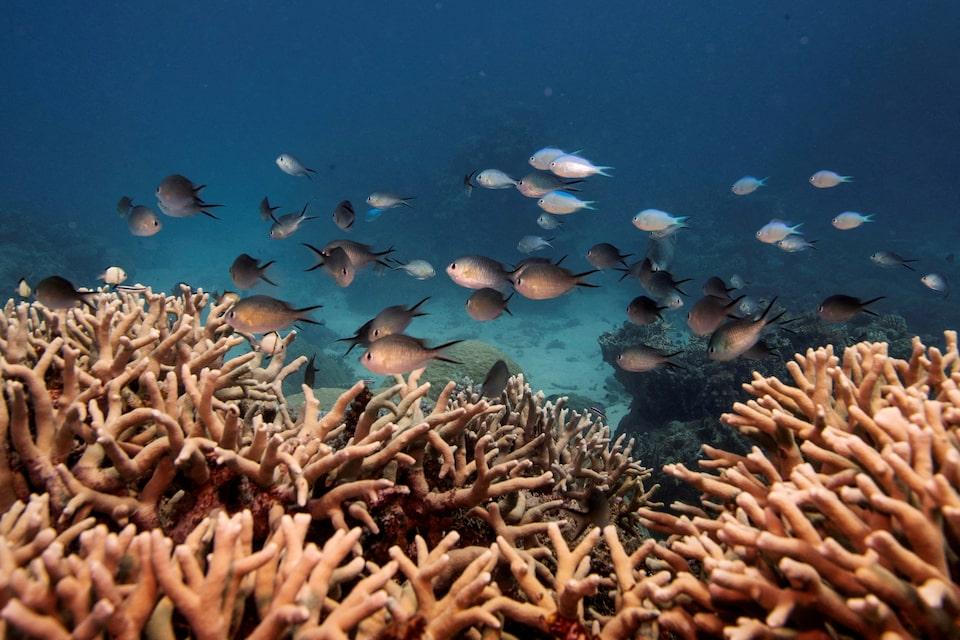
SINGAPORE, June 5 (Reuters) - Unprecedented heat waves in the Southwest Pacific affected more than 10% of the global ocean surface in 2024, damaging coral reefs and putting the region's last remaining tropical glacier at risk of extinction, the UN's weather body said on Thursday. Average 2024 temperatures in the region - which covers Australia and New Zealand as well as southeast Asian island states like Indonesia and the Philippines - were nearly half a degree Celsius (0.9 Fahrenheit) higher than the 1991-2020 mean, the World Meteorological Organization said in an annual report. Sign up here. "Much of the region saw at least severe marine heat wave conditions at some point during the course of 2024, particularly in areas near and south of the equator," said the WMO's Blair Trewin, one of the report's authors. Extreme heat over the year affected 40 million square kilometres (15.4 million square miles) of ocean, and new temperature highs were set in the Philippines and Australia, the report said. Ocean surface temperatures also broke records, while total ocean heat content was the second-highest annual average, behind 2022. An unprecedented number of cyclones, which experts have attributed to climate change, also caused havoc in the Philippines in October and November. Sea levels continue to rise more quickly than the global average, an urgent problem in a region where more than half the population live within 500 metres (547 yards) of the coast, the report added. The report also cited satellite data showing that the region's sole tropical glacier, located in Indonesia on the western part of the island of New Guinea, shrank by up to 50% last year. "Unfortunately, if this rate of loss continues, this glacier could be gone by 2026 or shortly thereafter," said the WMO's Thea Turkington, another of the report's authors. https://www.reuters.com/sustainability/cop/southwest-pacific-hit-by-unprecedented-marine-heat-waves-2024-un-says-2025-06-05/
2025-06-05 00:01
Chinese researcher arrested over smuggled pathogen U.S. prosecutors believe it can be used as agricultural weapon Agronomist says Fusarium graminearum is common pathogen FBI director says Chinese government seeking to infiltrate U.S. institutions, target food supply June 4 (Reuters) - A Michigan court has scheduled a bail hearing on Thursday for a Chinese researcher accused of smuggling biological samples into the United States. Yunqing Jian, 33, and her boyfriend Zunyong Liu, 34, who conducted biological studies in the same field, were accused of smuggling a fungus into the United States for research. Sign up here. Jian, who according to a federal criminal complaint has worked on research projects in the United States since 2022, made her first court appearance on Tuesday. Liu was denied entry into the United States last July, when the pathogen, a fungus identified by the U.S. Department of Justice as Fusarium graminearum, was found in his luggage. Liu said he wanted to conduct research on the fungus at a University of Michigan laboratory where Jian worked, according to the complaint. Prosecutors described the fungus as a dangerous biological pathogen that had the potential to be used as an agricultural terrorism weapon. The fungus is already widespread on U.S. farms, tested for and tightly controlled in grains, and is not considered dangerous unless consumed in large quantities. Clair Keene, an agronomist at North Dakota State University, said she was puzzled by U.S. authorities’ description of the fungus. "It's a common pathogen. We have it here. The claim that Fusarium graminearum can be used as a biological weapon doesn't strike me as accurate," she said. The fungus can cause Fusarium head blight, typically known as scab. It is common among wheat, barley and other grains especially during rainy years. The telltale salmon-pink streaks on the grain heads contain a toxic byproduct called vomitoxin, which in high quantities can cause nausea and vomiting when eaten. Keene said farmers often spray fungicide to protect their crop and researchers have developed strains of wheat that are resistant to the fungus. Reuters was unable to contact Jian or her lawyer for comment. The case involving the researchers comes as the University of Michigan and other universities have faced pressure from the Trump administration over allegations they have done too little to combat antisemitism on campus and what the administration depicts as radical ideology in the classroom. Universities' ties to China also have come under scrutiny. The University of Michigan said in a statement it condemned "any actions that seek to cause harm, threaten national security or undermine the university's critical public mission." "It is important to note that the university has received no funding from the Chinese government in relation to research conducted by the accused individuals," the university said, adding it will "continue to cooperate" with federal law enforcement in its ongoing investigation and prosecution. FBI director Kash Patel said in a post on X that the case was a reminder that China's ruling Communist Party "is working around the clock to deploy operatives and researchers to infiltrate American institutions and target our food supply, which would have grave consequences... putting American lives and our economy at serious risk." The Chinese Embassy in Washington in response to a Reuters request for comment sent a statement from its spokesperson Liu Pengyu. "I don't know the specific situation, but I would like to emphasize that the Chinese government has always required overseas Chinese citizens to abide by local laws and regulations and will also resolutely safeguard their legitimate rights and interests," Liu said. https://www.reuters.com/world/us/bail-hearing-over-smuggled-fungus-scheduled-chinese-researcher-2025-06-05/

2025-06-04 23:08
BRASILIA, June 4 (Reuters) - Brazil sold $2.75 billion in dollar-denominated sovereign bonds on Wednesday, the treasury said, marking its second international issuance this year as the country capitalizes on declining default risk. The government sold $1.5 billion through a new five-year bond maturing in 2030, with a yield of 5.68%, and an additional $1.25 billion through a reopening of its 10-year benchmark Global 2035 bond, with a 6.73% yield. Sign up here. The deal comes amid a recent decline in Brazil's five-year credit default swap (CDS) , a key gauge of sovereign risk used by investors to hedge against default. After rising earlier this year, Brazil's CDS has retreated to its lowest level of 2025, down 27.6% year-to-date as of Tuesday. Brazil's dollar bond sale follows the $2.5 billion 10-year sovereign bond placed in February, which was the issuance reopened on Wednesday. The treasury said in a statement that the demand for the new issuance surpassed the issued volume by about four times. Reuters had reported earlier in the day, citing a source, that Brazil was poised to sell $2.75 billion with the bond sale. Emerging markets have broadly benefited from a global rotation of capital driven in part by trade policy shifts, including steep tariff hikes introduced by U.S. President Donald Trump - a trend that has contributed to the weakening of the U.S. dollar globally. On the domestic front, investors are in a wait-and-see mode ahead of structural fiscal measures the government signaled are being negotiated with Congress, after a controversial hike in taxes on some financial transactions aimed at boosting public revenues was poorly received. The new external issuance aims to boost liquidity in Brazil's sovereign dollar yield curve, provide pricing references for corporate issuers and raise funds to pre-finance upcoming external debt maturities, the treasury said. BNP Paribas, Citigroup and Santander led the transaction. https://www.reuters.com/world/americas/brazil-sells-275-billion-second-dollar-bond-deal-2025-cds-hits-year-low-2025-06-04/