2026-02-12 11:48
Feb 12 (Reuters) - India's Hindalco Industries (HALC.NS) , opens new tab posted a 45% fall in its third-quarter profit on Thursday despite firmer aluminium and copper prices, weighed down by expenses linked to fire-related disruptions at its U.S. unit Novelis. The Aditya Birla Group-owned metals producer reported a consolidated net profit of 20.49 billion rupees ($226.14 million) for the three months ended December 31, compared with 37.35 billion rupees a year earlier. Sign up here. The decline was largely due to 26.10 billion rupees of exceptional expenses tied to a plant disruption in Oswego, New York. Its U.S.-based subsidiary Novelis, which supplies rolled aluminium to beverage can makers and automakers, was impacted by a fire at its New York plant last year. The results come a day after Hindalco said the fire at Novelis would hit its 2026 cash flow by $1.3 billion to $1.6 billion, with the company targeting a restart towards the end of the second quarter. The company's consolidated revenue rose 14% to 665.21 billion rupees, supported by a strong performance in the India business, higher copper sales and growth in value-added aluminium products. Global aluminium prices remained supported during the quarter amid supply constraints and steady demand from the automotive, packaging and infrastructure sectors. Domestic demand for non-ferrous metals was also aided by government-led infrastructure spending and manufacturing growth. In India, Hindalco's copper segment saw a 33% rise in revenue, while its aluminium upstream and downstream businesses grew 6% and 22%, respectively. Managing Director Satish Pai said that Novelis' performance is expected to improve in the fourth quarter and fully recover next year after the Oswego facility restarts in June. Strong performance in the India business helped stabilise overall earnings during the disruption, Pai said in a post-earnings call, adding that underlying margins have already stabilised. Earlier in the day, analysts at Jefferies said in a note that fire-related disruption weighed on Novelis' December-quarter performance, leading to idle capacity, higher costs and lower shipments. Ambit Capital also flagged earnings pressure from the plant outage, citing repair expenses, fixed costs and supply disruptions. ($1 = 90.6060 Indian rupees) https://www.reuters.com/world/india/indias-hindalco-posts-45-fall-quarterly-profit-higher-costs-2026-02-12/

2026-02-12 11:44
Feb 12 - What matters in U.S. and global markets today By Mike Dolan , opens new tab, Editor-At-Large, Finance and Markets Sign up here. World stock markets have been pretty buoyant as they digest the robust U.S. January employment report and dampened Federal Reserve rate cut expectations. While the downward revisions to 2025 payrolls underscore last year’s subdued hiring, the 130,000 payroll gain last month was almost twice the 70,000 forecast. The unemployment rate also unexpectedly fell to 4.3% - even as labor force participation rose - and average earnings growth accelerated. I’ll get into that and more below. But first, check out my latest column on why Trump's rate call doesn't jibe with budget math. And listen to the latest episode of the Morning Bid daily podcast. Subscribe to hear Reuters journalists discuss the biggest news in markets and finance seven days a week. JOBS JOLT RATE BETS January's job gains may have been concentrated in the healthcare, social services and construction sectors, but the main takeaway for markets is that the labor market has likely stabilised into 2026 - much like Fed Chair Jerome Powell said it had last month. And so thinking in the rates market has returned to where it was back then. Two cuts are priced in the futures curve for the year, with the first of those not fully priced until July. If the labor market has stabilized, that allows the Fed to focus on its inflation mandate and it's still well above target there. Friday’s CPI report now takes centre stage. What stabilization doesn't do is support Donald Trump's view that America should have the lowest borrowing rates in the world. And the release of the CBO's latest 10-year budget and debt outlook shows why U.S. Treasury borrowing costs are not the lowest in the world. The nonpartisan organization expects the cumulative 10-year deficit to be some $1.4 trillion, or 6%, higher than projected in January 2025. It also forecasts the debt-to-GDP ratio topping its 1946 peak of 106% in 2030. U.S. and global markets were relatively calm on Wednesday despite all that. On Thursday, Wall Street futures were up ahead of the bell, European stocks hit new records and U.S. Treasury yields were mostly back in the middle of recent ranges. The big currency mover was China's offshore yuan, which continues to surge to new three-year highs ahead of the Lunar New Year holidays. Relatively upbeat corporate earnings topped the European news flow, with the EU's special summit on economic reform and competitiveness in the background. In deals news, shares in British money manager Schroders surged 29% following the announcement that it's being taken over by U.S. asset manager Nuveen for 9.9 billion pounds ($13.5 billion). That would be one of Europe's largest ever fund management deals, marking the end of an era for the 222-year-old firm. It also may speak to the year's big rotation into so-called value stocks and markets, with relatively cheap UK markets attracting global investors. Chart of the day U.S. job growth unexpectedly accelerated in January and the unemployment rate fell to 4.3%, signs of labor market stability that could give the Federal Reserve room to keep interest rates unchanged for some time while policymakers monitor inflation. Today's events to watch * U.S. weekly jobless claims (8:30 AM EST) * U.S. 30-year bond auction * Fed's Stephen Miran and Dallas Fed's Lorie Logan both speak * U.S. corporate earnings: Airbnb, Expedia, Pinterest Want to receive the Morning Bid in your inbox every weekday morning? Sign up for the newsletter here. You can find ROI on the Reuters website , opens new tab, and you can follow us on LinkedIn , opens new tab and X. , opens new tab Opinions expressed are those of the author. They do not reflect the views of Reuters News, which, under the Trust Principles , opens new tab, is committed to integrity, independence, and freedom from bias. https://www.reuters.com/business/finance/global-markets-view-usa-2026-02-12/
2026-02-12 11:41
BEIJING, Feb 12 (Reuters) - China's industry ministry on Thursday released draft safety rules for automated driving systems for cars with level-3 and level-4 autonomous capabilities, according to documents the ministry released. Automated systems' "safety level should at least reach that of a qualified and focused driver," a document showed. The systems would also need to confirm that the driver has completed relevant training before autonomous functions could be activated. Sign up here. The ministry is seeking public comment on the draft rules through April 13, it said in a statement. https://www.reuters.com/world/asia-pacific/china-releases-draft-safety-rules-automated-driving-systems-2026-02-12/

2026-02-12 11:31
Feb 12 (Reuters) - U.S. electric utility Entergy (ETR.N) , opens new tab on Thursday forecast 2026 earnings below Wall Street expectations after missing estimates for fourth-quarter profit, as elevated operating and maintenance costs weigh on the company. Rising power consumption from large industrial users and emerging high-load customers have lifted demand for electricity, but higher operating expenses, financing costs and capital requirements are weighing on margins and near-term profit growth for utilities. Sign up here. Entergy's operating and maintenance expenses rose 8.6% year-on-year in the fourth quarter to $26.67 per megawatt hour (MWh), while full-year O&M and nuclear refueling outage expenses increased 1.2% to $22.02 per MWh. The company's results were further pressured by higher debt levels, which rose nearly 7% to $31 million in 2025 on a year-on-year basis. New Orleans-based Entergy provides electricity to nearly 3 million customers across Arkansas, Louisiana, Mississippi and Texas. The utility now expects its full-year adjusted profit to be in the range of $4.25 to $4.45, the midpoint of which is below analysts' average estimate of $4.41 per share, according to data compiled by LSEG. For the quarter ended December 31, Entergy posted an adjusted profit of 51 cents per share, which missed analysts' average estimates of 52 cents. https://www.reuters.com/business/energy/entergy-forecasts-2026-profit-below-estimates-costs-weigh-2026-02-12/

2026-02-12 11:29
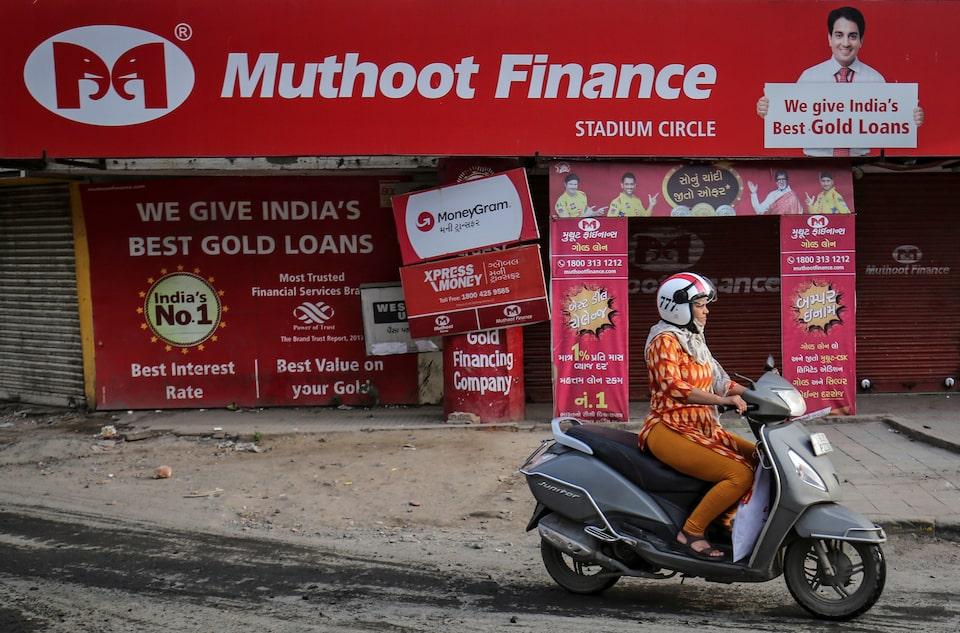
Feb 12 (Reuters) - Indian gold loan financier Muthoot Finance (MUTT.NS) , opens new tab reported a surge in third-quarter profit on Thursday, driven by strong loan demand amid record-high gold prices. The company's profit nearly doubled to 26.56 billion rupees ($293.14 million) for the quarter ended December 31, compared with 13.63 billion rupees a year earlier. Sign up here. Gold prices touched multiple record highs in the October to December quarter. Higher prices benefit gold financiers as the value of pledged gold increases, enabling borrowers to secure larger loans against the same quantity of gold. Additionally, tighter lending conditions in the unsecured loan segment have prompted more borrowers to turn to gold loans as an alternative source of funding. Muthoot Finance's standalone loan assets under management rose 51% year-on-year to 1.48 trillion rupees at the end of the quarter. Reflecting robust loan growth so far this fiscal year, the company in November raised its fiscal 2026 gold loan growth outlook to 30%–35%, up from 15% previously. Interest income for the third quarter jumped about 63% to 71.14 billion rupees. Asset quality also improved sequentially, with gross stage-three loans — or loans overdue by more than 90 days — declining to 1.58% of total loans at the end of December, from 2.25% three months earlier. Shares of the company closed 3.4% higher ahead of the results. ($1 = 90.6050 Indian rupees) https://www.reuters.com/world/india/indias-muthoot-finance-quarterly-profit-nearly-doubles-strong-loan-growth-2026-02-12/
2026-02-12 11:26
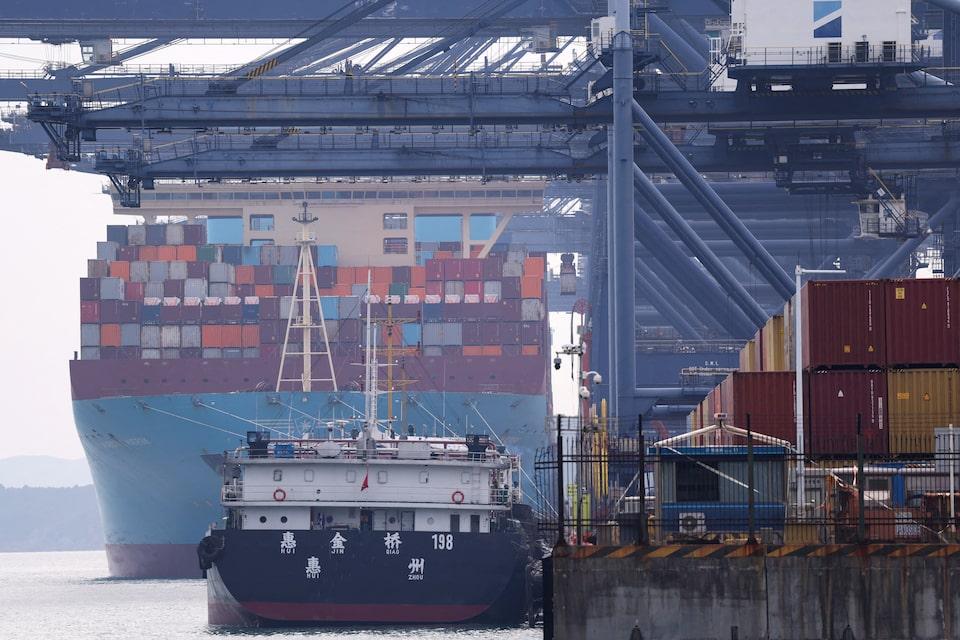
Shipping accounts for nearly 3% of greenhouse gas emissions IMO to consider carbon price again this year Shipping, energy companies forge ahead with green investments Rules may change again over ships' 30-year lifespans, Wartsila CEO says LONDON/SINGAPORE, Feb 12 (Reuters) - The shipping industry's biggest players are shrugging off Trump administration opposition to a global carbon price and are forging ahead with billions of dollars in emissions-reducing investments, according to company officials and a Reuters analysis of data. Europe, Brazil and a host of other nations are pushing the sector, which is responsible for nearly 3% of the world's greenhouse gas emissions, to go green. But, in October, the U.S. and Saudi Arabia, the world's two largest oil producers, successfully spearheaded efforts to postpone by one year a decision on the International Maritime Organization's proposal of a $380-per-metric-ton levy. Sign up here. Some analysts and industry observers initially warned that the absence of such a global framework added complexity to companies' planning and could cause some to pause their green investments. But in interviews with 15 shipping companies, ports, bunker suppliers and marine technology companies, 10 told Reuters that regional regulations, long investment lead times, and expectations of a continuing trend towards decarbonisation all argued in favour of staying the course. And a Reuters analysis of vessel delivery data through 2028 showed orders of ships capable of running on alternative fuels dominating new shipbuilding. Hakan Agnevall - chief executive of Wartsila (WRT1V.HE) , opens new tab, a major producer of ship engines and exhaust gas cleaning scrubbers - told Reuters that a one-year carbon price postponement is unlikely to rattle customers, like his, who generally take a 30-year investment perspective. "It's not bold to say that regulations will change during those 30 years." DUAL-FUEL VESSELS DOMINATE NEW SHIP ORDERS Most of the nearly 50,000 commercial ships operating globally today run on fuel oil or gas oil. But in a unanimous decision in 2023, IMO member states set a target of net-zero emissions by or around 2050. Firms have, in anticipation, begun ordering dual-fuel ships that can use both fuel oil as well as greener alternatives like liquefied natural gas, methanol and ammonia. While Pacific Basin (2343.HK) , opens new tab - a large dry bulk ship owner - did opt to buy four newbuild vessels running only on oil-derived fuels, citing the postponement of the IMO's carbon price, the company is an outlier. Unlike other sectors - from energy to auto manufacturing - that have curbed their green ambitions in a rollback that has only accelerated since Donald Trump's return to the White House, the shipping industry has, so far, declined to pivot. Major ship owners have reiterated their commitments to invest in emissions reduction measures, including dual-fuel vessels and onboard energy-saving devices. By the end of December, companies had invested over $150 billion in dual-fuel vessels, according to a Reuters analysis of data from the World Shipping Council, an industry group for container shipping and vehicle carriers. In total, 1,126 dual-fuel container ships and vehicle carriers have now been either delivered or are on order, the data showed. That marks an increase of 28% compared with the previous year, indicating that newbuilding orders for lower-emission fuel vessels continued even after the IMO delay. They also continued to outpace orders for traditional ships, with dual-fuel vessels now accounting for 74% of the overall container ship and vehicle carrier orderbook. And investments in new marine fuels are also moving ahead. Alexander Saverys, CEO of Belgian ship owner CMB.Tech (CMBT.BR) , opens new tab, told Reuters it will continue investments in both ammonia bunkering and production. A Mitsui O.S.K. Lines (9104.T) , opens new tab spokesperson told Reuters the IMO postponement just means a longer transition to low and zero-carbon fuels, and the company is still focused on LNG-fuelled vessels and early-stage adoption of ammonia and methanol. Maersk (MAERSKb.CO) , opens new tab, among the first to explore emissions-reducing alternative fuels, initially opted for methanol but has since ordered LNG-fuelled ships and has now also started testing ethanol as an alternative. NYK Group (9101.T) , opens new tab, which reaffirmed its emissions reduction strategy after the IMO decision, sees the one-year delay as an opportunity for discussion and refinement of the regulatory framework, a company spokesperson said. "While recent regulatory uncertainties might lead some operators to take a more cautious approach, the overall direction of maritime decarbonisation has not changed significantly," said Jason Stefanatos, decarbonisation director at maritime consultancy DNV. "The commercial drivers still remain." DESPITE IMO DELAY, GREEN INCENTIVES ARE EXPANDING GLOBALLY Many companies cited regional green fuel regulations among the main reasons for moving ahead with investments. The European Union's FuelEU Maritime, which requires vessels to pay penalties for failing to achieve lower emissions, makes a business case for greener fleets, ship owners and fuel suppliers said. And the EU Emissions Trading System and voluntary initiatives provide further incentives. Ship owners with dual-fuel vessels will likely use them on EU voyages to avoid paying FuelEU Maritime penalties, and some should also receive rewards for over-compliance, said Kenneth Tveter, an analyst at shipbroker Clarksons. "The case for low-carbon fuels such as ammonia and methanol is still alive if you have a trade concentrated around Europe," he said. Major Horn of Africa port Djibouti and OPEC member Gabon have also introduced levies on maritime emissions. And current momentum could see punitive regulations and incentive schemes introduced in other important shipping hubs soon. Britain, notably, has proposed to expand its emissions trading system to international shipping from 2028. And Turkey is considering a scheme similar to the EU's. Such factors should drive demand for LNG, bio-LNG and biofuels over the next five years, said Nacho de Miguel, head of alternative fuels at bunker supplier Peninsula. "Whilst the IMO's net-zero framework has been postponed, this does not change our strategy," he said. https://www.reuters.com/sustainability/climate-energy/global-shipping-industry-sticks-with-green-investments-despite-carbon-price-2026-02-12/