2026-01-21 04:56
MUMBAI, Jan 21 (Reuters) - The Indian rupee plunged to a record low and suffered its biggest single-session fall in two months on Wednesday, as a global bond rout and U.S. threats to acquire Greenland kept investors on edge and amplified concerns over outflows. The rupee fell for the sixth straight session, slipping to an all-time low of 91.7425 against the dollar. It closed down 0.8% at 91.6950 against 90.9750 previous close. Sign up here. The fall was exacerbated as the Reserve Bank of India stayed away from the market, and did not provide dollar supply, traders said. The rupee, the worst performing Asian on the day, is down 2% so far this month, after falling about 5% in 2025. Many of the challenges that weighed on the rupee in 2025 remain in place. Equity outflows persist and importers are more inclined to hedge than exporters amid expectations of a further depreciation. And while India's current-account deficit remains manageable, the lack of capital inflows is a hurdle, leaving the currency exposed to further weakness, analysts said. Indian equities dropped 0.3% on the day, after registering their biggest drop in over eight months on Tuesday. Foreign investors have withdrawn about $3 billion from Indian shares in January after record outflows of nearly $19 billion in 2025. "Flows mainly drive the USD/INR pair, thus weakness may continue to persist with interim legs of intervention expected from RBI in case of excess volatility," said Kunal Sodhani, head of treasury at Shinhan Bank India. India Forex Advisors said the currency will remain sensitive to corporate demand dynamics and portfolio flows. An escalation in global risk aversion would likely reinforce outflows, increasing downside pressure on the rupee. Lack of progress on a trade deal with the U.S. has further deprived the rupee of a potential inflow catalyst. Adding to the strain on the currency this year is weakness in most Asian peers — a factor that was largely absent in 2025. Investors now await U.S. President Trump's speech in Davos due later in the day. https://www.reuters.com/world/india/indian-rupee-risk-record-low-heightened-risk-aversion-rbi-backstop-eyed-2026-01-21/

2026-01-21 04:16
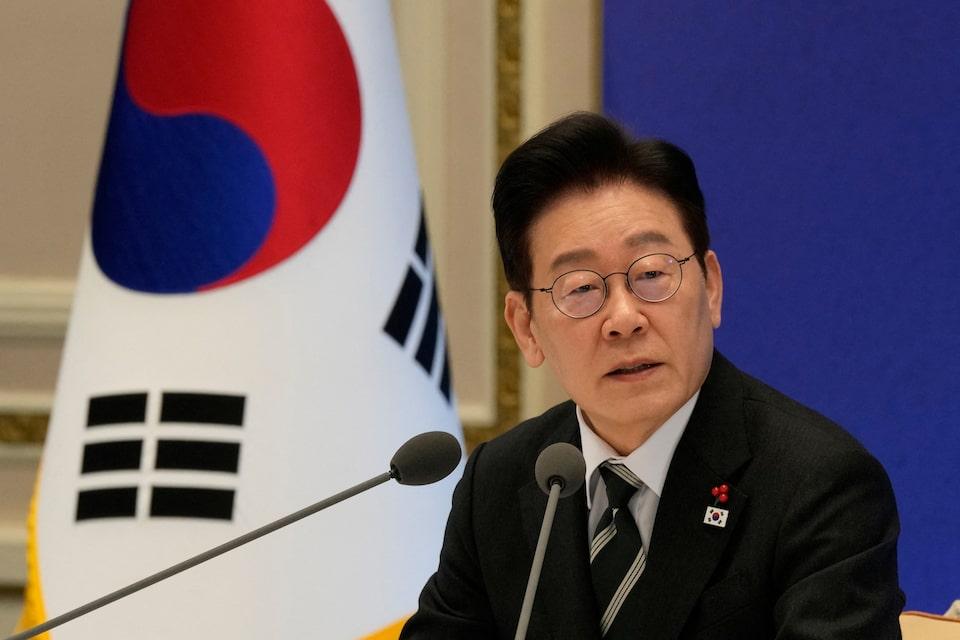
Authorities expect won to strengthe in coming months Won weakness in correlation with yen moves, says Lee Won gains sharply after Lee vows to stabilise market Lee says stock market still undervalued SEOUL, Jan 21 (Reuters) - South Korean authorities expect the won to strengthen to around the 1,400-per-dollar level in a month or two, although domestic policies alone will not be able to stabilise foreign exchange markets, President Lee Jae Myung said on Wednesday. Lee also said the domestic stock market, which emerged last year as the world's best performer with a 76% jump, was still undervalued. Sign up here. "According to relevant authorities in charge, it (the dollar-won exchange rate) is expected to fall to around 1,400 after a month or two," Lee told a press conference. The won turned higher after Lee's comments to strengthen as much as 0.5% to 1,468.8 per dollar, after touching earlier in the session its weakest level since December 24 at 1,481.4. "The dollar-won rate fell sharply as traders unwound long dollar positions on the president's comments," one local currency trader said. South Korean authorities have rolled out various policy measures since late last year to support a currency hovering around 16-year lows, saying the recent depreciation was not in line with economic fundamentals. Lee said domestic policies alone would not be sufficient to reverse the recent depreciation in the won, as it was somewhat correlated with weakness in the Japanese yen , adding that the won was faring comparably better. "We will continue to make efforts to find sustainable policy tools to stabilise exchange rates," Lee said. TACKLING KOREA DISCOUNT On the stock market, Lee said it was still undervalued, though some of the factors contributing to the so-called "Korea Discount", such as national security risks, domestic politics, corporate governance and market practices, were being resolved. The Korea Discount refers to a tendency for South Korean stocks to trade at lower valuations compared with global peers due to factors such as opaque corporate governance structures and low dividend payouts. The benchmark KOSPI (.KS11) , opens new tab has risen 15% so far this month, led by a rally in chip companies and automakers on optimism around artificial intelligence technologies, after last year posting its best performance since 1999. The index was little changed at around 4,880 points on Wednesday, erasing early losses. "It is now looking at surpassing 5,000 on something we couldn't foresee. That is, the boom of artificial intelligence and semiconductors at an unpredictable scale," Lee said. https://www.reuters.com/world/asia-pacific/south-koreas-lee-says-authorities-expect-won-strengthen-around-1400-level-soon-2026-01-21/
2026-01-21 03:25
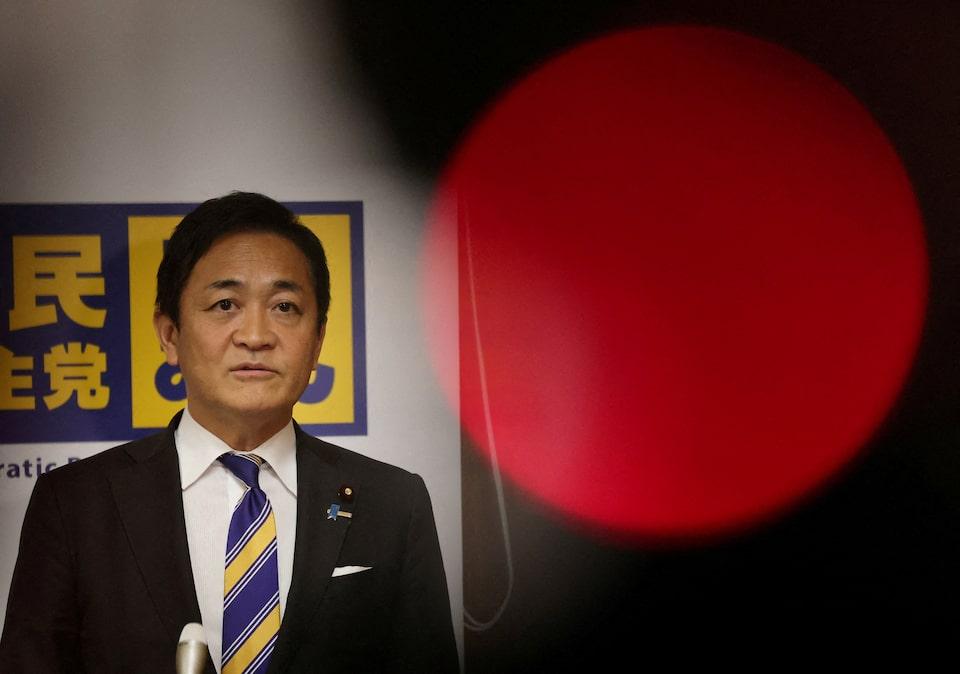
Government can buy back JGBs, reduce issuance of super-long notes BOJ can taper its bond buying at a slower pace than scheduled Japan should not rule out yen intervention, Tamaki says BOJ should proceed with rate hikes if smaller firms' wages firm TOKYO, Jan 21 (Reuters) - Japan should act decisively against excessive market moves, Yuichiro Tamaki, head of an influential opposition party, told Reuters on Wednesday, after a brutal selloff of Japanese government bonds sent a chill through global financial markets. Tamaki, head of the Democratic Party for the People (DPP), said policymakers could correct the "abnormal" moves in assets through actions including buying back government bonds or reducing issuance of super-long notes. Sign up here. The DPP is a smaller party than a newly formed opposition coalition, but it still commands a significant presence in parliament and holds a casting vote in key legislation and the ruling coalition's economic policies. "Market volatility is heightening significantly with somewhat abnormal moves seen," Tamaki said, when asked about the sharp selloff in Japanese government bonds (JGB). "The government and the Bank of Japan should respond decisively to excessive market moves," said Tamaki. Investors were desperately trying to come to grips with a meltdown in JGBs, with the yield on the benchmark 10-year paper having spiked 8.5 basis points in just two days, the sharpest rise since Japan loosened a cap on the benchmark bond yield in 2022. The rout was sparked by comments from Prime Minister Sanae Takaichi, who on Monday announced a plan to call a snap general election for February 8 with a pledge to suspend by two years an 8% levy on food sales and reverse what she described as "excessively tight fiscal policy." Investors fear Japan could ramp up debt issuance to meet Takaichi's expansionary fiscal agenda and worsen its already tattered finances. FX MARKET INTERVENTION SHOULD BE PART OF PLAYBOOK Tamaki said the government can consider buying back bonds or reducing issuance of 40-year JGBs, on top of sending a strong message to markets. The Bank of Japan, for its part, can taper its bond-buying at a slower pace than currently scheduled, he added. Japan should not rule out intervening in the currency market to prop up the yen, if such efforts to lower bond yields lead to an unwelcome decline in the currency, Tamaki said. The market concern over Japan's finances has also rippled through to the yen, while investors fret the BOJ's slow pace of interest rate hikes may be fuelling the risk of too-high inflation. Since Takaichi became prime minister in October, her dovish fiscal and monetary credentials have tanked the yen by about 8% against the dollar to briefly hit an 18-month low of 159.45 last week - its lowest level since Japan last intervened in July 2024. "I think the BOJ is moving in the right direction by normalising monetary policy," Tamaki said. The BOJ should continue raising interest rates if small and mid-sized firms can sustain wage gains of around 5%, he added. When asked about dominant market views the BOJ will hike rates at a pace of roughly twice a year, he said: "It feels natural to me, though the BOJ should pay close attention to any sharp worsening of economic and job market conditions that could lead to rapid declines in wage growth." The BOJ ended a decade-long, massive stimulus and began tapering its huge bond buying in 2024, followed by several sequences of hikes in its short-term policy rate including one to 0.75% from 0.5% last month. Analysts polled by Reuters expect the BOJ to wait until July before raising rates again, with more than 75% of them expecting it to climb to 1% or higher by September. https://www.reuters.com/world/asia-pacific/japan-should-respond-decisively-bond-selloff-opposition-head-says-2026-01-21/
2026-01-21 00:42
NEW YORK, Jan 20 (Reuters) - Canadian oil producer Cenovus Energy (CVE.TO) , opens new tab is considering a sale of conventional oil and gas assets in the Deep Basin of Alberta as it looks to cut debt after the recent takeover of oil sands rival MEG Energy, two sources familiar with the matter told Reuters. Cenovus has reached out to potential buyers in recent weeks to gauge interest in the assets, which could fetch around C$3 billion ($2.17 billion), the sources said. They cautioned the plans are still at an early stage, and Cenovus could ultimately decide to retain the assets. Sign up here. The sources requested anonymity to discuss confidential details. Cenovus did not immediately respond to a request for comment. Straddling Alberta and British Columbia, the Deep Basin is a conventional, natural gas-heavy formation lying northeast of the Rocky Mountain belt. Conventional oil and gas assets typically refer to well-established, mature fields that do not require complex drilling technologies but have steadily declining output. Cenovus' plans to possibly sell its Deep Basin assets come as it sharpens its focus on its core oil sands business after completing a C$8.5 billion acquisition of MEG Energy in November, when it added the smaller rival's highly coveted Christina Lake project to its portfolio after a bitter takeover battle with Adam Waterous' Strathcona Resources (SCR.TO) , opens new tab. The company last month said it expects to invest up to C$3.6 billion of capital in its oil sands business this year, up from as much as C$2.8 billion allocated in the 2025 budget. By contrast, the conventional business, which includes the Deep Basin assets, was allocated up to C$500 million of capital for 2026, from as much as C$400 million last year. A potential sale of the Deep Basin assets would also help Cenovus clean up its balance sheet. The Calgary-headquartered company's net debt jumped to around C$10.7 billion after the MEG Energy takeover as it assumed about C$800 million of MEG's debt and took out a C$2.7 billion loan to fund the deal, according to Morningstar DBRS estimates. Cenovus had assured investors it would bring its net debt down to C$4 billion over time. A sale of the Deep Basin assets could help the company get closer to that target. Cenovus last month forecast production from conventional assets would average up to 125,000 barrels of oil equivalent per day in 2026. In addition to the Deep Basin, Cenovus' conventional assets include holdings in the Montney and Rainbow Lake regions of Canada. ($1 = 1.3823 Canadian dollars) https://www.reuters.com/business/energy/cenovus-considers-selling-some-alberta-assets-valued-around-c3-billion-sources-2026-01-21/

2026-01-21 00:30
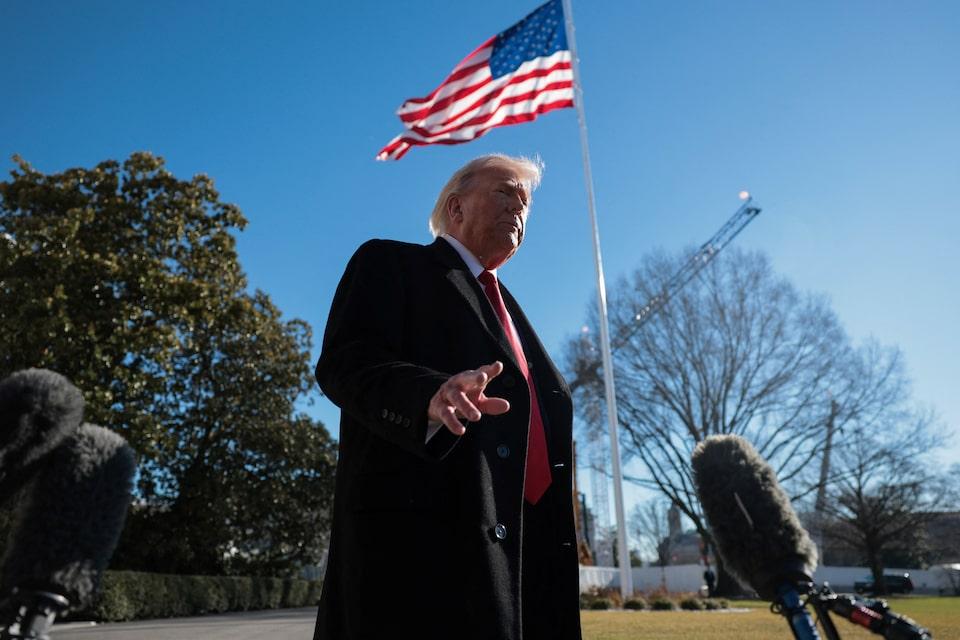
ORLANDO, Florida, Jan 20 (Reuters) - U.S. President Donald Trump's latest foreign policy and trade war salvos are upsetting global markets, but the question is whether these ructions will escalate or fade away, as was the case during the last 12 months. The latter is probably more likely, but either way, it is apparent that investors are struggling to adequately price the fundamental shifts in the world's geopolitical tectonic plates. Sign up here. And the shifts that have already taken place in 2026 are truly breathtaking. The Trump administration has removed the leader of Venezuela, and now appears to be the Latin American country's de facto ruler. A violent crackdown on protests in Iran has killed thousands, with the threat of a U.S. response still lingering. And then there is Trump's latest push to acquire Greenland from fellow NATO ally Denmark by any means necessary. The U.S.-Europe alliance, and indeed the very rules-based global order built since World War Two appears to be in jeopardy. The economic and financial terrain is a minefield too. Trump has issued a host of interventionist decrees on issues from credit card rates to mortgage-backed securities, while also pressuring U.S. oil executives to invest billions in Venezuela. And lest we forget, his Justice Department is still threatening to indict Federal Reserve Chair Jerome Powell. Until now, though, this "Trumpian assault" on the U.S. and global rules-based order – to borrow a phrase from Matt King, founder of Satori Insights – seemed at odds with the relative calm across markets. That calm is fracturing. The escalating spat between Trump and many of America's closest European allies has triggered a widespread selloff in stocks, bonds and the dollar. Safe-haven gold has continued to climb, busting through $4,700 per ounce. This looks like a return of the so-called 'Sell America' trade. Yet if last year is any guide, these market jitters may turn out to be speed bumps on the way to new highs rather than roadblocks. FUNDAMENTALS MATTER, RIGHT? Putting the geopolitical drama aside, consensus expectations for U.S. economic growth and corporate profits suggest that Wall Street is unlikely to stay down for long. The International Monetary Fund on Monday raised its 2026 U.S. growth estimate to 2.4% from 2.1% in October, due in part to the huge sums being plowed into artificial-intelligence data centers, chips and power generation. Moreover, early indications from the fourth quarter earnings season are encouraging. Of the 33 companies in the S&P 500 that have reported so far, 84.8% have notched an earnings beat. If the LSEG consensus estimate for year-on-year earnings growth of 9.0% materializes, that should put upward pressure on equities. Finally, it's good to remember that high uncertainty isn't necessarily bad for growth or profits. In some cases, it could even be positive. Think of the investment needed to fund a global rearmament wave, or to fuel the scramble for energy security and AI independence. NO ROOM FOR LIMBO Markets' relative calm over the past year may partly be the result of a virtuous cycle – or, looked at another way, an illusion. Passive investment funds continue to send a steady flow of capital into credit and equity markets, helping to keep volatility low and prices high. As long as the music is playing, investors will keep dancing. But the confusing trends of the last year – including simultaneous rallies in both risk-on and risk-off assets – also reflect the fact that it is simply very difficult to accurately price risk of this scale. What value does an investor assign to the end of NATO and the U.S.-Europe alliance, or the emergence of a new multi-polar world carved into three broad "spheres of influence" headed by the U.S., China and Russia? "For investors, regime change is hard to navigate. It's like you are either at war or you aren't at war. There's no limbo," says Satori Insights' Matt King. "The risk rally is consistent with fundamentals, but not necessarily driven by fundamentals. There's something very odd about it. You can explain it, but there is a degree of vulnerability about it." This applies to corporate earnings too. There's an assumption that tech and broader earnings will remain at current levels. Threats to the cycle – such as excess AI capacity due to competition from China or regulatory pressure from the EU – don't appear to be captured in analysts' forecasts. But those risks still exist. Perhaps Trump's push for Greenland will be the straw that breaks investors' backs, and the current market jitters will turn into a true correction. You might not want to bet on it though. (The opinions expressed here are those of the author, a columnist for Reuters) Enjoying this column? Check out Reuters Open Interest (ROI), , opens new tab your essential new source for global financial commentary. Follow ROI on LinkedIn, , opens new tab and X. , opens new tab And listen to the Morning Bid daily podcast on Apple , opens new tab, Spotify , opens new tab, or the Reuters app , opens new tab. Subscribe to hear Reuters journalists discuss the biggest news in markets and finance seven days a week. https://www.reuters.com/markets/global-markets-roi-column-pix-graphics-2026-01-20/
2026-01-21 00:14
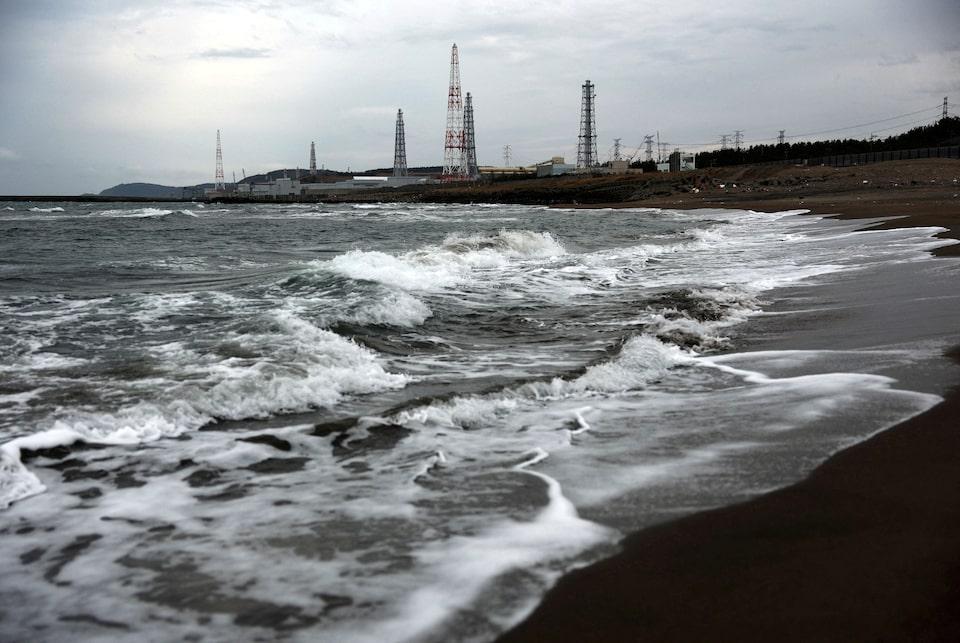
TEPCO to restart one reactor at Kashiwazaki-Kariwa nuclear power plant, its first since Fukushima Daiichi accident in 2011 Process in focus as other reactors await review Japan revives its nuclear industry but public acceptance, Chubu Elec restart issue clouds outlook TOKYO, Jan 21 (Reuters) - Tokyo Electric Power (TEPCO) (9501.T) , opens new tab will restart on Wednesday a reactor at the Kashiwazaki-Kariwa nuclear power plant after inspections were completed, its first such move since the Fukushima disaster in 2011. TEPCO said it would put online after 7 p.m. (1000 GMT) the 1.36 gigawatt (GW) reactor No. 6, one of seven at Kashiwazaki-Kariwa, the world's biggest nuclear power station capable of producing 8.2 GW of electricity when at full capacity. Sign up here. The restart was delayed from January 20 as TEPCO was investigating an alarm malfunction. As of early Wednesday, the equipment in question was functioning normally, TEPCO said. Reactor No. 6 is expected to restart commercial operation, boosting the power supply in the Tokyo area - Japan's busiest - by the end of February. Reactor No. 7 is expected to be brought online around 2030 and some others could be decommissioned. The revival of Kashiwazaki-Kariwa brings the total number of reactors in Japan currently restarted to 15, out of the 33 reactors that remain operable after the shutdown of Japan's entire fleet of 54 reactors in the wake of TEPCO's Fukushima Daiichi reactor meltdown in 2011. Prime Minister Sanae Takaichi is pushing for the construction of new reactors, especially new-generation and small modular reactors (SMRs), with the government recently announcing a new public funding scheme to accelerate a nuclear power comeback. After setbacks in its offshore wind roll-out and inflation pressure from fossil fuel imports, Japan is switching its attention to nuclear power again to boost energy security and reduce gas and coal purchases. Kashiwazaki-Kariwa's restart, the first for TEPCO since the Fukushima disaster, is a major test for the entire Japanese nuclear power industry, as six reactors operated by other utilities, including Chubu Electric Power Co (9502.T) , opens new tab, are awaiting regulatory decisions on their potential restarts. The developments are also in focus as Japan seeks to boost cooperation with the U.S., its closest ally, on new-generation nuclear reactors and SMRs, with the global atomic industry largely dominated by China and Russia. This month, Japan's nuclear watchdog said it would order Chubu Electric to provide a detailed report on falsified seismic data and pause a review of the utility's application to restart Hamaoka, its only atomic plant, as public support for greater usage of nuclear power remains divided. Commodity analysts at Kpler expect liquefied natural gas imports by Japan, one of the world's top buyers along with China, to drop by 4 million metric tons in 2026 from a year earlier to 62 million tons due to higher nuclear power availability and if Unit No. 6 comes commercially online early this year. https://www.reuters.com/sustainability/boards-policy-regulation/tepco-could-restart-kashiwazaki-kariwa-nuclear-power-plant-wednesday-kyodo-2026-01-21/