2026-01-20 21:01
Co holds 709,715 bitcoin as of January 19 Analyst expects co to continue buying bitcoin during price dips Quarterly results not key metric for Strategy, analyst said Co shares drop 7.4%, bitcoin falls 3.6% Jan 20 (Reuters) - Billionaire Michael Saylor's bitcoin-focused firm Strategy (MSTR.O) , opens new tab said on Tuesday it bought about $2.13 billion worth of bitcoin over the past eight days, stepping up purchases even as its stock has been pressured by cryptocurrency volatility. The company acquired roughly 22,305 bitcoin between the period of January 12 and January 19, according to a regulatory filing. Sign up here. The purchases were funded using proceeds from the company’s at-the-market share offering program, Strategy said. Shares of the company slid about 7.4%, while bitcoin fell 3.6%. "Strategy is still buying Bitcoin because stopping would be as much a signal to the market as purchasing more," said Nic Puckrin, analyst and co-founder of Coin Bureau. If it stops, Saylor is essentially admitting that the balance sheet can't handle downward price pressure, potentially weighing on both Strategy's shares and broader bitcoin sentiment, given MSTR's close link with optimism around the cryptocurrency, Puckrin said. Saylor said in an X post , opens new tab on Tuesday that Strategy holds 709,715 bitcoin as of January 19. Earlier this month, Strategy reported an unrealized loss of $17.44 billion on its digital assets in the fourth quarter, reflecting a drop in the value of its bitcoin holdings in the quarter, a paper hit that has weighed on investor sentiment alongside sharp crypto-market swings. Strategy is operating on a longer time horizon, focused on growing its bitcoin-per-share, quarterly results are no longer the right yardstick for the company, Puckrin added. Strategy, which started out as software company MicroStrategy, began buying and holding bitcoin in 2020. https://www.reuters.com/legal/transactional/bitcoin-hoarder-strategy-buys-213-billion-bitcoin-eight-days-2026-01-20/

2026-01-20 21:00
US benchmarks record biggest one-day drop since October 10 S&P 500, Nasdaq slip below 50-day moving average Indexes down: Dow 1.76%, S&P 500 2.06%, Nasdaq 2.39% Market uncertainty heightened by Trump's Greenland tariff threat Japanese bond market jitters weigh on other govt debt; feed negative equity sentiment Jan 20 (Reuters) - All three major Wall Street indexes ended Tuesday with their biggest one-day drops in three months, in a broad selloff triggered by concerns that fresh tariff threats from President Donald Trump against Europe could signal renewed market volatility. The risk-off trade was pervasive, helping vault gold to fresh record highs, and pushing up debt costs with U.S. Treasuries wobbling under renewed selling pressure. Bitcoin, which can find favor when traditional markets waver, fell more than 3%. Sign up here. All three U.S. equity benchmarks registered their worst one-day performance since October 10, with both the S&P 500 (.SPX) , opens new tab and Nasdaq Composite (.IXIC) , opens new tab slipping below their 50-day moving averages. The S&P 500 (.SPX) , opens new tab lost 143.15 points, or 2.06%, to end at 6,796.86 points, while the Nasdaq Composite (.IXIC) , opens new tab gave up 561.07 points, or 2.39%, to 22,954.32. The Dow Jones Industrial Average (.DJI) , opens new tab fell 870.74 points, or 1.76%, to 48,488.59. UNCERTAINTY RISES Tuesday was the first opportunity for U.S. investors to act on Trump's weekend comments, given the market holiday for Martin Luther King, Jr. Day. This included Trump saying additional 10% import tariffs would take effect on February 1 on goods from Denmark, Norway, Sweden, France, Germany, the Netherlands, Finland and Great Britain — all already subject to U.S. tariffs. The tariffs would increase to 25% on June 1 and continue until a deal was reached for the U.S. to purchase Greenland, Trump wrote in a post on Truth Social. Leaders of Greenland, an autonomous territory of Denmark, and Denmark have insisted the island is not for sale. The reinjection of tariff threats into global markets harkens back to April's "Liberation Day," when Trump's levies on global trade partners pushed the S&P 500 to near bear market territory. The CBOE Volatility Index (.VIX) , opens new tab, also known as Wall Street's fear gauge, spiked to 20.09 points, its highest close since November 24. Trading volumes were also higher: around 20.6 billion shares changed hands on U.S. exchanges on Tuesday, up from the 17.01 billion average for the last 20 trading days. While investor sentiment was frayed on Tuesday, the question being asked is whether Greenland represents a knee-jerk selloff, or something that will have longer-term implications for markets. Jamie Cox, managing partner at Harris Financial Group, said he was not seeing indications investors were fleeing. "I'm not at the point yet where I'm willing to say what is happening with Greenland, and the resurgence of the tariff threat back and forth, is going to precipitate a correction in the equities markets," he said, adding he would be surprised if there was a 3% to 5% drop this week. BOND MARKETS SPILLOVER A potentially more significant action, in Cox's eyes, would be whether Japanese authorities intervene in financial markets. Japanese government bonds plunged on Tuesday, sending yields to record highs, while Tokyo stocks and the yen also fell after Prime Minister Sanae Takaichi's call for a snap election shook confidence in the country's fiscal health. The moves helped push the cost of longer-term European government bonds higher, while a selloff in U.S. Treasuries was more pronounced on the long end of the curve. Despite tariff talk, and notable bond movements, the U.S. economy remains in a strong position. Investors are due a host of fresh data this week on the state of the U.S. economy, including the third-quarter U.S. GDP update, January PMI readings and the Personal Consumption Expenditures report, which is the Federal Reserve's preferred inflation gauge. Earnings season is also kicking into higher gear, with several industry bellwethers set to report their quarterly earnings this week. Among them was Netflix (NFLX.O) , opens new tab, which closed 0.8% lower before reporting earnings after the bell. https://www.reuters.com/business/sp-nasdaq-futures-slide-one-month-lows-greenland-concerns-2026-01-20/
2026-01-20 20:52
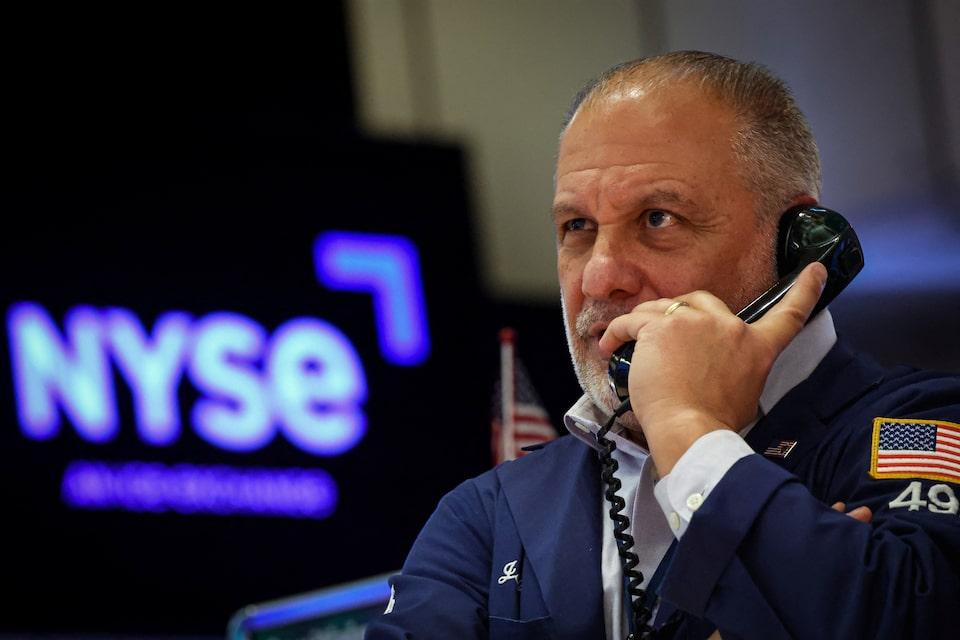
Japanese bond selloff spills over globally Long-dated U.S. yields post biggest two-day rise since May Greenland tensions add pressure on European defence spending LONDON/NEW YORK, Jan 20 (Reuters) - A jump in Japan's borrowing costs to all-time highs rippled through major bond markets on Tuesday, colliding with fresh anxiety over tensions related to Greenland and underscoring investors' sensitivity to rising fiscal pressures and heavy debt loads. Japanese 10-year government bond yields surged almost 19 basis points (bps) in two days, the sharpest rise since 2022, while 30-year yields posted their biggest daily jump since 2003 as investors braced for increased government spending. Sign up here. Prime Minster Sanae Takaichi called a snap election on Monday and is running on a platform of stimulus. "If there is a strong mandate following the election, that could open the door to more fiscal spending," said Seema Shah, chief global strategist at Principal Asset Management. "It pulls a lot of global bond markets into a difficult story about debt and you can see that in the rise in borrowing costs." WORRIES OVER GREENLAND, THREAT OF MORE TARIFFS Bond investors were also grappling with U.S. President Donald Trump's tariff threats against European allies over Greenland, which may raise expectations that Europe will have to ramp up defence spending further through even more bond issuance. Talk of a 'Sell America' trade has also resurfaced, adding to selling pressure on Treasuries. The benchmark 10-year yield on Tuesday hit its highest since late August of 4.313% . Danish pension fund AkademikerPension said on Tuesday it was planning to sell its U.S. Treasury holdings by the end of the month, worth some $100 million. U.S. 30-year Treasury yields jumped around 8 basis points to 4.91% , as U.S. markets reopened after Monday's holiday. Over the last two trading days, they've risen by 13 bps, their biggest two-day increase since last May, when China-U.S. trade tensions flared. The spread between U.S. two‑year and 30‑year yields, a barometer of investor unease about long‑term government finances, was on track for its biggest one‑day widening since August, yet remained well below the 19‑bp jump recorded during last April's Liberation Day selloff. "Japan fiscal pressures are concerning, but markets have become more sanguine about U.S. deficits," wrote Gennadiy Goldberg, head of U.S. rates strategy, at TD Securities in a research note. "While Japanese worries could continue to pass through given global correlations, the U.S. Treasury is doing everything in their power to avoid over-issuing long-end debt by keeping issuance shorter-dated." WHAT HAPPENED TO THE CALM? The bonds selloff ends weeks of relative stability in big markets outside of Japan that have faced pressure over the past year from concern about high debt. German 30-year bonds climbed as much as 6 bps to 3.53%, the highest in about two weeks, before coming down to 3.483%. UK 30-year yields , which often rise or fall more than peers, were up around 6 bps at 5.22%, posting their largest daily increase since early January. In Europe, tensions over Greenland only highlighted spending pressures, analysts said. "It again means that Europe needs to do more on defence," said Barclays head of euro rates strategy Rohan Khanna. "Which the market is going to say: look, it eventually means more issuance and more debt supply and hence weaker long-end bonds." He added that tariffs would hurt growth, which was supportive for shorter-dated bonds. European bond markets were also sensitive to the JGB selloff because Japanese investors, big buyers of foreign bonds, might be tempted to move money into higher Japanese bond yields. "The question is, where are those flows going to come from now? Are they going to come more from the U.S. or more from Europe? And given the current geopolitical landscape, that could amplify the spillover to the U.S. a bit more," said ING senior rates strategist Michiel Tukker. "You could argue it's safer to stay in German Bunds than U.S. Treasuries." https://www.reuters.com/world/asia-pacific/japanese-selloff-greenland-fears-ripple-through-debt-ridden-global-bond-markets-2026-01-20/
2026-01-20 20:22
Jan 20 (Reuters) - The U.S. State Department has approved the potential sale of maritime patrol and reconnaissance aircraft and lightweight torpedoes and related equipment to Singapore in a deal valued at an estimated $2.3 billion, the Pentagon said on Tuesday. The principal contractor is Boeing (BA.N) , opens new tab, according to the Pentagon. Sign up here. https://www.reuters.com/business/aerospace-defense/state-department-approves-potential-sale-aircraft-torpedoes-singapore-23-billion-2026-01-20/
2026-01-20 20:17
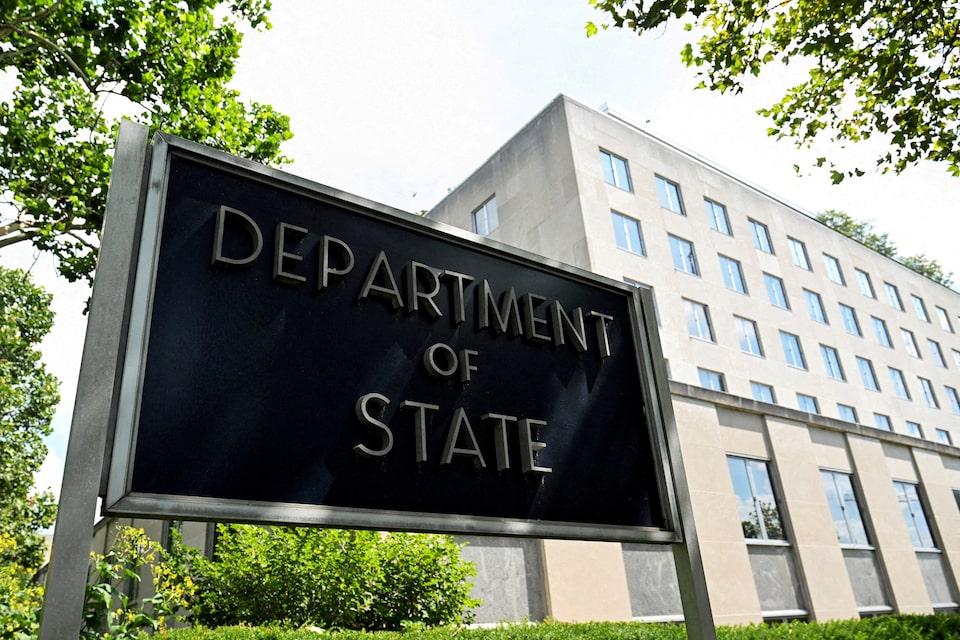
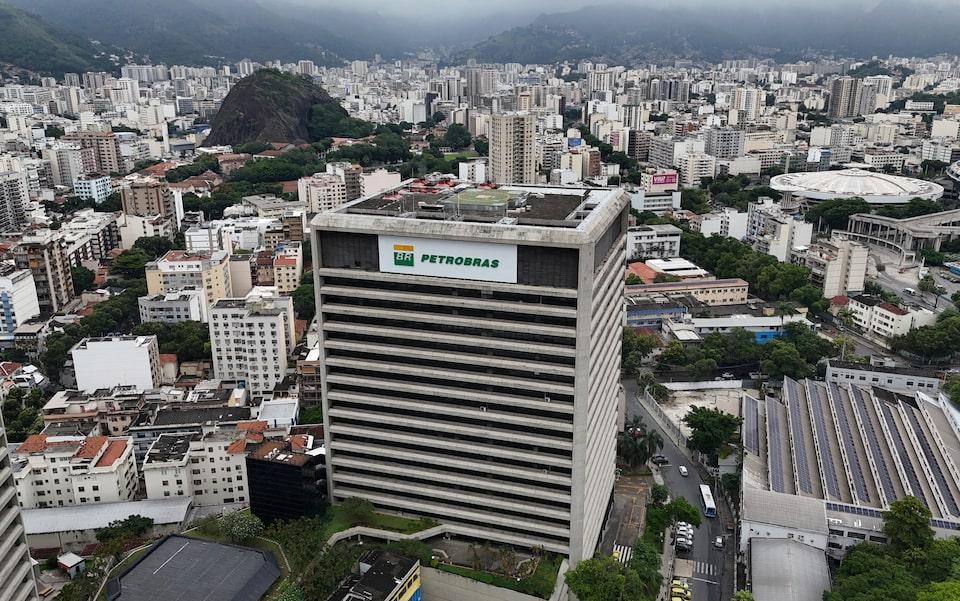
RIO DE JANEIRO, Jan 20 (Reuters) - Brazilian state-run oil firm Petrobras (PETR3.SA) , opens new tab and its logistics subsidiary Transpetro on Tuesday signed contracts with shipyards for five gas carriers, 18 barges and 18 pushers, for 2.8 billion reais ($521 million). The companies made the deal official at an event in Brazil's southern Rio Grande do Sul state. Brazilian President Luiz Inacio Lula da Silva, who has prioritized boosting the country's shipbuilding sector, attended the ceremony. Sign up here. A shipyard in Rio Grande do Sul will build the five tankers, representing 2.2 billion reais of the deal, to carry liquefied petroleum gas, known as cooking gas, and derivatives, according to a statement from Petrobras. Two of the tankers will have a capacity of 14,000 cubic meters, while the other three will be able to transport 7,000 cubic meters each, it said. The first gas tanker will be delivered within 33 months after construction begins, with new deliveries every six months, the state-run firm added. Shipyards in two other Brazilian states will build the remaining barges and pushers, and Transpetro will operate all ships. "With these contracts, we are preparing Petrobras for the growth of our production in the coming years and boosting the recovery of the national shipbuilding industry," Petrobras Chief Executive Officer Magda Chambriard said in the statement. ($1 = 5.3761 reais) https://www.reuters.com/business/energy/brazils-petrobras-signs-521-million-contracts-five-gas-tankers-multiple-vessels-2026-01-20/
2026-01-20 19:03
Jan 20 (Reuters) - The world is facing irreversible water "bankruptcy", with billions of people struggling to cope with the consequences of decades of overuse as well as shrinking supplies from lakes, rivers, glaciers and wetlands, U.N. researchers said on Tuesday. Nearly three-quarters of the global population live in countries classified as "water insecure" or "critically water insecure", and 4 billion people face severe water scarcity at least one month per year, the United Nations University Institute for Water, Environment and Health warned in a report , opens new tab. Sign up here. "Many regions are living beyond their hydrological means, and many critical water systems are already bankrupt," said Kaveh Madani, lead author and director of the institute. "By acknowledging the reality of water bankruptcy, we can finally make the hard choices that will protect people, economies and ecosystems," he said. The report said water supplies are "already in a post-crisis state of failure" after decades of unsustainable extraction rates that have drawn down water "savings" contained in aquifers, glaciers, soils, wetlands and river ecosystems, with supplies also degraded by pollution. More than 170 million hectares of irrigated cropland - an area larger than Iran - are under "high" or "very high" water stress, and economic damage from land degradation, groundwater depletion and climate change amounts to more than $300 billion a year worldwide, the report said. Three billion people and more than half of global food production are concentrated in areas already facing unstable or declining water storage levels, while salinisation has also degraded more than 100 million hectares of cropland, it said. The researchers wrote that the current approach to solving water problems was no longer fit for purpose, and the priority was not "returning to normal" but a new "global water agenda" designed to minimise damage. However, Jonathan Paul, geoscience professor at Royal Holloway, University of London, said the report did not address one major factor behind the crisis. "The elephant in the room, which is mentioned explicitly only once, is the role of massive and uneven population growth in driving so many of the manifestations of water bankruptcy," he said. https://www.reuters.com/sustainability/climate-energy/looming-water-supply-bankruptcy-puts-billions-risk-un-report-warns-2026-01-20/