2025-05-30 11:17
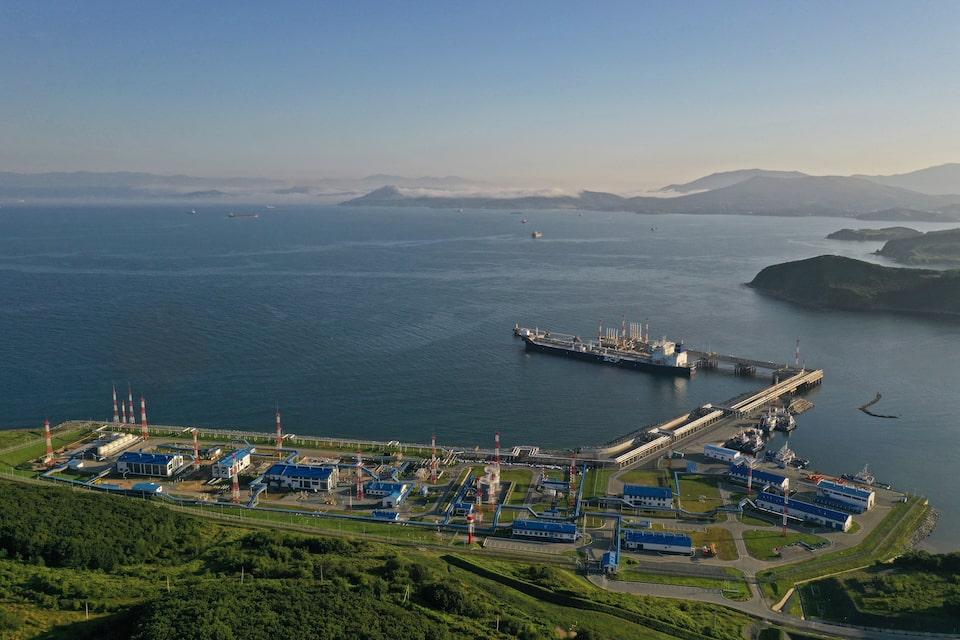
MOSCOW, May 30 (Reuters) - Russia expects a 50% rise in voyages by foreign vessels using the Northern Sea Route (NSR) along its Arctic coast this year, which Moscow sees as an alternative to the Suez Canal, state-controlled nuclear energy firm Rosatom told Reuters on Friday. Rosatom runs a fleet of icebreakers and is in charge of operations along the NSR, which connects Russian ports with China during the summer months, saving vessels up to 10 days at sea compared to traveling via the Suez Canal. Sign up here. Moscow is promoting the route as a way of avoiding sailing close to the borders of European Union member states at a time of mounting geopolitical tensions. "There is a clear upward trend in international interest in the NSR ... In 2025, foreign companies are expected to conduct at least 1.5 times more voyages through the NSR compared to the previous year," the company told Reuters in emailed comments. As of May 27, a total of 196 applications have been submitted for vessel navigation along the NSR, including vessels sailing under foreign flags, Rosatom said, adding that summer-autumn navigation will be open from July 1 to November 30. A record volume of nearly 38 million metric tons of various goods, including oil and liquefied natural gas, was shipped along the route last year, the company said. However, the NSR presents a massive challenge for ships due to thick ice in winter, and navigation is restricted to warmer months. Long dominated by vessels managed by Russian shipping giant Sovcomflot, Azerbaijan-based Vista Vvave Shipmanagement was among companies using the NSR for the first time last year. https://www.reuters.com/world/china/russias-rosatom-expects-boom-foreign-vessels-using-arctic-shipping-route-2025-05-30/

2025-05-30 11:12
DUBAI, May 30 (Reuters) - Saudi Aramco (2222.SE) , opens new tab has published a new prospectus for its issuance programme of Islamic bonds or sukuk, signalling the state oil major may soon tap the debt markets again after it raised $5 billion from a three-part bond sale this week. The prospectus, submitted to the London Stock Exchange where the sukuk would be listed, is dated May 30. Aramco has a year to issue sukuk under its terms. Sign up here. Aramco earlier this week raised $5 billion from a sale of conventional bonds. The borrowing comes after economic uncertainty and rising supply hit crude markets, denting the top oil exporter's profits. "Aramco is likely looking to take advantage of a window of relative market calm to issue debt again," said Zeina Rizk, co-head of fixed income at Amwal Capital Partners. Aramco in March said it expected to slash its dividend this year by nearly a third as profits and free cash flow decline. Reuters reported last week that Aramco is exploring potential asset sales to free up funds as it pursues international expansion and weathers lower crude prices. The Saudi government is heavily reliant on generous payouts from Aramco, its longtime cash cow, also including royalties and taxes. Oil receipts made up 62% of state revenue last year. The government does not disclose at which crude price its books are balanced. The IMF estimates it needs oil at over $90 a barrel for a balanced budget. Brent crude was trading around $64.4 on Friday. Citi, HSBC and JPMorgan are the arrangers of the sukuk programme and are joined as dealers by First Abu Dhabi Bank, Goldman Sachs, Morgan Stanley, SNB Capital and Standard Chartered. https://www.reuters.com/business/energy/saudi-aramco-could-soon-issue-islamic-bonds-prospectus-shows-2025-05-30/
2025-05-30 11:02
MOSCOW, May 30 (Reuters) - Russia has increased supplies of its oil from the Arctic to Syria, which needs the feedstock for its refineries, according to shipping data cited by an industry source and LSEG data. Russia has long considered Syria as a key gateway for its trade and military operations in the Middle East and Africa. Sign up here. Its positions in the country's west, where it has a naval base in Tartous and Hmeimim air base near the port city of Latakia, have been dealt a blow following the toppling of Moscow-leaning President Bashar al-Assad in December, but Moscow is in talks with Syria's new Islamist-led administration to keep the bases, the Kremlin said in January. A tanker hit by U.S. sanctions, Mitzel, loaded some 140,000 metric tons of Russian oil in the Arctic port of Murmansk and is heading to Baniyas port that has already received several cargoes of such oil, according to the source and LSEG. Tankers Sakina and Aquatica shipped oil from Russia to Syria in March, followed by the Sabina tanker in April, LSEG shipping data showed and traders said. Overall supplies of Russian oil to Syria reached some 350,000 metric tons, or some 2.6 million barrels so far this year. Russia has to look for alternative buyers of its Arctic oil since the U.S. sanctions in January hit producer Gazprom Neft (SIBN.MM) , opens new tab and the tankers shipping the crude. Russia also supplied diesel to Syria this year, LSEG data showed. Syria's refineries will need alternatives to Iranian oil, which made up a significant supply during Assad's rule but whose deliveries were suspended late last year, leading to a temporary shutdown of the Baniyas refinery in December. Syria's oil ministry announced a resumption of operations at Baniyas refinery in April after new oil shipments had been received but also said it was carrying out technical repairs at the site, without detailing the refinery's current operational capacity. Gazprom Neft, which produces ARCO and Novy port Arctic oil grades, and the Syrian oil ministry did not respond to requests for comment. https://www.reuters.com/business/energy/russia-boosts-arctic-oil-supplies-syria-lseg-source-data-showed-2025-05-30/
2025-05-30 10:53
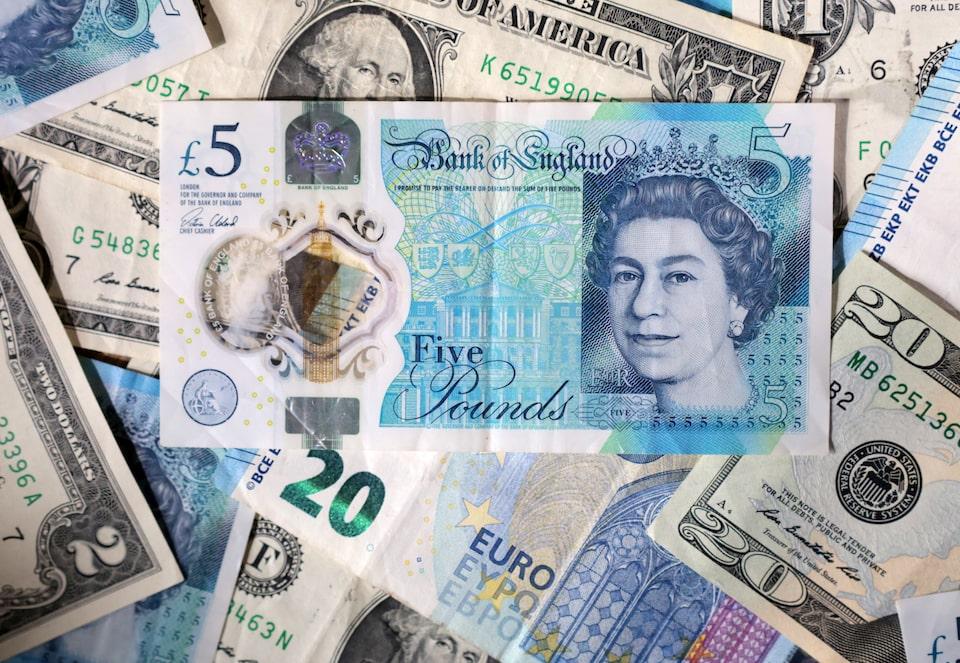
May 30 (Reuters) - Sterling held steady on Friday, set for its fourth month in a row of gains against the dollar, as recent favourable economic data support Britain's currency just as worries over U.S. tariffs and high debt weigh on the greenback. "Sterling looks well supported," said Kit Juckes, chief FX strategist at Societe Generale, pointing to "reasonably good" data trends. Sign up here. Sterling was last trading at $1.3472 , little changed on the day and down around 0.5% on the week after gaining about 2% last week. That leaves the pound set to end May with a gain of around 1%, which would mark a fourth straight month of increases against a weakened greenback. It last recorded four consecutive monthly gains against the dollar in 2022. The dollar, meanwhile, was en route to its fifth-straight monthly decline on Friday, as further uncertainty around trade policy and U.S. fiscal health weighed. Sterling rose around 0.25% to 84.06 pence per euro. Still, it was set for its first week of declines after six weeks of increases as gains seen after UK retail sales and inflation numbers last week and optimism around Britain's trade deals with the U.S. and India faded. Last week's stronger than expected UK inflation print caused markets to do away with bets for a rate cut at the Bank of England's policy meeting in June, with about 97% of traders now anticipating that the central bank will hold rates after a cut by 0.25 percentage points to 4.25% in May. "The economy has not got the legs to justify a significant strengthening (of the pound) from here," Juckes said. "I just think it's going to frustrate all the bears, left, right, and centre." Further out, traders looked ahead to a multi-year spending review by finance minister Rachel Reeves on June 11, with the government facing the challenging task of boosting economic growth while limiting spending and tax increases as it has pledged. https://www.reuters.com/world/uk/sterling-set-fourth-monthly-rise-against-weakened-dollar-2025-05-30/
2025-05-30 10:51
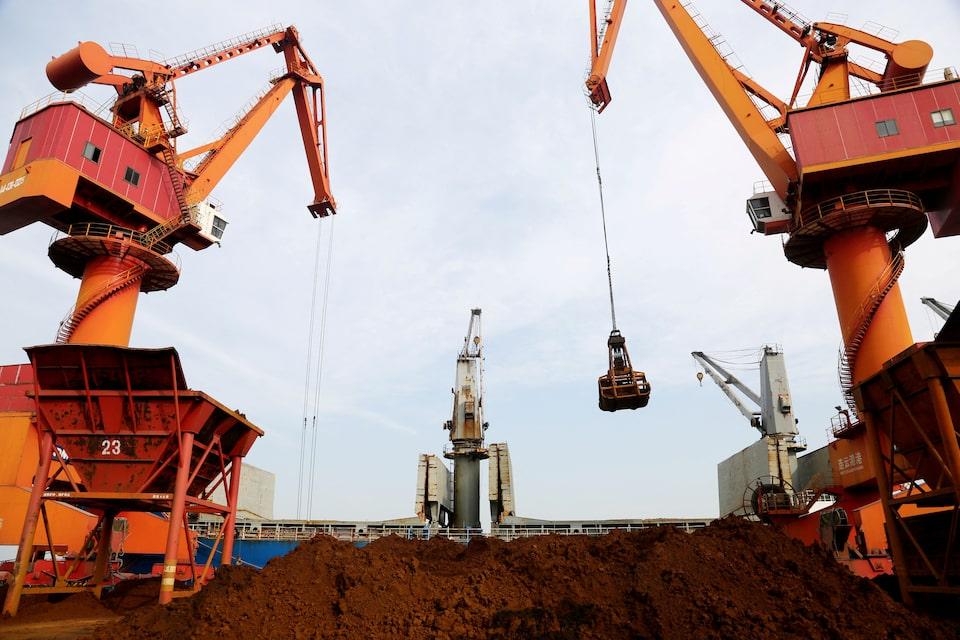
2025 surplus seen at 20-30 million tons vs 50 million tons before Demand has held up so far this year, cyclones hit supply New supply from Guinea's Simandou remains a long-term price risk SINGAPORE, May 30 (Reuters) - The prospects for iron ore prices are improving thanks to a lower than expected global surplus this year, analysts and traders say, though looming new supply from the giant Simandou project in Guinea remains a long-term downside risk for prices. Analysts and traders have cut their oversupply forecasts for this year to between 20 million and 30 million metric tons, from 50 million tons earlier this year, according to more than a dozen interviews at the flagship Singapore International Ferrous Week conference this week. Sign up here. That is because demand has been surprisingly resilient so far this year thanks to robust steel exports as buyers stocked up amid signs of an escalating global trade war, while cyclones disrupted supply in major producer Australia. In the first four months of 2025, China's iron ore imports slid 5.5% year-on-year while its crude steel output ticked up 0.4%, official data showed. Iron ore prices have held well above $90 per ton, below which high-cost miners struggle to break even, despite trade tensions between the world's top two economies that have fueled concerns about the outlook for steel demand. That has led analysts and traders to revise up their bearish-case pricing scenarios to between $80 and $85 per ton versus $75 or lower at the start of the year. Medium term demand for iron ore should remain firm because China's young fleet of blast furnaces will require iron ore for at least another decade, said analysts. "There won't be any big reduction in the number of blast furnaces in China by 2035 from the perspective of the life cycle of the currently running equipment, meaning that iron ore procurement will hover at a relatively high level," Long Hongming, a professor from Anhui University of Technology, told the conference on Tuesday. SIMANDOU Simandou, one of the world's largest high-grade iron ore mines, will start shipping ore in November, and its entry into the global market is expected to aggravate the supply glut starting 2026. However, the increasingly hostile attitude of Guinea's military government, which recently cancelled 129 minerals exploration permits and is locked in a standoff with Emirates Global Aluminium, raised concerns among traders, miners, analysts and steel mills at the conference in Singapore. Participants questioned whether the government's activist stance could affect how smoothly the project will be able to ramp up to its full production of 120 million tons a year. Simandou is a joint venture between Rio Tinto (RIO.AX) , opens new tab, the world's largest iron ore miner, and Chinese companies including China Baowu, the world's largest steelmaker by output. https://www.reuters.com/world/china/iron-ore-pessimism-subsides-despite-looming-simandou-supply-2025-05-30/
2025-05-30 10:50
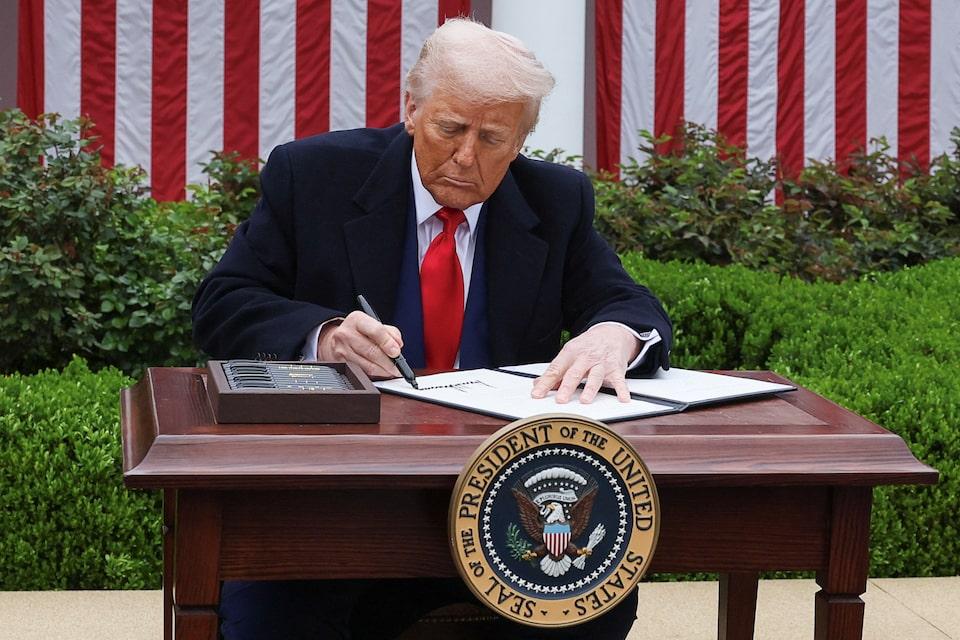
LONDON, May 30 (Reuters) - What matters in U.S. and global markets today By Mike Dolan , opens new tab, Editor-At-Large, Financial Industry and Financial Markets Sign up here. This week's U.S. tariff whiplash has left financial markets dazed, as anxiety about foreign capital taxes and fresh rate cut hopes add to the confusion. June promises to be a tense month in an already turbulent year. It's Friday, so today I'll provide a quick overview of what's happening in global markets and then offer you some weekend reading suggestions away from the headlines. Today's Market Minute * A federal appeals court temporarily reinstated the most sweeping of President Donald Trump's tariffs on Thursday, a day after a U.S. trade court ruled that Trump had exceeded his authority in imposing the duties and ordered an immediate block on them. * The Trump administration's trade war has cost companies more than $34 billion in lost sales and higher costs, according to a Reuters analysis of corporate disclosures. * The safety of Germany's gold reserves held overseas and in New York in particular, until recently mainly a talking point for the country's far-right party and gold bugs, is becoming a matter of public debate with Donald Trump back in the White House. * While we may not see a full-blown debt crisis in the U.S., there's a growing sense that "the fiscal" matters for markets more now than it has for decades. Reuters columnist Jamie McGeever explores the assumptions baked into the current U.S. debt and deficit projections. * Reuters columnist Gavin Maguire explains why developers and exporters of natural gas should be alarmed by the decline in thermal coal exports coming out of Indonesia. Tariffs return along with capital tax fears A federal appeals court temporarily reinstated the most sweeping of Donald Trump's import tariffs late on Thursday. Allowing the stay while the case progresses, the court ordered the plaintiffs in the cases to respond by June 5 and the administration by June 9. Trump has promised to take the matter all the way to the Supreme Court. Thursday's rally in stocks (.SPX) , opens new tab and the dollar (.DXY) , opens new tab faded quickly, with many investors convinced the administration would seek other routes to impose the levies even if it loses its case. The whole episode raises as many questions as answers, not least regarding when tariffs will be imposed and which ones will eventually come to pass. This heightens business uncertainty as much as it offers any marginal relief. Countries in bilateral trade talks may be emboldened to avoid making concessions until there is more clarity around the legal issue, meaning we could see a shortening of the already narrow six-week negotiating period left before July 9's re-imposition of "reciprocal tariffs". Meanwhile, there are also questions over the U.S. fiscal bill now heading through the Senate, including how much delayed or reduced tariffs will impact revenue estimates and deficit calculations. What's more, investors are increasingly concerned about provisions in the bill - namely Section 899 - that allow the administration to impose taxes of up to 20% on foreign asset holdings. Some fear this could cause the tariff war to morph into a capital war, unnerving overseas investors anew. Resorting to non-tariff threats would only up the ante in tough trade talks with Europe, which is already countering with threats against U.S. tech firms. On top of all this, we have next month's annual Treasury review of overseas currency manipulation. In short, we could soon seen more trade weapons drawn into the fray. There's even growing angst overseas that foreign holdings of gold at the U.S. central bank could be at risk. But amid all the speculation, U.S. Treasuries rallied sharply on Thursday. Some of that was down to signs of weakening economic activity, with weekly jobless claims rising, pending homes sales weakening and first quarter GDP revisions cutting consumer spending estimates and showing a drop in corporate profits. That was enough to nudge Federal Reserve easing hopes back up, with futures now pricing in two full rate cuts by yearend. The drop in Treasury yields was helped by a robust auction of 7-year notes, which Morgan Stanley said left primary dealers with just 4.8% of the paper, the lowest primary dealer takedown on record for any Treasury auction. Amid all this, Trump called Fed Chair Jerome Powell to the White House on Thursday for their first face-to-face meeting since he took office in January. He told the central bank chief he was making a "mistake" by not lowering interest rates. Underscoring its independence, the Fed issued a statement after the meeting saying it "will set monetary policy, as required by law, to support maximum employment and stable prices and will make those decisions based solely on careful, objective, and non-political analysis." The April reading for the Fed's favored inflation gauge is due for release on Friday. Ahead of the open, U.S. stock futures were back slightly in the red, 10-year Treasury yields flirted with their lowest in a fortnight and the dollar (.DXY) , opens new tab was firmer after Thursday's sharp reversal. Elsewhere, European stocks (.STOXXE) , opens new tab were higher, but Japan's Nikkei (.N225) , opens new tab relapsed more than 1%. Tokyo core inflation readings for May came in higher than forecast at 3.6%, the most in two years, upping speculation that there will be more Bank of Japan interest rate hikes ahead. European inflation updates for this month were much softer, buoying hopes of further European Central Bank easing as the ECB gets set to meet again next week. Weekend reading suggestions Here are some articles away from the day-to-day headlines that you may find interesting. * GENDER Z: In democracies worldwide, a political gender divide is intensifying among Gen Z voters, with young men voting for right-wing parties and young women leaning left, a break from pre-pandemic years when both tended to vote for progressives. Reuters' Heejung Jung, Mark Bendeich and Thomas Escritt examine this trend. * RESERVE SWITCH: Just over half of 88 central bank reserve managers said they expected the pace of reserve diversification to accelerate over the next 12 months, according to the annual HSBC Reserve Management Trends survey. Almost 80% of respondents thought de-dollarisation was increasing, though on a gradual basis. , opens new tab * DEFENSE HELP WANTED: While the European Union's 800 billion euro defense spending push is expected to create hundreds of thousands of jobs over the next decade, specially trained AI engineers, data scientists, welders and mechanics are in short supply. Reuters' Michael Kahn, Christoph Steitz, Dominique Patton spoke to more than a dozen companies, recruiters and workers who said that along with hiking wages and benefits, arms makers are poaching from other sectors. * MGGA: Making Germany Grow Again is the theme of an IMF podcast with Ulrike Malmendier, a professor at University of California, Berkeley and member of the German Council of Economic Advisors. Malmendier explains how ageing Germany needs to attract more skilled migrants, rethink its capital markets and pensions system and address energy supply problems in order to resume its role as Europe's powerhouse economy. , opens new tab * FUZZY FEDSPEAK: Households and professional forecasters often hear Federal Reserve speeches on inflation and monetary policy in different ways, according to a paper on Fed communications published on CEPR's VoxEU site. , opens new tab * EV EVERGRANDE?: An intensifying auto industry price war in China has stoked fears of a long-anticipated shake-out in the world's largest car market. Reuters' Norihiko Shirouzu reveals how steep price cuts may signal a potential tipping point, where weaker players can no longer sustain deepening losses. * 'SACRIFICE RATIOS' AND PRICE LEVEL: Central bank research show how 'sacrifice ratios' - or output losses per inflation reduction - were historically low during post-pandemic monetary tightening. But it ignores politically toxic price level increases, something that should be included in the list of 'tradeoffs' assessed when conducting policy, according to an NBER paper by economists Kristin Forbes, Jongrim Ha and Ayhan Kose. , opens new tab * DOLLAR SACRIFICE?: Donald Trump's erratic U.S. trade threats against Europe and de-funding of universities are the sorts of policies that come at a price, not least damaging the dollar's cyclical and structural outlook. Writing on Project Syndicate, former Goldman Sachs global economist and UK Treasury minister Jim O'Neill explains why he thinks the implications for the future of American power are profound. , opens new tab * DRONE WARS: Indian and Pakistani militaries have deployed high-end fighter jets, conventional missiles and artillery during decades of clashes, but the four days of fighting in May marked the first time New Delhi and Islamabad utilized unmanned aerial vehicles at scale against each other. Read the fascinating report by Reuters' Devjyot Ghoshal, Ariba Shahid and Shivam Patel. * INDUSTRIAL POLICY REDUX: Government subsidies, investment incentives, and other industrial-policy actions have almost quadrupled since 2017 - mostly in critical industries such as defense, chips and high-end equipment, according to research from the consulting firm McKinsey. , opens new tab Chart of the day Companies are struggling to give guidance on the rest of the year's earnings given the high level of uncertainty related to U.S. tariff policy. Today's events to watch * U.S. April personal consumption and spending and personal consumption expenditures inflation gauge (8:30 AM EDT), April international goods trade (8:30 AM EDT), April wholesale/retail inventories (8:30 AM EDT), May Chicago business survey (9:45 AM EDT) University of Michigan final May household sentiment survey (10:00 AM EDT); Canada Q1 GDP revision (8:30 AM EDT) * San Francisco Federal Reserve President Mary Daly, Dallas Fed President Lorie Logan, Atlanta Fed chief Raphael Bostic and Chicago Fed boss Austan Goolsbee all speak. * U.S. corporate earnings: Marvell Technology Opinions expressed are those of the author. They do not reflect the views of Reuters News, which, under the Trust Principles , opens new tab, is committed to integrity, independence, and freedom from bias. https://www.reuters.com/business/finance/global-markets-view-usa-2025-05-30/