2025-05-30 07:16
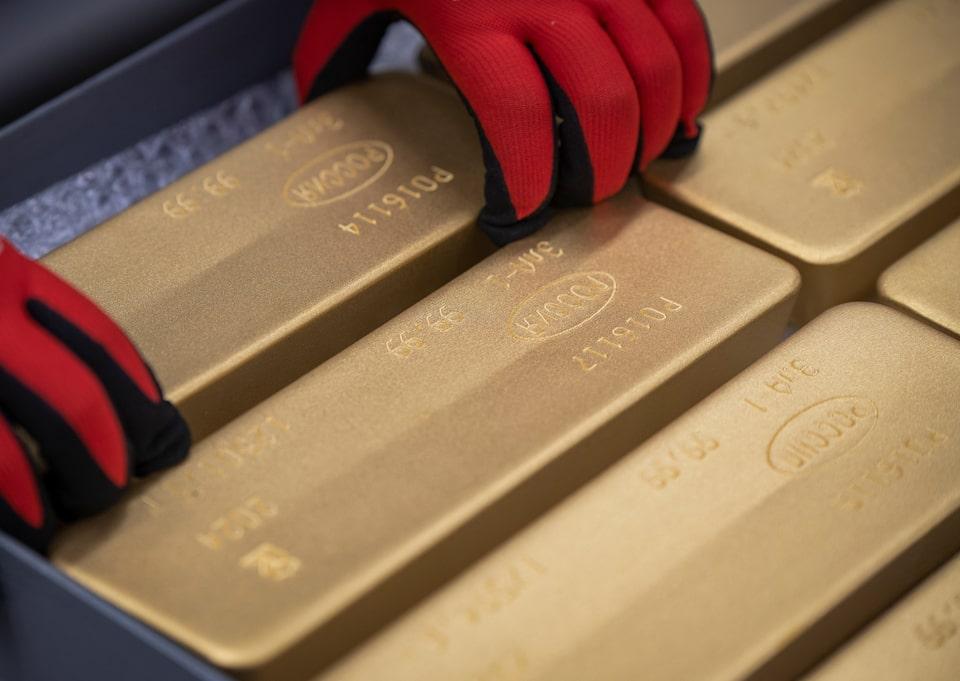
Two VLGCs wait to load ethane for China -Kpler, LSEG 13 tankers due to load ethane for China in June -Kpler Enterprise warns ethane, butane exports to China could fall SINGAPORE/HOUSTON, May 30 (Reuters) - Chinese purchases of U.S. ethane, a key petrochemical feedstock, face fresh uncertainty after the Commerce Department told exporters to seek licences to export to China, according to trade sources and shipping data. Washington ordered a broad swathe of companies to stop shipping goods, including ethane and butane, to China without a licence and revoked licences already granted to some suppliers, Reuters reported on Wednesday. Sign up here. The move is the latest disruption in Chinese purchases of U.S. ethane, which hit a record of 492,000 barrels per day in 2024, or nearly half of U.S. exports, according to the U.S. Energy Information Administration. Early last month, China increased levies on imports of U.S. goods to 125% but waived the tariff for petrochemical producers who rely on the United States. for almost all their ethane imports. At least two Very Large Gas Carriers were waiting at U.S. ports to load ethane this week while 15 more tankers are headed to, or waiting off, the U.S. Gulf Coast, to load about 284,000 bpd of ethane in June, Kpler data showed. "It's going to be a major issue if all exports are suspended," said a Chinese ethane importer, who sought anonymity because he is not authorised to speak to media. "We are cautiously watching if exporters can obtain new export licences soon." VLGC Pacific Ineos Grenadier was supposed to load ethane for Ineos at Enterprise Products Partners' (EPD.N) , opens new tab Morgan's Point terminal at La Porte, Texas, has docked there since last Friday, Kpler and LSEG data showed. Stl Qianjiang is anchored near Energy Transfer's (ET.N) , opens new tab Nederland terminal, due to load ethane for Chinese petrochemical firm Satellite Chemical, the data showed. Enterprise, Energy Transfer and Ineos did not immediately respond to requests for comment outside office hours while Satellite Chemical could not be reached for comment. "The market disruption could be immediate," Julian Renton, an analyst at East Daley Analytics, said in a note. A trade source said Ineos, which also buys ethane for its plants in Europe, may divert its cargo there. In a filing, Enterprise, a top handler of ethane and butane, said it was evaluating its procedures and internal controls and could not determine if it would be able to get a licence. Traders said there may be limited near-term impact on Chinese operators, as they have sufficient stocks. East Daley's Renton said if the restriction holds, Chinese petrochemical plants could face critical feedstock shortfalls, while projects may stall. Chinese petrochemical firms use ethane as a cheaper feedstock alternative to naphtha, while U.S. oil and gas producers count on China to buy their natural gas liquids as domestic supply exceeds demand. Shares of ethane importers Satellite Chemical (002648.SZ) , opens new tab were down 3.1% on Friday, while Wanhua Chemical (600309.SS) , opens new tab stock lost 1.3%. https://www.reuters.com/business/energy/us-ethane-exports-china-hit-new-roadblock-with-licence-requirement-2025-05-30/

2025-05-30 06:39
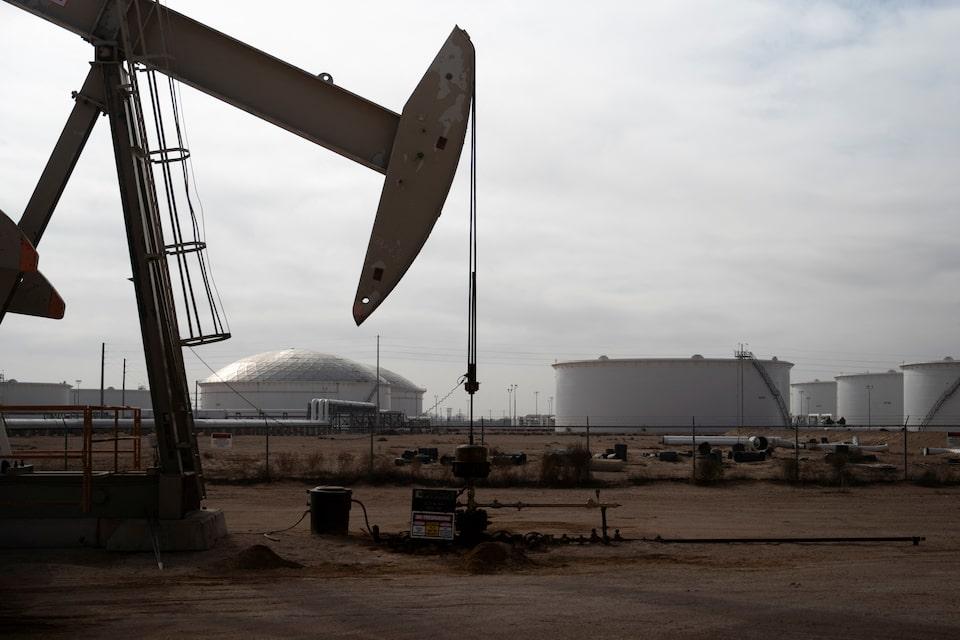
Brent and WTI down over 1% this week OPEC+ could discuss bigger July output rise at Saturday meeting Trade uncertainty continues after US appeals court decision HOUSTON, May 30 (Reuters) - U.S. crude futures fell on Friday as traders expected OPEC+ would decide on Saturday to boost oil output for July beyond previous forecasts. Brent crude futures settled down 25 cents, or 0.39%, at $63.90 a barrel. U.S. West Texas Intermediate crude finished down 15 cents, or 0.25%, at $60.79 a barrel, having earlier dropped more than $1 a barrel. Sign up here. The Brent July futures contract is due to expire on Friday. The more liquid August contract was down 71 cents, or 1.12%, at $62.64 a barrel. At these levels, the front-month benchmark contracts were headed for weekly losses over 1%. Prices dipped into negative territory after Reuters reported that OPEC+ may discuss an increase in July output larger than the 411,000 barrels per day (bpd) rise that the group decided on for May and June. "What OPEC+ is planning doesn't look particularly supportive for the oil market," said Matt Smith, Kpler's lead analyst for the Americas. The potential OPEC+ output hike comes as the global surplus has widened to 2.2 million bpd, likely necessitating a price adjustment to prompt a supply-side response and restore balance, said JPMorgan analysts in a note, adding that they expected prices to remain within the current range before easing into the high $50s by year-end. Phil Flynn, a senior analyst with Price Futures Group, said an online post on Truth Social by U.S. President Donald Trump that seemed to threaten more changes in tariff levels for Chinese imports also put pressure on crude prices. "Trump's Truth Social message on China failing to observe a truce on tariffs also combined with the Reuters headline to push prices down," Flynn said. Trump's tariffs were expected to remain in effect after a federal appeals court temporarily reinstated them on Thursday, reversing a trade court's decision a day earlier to put an immediate block on the sweeping duties. U.S. energy firms this week cut the number of oil and natural gas rigs operating for a fifth week in a row to the lowest since November 2021, energy services firm Baker Hughes (BKR.O) , opens new tab said in its closely followed report on Friday. It was the first time since September 2023 that the number of rigs declined for five straight weeks. Baker Hughes said this week's decline put the total count down by 37 rigs, or 6%, from this time last year. Oil rigs fell by four to 461 this week, their lowest since November 2021, the company said. Gas rigs rose by one to 99. https://www.reuters.com/business/energy/oil-prices-set-weekly-drop-with-tariff-legal-battles-opec-focus-2025-05-30/
2025-05-30 06:39
LONDON, June 2 (Reuters) - U.S. jobs data, a European Central Bank meeting and big global oil producers all vie for investor attention this week. And as a new month begins, court rulings on U.S. President Donald Trump's tariffs suggest further plot twists to the trade story. Sign up here. Here's what's coming up in the week ahead in world markets from Lewis Krauskopf in New York, Rae Wee in Singapore, and Yoruk Bahceli, Dhara Ranasinghe and Alex Lawler in London. 1/ TRADEOFFS As ever-changing tariff developments muddy the growth outlook, the May U.S. jobs report will provide key insight into the state of the economy heading into another bout of trade turbulence. Friday's report is expected to show the economy created 130,000 new jobs, according to a Reuters poll, down from a higher-than-expected 177,000 in April. The data comes as Federal Reserve officials acknowledge they could face "difficult tradeoffs" in coming months with rising inflation alongside rising unemployment, minutes from their latest meeting show. Investors have reduced bets on the amount of expected Fed monetary policy easing, with fewer than two rate cuts now priced in by December. They're also watching the progress of tax-and-spending legislation in Washington, with Trump ally Elon Musk arguing that the tax bill detracts from efforts to reduce the budget deficit. 2/ ALMOST THERE A quarter-point ECB interest rate cut on June 5, taking the key rate to 2%, is a done deal for traders. The question now is whether the ECB pauses after what will be an eighth rate reduction in the past year. Economists expect the ECB to hold steady come July before cutting once more before year-end. The economy is holding up better than anticipated and pausing allows ECB chief Christine Lagarde time to assess the impact of U.S. tariffs. Euro zone inflation data on Tuesday could show headline inflation hit the ECB's 2% target in May. Finally, expect Lagarde to be put on the spot about whether she's likely to complete her term after a press report that she held talks about leaving early to lead the World Economic Forum. 3/ TALKING OIL The world’s largest group of oil producers, OPEC+, stuck to its guns on Saturday with another big output increase of 411,000 barrels per day for July as it looks to wrestle back market share and punish over-producers. OPEC+ pumps about half the world's oil and has agreed three layers of output cuts since 2022 to support oil prices. Two of these are in place until end-2026, one is currently being unwound by the eight members. The May and June hikes are faster than originally planned. The strategy of producers Saudi Arabia and Russia is partly to punish over-producing allies and win back market share. OPEC+ cites healthy market fundamentals as its reasoning. Increased supply is weighing on crude prices, squeezing all producers, but some more than others, including rival U.S. shale producers, analysts say. Oil hit four-year lows in April below $60 after OPEC+ announced accelerating output hikes and as U.S. tariffs stoked growth worries. It has recovered to about $65, but is still down 13% for the year so far. 4/ CHECK-LIST Upcoming inflation readings across emerging Asian economies could give investors further clarity on the extent policymakers in the region could go in cutting rates. Central banks like Bank Indonesia have already resumed easing cycles recently and the market consensus is for more to come, as Trump's sweeping tariffs pose significant headwinds to growth in export-reliant Asia. With inflation trending downwards and amid a recent surge in Asian currencies, policymakers have found greater comfort in lowering rates. The question now is by how much. The Asian Development Bank expects growth in developing Asia will ease slightly in 2025 to its slowest pace since 2022. Elsewhere, Australia releases first-quarter growth data on Wednesday. The numbers pre-date April's tariff chaos so any optimism from an upbeat number is likely to be short-lived. 5/ NO REST FOR THE WICKED Investors must be relieved to leave behind another rollercoaster month. But the back-and-forth in the courts on Trump's tariffs heightens uncertainty ahead. Still, there's no stopping world stocks, which have long forgotten their "Liberation Day" losses. The S&P 500 index, up more than 6% in May, is set for its best performance since November. In bond markets, the picture is bleaker with a focus on fiscal discipline, underscored by the U.S. losing its last top AAA rating. U.S. 30-year Treasury yields are holding around 5% and led a recent global bond selloff, with Trump's sweeping tax and spending bill seen further raising the already-high U.S. budget deficit. The dollar has remained 4% lower since April 2 when Trump announced his tariffs. Debt worries reverberate elsewhere. Japan, where longer-dated bond yields soared to record highs and the sale of such debt has seen tepid demand, remains in focus. https://www.reuters.com/business/take-five/global-markets-themes-graphic-2025-05-30/

2025-05-30 06:27
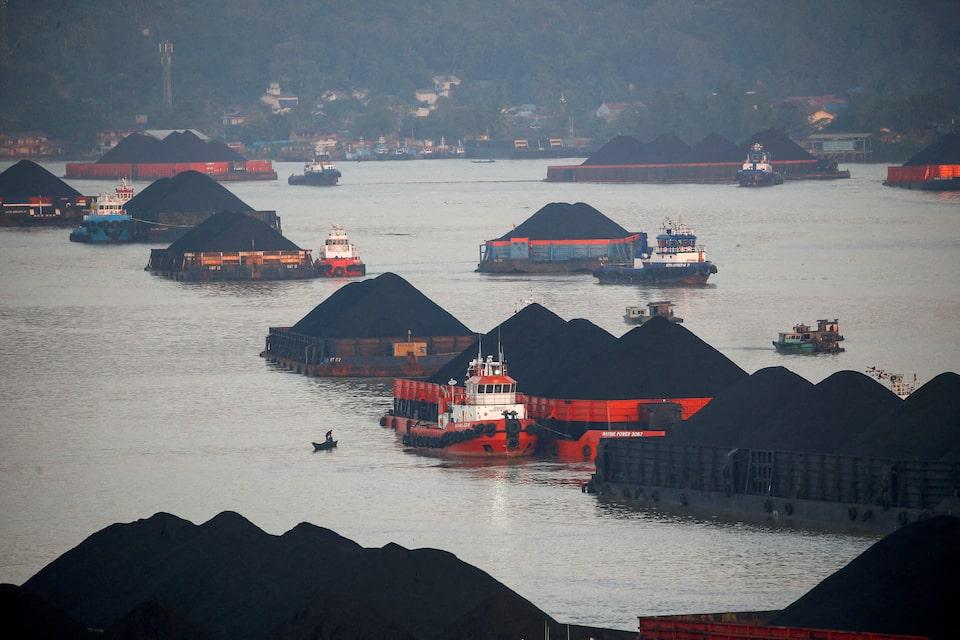
LITTLETON, Colorado, May 30 (Reuters) - Developers and exporters of natural gas should be alarmed by the dour state of thermal coal exports coming out of Indonesia. The world's largest thermal coal exporter is on course for a rare decline in annual sales after shipping out the smallest tonnage in three years during the opening five months of 2025. Sign up here. To combat declining sales, regional coal traders have cut export prices to their lowest in four years, which in turn are reducing the cost of coal-fired power production across Asia. That's bad news for natural gas bulls, who eye Asia as their main potential growth market but are already struggling to displace cheaper coal from power systems across the region. TOP MARKETS SHRINK Indonesian coal sales to the two largest coal consumers - China and India - dropped by 23% and 14% respectively so far this year as coal miners in those countries lifted domestic output and reduced demand for imports. Indonesia exported just under 188 million metric tons of coal used for power generation during January to May, according to commodities trade intelligence firm Kpler. That total was 12% or around 25 million tons less than during the same months in 2024, and was the lowest for that period since 2022. Sales to top market China are down by 23% or by 20 million tons compared to January to May 2024, while sales to India were 14% or 6.5 million tons lower. As China and India have historically accounted for two-thirds of all Indonesian coal exports, exporters are attempting to replace those lost volumes with sales to other markets. However, the soft state of global consumer demand and manufacturing activity has also cooled demand for industrial power fuels in other major coal import markets, including South Korea, Japan, Taiwan and the Philippines. Indeed, eight of the ten largest markets for Indonesian coal have registered year-over-year declines in imports so far in 2025. CUT THROAT To combat the declining sales, coal traders in Indonesia, Australia, Colombia, South Africa and Russia have all cut prices this month, with many key international coal benchmarks currently trading at over four-year lows. As Asia's power system already relies on coal for over half of all electricity supplies, cheaper coal prices look set to deepen the region's reliance on the fuel for power, especially while economic and business profit growth remain subdued. Cheaper coal prices also serve to undermine the appeal of constructing new natural gas-fired power plants in the region, especially in areas where new solar capacity can be brought online more quickly to help boost near-term power supplies. GAS GROWTH Natural gas plants currently produce around 10% of Asia's utility-supplied electricity, according to Ember, fed by around 912 gigawatts (GW) of regional gas-fired generation capacity, data from Global Energy Monitor (GEM) shows. Gas market bulls have high hopes that more gas generation capacity will be built in Asia. Two-thirds of all new global gas power capacity currently under construction is taking place within the continent, GEM data shows. An additional 61% of gas projects in so-called pre-construction - where deals have been proposed but capital and sites have yet to be secured - are also in Asia. Most, if not all, of the gas projects currently under construction are expected to come online, especially the roughly 53 GW of new capacity in China and Taiwan where outdated coal-fired capacity is expected to be replaced by newer gas plants. Singapore and South Korea have a further 7 GW in the construction phase, which should bode well for international gas export potential as both those countries are gas importers. However, it is not yet clear how much more gas generation capacity will be built elsewhere in Asia, especially in countries such as Indonesia and the Philippines where there are limited government funds available for large energy investments. Both Indonesia and the Philippines have also been hit by gas project delays in recent years which are serving to undermine commercial support for new gas projects, especially when solar capacity has been brought online more quickly. The speed of cost reductions of solar generation and battery storage systems also cloud the outlook for gas power projects that are not yet under construction, especially in countries with strong social support for reducing fossil fuel reliance. For exporters of natural gas and LNG, the combination of project delays and development uncertainty is already serving to postpone potential export volume growth by years and is placing pressure on near-term LNG export prices in key markets. And with coal prices now lingering near multi-year lows, that could be enough to change the tune of many gas market bulls. The opinions expressed here are those of the author, a columnist for Reuters. https://www.reuters.com/markets/asia/natural-gas-bulls-should-bemoan-indonesias-coal-export-blues-maguire-2025-05-30/
2025-05-30 06:27
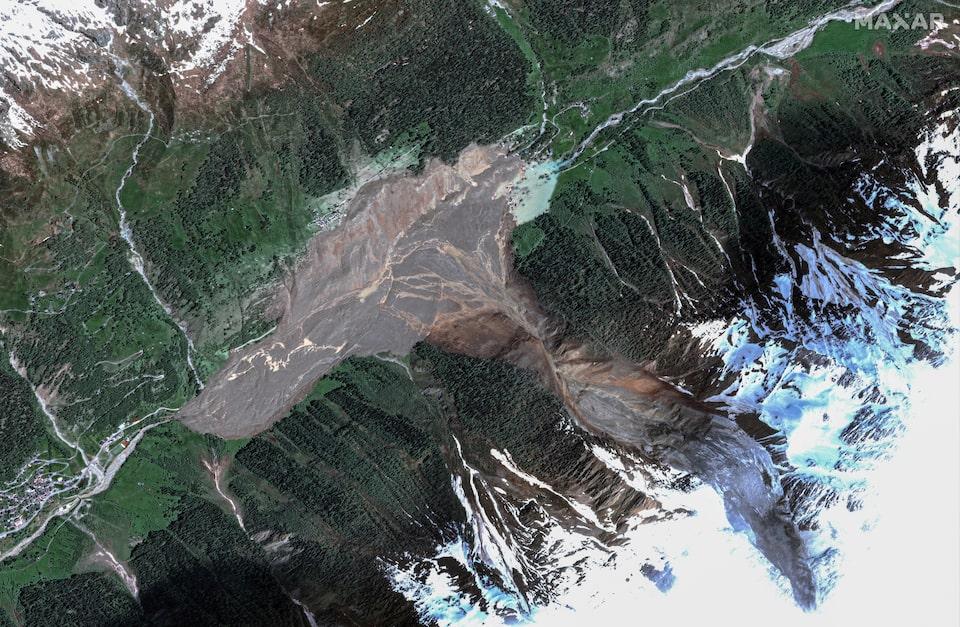
Debris left by collapsed glacier blocks path of river Damage seen running into hundreds of millions of Swiss francs Water getting through the debris and running off, spurring hope ZURICH, May 30 (Reuters) - A lake of water trapped behind a mass of glacial debris that buried a village and blocked a river in southern Switzerland this week has sparked fears of flooding in the Alpine valley, even as some water eased its way through the morass on Friday. A deluge of millions of cubic meters of ice, mud and rock crashed down a mountain on Wednesday, engulfing the village of Blatten. The few houses that remained intact were later flooded. Sign up here. The village's 300 residents had already been evacuated after part of the mountain behind the Birch Glacier began to crumble. Rescue teams were looking for a missing 64-year-old man but have suspended their search for now due to the difficult conditions. Flooding increased on Thursday as the mound of debris almost 2 km (1.2 miles) across clogged the path of the River Lonza, causing a lake to form amid the wreckage, raising fears that the morass could dislodge and trigger more evacuations. Late on Thursday, local authorities urged residents in Gampel and Steg, neighbouring and lower-lying villages several kilometres further downstream on the Lonza, to prepare for possible evacuation in case of emergency. Still, by Friday afternoon some of the accumulated water had made its way through the debris and run off, indicating that it could be finding a way back to the river without raising the danger level, Swiss officials said. Authorities are therefore sticking to safety measures put in place on Thursday and do not currently expect the situation to worsen, local official Christian Studer told a press conference. The army has been standing by with water pumps, diggers and other heavy equipment to help relieve pressure on the Lonza, a tributary of the River Rhone, once conditions allow. Residents have struggled to absorb the scale of destruction caused by the deluge, an event that scientists suspect is a dramatic example of the impact of climate change in the Alps. The Swiss Insurance Association said the damage would likely amount to several hundred million Swiss francs, and that it was too early for a more precise estimate. How many houses were insured in Blatten was unclear, it said in a statement. https://www.reuters.com/sustainability/climate-energy/flood-risk-threatens-swiss-valley-after-village-destroyed-by-glacier-2025-05-30/
2025-05-30 06:18
Trump's tariffs to remain in effect after appeals court decision US PCE price index report due at 1230 GMT Dollar up 0.3% May 30 (Reuters) - Gold prices fell on Friday as the U.S. dollar ticked higher and investors remained cautious ahead of key U.S. inflation data due later in the day to gauge the Federal Reserve's monetary policy trajectory. Spot gold was down 0.7% at $3,292.28 an ounce as of 1145 GMT. Bullion is down 1.9% so far this week. Sign up here. U.S. gold futures fell 0.8% to $3,290.30. The dollar (.DXY) , opens new tab rose 0.3% and was on track for a weekly gain, making gold costlier for foreign buyers. "The U.S. dollar is up slightly, which could be a source of pressure for gold," said Carsten Menke, analyst at Julius Baer. "Barring a major surprise to the PCE data, I would not expect gold to show a meaningful reaction. That said, the market seems to be a bit more nervous as of late, suggesting that volatility should stay high in the short-term," Menke said. The Personal Consumption Expenditures (PCE) index, the Fed's preferred inflation measure, is due at 1230 GMT. The data is likely to show that inflation rose 2.2% in April, according to economists polled by Reuters, compared with a 2.3% increase in March. "With U.S. core PCE looming large, there is some hesitance to take new long positions in gold," said Tim Waterer, chief market analyst at KCM Trade. Investors are currently anticipating 50 basis points worth of Fed rate cuts by the end of this year, starting in October. Bullion, which is considered a hedge against economic and geopolitical uncertainty, tends to thrive in a low interest rate environment. Meanwhile, a federal appeals court temporarily reinstated the most sweeping of President Donald Trump's tariffs on Thursday, a day after a U.S. trade court ruled he had exceeded his authority and ordered an immediate block. Spot silver fell 0.6% to $33.14 an ounce, platinum eased 1.2% to $1,068.80 and palladium dropped 0.6% to $967.70. https://www.reuters.com/world/india/gold-slips-dollar-ticks-higher-us-inflation-report-focus-2025-05-30/