2025-05-30 05:17
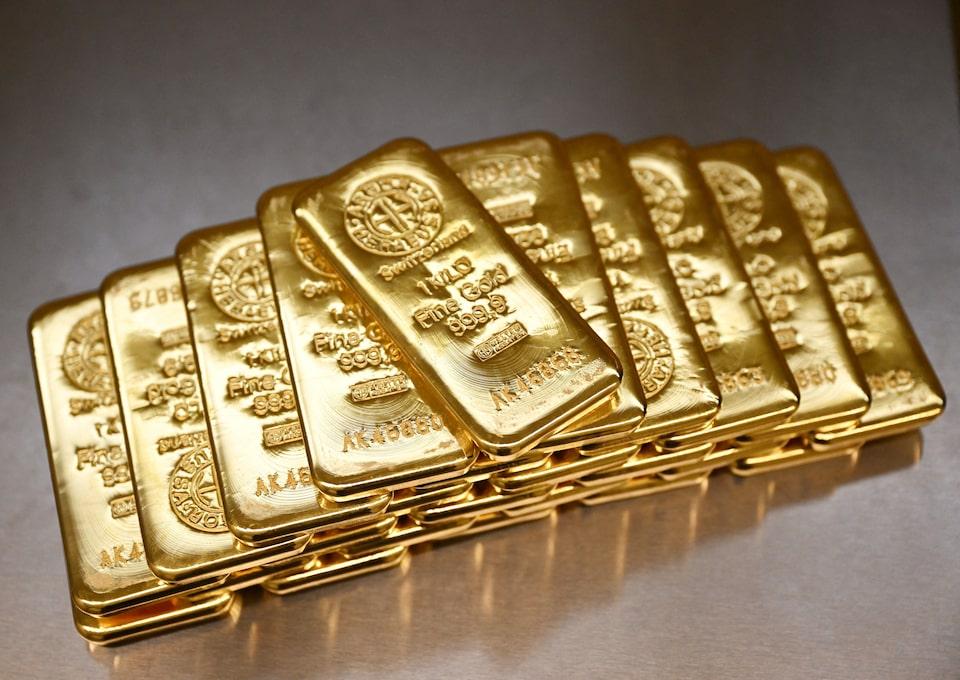
Germany has stored gold in New York since Cold War Lawmakers worry about Trump's reliability Any move could hurt relations with Fed FRANKFURT/BERLIN, May 30 (Reuters) - The safety of Germany's gold reserves held overseas and in New York in particular, until recently mainly a talking point for the country's far-right party and gold bugs, is becoming a matter of public debate with Donald Trump back in the White House. The Bundesbank, Germany's central bank, has the world's second largest stock of gold at 3,352 tonnes. One-third of it is stored at the Federal Reserve Bank of New York for reasons dating back to the Cold War and the monetary system created in the wake of World War Two. Sign up here. Those holdings have occasionally attracted scrutiny in the past, and the right-wing Alternative for Germany (AfD) has embraced calls for a return of the country's gold back home. U.S. President Donald Trump's confrontations with longstanding allies over trade and security, and his attacks on the Fed, have revived the issue in recent weeks and more mainstream voices have joined the debate. Germany's Taxpayers Federation sent letters this week to the Bundesbank and the Finance Ministry calling on them to repatriate the gold stored in the United States. "Trump wants to control the Fed, which would also mean controlling the German gold reserves in the U.S." Michael Jaeger, the Taxpayers Federation's vice-president, told Reuters. "It's our money, it should be brought back." Markus Ferber, an influential member of the European Parliament for Germany's ruling Christian Democrats, said the United States was "no longer the reliable partner it used to be." "Trump is erratic and one cannot rule out that someday he will come up with creative ideas how to treat foreign gold reserves," he told Reuters. "The Bundesbank’s policy for gold reserves has to reflect the new geopolitical realities." Public broadcasters ZDF and ARD have also recently carried reports asking how safe Germany's gold is in New York. The Bundesbank said the New York Fed remained "an important storage location" for its gold. "We have no doubt that in the New York Fed we have a trustworthy, reliable partner for the storage of our gold holdings," the central bank said in response to a Reuters enquiry. The German Finance Ministry referred Reuters queries on the matter to the central bank, while stressing the Bundesbank's independence. Any hint that Germany might be considering moving gold out of New York would be politically sensitive as it could be interpreted as lack of confidence in the Federal Reserve and its independence. The European Central Bank last week stressed its trust in the Fed as a reliable partner. But Trump's frequent criticism of Fed chair Jerome Powell, whose term ends in a year, has fuelled some concerns about the Fed's future independence and its long-standing commitments to its partners. Peter Boehringer, the architect of the original decade-old gold campaign and now an AfD lawmaker, said he felt vindicated that the topic of repatriating gold reserves has now become a matter discussed by mainstream media and other lawmakers. "When I started asking about the gold, I was dismissed as a conspiracy theorist," he said. "Today, after Trump, my concerns are shared widely." Germany accumulated most of its gold during its 1950s-1960s export boom. A key advantage of storing some of it in New York during the Cold War was to keep it at a safe distance from Russia in case of an invasion. The gold also cemented a military alliance with the United States, which still has dozens of military bases around Germany, including Europe's largest. With the Soviet Union long gone, the Bundesbank brought back 300 tonnes of gold from New York between 2014 and 2017, saying it wanted to "build confidence at home". But Russia's invasion of Ukraine, and the implicit threat it represents for the rest of Europe, was likely to complicate Germany's geopolitical calculus again. For Ferber, this underscored the need for greater diversification across several, and potentially new, locations. Today, Germany's gold reserves are held at the Bundesbank headquarters in Frankfurt, in New York, and at the Bank of England in London. "For gold reserves, diversification is key. Having all eggs in too few baskets is never advisable," Ferber said, without specifying where the gold should be brought. Fritz Guentzler, a spokesperson for the Christian Democrats in the German parliament, said he had no reason to mistrust the Fed but the Bundesbank should continue "regularly inspecting the stocks" of gold. The Bundesbank said it ran regular sample tests and had inspected 13% of stock in New York over the years. https://www.reuters.com/business/finance/trump-spurs-questions-about-safety-germanys-gold-new-york-2025-05-30/
2025-05-30 04:54
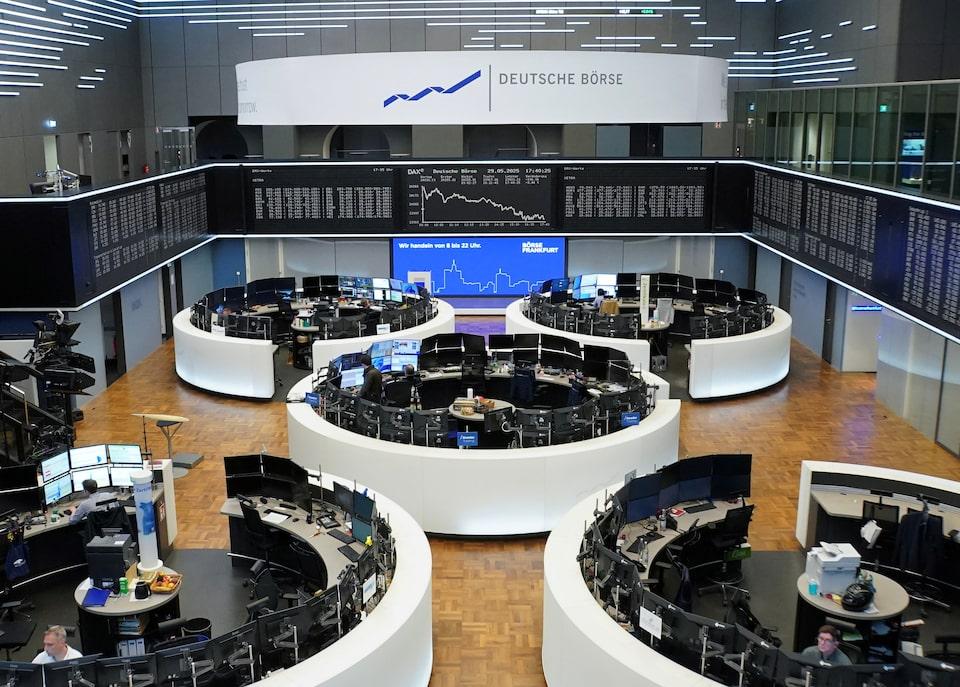
A look at the day ahead in European and global markets from Kevin Buckland President Donald Trump's tariffs are more on-again than off-again as we head into the end of a dramatic week of courtroom surprises, which initially had investors cheering but then left them with little more than an additional source of uncertainty. Sign up here. Looking around Asia in early trading, losses to Japan's Nikkei stand out. Stocks in Tokyo were hit by an additional whammy from renewed demand for the safe-haven yen, which undercuts the value of overseas revenues for the index's heavyweight exporters. The drop in Hong Kong's Hang Seng was also eye-catching, with both benchmarks essentially giving up all of the sizeable gains of the day before. When the little-known United States Court of International Trade on Wednesday unexpectedly blocked the bulk of Trump's aggressive levies, on the grounds that he had overstepped his authority, there was some inkling that the judiciary could provide a check on his often erratic policymaking. But a day later those tariffs were back, reinstated by an appeals court while it considers the case. That is by no means a foreshadowing of its eventual ruling, but Trump's team is already saying it has other avenues to keep the tariffs in effect. For businesses, consumers and central banks, it's just one more reason to sit on their hands, pushing out already delayed decisions on hiring, spending or cutting rates. For U.S. trade partners, though, the Trump administration assures us that good-faith negotiations continue undeterred. Treasury Secretary Scott Bessent pointed specifically to high-level talks he will have with a Japanese delegation in Washington later today. Despite Trump's optimism, deals have been hard to come by - a broad agreement with Britain is the only one so far. And Bessent acknowledged talks with China are "a bit stalled", adding they may require the direct involvement of Trump and Chinese President Xi Jinping. The courtroom drama around tariffs came just as tariff revenues were starting to pick up. Donald Schneider at Piper Sandler on social media platform X this week estimated them at an annualised pace of $255 billion, up from a norm of about $85 billion. That would be welcome news as the sweeping tax cuts and spending measures in Trump's "big, beautiful bill", which is about to go to the Senate, have been fanning worries about U.S. fiscal sustainability. One critic of the bill has been Elon Musk, and there were signs that what looked to be a quiet exit from his work at DOGE might carry some bad blood. But Trump has since announced a big sending off with a joint press conference at the Oval Office for later today, adding that although it'll be the Tesla and SpaceX CEO's last day on the government payroll, "he will always be with us". The air also seems less heavy between Trump and Fed Chair Jay Powell following a private meeting in the Oval Office on Thursday. While the president reiterated his feeling that the central bank is making a mistake by not lowering rates, the lack of any name-calling in social media posts afterwards may have come as a relief to markets that were roiled last month by Trump's public threats to fire the Fed chief. Key developments that could influence markets on Friday: -Germany consumer inflation data (May) -Bank of Italy Governor Panetta speaks in Rome -Fed speakers include San Francisco Fed President Daly, Dallas Fed President Logan, Atlanta Fed President Bostic and Chicago Fed President Goolsbee Trying to keep up with the latest tariff news? Our new daily news digest offers a rundown of the top market-moving headlines impacting global trade. Sign up for Tariff Watch here. https://www.reuters.com/world/europe/global-markets-view-europe-2025-05-30/
2025-05-30 03:58
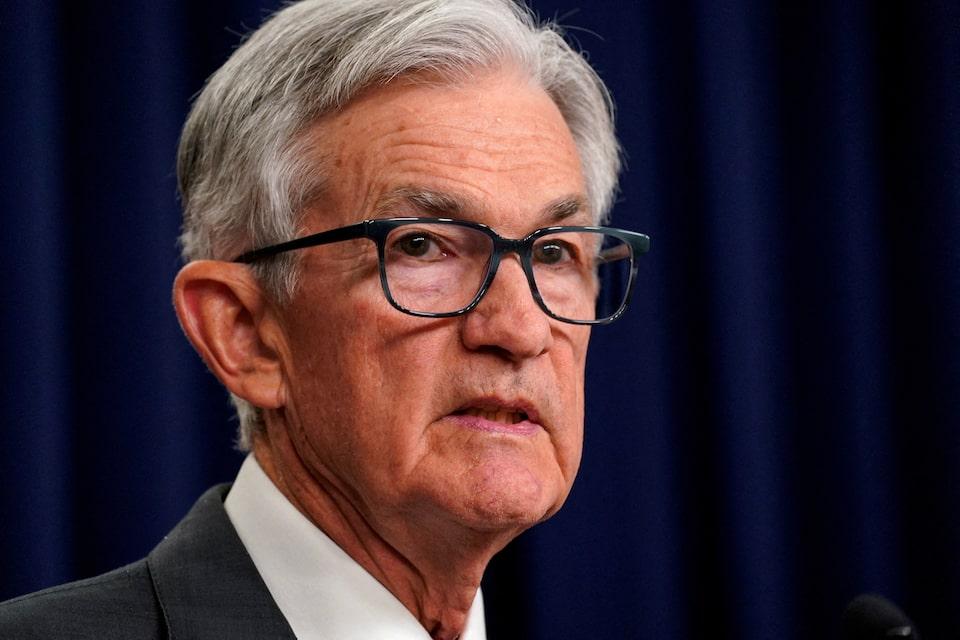
Trump told Powell it's a mistake not to lower rates, White House says Powell emphasized policy depends on economic data, Fed says The pair last met face to face in 2019, Powell's calendars show WASHINGTON, May 29 (Reuters) - U.S. President Donald Trump called Federal Reserve Chair Jerome Powell to the White House on Thursday for their first face-to-face meeting since he took office in January and told the central bank chief he was making a "mistake" by not lowering interest rates. Both the White House and Fed confirmed the two met at the president's invitation, renewing a fractious relationship in which Trump has repeatedly berated Powell for not cutting rates as the president desires. Sign up here. "Chair Powell did not discuss his expectations for monetary policy," the Fed said in a statement after the meeting, "except to stress that the path of policy will depend entirely on incoming economic information and what that means for the outlook." He told Trump that he and his colleagues at the Fed "will set monetary policy, as required by law, to support maximum employment and stable prices and will make those decisions based solely on careful, objective, and non-political analysis," the statement said. White House spokeswoman Karoline Leavitt said she and the president had seen the Fed's statement and that it was correct. However, she added, "the President did say that he believes the Fed chair is making a mistake by not lowering interest rates, which is putting us at an economic disadvantage to China and other countries." The Fed earlier this month left the policy rate in the 4.25%-4.50% range, where it has been since December, and policymakers have since signaled they may leave it there for another few months as they wait for more clarity on tariff policy. Policymakers are worried the tariffs and policy uncertainty could slow the economy, but even more so are concerned that they could lead to persistently higher inflation, minutes from the Fed's May meeting released on Wednesday show. Financial markets currently are pricing in a Fed interest-rate cut in September, with a second one to follow in December. Trump elevated Powell to the post of Fed Chair during his first term but quickly fell out with him over his interest-rate decisions. He has said he wants to see him gone from the central bank, though he has also said he has no intention of trying to fire Powell. But the possibility of a firing has unsettled financial markets that bank on an independent Fed's ability to do its job without political interference. Those fears were partly alleviated last week after a Supreme Court ruling, in a pair of cases testing Trump's ability to fire the leadership of other independent government agencies, signaled the central bank may be treated as a special case whose chair cannot be terminated at will. Powell last met with Trump in November 2019, during Trump's first term, in a 30-minute meeting also attended by then-Treasury Secretary Steven Mnuchin. It is Powell's first presidential visit in three years - the last one was with Joe Biden and Treasury Secretary Janet Yellen at the White House. Powell has said that such meetings are always at the request of the president and never the other way. https://www.reuters.com/world/us/feds-powell-meets-trump-white-house-fed-says-2025-05-29/
2025-05-30 03:38
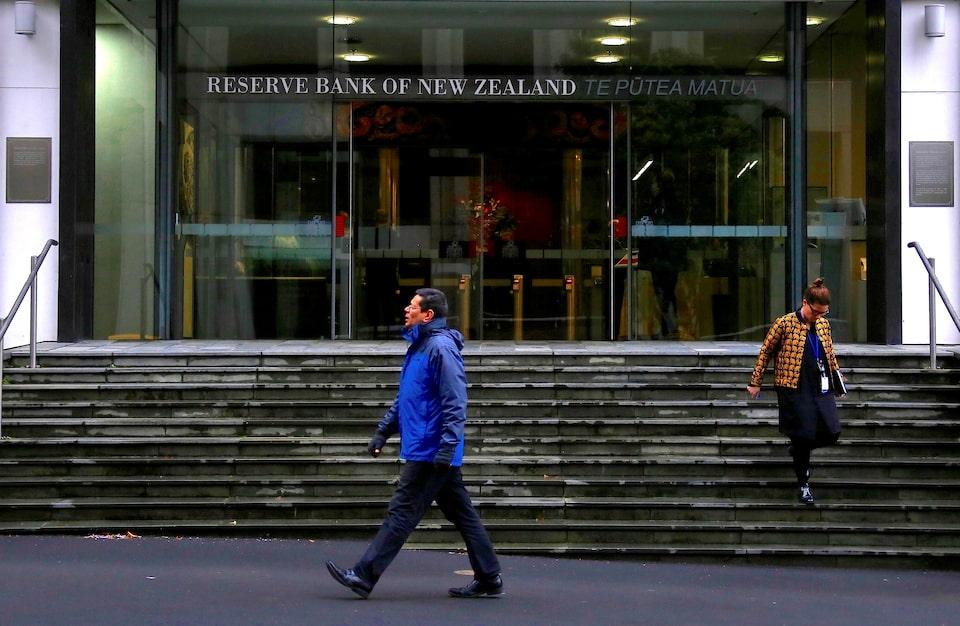
SYDNEY, May 30 (Reuters) - New Zealand's interest rates are in the 2.5%-3.5% neutral band, with past policy easing yet to flow through to the economy to make future moves more dependent on how the economy evolves, a senior central banker said on Friday. In an interview with Reuters, Reserve Bank of New Zealand Assistant Governor Karen Silk highlighted the enormous global trade uncertainties, but the central projection is for the economy to recover on the back of past easing, offsetting some trade risks. Sign up here. The RBNZ cut interest rates by 25 basis points to 3.25% on Wednesday but signaled it might be nearing the end of the easing cycle, having cut rates by a whopping 225 bps since August. When asked about why there is no need to go below the neutral rate, Silk said rate cuts would take time to flow through and the strong commodity prices are pointing to a buoyant export sector. "The track for (OCR) also indicates that whatever we do is going to be data-dependent, and then we will be looking to the data to help us to decide when or if we cut further from here." Silk said global central bankers cannot simply react to the first thing they see when asked about the latest court rulings on U.S. President Donald Trump's tariffs. "There isn't certainty to where these things land. But what we do know is that we do have heightened uncertainties." A global front-runner in withdrawing pandemic-era stimulus, the RBNZ lifted rates 525 basis points between October 2021 and September 2023 to curb inflation in the most aggressive tightening since 1999. The punishing borrowing costs took a heavy toll on demand and tipped the economy into recession last year. While the economy has emerged from the slump, growth remains weak and is being further hampered by a slowdown in the global economy and the government’s tight fiscal policy. https://www.reuters.com/world/asia-pacific/new-zealands-interest-rates-neutral-zone-data-decide-next-move-central-bank-2025-05-30/
2025-05-30 02:58
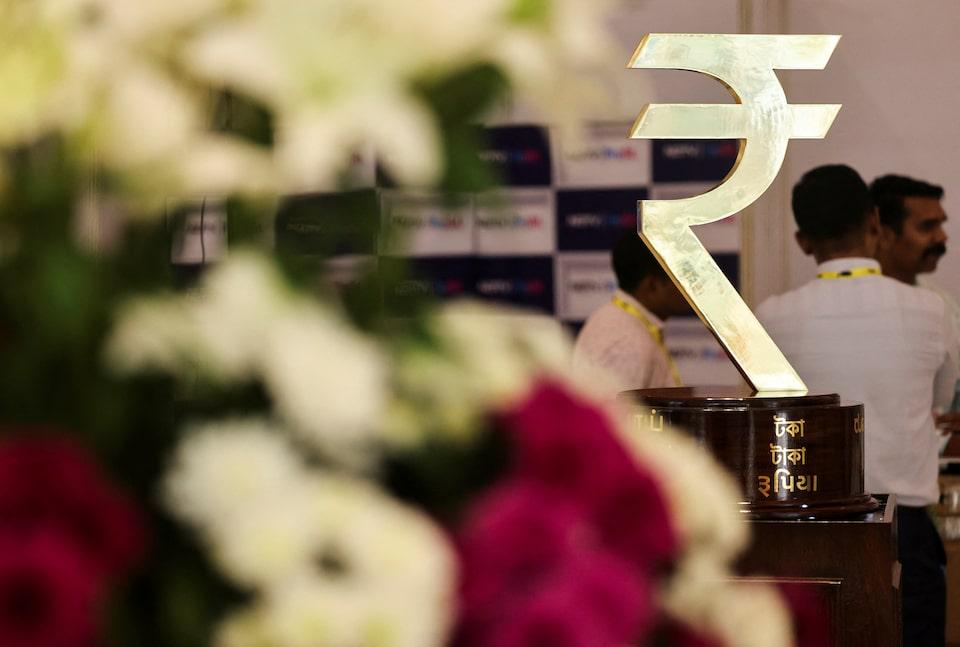
MUMBAI, May 30 (Reuters) - The Indian rupee is poised to open higher on Friday, after the U.S. dollar’s rally, which was sparked by a U.S. court ruling on tariff policy, proved short-lived. The 1-month non-deliverable forward indicated a open in the 85.36-85.40 range, versus the previous session's close of 85.5075. Sign up here. So far this week, the Indian currency has been in a 84.78 to 85.70 range and is on track for a marginal weekly decline. The rupee "is in a space where you have to play the ranges" with the near-term range defined by recent price action between 85.00 and 85.80, a currency trader at a Mumbai-based bank said. "Moves below 85 (on dollar/rupee) and past 86 are difficult to imagine at this stage." DOLLAR RESUMES DECLINE The dollar index, which had touched an intraday high of 100.48 on Thursday, slipped to 99.30, allowing Asian currencies to recover from losses. The dollar had initially found support after a U.S. court ruling blocked most of former President Donald Trump’s proposed tariffs. However, a federal appeals court later issued a temporary pause on the ruling, allowing the tariffs to remain in place for now. Senior officials from the Trump administration had anyway downplayed the impact of the ruling blocking the tariffs, expressing confidence it would be overturned on appeal and indicating that alternative legal avenues to impose tariffs remain available. While the initial court ruling sparked optimism, it does not eliminate the uncertainty surrounding the U.S. trade policy, ANZ Bank said in a note. "The appeal process could drag on for months, adding to trade policy uncertainty,” ANZ noted, while pointing out that legal experts have suggested that the administration does indeed have other legal authorities to levy tariffs. The dollar was further pressured by data that showed the number of Americans filing new applications for jobless benefits rose more than expected last week. KEY INDICATORS: ** One-month non-deliverable rupee forward at 85.5; onshore one-month forward premium at 13.25 paise ** Dollar index at 99.30 ** Brent crude futures down 0.4% at $63.9 per barrel ** Ten-year U.S. note yield at 4.42% ** As per NSDL data, foreign investors bought a net $542.6 million worth of Indian shares on May. 28 ** NSDL data shows foreign investors sold a net $41.3 million worth of Indian bonds on May. 29 https://www.reuters.com/world/india/rupee-rise-open-after-dollar-reverses-tariff-ruling-spurred-rally-2025-05-30/
2025-05-30 00:52
QUITO, May 29 (Reuters) - Ecuador's state oil producer Petroecuador on Thursday declared a 60-day emergency at the South American nation's largest oil refinery, its second emergency in one month, after a fire this week caused damage to some fuel tanks. Petroecuador said it had identified damages at two fuel tanks and in an electrical substation at its Esmeraldas refinery in northern Ecuador, which was affecting operational capacity. Sign up here. "This led to the emergency shutdown of key units and auxiliary steam and power systems," the company said in a statement, adding the emergency period would allow Petroecuador to speed up its repair work. Liquefied petroleum gas is being supplied according to availability and necessary scheduling would be assessed to attend to domestic demand, it said Fuel prices are regulated by an external agency and have not changed, said Petroecuador. Operations at the refinery have been suspended since Monday due to a fire. Petroecuador said at the time that all personnel had been safely evacuated and no injures were reported. At the end of April, Petroecuador declared a separate 60-day emergency at the refinery due to damages from a magnitude 6.3 earthquake that struck the area. https://www.reuters.com/business/energy/petroecuador-declares-emergency-ecuadors-biggest-refinery-after-fire-damages-2025-05-30/