2025-05-29 21:48
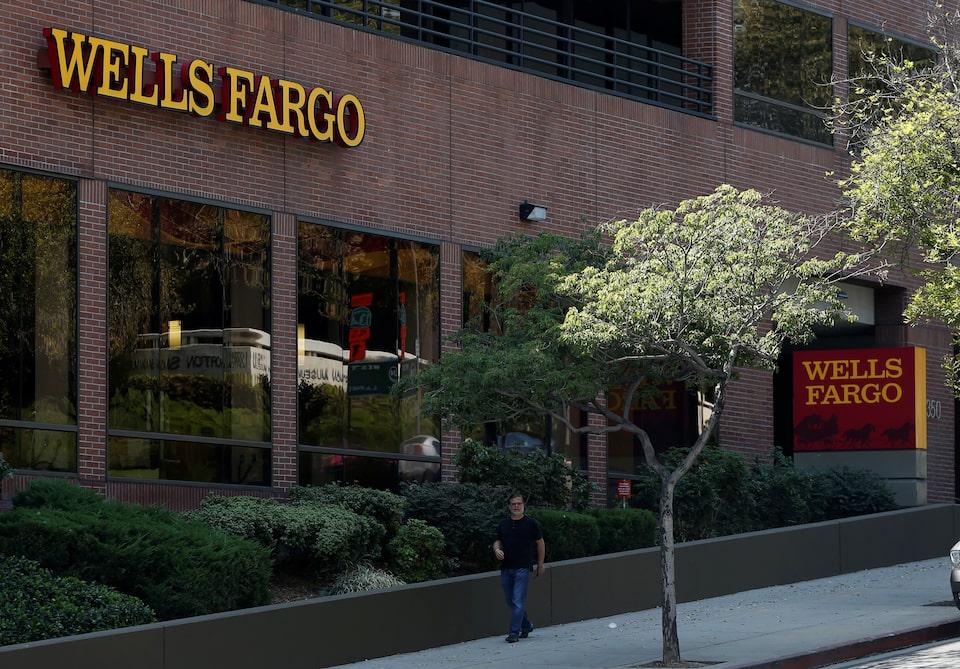
May 29 (Reuters) - Wells Fargo (WFC.N) , opens new tab said on Thursday it has signed a deal to sell its rail equipment leasing business to a newly formed joint venture between railcar lessor GATX Corporation (GATX.N) , opens new tab and Brookfield Infrastructure (BIP.N) , opens new tab. The deal, which the U.S. banking giant said will not have a material impact on its financial position or earnings, includes the entire rail operating lease assets valued at around $4.4 billion, as well as the rail finance lease portfolio. Sign up here. "This transaction is consistent with Wells Fargo's ongoing strategy of simplifying our businesses and focusing on products and services that are core to our clients," said David Marks, executive vice president, Wells Fargo Commercial Banking. In a separate statement, GATX and Brookfield Infrastructure said the rail operating lease portfolio includes roughly 105,000 railcars. Additionally, Brookfield Infrastructure has also agreed to acquire Wells Fargo's rail finance lease portfolio, composed of roughly 23,000 railcars and around 440 locomotives. GATX will initially own 30% and Brookfield Infrastructure 70% of the joint venture, with the former having the option to acquire full ownership over time. GATX will have commercial and operational control, and manage all joint venture assets. The companies said they expect the deal to close in the first quarter of 2026 or sooner. https://www.reuters.com/business/finance/wells-fargo-signs-deal-sell-44-billion-rail-assets-portfolio-2025-05-29/
2025-05-29 21:29
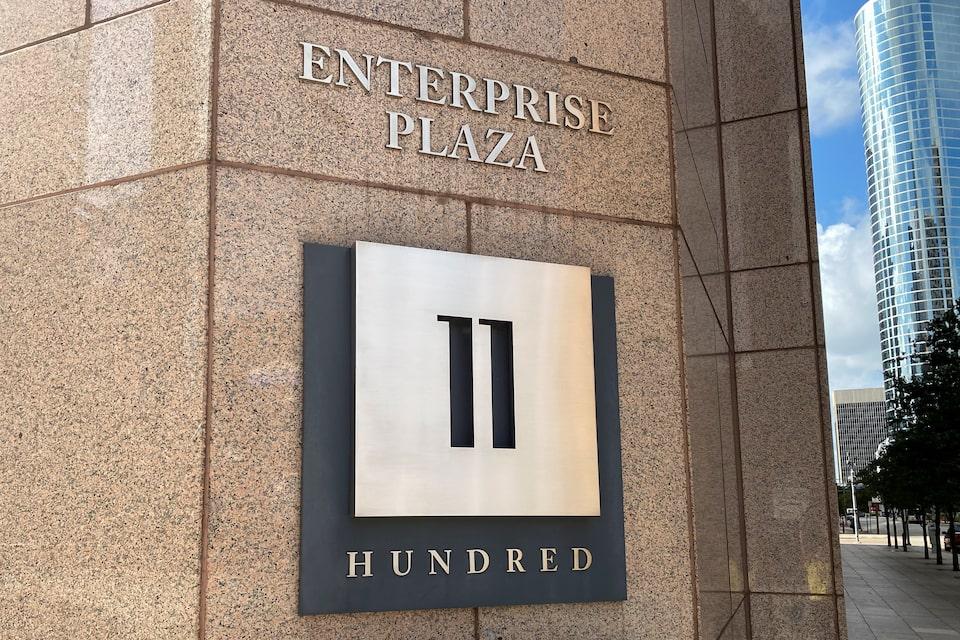
HOUSTON, May 29 (Reuters) - Enterprise Products Partners (EPD.N) , opens new tab on Thursday said its ethane and butane exports could be hurt by a U.S. Department of Commerce requirement that it apply for a license to export to China. The United States has ordered a broad swathe of companies to stop shipping goods, including ethane and butane, to China without a license and revoked licenses already granted to certain suppliers, Reuters reported on Wednesday. Sign up here. Enterprise, which owns and operates marine export terminals that handle ethane and butane, said in a regulatory filing it was evaluating its procedures and internal controls and could not determine if it will be able to obtain a license. Enterprise's marine export terminal on the Houston ship channel loaded about 213,000 barrels per day of ethane in 2024, of which about 85,000 BPD, or 40%, were exported to Chinese markets, Enterprise said. https://www.reuters.com/business/energy/enterprise-products-says-its-china-exports-could-fall-due-license-requirement-2025-05-29/
2025-05-29 21:12
TRIPOLI, May 29 (Reuters) - Three suspects have been detained for allegedly storming the Libyan state oil firm's headquarters in Tripoli, the country's attorney general said on Thursday, a day after its rival government in the east threatened to declare force majeure on oil fields and ports citing assaults on the firm. The National Oil Corporation is based in Tripoli under the control of the internationally-recognized Government of National Unity. The parallel government in Benghazi in the east is not internationally recognised, but most oilfields in the major oil producing country are under the control of eastern Libyan military leader Khalifa Haftar. Sign up here. The NOC has previously denied its corporation's headquarters were stormed, calling it "completely false" and quoted its acting chief as calling it "nothing more than a limited personal dispute that occurred in the reception area." But the eastern-based government has threatened to also temporarily relocate the NOC's headquarters to "safe cities" such as Ras Lanuf and Brega, both of which it controls. "The public prosecution reviewed the evidence of the storming of the Corporation's headquarters, inspected the scene, reviewed the video footage recorded at the time of the incident and heard the testimonies of those present," the attorney general said in a statement. The three suspects were handed over by the defence ministry, which was asked "to arrest the remaining contributors to the incident," the attorney general said. The national output of crude oil in the past 24 hours reached 1,389,055 barrels per day, the NOC said on Wednesday, reflecting normal levels. Libya's oil output has been disrupted repeatedly in the chaotic decade since 2014 when the country divided between two rival authorities in the east and west following the NATO-backed uprising that toppled Muammar Gaddafi in 2011. https://www.reuters.com/business/energy/three-suspects-detained-storming-libyas-state-oil-firm-attorney-general-says-2025-05-29/

2025-05-29 21:09
ORLANDO, Florida, May 29 (Reuters) - TRADING DAY Making sense of the forces driving global markets Sign up here. By Jamie McGeever, Markets Columnist Tariff ruling and counter-ruling Tariff confusion reigned on Thursday as investors digested a U.S. trade court ruling late Wednesday against most of President Donald Trump's tariffs. They initially cheered the news, but by the time a U.S. appeals court reinstated the duties just before the Wall Street close, that optimism had largely evaporated. In my column today I look at how structurally higher U.S. borrowing costs in the coming years mean the fiscal 'precipice' Washington faces may be even nearer than it seems. More on that below, but first, a roundup of the main market moves. If you have more time to read, here are a few articles I recommend to help you make sense of what happened in markets today. Today's Key Market Moves Courting confusion As if the fog of uncertainty shrouding markets wasn't thick enough, investors' visibility has been dimmed further by a U.S. court ruling that most of Trump's tariffs are unlawful, followed by an appeals court reinstating them while the appeal process unfolds. The administration will likely find other legal avenues to implement its tariffs if need be, so the net effect may ultimately be minimal. But the ruling and appeal could affect Washington's negotiations with major trade partners, timelines, and how countries play their hand. For investors, the upshot is more uncertainty and less clarity. The latest twists come just as it looked like tariff revenues were beginning to pick up. Donald Schneider at Piper Sandler on social media platform X this week estimated that tariff revenues were coming in at an annualized pace of $255 billion, up from a "norm" of about $85 billion, while analysts at UBS on Thursday said tariffs were on track to generate $300-450 billion in annual revenues. Wednesday's court ruling, however, would cut that to below $200 billion. On the other hand, of course, lower tariffs are immediately positive for growth and reduce the likelihood of retaliation from other countries. Senior administration officials downplayed the impact of the trade court block, but it is notable that Trump himself hasn't commented yet. He was busy on Thursday, to be fair. He had a "meaningful" telephone call about trade and tariffs with Japanese Prime Minister Shigeru Ishiba, then later hosted a private meeting at the White House with Federal Reserve Chair Jerome Powell. The two discussed growth, employment, and inflation, and Trump reiterated his view that the Fed is making a "mistake" by not cutting interest rates. The meeting, their first since 2019, comes a day after Fed minutes underscored exactly why policymakers haven't cut rates - unprecedented uncertainty. Before all that, investors on Thursday were also digesting Nvidia's earnings and forecasts, and revised U.S. GDP data. They have an even heavier dose of top-tier data to deal with on Friday, which includes the latest inflation snapshots for Tokyo, Germany and the United States, as well as first quarter GDP readings from India, Brazil and Canada. High yields bring U.S. fiscal 'precipice' even closer Few would disagree that U.S. public finances are deteriorating, but debt Cassandras have been warning of a fiscal day of reckoning for 40 years and it has yet to arrive, so why should this time be any different? The non-partisan Congressional Budget Office's baseline forecast sees federal debt held by the public rising to 117% of GDP over the next decade from 98% last year, and net interest payments rising to 4% of GDP, a sixth of all federal spending. While these eye-watering figures are concerning, it still seems difficult to fathom the United States experiencing a genuine debt crisis where investors turn their backs on Treasuries and the dollar, the two cornerstones of the global financial system. Both should enjoy strong demand – at least for the foreseeable future – even if their prices may need to fall to attract buyers. And in times of extreme crisis, like 2008 and 2020, the Fed can always buy huge quantities of U.S. bonds to stabilize the market. But that doesn't mean investors should ignore the swelling tide of fiscal gloom. We may not see a full-blown debt crisis, but there's a sense that "the fiscal" matters for markets more now than it has for decades. ECONOMIC ASSUMPTIONS To better understand the risk at hand, it's useful to explore the assumptions baked into the current U.S. debt and deficit projections. The CBO's comprehensive fiscal projections are a benchmark for many policymakers and investors. But amid the fog of uncertainty created by U.S. President Donald Trump's trade war, the baseline economic assumptions underlying this outlook may be too optimistic. The CBO assumes that the United States will experience continuous, uninterrupted economic growth over the next decade. While it's true that since 1990 the U.S. economy has twice gone on streaks of more than a decade without experiencing a recession, conditions today - not the least of which is the country's bloated public debt burden - suggest that a repeat is highly unlikely. And in the event of a downturn, U.S. public finances would almost certainly suffer the double whammy of shrinking tax receipts and a surge in benefit payments, pushing the country closer to a fiscal cliff. Of course, an economic downturn would probably also prompt the Fed to lower interest rates, which would likely cause bond yields to fall and offer some relief on debt-servicing costs. But investor angst over the debt may keep market-based borrowing costs higher than they would otherwise be, something that is also not baked into the CBO's central projections. And if government borrowing costs over the next decade are higher than currently projected, the U.S. fiscal picture is even more troublesome than thought. YIELD CURVE ASSUMPTIONS Yield curve assumptions play a major – and often underappreciated – role in U.S. debt sustainability projections. The current CBO projections are based on the expectation that the yield curve will "normalize" in the coming year. They assume that the three-month Treasury yield will fall to 3.2% and the 10-year yield will settle at 3.9%. But what if the yield curve stays near current levels over the next decade, with a three-month rate of 4.40% and a 10-year yield of 4.50%? Chris Marsh at Exante Data crunches the numbers and finds that, in this scenario, federal debt held by the public could rise to 125% of GDP by 2034 and interest payments as a share of revenue would approach 30%. Interest payments as a share of revenues are already about to exceed their late-1980s peak and may end up at the highest level since at least the 1950s. Adding to this concern, Saul Eslake and John Llewellyn at Independent Economics note that if the yield curve does not normalize, the United States could get in the dangerous position where nominal GDP growth remains persistently below the 10-year Treasury yield, meaning debt dynamics would deteriorate because interest payments would outstrip growth. Given that the Trump administration's current budget bill is expected to add nearly $4 trillion to the federal debt over the next decade, the risk of this is especially pertinent today. One consequence of higher-for-longer U.S. interest rates then could be a much-heavier-for-much-longer debt burden. What could move markets tomorrow? Opinions expressed are those of the author. They do not reflect the views of Reuters News, which, under the Trust Principles , opens new tab, is committed to integrity, independence, and freedom from bias. https://www.reuters.com/world/china/global-markets-trading-day-graphic-pix-2025-05-29/

2025-05-29 20:52
WASHINGTON, May 29 (Reuters) - Sempra's (SRE.N) , opens new tab Port Arthur Phase 2 project in Texas has won U.S. approval to export liquefied natural gas to markets in Europe and Asia, the Department of Energy said on Thursday. It was the first final LNG export authorization under U.S. President Donald Trump, who reversed a pause on the approvals that former President Biden had ordered to study economic and environmental impacts of the booming business. Sign up here. The project "marks a significant expansion of the first phase already under construction - turning more of the liquid gold beneath our feet into energy security for the American people," said U.S. Energy Secretary Chris Wright. The approval marks another milestone for the proposed Port Arthur LNG Phase 2 development project, as Sempra makes steady progress towards reaching a final investment decision, said Justin Bird, CEO of Sempra Infrastructure, a unit of Sempra Energy. Since Trump took office, the administration has given conditional approval to Commonwealth LNG's proposed export facility in Cameron Parish, Louisiana, and Venture Global's (VG.N) , opens new tab CP2 project, also in Louisiana, to sell the superchilled gas to markets in Asia and Europe pending final approval from the Federal Energy Regulatory Commission (FERC). The Port Arthur Phase 2 is the first final approval. Port Arthur LNG Phase 2 still needs a final investment decision (FID). Once completed, it is expected to export 1.91 billion cubic feet per day. Port Arthur Phase 1 is under construction and is expected to begin exporting LNG in 2027. Sempra also operates the Cameron LNG export terminal in Louisiana, which has been exporting LNG since 2019. It is currently building the Energia Costa Azul terminal in Mexico, which will begin commercial export operations of U.S.-sourced gas as LNG in 2026. Sempra said this month in an earnings call it expects to make an FID by the end of the year, though uncertainty in the macroeconomic environment may affect the timing of product development. https://www.reuters.com/business/energy/sempras-port-arthur-phase-2-wins-us-approval-export-lng-2025-05-29/

2025-05-29 20:43
May 29 (Reuters) - Solar panel maker Meyer Burger (MBTN.S) , opens new tab shut down a U.S. factory in Arizona due to financial troubles, cutting all 282 employees, the Swiss company said on Thursday. The closure is a setback for solar industry efforts to build a domestic supply chain and reduce its reliance on China, the world's top solar panel manufacturer. Sign up here. Meyer Burger announced in 2021 it would build the Goodyear, Arizona, plant to capitalize on clean energy incentives introduced during the administration of former U.S. President Joe Biden, who equated fighting climate change with creating jobs and boosting domestic manufacturing. A bill currently under consideration in Congress would end or phase out many of those incentives, a key campaign promise of President Donald Trump. Meyer Burger's operations in both Europe and the United States struggled to compete with cheaper products imported from Asia. Less than a year ago, it canceled plans for a second U.S. factory in Colorado. The company said on Thursday it was in talks with a group of bondholders about restructuring, but that the future of the Goodyear site was uncertain. The doors of the Goodyear facility were shut early on Thursday and the company put up a sign saying the facility was closed, according to two former employees. https://www.reuters.com/sustainability/climate-energy/meyer-burger-shuts-down-us-solar-panel-factory-arizona-2025-05-29/