2025-05-29 10:50
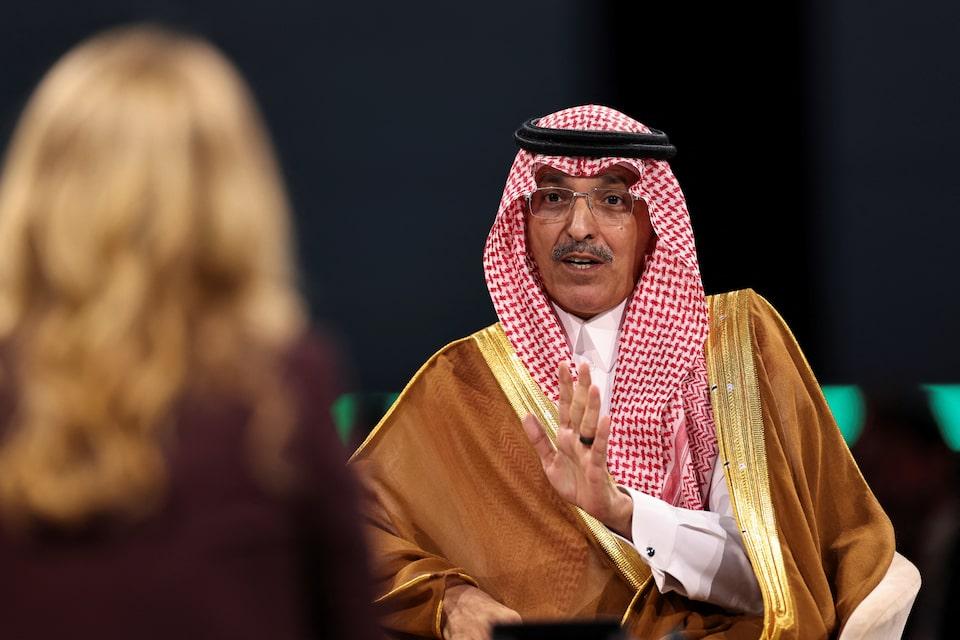
May 29 (Reuters) - Saudi Arabia's Finance Minister Mohammed Al-Jadaan said the kingdom would "take stock" of its spending priorities in response to a significant decline in oil revenue, the Financial Times reported on Thursday. Riyadh plans to maintain its current pace of government spending despite facing widening budget and current account deficits, as well as rising debt levels, the FT said, citing an interview with the minister. Sign up here. Jadaan told the newspaper that he would not be concerned about the deficit widening to 3%, 4%, or "occasionally" 5% of GDP as long as government spending supported non-oil growth — a key target under the kingdom’s diversification strategy. Jadaan said Saudi Arabia aimed to avoid the "trap of booms and busts" by pursuing countercyclical policies and prioritising growth over short-term fiscal balance, the report added. Saudi Arabia has been ramping up oil refining operations to capitalise on strong margins, helping offset revenue lost to weaker crude prices and exports. While crude prices are likely to remain at current levels or even lower for most of the year given the surge in supplies and demand uncertainty, the increased refining operations offer Riyadh an effective tool to manage oil price volatility and to better withstand a protracted price war. https://www.reuters.com/world/middle-east/saudi-arabia-take-stock-spending-priorities-after-oil-revenue-drop-ft-reports-2025-05-29/
2025-05-29 10:46
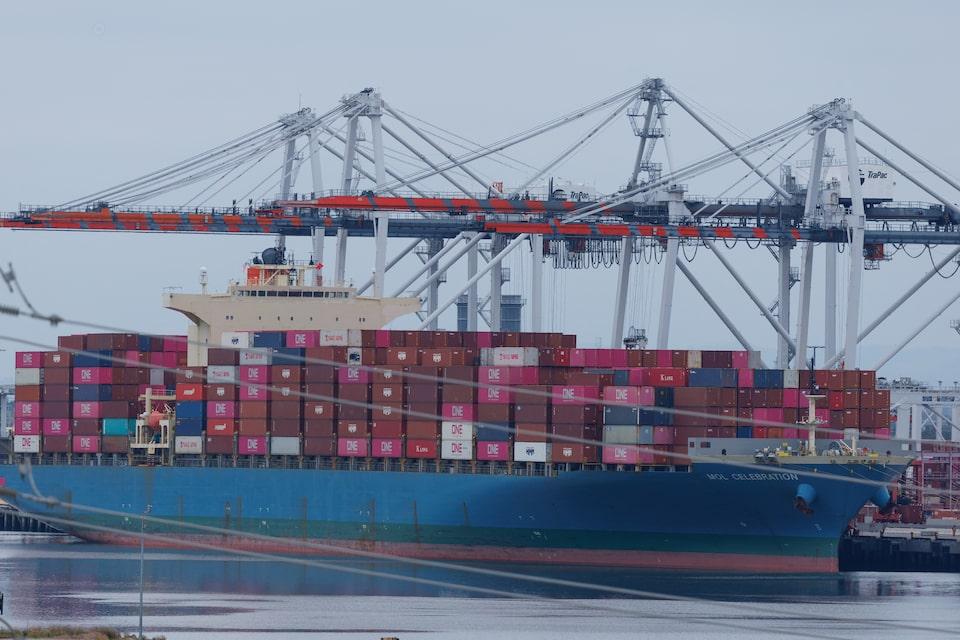
LONDON, May 29 (Reuters) - A U.S. trade court blocked most of President Donald Trump's tariffs in a sweeping ruling on Wednesday that found the president had overstepped his authority by imposing across-the-board duties on imports from U.S. trading partners. Below is some detail on the ruling and a digest of other laws Trump could deploy to pursue his trade policy, according to analysts Goldman Sachs, Deutsche Bank and Panmure Liberum: Sign up here. THE RULING The Court of International Trade invalidated with immediate effect all of Trump's orders on tariffs since January that were rooted in the International Emergency Economic Powers Act (IEEPA), a law meant to address "unusual and extraordinary" threats during a national emergency. It said the constitution gives Congress exclusive authority to regulate commerce with other countries. Other laws: SECTION 122 This could be one of the quickest options for Trump to implement. The administration could replace the 10% across-the-board tariffs with similar duties of up to 15% under Section 122 of the Trade Act. They would last up to six months, after which Trump would require Congressional approval to extend them. The law authorises the president to address a balance of payments deficit or to prevent an imminent and significant depreciation in the dollar, but it does not require any formal investigation or process, so the administration could implement it within days if deemed necessary. SECTION 301 The U.S. Trade Representative (USTR) could launch investigations under Section 301 on unfair trade practices of the 1974 Trade Act, on key trading partners, laying the groundwork for tariffs at a later date. It would require a probe and public comment, which can take months. There is not limit to the level or duration of tariffs. In his first term, Trump invoked the same unfair trade practices statute to impose tariffs of up to 25% on some $370 billion worth of Chinese imports in 2018 and 2019, triggering a nearly three-year trade war with Beijing. SECTION 232 Trump has already used Section 232 on national security grounds for autos, steel and aluminium tariffs and has launched probes into imports of both pharmaceuticals and semiconductors as part of a bid to impose tariffs on both sectors. One option would be to expand its use to other sectors, Deutsche Bank and Goldman analysts said. Like Section 301, it requires time for public comment and can take months, however. Goldman analysts noted that Trump has not emphasised sectoral tariffs as frequently recently as he did earlier this year, but if the White House has less flexibility on tariffs applied to countries, sectoral tariffs might receive more attention again. SECTION 338 OF THE TRADE ACT OF 1930 Trump could also dust off a 1930 trade law largely forgotten for decades, which allows him to impose duties of up to 50% on imports from countries found to discriminate against U.S. commerce. The authority, which has been threatened but never used to impose tariffs, is similar to that under Section 301, except that it limits the size of tariffs. But it does not require a formal investigation, Goldman analysts said. https://www.reuters.com/world/us/what-else-can-trump-do-global-tariffs-after-us-court-ruling-2025-05-29/
2025-05-29 10:45
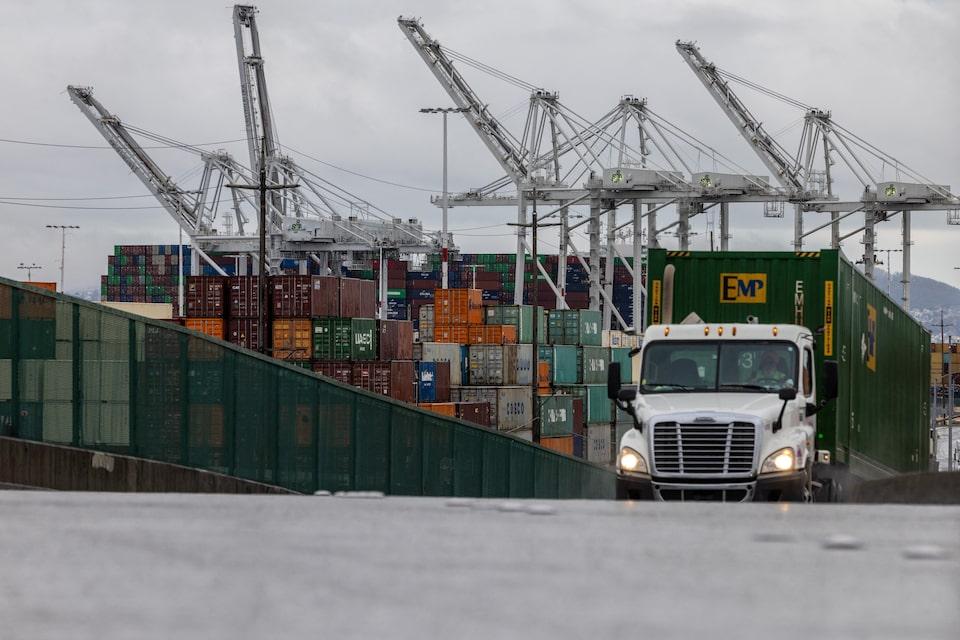
LONDON, May 29 (Reuters) - What matters in U.S. and global markets today By Mike Dolan , opens new tab, Editor-At-Large, Financial Industry and Financial Markets Sign up here. World markets and the U.S. dollar have surged this morning after a shock U.S. court ruling overnight that said the bulk of President Donald Trump's sweeping import tariff hikes were outside his authority. I'll discuss the implications of this below along with the rest of the morning's market news before getting into today's deep dive, where I explain why Germany may not remain long in its new role as the world's top creditor. Today's Market Minute * A U.S. trade court blocked most of President Donald Trump's tariffs in a sweeping ruling on Wednesday that found the president overstepped his authority by imposing across-the-board duties on imports from U.S. trading partners. * Billionaire Tesla CEO Elon Musk is leaving the Trump administration after leading a tumultuous efficiency drive, during which he upended several federal agencies but ultimately failed to deliver the generational savings he had sought. * NATO will ask Germany to provide seven more brigades, or some 40,000 troops, for the alliance's defence under new targets for weapons and troop numbers that its members' defence ministers are set to agree on next week. * In the faceoff between heavily indebted developed economies and increasingly wary investors, Japan has blinked first, announcing that it will reconsider its debt profile strategy. The U.S. could soon follow. Read the latest from Reuters columnist Jamie McGeever. * The U.S. power system is on track to produce more electricity from clean power sources than from fossil fuels for the third straight month in May, a record-long stretch. Find out more in the latest piece from Reuters columnist Gavin Maguire. Trump tariffs thwarted The Manhattan-based Court of International Trade ruled on Wednesday that the U.S. Constitution gives Congress exclusive authority to regulate commerce with other countries, and that this authority is not overridden by the president's emergency powers. In response, the White House quickly set an appeal process in motion, one that could go all the way to the Supreme Court. But the trade court has, at least temporarily, invalidated all of Trump's orders on tariffs since January that were rooted in the International Emergency Economic Powers Act, a law meant to address "unusual and extraordinary" threats during a crisis. While the ruling doesn't cover sector-specific tariffs on steel or autos, analysts said it does invalidate the 10% universal tariff, the global 'reciprocal' tariffs, levies on Canada and Mexico and the new China levies. At the very least, the tariffs are in limbo for now. Appeals are pending and there may be other legal routes to reinstate the levies, but, as it stands, the ruling effectively freezes bilateral trade negotiations with Europe, China and other countries that needed to be concluded by July 9. Stock markets - which were already cheering a decent set of Nvidia results that came out shortly before the court announcement - zoomed higher ahead of today's bell on the prospect of frustration, delay and possible suspension of the central plank of Trump's trade war. U.S. futures , , jumped between 1.5% and 2% ahead of Thursday's bell. Bourses in Europe and Asia rose too, with Japan's Nikkei (.N225) , opens new tab leading the way with gains of almost 2%. The S&P 500 (.SPX) , opens new tab is currently about 4% below an all-time high touched on February 19, having rebounded from a near 20% decline last month. For individual stocks, Apple (AAPL.O) , opens new tab climbed 3.6% overnight, while Meta (META.O) , opens new tab and Alphabet (GOOGL.O) , opens new tab added more than 2%. Shares of Nvidia (NVDA.O) , opens new tab were up more than 5% as the chip giant beat estimates again for first-quarter sales, driven by customers stockpiling AI chips ahead of restrictions on U.S. exports to China. Markets seemed relaxed even as the company warned that the new curbs were expected to cut $8 billion from current-quarter sales. The Nvidia gains appeared to hold even after news emerged that Washington had ordered a broad swathe of companies to stop shipping goods to China without a license and revoked licenses already granted to certain suppliers. Products affected include design software and chemicals for semiconductors, butane and ethane, machine tools, and aviation equipment, Reuters sources said. But the tariff ruling has since dominated headlines. The dollar (.DXY) , opens new tab, which had fallen as the tariffs were rolled out over the past few months, initially climbed, hitting its best levels in a week. But it gave back much of these gains as the New York open neared. Crude oil prices pushed higher and gold fell. In the midst of a heavy week of new debt sales, U.S. Treasury yields nudged higher and the yield on long-bonds held above 5%. Federal Reserve futures are now pricing in less than two rate cuts through the end of the year, with barely 40 basis points of easing now expected before December. Minutes from the U.S. Fed's latest policy meeting released on Wednesday indicated that policymakers felt they could face "difficult tradeoffs" in coming months in the form of rising inflation alongside rising unemployment. A second estimate for first-quarter GDP is due out later, and the latest update on the Fed's favoured inflation gauge is slated for Friday. Big retailers top the earnings calendar on Thursday. And now onto today's column, where I explain how Germany's re-emergence as the world's top creditor may affect international capital flows in a time of international economic upheaval. Germany's return as world's top creditor may be fleeting Germany is reprising its role as the world's biggest creditor for the first time since 1991 - but seismic global policy changes suggest it might not be back in the seat for long. As the United States has soaked up the vast bulk of global savings over the past two decades, the stability of ballooning global trade and investment imbalances has become one of the biggest market issues - especially now, as trade wars unfold. For everyone plotting the map, Japan's Ministry of Finance this week recorded a remarkable milestone. For the first time in 34 years, Germany overtook Japan last year as the biggest net provider of investment capital to the rest of the globe. While exchange rates had something to do with the ranking switch, Germany's unenviable top spot - borne of weak growth and a lack of investment opportunities at home - speaks volumes about the state of world savings, investment and demographics. The three top net creditors - Germany, Japan and China - have one major thing in common. They are all large aging economies where populations have already peaked and are set to decline over the remainder of the century - dampening domestic demand in the process and generating outsized savings pools. But, as Deutsche Bank Chief Economist Robin Winkler points out, the German and Japanese investment positions are quite different in nature. Much to the chagrin of U.S. President Donald Trump's new administration, both countries have run chronic trade surpluses with the United States and the rest of the world for years, relying on exports for growth amid depressed local demand. And they have both banked the lion's share of the resulting savings into overseas investments, mostly in the faster-growing America. In the process, these flows generated more than a decade of U.S. asset booms and dollar appreciation - something Trump's team claim had clobbered U.S. manufacturing competitiveness and eliminated good-paying jobs in the process. Trade tariffs will help to redress the imbalance, according to Trump, and so too would a weaker dollar. FICKLE OR STICKY? But Winkler points out that much of the rise in Japan's surpluses over the years has been in direct investments - company acquisitions, new overseas plants and job creation. Unlike Japan, Germany's trade surpluses have been mostly recycled into portfolio investments such as stocks and bonds - making them far less "sticky" and easily reversed. For Germany, this could be a double-edged sword. "It makes Germany more susceptible to criticism that its trade surpluses vis-à-vis certain countries have not directly generated jobs in these countries," Winkler wrote, adding this could be a problem in trade talks under way. "On the other hand, the low share of direct investment makes Germany's net asset position more liquid and fungible than Japan's," he added. "This should be an advantage at a time of geopolitical fragmentation as it is easier to reallocate or even repatriate foreign assets quickly should it become necessary." Of course, the flipside of Trump's trade and diplomatic wars in Europe this year has been a transformative fiscal boost in Germany aimed at both re-arming and rebuilding the economy - changing its domestic growth trajectory as well as potential choice of investment destination for its savers. Capital needs in Europe are rising fast and incentives for savers and investors to stay at home will come with that. This creates substantial risks for Wall Street - and not just dollar depreciation, which the administration appears to be encouraging. While Japanese investors make up the single biggest group of overseas investors in U.S. government bonds, Europe was the source of $7 trillion of overseas equity investment since 2012. As the past week revealed, the stakes in U.S.-European trade talks - which now only have six weeks to square numerous thorny issues - are very high on both sides of the Atlantic. Chart of the day Global economic surprise indexes that measure incoming economic data against consensus forecasts are at their highest levels in a year. And after three months in negative territory, the U.S. surprise index is back in positive territory too, reaching its best level since February. Of course, much of the data being released covers the period before U.S. tariffs came into effect, meaning they may be flattered by front-loading to beat the tariffs. But these figures are another sign that 'hard' data is continuing to hold up. But now that the whole trade outlook has been upended once again, the picture may get even foggier. Today's events to watch * U.S. first quarter GDP revision and Q1 corporate profits (8:30 AM EDT), weekly jobless claims (8:30 AM EDT), April pending home sales (10:00 AM EDT); Canada Q1 current account (8:30 AM EDT) * Federal Reserve Board Governor Adriana Kugler, San Francisco Fed President Mary Daly, Dallas Fed President Lorie Logan, Chicago Fed chief Austan Goolsbee and Richmond Fed boss Thomas Barkin all speak. Bank of England governor Andrew Bailey speaks * U.S Treasury sells $44 billion of 7-year notes * U.S. corporate earnings: Costco, Best Buy, Hormel Foods, Dell, NetApp, Cooper, Ulta Beauty Opinions expressed are those of the author. They do not reflect the views of Reuters News, which, under the Trust Principles , opens new tab, is committed to integrity, independence, and freedom from bias. https://www.reuters.com/business/finance/global-markets-view-usa-2025-05-29/
2025-05-29 10:28
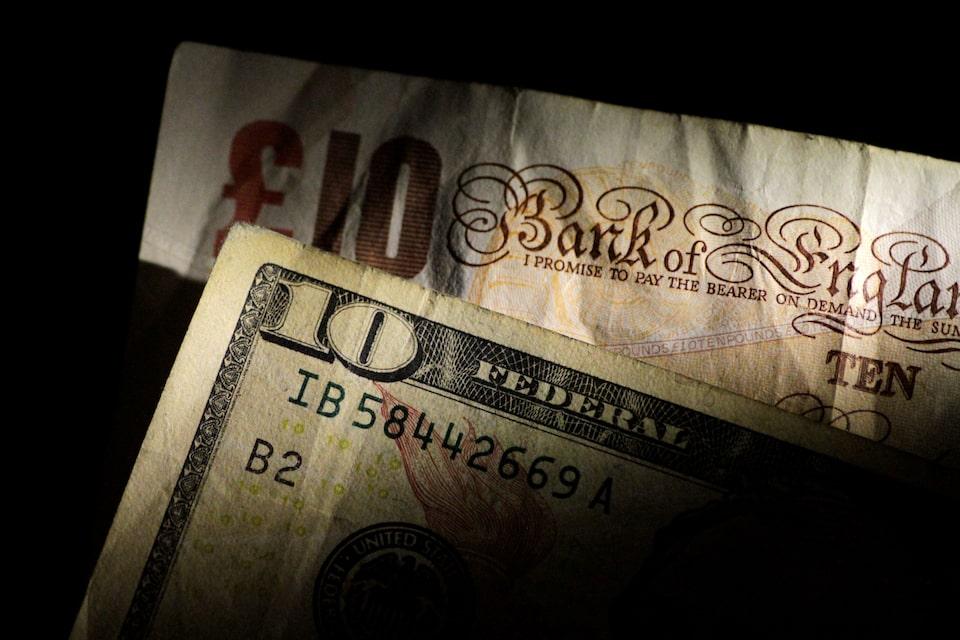
May 29 (Reuters) - The pound ticked higher versus the dollar on Thursday, one of the few major currencies holding its ground against the greenback which earlier surged after a court blocked U.S. President Donald Trump from imposing import tariffs on other countries. At 0942 GMT, the pound was up 0.12% against the dollar at 1.347 . Elsewhere, the euro, Japanese yen and Swiss franc all fell versus the dollar. Sign up here. Nevertheless the pound remains a fraction below the 1.359 level touched on Tuesday, its highest against the greenback since February 2022. "Due to the court ruling that Trump’s tariffs are illegal, the pound has given back a chunk of gains made against the U.S. dollar," said George Vessey, lead FX & Macro Strategist at Convera in a note, though he added it remains above its 21-day moving average, a signal that a recent uptrend is still intact. The pound has gained almost 8% against the dollar in 2025 and is on track for its fourth consecutive monthly rise, as investors react to uncertain U.S. trade policy. It has also been boosted by strong data, including retail sales last week as well as the announcement of a UK-U.S. trade deal earlier this month. "GBP has done well in recent weeks on the back of U.S. and EU trade/reset deals, above-forecast consumer spending and less crowded positioning," said Kenneth Broux, head of corporate research FX and rates at Societe Generale, also flagging that the market is pricing fewer Bank of England rate cuts. Last week's inflation print led traders to scrap bets for a cut at the BoE's meeting scheduled for June, with more than 97% of traders now expecting the central bank to hold rates . The central bank slashed the bank rate by 0.25 percentage points to 4.25% on May 8. The Confederation of British Industry said on Thursday that business confidence in Britain's services sector hit a two-and-a-half-year low in the quarter to May. Data from market researcher Kantar on Wednesday showed British grocery price inflation jumped to 4.1% for the four weeks to May 18, its highest level since February last year. Against the euro, the pound was up 0.1% at 83.72, on track for its seventh straight week of gains. https://www.reuters.com/world/uk/sterling-ticks-higher-strong-data-trade-deal-buffer-against-stronger-dollar-2025-05-29/
2025-05-29 10:08
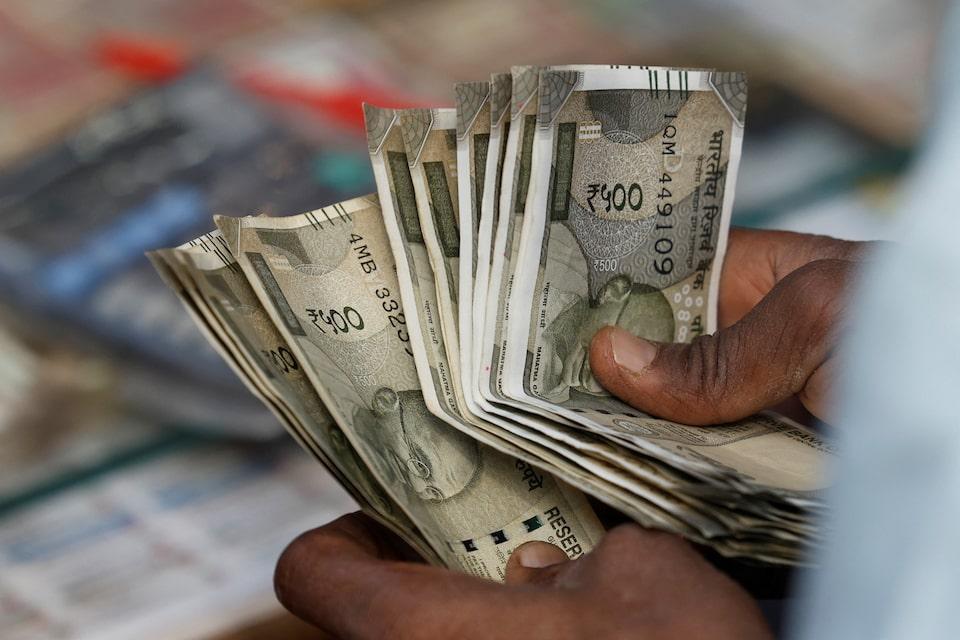
MUMBAI, May 29 (Reuters) - The Indian rupee weakened slightly on Thursday, as the greenback firmed following a court decision to block President Donald Trump's "reciprocal tariffs" from going into effect, while traders also pointed to importer dollar bids weighing on the local unit. The rupee closed at 85.5075 against the U.S. dollar, down 0.2% from its close at 85.36 in the previous session. Sign up here. The dollar index rose to an over one-week high of 100.48 before slipping back below the 100-handle while Asian currencies were trading mixed. The offshore Chinese yuan was little changed at 7.19 while the Malaysian ringgit led losses among Asian peers, with a 0.5% decline. Traders also pointed to routine dollar bids from importers weighing on the rupee. "From a technical standpoint, the USD/INR pair remains in a consolidation zone with resistance near 85.70-85.90 levels and strong support of 84.90-85.10 levels," said Amit Pabari, managing director at FX advisory firm CR Forex. "A breach on either side could pave a sharp movement in that direction," Pabari added. The U.S. court decision to halt reciprocal tariffs provided some relief to the greenback which had otherwise struggled this year due to trade uncertainty. The dollar strengthened against safe havens like the Swiss franc and Japanese yen as well. "We think the combination of this tariff news and a slightly hawkish FOMC minutes (almost all participants commented on the risk that inflation could prove to be more persistent than expected), can help the dollar stay bid in the near term," ING said in a note. Minutes of the Federal Reserve's May policy meeting also pointed out that the recent sharp decline in the dollar was primarily driven by increased foreign exchange hedge ratios, rather than significant foreign selling of U.S. assets. https://www.reuters.com/world/india/rupee-ends-slightly-lower-firmer-dollar-importer-hedging-2025-05-29/
2025-05-29 08:52
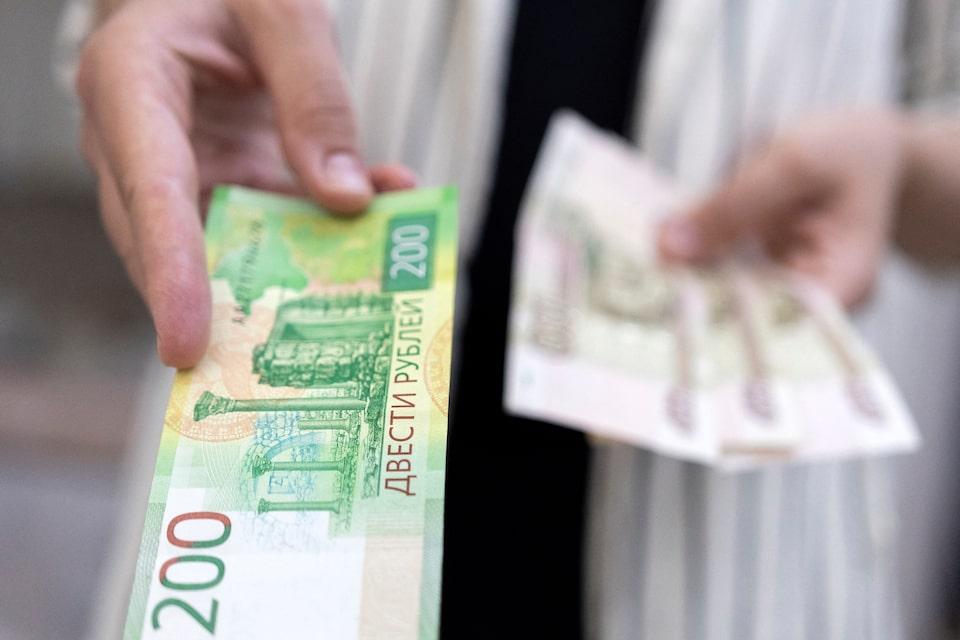
May 29 (Reuters) - The Russian rouble strengthened sharply on Thursday, soaring past the 78 mark against the dollar to reach a two-year high, after Moscow proposed a fresh round of peace talks with Kyiv. The rouble has firmed by more than 40% against the dollar this year, a rise analysts have attributed to the easing of geopolitical tensions - mainly with U.S. President Donald Trump's administration - and the central bank's tight monetary policy, which has reduced demand for foreign currency. Sign up here. By 0843 GMT, the rouble was up 1.3% at 78.80 per U.S. dollar, LSEG data based on over-the-counter quotes showed, earlier hitting 77.95, its strongest since May 29, 2023. Russia on Wednesday proposed holding the next round of direct talks with Ukraine on June 2 in Istanbul. Kyiv has yet to respond to the proposal. Trump, meanwhile, said he was not yet prepared to impose new sanctions on Russia because he did not want the penalties to scuttle a potential peace deal. That news backdrop, as well as Russia saying it had completed a draft peace memorandum, contributed to the rouble's strength, said Promsvyazbank's Yevgeny Loktyukhov, along with an uptick in oil prices. Brent crude oil , a global benchmark for Russia's main export, was up 1.2% at $65.68 a barrel. The improvement of the geopolitical background and the situation on oil markets should compensate for the traditional month-end foreign currency supply squeeze after tax payments are made, said Loktyukhov. Exporters usually convert their foreign currency earnings into roubles to pay local liabilities at the end of each month, buttressing the Russian currency. Against the Chinese yuan, the rouble was up 1% at 10.90 on the Moscow Stock Exchange. Russia's central bank uses yuan for foreign exchange interventions, and it is the most traded foreign currency in Russia. https://www.reuters.com/markets/europe/russian-rouble-soars-past-78-vs-dollar-reach-two-year-high-2025-05-29/