2025-05-29 06:27
Akazawa, Bessent to meet in Washington on Friday Defence gear purchase could boost US trade surplus, Akazawa says US court ruling would not change Japan's strategies, source says Foreign exchange levels have not been discussed so far TOKYO, May 29 (Reuters) - Japan is considering using the purchase of U.S. defence equipment as a bargaining chip in tariff talks, its top tariff negotiator Ryosei Akazawa said on Thursday as he heads for a fourth round of the negotiations in Washington. The defence equipment purchase would be among a package of proposals to gain U.S. concessions, which also include technical cooperation in shipbuilding, revision to inspection standards for imported automobiles and increased imports of U.S. farm products. Sign up here. "Japan's purchase of defence equipment would contribute to the U.S. trade surplus, so in that sense, it could be considered (in the trade talks)," Akazawa told reporters. Akazawa will meet with U.S. Treasury Secretary Scott Bessent on Friday in the fourth round of trade talks in Washington, as Japan faces a 24% tariff rate starting in July unless it can negotiate a deal with the U.S. "We plan to discuss trade expansion, non-tariff barriers and economic security cooperation," he said before heading to an airport. Japan and the U.S. have agreed to deepen the trade discussions with the G7 leaders' summit on June 15-17 in mind, where U.S. President Donald Trump and Japan's Prime Minister Shigeru Ishiba are set to meet in person. A source familiar with the talks said a U.S. trade court's ruling to block Trump's sweeping tariffs would not change Japan's strategies in the trade talks. Japan wants to eliminate not just "reciprocal" tariffs but also industry-specific tariffs on automobiles, said the source, who declined to be identified as the matter is private. Speaking to reporters on the potential defence equipment purchase, Akazawa did not specify which equipment Japan is considering buying. Japanese media reported that Trump pitched the F-47 and other fighter jets in a phone call with Ishiba last week. Meanwhile, a Japanese government spokesperson denied a report by the Asahi Shimbun that the government has started considering increasing its share of costs for U.S. troops stationed in Japan. The budget for the costs of stationing U.S. troops "has been shared appropriately," Chief Cabinet Secretary Yoshimasa Hayashi told a regular press conference. Similarly, Akazawa said national security and tariff deals should be separated as they are different matters. When the two countries started trade talks in April, the issues of currency rates were high on the agenda, as Trump's past remarks accusing Japan of intentionally maintaining a weak yen fuelled market expectations that Tokyo will face pressure to strengthen its currency's value against the dollar. The pair has set the currency issues aside for talks between their finance ministers, and so far both sides said they have not discussed setting currency targets. In what could be interpreted as giving a nod to current rates, the U.S. Treasury Department said last week it agreed with Japan that the dollar-yen rate at present reflects fundamentals. Japanese officials, however, reiterated they have never discussed current foreign exchange levels with the U.S. ($1 = 145.3300 yen) https://www.reuters.com/business/trump-administration-asked-japan-increase-share-costs-us-troops-asahi-shimbun-2025-05-29/

2025-05-29 06:25
MUMBAI, May 29 (Reuters) - The Indian central bank's gains from foreign exchange transactions surged nearly 33% to 1.11 trillion rupees ($13 billion) in the fiscal year ending March, pushing up its income sharply, its annual report showed on Thursday. The Reserve Bank of India's net income rose to 2.69 trillion rupees, up 27.5% on year. Interest income from foreign securities also saw a sharp rise to 970.07 billion rupees from 653.28 billion rupees in the previous year. Sign up here. The size of the RBI's balance sheet grew 8.2% to 76.25 trillion rupees. "In FY25, the surge in dollar selling was due to FY25 balance of payments turning negative," said Gaura Sen Gupta, chief economist at IDFC First Bank. "In FY26, we expect balance of payments to be a small positive. Hence the quantum of dollar selling is expected to be moderate." Last week, RBI's board approved the transfer of a record 2.69 trillion rupees as surplus to the government for last fiscal year as it opted to raise its contingency risk buffer under a revised economic capital framework. In fiscal year 2019, the RBI adopted a new economic capital framework that required it to maintain a contingency risk buffer of 5.5% to 6.5% of its balance sheet. Last week, the board changed the range of the contingency risk buffer to 6% plus or minus 1.5 percentage points to provide adequate flexibility and to ensure smoothening of surplus transfer. IDFC Bank's Sen Gupta expects the RBI's dividend for this fiscal year to remain similar to levels seen in the previous two years, as interest income will remain substantial and provisioning stable. For the last fiscal, the RBI's total expenditure rose 7.76% to 697.14 billion rupees, largely due to higher interest spends, and costs related to employees and printing of notes. GROWTH FOCUS Monetary policy is committed towards achieving durable price stability, which is necessary for high growth on a sustained basis, the RBI reiterated in the annual report. "The benign inflation outlook and moderate growth warrant monetary policy to be growth supportive, while remaining watchful about the rapidly evolving global macroeconomic conditions," it said. The central bank will undertake liquidity management operations in sync with the monetary policy stance and keep system liquidity adequate to meet the needs of the productive sectors of the economy, it said. Banks should manage trading and banking book risks proactively amid heightened global uncertainties, and in light of a moderation in net interest margins, it said. ($1 = 85.5700 Indian rupees) https://www.reuters.com/world/india/india-central-banks-net-income-surges-fy25-fx-gains-rise-2025-05-29/
2025-05-29 06:20
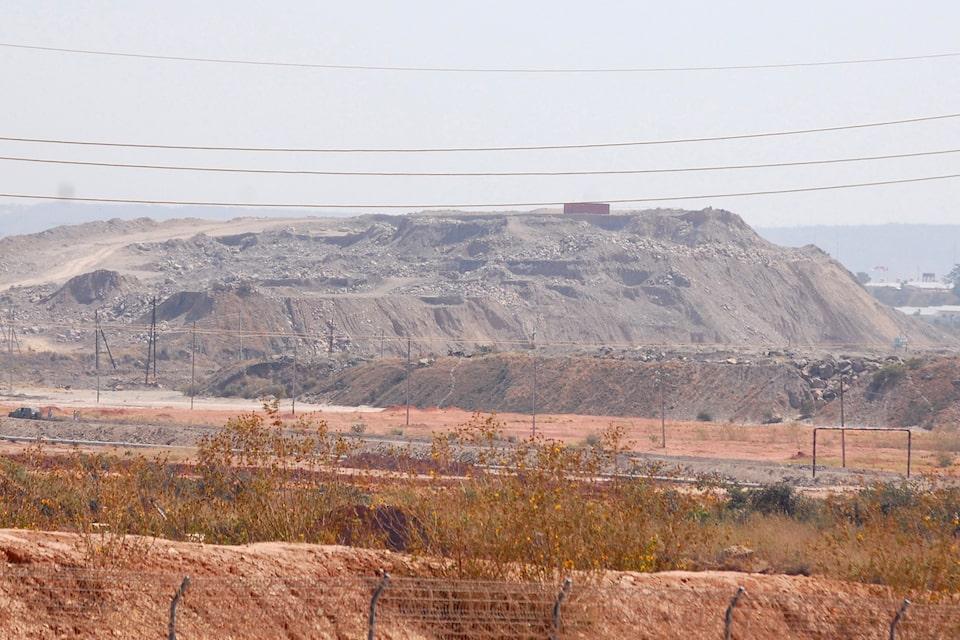
LONDON, May 29 (Reuters) - The price of cobalt has fallen so far over the last couple of years that even Congo's artisanal miners have given up on the battery metal. They have been swept aside by a wave of production from the Democratic Republic of Congo's (DRC) formal sector and a secondary flood of metal from Indonesia. Sign up here. The market was over-supplied for the third consecutive year in 2024 even though global demand exceeded 200,000 metric tons for the first time. Metals investor Cobalt Holdings is betting that the worst is over. The company is aiming to raise $230 million from an initial public offering in London the majority of which it will use to buy 6,000 tons of physical cobalt from Glencore (GLEN.L) , opens new tab. Chief Executive Jake Greenberg believes the purchase from Glencore, the first of several, will be "at or near a low point in the cycle", according to the company's registration filing. Greenberg helped launch Yellow Cake (YCA.L) , opens new tab, which offers investors a physical uranium play, and Cobalt Holdings is a similar vehicle for punters wanting to ride the cobalt cycle. It's likely to be a bumpy ride and the longer-term bull thesis hinges both on whether the Congo, and to a lesser extent Indonesia, can restrain supply and on whether cobalt can maintain its position as a critical new energy input. FINDING THE FLOOR The DRC government's imposition of a four-month export ban in February is a positive sign that the world's largest cobalt producer has woken up to the fact it is producing too much. Cobalt has a history of boom-and-bust pricing as super-strong rallies such as those in 2018 and 2022 generated an artisanal supply response. Not this time. Congo's informal sector saw output drop to a historic low last year, both in absolute and relative terms, according to analysts at Benchmark Mineral Intelligence (BMI). Rather, it was China's CMOC Group (603993.SS) , opens new tab which caused the supply shock, more than doubling production to 114,000 tons, above both guidance and assumed nameplate capacity at its TFM and KFM mines in the DRC. The output surge continues unabated. The company reported first-quarter output of 30,414 tons, up 21% year-on-year. That material is stuck for now as the government decides what it will do when the export ban expires in June. But any decision "will inevitably imply a strict limitation of exports in whole or in part until market balance is reached with regard to the supply and demand of cobalt", according to Patrick Luabeya, head of the government's strategic metals authority. Congo's apparent readiness to address its over-production has dispelled some of the cobalt blues, boosting the price to $16 per pound from a 10-year low of $10. The market is now on tenterhooks as it awaits Kinshasa's next move. But if the world's largest producer is prepared to limit exports or production, the market may have found a price floor, an elusive concept for a metal that is largely produced as a by-product of either copper or nickel. BATTERY WARS Cobalt demand grew by a robust 14% year-on-year in 2024, driven by the metal's usage in electric vehicle (EV) batteries, according to BMI's annual market report commissioned by The Cobalt Institute. The bull case for the metal rests on EV battery demand continuing to expand to the point that cobalt usage starts outstripping production some time around the turn of the decade. BMI expects market surpluses to shrink going forwards, even without any production curbs in the DRC, with a structural supply deficit emerging "from at least the early 2030s". However, cobalt's share of the EV battery market is in flux as Chinese EV producers pivot to battery chemistries that don't use any cobalt at all. This is also true of the fast-growing energy storage sector, which is dominated by lithium-iron-phosphate (LFP) batteries. The good news is that Western automakers are still heavily committed to cobalt-chemistry batteries and may become more so as China tightens export controls on LFP technologies. But cobalt's fortunes remain in significant part dependent on the global battle to produce ever more efficient and powerful batteries. Some of them will contain cobalt, others will not. STRATEGIC STOCKPILE Cobalt Holdings is not the only entity looking to scoop up cobalt at bargain-basement prices. China's state stockpiler has been doing the same. BMI estimates the National Development and Reform Commission received around 16,600 tons of cobalt in 2024, up from 7,200 tons in 2023. That reduced last year's supply surplus from over 50,000 tons to a still substantial 36,000 tons. While China is well stocked, the West isn't, even though just about every country classifies cobalt as a strategically important metal, not just for its use in batteries but also in the form of super-alloys for aircraft manufacturing. Cobalt Holdings' plans to accumulate what amounts to a Western strategic stockpile is an interesting development in the broader competition between the West and China for access to critical minerals. It helps loosen China's mine-to-market grip on the cobalt supply chain and simultaneously offers a hedge against future disruption in a supply chain which is highly concentrated geographically. However, it remains to be seen how long investors will have to wait to see the cobalt cycle once again turn from bust to boom. There is a lot of cobalt around right now and there still will be even after Cobalt Holdings takes another 6,000 tons off the market. The opinions expressed here are those of the author, a columnist for Reuters. https://www.reuters.com/markets/europe/cobalt-holdings-bets-battery-metals-fortunes-have-turned-andy-home-2025-05-29/
2025-05-29 06:09
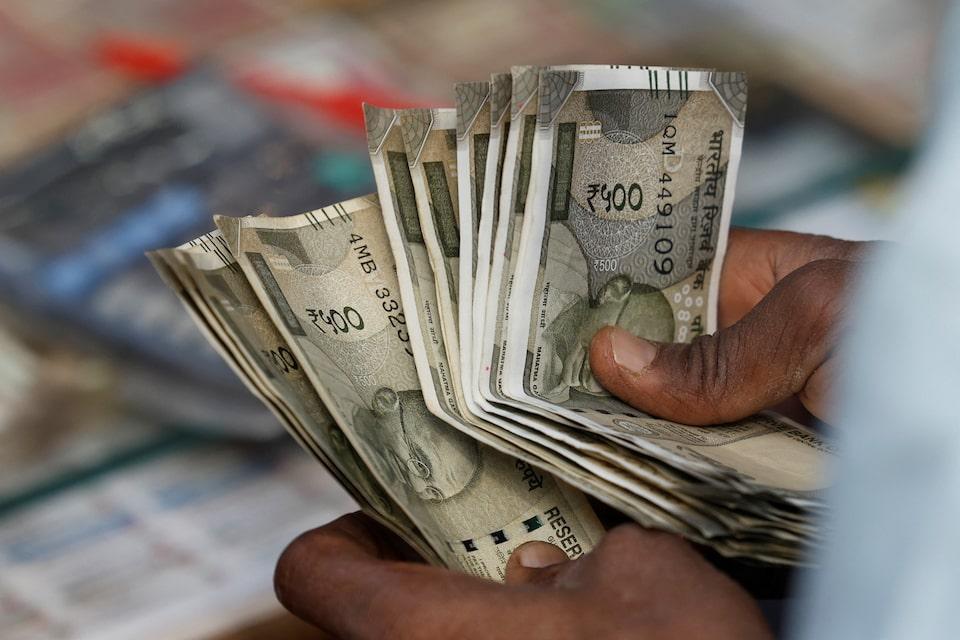
MUMBAI, May 29 (Reuters) - The Indian rupee weakened on Thursday, weighed down by a broad rebound in the dollar after a U.S. federal court blocked most of President Donald Trump's "reciprocal tariffs" from taking effect. The rupee was at 85.5325 per U.S. dollar as of 11:30 a.m. IST, down 0.2% on the day. Asian currencies were down between 0.1% to 0.6% while the dollar index rose past the 100 handle. Sign up here. However, the benchmark BSE Sensex (.BSESN) , opens new tab and Nifty 50 (.NSEI) , opens new tab equity indexes were little changed, lagging behind gains in regional peers as markets cheered the court ruling to block Trump tariffs. A U.S. trade court said in its ruling that the country's Constitution gives Congress exclusive authority to regulate commerce with other countries that is not overridden by the president's emergency powers to safeguard the U.S. economy. The Trump administration has appealed the ruling. Analysts pointed out that the market was showing a knee-jerk reaction to the ruling, which blocked tariff policies that had weighed heavily on the dollar and boosted emerging market currencies, but many added that the initial reaction may lack follow through. "It remains to be seen if this ruling is a game-changer because the Supreme Court has a conservative majority influenced by Trump’s appointments," DBS said in a note, adding that "USD is not out of the woods," as concerns about U.S. fiscal health continue to linger. Traders also pointed to dollar bids from foreign banks and local companies weighing on the rupee. It seems like "two-way price action will persist unless it (USD/INR) moves out of the 84.80-86 range," a trader at a Mumbai-based bank said. Dollar-rupee forward premiums fell after markets pared hopes of Federal Reserve rate cuts, pushing near-tenor Treasury yields higher after the release of the minutes of the Fed's May policy meeting. The 1-year dollar-rupee implied yield fell 4 bps to 1.96%, its lowest since December 2024. https://www.reuters.com/world/india/rupee-dips-tracking-asian-peers-after-court-blocks-most-us-tariffs-2025-05-29/
2025-05-29 06:09
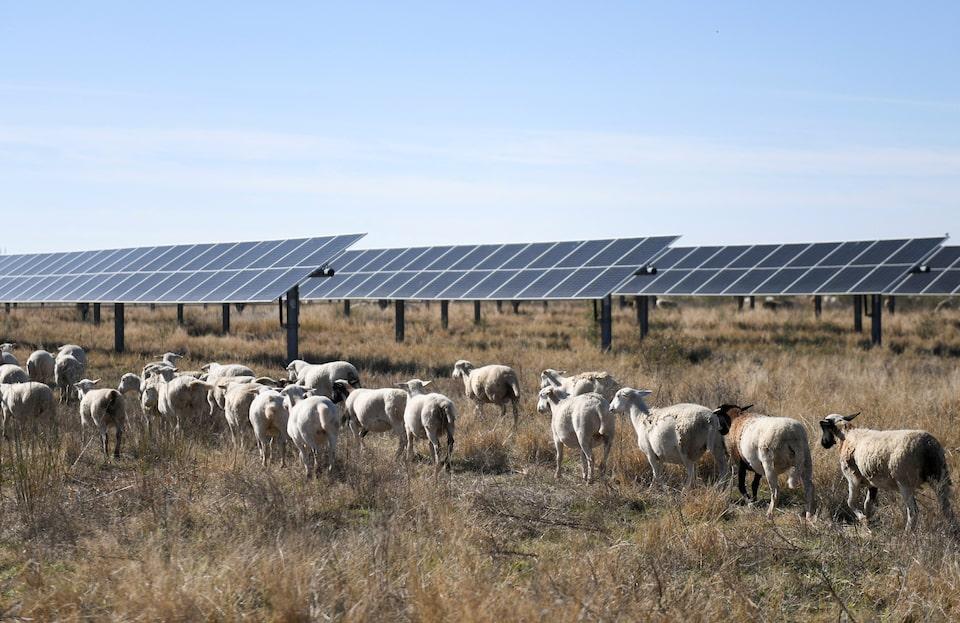
LITTLETON, Colorado, May 29 (Reuters) - The U.S. power system is on track to produce more electricity from clean power sources than from fossil fuels for the third straight month in May, establishing a record-long stretch for clean power generation in the country. Clean power sources provided the majority of U.S. electricity supplies for the first time in March of this year, according to data from think tank Ember, and extended that run in April thanks to record renewable energy output. Sign up here. The lowest natural gas-fired generation total in three years also helped ensure clean energy's majority share in April, and further declines in gas power output so far this month look set to keep that trend going in May. Greater demand for air conditioning systems over the summer may force utilities to elevate fossil fuel-based output from June onwards. But the current three-month stretch of clean power dominance marks a new milestone in U.S. energy transition efforts, and highlights a growing adeptness within generation networks at maximising clean energy output while curtailing fossil fuel use. CLEAN MAJORITY After generating 50.5% of U.S. utility-supplied electricity in March, clean energy sources accounted for 50.8% of electricity in April, Ember data shows. Big year-over-year increases in output from solar farms (+33%) and hydro dams (+24%) helped lift total clean electricity output by 8% in April from the same month a year ago. Gas-fired electricity generation in April was 6% lower than in the same month in 2024, further helping to stack generation trends in favour of clean power. So far in May, data from LSEG indicate that clean energy sources continue to have the upper hand. From May 1 through May 27, LSEG data shows that solar power output is up by 19% from the same dates in 2024, to a record 883,000 megawatt hours (MWh). That increase in solar output helped offset a 7% year-over-year decline in output from wind farms so far this month, and helped push total supplies from renewable energy sources to a new record. On the fossil fuel side of the output ledger natural gas underwent a further year-over-year contraction, with gas-fired output at just under 4.3 million MWh for the May 1-27 window, and the smallest for that period in at least three years. Coal-fired power output showed a modest 2% expansion so far in May from the same month a year ago, but overall fossil fuel power output is on track for a 9% fall from May 2024. FOSSIL FLUX The sustained high price of natural gas - which is the largest single power source within the U.S. electricity system - has been a supportive factor behind the recent clean streak. So far in 2025, benchmark U.S. Henry Hub natural gas futures have averaged $3.70 per million British thermal units (MMBtu). That average price is 77% above where Henry Hub values averaged over the same period of 2024, and means that power generators were motivated to cut back on gas use whenever possible so far this year. Utilities with generation portfolios that contain renewable power were able to deploy maximum volumes of clean energy while curtailing gas-fired production, thereby saving on costs while lifting the proportion of clean power to new highs. Power generators with more limited renewable supplies opted to boost coal-fired generation sharply higher so far this year, which also provided scope for cuts to the use of pricey gas. Total generation from gas-fired power stations is down around 8% so far this year from the same dates in 2024, while coal-fired plant production is around 15% higher, according to LSEG. SUMMER STRAIN Power generation from solar farms - which have been by far the fastest growing energy source in recent years - looks set to hit fresh highs as the U.S. summer kicks in. Solar's share of the overall electricity generation mix appears on track to climb from just under 11% in April to around 12% to 14% in the coming months as solar radiation levels peak. However, greater use of power-hungry air conditioners will put utilities on the hook to ensure that power supplies meet the heightened demand levels, even when the sun doesn't shine. That will likely serve to lift the proportion of fossil fuels within the overall generation mix, and potentially push clean power's share below 50% again during the hottest months of the year. But with solar and battery storage capacity still expanding within U.S. networks, clean power's share of the generation mix should remain close to 50%, and could re-emerge as the primary power source once demand for cooling systems dips in the fall. The opinions expressed here are those of the author, a columnist for Reuters. https://www.reuters.com/markets/commodities/record-us-clean-power-run-rolls-through-may-maguire-2025-05-29/
2025-05-29 06:05
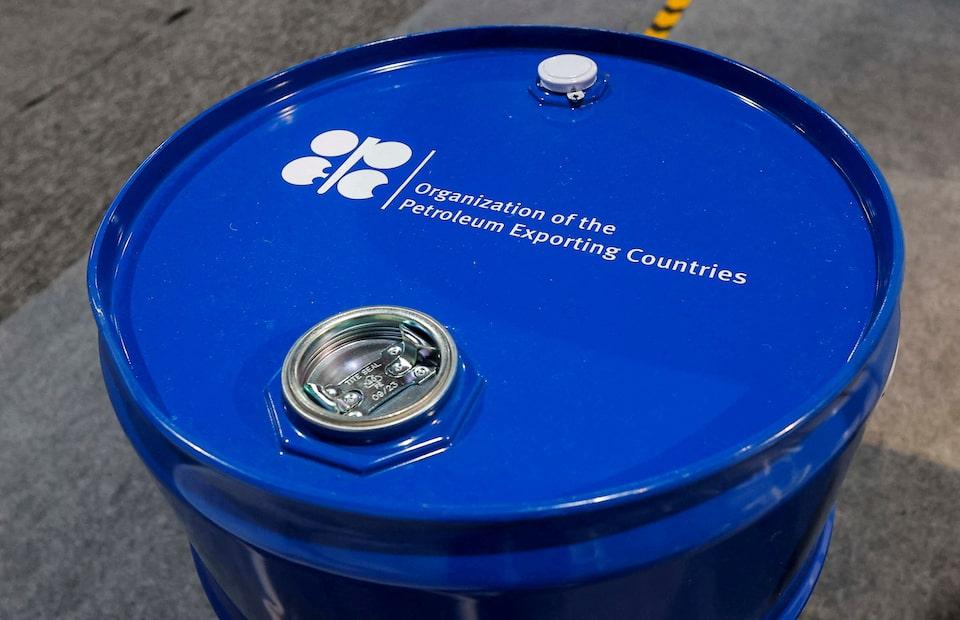
US drillers slow down operations following oil price drop US oil output growth set to slow in 2025 OPEC will need to deepen price war to significantly impact US output LONDON, May 29 - Oil drillers in the U.S. shale heartland are slowing down operations, a sign that OPEC's high-stakes price war is starting to pay off, but Saudi Arabia will need to exert a lot more pain to make a lasting impact on market share. U.S. oil producers upended the global market in the early 2010s, as the innovative ‘fracking’ drilling technique allowed them to tap vast onshore shale formations. Consequently, the United States, long the world's top oil consumer, became its leading producer as of 2018. It currently pumps around 13.5 million barrels per day, around 13% of world supplies. Sign up here. The rising tide of U.S. oil has long irked the Organization of the Petroleum Exporting Countries, which has seen its market share steadily erode over the past two decades. Saudi Arabia, OPEC's de-facto leader, in 2014 sought to curb surging U.S. output by flooding the market with cheap oil. This effort bankrupted a number of shale producers, but it only temporarily paused the country’s ascent as companies adapted to lower prices and the industry consolidated. PRICE WAR REDUX Riyadh and its allies, a group known as OPEC+, are now giving it another go. They surprised the market earlier this year by announcing that they would rapidly unwind 2.2 million bpd of production cuts introduced in 2024. The group is expected to announce further increases in production later this week. Benchmark U.S. oil prices have dropped by nearly a quarter since January to around $61 a barrel in response to OPEC+'s strategy as well as concerns over U.S. President Donald Trump's trade wars. At these prices, many shale wells are not profitable, as frackers require an oil price of between $61 and $70 a barrel to expand production, according to a survey conducted by the Dallas Federal Reserve Bank. And sure enough, nimble frackers have already responded by paring back drilling activities to conserve cash. The number of U.S. onshore oil drilling rigs dropped by eight to 465 last week, the lowest since November 2021, according to energy services firm Baker Hughes. Crucially, drillers in the Permian Basin in West Texas and eastern New Mexico, which accounts for nearly half of U.S. production, cut three rigs, bringing the total down to 279, also the lowest since November 2021. Crude production from new Permian wells, a measure of productivity, slightly improved in April, but that was largely offset by declines in other basins. And multiple indicators suggest activity is set to decelerate further. Importantly, Frac Spread Count, which measures the number of crews actively performing hydraulic fracturing, has seen a 28% annual drop to 186, according to energy consultancy Primary Vision, an indication that production could fall sharply in the coming months. Another measure to watch is drilled but uncompleted wells (DUCs), or partially completed wells that can start production quickly, offering operators flexibility to withhold production until market conditions improve. DUCs have risen by 11% since December 2024 to 975 in the Permian Basin. DOWN BUT NOT OUT While the latest data on shale drilling activity suggests U.S. production will continue to slow, it is far from falling off a cliff. The U.S. Energy Information Administration reduced in May its forecasts for U.S. production in 2025 and 2026 by around 100,000 bpd to 13.4 million bpd and 13.5 million bpd, respectively, compared with 13.2 million bpd last year. Production in the Permian Basin is forecast to average 6.51 million bpd in 2025, down from its previous estimate of 6.58 million bpd. But that would still mark a significant increase from 6.3 million bpd in 2024. OPEC+ may find it even harder to have a sustainable impact now than it did in 2014 as the U.S. shale landscape is significantly different from a decade ago. True, 15 years of intensive oil and gas drilling have depleted a large chunk of the most profitable shale acreage. However, shale drillers have in recent years adopted much stricter spending discipline, focusing on returning value to shareholders in contrast with last decade’s focus on growing production. Independent U.S. oil and gas producers have so far reduced their planned 2025 spending commitments by an aggregate 4% to $60 billion, while output is expected to remain largely flat, according to consultancy RBN Energy. Also, production today is concentrated in the hands of far fewer companies, such as Exxon Mobil and Chevron. These energy majors have developed highly efficient drilling techniques and boast strong balance sheets that leave them better equipped to withstand the OPEC assault. Current oil prices are therefore likely to temporarily curb U.S. production but not lead to the type of sharp deceleration seen in 2014. OPEC+ will therefore need to deepen and extend its price war for many months if it seeks to fundamentally change the oil production balance of power. Want to receive my column in your inbox every Thursday, along with additional energy insights and trending stories? Sign up for my Power Up newsletter here. https://www.reuters.com/markets/commodities/opec-must-squeeze-us-shale-much-more-win-oil-price-war-bousso-2025-05-29/