2025-05-27 22:48
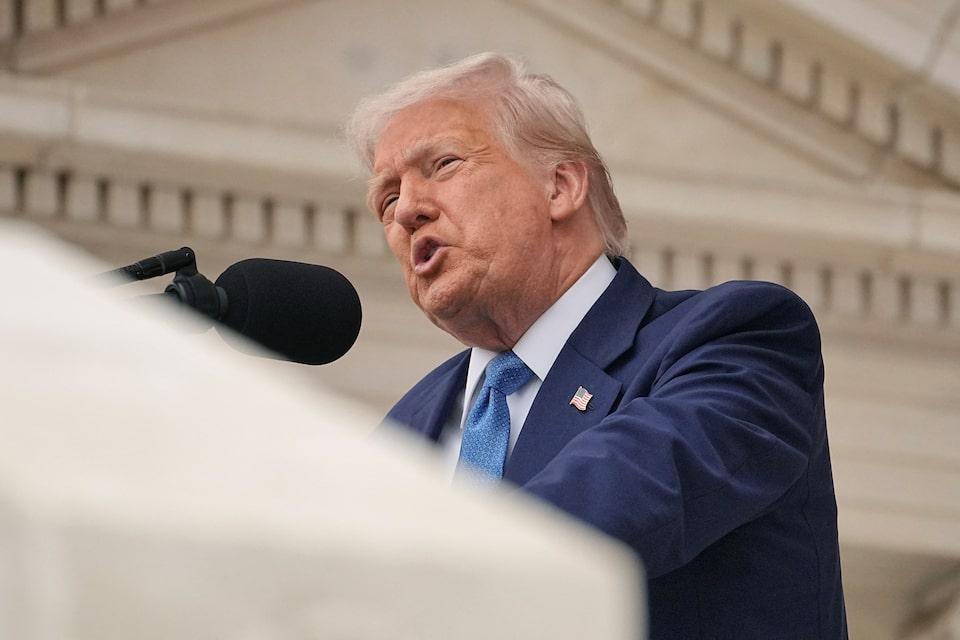
WASHINGTON, May 27 (Reuters) - U.S. President Donald Trump said on Tuesday that the U.S. government will retain its mortgage guarantees and oversight role for Fannie Mae (FNMA.PK) , opens new tab and Freddie Mac (FMCC.PK) , opens new tab as he works to take the U.S. mortgage finance firms public. "I am working on TAKING THESE AMAZING COMPANIES PUBLIC, but I want to be clear, the U.S. Government will keep its implicit GUARANTEES, and I will stay strong in my position on overseeing them as President," Trump said in a post , opens new tab on Truth Social. The United States Treasury owns preferred shares in the firms and warrants to purchase about 80% of their common stock, a holdover from a rescue during the 2008 housing loan crisis. "These Agencies are now doing very well," Trump said on Tuesday, referring to Fannie Mae and Freddie Mac. Fannie (FNMA.PK) , opens new tab, formally known as the Federal National Mortgage Association, and Freddie (FMCC.PK) , opens new tab, the Federal Home Loan Mortgage Corp., operate as for-profit firms with private shareholders. Sign up here. https://www.reuters.com/business/finance/trump-says-us-retain-oversight-guarantees-fannie-mae-freddie-mac-spinoff-2025-05-27/
2025-05-27 21:38
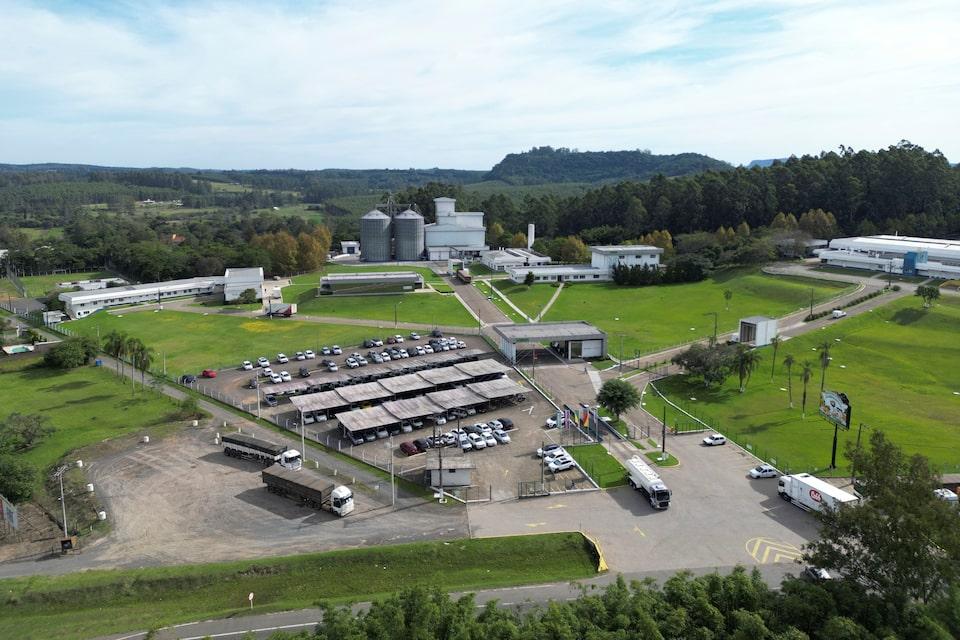
SAO PAULO, May 27 (Reuters) - Brazil identified fresh bird flu cases in wild animals, which it said should not have any commercial impact, and is investigating a new potential case on a commercial farm, Agriculture Minister Carlos Favaro said on Tuesday. Brazil, the world's largest chicken exporter, earlier this month identified a bird flu outbreak on a commercial farm in the southern city of Montenegro, triggering both nationwide and regional trade bans from dozens of countries. Sign up here. The new case on wild birds happened in the city of Mateus Leme, located in the southeastern state of Minas Gerais, data in the Agriculture Ministry's website showed. Favaro told a Senate hearing that the case should be treated as something "natural", since Brazil is rich in migratory birds, which generally transmit viruses. The minister also said that authorities were investigating a potential new case on a commercial flock in the Brazilian southern state of Rio Grande do Sul, the same state where the Montenegro outbreak had happened. The case under investigation was from a commercial farm in the city of Anta Gorda, where Brazil identified an outbreak of Newcastle disease on a poultry farm last year. Brazil is currently investigating about a dozen of potential outbreaks of highly pathogenic avian flu, but only two, including the one in Anta Gorda, are on commercial farms, data from the ministry showed. Preliminary tests had already indicated a negative result for a case under investigation on a commercial farm in the northern state of Tocantins. https://www.reuters.com/business/healthcare-pharmaceuticals/brazil-finds-bird-flu-wild-bird-investigates-potential-case-commercial-farm-2025-05-27/
2025-05-27 21:23
May 27 (Reuters) - The International Monetary Fund said on Tuesday it had reached an agreement with El Salvador to disburse about $120 million, following the first review of a $1.4 billion 40-month program. The disbursement is subject to approval by the IMF executive board. Sign up here. In February, the IMF approved the $1.4 billion extended fund facility arrangement for El Salvador. "Most program targets set for the first review were comfortably met, and implementation of the structural benchmarks is progressing well," the IMF said in a statement. In March, the country separately secured a $500 million loan from the Inter-American Development Bank to shore up its budget. https://www.reuters.com/world/americas/imf-reaches-agreement-under-first-review-14-billion-el-salvador-program-2025-05-27/
2025-05-27 21:07
ORLANDO, Florida, May 27 (Reuters) - TRADING DAY Making sense of the forces driving global markets Sign up here. By Jamie McGeever, Markets Columnist Reasons to be cheerful A tariff reprieve from U.S. President Donald Trump, a surprise bounce in U.S. consumer confidence and a slide in government bond yields sparked a rally across most markets on Tuesday, particularly U.S. assets, with Wall Street, Treasuries and the dollar all outperforming. In my column today I look at how much the dollar may need to fall if the Trump administration is to succeed in making a significant dent in the U.S. trade deficit. More on that below, but first, a roundup of the main market moves. If you have more time to read, here are a few articles I recommend to help you make sense of what happened in markets today. Today's Key Market Moves Japan spreads long bond relief Global liquidity returned to more normal levels on Tuesday as UK and U.S. markets re-opened after the long weekend, and investors mostly scooped up whatever they could get their hands on. There were good reasons to feel bullish: President Trump extending his deadline for imposing 50% tariffs on European Union goods to July 9, relief at the long end of the Japanese Government Bond market, and a spike in U.S. consumer confidence. There will be more back-and-forth in Trump's tariff pronouncements in the weeks ahead, and there is a case to make that each positive turn will deliver diminishing returns for markets. The next big deadline is July 9, when Trump's pause on his reciprocal tariffs with the rest of the world also expires. Similarly, consumer confidence in the U.S. and elsewhere is liable to be volatile, difficult to predict amid such heightened uncertainty, and susceptible to the tariff headlines of the day. That said, if Trump's tariffs deliver a one-off price shock and no lasting inflationary pressure beyond that, consumer confidence may continue to improve. Economists at Citi, for example, forecast year-end inflation of 3.2%, not too much higher than the current rate of around 2.5-2.7% and well below some of the gloomier forecasts of 4% or higher. Perhaps the most interesting market moves of the day came from Japan, where ultra-long JGB yields clocked some of their steepest one-day falls after sources told Reuters the Ministry of Finance may consider trimming issuance of long-dated paper. These yields had last week spiked to record highs on growing jitters about Tokyo's deteriorating public finances and an alarming drop off in investor demand. Tuesday's rally in JGBs spread to long-dated U.S. bonds, which have also come under heavy selling pressure on concerns about Washington's fiscal indiscipline and drawn weak demand at auction too. Analysts at Morgan Stanley on Monday recommended going outright long on 10-year Japanese Government Bonds at 1.505%, which was the yield's high that day. But they remain more cautious on the long end, despite Tuesday's rebound. A more "lasting solution" to the recent market turbulence, they argue, will require an increase in Bank of Japan purchases or less supply from the Ministry of Finance. Or both. Looking ahead to Wednesday, the global session will kick off with an expected interest rate cut in New Zealand, span a 40-year bond auction in Japan and a five-year note sale in the United States, and wrap up with chipmaker Nvidia's quarterly earnings after the Wall Street close. Historic dollar fall needed to eliminate US trade deficit If the United States is to significantly reduce or, whisper it, eliminate its trade deficit, the dollar will probably have to weaken a lot. How much is unclear, though, as history shows large dollar declines are rare and have unpredictable consequences for trade. Reducing the U.S. trade deficit is the key goal of Trump's economic agenda because he believes it reflects decades of other countries "ripping off" America to the tune of hundreds of billions of dollars annually. Stephen Miran, chair of the Council of Economic Advisers, published a paper in November titled "A User's Guide to Restructuring the Global Trading System" in which he argued that the dollar is "persistently over-valued" from a trade perspective. "Sweeping tariffs and a shift away from strong dollar policy" could fundamentally reshape the global trade and financial systems. If a weaker exchange rate is the Trump administration's goal, it is on the right track, with the greenback down nearly 10% this year on the back of growing concerns over Washington's fiscal trajectory and policy credibility, as well as the end of "U.S. exceptionalism" and the "safe haven" status of Treasuries. But it is good to remember that a 15% fall in the dollar during Trump's first term had no impact on the trade deficit, which remained between 2.5% and 3.0% of GDP until the pandemic. Making a dent in the U.S. deficit will therefore require a much bigger move. WEIGHT OF HISTORY Reducing the trade deficit will be a challenge, eliminating it without a recession, a historic feat. The United States has run a persistent deficit for the past half-century, as insatiable consumer demand has sucked in goods from around the world and voracious appetite for U.S. assets from overseas has kept capital flowing stateside. The only exception was in the third quarter of 1980, when the U.S. posted a slender trade surplus of 0.2% of GDP, and trade with the rest of the world almost briefly balanced in 1982 and 1991-92. But these periods all coincided with - or were the result of - sharp slowdowns in U.S. economic activity that ultimately ended in recession. As growth shrank, import demand slumped and the trade gap narrowed. The dollar only played a significant role in one of them. In 1987, the trade gap was a then-record 3.1% of GDP. But it had almost disappeared by the early 1990s, largely because of the dollar's 50% devaluation from 1985-87, its biggest-ever depreciation. That three-year decline was accelerated by the Plaza Accord in September 1985, a coordinated response between the world's economic powers to weaken the dollar following its parabolic rise in the first half of the 1980s. But that does not mean large depreciations always coincide with reductions in the trade deficit. The dollar's second-largest decline was a 40% fall between 2002 and mid-2008, just before Lehman Brothers collapsed. But the U.S. trade deficit actually widened throughout most of that period, peaking at a record 6% of GDP in 2005. While it had shrunk by more than three percentage points by 2009, that was due more to plunging imports during the Great Recession than the exchange rate. These two episodes of deep, protracted dollar depreciation stand out because over the past 50 years, the dollar index has only had two other declines exceeding 20%, in 1977-78 and the early 1990s, and a few other slides of 15-20%. None of these had any discernible impact on the U.S. trade balance. DEFICIT TO 'VANISH'? The U.S. administration is correct that the dollar is historically strong today by several broad measures. Given that Trump and Treasury Secretary Scott Bessent seem intent on rebalancing global trade, pressure on the greenback looks unlikely to lift any time soon. But how much would the dollar have to fall to whittle away the yawning trade deficit, which last year totaled $918 billion, or 3.1% of GDP? Hedge fund manager Andreas Steno Larsen reckons a 20%-25% depreciation over the next two years would see the deficit "vanish," while Deutsche Bank's Peter Hooper thinks a 20%-30% depreciation could be enough to "eventually" narrow the deficit by about 3% of GDP. "This means that a significant reversal of the roughly 40% appreciation of the dollar in real (price-adjusted) terms against a broad set of currencies since 2010 could be sufficient to get the current deficit back to a zero balance," Hooper wrote last week. History suggests this may be challenging without a severe economic slowdown. But that's a risk the administration seems prepared to accept. What could move markets tomorrow? Opinions expressed are those of the author. They do not reflect the views of Reuters News, which, under the Trust Principles , opens new tab, is committed to integrity, independence, and freedom from bias. https://www.reuters.com/world/china/global-markets-trading-day-graphic-pix-2025-05-27/
2025-05-27 20:46
Semi ETF options trading most defensive in 10 months Some signs of caution in Nvidia trading Some traders sell volatility in Nvidia options NEW YORK, May 27 (Reuters) - Traders in the options markets are bracing for industry-wide volatility when AI-chipmaker Nvidia (NVDA.O) , opens new tab reports results on Wednesday, with defensive options contracts on a major semiconductor ETF drawing heavy trading. For VanEck Semiconductor ETF (SMH.O) , opens new tab, the largest semiconductors ETF with some $22 billion in assets, about 2.4 put options changed hands daily over the last 10 days against every call option traded, the most defensive the trading has been in about 10 months, according to Trade Alert data. Sign up here. Call options convey the right to buy shares at a fixed price in the future while put contracts offer the right to sell the shares at a given price. "The put buying in SMH ahead of Nvidia's earnings reflects growing concern about potential volatility for the entire sector following the report," said Chris Murphy, co-head of derivative strategy at Susquehanna Financial Group. On Tuesday, some 105,000 put options changed hands against about 16,000 call options, by 3 p.m. ET (1900 GMT), Trade Alert data showed. In one notable trade, one investor last week bought 50,000 put options in SMH that would guard against the ETF's shares slipping about 10%, to below $220, by the end of May. Nvidia accounts for about a fifth of the semi ETF's assets but due to its dominance in the artificial intelligence market, the chipmaker's influence goes beyond its weight in the fund, analysts said. While investors have been focused on defensive plays in the SMH ETF, options action on Nvidia itself was more mixed, Murphy said. Murphy said investors were selling options to take advantage of heightened volatility expectations around the chipmaker's earnings, meaning they were betting the reaction to the chipmaker's results will not be overly severe. "It's been hedging in SMH while in NVDA they’re tactically monetizing elevated premiums ahead of earnings," he said. Susquehanna makes markets in the securities of Nvidia. Interactive Brokers’ list of the 25 most active securities by client orders showed Nvidia ranked second, underlining the heightened investor interest in the results. Still, the stock was only one of two names for which investors were net sellers. "That likely reflects some caution ahead of earnings after a solid run," Steve Sosnick, Interactive Brokers’ chief strategist, said in a note. Nvidia will be the last of the "Magnificent Seven" megacap tech and growth companies to report results for this period. Their stocks have been mixed in 2025 after leading the market higher as a group in the last two years. For the year, Nvidia shares are up about 0.7%, while SMH shares are up about 1.2%. https://www.reuters.com/business/semiconductor-etf-options-show-caution-ahead-nvidia-results-2025-05-27/

2025-05-27 20:44
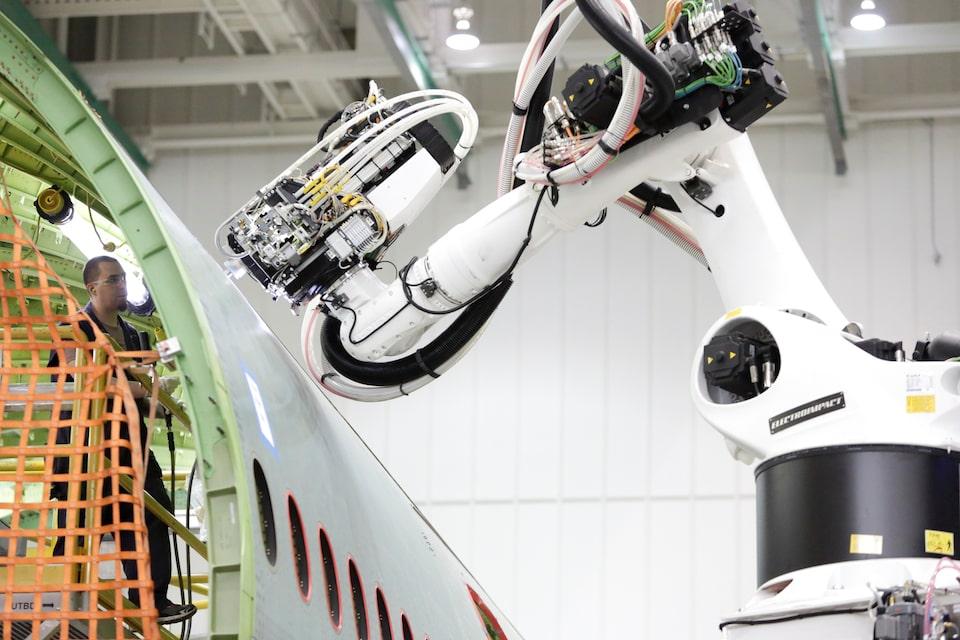
Core capital goods orders dive 1.3% in April Shipments of core capital goods dip 0.1% Durable goods orders decline 6.3% Consumer confidence improves; tariffs anxiety lingers WASHINGTON, May 27 (Reuters) - New orders for key U.S.-manufactured capital goods plunged by the most in six months in April amid mounting uncertainty over the economy because of tariffs, suggesting business spending on equipment weakened at the start of the second quarter. The report from the Commerce Department on Tuesday also showed shipments of these goods falling last month. Economists said President Donald Trump's flip-flopping on import duties was making it difficult for businesses to plan ahead. That has been evident in the deterioration in sentiment among businesses. Sign up here. "I have predicted for months that business investment will be the main driver of a softer economic performance this year, as executives postpone their capital projects until they have more clarity on policy," said Stephen Stanley, chief U.S. economist at Santander U.S. Capital Markets. "These data offer the first confirming evidence of that hypothesis." Non-defense capital goods orders excluding aircraft, a closely watched proxy for business spending plans, tumbled 1.3% last month. That was the largest drop since last October and followed an upwardly revised 0.3% gain in March, the Commerce Department's Census Bureau said. Economists polled by Reuters had forecast these so-called core capital goods orders dipping 0.1% after a previously reported 0.2% drop in March. Core capital goods shipments slipped 0.1% after increasing 0.5% in March. Nondefense capital goods orders slumped 19.1%. Shipments of these goods rebounded 3.5% after falling 1.1% in March. Front-running by businesses eager to avoid higher prices from Trump's sweeping tariffs on imports contributed to business spending on equipment, mostly information processing equipment, surging at its fastest rate in 4-1/2 years in the first quarter. That helped to limit the drag on gross domestic product from a flood of imports. Trump has delayed higher import duties on most countries until July. The White House this month announced a deal with Beijing to slash tariffs on Chinese goods to 30% from 145% for 90 days. The truce in the trade war between Washington and Beijing helped to lift consumer confidence in May after deteriorating for five straight months. Consumers, however, continued to worry about tariffs raising prices and hurting the economy. The Conference Board's consumer confidence index increased 12.3 points to 98.0 this month, blowing past economists' expectations for an improvement to 87.0. But concerns about the labor market lingered, even as consumers planned to spend more over the next six months on big-ticket items such as motor vehicles and household appliances, take vacations and buy houses. The survey's so-called labor market differential, derived from data on respondents' views on whether jobs are plentiful or hard to get, narrowed to 13.2 from 13.7 in April. This measure correlates with the unemployment rate in the Labor Department's monthly employment report. Trump last week ratcheted up his trade war, proposing a 50% tariff on European Union goods starting June 1 and threatened Apple (AAPL.O) , opens new tab with a 25% duty on any iPhones manufactured outside the United States. Trump at the weekend, however, backed off his threat against the EU, restoring a July 9 deadline. Stocks on Wall Street were trading higher. The dollar rose against a basket of currencies. U.S. Treasury yields fell. FRESH ROUND OF FRONT-LOADING Economists are anticipating a period of volatility for business spending, with the pauses in higher tariffs for Chinese and EU products seen unleashing a fresh round of front-loading. Ultimately, they expect investment to soften this year. Trump sees tariffs as a tool to, among other things, revive a long-declining U.S. industrial base, a feat that economists argue would be difficult to achieve in the short-term because of structural issues, including labor shortages. While orders for computers and electronic products rebounded 1.0% last month, bookings for communications equipment decreased 2.6%. Electrical equipment, appliances and components orders fell 0.2%. But orders for machinery increased 0.8% as did those for fabricated metal products. Orders for durable goods, items ranging from toasters to aircraft meant to last three years or more, dropped 6.3% last month after a slightly upwardly revised 7.6% rise in March. Durable goods orders were previously reported to have jumped 7.5% in March. They were last month weighed down by a decline in orders for commercial aircraft as well as the fading boost from the tariff-related front-running. Boeing (BA.N) , opens new tab reported on its website that it had received only eight aircraft orders in April, down from 192 in March. Orders for motor vehicles and parts decreased 2.9%. Overall transportation orders plummeted 17.1% after soaring 23.5% in March. The Atlanta Federal Reserve lowered its second-quarter GDP growth estimate to a 2.2% annualized rate on the data from a 2.4% pace earlier. The economy contracted at a 0.3% rate in the January-March quarter. Some economists expect business spending on equipment to hold up if companies more or less maintain the first quarter's robust pace of front-running of imports. "It is not until this import-driven boost fades later this year that we expect investment growth in that category to slow sharply," said Thomas Ryan, an economist at Capital Economics. "We expect business equipment investment to flatline in the second half of the year." The tariff-driven economic uncertainty and higher mortgage rates are weighing on demand for homes, resulting in a rise in supply that is curbing house price growth. New housing inventory is at levels last seen in 2007, while the supply of previously owned homes is the highest in more than four years. A third report from the Federal Housing Finance Agency showed house prices increased 3.7% in the 12 months through March after advancing 3.9% in February. "Prospects for house prices do not look strong," said Carl Weinberg, chief economist at High Frequency Economics. "A new slowing trend is emerging as the economy slows and real incomes falter." https://www.reuters.com/business/aerospace-defense/us-core-capital-goods-orders-tumble-april-2025-05-27/