2025-05-27 17:03
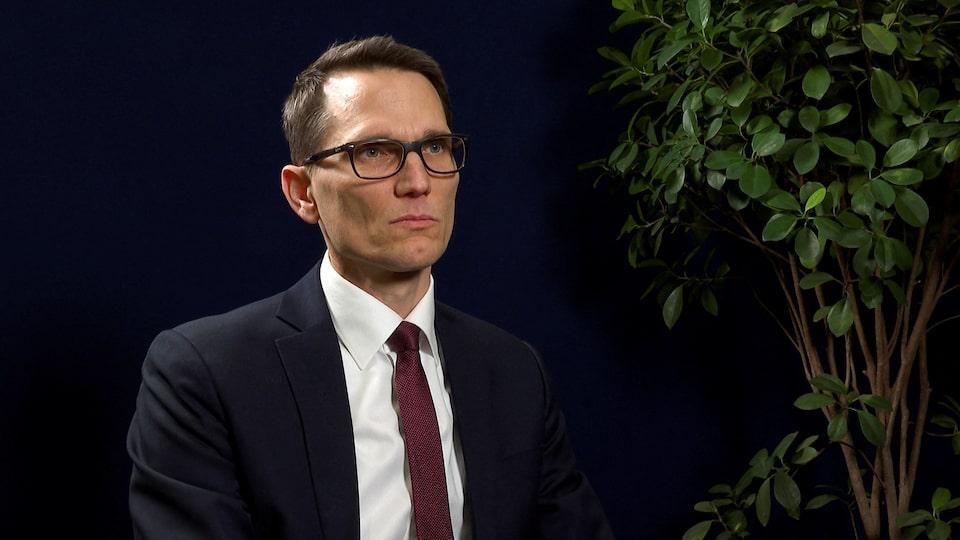
BASEL, Switzerland, May 27 (Reuters) - Swiss inflation could enter negative territory in the coming months, but this will not necessarily trigger a reaction by the Swiss National Bank, SNB Chairman Martin Schlegel said on Tuesday. The SNB will not be guided by inflation data for individual months, but instead look at maintaining price stability over the medium term, Schlegel told an event in Basel. Sign up here. "Even negative inflation figures cannot be ruled out in the coming months," he said. "The SNB does not necessarily have to react to this. Our focus is not on the current rate of inflation, but rather on price stability over the medium term." Swiss inflation eased to 0% in April, at the bottom end of the SNB's 0-2% target range, which it calls price stability. The figure, the lowest reading for four years, has fuelled market expectations the SNB will cut its benchmark rate from the current 0.25% at its next monetary policy meeting on June 19. Markets currently price in a 75% probability the SNB will cut the rate 25 basis points to zero. They give a 25% chance the central bank will go for a 50 basis point cut to minus 0.25%. By focusing on the medium term rather than short term peaks and troughs, the SNB could act with a "steady hand" in deciding monetary policy, the SNB chairman said. However, the bank would not hesitate to act if necessary, he said, with the SNB's policy rate its main tool. Currency market interventions could also be an important instrument, he added. Schlegel also said trade uncertainties are currently high due to the tariff policies pursued by the U.S. government. https://www.reuters.com/business/finance/swiss-inflation-could-go-negative-snb-focused-medium-term-schlegel-says-2025-05-27/
2025-05-27 16:40
BEIJING, May 27 (Reuters) - The Shanghai Futures Exchange (ShFE) released draft proposals on Tuesday to further open up domestic futures to overseas investors and brokers as part of an effort to help internationalise the renminbi. China is the world's largest consumer of industrial metals by far, but much of the trade is priced by overseas benchmarks. ShFE has long been working on plans to build its global presence and challenge the dominance of the rival London Metal Exchange (LME). Sign up here. The 34 different proposals , opens new tab, which stretch from options trading and hedging to tin futures, aim to "fully introduce overseas participants" and help internationalise the renminbi, the exchange said. "This announcement is basically a constitutional change for the entire ShFE opening up," said Tiger Shi, CEO of broker BANDS Financial. "Access for foreign investors to all the ShFE products is on a fast track from now on." The changes under consideration include allowing foreign brokers and other traders directly onto the exchange, instead of through an onshore intermediary, as is the case today. Participants would also be allowed to post margins in foreign currencies such as the U.S. dollar. Draft rule changes covering futures for 18 products including alumina, nickel and copper cathodes, are available for public comment until June 4. "We are excited by the opportunities it presents particularly given the importance of spreads and particularly arb (arbitrage), which has garnered greater exposure amid the threat of tariffs and particularly between CME and LME copper," said Alastair Munro, senior metals strategist at Marex. London-headquartered Marex is one of eight financial firms allowed to trade on the LME's open-outcry floor. "That presents opportunities particularly on the likes of nickel where those price differentials at points present trading opportunities," Munro added. Reuters reported last week that ShFE was considering opening its domestic nickel futures contract to foreign investors this year, instead of launching a separate contract on its International Energy Exchange. The LME is the world's biggest marketplace for industrial metals and dominates global nickel trading, but market confidence was shaken in 2022. In March that year, the nickel price rocketed to a record above $100,000 a metric ton and the LME cancelled nickel trades on March 8, for which it was sued by hedge fund Elliott Associates. The LME did not immediately respond to a request for comment. https://www.reuters.com/markets/commodities/shanghai-futures-exchange-open-wider-foreigners-bid-internationalise-renminbi-2025-05-27/
2025-05-27 16:14
ATHENS, May 27 (Reuters) - Kosovo has lost out on more than 600 million euros of external funding relating to environmental protection and energy projects among others, since the European Union imposed sanctions in 2023, according to a report by the GAP Institute think tank. Kosovo's government disputes the sum, but the report, by a local body, gives one of the first independent assessments of the impact on one of Europe's poorest countries of sanctions for its role in stoking ethnic tensions in its Serb-majority north. Sign up here. "The measures ... have resulted in significant financial and developmental consequences, costing Kosovo around 613.4 million euros in suspended or indefinitely delayed projects," the GAP Institute said in its report. The affected funds relate to various financial instruments that have helped Kosovo's development since it gained independence from Serbia in 2008. The most-hit sectors are environment and energy, where more than 460 million euros have been stalled, the report said. That represents a big blow for a country that desperately needs to reduce its reliance on coal-fired power generation. Earlier this year, Reuters identified at least 150 million euros in stalled funds. The EU has not publicly said how much is delayed. Kosovo's government disputes both figures. Apart from 7.1 million euros that it says have been lost due to contracts expiring, the funds "are neither lost nor at risk" because they will resume when sanctions are lifted, a spokesperson told Reuters on Tuesday. The EU's foreign policy chief Kaja Kallas said last week that the bloc would begin to "gradually" lift the sanctions, on the condition that Kosovo de-escalate tensions in the north. A senior diplomat told Reuters that the EU would begin to provide technical assistance for EU-funded projects in the next few weeks but that there was currently no plan to disburse funds. Kosovo is not recognised as a state by some EU members, which makes lifting the sanctions more difficult. The gradual lifting "is not very substantial and it is very unlikely that the EU can move forward with funding," the diplomat said. Kosovo has aspirations to join the EU. However, that process has also been hobbled by Prime Minister Albin Kurti's role in raising tensions in the north by systematically closing Serb-run institutions, banning the use of the Serbian dinar within its borders, and choking trade. https://www.reuters.com/business/environment/eu-sanctions-cost-kosovo-600-mln-euros-stalled-funds-says-think-tank-2025-05-27/

2025-05-27 15:42
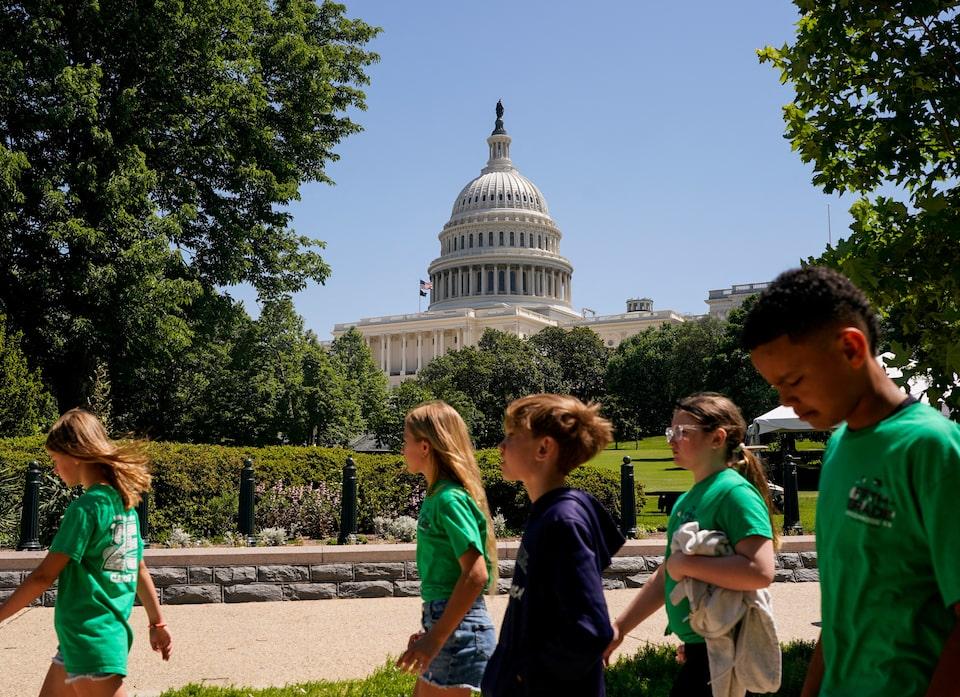
Investors weigh the potential of tax cuts to spark economic growth against deficit concerns Senate debate may increase price tag of fiscal measures, market participants say Heightened deficit concerns come on heels of Moody's downgrade May 23 (Reuters) - Investors are fearing that projections for the U.S. debt mountain could increase further when a sweeping tax and spending bill goes through the Senate, with the risk that bond yields stay higher for longer. Markets have been sensitive to the deteriorating U.S. debt profile, exacerbated by Moody's downgrade of the U.S. sovereign credit rating on May 16. Long-dated bonds have been especially hurt by deficit concerns, with investors delivering a tepid response to a 20-year auction and sending the 30-year bond yield to its highest level since October 2023. Higher bond yields can translate into higher borrowing costs for consumers, businesses and governments. Sign up here. "The concern is that as the bill winds its way through the Senate, spending cuts will get whittled down, stimulus will be added and the deficit will show even more growth," said Brian Nick, chief investment officer at NewEdge Wealth, who sees that translating into higher bond yields and a steeper yield curve. The House of Representatives' version of the tax bill is calculated to add about $3.8 trillion to the federal government's $36.2 trillion in debt over the next decade, according to the Congressional Budget Office. After passing a House vote on Thursday, the bill heads to the Senate, where members are expected to begin work on it after next week's Memorial Day recess. Some of the bill's provisions will be welcome to Republican voters, but senators are still expected to push for changes. “The Senate will be less keen to include deep spending cuts and the longer the debate continues, the more likely the price tag goes up,” said Christopher Hodge, chief U.S. economist at Natixis. President Donald Trump has said he wants a final bill on his desk by July 4. However, if it takes longer, it increases the risk that softer economic data will make spending cuts still more unpopular among senators, Nick said. To be sure, investors see an uplift to growth from the tax cuts as well as the tariff revenues, which they are balancing in their investment decisions. Trump and his team, including White House Press Secretary Karoline Leavitt, have emphasized the $1.6 trillion in outright spending cuts when asked about the potential impact on the deficit of the fiscal bill. Top Republicans have argued that tax cuts will pay for themselves by stimulating higher economic growth and generating $2.5 trillion in new revenue over a decade. “The American people voted for President Trump to restore fiscal sanity to our government – and by securing the largest deficit reduction in 30 years, the largest tax cut for middle and working-class Americans in history, and $1.6 trillion in savings, the One, Big, Beautiful Bill delivers," said Anna Kelly, a White House spokeswoman. "This President is restoring accountability to taxpayers, and everyone from Main Street to Wall Street will benefit." Some specific winners are seen from the changes. A research note from Morgan Stanley said the tax bill is expected to benefit companies with elevated capital expenditure and revenue in the U.S. and said specific sectors it sees as having uplift are industrials, communications services and energy. Morgan Stanley also estimated that tariffs could generate $2 trillion of revenue over 10 years, although it emphasized that this could change as trade talks are ongoing. Naomi Fink, chief global strategist at Nikko Asset Management, said that the tax cuts may be intended to stimulate demand, although she added, "if they don't do that faster than they drive up government debt funding costs, it won't work." HOUSE BILL DRAWS SKEPTICISM Some investors were disappointed about the version of the bill so far. Mohit Mittal, chief investment officer for core strategies and a managing director at PIMCO, said investors had expected more in the way of spending cuts. "Over the next 10 years, the final bill is probably going to end up being ... $50 (billion) to $75 billion higher per year than what the market was anticipating," he said. Steve Sosnick, chief strategist at Interactive Brokers, said in a note to clients on Thursday that the last thing global bond markets wanted to see was "legislation that risks creating larger budget deficits in the world’s largest economy." Still, that does not mean that bond investors are shunning the rich yields offered by those longer bonds, although many now demand higher yields. "As a long-term investor, that (steeper yield curve) slope is attractive," said Thanos Bardas, senior portfolio manager of investment grade fixed income at Neuberger Berman, who believes bond investors will rely on yields for their returns in the coming months. Other investors also are eying longer-term bonds. Paul Karger, co-founder and managing partner of TwinFocus, said his team has increasingly been adding to their holdings in recent days and weeks. But Mike Reynolds, chief investment strategist at Glenmede, believes yields still have not reached levels where it makes sense to become a buyer. Investors will be closely monitoring the impact of both the House bill and the looming Senate debate on financial markets, which may in turn filter back to members of Congress and play a role in shaping the bill's final version. "Lawmakers pay closer attention to voters and polls than they do the financial markets," Brian Gardner, chief Washington policy strategist at Stifel Financial, said in a note to clients on Thursday. He added, however, that lawmakers also notice when market movements create higher lending rates for consumers. U.S. senators, he said, "will be watching signals from Wall Street." https://www.reuters.com/business/finance/investors-see-worsening-us-deficit-outlook-tax-bill-heads-senate-2025-05-23/
2025-05-27 14:26
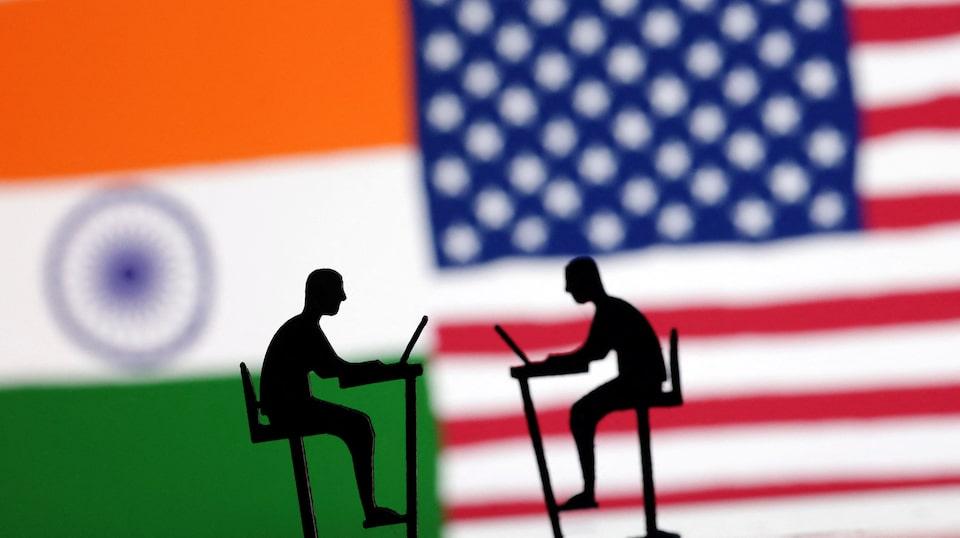
May 27 (Reuters) - A successful trade agreement between India and the U.S. could boost exports and unlock new market access, India's finance ministry said in its monthly economic review on Tuesday. "A successful U.S.-India trade agreement could flip current headwinds into tailwinds, opening up new market access and energising exports," the report said. Sign up here. Indian Trade Minister Piyush Goyal visited Washington last week to advance trade talks, with both sides aiming to sign an interim agreement by early July. New Delhi is seeking to clinch a trade deal with the U.S. within the 90-day pause on tariff hikes announced by U.S. President Donald Trump on April 9 for major trading partners, which includes a 26% tariff on imports from India. The U.S. is India's largest trading partner, with bilateral trade totalling about $129 billion in 2024. The trade balance is currently in favour of India, which runs a $45.7 billion surplus with the United States. The finance ministry report also said that the government's direct tax exemptions, fiscal measures and recent rate cuts from the central bank could accelerate the recovery and lift growth towards the upper end of forecasts of 6.3% to 6.8% in the current fiscal year. Government capital spending is playing a "pivotal role" in supporting economic activity, and shielding the economy from global shocks, the report said, noting that personal income tax cuts and the recent rate reduction by the central bank are also expected to spur consumption and private investment. India has the potential to remain as one of the most promising destinations for investment amid ongoing global uncertainty, it said. The report added that the Indian rupee has remained relatively stable and that foreign exchange reserves continue to provide a cushion against external shocks. https://www.reuters.com/world/india/successful-us-india-trade-deal-could-energise-exports-indian-finance-ministry-2025-05-27/
2025-05-27 14:15
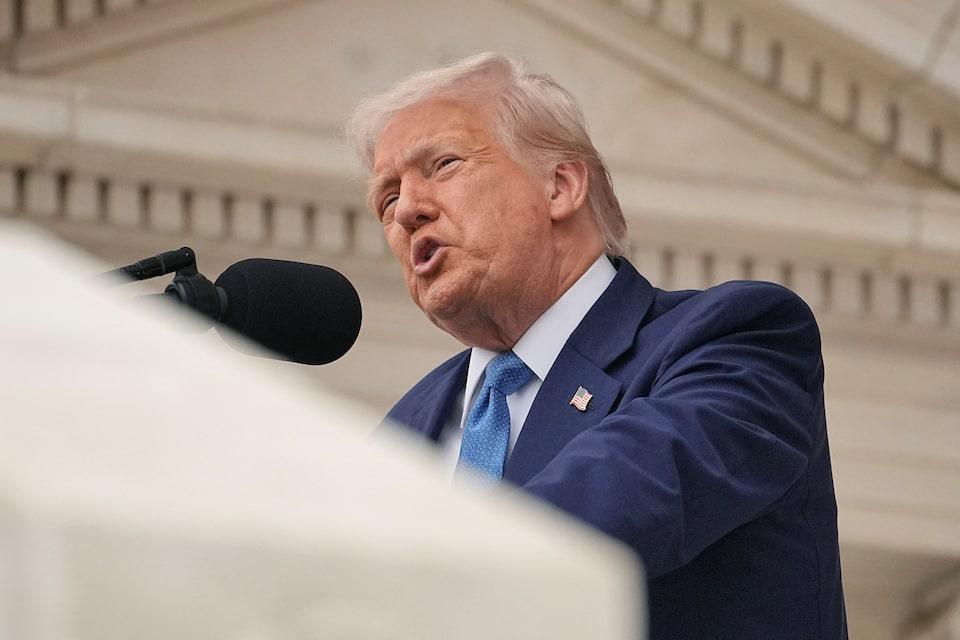
WASHINGTON, May 27 (Reuters) - U.S. President Donald Trump on Tuesday said the EU's move to set up talks was positive and that he hoped Europe would "open up" to trade with the U.S. even as he reiterated his threat to unilaterally impose trade terms if no agreement emerges. "I have just been informed that the E.U. has called to quickly establish meeting dates. This is a positive event, and I hope that they will, FINALLY, like my same demand to China, open up the European Nations for Trade with the United States of America," Trump wrote on his social media platform. Sign up here. "Remember, I am empowered to “SET A DEAL” for Trade into the United States if we are unable to make a deal, or are treated unfairly," he added. Trump's latest comments come after he backtracked over the weekend and dropped his threat on Friday to impose 50% tariffs on European Union imports as Wall Street opened higher Tuesday morning. U.S. and EU trade representatives had been due to hold talks on Monday as European policymakers gauge the bloc's companies plans for American investments. https://www.reuters.com/business/autos-transportation/trump-says-eu-call-set-up-trade-meetings-is-positive-2025-05-27/