2025-05-26 13:39
JERUSALEM, May 26 (Reuters) - The Bank of Israel left short-term interest rates unchanged for an 11th straight meeting on Monday, saying high inflation remains the chief concern while economic activity continues to recover moderately despite the war in Gaza. The central bank kept its benchmark rate (ILINR=ECI) , opens new tab at 4.50%. Sign up here. "In view of the continuing war, the Monetary Committee’s policy is focusing on stabilizing the markets and reducing uncertainty, alongside price stability and supporting economic activity," it said. It added the rates path would be based on "the convergence of inflation to its target, continued stability in the financial markets, economic activity, and fiscal policy". With taxes and electricity and water prices rising at the start of this year and airfares increasing last month as foreign airlines cancel flights to Tel Aviv, the annual inflation rate (ILCPIY=ECI) , opens new tab gained to 3.6% in April - above expectations of 3.1% - from 3.3% in March and remained above the government's 1%-3% annual target. "In the Committee’s assessment, there are several risks for a possible acceleration of inflation or for it not converging to the target range: geopolitical developments and their impact on economic activity, supply constraints, worsening global terms of trade, and volatility of the shekel," the central bank said. After the decision, Israel's shekel was 1.1% stronger versus the dollar and is up 2.1% this month. The Bank of Israel reduced the rate by 25 basis points in January 2024 after inflation eased and economic growth slowed amid the Gaza war, but has kept policy steady since and said it was in no rush to ease again while inflation remained above target. Based on bond yields, financial markets still expect inflation to ease to 1.8% in the coming year, according to Bank of Israel data. They also expect two rate cuts later in 2025 as projected by the central bank's own economists. In keeping rates steady, the Bank of Israel also cited economic activity rebounding moderately and a tight labour market, which has started to moderate. It mentioned the risk premium - as measured by the 5-year credit default swap price and by the spreads on dollar-denominated government bonds - had declined but remains above prewar levels. The economy grew by an annualised 3.4% in the first quarter after a 1% expansion for all of 2024 due to the war. All 14 analysts polled by Reuters had expected no rate move on Monday. https://www.reuters.com/world/middle-east/bank-israel-keeps-rates-hold-after-april-inflation-rise-2025-05-26/

2025-05-26 12:52
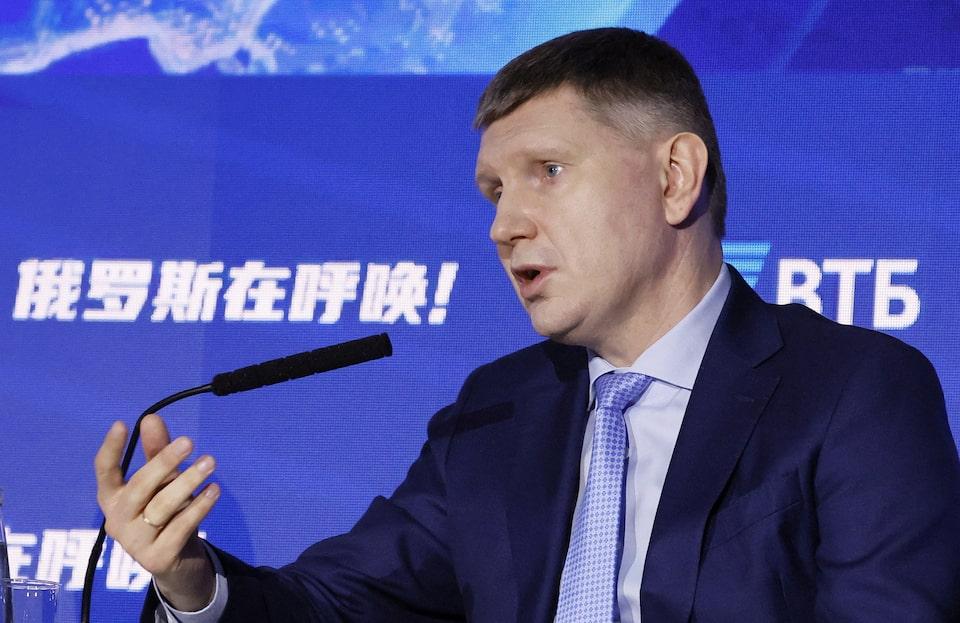
Minister urges central bank to consider slowing inflation Russia's key interest rate held at 21% since October Bank of Russia to next set interest rates on June 6 MOSCOW, May 26 (Reuters) - Russia's economy is facing "hypothermia" risks, Economy Minister Maxim Reshetnikov said on Monday as he urged the central bank to take slowing inflation into account when it meets to set interest rates next week. Grappling with stubbornly high inflation, Russia's central bank has kept its key interest rate at 21% since October, a stance that has stifled investment just as the economic support provided by soaring military spending starts to decline. Sign up here. Russian authorities usually present a united front on policy matters, but high interest rates, hefty budget spending and the efficacy of capital controls have all led to public disagreements in the last few years. Sometimes the Kremlin gets involved. In August 2023, the central bank made an unscheduled, 350-basis-point rate hike the day after receiving a public rebuke from President Vladimir Putin's then economic adviser Maxim Oreshkin, blaming what he called its soft monetary policy for weakening the rouble. Then in March this year Putin urged his economic officials not to freeze the Russian economy as if it were in a "cryotherapy chamber" with high borrowing costs, which many analysts interpreted as a call to start an easing cycle. Reshetnikov, speaking on Monday in the State Duma, Russia's lower house of parliament, said that inflation in recent weeks had been in the 3-4% range when recalculated in annual terms. "We expect that May data will consolidate this trend and we of course expect that the central bank will duly take this into account when taking decisions because we also see risks of economic hypothermia in the current regime," Reshetnikov said. The ministry forecasts annual inflation for 2025 at 7.6%, an estimate that Reshetnikov described as "realistic". Major Russian exporters including Rusal and Gazpromneft have cut the planned volume of commodities such as metal and oil products they send by rail, a Russian Railways document seen by Reuters showed last week, demonstrating the real-world impact of subdued demand as the country's economy slows. Many businesses in the industrial sector have complained of prohibitive borrowing costs and some have scaled back investment plans. The economy ministry forecasts economic growth of 2.5% this year, compared with a central bank prediction of 1-2%. The central bank's next rate-setting meeting is scheduled for June 6. https://www.reuters.com/markets/asia/russias-cooling-economy-facing-hypothermia-risks-minister-warns-2025-05-26/
2025-05-26 11:55
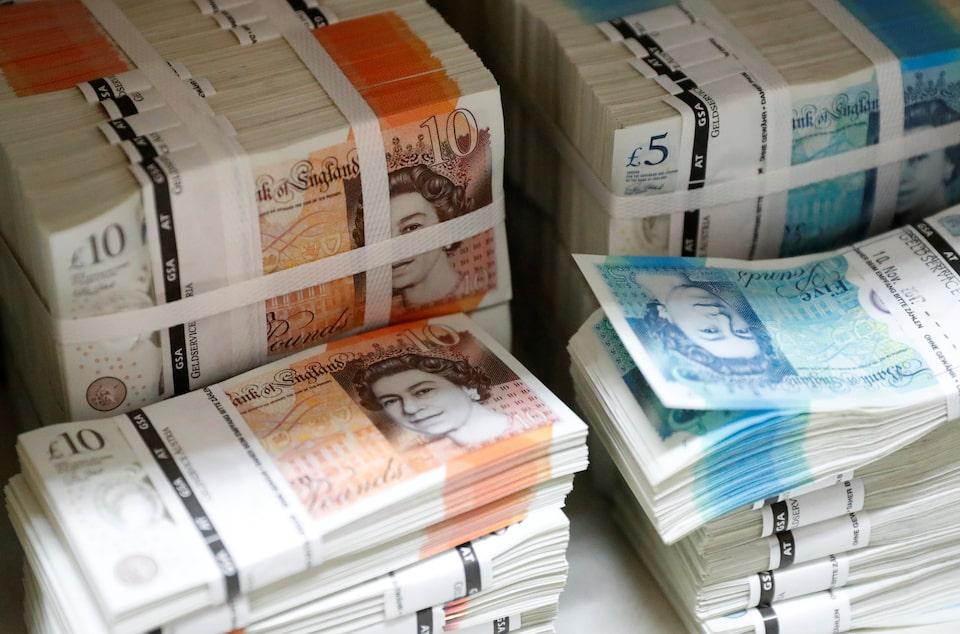
LONDON, May 26 (Reuters) - The pound edged up on Monday to trade around its highest since early 2022, as the dollar came under broad pressure following another abrupt reversal in trade policy by U.S. President Donald Trump that gave investors a fresh dose of uncertainty. On Friday, Trump sent a shiver through global markets by threatening a 50% tariff on all European Union imports into the U.S. from June 1, reigniting concern about the impact of U.S. trade policies on the underlying economy. Sign up here. By Sunday, he had reversed tack, pushing the deadline for tariffs to July 9 from June 1, after European Commission President Ursula von der Leyen told him on the telephone that the 27-nation bloc needed more time to produce a deal. The EU said on Monday the call at the weekend had given "new impetus" to trade talks. Even though Britain has a deal in place with the U.S., the pound has been caught up in the relief rally in non-U.S. assets. Sterling was up 0.13% at $1.3558, having touched a session high of $1.359, its highest since February 2022. Trading volumes were likely to be lighter than usual given public holidays on Monday in both Britain and the United States. The pound has gained more than 8% so far this year against the dollar, its strongest performance in the first five months of the year since 2009, when the world was emerging from the global financial crisis. Much of that has been down to the fact that persistent inflation and relatively steady growth in Britain mean traders believe the Bank of England will not be able to cut interest rates as quickly as other central banks. At Friday's close, traders were pricing in the prospect of just 41 basis points' worth of rate cuts by year-end, equivalent to one quarter-point cut and a roughly 50% chance of a second. By contrast, they are almost fully pricing in the chance of two more rate cuts from both the U.S. and euro zone central banks. "The pound is enjoying strong momentum but the move is starting to look a bit stretched," analysts at BBVA said in a note on Monday. Against the euro , the pound held steady at 83.95 pence. https://www.reuters.com/world/uk/sterling-touches-new-2022-high-trump-eu-tariff-reversal-dents-dollar-2025-05-26/
2025-05-26 11:40
MUMBAI, May 26 (Reuters) - India, the world's largest milk producer, must protect millions of small dairy farmers in its trade talks with the United States to avoid market disruption from any surge in U.S. imports, industry officials said. India is negotiating a comprehensive bilateral trade agreement with the United States after Washington imposed reciprocal tariffs including a 26% duty on Indian goods, later paused for 90 days. Sign up here. The United States, whose dairy exports reached $8.22 billion last year, is pushing for greater access to India's dairy market, which remains shielded by high import duties and non-tariff barriers. "It is necessary that we do not give them very cheap access to our markets," said Jayen Mehta, managing director of the Gujarat Co-operative Milk Marketing Federation Ltd (GCMMF), which owns Amul, a household name and the country's largest dairy brand. "They are intended to dump their surplus in our country, which we cannot afford," Mehta said. The average herd size in India is only two to three animals per farmer, compared to hundreds in the United States - a difference that puts small Indian farmers at a disadvantage, industry officials say. India's dairy sector feeds more than 1.4 billion people and provides livelihoods to 80 million farmers, making it critical that trade negotiations do not harm milk producers, most of whom are rural poor, Mehta said. India accounts for nearly a quarter of global milk production, with output reaching 239 million metric tons, more than double U.S. output of around 103 million tons. The Indian dairy industry is valued at $16.8 billion. New Delhi has previously excluded the dairy sector from bilateral trade agreements and will continue to protect it, as the government recognises its role in supporting small farmers, said R.S. Sodhi, president of the Indian Dairy Association. The country's dairy industry should also be protected due to cultural and dietary considerations, as cattle in the United States are often fed feed containing animal by-products, which does not align with Indian consumer preferences, Sodhi said. A senior official at the federal trade ministry said India is resisting pressure from the United States to open its dairy sector in the current bilateral trade talks. India will not surrender under any circumstances, and the dairy sector will continue to enjoy protection, said the official, who did not wish to be named since the deliberations were not public. Dairy farmers say they need government protection. "The government needs to make sure we're not hit by cheap imports from other countries," said farmer Mahesh Sakunde from the western state of Maharashtra. "If that happens, the whole industry will suffer, and so will farmers like us." https://www.reuters.com/world/india/indias-dairy-sector-pushes-safeguards-us-trade-talks-2025-05-26/

2025-05-26 11:37
NICOSIA, May 26 (Reuters) - Cyprus has received 13 mobile desalination units from the United Arab Emirates, delivered free of charge to help the island deal with a severe water shortage just ahead of the water-intensive tourism season. Cyprus has four large desalination plants with a combined daily water production capacity of about 220,000 cubic metres. Sign up here. The UAE will supply it with 14 mobile desalination units under a bilateral deal, boosting its daily production capacity by about 15,000 cubic metres. While the mobile units are a valuable addition in tackling the water crisis, the situation remains challenging, Agriculture Minister Maria Panayiotou said. "This shouldn’t make us complacent. People must still use water sparingly," she said as she thanked the UAE for dispatching the units within a matter of weeks. Although Cyprus has a widespread reservoir network, it has increasingly relied on desalination in recent decades to offset declining rainfall. As of Monday, the country's 18 largest reservoirs were only 21.7% full, according to official data. https://www.reuters.com/sustainability/boards-policy-regulation/cyprus-receives-mobile-desalination-units-uae-tackle-water-crisis-2025-05-26/

2025-05-26 11:05
BEIJING, May 26 (Reuters) - Chinese customs are holding up some shipments of lower-performance rare earth magnets used in appliances and consumer electronics because of confusion over how to apply Beijing's export curbs, according to three sources. Rare earth magnets blend elements from the family of 17 elements and the mix determines performance. High-performance types go into cars, wind turbines and fighter jets with weaker ones used in consumer electronics and household appliances. Sign up here. However, China's customs website only lists a single code for rare earth magnets, despite their different chemistries. When Beijing restricted exports of several high-performance types along with other rare earths in April, it excluded some low-performance ones. Customs officials have nonetheless barred at least two shipments because they share the same code identifier, said two sources familiar with the matter. The shipments had still not left China even after the exporters provided documents showing there were no curbs on the types of magnets involved, said the sources who spoke on condition of anonymity, as the matter is a sensitive one. China's commerce ministry and customs did not respond to Reuters request for comment. European auto parts and appliance maker Bosch said bottlenecks in the supply of rare earths key for both electric motors and consumer goods were affecting its suppliers, who had to furnish a lot of detailed information to get export licences. "The process for our suppliers to apply for export licences for various rare earths ... since April, is complex and time-consuming, partly due to the need to collect and provide a lot of information," a Bosch spokesperson said. Not all exports are affected by the customs delays, however, with officials of appliance makers Electrolux and Smeg both telling Reuters they were not facing issues. Customs data shows China's exports of permanent magnets fell 51% to 2,626 tons in April, the first month of data following the curbs. Exports were 15,267 tons in the year's first quarter. https://www.reuters.com/markets/commodities/chinese-customs-caution-slows-some-rare-earth-magnet-exports-sources-say-2025-05-26/