2025-05-26 11:01
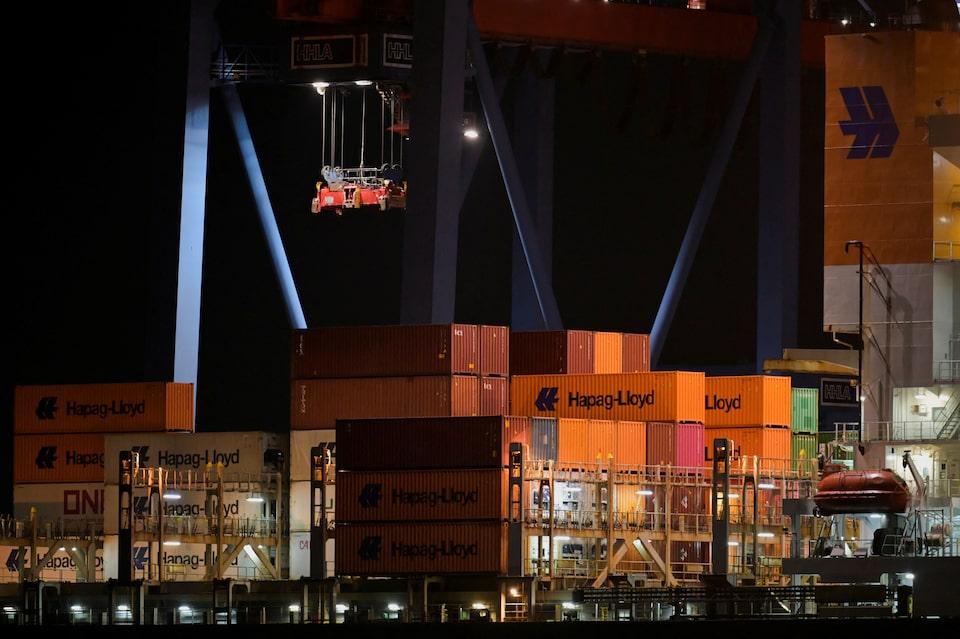
May 23 (Reuters) - U.S. President Donald Trump on Friday once again threatened to ramp up his trade war, recommending a 50% tariff on European Union goods starting June 1, sending European stocks tumbling. The United States was the trading bloc's biggest export partner in 2024, making up 20.6% of exports, according to Eurostat. Sign up here. Medicinal and pharmaceutical products were the EU's most exported group to the U.S in 2024, followed by motor vehicles and aircrafts and associated equipment, according to the data. The three largest exporters to the United States in the EU were Germany, which exported 161 billion euros ($182.62 billion) worth of goods, Ireland, at 72 billion euros, and Italy, at 65 billion euros. Below is an overview of the biggest EU exports to the U.S. by sector: MEDICATION AND PHARMACEUTICALS The EU exported around 120 billion euros worth of pharmaceutical products and medicaments to the U.S in 2024, according to Eurostat data. Although the Trump Administration initially spared pharmaceutical products from reciprocal tariffs on "Liberation Day", it was not immediately clear if the industry would continue to be shielded from them after Trump's statement on Friday. Some of the EU’s top pharmaceutical companies are - Novo Nordisk (NOVOb.CO) , opens new tab - Bayer (BAYGn.DE) , opens new tab - Roche (ROG.S) , opens new tab - Novartis (NOVN.S) , opens new tab AUTOMAKERS The U.S. was the second largest market for EU car exports accounting for 22% of EU vehicle exports in 2024 in terms of value, according to figures from auto industry group ACEA. Automakers including Mercedes-Benz (MBGn.DE) , opens new tab, Stellantis (STLAM.MI) , opens new tab and Volvo Cars (VOLCARb.ST) , opens new tab have pulled their 2025 financial guidance, citing the uncertainty caused by U.S. trade policy. German Volkswagen Group is highly exposed to the tariffs, as its premium brand Audi does not manufacture in the U.S., though it has said it plans to announce a location to build some of its top-selling models in the market this year. AIRCRAFT AND AIRCRAFT EQUIPMENT Toulouse-based Airbus is France's second-biggest exporter and delivers some 12% of its jets to the United States, some of which are assembled locally, according to Cirium data. Among the biggest supplier to Airbus and Boeing is CFM International, the world's largest engine maker by volume, co-owned by France's Safran (SAF.PA) , opens new tab, and GE Aerospace (GE.N) , opens new tab. ENGINES, MOTORS AND MOTOR VEHICLE PARTS Alongside cars and planes, the European Union also delivers a lot of car parts and engines into the U.S. Companies potentially affected by tariffs could include MTU Aero Engines, which besides manufacturing military aircraft engines also repairs and maintains commercial engines. Some European companies manufacturing car parts including engines and motors: - Steyr Motors (4X0.VI) , opens new tab - MTU Aero Engines (MTXGn.DE) , opens new tab - DEUTZ (DEZG.DE) , opens new tab ALCOHOL Of the around 9 billion euros worth of alcoholic beverages that the EU supplies to the U.S., European spirits made up 2.9 billion euros in 2024, according to trade group spiritsEurope. U.S. spirits companies are also invested in Europe and throughout the sector's supply chain, so hurting them puts jobs at risk, SpiritsEurope had told Reuters in March. Some of the biggest European alcohol producers include: - Dutch brewer Heineken (HEIN.AS) , opens new tab - British spirits maker Diageo (DGE.L) , opens new tab, owner of many European brands - Beer maker Carlsberg (CARLb.CO) , opens new tab COSMETICS Exports of perfumes, essential oils, cosmetics, and toiletries to the United States was made up of $10.47 billion in 2024, according to the United Nations Comtrade database. Of this, French cosmetics exports to the U.S., from the likes of L'Oreal (OREP.PA) , opens new tab, make up about 2.5 billion euros per year. LUXURY The sector's largest groups sell roughly a quarter of their products to U.S. consumers, while exposure among smaller brands varies, from 14% at outerwear company Moncler to 46% at sandals-maker Birkenstock. France's luxury industry - the world's largest - employs over 600,000 people, data from the economy ministry shows. The two countries are the largest exporters of most luxury products to the United States. S&P analysts cited the luxury sector in a recent note as one of those most exposed to U.S. tariffs, as companies have only limited ability to move production to the United States. ($1 = 0.8816 euros) https://www.reuters.com/business/autos-transportation/eus-top-exports-most-vulnerable-trumps-new-tariffs-2025-05-23/
2025-05-26 10:56
GENEVA, May 26 (Reuters) - Less than 5% of Gaza's cropland can be cultivated due to damage and access restrictions, "exacerbating the risk of famine in the area", according to a U.N. assessment published on Monday. "This level of destruction is not just a loss of infrastructure – it is a collapse of Gaza's agrifood system and of lifelines," said Beth Bechdol, Deputy Director-General of the Food and Agriculture Organization which produced the assessment alongside the U.N. Satellite Centre. Sign up here. Before the Israel-Hamas war began over 19 months ago, Gazan farmers cultivated a range of crops including citrus fruits, dates and olives, despite the area being among the most densely populated in the world. Now, half a million people face starvation, according to a global hunger monitor, amid Israeli restrictions on food imports after an 11-week blockade. In total, just 688 hectares, or 4.6% of the total, is available for cultivation, the U.N. assessment said. It showed that more than 80% of Gaza's cropland had been damaged in the war. A total of 77.8% is not accessible, the statement said, based on a U.N. assessment of Israeli restricted sites and evacuation orders. The report found that nearly three-quarters of greenhouses had been damaged in the war and over 80% of wells, according to the assessment based on high-resolution satellite imagery. It described the situation as "particularly critical" in the southern area of Rafah and in the northern areas where nearly all cropland is inaccessible, the statement said. https://www.reuters.com/business/environment/less-than-5-gazas-cropland-is-useable-un-assessment-shows-2025-05-26/

2025-05-26 10:48
MILAN, May 26 (Reuters) - Italy's biggest utility Enel (ENEI.MI) , opens new tab has signed a swap deal with U.S. Gulf Pacific Power covering some wind farm assets which will boost its net consolidated green capacity in the United States by 285 megawatts, it said on Monday. WHY IT'S IMPORTANT The deal is part of Enel's strategy to up its generation capacity from renewable sources also through the acquisition of so-called 'brownfield' assets, which are projects already in operation. Sign up here. Enel's total net installed consolidated green capacity in the United States amounted to 11,620 MW in the first quarter of 2025. BY THE NUMBERS Enel, through its subsidiary Enel Green Power North America, will pay GPP about $50 million, subject to an adjustment mechanism. It did not specify the assets that will be included in the agreement. The deal, when completed, will boost the group's ordinary earnings before interest, taxes, depreciation and amortisation (EBITDA) by approximately $50 million. The transaction will increase its net financial debt by about $20 million. https://www.reuters.com/sustainability/climate-energy/italys-enel-raise-us-green-energy-capacity-with-wind-farms-swap-2025-05-26/

2025-05-26 10:11
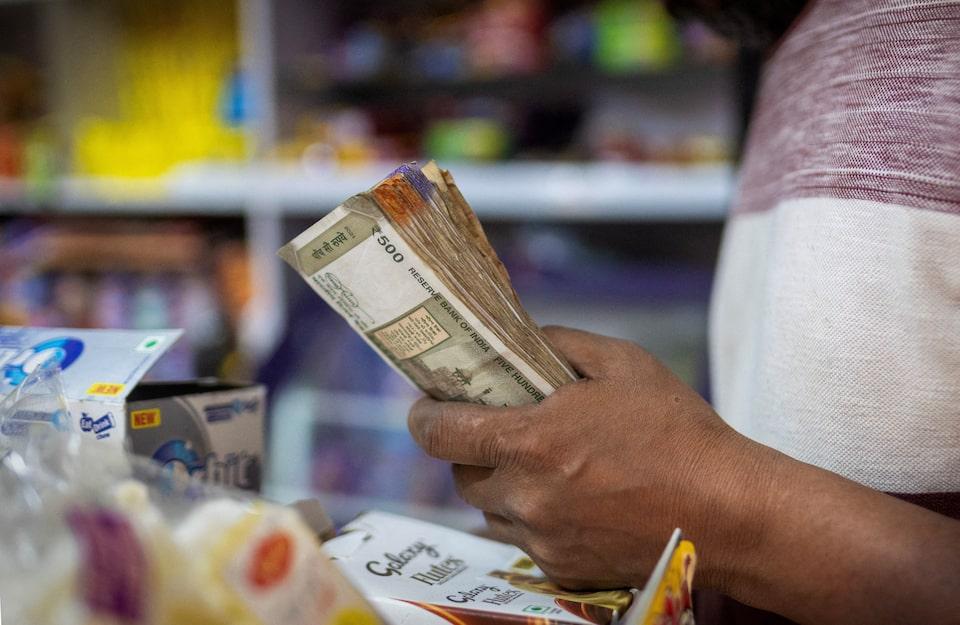
MUMBAI, May 26 (Reuters) - The Indian rupee closed modestly stronger after hitting a two-week high on Monday as a turnaround in the dollar index weighed on regional peers like the Chinese yuan, which touched a seven-month peak earlier in the day. The rupee closed at 85.0.850 against the U.S. dollar, up 0.1% from its close at 85.2125 in the previous session. Sign up here. The currency had risen to 84.79 before trimming gains, as the dollar edged higher against major peers and importer demand emerged above the 85 level, traders said. The dollar index was little changed at 99 after hitting an over month-low of 98.6 in early trading. The offshore Chinese yuan , meanwhile, was last quoted down 0.1% at 7.18 per U.S. dollar. U.S. President Donald Trump's trade policy reversals, as well as his sweeping spending and tax-cut bill currently in legislation, have weighed on the appetite for U.S. assets and the dollar, by extension. "It's a very EM positive environment, and I don't see any reason why that will stop in the near-term," said Brad Bechtel, global head of foreign exchange at Jefferies. Bechtel pointed out that the dollar could be exposed to steeper losses if China allows the yuan to start moving substantially higher. While Asian currencies have risen by as much as 7% on the month so far, the offshore yuan's gains are lower at about 1.4% and the Indian rupee is a laggard with a 0.6% fall over May. Meanwhile, India's benchmark equity indexes closed higher by about 0.6% each on day, tracking gains in most regional peers. The country's benchmark 10-year bond yield eased slightly with analysts expecting the downtrend in bond yields and overnight index swap rates to persist on expectations that the central bank will infuse further liquidity and lower interest rates. https://www.reuters.com/world/india/rupee-ends-slightly-higher-importer-dollar-bids-yuans-slip-erode-early-gains-2025-05-26/
2025-05-26 08:06
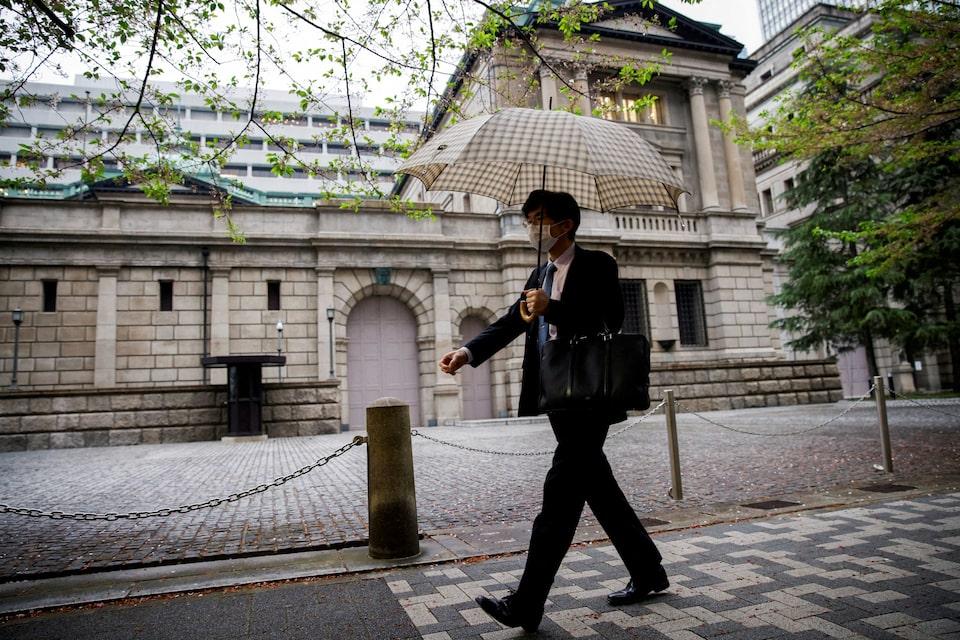
BOJ's conference to debate IMF paper on 'inflation scares' Rate control, quantitative tightening also up for debate Central banks face challenge of balancing growth, price risks TOKYO, May 26 (Reuters) - It's Japan's version of the Fed's Jackson Hole symposium, without the trail hikes or views, and this year's gathering of global central bankers in Tokyo will focus on two uncomfortable realities: flagging economic growth and sticky inflation. The Bank of Japan and its affiliated think tank host a two-day annual conference that kicks off on Tuesday and includes prominent U.S., European and Asian academics and central bankers. Sign up here. While most of the speeches are academic in nature and closed to media, this year's theme looks at "New challenges for monetary policy", specifically how central banks should deal with persistent inflation, downside economic risks, volatile markets and U.S. tariffs. Those conflicting headwinds, much of it a result of U.S. President Donald Trump's policies, are creating speedbumps for many central banks, regardless of whether they are raising and cutting interest rates. The BOJ, for example, remains on track to continue raising interest rates and steadily taper its bond purchases, a stark contrast to its rate cutting peers, but recent global developments have raised questions about the pace of such moves. "While the BOJ may be forced to stand pat for a while, it doesn't need to ditch rate hikes altogether," said former BOJ official Nobuyasu Atago. "It just needs to communicate in a way that when the environment looks right, it can resume rate hikes." Officials from the Federal Reserve, including New York Fed President John Williams, European Central Bank, Bank of Canada and Reserve Bank of Australia are among participants of the conference, which takes place at the BOJ's headquarters in central Tokyo. At last year's meeting, participants took stock of their experience battling economic downturns by discussing lessons learned from using various unconventional monetary easing tools. They also discussed whether Japan - an outlier that kept interest rates ultra-low even as other major central banks hiked aggressively - could emerge from decades of deflation and low inflation with budding signs of sustained wage hikes. While concerns this year centre on tariff-induced economic downturns, the conference's session topics indicate policymakers still sensitive to risks of being caught with persistent, too-high inflation. One session features "reserve demand, interest rate control, and quantitative tightening." Another will debate a paper published by the International Monetary Fund (IMF) in December titled "Monetary Policy and Inflation Scares." That paper explains how large supply shocks, such as one caused by the COVID pandemic, can lead to persistent inflation, warning of the dangers central banks face assuming that they can look through cost-push price pressures. ERRATIC POLICY That could be a compelling message for major central banks that face a similar dilemma exacerbated by a global trade war and Trump's erratic trade policy. Initially thought to be on course for more rate cuts, the U.S. Federal Reserve has been forced into a waiting game with officials warning last week of creeping inflation due to tariffs. While the European Central Bank is expected to cut rates again in June, the case is growing for a pause beyond that as inflation challenges creep up on the horizon, according to Reuters' conversations with policymakers. "Tariffs may be disinflationary in the short run but pose upside risks over the medium term," ECB board member Isabel Schnabel, an outspoken policy hawk, told a conference at Stanford University on May 9, in an explicit call for a pause. The BOJ, too, faces the challenge of balancing domestic inflationary pressure and growth risks from U.S. tariffs. Trump tariffs forced the BOJ to sharply cut its growth forecasts on May 1, signaling a pause in its rate-hike cycle that still leaves short-term interest rates at a meagre 0.5%. And yet, Governor Kazuo Ueda has signaled readiness to resume rate hikes if underlying inflation stays on course to durably hit its 2% target. Japan's core consumer inflation hit a more than two-year high of 3.5% in April as food prices surged 7% in a sign of the pain rising living costs are inflicting on households. "It's clear the BOJ has failed to achieve its mandate of price stability," said Atago, who is currently chief economist at Rakuten Securities Economic Research Institute. "Inflation will always be among worries for the BOJ, which is probably already behind the curve in dealing with domestic price pressures." Ueda delivers a keynote speech at the outset of the conference on Tuesday, followed by a lecture by Agustin Carstens, general manager of the Bank for International Settlements (BIS). https://www.reuters.com/business/finance/global-central-banks-talk-harsh-new-economic-realities-tokyo-2025-05-26/
2025-05-26 07:31
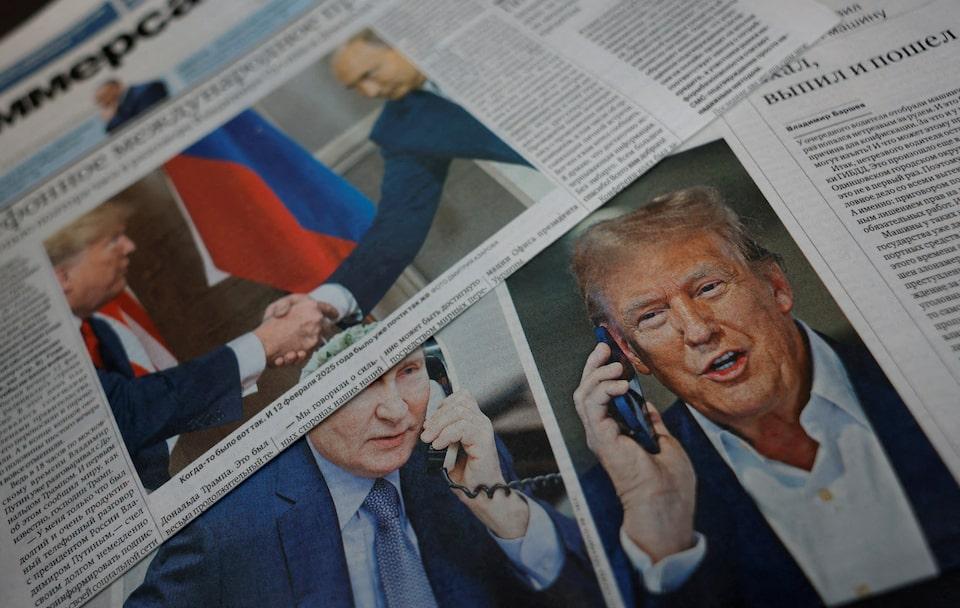
Russia launches large-scale attacks for three consecutive nights Trump says considering more sanctions on Russia Trump says Zelenskiy should stop talking the way he does Zelenskiy says air attacks are Putin's 'political choice' Kremlin suggests Trump is emotionally overloaded WASHINGTON/MOSCOW/KYIV, May 26 (Reuters) - U.S. President Donald Trump said Vladimir Putin had "gone absolutely CRAZY" by unleashing a massive aerial attack on Ukraine and said he was weighing new sanctions on Moscow, though he also scolded Ukrainian President Volodymyr Zelenskiy. Trump posted the remark on social media as sleeping Ukrainians woke to a third consecutive night of huge Russian aerial attacks, listening for hours to drones buzzing near their homes and eruptions of Ukrainian anti-aircraft fire. Sign up here. "Something has happened to him (Putin). He has gone absolutely CRAZY!" Trump said of the Russian president on Truth Social. "I've always said that he wants ALL of Ukraine, not just a piece of it, and maybe that's proving to be right, but if he does, it will lead to the downfall of Russia!" Trump also criticised Zelenskiy, posting that the Ukrainian leader "is doing his Country no favours by talking the way he does. Everything out of his mouth causes problems, I don't like it, and it better stop." The Kremlin, asked about Trump's remark about Putin being "crazy," thanked the U.S. people and Trump for their assistance in launching peace negotiations but suggested Trump and others might be emotionally overloaded. "This is a very crucial moment, which is associated, of course, with the emotional overload of everyone absolutely and with emotional reactions," Kremlin spokesman Dmitry Peskov said. Zelenskiy, in his nightly video address, did not directly address Trump's criticism. He said the repeated barrage of Russian attacks reflected Putin's "political choice" and proved the Kremlin was not interested in ending the war. "There is no military sense in this, but it is an obvious political choice - a choice by Putin, a choice by Russia - a choice to continue the war and destroy lives," he said. Zelenskiy said the attacks - more than 900 drones as well as missiles over three nights - showed that Russia was "playing with diplomacy." Russia, he said, "deserves full-scale pressure, everything that can be done to limit their military capability." Swarms of drones are being launched by both sides while fierce fighting is under way along key parts of the front. The Ukrainian Air Force said the most recent overnight Russian attack hit targets in five locations, but did not elaborate, implying military damage. The western region of Khmelnytskyi, which is home to a military air base, was targeted by seven cruise missiles and scores of drones, and residential buildings and industrial facilities sustained damage, officials said. A 14-year-old boy was reported injured in the Black Sea region of Odesa. The Russian Defence Ministry said its strike hit targets at Ukraine's Starokostiantyniv air base in Khmelnytskyi region. The Kremlin said the attacks were directed at military targets and that the strikes were a response to significant Ukrainian attacks on Russian civilian targets. 'I'M NOT HAPPY' Speaking to reporters at the airport in Morristown, New Jersey, Trump said of Putin: "I don't know what's wrong with him. What the hell happened to him? Right? He's killing a lot of people. I'm not happy about that." He raised the possibility of imposing more sanctions on Russia in response to the ongoing attacks. In the biggest aerial assault of the war, Russia pummelled Ukrainian cities and other targets with at least 367 drones and missiles the previous night into Sunday, killing at least 12 people, including three children in the northern region of Zhytomyr, Ukrainian officials said. The Russian attack was the largest of the war in terms of weapons fired, although other strikes have killed more people. Ukraine has also attacked Russia with drones, including some aimed at Moscow that briefly closed the city's airports. Trump has been pressuring Russia and Ukraine to end the more than three-year war, but the two sides remain far apart - and while major powers talk, the war is intensifying and Russian forces are advancing in eastern Ukraine. European leaders have been disappointed by their inability so far to win over the U.S. leader to their cause in the war started by Russia, and to convince him to cross the threshold of imposing major new sanctions. French President Emmanuel Macron said he hoped that Trump's ire towards Putin would now result in new sanctions that could dissuade the Russian leader from acting further. The Kremlin says it is conducting what it calls a "special military operation" in Ukraine to protect Russia from NATO encroachment on its borders. Ukraine says Russia launched an unprovoked war of aggression. https://www.reuters.com/world/europe/trump-says-putin-has-gone-absolutely-crazy-considering-more-sanctions-russia-2025-05-26/