2025-05-26 07:19
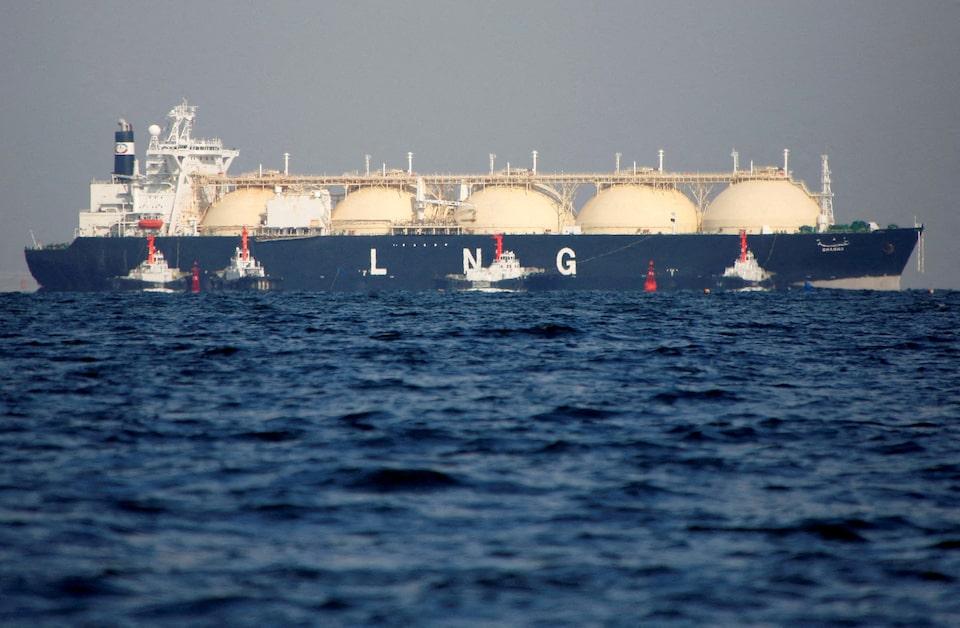
SINGAPORE, May 26 (Reuters) - Asia's imports of liquefied natural gas stagnated in May while Europe's continued to ease as demand in both of the world's top-importing regions entered the seasonal slump between winter and summer peaks. Imports of the super-chilled fuel to Asia are on track to reach 22.53 million metric tons in May, up from 21.89 million in April, according to data compiled by commodity analysts Kpler. Sign up here. However, it's worth noting that this actually represents a small drop on a per day basis, with May's 727,000 tons fractionally less than April's 730,000. Compared to the year earlier month, Asia's arrivals are down 4.5%, continuing the pattern of softer demand seen so far in 2025. For the first five months of the year Asia imported 112.45 million tons of LNG, down 6.2% from the 119.83 million for the same period in 2024. Blame for the decline can largely be attributed to China, the world's biggest LNG importer, where volumes have slipped this year amid high spot prices that have rendered LNG uncompetitive against domestic output and natural gas supplied via pipelines from central Asia and Russia. China's LNG imports are expected to drop to 4.61 million tons in May, down from 4.86 million in April, and the weakest on a per day basis since March 2020, according to Kpler data. The spot price of LNG in Asia declined from its mid-February peak of $16.50 per million British thermal units (mmBtu) to $11, the lowest in a year, on May 2. But even this drop wasn't enough to renew Chinese buying interest, with any price above $10 per mmBtu believed to make spot purchases uneconomic. The spot price has also rallied since the early low in May, reaching $12.40 per mmBtu in the week to May 23, with the higher prices likely to weigh on future Chinese demand. With China's appetite limited, the question is why is the spot price rising, and it may be driven more by supply than demand. Shipments from top regional supplier Australia dropped to a three-month low of 6.61 million tons in May amid a reported outage at a major plant, while Malaysia's exports slid to a nine-month low of 1.71 million tons in May. Markets were also buoyed by reports that Egypt is seeking 40-60 LNG cargoes for the upcoming northern summer amid an energy crunch, which would likely suck some LNG away from Asian markets, especially from Middle East producers like Qatar and the United Arab Emirates. EUROPE TRIMS European LNG demand continued to ease in May, dropping to 9.91 million tons from 10.37 million in April, according to Kpler data. Europe's intake has been dropping since reaching a 27-month high of 12.78 million tons in March as the continent's storages have been rebuilt after being depleted by a larger than normal amount over the winter demand period. The United States remains Europe's top supplier, although imports dropped to a five-month low of 5.53 million tons in May, down from 5.87 million in April. However, U.S. exporters have been able to switch more volumes to Asia, with Kpler tracking imports of 1.86 million tons in May, up from 1.35 million in April and the highest since December. It's also likely that Asia's imports from the United States will move higher again in June, with Kpler estimating arrivals of 2.1 million tons. Several Asian countries are seeking to buy more U.S. LNG, and other commodities such as crude oil, as part of efforts to get trade deals with the administration of U.S. President Donald Trump. The problem with trying to buy more from the United States is that if several countries all try it at the same time, the available supply will quickly be exhausted. Whether buyers are prepared to pay a premium for U.S. LNG will then be an interesting geopolitical question. The views expressed here are those of the author, a columnist for Reuters. https://www.reuters.com/markets/commodities/soft-china-dampens-asia-lng-demand-while-europes-imports-ease-russell-2025-05-26/
2025-05-26 07:14
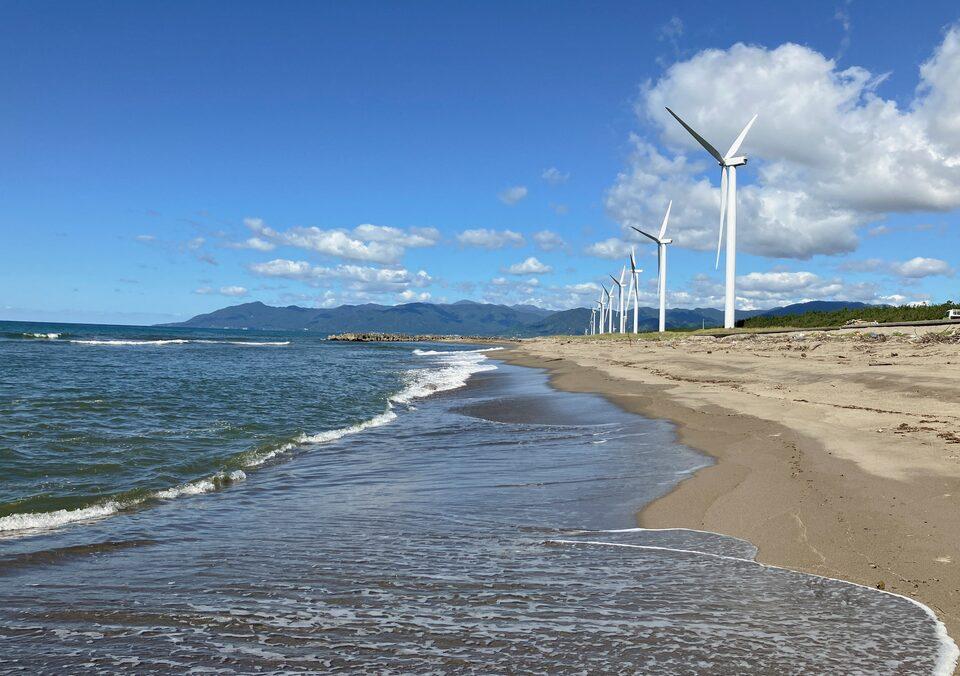
Japan needs to revive offshore wind plan to meet 2040 target Developers secured for one-tenth of targeted 45 GW capacity Industry seeks rule changes to offset soaring costs, price risks TOKYO, May 26 (Reuters) - Japan is likely to sweeten terms for developers to build a massive offshore wind farm sector, industry insiders say, as it looks to put its energy ambitions back on track against a worldwide slump of projects hit by soaring costs and delays. The government aims to have 45 gigawatts of offshore wind capacity by 2040, which is essential to cutting the country's dependence on imported coal and gas for power generation, reducing its carbon emissions and bolstering national security. Sign up here. But its plans have stalled following three major rounds of auctions to develop capacity. Trading house Mitsubishi (8058.T) , opens new tab, the winner in the government's first auction in 2021, cautioned in February that surging costs had forced it to review its plans. It has yet to start construction on any projects. Mitsubishi's warning, along with booking over $300 million in offshore wind losses, followed a decision by Denmark's Orsted (ORSTED.CO) , opens new tab to pull out of Japan last year in a global restructuring. Shell , too, recently cut its team focused on Japan offshore wind, three industry sources said, as it scales back low-carbon operations. Shell declined to comment on its offshore wind operations, but said it "continuously evaluates opportunities to optimise its global portfolio". Looking to defy the troubles plaguing renewables globally as operators scrap or shrink projects in Europe, the U.S. and Asia, the government is holding talks with industry players, who are pressing for a number of measures to reduce risks and help cut costs on their projects. "This is a very new industry in Japan and there's a huge learning process taking place on all sides. The key thing is the receptiveness of the government to work with industry," said Yuriy Humber, CEO of K.K. Yuri Group, a Tokyo-based research and consulting firm. Among potential changes, authorities are considering extending project durations to 40 years from the current 30 years and clarifying cabotage laws to allow non-Japanese flagged ships to operate in offshore wind farm areas, according to government documents and sources with direct knowledge. Industry players are also pushing for capacity auctions that would enable utility and industrial buyers to lock in power under multi-year contracts instead of annual contracts. In addition, the offshore wind industry wants the government to provide big industrial users with tax relief or subsidies in exchange for signing long-term wind power purchase deals, the sources said, which may be a long-shot given already high government support to households dealing with rising prices. Reuters spoke to six industry sources involved in the discussions between the offshore wind players and Japan's industry ministry, or METI, and the land ministry. They all spoke on condition of anonymity as the talks are confidential. Japan's biggest business lobby, Keidanren, whose members include major power users, was not immediately available for comment on the tax support. The government is also considering switching the tariff system for those who won the first major auction round to a "feed in premium" (FIP) from "feed in tariff" (FIT), allowing Mitsubishi to benefit from market prices, sources and government documents said. That rule is already in place for the second auction and onwards. The proposed switch to FIP from FIT, which has yet to be approved, is a clarification of the rules and not a revision, said a METI official in charge of the offshore wind sector. The official did not comment further on potential rule changes. UNEVEN START Thus far, Japan has auctioned around a tenth of the offshore wind capacity it aims to have. Despite coming late to offshore wind, Tokyo lured many foreign players drawn by its ambition to raise the country's energy self-sufficiency. In the first round, Mitsubishi led domestic consortia in winning the right to build three offshore wind farms, with subsequent rounds won by local and foreign operators including Germany's RWE (RWEG.DE) , opens new tab, Spain's Iberdrola (IBE.MC) , opens new tab and BP (BP.L) , opens new tab. Mitsubishi already faces at least a couple of years delay in farm launches, industry sources say, against its original plan for them to start operating between 2028 and 2030. The company said it is closely monitoring discussions with METI on possible rule changes and is reviewing its business plans "taking into consideration the direction of such discussion/revision." Acknowledging that the rollout of renewables and other low-carbon solutions may not be hitting targets, METI in February said Japan may need to increase liquefied natural gas imports by more than 10% to some 74 million metric tons by 2040, reversing the downward trend as the data center and semiconductor industries drive power demand. Despite not winning any sites in the initial offshore wind rounds, some foreign operators including Equinor (EQNR.OL) , opens new tab and Total (TTEF.PA) , opens new tab have maintained their presence in Japan. Both companies did not reply to Reuters requests for comment. "Those that want to come in later when things are more straightforward may simply have to pay the premium for doing that," said Humber. https://www.reuters.com/sustainability/boards-policy-regulation/japan-poised-sweeten-offshore-wind-rules-players-get-cold-feet-2025-05-26/
2025-05-26 06:57
MADRID, May 26 (Reuters) - Spanish gas grid operator Enagas (ENAG.MC) , opens new tab said on Monday the World Bank's International Centre for Settlement of Investment Disputes (ICSID) raised the amount the company is entitled to be paid in an arbitration process over a pipeline it built in the country. ICSID ordered Peru to pay the company $302 million, up from $194 million it awarded in its original ruling in December, the company said in a filing to the stock market regulator. Sign up here. Enagas had originally requested a $505 million compensation from the Peruvian government and reported a capital loss of 246 million euros ($281 million) in the fourth quarter last year on the amount it was entitled to by the first ruling. ($1 = 0.8763 euros) https://www.reuters.com/business/energy/arbitration-body-raises-amount-awarded-enagas-302-million-process-against-peru-2025-05-26/

2025-05-26 06:29
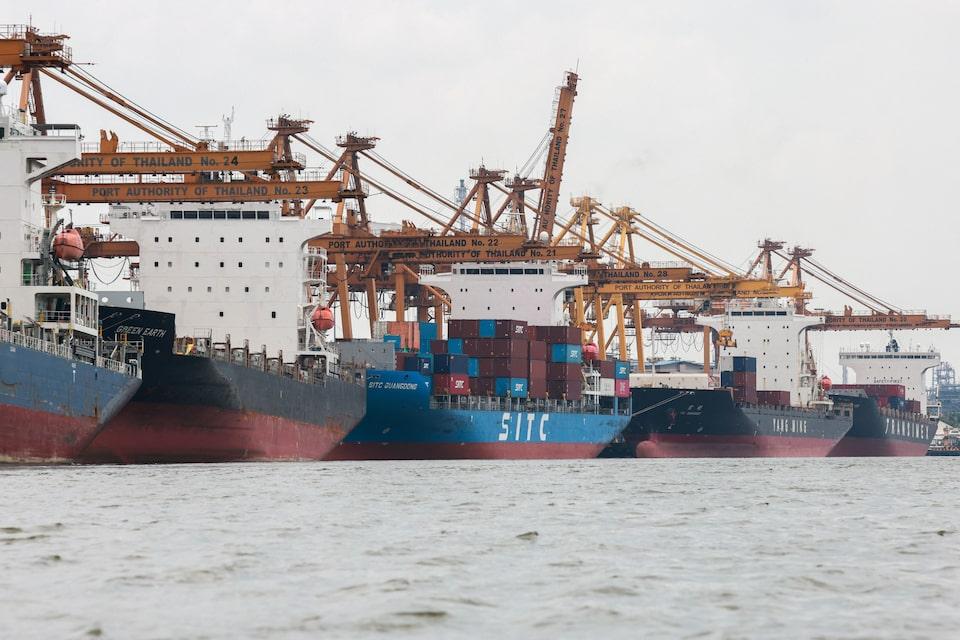
BANGKOK, May 26 (Reuters) - Thailand's export growth slightly beat forecast in April but was slower than the previous month, while the commerce ministry warned of challenges from U.S. tariffs in the second half of the year. Exports (THCEX=ECI) , opens new tab rose 10.2% in April from a year earlier, compared with a 9.1% year-on-year increase seen in a Reuters poll, and followed March's 17.8% rise. Sign up here. Exports, a key driver of the Thai economy, should continue to increase in the current quarter, Poonpong Naiyanapakorn, head of the Trade Policy and Strategy Office, told a press conference. In April, exports to the United States, Thailand's biggest market, increased 23.8% from a year earlier, while shipments to China rose 3.2%. Exports of computers and parts surged 75% in April from a year earlier, while shipments of agricultural goods declined 19.6%, with rice export volumes down 37.3% annually. Thailand's exports in the second half of the year will face a risk of U.S. tariffs after a moratorium expires in July, the ministry said in a statement. Thailand faces a 36% U.S. tariff if a reduction cannot be negotiated with Washington before the moratorium ends. The United States has set a 10% baseline tariff for most nations while the moratorium is in place. Discussions with the U.S. trade representative have been positive, Commerce Minister Pichai Naripthaphan told the press conference. Exports should remain "the hero" this year for Thailand, he added. "Our exports have stronger fundamentals. We have more stable market distribution," Pichai said. "Let's not be too pessimistic". In the January-April, exports increased 14% annually. Imports (THCIM=ECI) , opens new tab rose 16.1% in April from a year earlier versus a forecast rise of 8.5%. Thailand recorded a trade deficit (THCTR=ECI) , opens new tab of $3.3 billion last month, compared with a forecast deficit of $0.80 billion. Pichai said in a worst case scenario, exports should grow more than 4% this year, beating a ministry target of 2% to 3%. Last week, he said exports would also be helped by increased shipments to countries other than the United States. https://www.reuters.com/markets/asia/thai-april-exports-rise-102-yy-above-forecast-2025-05-26/
2025-05-26 06:14
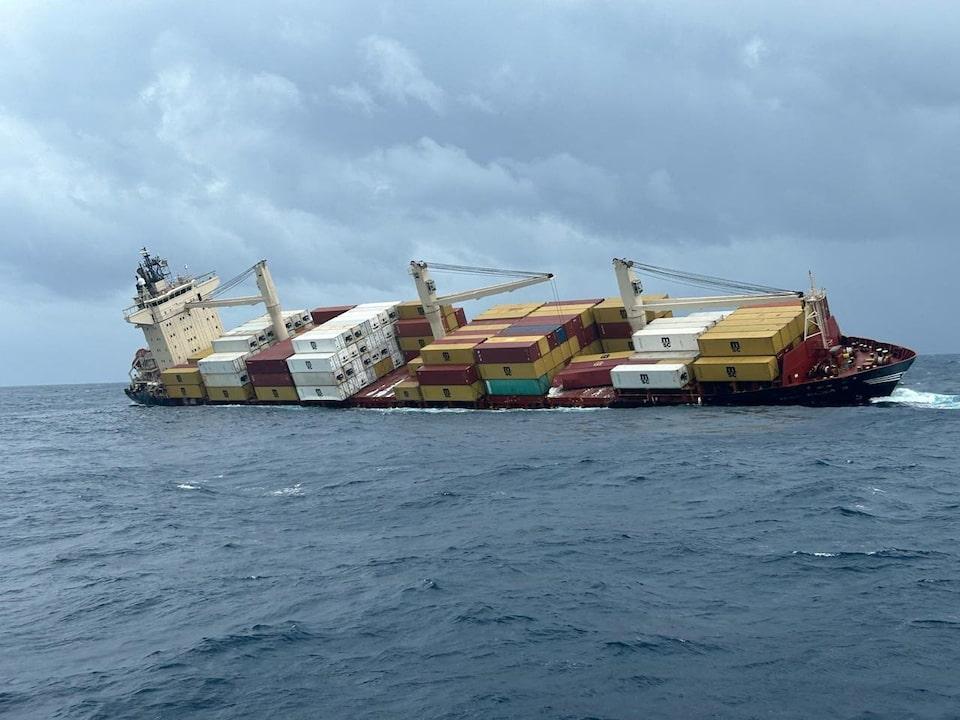
KOCHI/ BENGALURU, May 26 (Reuters) - Authorities in the southern Indian state of Kerala were scrambling to contain an oil spill on Monday after a container vessel sank, leaking fuel into the Arabian Sea and releasing 100 cargo containers into the water. The Liberia-flagged MSC ELSA3 ship was travelling from Vizhinjam on India's southern tip to Kochi when it capsized about 38 nautical miles off Kerala on Saturday, officials said, adding that all 24 crew members had been rescued. Sign up here. The entire ship has since been "submerged", the Kerala chief minister's office said in a statement on Sunday without elaborating on the cause of the incident. "The Coast Guard is taking steps to block the oil with two ships. A Dornier aircraft is also being used to spray oil-destroying powder on the oil slick," the statement said. The vessel was carrying 640 containers, including 13 with "hazardous cargo" and 12 with calcium carbide, the Indian coast guard said, without disclosing the contents of the containers that fell into the sea. Cyprus-based MSC Shipmanagement, which owns the vessel, did not immediately respond to a request for comment. The Kerala coast has been put on high alert, with local coastal bodies instructed not to touch or go near the containers - some of which began washing up on beaches on Monday - and fishermen advised not to venture into the sea. Authorities in the state's Kollam region have encouraged people living nearby to move to safer places. Accidental oil spills in the ocean can have far-reaching effects, putting marine ecosystems to the local fishing industry at risk. The collision of a BW LPG vessel and a local ship carrying heavy fuel oil caused a similar oil spill in 2017 near the southern city of Chennai, which harmed aquatic life and affected the livelihood of thousands of fishermen. https://www.reuters.com/world/india/india-rushes-contain-oil-spill-vessel-sinks-off-kerala-coast-2025-05-26/
2025-05-26 06:03
Nippon Steel up after Trump offers support for US Steel deal China-listed Apple suppliers fall after Trump's tariff threats US, UK markets closed for public holidays on Monday LONDON/SINGAPORE, May 26 (Reuters) - Global markets climbed on Monday and the euro rallied after U.S. President Donald Trump kicked his threat to slap 50% tariffs on European Union goods into July, marking another temporary trade policy reprieve. MSCI's broadest index of world shares (.MIWD00000PUS) , opens new tab rose 0.2%. The pan-European stocks index (.STOXX) , opens new tab, last up .9%, recovered to where it was trading before Trump on Friday unexpectedly called for 50% tariffs on European goods, saying negotiations with the region had become too sluggish. Sign up here. On Sunday, Trump reversed course, pushing the deadline for tariffs to July 9 from June 1, after European Commission President Ursula von der Leyen said the 27-nation bloc needed more time to produce a deal. Trump's latest policy moves were a reminder to investors how quickly circumstances could change. Analysts have pointed out that investors are shifting their money out of U.S. markets to Europe and Asia as they price in a possible U.S. recession and a consequent global slowdown. Last Friday's comments were a reminder of Trump and his administration’s unpredictable and seemingly incoherent policies and decision-making, Commerzbank said in a note. "Now, a really toxic cocktail is mixed for the U.S. consisting of (1) rising risk premium to hold U.S. assets, (2) global investors' move towards increased portfolio diversification, and (3) an increased homeland focus," said a note from SEB Research, adding that they expected the dollar to lose value while U.S. interest rates could rise further. EURO GAINS The dollar (.DXY) , opens new tab fell 0.1% against a basket of currencies on Monday. The euro appreciated 0.23% to $1.1380 - its highest since late April, while the pound ticked almost 0.2% upwards to 1.3567. "It still is largely a 'sell dollar story'," said Christopher Wong, currency strategist at OCBC. "The policy unpredictability surrounding Trump's tariffs and of course, the erosion of the U.S. exceptionalism, this could potentially still undermine sentiment and the confidence in the medium term." Trading volumes on Monday were expected to be thinner than usual, given that markets in the United States and Britain were closed due to public holidays. Ballooning debt levels in developed economies were also brought back into focus following Moody's credit rating downgrade of the United States and weak debt auctions in the U.S. and Japan last week. Inflation reports come from Japan and Germany later this week, along with price data on U.S. goods and services. China and Hong Kong stocks closed lower on Monday as automobile shares slid on price war concerns, and Apple suppliers dropped on potential U.S. tariffs. At the close, the Shanghai Composite index (.SSEC) , opens new tab weakened 0.1% while the blue-chip CSI300 index (.CSI300) , opens new tab dropped 0.6%. In Japan, Nikkei 225 (.N225) , opens new tab closed 1% higher, its sharpest one-day advance in almost two weeks, after Trump appeared to give his blessing to Nippon Steel's (5401.T) , opens new tab takeover of U.S. Steel (X.N) , opens new tab. Japanese government bonds also rallied, following a dramatic week in which super-long yields hit record levels. Super-long Japanese bonds will be in focus, with inflation data expected later in the week as investors try to gauge the Bank of Japan's monetary policy outlook. On the commodities front, Brent and U.S. crude prices , both traded 23 cents lower, to $64.54 and $61.28 respectively, while gold eased from a two-week high to $3,339 an ounce. https://www.reuters.com/world/china/global-markets-wrapup-1-2025-05-26/