2025-05-23 12:32
BRUSSELS, May 23 (Reuters) - Polish Trade Minister Michal Baranowski played down on Friday the threat of the United States imposing 50% tariffs on European goods from June 1 as a move in the ongoing negotiations, underlining there was time for EU-U.S. talks until early July. Earlier on Friday, President Donald Trump said he was recommending a straight 50% tariff on goods from the European Union starting on June 1, because trade negotiations with the EU were "going nowhere". Sign up here. "The European Union and the United States are negotiating. Some negotiate behind closer doors, others more in front of cameras," Baranowski, whose country holds the rotating presidency of the 27-nation European Union, told reporters. "The fact that we see some important statements in the public domain does not mean that they will translate into actions of the U.S. administration," he said. In early April, Washington set a 90-day window until July 8 for negotiations with the EU on a trade deal. Until then, U.S. reciprocal tariffs on EU goods, initially set at 20%, would be 10%, with the exception of steel, aluminium, and cars which get a 25% tariff from the U.S. "So far we have a clear signal, also at the political level, that the United States and the European Union have decided to hold back with reciprocal tariffs. We have time until early July to conduct negotiations and according to my best knowledge these negotiations are moving forward," Baranowski said. "(EU) Trade Commissioner (Maros) Sefcovic and will see U.S. chief negotiator (Jamieson) Greer at the beginning of June in Paris which will be another opportunity to discussion concrete steps, rather than talk in such generalities," Baranowski said. Baranowski said the European Union decided jointly not to escalate the rhetoric in the trade dispute with Washington and to conduct talks behind closed doors, which Sefcovic was doing very well with full support of EU governments. Asked if the Trump threat of 50% tariffs was a form of pressure in the negotiations, Baranowski said: "President Trump is showing that he too would like to quickly reach the best agreement between the United States and Europe and here we fully share his view, because indeed Europe is the most important economic partner for the United States as well as the United States for Europe," he said. "I am convinced that in the end we will reach a deal, but it is possible that the road to it will be bumpy and full of all kinds of interesting statements," he said. https://www.reuters.com/markets/europe/polish-trade-minister-plays-down-50-us-tariff-threat-says-us-eu-trade-talks-2025-05-23/

2025-05-23 12:28
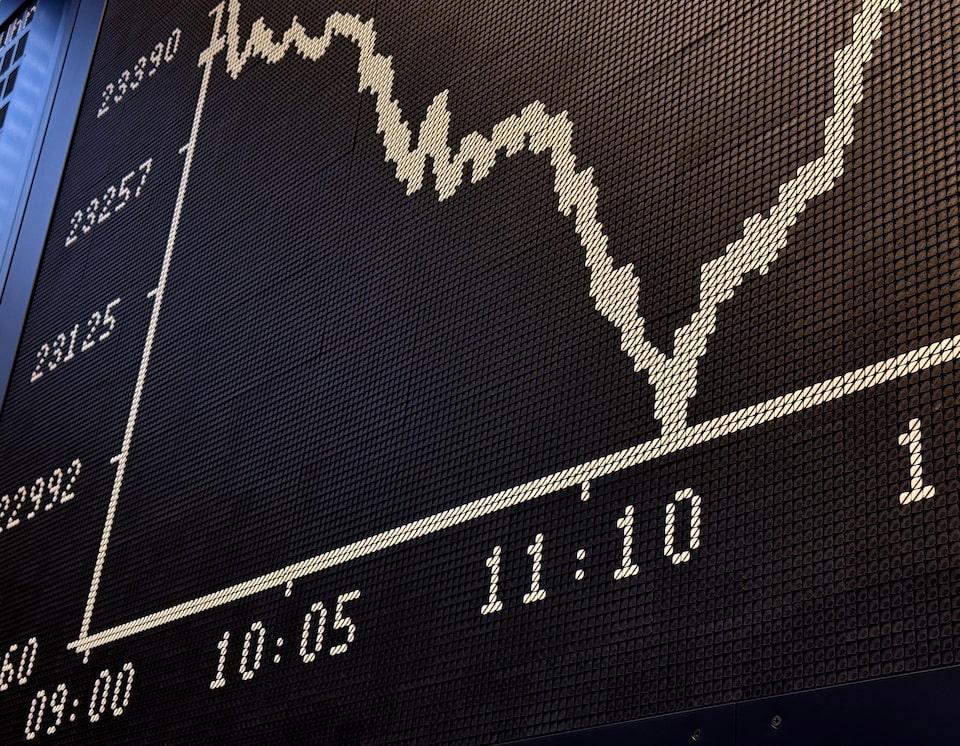
Stoxx 600 falls 1.5% led by autos, banks and luxury Trump proposes 50% tariff on European Union Germany's 10-year yield falls 8 basis points LONDON, May 23 (Reuters) - European stocks tumbled, the euro gave back some gains, and euro zone government bond yields fell sharply on Friday after U.S. President Donald Trump said he is recommending a straight 50% tariff on goods from the European Union starting on June 1. Trump's remarks in a series of social media posts, which also targeted Apple (AAPL.O) , opens new tab, halted investors' expectations that the bulk of tariffs he announced in early April would be negotiated away, a view that had supported stock market gains in the past few weeks. Sign up here. Europe's broad Stoxx 600 index (.STOXX) , opens new tab was last down 1.5%, with auto and luxury stocks both falling well over 3%. (.SXAP) , opens new tab, Germany's exporter-heavy DAX (.GDAXI) , opens new tab fell 2.3%. U.S. S&P 500 futures also fell around 1.5%, as investors also worried that the tariffs would hurt U.S. and global growth. "This is a major escalation of trade tensions," said Holger Schmieding, chief economist at Berenberg. "With Trump, you never know. But this would be a major escalation. The EU would have to react and it is something that would really hurt the U.S. and European economy." The White House has been in negotiations with numerous countries over trade issues, and has agreed deals with Britain, and China. The back and forth on tariffs in recent weeks has left long-term investors flying blind, as changes in policy whipsaw markets. The STOXX 600 fell around 12% in a few days in early April after Trump's April 2 tariff announcement, but steadily recovered in the weeks that followed. At the start of this week, it had rebounded 16% from those lows, and was last less than 1% off its April 2 close. A measure of European stock market volatility posted its biggest one-day jump since the turmoil sparked by the April 2 announcement. (.V2TX) , opens new tab The European Commission already said on Monday the euro zone economy will grow more slowly this year and next because of the trade war started by the United States and uncertainty over when and how it will end. Investor expectations that tariffs would hurt economic growth in the currency bloc caused them to up bets on the scale of European Central Bank easing this year, and sent them scurrying towards government bonds. Germany's rate-sensitive two-year bond yield was last down 8 basis points at 1.75%, while benchmark 10-year yields were down 7 bps at 2.57%. , In currency markets, the biggest gainer was the safe-haven Japanese yen. The dollar was last down 1% on the yen at 142.5, while the euro was down 0.5% at 161.58 yen. , The euro was more muted versus the dollar - in recent weeks investors have sold the U.S. currency when worried about tariffs - and so traders had to balance that with concern about the euro zone growth outlook. The euro gave back some of its earlier gains against the dollar on the latest tariff news, but was last 0.5% higher on the day at $1.1335. https://www.reuters.com/world/europe/european-stocks-tumble-bonds-rally-after-trump-recommends-50-tariff-eu-2025-05-23/
2025-05-23 12:24
TSX ends up 0.1% at 25,879.95 For the week, the index loses 0.4% Materials group gains 1.3% as gold climbs Technology falls 1.4% May 23 (Reuters) - Canada's main stock index edged higher on Friday as gold mining shares rallied, but the move was limited as trade tensions resurfaced and investors worried about the recent upward move in long-term borrowing costs. The Toronto Stock Exchange's S&P/TSX composite index (.GSPTSE) , opens new tab ended up 25.94 points, or 0.1%, at 25,879.95, holding below the record closing high it posted on Tuesday. Sign up here. For the week, the index was down 0.4%, its first decline after six straight weekly gains. "We've had such a powerful bounce off those lows in April, the market was probably due for some consolidation," said Greg Taylor, chief investment officer at PenderFund Capital Management. "The big thing to watch is still bond yields ... That's going to hold the market back from really hitting new highs substantially." U.S. Treasury yields have climbed in recent weeks on concern about a worsening fiscal outlook for the United States. On Friday, they edged lower after President Donald Trump threatened to impose hefty tariffs on smartphone giant Apple (AAPL.O) , opens new tab and goods from the European Union, raising concerns about slowing economic growth. Domestic data was upbeat. Retail sales rose 0.8% month-over-month in March, beating estimates, and looked set to increase further in April. The materials group, which includes metal mining shares, advanced 1.3% as the price of gold moved back in reach of its recent record high. The price of oil also rose, settling 0.5% higher at $61.53 a barrel, while the energy sector added 0.4%. Shares of uranium producer Energy Fuels Inc surged 18.1% after Trump signed executive orders seeking to jumpstart the nuclear power industry. Technology was a drag, falling 1.4%, and industrials lost 0.7%. https://www.reuters.com/markets/europe/tsx-futures-flat-us-debt-concerns-loom-2025-05-23/
2025-05-23 12:15
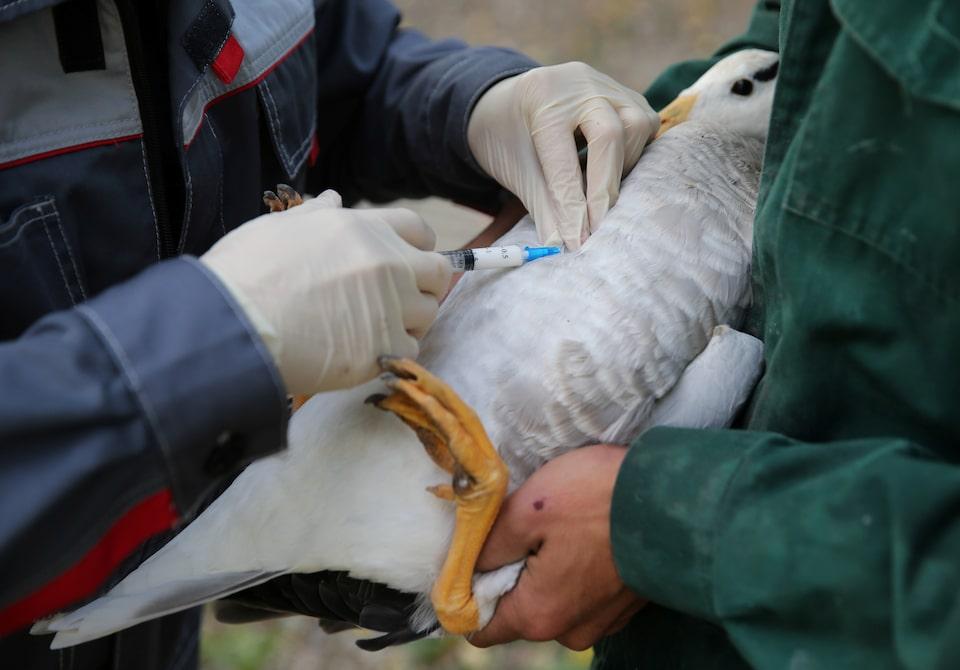
WOAH backs vaccination to curb animal diseases Brazil faces export bans after first bird flu outbreak Bird flu has spread to mammals, raising pandemic concerns Vaccination led to global rinderpest eradication PARIS, May 23 (Reuters) - Vaccinating animals more widely could help stop the spread of deadly diseases, protect public health and keep global trade flowing, the head of the World Organisation for Animal Health said as bird flu disrupts Brazilian poultry exports. Brazil, the world's top poultry exporter, confirmed its first-ever outbreak of highly pathogenic avian influenza, commonly called bird flu, in domestic birds last week, prompting export bans from several countries. Sign up here. While most countries rely on culling policies and movement restrictions, the World Organisation for Animal Health (WOAH) said vaccination could help reduce outbreaks while preserving trade. "Vaccination is a tool, it's a very good tool when it exists, but it's up to each country, region, or group of countries to identify in which case it will be useful to use it or not," Director General Emmanuelle Soubeyran told Reuters ahead of the start of WOAH's general assembly on Sunday. More than 633 million birds have been lost to bird flu over the past two decades, the Paris-based WOAH said in a report on the state of animal health released on Friday. The disease has triggered mass culling, caused billions in economic damage, and disrupted food supply chains worldwide. Bird flu has also spread to mammals, including dairy cows in the United States, and infected hundreds of people, raising concerns it could spark a new pandemic. If properly implemented, vaccination limits virus spread, protects animal health, and lowers the risk of human infection. But it is costly to develop vaccines and roll them out, and vaccination programmes often lead to trade restrictions over fears that a disease may circulate unnoticed. In France, a nationwide duck vaccination effort helped cut bird flu outbreaks from over 300 to just 10 within a year. The United States and Canada eased their ban on French poultry imports in January, citing good traceability and monitoring. Most bird flu vaccination campaigns focus on long-lived birds like ducks or breeders. Broilers - chickens raised for meat - are typically not vaccinated because they do not live long enough, which may limit immediate use in major poultry-exporting nations. Vaccination has helped eliminate or control other animal diseases, including rinderpest in 2011, the first animal disease ever eradicated globally, and only the second of any kind eradicated after smallpox in humans, WOAH said in its report. To address concerns that vaccinations may disrupt trade, WOAH is working on global standards to distinguish vaccinated birds from infected ones, the so-called DIVA principle. https://www.reuters.com/business/healthcare-pharmaceuticals/animal-health-body-says-vaccines-needed-protect-humans-trade-2025-05-23/
2025-05-23 12:11
May 23 (Reuters) - Shares of nuclear power companies closed higher on Friday after U.S. President Donald Trump signed executive orders seeking to jumpstart the industry. The orders direct the nation's independent nuclear regulatory commission to cut down on regulations and fast-track new licenses for reactors and power plants. Sign up here. U.S. power consumption is estimated to reach record highs in 2025 and 2026, after stagnating for nearly two decades, as power-hungry data centers dedicated to artificial intelligence and crypto miners plug into the grid. "Our confidence in the AI revolution data center buildout is increasing under the Trump administration, with nuclear energy ultimately playing a key role in powering data centers," Wedbush analysts said. The orders also seek to reinvigorate uranium production and enrichment in the U.S. to help meet surging power demand. Shares of uranium mining companies Uranium Energy (UEC.A) , opens new tab, Energy Fuels (UUUU.A) , opens new tab and Centrus Energy (LEU.A) , opens new tab jumped between 19.6% and 24.2%. Canadian miner Cameco (CCO.TO) , opens new tab was up nearly 10%. The Global X Uranium ETF (URA.P) , opens new tab, which invests in a broad range of uranium-linked stocks, rose more than 11.6%. Nuclear utilities Constellation Energy (CEG.O) , opens new tab, Vistra (VST.N) , opens new tab, GE Vernova (GEV.N) , opens new tab all added more than 1.2%. Nuclear energy has garnered renewed interest from investors and companies, as it is considered to be a cleaner source of fuel and more reliable than wind or solar energy. The industry is also expected to benefit from Trump's sweeping tax and spending bill, which rolled back many green-energy subsidies but preserved tax credits for nuclear energy. "We are clearly witnessing the billowing of tailwinds behind the broader nuclear industry," H.C. Wainwright analysts said. Nano Nuclear Energy (NNE.O) , opens new tab led the gains for companies involved in developing new nuclear technology, with its shares surging more than 30%. Sam Altman-backed nuclear startup Oklo (OKLO.N) , opens new tab gained 23.1%, while NuScale Power (SMR.N) , opens new tab soared 19.6%. https://www.reuters.com/business/energy/nuclear-stocks-surge-report-trump-executive-orders-boost-industry-2025-05-23/
2025-05-23 11:59
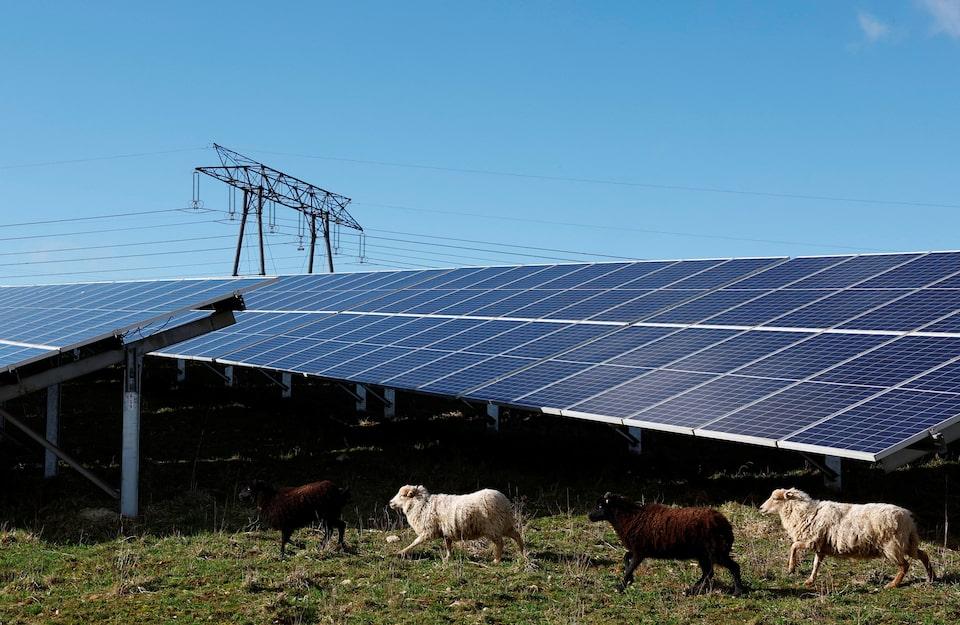
LITTLETON, Colorado, May 23 (Reuters) - France's power producers have lifted clean energy output to six-year highs so far this year and generated around 95% of all the country's power supplies from clean energy sources - far exceeding clean power production in all other European nations. The rise in clean energy supplies came despite year-over-year drops in wind and hydro power production, which were offset by record solar generation and the highest nuclear power output since 2019. Sign up here. The ability of France's utilities to maintain clean energy growth despite lower hydro and wind output highlights the resilience of France's power system, and contrasts with recent declines seen in clean power output across Europe as a whole. France's robust energy output levels have also yielded some of the lowest wholesale power prices across mainland Europe, which so far in 2025 have averaged around 25% to 35% below rival nations including Germany and Italy, data from LSEG shows. This combination of durable clean energy growth and below-average power prices underscores the importance of France's energy sector within Europe's interconnected power system, where France plays a critical role as a net power exporter. NUCLEAR DEPENDENCE France's fleet of more than 50 nuclear reactors forms the backbone of its power generation system and account for around 70% of the country's electricity supplies. Some of the country's reactors are more than 40 years old and require regular complex and costly maintenance. Other reactors have been affected by warm river temperatures during the summer, which can limit plant output potential and pose operational risks if not enough cooling water is available to control fuel rod temperatures. To lower the country's dependence on its reactor base, France's power firms have boosted generation capacity of other power sources and shuttered outdated nuclear plants. This has resulted in nuclear power's share of total power generation capacity falling from 45% in 2019 to 39% in 2024, according to energy think tank Ember. Solar and wind farms have been the fastest-growing sources of new power capacity and currently account for around 30% of generating capacity. Hydro plants account for an additional 16%, while gas plants account for 12% and bioenergy plants 2%. CLEAN COMMITMENT In addition to trimming outdated nuclear capacity, France's power firms have nearly halved coal-fired power capacity since 2019 while keeping gas-fired capacity largely flat. The country's power firms have also nearly doubled bioenergy plant capacity and slightly raised hydro capacity over the past five years, Ember data shows. That heavy emphasis on the expansion of non-nuclear clean energy supplies has helped sustain France's power system as one of the cleanest among all major economies even as it reduced its reliance on nuclear power. France's power system generated nearly 98% of its electricity from clean energy sources in April, which is its cleanest monthly power share since mid-2024. That clean power share compares to 65% in the United Kingdom, 60% in Germany and 64% for Europe as a whole, and means that France is by far the regional clean power leader. PRICE IMPACT The build-out of clean power capacity - which is up by 17% since 2019 - has helped keep France's power costs among the lowest in Europe. So far in 2025, France's spot wholesale base power costs have averaged around 73 euros ($82) per megawatt hour (MWh), according to LSEG. That power price average compares to around 98 euros/MWh in Germany, 107 euros/MWh in Poland, and 125 euros/MWh in Italy, LSEG data shows. Such steep power price discounts to regional peers have endowed French power firms with a key competitive advantage in Europe's interconnected power markets, as they can profitably export surplus power. This in turn means that France's clean power clout extends well beyond its borders, and ensures that even power importers that mainly rely on fossil fuels for domestic power production can benefit from France's ever-cleaner power base. The opinions expressed here are those of the author, a columnist for Reuters. ($1 = 0.8863 euros) https://www.reuters.com/business/energy/france-flexes-clean-power-clout-nuclear-solar-output-climb-maguire-2025-05-23/