2025-05-23 10:42
BEIJING, May 23 (Reuters) - Argentina is close to securing an agreement to export beef offal products to China, according to two people involved in the negotiations, as both sides move to finalise technical details and Beijing steps up efforts to diversify its food imports. "We think we are reaching the end of the conversations between both governments ... It's just fine tuning between the technical departments," Georges Breitschmitt, president of Argentina's beef promotion agency (IPCVA), told Reuters in an interview in Beijing. Sign up here. Breitschmitt, who is involved in the negotiations, said the process is accelerating but exact approval dates remain uncertain. A second source involved in the talks said a deal would be reached "soon". Both said that Chinese officials are expected to visit Argentina on June 8 for further talks. The push comes as China seeks to diversify its agricultural imports and deepen trade ties with key suppliers, including Brazil and Argentina, amid an ongoing trade standoff with the U.S. that has rattled global markets. The Chinese customs did not respond to a Reuters request for comment. The Argentina embassy in Beijing did not immediately respond to Reuters' emailed request for comment, and phone calls to the embassy went unanswered. Argentina exports around 30% of its total beef production, with about two thirds historically going to China. But the offal trade follows a different pattern, with the majority shipped to global markets and only limited domestic consumption. While China remains the top destination for Argentine beef, shipments have recently dropped. In Q1 2025, China accounted for 56.4% of Argentina's total beef exports in the first quarter of 2025, down from 68% in 2024 and 74.5% in 2023, according to government data. Breitschmitt attributed the dip partly to the low prices offered by China earlier this year due to high domestic inventories. "But we are catching up again on volume in May," Breitschmitt said, adding China's reduced purchases of U.S. beef could create new opportunities for Argentina. In 2024, China imported a record 2.87 million metric tons of beef, customs data showed. Brazil, Argentina and Australia are among China's largest beef suppliers. https://www.reuters.com/world/americas/argentina-nears-deal-export-beef-offal-china-2025-05-23/

2025-05-23 10:33
LONDON, May 23 (Reuters) - A look at what matters in U.S. and global markets today from Mike Dolan , opens new tab, Editor-At-Large, Finance and Markets Even though some calm returned to U.S. bond and stock markets overnight after this week's wave of fiscal policy anxiety, the dollar has continued to slide - with sterling leading the pack to its best levels against the greenback in three years. Sign up here. It's Friday, so today I'll provide a quick overview of what's happening in global markets and then offer you some weekend reading suggestions away from the headlines. Today's Market Minute * U.S. Senate Republicans said on Thursday they will seek substantial changes to President Donald Trump's sweeping tax and spending bill after it narrowly won approval in the House of Representatives, in a sign that significant hurdles remain for the package. * The dollar headed for its first weekly fall in five weeks against major currencies on Friday and long-dated Treasury yields stayed elevated, as U.S. debt concerns that have mounted for years started driving moves in currencies and global debt. * The German economy grew significantly more in the first quarter than previously estimated due to export and industry frontloading ahead of U.S. tariffs, according to a second estimate published on Friday. * Japan's new agriculture minister pledged on Friday to quickly move rice from government stockpiles to store shelves where they would be offered at prices significantly lower than current levels, seeking to stem a consumer shift to cheaper, foreign brands. * Yields of government bonds with the longest maturities have risen sharply - not just in the United States, where the chaotic first months of Trump's second term in the White House are causing investors to demand better returns on their bond holdings, but also in Japan and Britain. * Oil prices dropped for a fourth consecutive session on Friday and were set for their first weekly decline in three weeks, weighed down by renewed supply pressure from another possible OPEC+ output hike in July. * Global investors admit to flying blind in markets roiled by erratic U.S. trade rhetoric and chaotic economic forecasting, saying that placing long-term bets is harder now than at any time since the 2020 COVID-19 crisis. Dollar keeps tumbling Trump's signature fiscal package of tax and spending - which is expected to lift U.S. debt piles by another $3.8 trillion or so over the coming decade - finally passed in the House of Representatives on Thursday. But only by one vote. The bill now has to go to the Senate, which is likely to seek changes. A Republican majority 53-47 should eventually see it pass, but any changes will require the bill to return to the House for a new vote. The bill allows for a $4 trillion rise in the U.S. debt ceiling. If it's not passed by July, it's estimated that the government will start running out funds in August. After an initial spike to 19-month highs after the vote, U.S. long-term Treasury yields retreated again. But 30-year yields remain above 5% on Friday and nerves persist about the market reaction to baked-in deficits and rising debts. Interest payments accounted for one out of every eight dollars spent by the U.S. government last year, more than the amount spent on the military, according to the non-partisan Congressional Budget Office. That share is due to grow to one dollar in six over the next 10 years as an aging population pushes up the government's health and pension costs. The steadying of the bond market on Thursday was helped by dovish comments from Federal Reserve Governor Christopher Waller, who said if there is some clarity on the tariff front, it might allow interest rates to come down in the second half of the year. "If we can get the tariffs down close to the 10% and then that's all sealed, done and delivered somewhere by July, then we're in good shape for the second half of the year," Waller told Fox Business. "Then we're in a good position to kind of move with rate cuts through the second half of the year." There was some further relief for those wary of political influence on the Fed too. A U.S. Supreme Court ruling on a legal battle over Trump's firing of two federal labor board members contained a line that raised the bar for any attempt to fire Fed Chair Jerome Powell at will. "The Federal Reserve is a uniquely structured, quasi-private entity that follows in the distinct historical tradition of the First and Second Banks," a majority of justices said in the court's ruling. The Federal Reserve Act of 1913 that created the nation's third and still existing central bank stipulates that Fed officials may be dismissed only "for cause," not for political or policy disagreements. There was also some better news on the economic front, with May U.S. business surveys coming in more upbeat than forecast and weekly jobless claims broadly stable. But as U.S. Treasuries and stock futures held the line on Friday ahead of the long Memorial Day holiday weekend, the dollar (.DXY) , opens new tab continued to weaken - with the index slipping close to two-week lows. The latest leg of the dollar decline was as much to do with developments overseas. Germany updated its GDP readings for the first quarter to show an expansion twice that of original estimates, while British retail sales also beat forecasts for April. With more hawkish noises from the Bank of England of late about further rate cuts in Britain, sterling led the advance of major currencies against the dollar and hit its highest since February 2022. Japan's core inflation, meantime, accelerated at its fastest annual pace in more than two years in April - raising the odds of another Bank of Japan interest rate hike by year-end. BOJ Governor Kazuo Ueda said on Thursday the central bank will closely monitor market moves as yields on super-long Japanese government bonds reached record highs this week. Weekend reads * BRAIN DRAIN?: U.S. administration attacks on science in U.S. federal institutions and moves to defund some universities have raised speculation about researchers and academics moving overseas. Europe appears keen to attract them. Heather Grabbe and Daniel Gros at the Brussels-based think tank Bruegel propose a 'Project Einstein' initiative , opens new tab to mobilize European Union funds to attract U.S. scientific talent, pointing out that up to a fifth of researchers at top U.S. universities previously studied in Europe. * STAR WARS: Trump's Golden Dome missile defense concept revives a controversial, decades-old initiative that could upend norms in outer space and reshape relations between the world's top space powers. Reuters correspondent Joey Roulette explains how the announcement of Golden Dome, a vast network of satellites and weapons in Earth's orbit set to cost $175 billion, could escalate the militarization of space. * REGLOBALISATION WITHOUT AMERICA?: In a critique of unfolding U.S. protectionism and how world leaders should respond, IMD Lausanne professor and CEPR's VoxEU founder Richard Baldwin includes one low-probability but not impossible scenario - reglobalisation without America , opens new tab. "The US continues to wall itself off with high trade barriers and the world gets on without it" is how Baldwin describes one of three scenarios, adding: "The WTO evolves into a clearing house for cooperation on climate, digital trade and 21st-century challenges. Multilateralism survives, maybe even thrives." * BONDED WAREHOUSES: Companies importing goods into the United States from China are rushing to convert warehouses into facilities that are exempt from Trump's tariffs until they are ready to sell the merchandise. Reuters' Richa Naidu and Arriana McLymore report on how there are already more than 1,700 bonded warehouses: facilities where imported goods can be held without immediate payment of customs duties. Fees are only paid when the goods leave the warehouse, allowing businesses to manage funds effectively during trade war uncertainty. * LASTING IMPACTS: The U.S. and global economies may well endure Washington's tariff war without disaster, argues Nobel laureate and Stanford professor Michael Spence on Project Syndicate. But longer-term effects of the Trump administration's other policies are likely to be more significant and far-reaching – and will 'probably be only partly reversible , opens new tab'. "Whatever its flaws, the US was regarded for decades as a reliable global actor, whether in trade and finance or foreign policy and security. No more." * AI EMPIRE: Concentration of artificial intelligence , opens new tab infrastructure in a handful of Big Tech giants poses big challenges to consumer choice, innovation, resilience, security and financial stability, argue Bank for International Settlements economists Leonardo Gambacorta and Vatsala Shreeti. In a paper summarized on VoxEU, they say excessive Big Tech influence over AI development risks exacerbating inequalities, harming consumer welfare and creating systemic vulnerabilities. * IMF MIA?: Rising global imbalances and inappropriate macro policies around the world led to this brewing global trade war and the International Monetary Fund has been 'missing in action' , opens new tab in demanding redress, argues Desmond Lachman at American Enterprise Institute in a column on Project Syndicate. "Globalization is in real danger of breaking down, and one of its premier institutions is nowhere to be found." * DURATION AND ORIGINAL SIN: Global mutual funds' sensitivity to duration risk cuts across emerging market governments' ability to borrow at long maturities , opens new tab in their own currencies, to an NBER paper by Hyun Song Shin at the BIS, Fed board economist Carol Bertaut and American University's Valentina Bruno. "Even though emerging markets have largely overcome 'Original Sin' by issuing sovereign bonds in local currency, the portfolio holdings of global investors have ebbed." Long maturities mitigate rollover risk for borrowers - but if investor reactions amplify market disruptions, long maturities may introduce new vulnerabilities affecting the availability and cost of finance. * FLYING PIGS: Dr. Mike Lemmon's pigs, each valued between $2,500 and $5,000, were supposed to be on a plane bound for Hangzhou from St. Louis in April to take up residence at Chinese hog farms. Instead, as Reuters Heather Schlitz relays in her report on the tariff hit to lucrative niche export markets, many went to a local Indiana slaughterhouse for less than $200 each after the Chinese buyer canceled the order within a week of Beijing's retaliatory tariffs against the United States. * COW BONDS: Sandra Palleiro traveled 600 km (370 miles) from Uruguay's capital, Montevideo, to find 61 cattle she owns, at least on paper. But, like hundreds of other investors, she can't find them. Reuters' Lucinda Elliott reports on how the missing bovines were part of a "cow bond" scheme that collapsed, causing one of Uruguay's biggest financial scandals. Chart of the day The German economy grew twice as fast in the first quarter as previously estimated, according to updated data on Friday. Quarter-on-quarter, the economy grew by 0.4% - putting the annualized expansion at more than 1.6%, its fastest in three years. By contrast, the U.S. contracted slightly - leading to a German outperformance for the first time since 2022. Both outcomes were heavily influenced by frontloading of imports to the United States ahead of expected tariff increases. While some of that may fade, the outlook for Germany received a significant boost from the new government's plans for a trillion-euro fiscal boost and its lifting of the self-imposed 'debt brake' for the first time in 14 years. Financial markets have already rushed to reflect the changing fortunes. Germany's main DAX (.GDAXI) , opens new tab equity index has risen 20% so far this year while Wall Street's S&P500 (.SPX) , opens new tab is down 1% for the year to date. Today's events to watch * U.S. April new home sales (1000 EDT); Mexico April trade balance (0800 EDT); Canada March retail sales (0830 EDT) * Federal Reserve Board Governor Lisa Cook, St. Louis Fed President Alberto Musalem and Kansas City Fed President Jeffrey Schmid all speak; European Central Bank board member Isabel Schnabel speaks; Bank of England Chief Economist Huw Pill speaks * U.S. corporate earnings: Workday Opinions expressed are those of the author. They do not reflect the views of Reuters News, which, under the Trust Principles , opens new tab, is committed to integrity, independence, and freedom from bias. https://www.reuters.com/business/finance/global-markets-view-usa-2025-05-23/
2025-05-23 10:30
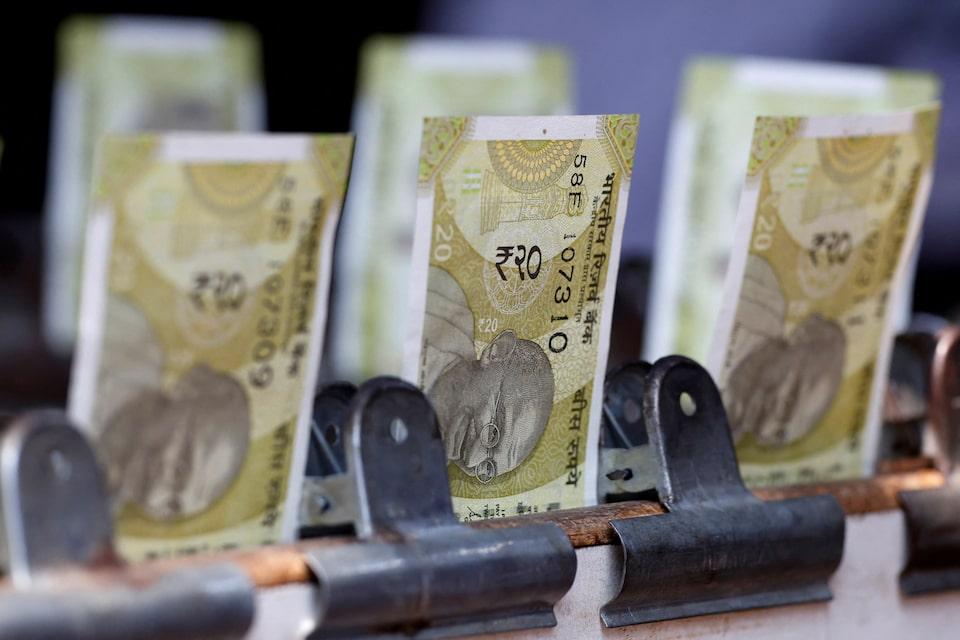
MUMBAI, May 23 (Reuters) - The Indian rupee rose sharply on Friday to post its best single-day gain in more than two years as worries over U.S. fiscal health and the impact of trade tariffs continued to weigh on the dollar, sparking a rally in emerging market currencies. The rupee closed at 85.2125 against the U.S. dollar, up 0.9% on the day, its best one-day gain since November 2022. Sign up here. For the week, the currency rose 0.3% as Friday's rally helped it recover from the dip past 86 to the dollar in the previous session. Persistent dollar sales from foreign banks, likely on behalf of custodial clients, and liquidation of bearish bets on the currency helped the recovery, traders said. The rupee's Friday move was a "rout" for the bearish bias that had built on the currency earlier in the week, when it failed to hold on to gains, a trader at a Mumbai-based bank said. Asian currencies rallied by as much as 1% as the dollar index fell 0.5% to 99.3, hovering near its weakest level in a fortnight. "With U.S.-Asian trade deals very much up for discussion over the coming months, $/Asia can stay under pressure," ING Bank said in a note. India's benchmark equity indexes, BSE Sensex (.BSESN) , opens new tab and Nifty 50 (.NSEI) , opens new tab led gains among Asian equities with a 1% rise while the country's benchmark 10-year bond yield declined. The rupee has broadly underperformed its emerging market peers this month. MSCI's EM currencies index (.MIEM00000CUS) , opens new tab is up 1.7% over May so far while the rupee has declined about 0.8%. In the near-term, the rupee is expected to hover between 84.80 and 85.80 but a breakout could prompt a pickup in corporate hedging which could accentuate the moves, said Abhilash Koikkara head of forex and rates at Nuvama Professional Clients Group. Traders await the Indian central bank's surplus transfer to the government, which is expected to be announced later in the day. https://www.reuters.com/world/india/rupee-soars-with-asian-peers-post-best-day-over-two-years-2025-05-23/
2025-05-23 09:17
LONDON, May 23 (Reuters) - Britain's statistics authorities have temporarily removed official status on Friday from producer price data published from November 2020 onwards, following the discovery of calculation errors. Britain's Office for National Statistics suspended the publication of new producer price data in March after finding an error in how 'chain-linking' methods had been coded into its data production systems. Sign up here. The Office for Statistics Regulation said on Friday it had agreed to a request from the ONS to remove the "accredited official status" from the older data, pending potential revisions. The changes affect the producer price indices including the export price index, import price index and services producer price indices. Measures of consumer price inflation are unaffected. https://www.reuters.com/world/uk/uk-removes-official-accreditation-past-producer-price-data-2025-05-23/
2025-05-23 09:01
Base rate seen on hold at 6.5% on May 27 Hardly any policy loosening seen through to end of 2025 Economists expect economy to grow by only 1% in 2025 BUDAPEST, May 23 (Reuters) - Hungary's central bank will keep interest rates unchanged again next Tuesday, according to a Reuters poll that expects hardly any loosening in monetary policy through to the end of 2025, due to inflation risks. All 14 analysts surveyed between May 19 and 23 said the base rate would stay at 6.5% for the 8th straight month at the May 27 policy meeting as the National Bank of Hungary tries to cut inflation with an economic recovery much weaker than expected. Sign up here. The poll's median projection is for the base rate to inch down to 6.25% by the end of 2025. On Thursday, Hungary's central bank governor, Mihaly Varga, said inflation expectations must be anchored in order for the bank to reach its inflation target in a sustainable manner, adding the fight against inflation is "not yet over". The central bank left its benchmark base rate steady in a unanimous decision in April and said a careful and patient approach to monetary policy was still needed. Hungarian inflation exceeded 5% in the first two months of the year before retreating to 4.8% in March and 4.2% in April. "We expect the NBH to keep its base rate unchanged at 6.50% at its upcoming meeting on May 27 and to retain its cautious forward guidance for the key policy rate to remain at its current level for a prolonged period of time," Morgan Stanley economist Georgi Deyanov said in a note. "We expect the central bank to acknowledge the improving inflation outlook but continue highlighting elevated risks to it and to hint at potential downside revisions to both its GDP and inflation forecasts at the subsequent June core meeting." New governor Varga, Prime Minister Viktor Orban's former finance minister, has ruled out rate cuts for the foreseeable future despite the poor GDP growth outlook. The poll sees Hungary's economy growing by only 1% this year, below the central bank's latest forecast for 1.9% to 2.9% published in March. Standard & Poor's cut Hungary's credit rating outlook to negative from stable last month. Two other rating agencies, Moody's and Fitch, are both expected to review their assessment of Hungary's credit standing in the coming weeks. https://www.reuters.com/business/finance/hungarian-central-bank-leave-base-rate-steady-again-eyeing-cpi-risks-2025-05-23/

2025-05-23 08:48
May 23 (Reuters) - Chip behemoth Nvidia is closing the U.S. earnings season, as investors digest the appearance of the bond vigilantes in the usually rather sedate corner of long-term government debt. Central banks in Australia, New Zealand and South Korea hold rate meetings as inflation data from around the globe provides evidence of the economic fallout from the tectonic shifts in U.S. trade policy. Sign up here. Here's your look at the week ahead from Dhara Ranasinghe, Samuel Indyk and Sinead Cruise in London, Lewis Krauskopf in New York and Kevin Buckland in Tokyo. 1/ ENDING ON A CHIP Results from Nvidia (NVDA.O) , opens new tab - a behemoth in the artificial intelligence field that has become a sparring ground in global trade and geopolitics - are due on Wednesday and round out the Q1 U.S. reporting season. Nvidia is part of the "Magnificent Seven" megacaps, whose shares have rebounded sharply since early April after a rough start to the year. Its AI chips have helped catapult the company to become one of the world's largest by market value and given it heft in world equity indexes. But after two years of massive gains, the stock's performance has levelled off so far in 2025. Nvidia's report could test the stock market rebound, with the S&P 500 approaching record highs after teetering on the brink of a bear market last month. 2/ HOME TO ROOST It's no surprise that government debt levels have surged given relentless pressure to raise spending on everything from defence to healthcare, aging populations and climate change. But the consequences of governments not doing enough to improve their finances are coming home to roost. Just days after the U.S. lost its top-notch triple-A credit rating with Moody's, a $16 billion sale of 20-year U.S. Treasuries saw soft demand and Japan had its worst auction result since 2012 - sending 30-year government bond yields to record highs. A corner of the bond market not known for its volatility - long-dated government bonds - has suddenly become a hot spot. In addition to surging Japan government bond yields, 30-year U.S. yields are back above 5%, dragging others higher. Japan sells more long-dated debt in the days to come. Watch those auctions. The bond vigilantes are back. 3/ HANKERING TO HIKE Unbowed by aggressive and unpredictable U.S. tariffs - or even the recent melt-up in bond yields - the Bank of Japan has kept a very calm demeanour in saying it plans to keep raising interest rates if prices gain in line with forecasts. A surge in rice prices has driven upward momentum. The bellwether Tokyo consumer price index is due on May 30, front-running the nationwide reading by three weeks. Figures a month ago scaled a two-year high. Australia's inflation data on Wednesday will be watched after the central bank cut rates in May and signalled an openness to additional easing, with cooling prices giving policy makers room to do so. New Zealand's central bank is seen trimming the cash rate by another quarter point the same day. On Thursday, the Bank of Korea looks ready to cut amid concerns about growing economic headwinds. 4/ PRESSURE GAUGE Inflation is returning to the top of policy makers' agenda elsewhere too. The Fed's targeted inflation metric, Personal Consumption Expenditures, for April, due on May 30, could paint a clearer picture of the impact U.S. tariffs are having. April was a volatile month after U.S. President Donald Trump's tariff onslaught on April 2, but recent consumer and producer prices data have not flashed inflationary warning signs just yet. Price pressures were clearly playing on the Fed's collective minds when it kept rates steady this month, with a warning that the risk of higher inflation had increased, dampening expectations for near-term rate cuts. The euro zone's biggest economies - France and Germany - report consumer prices data on Tuesday and Friday, bloc-wide figures follow the week after. 5/ MEGA MAY With fears for the U.S.'s massive debt pile quashing a relief rally in its assets, investors are planning how they might defend portfolios from more wild swings in the world's largest economy. Top money managers at JPMorgan (JPM.N) , opens new tab and Goldman Sachs (GS.N) , opens new tab are laying on more hedges to diffuse some of the hits to U.S. Treasuries and stocks. Others are using the dog days of May to sell down with greater conviction, diversifying exposures by pumping more money into Europe. European equity exchange-traded funds have pulled in 34 billion euros ($38.6 billion) of cash over the year to May 16 - four times the 8.2 billion euros put in U.S. equity funds, Morningstar data shows. By comparison, in 2024, net flows into U.S. equity funds in Europe had dominated by a ratio of more than 8:1 over locally-focused products. https://www.reuters.com/business/take-five/global-markets-themes-graphic-2025-05-23/