2025-05-22 21:16
ORLANDO, Florida, May 22 (Reuters) - TRADING DAY Making sense of the forces driving global markets Sign up here. By Jamie McGeever, Markets Columnist Wall Street rally evaporates Investors drew breath on Thursday from the recent selling across markets fueled by weakness in long-dated government debt, and pushed up stocks, the dollar and bond prices. But Wall Street's rebound lacked conviction and fizzled out, pointing to a lackluster open on Friday. In my column today I look at the dollar. There is no shortage of economic fundamental reasons to be bearish in the long term, but perhaps the recent selling has gotten a little excessive. More on that below, but first, a roundup of the main market moves. If you have more time to read, here are a few articles I recommend to help you make sense of what happened in markets today. Today's Key Market Moves Selloff on nervy hold The relative calm across markets on Thursday came amid purchasing managers' index data that showed the downturn for British and Japanese firms eased in May, and U.S. business activity accelerated amid a truce in the trade war between Washington and Beijing. Investors latched onto the 'activity' side of the U.S. report, and parked to one side the 'prices' data that showed rising prices of imported goods for companies and consumers. Inflationary pressures are intensifying. Asian markets open on Friday to the latest producer price inflation figures from South Korea, and consumer inflation data from Singapore and Japan. The figures from Tokyo are expected to show Japan's core inflation rose in April at its fastest pace in two years, adding to pressure on the Bank of Japan to raise interest rates. Japan's bond market is at the epicenter of the global turmoil in long-dated sovereign debt. This week a 20-year auction drew the weakest demand since 2012, and 30- and 40-year yields both surged to their highest levels on record. Punchy inflation figures could push yields back up again, which would further complicate life for the BOJ - it doesn't want to intervene buying bonds, but it won't be able to stand by and do nothing if yields continue to rise. Inflationary pressures in the euro zone, meanwhile, appear to be less intense. European Central Bank policymakers reckon the inflation shock is "nearly over" and expect disinflationary forces to dominate in the short term. Investors will be paying close attention to a speech by increasingly influential ECB board member Isabel Schnabel on Friday. She is seen as an inflation 'hawk' and has been vocal in her opposition to further rate cuts. Fiscal worries in the United States loom large over markets, despite the respite on Thursday, and the House of Representatives' narrow passing of President Donald Trump's tax bill will do nothing to alleviate those concerns. If anything, it might add to them. The bill aims to extend Trump's 2017 tax cuts, deliver new tax breaks on tips and car loans and boost spending on the military and border enforcement. All told, it will add some $3.8 trillion to the $36.2 trillion federal debt over the next decade, the nonpartisan Congressional Budget Office estimates. An auction of 10-year inflation-protected Treasuries on Thursday was smoother than Wednesday's 20-year note auction, and Federal Reserve Governor Christopher Waller said he still sees a path to rate cuts later this year. Overall then, it was a quieter, calmer day for markets on Thursday. Can the week close out in the same vein? Dollar sliding fast, but pace can't last There are plenty of fundamental economic reasons to hold a long-term negative view on the U.S. dollar, but the selling and bearish sentiment currently smothering the greenback may be overdone. The dollar has lost 5% of its value against a basket of major currencies since Trump's tariff 'Liberation Day' on April 2, and has fallen 10% since mid-January, when it was its strongest in more than two years. The economic and policy uncertainty caused by Trump's trade war and its chaotic implementation have dimmed the dollar's allure, while Trump's drive to rip up the world economic order of the last 80 years and his attacks on Federal Reserve Chair Jerome Powell have also alarmed investors. What's more, if the Trump administration is to revive U.S. manufacturing, reduce the trade deficit and rebalance global trade, a weaker exchange rate must be part of the plan. Clarity around some of these issues may not come for a while. The U.S.-China tariff truce expires on July 9 and Trump's tax-cut bill may not be finally approved until the July 4 recess, by which time the debt ceiling issue will be coming on investors' radar again. This is the backdrop against which many investors are now reassessing their exposure to dollar-denominated assets. That includes Treasuries, especially longer maturity bonds, which are feeling the heat from burning worries over Washington's debt and deficits. With the world's reserve currency and reserve asset under pressure, it's little wonder U.S. stocks are under-performing most global peers this year too. Added together, that's a powerful headwind for the dollar, despite the recent tailwind from the U.S.-Sino trade detente. But as is often the case in financial markets, traders and investors may have gotten a bit ahead of themselves. Bearish sentiment and positioning are now at extreme levels, according to some measures. TOO MUCH, TOO SOON Bank of America's latest global fund manager survey showed that exposure to the dollar this month was the lowest since May 2006, a 19-year low. A net 17% of investors in the survey are now underweight the dollar. The same survey also showed that a "U.S. dollar crash on international buyers' strike" is now considered to be the third biggest tail risk to world markets, according to investors, only marginally behind inflation forcing the Fed to raise interest rates. The multi-year process of "de-dollarization" may be underway but a buyers' strike is highly unlikely, even in these febrile and uncertain times. While "real money" investors like pension and insurance funds, sovereign wealth funds and reserve managers may reallocate capital over the course of several months, speculators and hedge funds move much quicker. And further. Commodity Futures Trading Commission data shows that hedge funds are holding an overall short dollar position - effectively a wager that the currency will weaken - worth $17 billion, one of the biggest short positions in years. Moreover, as recently as January funds held a net long position worth $35 billion, their most bullish dollar bet in nine years. Positioning in the yen is particularly extreme - bullish bets on the Japanese currency have never been bigger. With calls mounting for the Bank of Japan to pause its rate hikes and resume bond buying to stabilize the long end of the curve, the yen's upside from here may be limited. Oddly, the dollar's lurch lower has gone against the latest, hawkish shifts in Fed rate expectations. U.S. rates futures markets are now barely pricing in two quarter-point rate cuts this year, with the first not coming until October. Compare that with four cuts starting in June that traders were anticipating only a couple of months ago. There are also signs that the dollar's tight and well-established correlation with U.S.-euro zone yield spreads has broken down in recent weeks. But history suggests that correlation will re-establish itself pretty quickly. The dollar and exchange rates will be a key topic of discussion among finance ministers and central bank chiefs from the Group of Seven nations meeting in Canada this week. They will no doubt also feature in Washington's bilateral talks with key trading partners, particularly in Asia, as trade deals are thrashed out. The dollar's longer-term direction may be lower. In the near term though, a pause or even correction may be warranted. What could move markets tomorrow? Opinions expressed are those of the author. They do not reflect the views of Reuters News, which, under the Trust Principles , opens new tab, is committed to integrity, independence, and freedom from bias. https://www.reuters.com/world/china/global-markets-trading-day-graphic-pix-2025-05-22/
2025-05-22 21:04
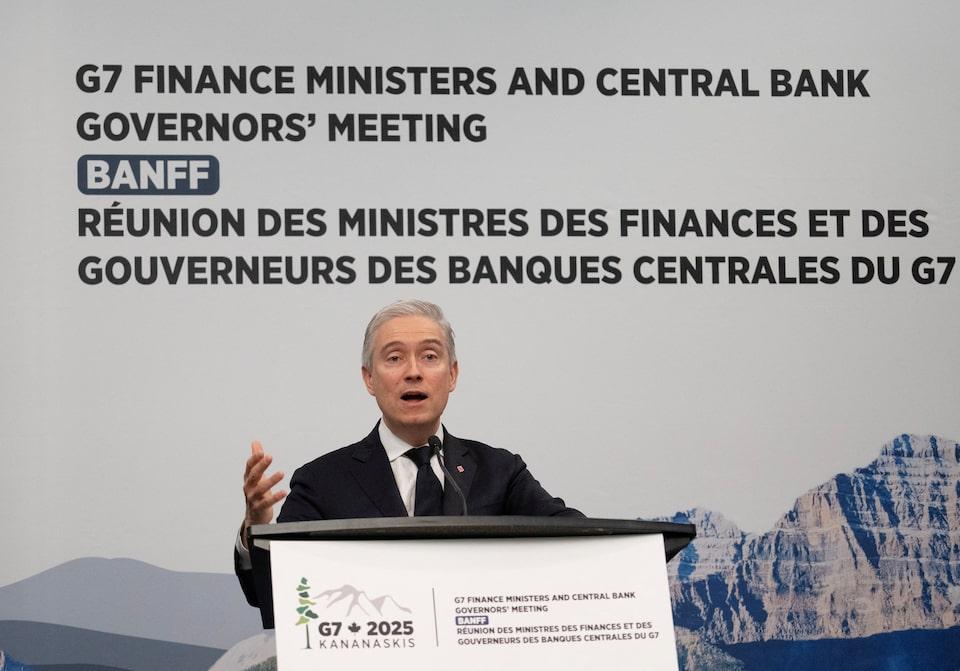
BANFF, Alberta, May 22 (Reuters) - Canada's Finance Minister François-Philippe Champagne said on Thursday that the discussions on tariffs did come up during a G7 finance leaders' meeting, even though there was mention of them in the final communique that was published. "They are not skating around the fact that tariffs are an issue," Champagne, who is also the chair of the G7 finance leaders, told reporters in a news briefing at the end of the meeting. Sign up here. U.S. President Donald Trump's barrage of tariffs on Canada and other G7 members have started hurting the economies of these countries and fragmented world order of global trade. With U.S. Treasury Secretary Scott Bessent present at the meetings, there was speculation on whether common ground would be achieved. "We are trying to enhance growth and stability, and obviously tariffs are something in that context that you can't avoid discussing," he said. https://www.reuters.com/world/americas/canadas-champagne-says-g7-ministers-not-skating-around-tariff-issue-2025-05-22/
2025-05-22 21:02
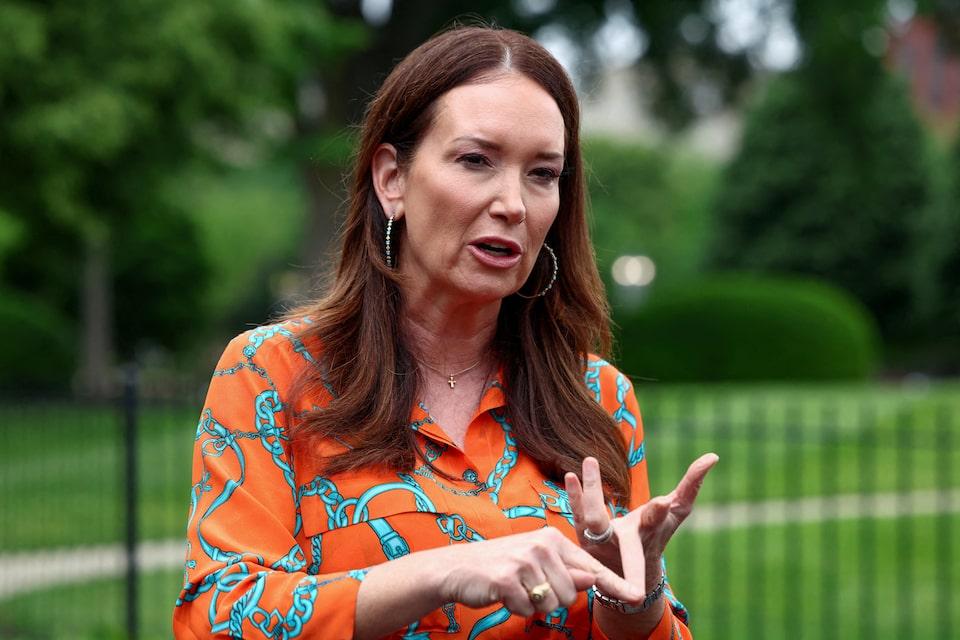
WASHINGTON, May 22 (Reuters) - U.S. Agriculture Secretary Brooke Rollins said on Thursday that she had signed waivers from Iowa and Indiana that would allow the states to bar the purchase of some processed foods and sugary drinks with Supplemental Nutrition Assistance Program benefits. President Donald Trump's administration has encouraged states to submit such waivers to the Department of Agriculture as part of its Make America Healthy Again initiative led by Health Secretary Robert F. Kennedy, Jr. Sign up here. Rollins said at a White House event celebrating the release of a report on childhood disease that she had signed the two waivers earlier in the day and that more approvals would be forthcoming. "We are on track to sign multiples of SNAP waivers to get junk food and sugary drinks out of our food stamp system," Rollins said. Rollins on Monday announced she had signed a similar waiver from Nebraska. The state will exclude all sodas and energy drinks from SNAP purchases beginning January 1, 2026, according to a copy of the waiver on the USDA website. More than 42 million Americans receive benefits through SNAP, the nation's largest food aid program. https://www.reuters.com/business/healthcare-pharmaceuticals/us-farm-agency-allow-iowa-indiana-bar-junk-food-soda-food-aid-2025-05-22/
2025-05-22 20:52
May 22 (Reuters) - Geothermal energy in the Great Basin of Nevada and adjoining states could produce electricity equivalent to 10% of the current U.S. power supply, the U.S. Geological Survey said on Thursday. The projected 10% would be a major increase, considering that geothermal energy currently contributes less than 1% to the nation's power supply, the agency said in a note. Sign up here. "Provisional assessment shows potential for 135 gigawatts of baseload power – if current technology works at scale in Nevada and 5 adjoining states," it noted. Geothermal energy refers to heat generated within the Earth that can be harnessed for uses including heating, cooling and electricity generation. With adequate technological advancements in coming years, the geothermal potential in the Great Basin is sufficient to fulfill a significant portion of the nation's electrical requirements, the agency added. Following the assessment in the Great Basin, the next region to be evaluated will be the Williston Basin in North Dakota, according to the agency. https://www.reuters.com/sustainability/boards-policy-regulation/us-agency-says-geothermal-energy-nevadas-great-basin-could-play-larger-role-2025-05-22/

2025-05-22 20:36
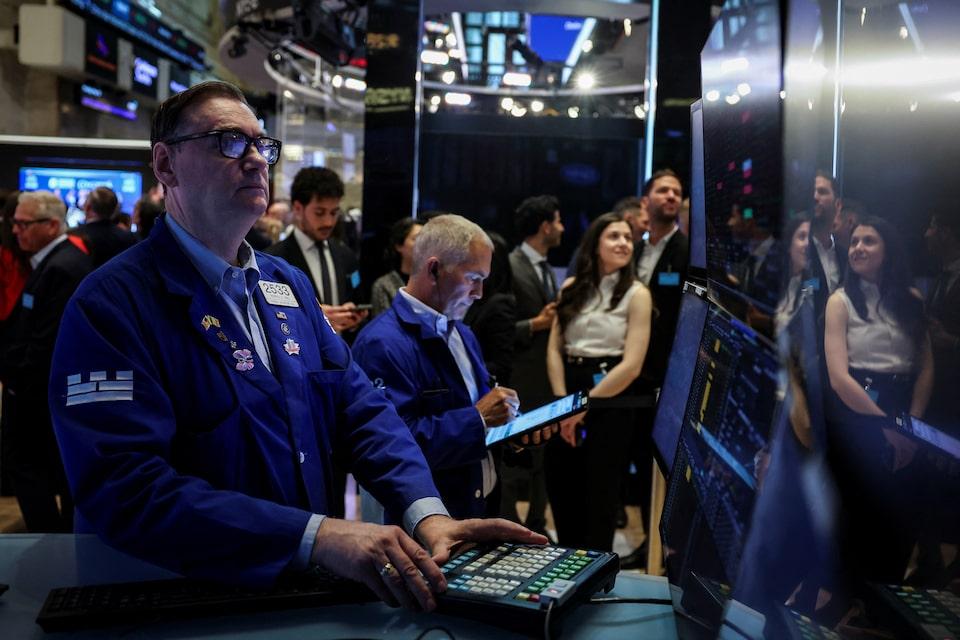
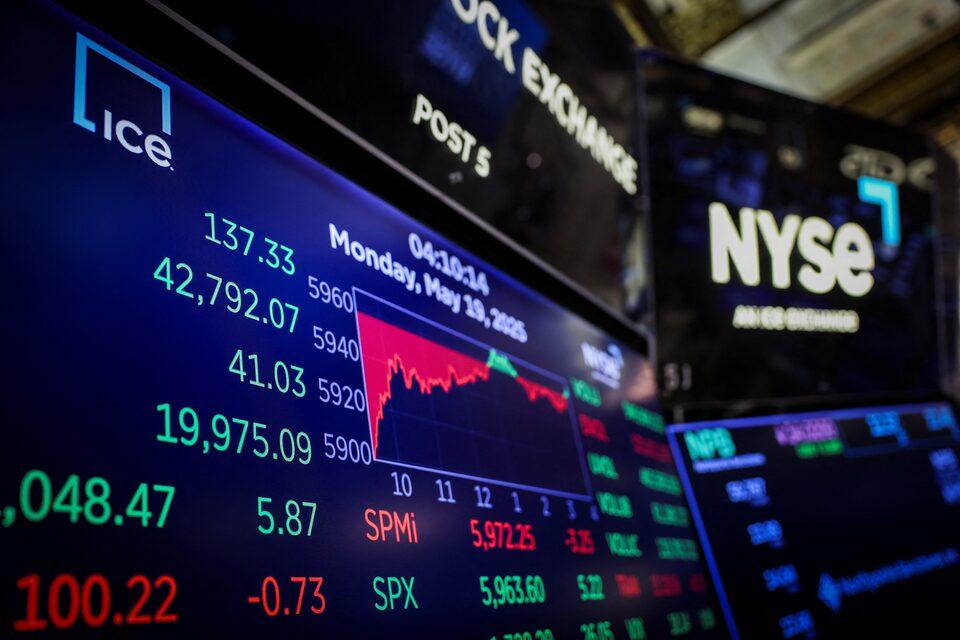
Dow and S&P 500 finish flat while Nasdaq up 0.28% Snowflake jumps after raising product revenue outlook Alphabet hits nearly three-month high Solar stocks fall on fears of subsidies ending NEW YORK, May 22 (Reuters) - U.S. stocks closed a choppy session little changed on Thursday, erasing initial declines as Treasury yields eased off recent highs after the House of Representatives passed U.S. President Donald Trump's tax and spending bill. Recent concerns about the U.S. deficit have pushed up Treasury yields and pressured stocks, but longer-dated yields fell on Thursday, allowing stocks to take a breather. The benchmark U.S. 10-year note yield fell 5.4 basis points to 4.543% after hitting its highest since February. Sign up here. The benchmark S&P 500 and the Dow Jones Industrial Average ended flat, while the Nasdaq edged higher. All three major Wall Street indexes had posted their biggest single-day percentage drops in a month on Wednesday as Treasury yields spiked on U.S. debt worries. The Republican-controlled House voted by a slim margin to pass the bill, which would fulfill many of Trump's campaign pledges to his political base, but will increase the $36.2 trillion U.S. debt pile by $3.8 trillion over the next decade, according to the nonpartisan Congressional Budget Office. Investors are also weighing the impact of Trump's tariffs on U.S. imports, including on consumer prices. "The problem today was the tax bill, which appears to have passed," said George Young, partner and portfolio manager at Villere & Co in New Orleans. "But we are thinking about bigger potential problems and the two main things on the table are tariffs and interest rates." "The market hates uncertainty and we've still got this overhang of the tariffs and the bond market, which is totally apolitical and totally international," Young added. The Dow Jones Industrial Average (.DJI) , opens new tab fell just 1.35 points to 41,859.09, the S&P 500 (.SPX) , opens new tab lost merely 2.60 points or 0.04% at 5,842.01 and the Nasdaq Composite (.IXIC) , opens new tab gained 53.09 points, or 0.28%, at 18,925.74. Eight out of 11 S&P 500 subsectors finished lower, led by utilities, healthcare, energy and consumer staples stocks. Consumer discretionary, communication services and technology stocks advanced. Megacap growth stocks, including Nvidia (NVDA.O) , opens new tab, Amazon (AMZN.O) , opens new tab and Tesla , gained. Alphabet (GOOGL.O) , opens new tab was 1.3% firmer after touching a nearly three-month high. Apple (AAPL.O) , opens new tab ended down 0.36%. Snowflake (SNOW.N) , opens new tab jumped more than 13% after the cloud computing firm raised its fiscal 2026 product revenue forecast. Analog Devices (ADI.O) , opens new tab fell 4.6% despite the semiconductor manufacturer beating Wall Street estimates for quarterly results. Shares of solar energy companies including First Solar (FSLR.O) , opens new tab dropped as Trump's tax bill is expected to end a number of green-energy subsidies. First Solar finished down 4.3%. Declining issues outnumbered advancers by a 1.17-to-1 ratio on the NYSE. There were 68 new highs and 99 new lows on the NYSE. The S&P 500 posted four new 52-week highs and nine new lows while the Nasdaq Composite recorded 49 new highs and 109 new lows. Volume on U.S. exchanges was 16.09 billion shares, compared with the 17.56 billion average for the full session over the last 20 trading days. https://www.reuters.com/business/us-stock-futures-muted-trumps-tax-bill-stokes-debt-concerns-2025-05-22/
2025-05-22 20:31
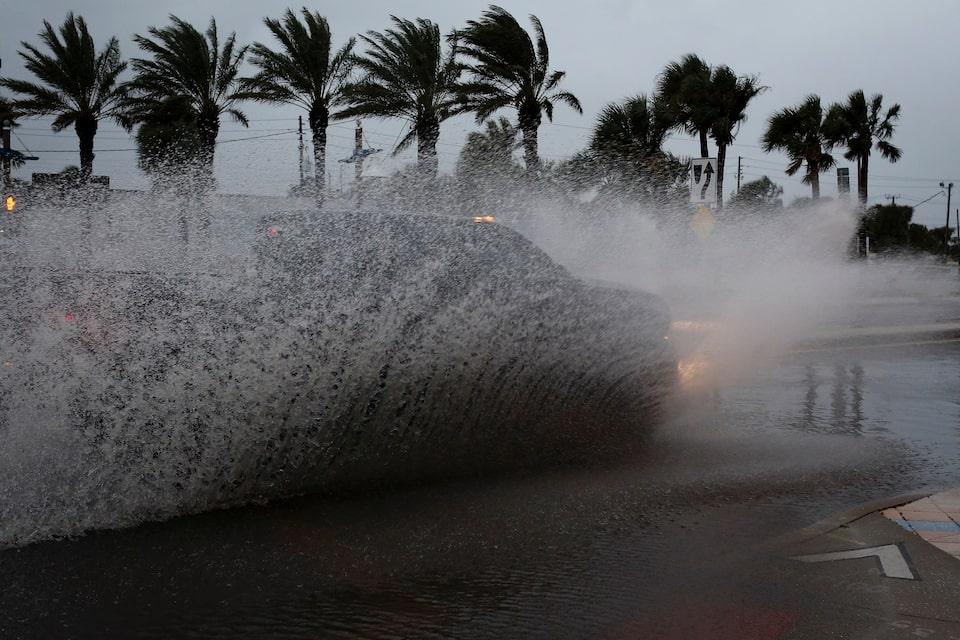
NOAA staffing cuts won't affect hurricane forecasts, NWS says Critics worry cuts may hinder storm monitoring in key regions FEMA absent from hurricane forecast briefing HOUSTON, May 22 (Reuters) - U.S. government scientists forecast an above-normal 2025 hurricane season on Thursday, and said big staffing and budget cuts at the National Oceanic and Atmospheric Administration would not hinder its ability to forecast devastating storms and warn the public. The Atlantic hurricane season begins on June 1 and is forecast to produce three to five major hurricanes with sustained winds of at least 111 miles (179 km) per hour, according to the U.S. National Weather Service, which is overseen by NOAA. Sign up here. The weather service forecast 13 to 19 named tropical storms with winds of at least 39 mph, of which six to 10 are forecast to become hurricanes with winds of 74 mph or higher. "Warmer sea surface temperatures are probably the major contributor to this," NWS director Ken Graham said at a news conference. Between 1991 and 2020, there were an average of 14.4 named tropical storms annually in the Atlantic, including on average 3.2 major hurricanes among 7.2 hurricanes. Graham, along with officials from NOAA, said recent staff cuts made by the Trump administration's Department of Government Efficiency, led by Elon Musk, would not hamper hurricane response. Nearly 900 employees, more than 7%, of NOAA's workforce have been cut, leading to protests across the United States. "We had some folks go, but we're going to make sure that we have everything that we have on the front lines. Every warning's going to go out," Graham said. Critics of the cuts have raised concerns that the NWS would be unable to launch weather balloons and monitor local conditions ahead of storms that affect regions of the country involved in agriculture and energy production like the Midwest and U.S. Gulf Coast. Graham said the U.S. National Hurricane Center in Miami is fully staffed and emphasized that the weather service does not rely on single methods like weather balloons in the upper atmosphere to forecast tropical storms. He said the agency also uses data and photographs from satellites, ground observations and hurricane hunter aircraft, which fly through storms to create highly reliable models of their future progress. "The hurricane hunters are also ready to go, both at NOAA and the Air Force. That information we get from the hurricane hunters is crucial to the hurricane forecast," Graham said, adding that using those aircraft increased the accuracy of storm track and intensity forecasts by 10-20%. No representatives of the Federal Emergency Management Agency were present at Thursday's briefing. In the past, FEMA has participated in hurricane forecast briefings as a way to assure the public about the federal government's hurricane preparedness. FEMA did not immediately respond to a request for comment. Deanne Criswell, a FEMA administrator under former President Joe Biden, said participating in the briefings was an important way to show partnership between agencies. "It gave us an opportunity to talk about our readiness posture," she said. Academic and private weather forecasters have also issued forecasts for an above-normal hurricane season, which continues through November 30. Colorado State University meteorologists said in early April the 2025 hurricane season across the Atlantic basin will be above average, with 17 named tropical storms, including nine hurricanes, of which four are predicted to be major. In late March, AccuWeather called for between three and five major hurricanes out of seven to 10 hurricanes from 13 to 18 named tropical storms this year. The 2024 hurricane season was one of the costliest on record. There were five major hurricanes, out of a total of 11 hurricanes from 18 named storms. The deaths of 427 people were attributed to 2024's storms and losses totaled $130 billion. https://www.reuters.com/business/environment/us-scientists-forecast-above-normal-2025-hurricane-season-2025-05-22/