2026-01-20 07:32
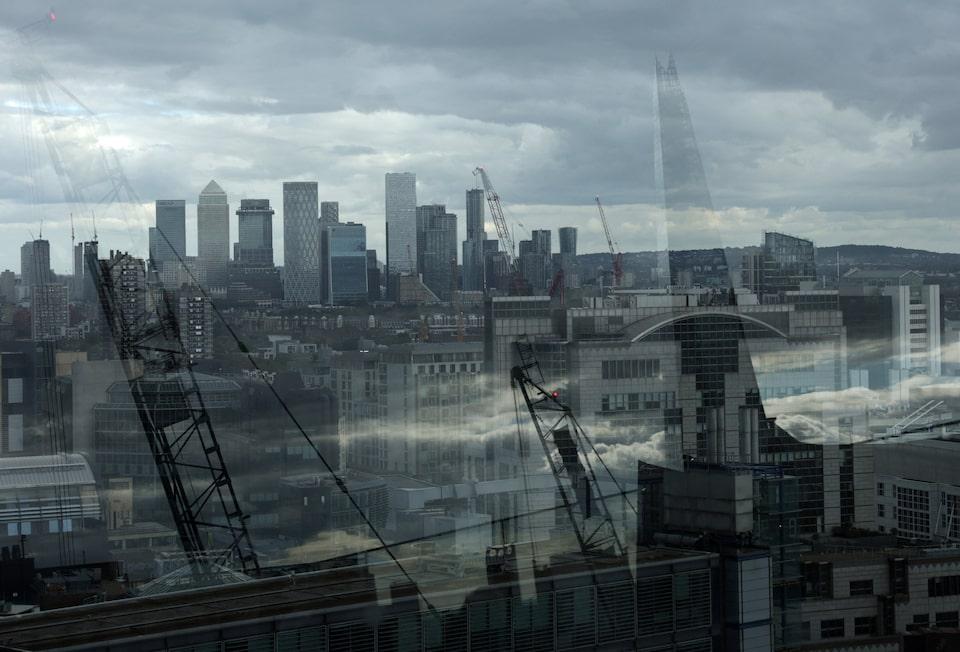
Private sector pay grows by least since November 2020 UK regular wage growth slows to 4.5% Jobless rate holds at 5.1%, highest since January 2021 Bank of England expected to hold rates in February LONDON, Jan 20 (Reuters) - Britain's jobs market weakened in the run-up to November's budget announcement by finance minister Rachel Reeves and wage growth slowed, data showed on Tuesday, potentially easing the Bank of England's worries about persistent inflation pressures. Economists saw some signs of stabilisation as job vacancies rose - suggesting some willingness to hire by employers - but the big picture remained one of caution in the jobs market. Sign up here. "The UK jobs market is in a more problematic phase with spiralling labour costs likely to mean notably higher unemployment," said Suren Thiru, economics director at the Institute of Chartered Accountants in England and Wales. "Though these discouraging figures will reinforce fears among policymakers over the health of the economy, the speed at which the jobs market is deteriorating is unlikely to be enough to trigger an interest rate cut next month." A measure of payrolls data from the tax office showed a drop of 43,000 in December from November, the biggest monthly fall since November 2020 although there have been bigger preliminary estimates of falls in that period which were subsequently revised up, an Office for National Statistics official said. A fall of 38,000 first reported for November was revised to show a decline of 33,000 people in payrolled employment. Annual pay growth in the private sector excluding bonuses - which is being closely watched by the Bank of England - slowed to 3.6% in the three months to November, its slowest rise since November 2020, from 3.9% in the three months to October. Overall core pay growth slowed to 4.5% in the September-to-November period compared with a year earlier, slightly below the 4.6% growth in the three months to October and in line with economists' expectations in a Reuters poll. The jobless rate - which is based on a survey that the ONS is in the process of overhauling after responses fell to low levels - held at 5.1%, as expected, and the highest since January 2021. BOE LIKELY TO HOLD RATES NEXT MONTH The BoE, which is expected to hold rates at 3.75% in February, is watching pay as a gauge of how long Britain's still high rate of inflation is likely to last. The pound weakened against the dollar and the euro after the data was published. Financial markets are pricing in one or two 0.25 percentage-point interest rate cuts by the end of 2026. Jack Kennedy, senior economist at jobs website Indeed, said a 10,000 rise in vacancies to 734,000 in December represented a bright spot in Tuesday's data. "But a clearer improvement in the UK economic outlook is likely needed before hiring activity picks up more meaningfully," Kennedy said. "Lower interest rates would be the most obvious catalyst, potentially supporting consumer spending." British inflation is likely to have edged up to 3.3% in data for December due to be published on Wednesday but BoE Governor Andrew Bailey has said he expects it will sharply fall to around the central bank's 2% target in April or May. Figures published last week showed stronger-than-expected growth in the economy during November after months of caution among businesses ahead of finance minister Rachel Reeves' budget that month. However, the economy is expected to grow by only 1.3% in 2026, the International Monetary Fund said on Monday, barely half its average pace in the roughly 15 years before the 2007-09 financial crisis. https://www.reuters.com/sustainability/sustainable-finance-reporting/uk-wage-growth-slows-45-three-months-november-ons-says-2026-01-20/
2026-01-20 07:24
Jan 20 (Reuters) - Shell PLC (SHEL.L) , opens new tab on Tuesday announced changes to its executive committee and said that Robin Mooldijk, president, projects and technology, will step down effective February 28. The company said that following Robin's departure, its executive committee will reduce in size from nine to eight members. Sign up here. https://www.reuters.com/business/energy/shells-projects-technology-president-robin-mooldijk-step-down-2026-01-20/
2026-01-20 07:21
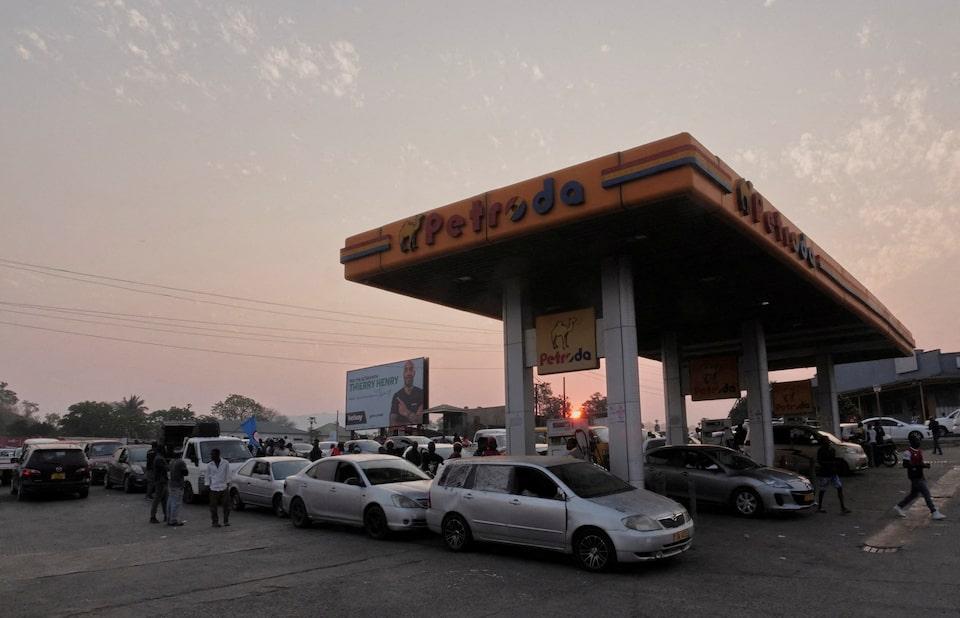
BLANTYRE, Jan 20 (Reuters) - Malawi's energy regulator hiked the price of petrol and diesel for the second time in four months on Tuesday to prevent fuel shortages and preserve scarce foreign exchange. The cost of petrol was hiked by almost 42% to 4,965 kwacha ($2.90) per litre, while diesel was increased by about 41% to 4,945 kwacha per litre, the Malawi Energy Regulatory Authority said in a statement. Sign up here. President Peter Mutharika, who returned to power last year, is trying to turn around the economic fortunes of the donor-dependent Southern African country. His government is also trying to negotiate a new support programme from the International Monetary Fund, restructure its debt and boost dwindling international reserves as part of turnaround efforts. Fuel shortages under his predecessor Lazarus Chakwera, were a major source of public frustration. The regulator said fuel prices had not been adjusted upwards as they should have under Chakwera's government, which meant insufficient fuel was imported, and levies to maintain roads and electrify rural areas were not remitted. Artificial fuel prices created arbitrage opportunities for smugglers, depleting the country's foreign exchange resources, it said. ($1 = 1,717.0200 kwacha) https://www.reuters.com/sustainability/boards-policy-regulation/malawi-hikes-fuel-prices-second-time-four-months-2026-01-20/
2026-01-20 07:11
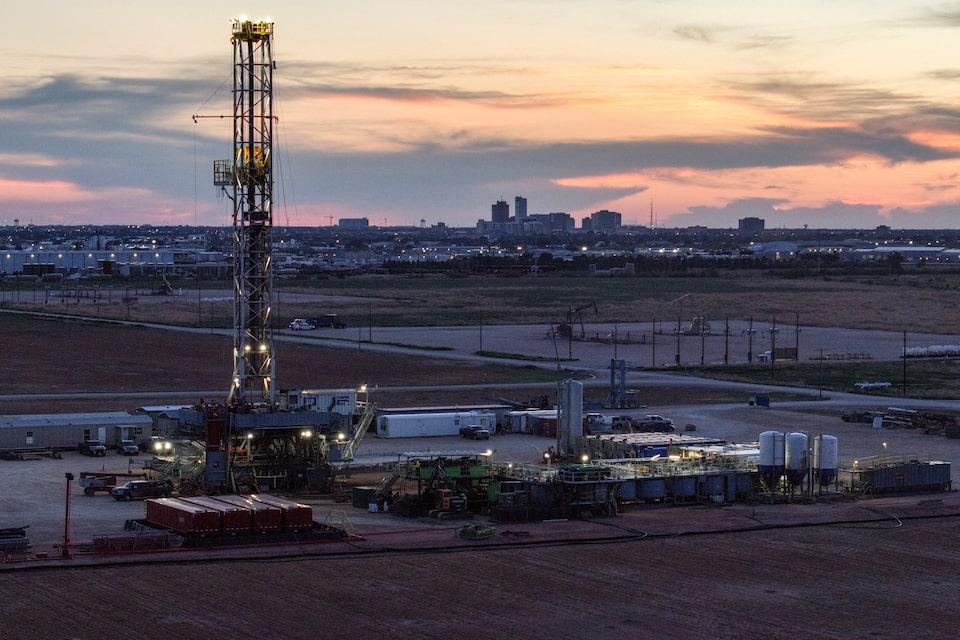
LONDON, Jan 20 (Reuters) - President Donald Trump has lavished the U.S. oil industry with favourable policies since returning to the White House, but his twin demands for cheap oil and “energy dominance” are increasingly colliding with companies’ bottom lines. Over the past year, the Republican president has rolled out numerous pro‑fossil fuel measures and offered strong support for U.S. oil firms abroad, a sharp departure from his Democratic predecessor Joe Biden’s focus on combating climate change. Sign up here. Within hours of taking office, Trump declared a national energy emergency, opening the way to relaxed environmental rules and expanded drilling permits on federal land and in Alaska. He also quickly lifted Biden’s freeze on permitting new liquefied natural gas (LNG) terminals and sped up project approvals. The policies are set to reinforce America’s status as the world's largest oil and gas producer. U.S. crude oil and liquids production is projected to hit a record of nearly 24 million barrels per day in 2026, accounting for 22% of global supply, according to the Energy Information Administration , opens new tab. What’s more, the U.S. in 2025 became the first country to export more than 100 million metric tons of LNG in a single year, powered by production from new plants. But the industry’s early enthusiasm for Trump’s “drill, baby, drill!” ethos has been tempered by his push for low energy prices and his appeals to the Organization of the Petroleum Exporting Countries to increase output. OPEC+, which includes Russia, sharply raised production targets throughout the year, sending U.S. benchmark crude to a near five‑year low of $55 a barrel in mid‑December. The price drop, and expectations of a future global supply glut, pushed U.S. drillers to scale back operations, with the domestic oil rig count falling 15% over the past year, according to energy service provider Baker Hughes(BKR.O) , opens new tab . That pullback is set to slow the pace of U.S. output growth this year and next. ENERGY DOMINO At the same time, Trump has used America’s oil and gas strength to advance his “energy dominance” agenda and the so‑called Donroe doctrine, his rebranding of a 19th‑century principle asserting U.S. influence over the Americas. The administration has wielded its oil and LNG wealth in negotiations intended to narrow trade imbalances with dozens of countries. Some counterparties, such as the European Union, have agreed to aggressive and unrealistic supply commitments that risk making buyers wary of depending heavily on the U.S. for vital energy. The centrality of oil in Trump's strategy was made crystal clear when U.S. forces captured Venezuelan President Nicolas Maduro in early January on drug trafficking charges, prompting Trump to quickly announce that Washington would indefinitely take control of the oil riches of a country home to the world’s largest proven reserves – some 300 billion barrels. In a televised White House meeting with oil executives on January 9, Trump declared that his administration would soon name the companies that will be asked to invest a combined $100 billion to rebuild Venezuela's derelict oil industry. But it is far from clear if top companies such as Exxon Mobil (XOM.N) , opens new tab or Chevron (CVX.N) , opens new tab would commit to investing heavily in the Latin American country, given immense political and economic risks and long‑standing doubts about the attractiveness of developing its oil resources. Exxon CEO Darren Woods underscored this at the White House meeting, calling Venezuela “un-investable” and citing the company’s history of being forced out of the country twice in recent decades. Trump bristled at Woods’s remarks, calling them “too cute,” adding later that he was inclined to keep Exxon out of the country. Defying Trump therefore risks meaningful backlash. THE BEAR HUG Venezuela may become a template for Trump’s broader use of U.S. oil companies as geopolitical instruments. He could, for example, attempt to draw them into Russia as part of a sweeping deal to end Moscow’s nearly four‑year-long full‑scale invasion of Ukraine. But deeper government involvement in commercial decision‑making carries major risks for the financial integrity of these firms. More broadly, the growing volatility of U.S. politics – under both Democrats and Republicans – poses increasing risks for the industry, as successive administrations reverse or discard their predecessors’ policies, particularly those enacted through executive orders rather than legislation. In short, the more friendly Trump’s policies are towards the oil sector today, the greater risk there is of significant whiplash if an environmentally focused administration comes into office. Trump’s embrace of the oil industry was widely welcomed after what many companies viewed as Biden’s relative hostility. But his strongman style risks turning that warm embrace into a bear hug. Want to receive my column in your inbox every Monday and Thursday, along with additional energy insights and links to trending stories? Sign up for my Power Up newsletter here. Enjoying this column? Check out Reuters Open Interest (ROI), , opens new tabyour essential new source for global financial commentary. ROI delivers thought-provoking, data-driven analysis. Markets are moving faster than ever. ROI , opens new tab can help you keep up. Follow ROI on LinkedIn , opens new tab and X. , opens new tab (The views expressed here are those of the author, a columnist for Reuters) https://www.reuters.com/business/energy/trumps-embrace-oil-industry-is-turning-into-an-awkward-grip-2026-01-20/
2026-01-20 06:40
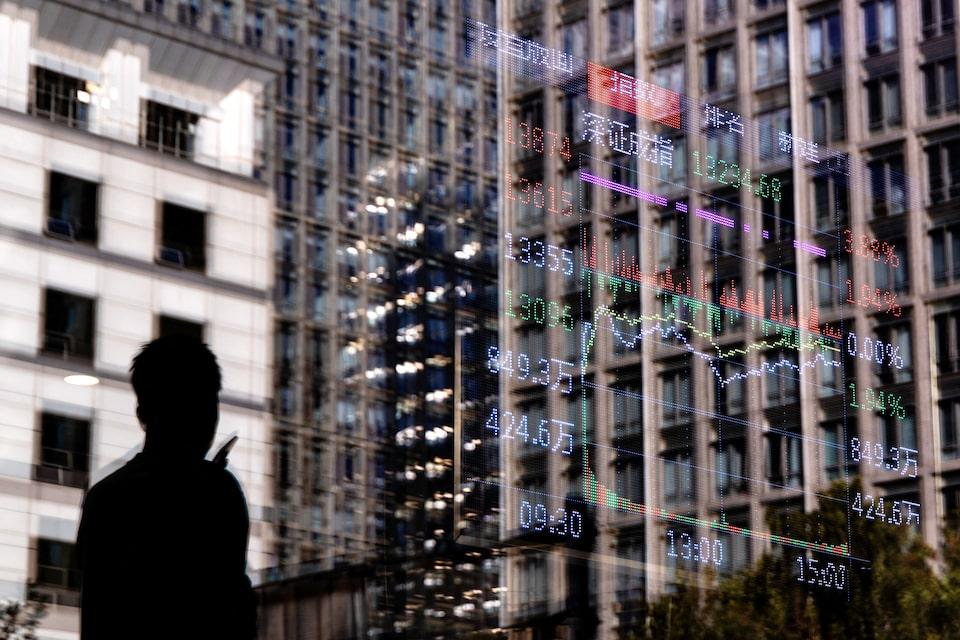
Trump steps up push to take control of Greenland Stocks selloff across Wall Street, Europe and Asia US Treasury yields spike, curve steepens Gold, silver climb to record highs NEW YORK/PARIS, Jan 20 (Reuters) - A widespread selloff spread across equities on Wall Street, Europe and Asia on Tuesday following market volatility stirred by U.S. President Donald Trump's threats to reignite a trade war with Europe over Greenland. Trump said he no longer thought "purely of peace" after he did not win the Nobel Peace Prize and reiterated a threat to increase tariffs on EU members Denmark, Finland, France, Germany, Sweden, and the Netherlands, along with Britain and Norway, until the U.S. is allowed to buy Greenland. Sign up here. The threat reignited the "Sell America" trade that had emerged after Trump's "Liberation Day" levies announced last April. EU leaders will discuss possible responses, including tariffs worth 93 billion euros ($109 billion) on U.S. imports, at an emergency summit in Brussels on Thursday. "The geopolitical risks that we've been talking about for a long time are re-emerging and are shifting market perceptions of common alliances across allies in Europe," said Wasif Latif, chief investment officer at Sarmaya Partners in New Jersey. "That is coupled with what's going on in Japan with the JGB yields continuing to rise and the market caught asleep at the wheel on that risk that's out there. So it's all coming together for a pretty significant risk-off day." The Dow Jones Industrial Average (.DJI) , opens new tab fell 1.76%, the S&P 500 (.SPX) , opens new tab fell 2.06% and the Nasdaq Composite (.IXIC) , opens new tab fell 2.39%. The indexes notched their biggest daily loss since October 10 while Wall Street's most-watched gauge of investor anxiety, the Cboe Volatility Index (.VIX) , opens new tab, jumped to an eight-week high of 20.99. Europe's STOXX 600 fell 0.7% on the day, having already fallen 1.2% on Monday (.STOXX) , opens new tab, while the MSCI World Equity Index was down 1.39% (.MIWD00000PUS) , opens new tab. The FTSE 100 fell 0.67% (.FTSE) , opens new tab. Overnight in Asia, MSCI's broadest index of Asia-Pacific shares outside Japan (.MIAPJ0000PUS) , opens new tab closed 0.55% lower, while Japan's Nikkei (.N225) , opens new tab fell 1.11%. Japanese government bonds (JGBs) plunged, sending yields to record highs, after Prime Minister Sanae Takaichi's calling of a snap election shook confidence in the country's fiscal health. "But we have to take all this with a grain of salt because what we've seen in prior times is that we get a risk-off and a selloff like this and the Trump administration and the powers that be walk things back and calm things down," Latif added. U.S. Treasury Secretary Scott Bessent told reporters in Davos on Tuesday that he was confident the U.S. and European countries would find a solution over the Trump administration's aim to take over Greenland, brushing off "hysteria" about a possible trade war. TARIFFS THREATENED ON FRENCH WINES AND CHAMPAGNE Trump separately threatened to hit French wines and champagne with 200% tariffs, in an apparent effort to cajole French President Emmanuel Macron to join his Board of Peace initiative. Amelie Derambure, senior multi-asset portfolio manager at Amundi in Paris, said that the downward move in markets was "precautionary profit-taking and some risk reduction," but that markets were helped by the macroeconomic backdrop. The euro was up 0.65% against the dollar at $1.1721, having earlier hit its highest since January 2 . The Japanese yen strengthened 0.07% against the greenback to 158.18 per dollar. The dollar index was down 0.52% at 98.58 and heading for its second day of declines. U.S. Treasury yields rose in early trading to their highest since September. U.S. markets were closed on Monday for a public holiday, so the move was a delayed reaction to developments that began over the weekend. The yield on benchmark U.S. 10-year notes rose 6.3 basis points to 4.295%. The yield curve between 2-year and 10-year U.S. Treasuries, and between 10-year and 30-year U.S. Treasuries, steepened by the most since October , . The yield on the benchmark German 10-year Bunds fell 0.4 basis points to 2.858%. Oil prices edged higher, with Brent crude futures settling up 1.53% at $64.92 a barrel . U.S. West Texas Intermediate settled up 1.51% at $60.34 a barrel . Gold hit a record high, rising above $4,700 an ounce . It was last up 1.89% at $4,757.78 an ounce. Spot silver slipped 0.18% to $94.51 an ounce, after hitting a record $95.87. ($1 = 0.8535 euros) https://www.reuters.com/world/china/global-markets-wrapup-1-2026-01-20/
2026-01-20 06:07
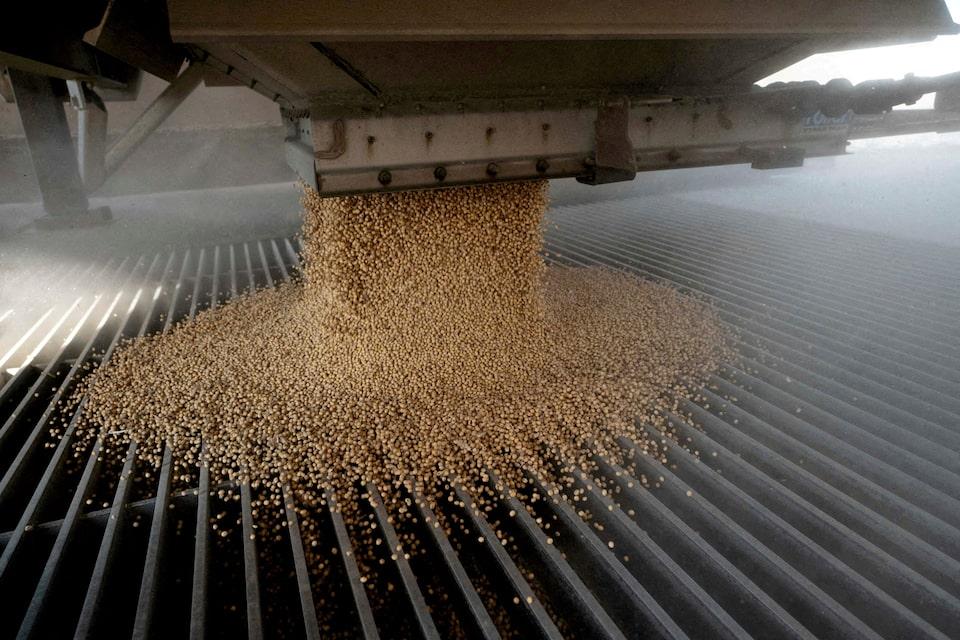
BEIJING/SINGAPORE, Jan 20 (Reuters) - China has bought about 12 million metric tons of U.S. soybeans, fulfilling a U.S.-stated pledge to purchase that volume by the end of February, three traders told Reuters on Tuesday, after a late-October trade truce spurred buying. As buyers shunned North American supplies amid a trade war, China recorded no imports from the United States for four consecutive months from last September, taking U.S. market share down to 15% from 21% in 2024. Sign up here. But the 12-million target was met last week after bulk purchases by state stockpiler Sinograin and state trader COFCO, which were the only buyers of U.S. beans, as private crushers continue to favour cheaper supplies from Argentina and Brazil. "Further purchases of U.S. soybeans are unlikely until the next U.S. new crop in September unless prices are competitive with South American soybean prices," said one of the sources familiar with details of the shipment. All the sources spoke on condition of anonymity, as they are not authorised to speak to the media. Sinograin and COFCO did not immediately respond to requests for comment. China resumed U.S. soybean purchases after the two countries' leaders met in late October, with the White House saying China had also agreed to buy at least 25 million metric tons annually over the next three years, starting in 2026. The purchased U.S. soybean cargoes, amounting to 12 million tons, are set for shipment between December and May, the sources said. In early December, Reuters reported that at least six bulk cargo vessels were scheduled to load soybeans at U.S. Gulf Coast terminals for China, with a seventh already on the way. One of these vessels, Ocean Harvest, is set to arrive at the eastern port of Zhangjiagang in about a week, according to ship-tracking data from LSEG and Kpler. Much of the purchased volume is probably destined for state reserves. In recent weeks, Sinograin has held four auctions in an apparent move to free up storage for U.S. soybean shipments. (This story has been refiled to fix the spelling of 'Zhangjiagang' in paragraph 10) https://www.reuters.com/world/asia-pacific/china-hits-12-million-ton-us-soybean-target-pledged-trade-truce-2026-01-20/