2025-05-22 11:53
May 22 (Reuters) - Neo Performance Materials (NEO.TO) , opens new tab said on Thursday it has exited its China separation facilities, as the Canadian rare earths company aims to reduce geopolitical risk and price volatility while expanding in Europe and North America. The exit concludes a strategic review it launched last year. Sign up here. The company said it sold its majority stakes in two Chinese separation facilities, the value of which was not disclosed. China controls the vast majority of global rare earth processing, making the sector highly vulnerable to supply disruptions and price swings tied to trade tensions or domestic policy shifts. The rare earths company also divested its gallium trichloride business in Quapaw and closed the hydrometallurgy portion of its Niobium and Tantalum business. "The company is scaling its European magnet operations and evaluating additional supporting capabilities, such as heavy rare earth separations," Neo said in a statement. Neo expects its permanent magnet facility in Europe to be completed on time and on budget, and start commercial production in 2026. https://www.reuters.com/world/china/neo-performance-materials-exits-separation-facilities-china-2025-05-22/

2025-05-22 11:48
JOHANNESBURG, May 22 (Reuters) - South Africa's government has agreed to give ailing state-owned logistics group Transnet a 51 billion rand ($2.8 billion) guarantee facility, the transport ministry said on Thursday. Transnet has struggled to provide adequate freight rail and port services for years because of equipment shortages and maintenance backlogs linked to under-investment, with cable theft and vandalism also damaging the rail network. Sign up here. The support package comprises a 41 billion rand guarantee for Transnet's funding requirements in the 2025/26 and the 2026/27 financial years and a 10 billion rand guarantee to help it service debt and make capital investments. Transnet said in a statement that the support would allow it to build on progress with strategic rail and port reforms. ($1 = 18.0252 rand) https://www.reuters.com/world/africa/south-africas-transnet-gets-28-billion-government-guarantee-2025-05-22/
2025-05-22 11:35
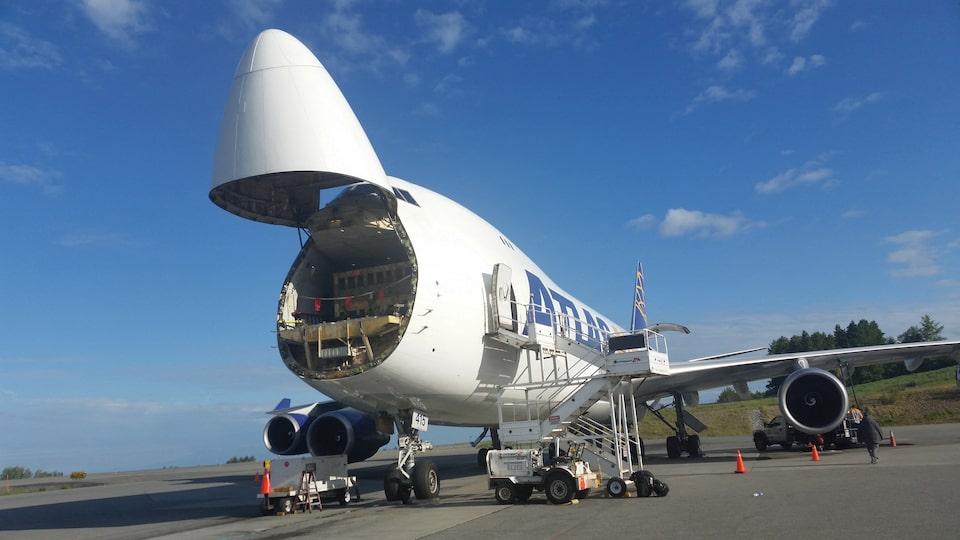
Breeding pigs are a small but profitable niche for US exporters US farmers worry China could now buy breeding pigs from Denmark China also has halted imports of US cattle semen for dairy cows White House seeks new customers, farmers see lasting damage CHICAGO, May 22 (Reuters) - Dr. Mike Lemmon's pigs, each valued between $2,500 and $5,000, were supposed to be on a plane bound for Hangzhou, China, from St. Louis in April, where’d they spend the flight snoring, play fighting and snacking on oats and husked corn before taking up residence at Chinese hog farms. Instead, many went to a local Indiana slaughterhouse for less than $200 each after the Chinese buyer canceled the order within a week of China implementing retaliatory tariffs against the U.S. in April. Sign up here. China is one of the biggest importers of American breeding pigs and other livestock genetic material such as cattle semen. These lucrative niche export markets had been growing, but dried up since U.S. President Donald Trump started a trade war with Beijing. U.S. farmers and exporters said the dispute has already cost them millions of dollars and jeopardized prized trade relationships that took years to develop. Though Washington and Beijing agreed to pause tariffs last week, exporters said Trump's unpredictable trade policy has caused their companies long-term damage and could encourage China and other major buyers to turn to foreign rivals like Denmark. "We've got brand damage now. There's not a week that goes by without clients asking what’s happening with the U.S.," said Tony Clayton, owner of Clayton Agri-Marketing, a Missouri-based livestock exporting company. "I don’t know how we can put this back together. This is long-term damage," he said. White House spokesperson Kush Desai said the administration was "working around the clock to secure billions of dollars in even more opportunities with our other trading partners." Some farmers raise pigs specifically for breeding, a niche business within the $37 billion U.S. hog industry. Farmers pay top dollar for these specialty pigs, which have favorable genetics to produce lots of healthy piglets that can eventually be processed into tasty, high-quality pork. Lemmon, an Indiana veterinarian and farm owner, has been selling pigs worldwide for over 30 years. He said he spent more than a year working on the $2.4 million sale of the pedigreed pigs to China. He noted they were carefully bred for good health, litter size and high fat content that leads to richly marbled, tender meat when cooked. "It's devastating when it happens," Lemmon said, referencing the sale he lost. He said he plans to stay in the breeding business, and is working to rekindle the deal with his Chinese buyer during the tariff pause. Roughly half of the world’s pigs live on Chinese farms. The country has purchased large quantities of breeding pigs from the U.S. since an outbreak of African swine fever, a virus with a near-total fatality rate, wiped out millions of the country’s hogs in 2018. Shipping livestock is lucrative but time-consuming. Shippers must personally fly with the animals or hire an on-board attendant who can make the rounds to keep their pricey passengers well-hydrated and comfortable during a long flight. When not working, the attendants chat with the flight crew or sometimes lie in sleeping bags next to the animals in the chilly cargo bay, exporters and farmers said. China has also been the biggest importer of semen from U.S. dairy cows, known for producing large amounts of protein-rich milk. But “Not one unit of semen is going to China right now,” Jay Weiker, president of the National Association of Animal Breeders, said, noting China had been importing one-quarter of all U.S. cattle semen, which they use to artificially inseminate their dairy cows. The Chinese milk industry began importing large amounts of cattle semen to improve the genetics of domestic dairy cows after a deadly scandal over contaminated milk in 2008, Weiker said. At least six children in China died and nearly 300,000 fell ill after a Chinese manufacturer added melamine, a dangerous chemical, to milk powder to make the protein levels appear higher. Brittany Scott, owner of SMART Reproduction Services, a sheep and goat genetics company, said several foreign customers had also pulled out of deals. This left many vials of semen sitting in her Arkansas facility, frozen in tanks of liquid nitrogen and waiting for buyers. “They are eager to do their jobs,” Scott said of her male goats and sheep. “They understand the assignment and they do really well.” However, the work of selling their product has proven harder after Trump announced sweeping tariffs in April, and China retaliated. The lost sales have been "a punch in the gut,” Scott said. https://www.reuters.com/world/china/pigs-cant-fly-us-high-end-livestock-breeders-lose-millions-china-tariff-fallout-2025-05-22/
2025-05-22 11:31
May 22 (Reuters) - Indian consumer goods major ITC (ITC.NS) , opens new tab reported a rise in fourth-quarter profit on Thursday, benefiting from resilient rural demand and strength in its mainstay cigarettes business. The maker of "Yippee" instant noodles and "Gold Flake" cigarettes reported a standalone profit before tax and exceptional items of 64.17 billion rupees ($746.65 million) for the quarter ended March 31, compared with 62.88 billion rupees a year earlier. Sign up here. A steady recovery in rural demand backed by a good monsoon has been partly cushioning the impact from soft consumption in urban areas on account of high cost of living in metros. Analysts said state-led income support schemes have also aided the rural performance. ITC's rivals Hindustan Unilever (HLL.NS) , opens new tab and Nestle India (NEST.NS) , opens new tab had reported weak fourth-quarter profit last month amid elevated input costs and muted urban demand. Revenue at ITC's consumer goods segment, which houses popular household brands such as Aashirvaad, Sunfeast and Bingo, rose 3.7% to 54.95 billion rupees. Its cigarettes business, which generates the highest revenue, grew nearly 6%. The company recorded a one-time gain of 151.79 billion rupees after the demerger of its hotels business, ITC Hotels (ITCT.NS) , opens new tab, which listed as a separate entity in late January. ITC's standalone revenue from operations grew 9.4% to 184.94 billion rupees. ($1 = 85.9440 Indian rupees) https://www.reuters.com/world/india/indias-itc-reports-rise-quarterly-profit-resilient-rural-demand-2025-05-22/
2025-05-22 11:30
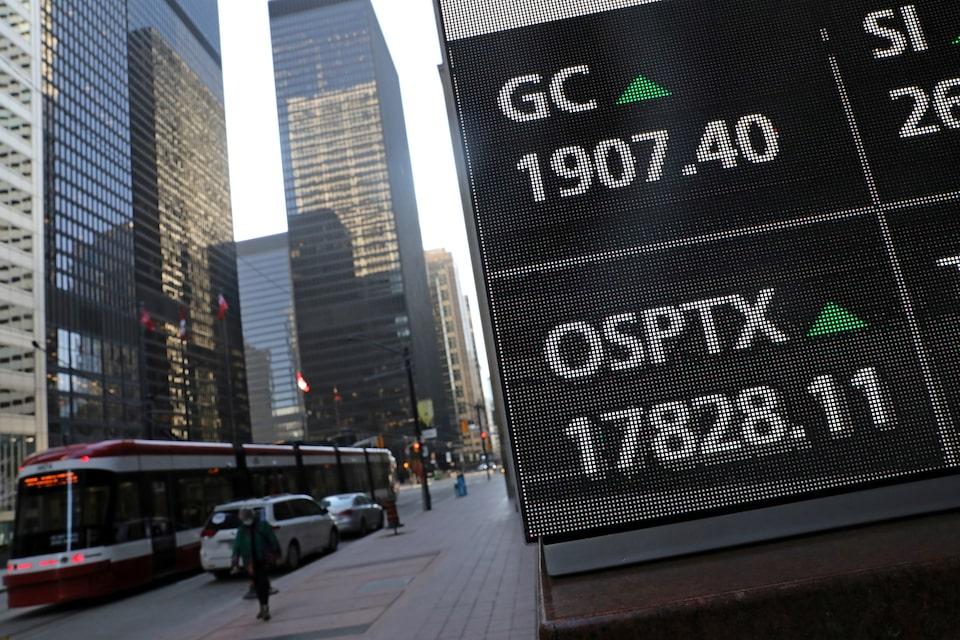
TSX ends 0.1% higher at 25,854.01, TD Bank gains 3.2% on earnings beat Financials and technology both add 0.6% Materials group falls 0.8% as gold pulls back May 22 (Reuters) - Canada's main stock index edged higher on Thursday as technology shares clawed back some of the previous day's declines and investors cheered Toronto-Dominion Bank's quarterly results. The Toronto Stock Exchange's S&P/TSX composite index (.GSPTSE) , opens new tab ended up 14.84 points, or 0.1%, at 25,854.01, with the market staying close to the record high that it posted earlier this week on easing global trade uncertainty. Sign up here. U.S. stocks finished little changed as Treasury yields eased off recent highs after the House of Representatives passed U.S. President Donald Trump's tax and spending bill. "Not saying that we're out of the woods ... but in Canada, we're in a very low rate environment, inflation has come down dramatically, you've got pretty decent earnings," said Barry Schwartz, chief investment officer at Baskin Wealth Management. TD Bank (TD.TO) , opens new tab reported better-than-expected earnings for the second quarter, powered by strength at its wholesale banking arm, and said it would lay off 2% of its workforce to cut costs and scale up its digital and AI investments. Shares of Canada's second-largest lender gained 3.2%, while the heavily weighted financials sector ended 0.6% higher. Recent strength in bank stocks is a sign that investors are not expecting a deep economic slowdown, Schwartz said. "The smart money is saying if there is a recession it may be a technical one, with no real impact on the economy and brighter days are ahead," added Schwartz. Technology also rose 0.6%, while the materials group, which includes fertilizer companies and metal mining shares, ended 0.8% lower as gold gave back some of its recent gains. https://www.reuters.com/markets/europe/tsx-futures-flat-ahead-vote-trumps-tax-bill-2025-05-22/
2025-05-22 11:30
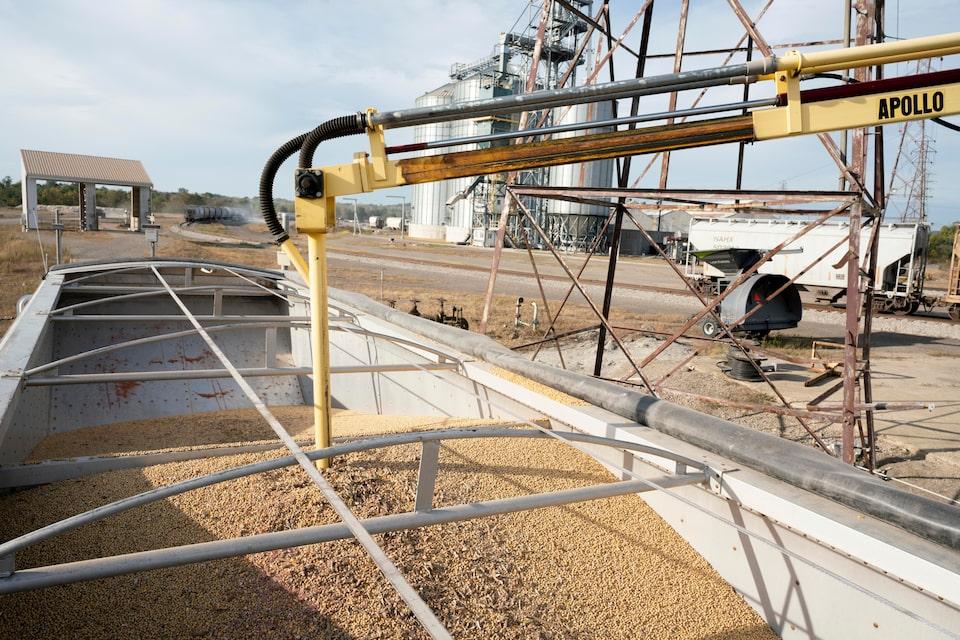
NAPERVILLE, Illinois, May 21 (Reuters) - Last week’s U.S.-China trade truce has sparked speculation as to what a potential trade deal between the two rivals might look like. For the U.S. agriculture sector, the result would ideally be very different from the deal signed in January 2020 during Donald Trump’s first U.S. presidency. Sign up here. That agreement, known as Phase 1, required China to significantly boost purchases of U.S. agricultural products. China ultimately came up short, but the structure of the deal itself was probably doomed from the start. It didn’t help that enforcement and extension of the deal were practically nonexistent, especially as the U.S. presidency changed hands in 2021. U.S. officials recently suggested that China’s failure to make good on Phase 1 purchase commitments be revisited. So let’s re-examine the flaws of Phase 1 from an agricultural perspective, just in case a similar deal is proposed this time around. SUSPICIOUS MATH China’s purchase commitments laid out by Phase 1 were based on dollar value, which immediately raised flags. The agreement suggested China would buy a record $36.5 billion in U.S. farm goods in 2020, some 50% above the pre-trade war average. A simple exercise can bring perspective. Soybeans, the top U.S. export of any kind to China, accounted for roughly half the value of all annual U.S. farm exports to China at the time. Given the average cost of exporting U.S. beans to China in 2019, when Phase 1 was formulated, the 2020 volume of shipments needed to jump 43% above the 2016 record. Where was this sudden, massive surge in Chinese soybean demand supposed to come from? Apparently, it never had to exist. China said from day one that it would purchase American goods per the deal based on market conditions, and that it had no intent to buy in excess. This clause basically deemed Phase 1 dead on arrival, but otherwise, a steep rise in global prices was the only possible way for the targets to be fulfilled. That eventually happened as global grain and oilseed prices neared or bested records in 2022. U.S. soybean shipments to China in 2022 were valued at a record $17.9 billion, up from $14.1 billion in 2020. But the 2022 volume was 12% lower than in 2020, meaning the high prices were masking a reduction in Chinese bookings. Phase 1 stated that China’s increasing U.S. purchase trajectory was to continue from 2022 through 2025. China would have still fallen short of targets in 2022 despite the price levels, but the binding part of the deal seemingly expired after 2021. The Biden administration throughout its tenure was notoriously quiet on U.S.-China trade and enforcement of the Trump-era agreement, and Phase 1 essentially went dark after 2021. OTHER OBVIOUS PROBLEMS The concept of requiring China to purchase extreme volumes of U.S. farm goods conflicts with Trump’s “America First” agenda, as it overlooks domestic supply needs in favor of China. Another issue is that aside from being unrealistic, the Phase 1 purchasing targets seemed arbitrary. No explanation of the $36.5 billion goal was ever offered, but in hindsight, Trump’s disdain for trade deficits could be a potential origin. The current state of U.S. agricultural trade with China is ugly. By value, U.S. farm exports to China in the first three months of 2025 were down 49% on the year, reaching some of the lowest levels within the last two decades. If China does agree to something that seems far-fetched, close attention is immediately warranted as Beijing seems to negotiate with back-pocket knowledge. No one thought China was smart to slap steep tariffs on U.S. soybeans in 2018, but Beijing likely knew something the rest of the world did not. Sweeping losses from disease across China’s hog herd reduced feed demand and allowed Chinese buyers to avoid U.S. beans for a while, against sound calculations that they would not be able to do so. China may have also sensed that 2020 was going to be a wild ride. The World Health Organization one day before the signing of Phase 1 was already ringing alarm bells worldwide about a dangerous virus originating in China. This level of strategy that China has employed in recent trade conflicts should certainly raise the stakes for the U.S. side, which could perhaps benefit from a more sensible, sustainable approach to future negotiations. Karen Braun is a market analyst for Reuters. Views expressed above are her own. https://www.reuters.com/markets/commodities/us-ag-sector-should-be-alert-after-last-deal-with-china-fell-short-2025-05-22/