2025-05-22 11:26
Basel III trading book rules likely to be delayed to 2027 US has stalled implementation of Basel III package Delay reflects industry concerns about competitiveness FRANKFURT, May 22(Reuters) - The European Union is set to delay new, global rules governing banks' trading again as it waits for more clarity about the U.S. administration's plans to deregulate its financial sector, sources told Reuters. The Fundamental Review of the Trading Book (FRTB) is a key part the Basel III package devised in the wake of the global financial crisis but not yet implemented by Britain or the United States, two of the world's key financial centres. Sign up here. Its adoption in the EU was already pushed back by a year to 2026 last year, when it became clear that the United States would not be able to adopt the rules by its original deadline. The latest, one-year postponement to January 1, 2027 reflects pressure from European banks fearing they will find themselves at a disadvantage to their U.S. and UK rivals, five senior officials at European and national institutions said. A senior EU source said European Commissioner Maria Luís Albuquerque informed the bloc's finance ministers about the delay at a meeting on May 13. The European Commission had said it would make a decision on whether or not to postpone the FRTB by the end of June after consulting with the industry and its supervisors. The FRTB governs capital and reporting requirements relating to banks' trading assets, crucially including how risk should be measured using a standard method or banks' own calculations. The United States has stalled the introduction of the entire Basel III package and U.S. President Donald Trump's administration signalled it might even relax some of the existing rules, in what would mark a U-turn from the push for more controls that followed the 2007-2009 financial crisis. European banks have urged the EU to refrain from imposing new burdens that their competitors overseas do not face. "It now looks as if this set of rules will not exist in the U.S. and we know that Brussels is looking at this carefully," Commerzbank's chief executive Bettina Orlopp said at a conference on Monday. "We have to be careful that we maintain the international competitiveness of European banks." The European Central Bank, the EU's top banking watchdog and for a long time a staunch defender of a timely implementation of Basel III, proposed a compromise earlier this month. It envisaged a one-year delay to rules applied to banks' internal risk models, while those concerning the one-size-fits-all, "standardised approach" would be phased in over three years starting in 2026. Some governments have also weighed in, with French President Emmanuel Macron calling for a "synchronisation , opens new tab" on financial rules between the EU, the United States and Britain. Britain earlier this year pushed back its Basel III implementation to 2027 while Washington has yet to unveil a timeline. In contrast, the EU has already implemented most of the Basel III package, which took effect this year. China, Japan and Canada have done so long ago. In March, the European Commission launched a consultation, asking banks and supervisors if they thought the FRTB should go live next year, be delayed by 12 months or tweaked to align it more with draft U.S. and UK rules. The European Banking Federation, an industry body, said member banks that were exposed to U.S. and British competition favoured a one-year delay. The International Swaps and Derivatives Association, a global lobby, said "a clear majority" of its own members also favoured a delay, although a minority preferred that the FRTB took effect next year to avoid running both new and old rules at once. https://www.reuters.com/sustainability/boards-policy-regulation/eu-delay-bank-rules-it-waits-trumps-deregulation-moves-sources-say-2025-05-22/
2025-05-22 11:26
HONG KONG, May 22 (Reuters) - At least four people have died and 17 remain missing after torrential rain triggered landslides in China's southwestern Guizhou province on Thursday, with the military deployed to assist in rescue efforts. Two died in Changshi township and two from nearby Qingyang village, where 19 people from eight different households were initially trapped after being hit by a landslide, state broadcaster CCTV reported on Thursday. Sign up here. Authorities also issued risk warnings for geological disasters in nearby areas. China is facing hotter and longer heatwaves and more frequent and unpredictable heavy rain as a result of climate change. The country is especially vulnerable to the effects of climate change, authorities have said, because of its huge population. Authorities initiated their third-highest emergency response for heavy rain in mountainous Guizhou as well as the nearby provinces of Hunan and Jiangxi. More than 400 emergency staff including military officers and firefighters were sent to assist in the rescue mission. Heavy rains over the last week in China's southern Guangdong province and Guangxi region have killed seven people and left several missing with authorities issuing warnings for severe rain, mountain flooding and geological disasters in the south of the country. Chinese meteorological data shows 2024 was the warmest year for the country since comparable records began more than six decades ago, the second straight year in which milestones were broken. https://www.reuters.com/business/environment/twenty-one-people-missing-heavy-rains-soak-southern-china-triggering-landslides-2025-05-22/

2025-05-22 11:04
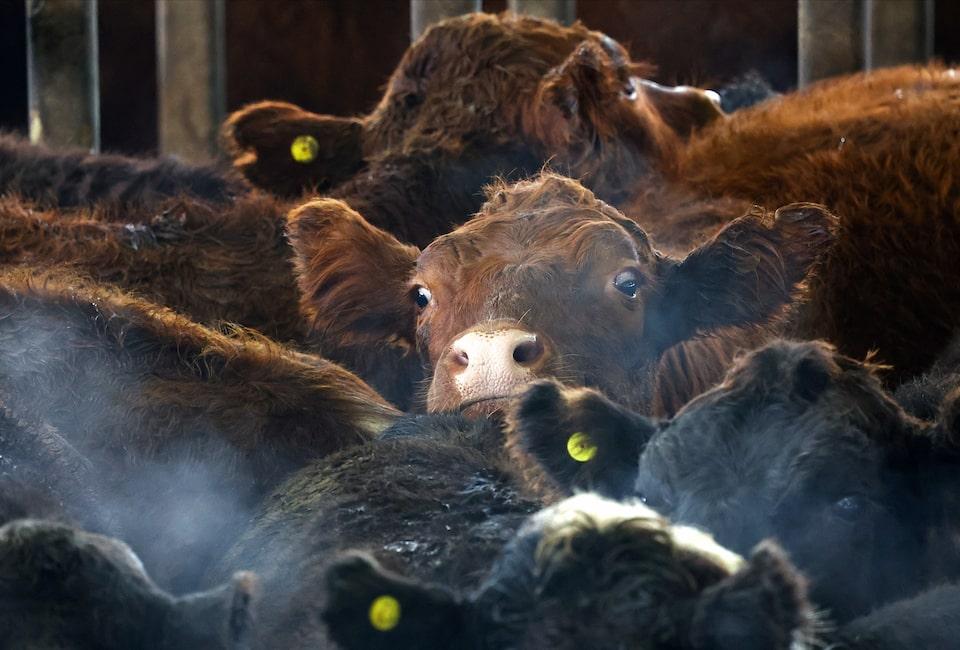
BUENOS AIRES, May 22 (Reuters) - In the Villarroel meat plant outside Buenos Aires, workers skillfully butcher cuts of Argentine beef, popular with restaurants from Shanghai to New York. But the country's steak exports are now sliding as costs rise on a stronger local peso. In the first four months of the year, beef exports fell nearly 20% year-on-year to around 255,000 tons, according to government agency Senasa. Shipments to price-sensitive top buyer China plunged to 137,000 tons from 203,000 tons a year earlier. Sign up here. Chinese importers - which gobbled up two-thirds of Argentina's beef exports last year - are paying around $5 per kilogram, packers say, cutting into their margins as local costs have risen alongside the peso. "We can't compete," Yahir Auad, a manager at the meat-packing plant's wider group, said at the factory in the city's suburbs. Last month, President Javier Milei eased years-long currency controls as part of his effort to stabilize Argentina's economy, a move long sought by investors. But a stronger peso has pushed up relative costs and hit what had for years been a competitive edge for some Argentine firms, affecting exporters as well as sectors like tourism as the country has become more expensive in dollar terms. "We've got more exchange-rate stability now, but that stability hasn't benefited us exporters," Auad said. "It costs us $4 or $4.50 (per kilo) to produce the raw material, to which we have to add expenses and taxes." The tough situation for Argentina's meat packers - that include Minerva's (BEEF3.SA) , opens new tab Swift, Quickfood, owned by Brazilian giant Marfrig (MRFG3.SA) , opens new tab, and others - represents a challenge for Milei even as Argentina emerges from years of economic tumult, overspending and market distortion. "Argentine beef is today the most expensive in Latin America in dollar terms," said Miguel Schiariti, director of meat-packing chamber Ciccra, citing the cost of a cut of tenderloin at the equivalent of some $4.70 in Argentina versus $3.60 in Brazil and $3.50 in Uruguay. "The meat-packing industry and the production industry will go bankrupt in this environment," he said. MEAT PACKERS CUT STAFF Argentina - known for its ranches, barbecue grills and huge per capita consumption of steaks - has some 53 million head of cattle and is among the top five global exporters of beef, usually sending higher quality cuts to Europe and North America, and cheaper cuts to China. However, exporters are finding it increasingly difficult to place their products on the international market. "Everyone is struggling to be profitable," said Miguel Jairala, an analyst with the ABC chamber of meat exporters. ABC says some meat-packing plants have begun cutting staff, in some cases more than 10% of the workforce. "Deals aren't being closed, with production costs high compared to the prices paid in China. Brazil has the potential to offer the same product, even better quality than ours, at a more competitive price," said Jairala. Auad said high taxes, including a 6.75% tariff firms had to pay when exporting, also contributed to the pain the sector was facing. Industry groups are lobbying the government to lower taxes. Argentina's Secretariat of Agriculture did not respond to a Reuters request for comment. "We had to close our (other) Las Heras meat packing plant because we couldn't fulfill the contracts," Auad said. "We sold at a certain price and were never able to fulfill the orders." https://www.reuters.com/world/china/wheres-beef-argentine-steak-exports-slide-strong-peso-inflates-costs-2025-05-22/
2025-05-22 10:56
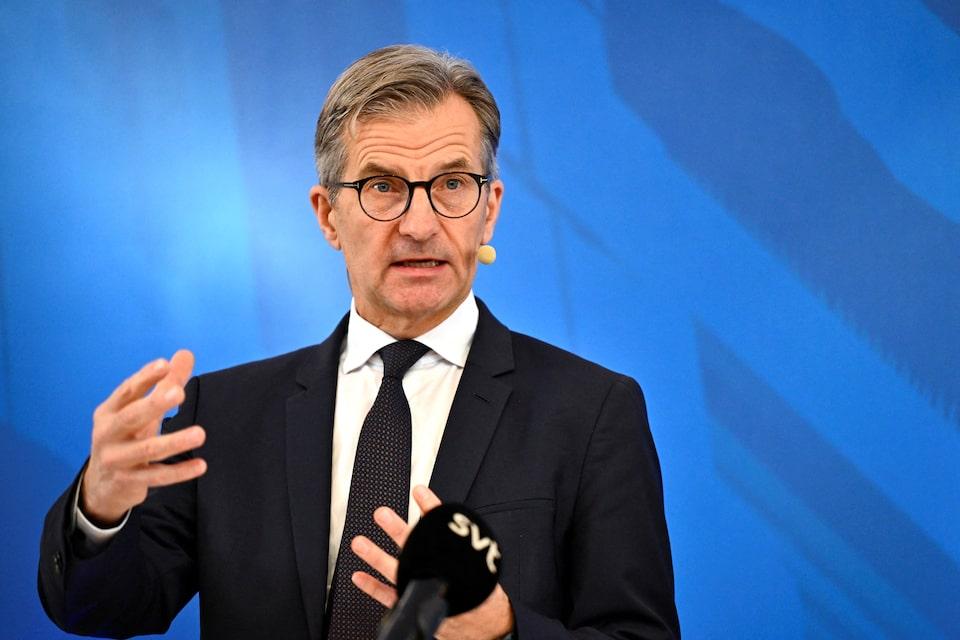
STOCKHOLM, May 22 (Reuters) - Information since the latest monetary policy decision does not deviate substantially from the view the Riksbank had earlier this month, Swedish Central Bank Governor Erik Thedeen said on Thursday. "We have somewhat elevated inflation but we expect it to come down during the course of the year," Thedeen told Reuters on the sideline of a conference. Sign up here. "The April inflation figures confirmed that view," he said. Consumer prices in Sweden, measured with a fixed interest rate, were up 2.3 percent in April from the same month last year, data showed last week. The Riksbank targets 2% inflation. The Riksbank held its policy rate at 2.25% this month but said a combination of lower growth and easing inflationary pressure might lead them to cut rates later this year. Thedeen also said that the financial systems have handled turbulence related to trade tariffs well. https://www.reuters.com/markets/europe/inflation-data-supports-view-easing-pressure-this-year-riksbank-chief-says-2025-05-22/
2025-05-22 10:43
LONDON, May 22 (Reuters) - What matters in U.S. and global markets today By Mike Dolan , opens new tab, Editor-At-Large, Financial Industry and Financial Markets Sign up here. Bond markets creaked again after the hammer came down on a lukewarm sale of 20-year U.S. Treasuries on Wednesday with President Donald Trump's sweeping tax and spending bill clearing a crucial hurdle overnight. n today's column, I discuss how a long-standing trend of U.S. corporations acting as cash-rich net lenders might reverse due to increased investment in AI and re-industrialisation efforts , opens new tab , potentially creating new competition for funds with ever-expanding U.S. government borrowing. But now onto all the market news. Today's Market Minute * U.S. President Donald Trump's sweeping tax and spending bill cleared a crucial hurdle on Thursday, as the House of Representatives voted roughly along party lines to begin a debate that would lead to a vote on passage later in the morning. * Foreign investors could once barely imagine that China would invade neighbouring Taiwan, but with Donald Trump as president of the United States, many view it as a tail-risk scenario they must prepare for, although they cannot find ways to do so. * Stocks and the U.S. dollar fell on Thursday, while longer-dated Treasury yields steadied near their highest in 18 months as worries of a worsening fiscal outlook in the world's biggest economy remained at the top of investors' minds. * Bitcoin rose to its highest level on record on Wednesday, eclipsing the previous high from January, as risk sentiment continues to improve after last month's tariff-induced selloff. * Oil prices fell more than 1% on Thursday following a report that OPEC+ is discussing a production increase for July, stoking concerns any potential increase in global supply would exceed demand growth. * Solar farms are set for a record stretch of power sector dominance in Germany after becoming the single largest generation source in the country at the earliest point of the year ever. Hammer comes down Markets fear the bill will bake in elevated deficits and rising debt piles over the remainder of the administration's term at least. The proposed legislation lifts the $36.2 trillion debt mountain by another $3.8 trillion over the next decade, according to the nonpartisan Congressional Budget Office. Lawmakers were due to vote again to pass the measure later today and send it on to the Republican-led Senate, which could take weeks to act. And it was not yet clear whether House Speaker Mike Johnson would secure the necessary support from his own narrow 220-212 seat Republican majority. But bond markets are getting restive, as the poor 20-year auction displayed. The U.S. 30-year yield reached 5.108%, its highest since October 2023, and the 20-year yield hit 5.126%, its highest since November 2023. The 30-year 'long bond' yield is now just 7 basis points from 2023's peaks. A break above that would put it at its highest since the 2007 banking crash unfolded - a shock which forced the Federal Reserve to spend years in bond buying support. Trouble at the long end of the Treasury market was reflected in government bond markets around the world, with Japan still grappling with surging ultra-long yields to record levels too and Britain's 30-year yield hitting its highest since April's volatility. Bank of Japan board member Asahi Noguchi said on Thursday he saw no need for the central bank to intervene in the bond market to stem recent sharp rises in super-long yields, describing the moves as "rapid but not abnormal". Compounded by aggravated inflation readings and tariff-related price concerns, the debt worries unnerved stock markets again too. Wall Street stock indexes (.SPX) , opens new tab fell back more than 1% on Wednesday and markets in Asia and Europe were all lower earlier today. There was some respite from crude oil prices, however. U.S. benchmark retreated 1% after a report that OPEC+ is discussing a production increase for July, stoking speculation that global supply could exceed demand growth. The dollar (.DXY) , opens new tab got a modest lift meantime as signals from the G7 finance chiefs in Canada suggested Washington held back from demanding a higher yen in bilateral trade talks with Japan, as some pre-meeting speculation had fretted about. U.S. Treasury Secretary Scott Bessent and Japanese Finance Minister Katsunobu Kato issued a statement on Wednesday that the dollar-yen exchange rate currently reflects fundamentals, a rare and explicit statement on the prevailing market situation. Bessent and Kato "reaffirmed their shared belief that exchange rates should be market determined and that, at present, the dollar-yen exchange rate reflects fundamentals", the Treasury Department said in a statement. The somewhat contradictory statement also said that they did not discuss foreign exchange levels. On Wednesday, South Korea's won rose sharply against the dollar after a media report that Washington had demanded that Seoul come up with measures to boost the won as part of any trade deal. The won gave up most of those gains today, however. Elsewhere, attention was on worldwide business surveys for May. Composite readings for euro zone and Japanese firms showed activity there unexpectedly slipping back into contractionary mode this month, due largely to fresh weakness among service sector companies. U.S. equivalents are due out later, along with weekly jobless numbers. Be sure to check out today's column, which looks at potential rumblings in U.S. government debt markets from the perspective of domestic U.S. corporate demand for credit going forward. Chart of the day Longer-dated U.S. Treasury yields climbed again after a $16 billion sale of 20-year bonds on Wednesday met lukewarm demand from investors just as Congress thrashed out the details of Donald Trump's fiscal bill. With long-term debt yields rising across the world, investors are concerned about mounting deficits, debt piles and tariff-related inflation risks. The New York Fed's estimate of the 10-year term premium - the compensation investors demand for holding 10-year debt to maturity as opposed to just rolling over short-term securities - is close to its highest in more than a decade and almost twice its 20-year average. Today's events to watch * U.S. weekly jobless claims (0830EDT), flash May manufacturing surveys from S&PGlobal(0945EDT), Kansas City Federal Reserve May manufacturing survey (1100EDT), April existing home sales (1000EDT); Canada April producer prices (0830EDT) * U.S. Treasury sells 10-year inflation-protected securities * G7 finance ministers and central bankers meet in Banff in Alberta, Canada * New York Federal Reserve President John Williams and Richmond Fed President Thomas Barkin speak; European Central Bank Vice President Luis de Guindos speaks; Bank of England Chief Economist Huw Pill speaks * U.S. corporate earnings: Analog, Autodesk, Copart, Deckers, Intuit, Ralph Lauren, Ross, Workday Opinions expressed are those of the author. They do not reflect the views of Reuters News, which, under the Trust Principles , opens new tab, is committed to integrity, independence, and freedom from bias. https://www.reuters.com/business/finance/global-markets-view-usa-2025-05-22/
2025-05-22 10:20
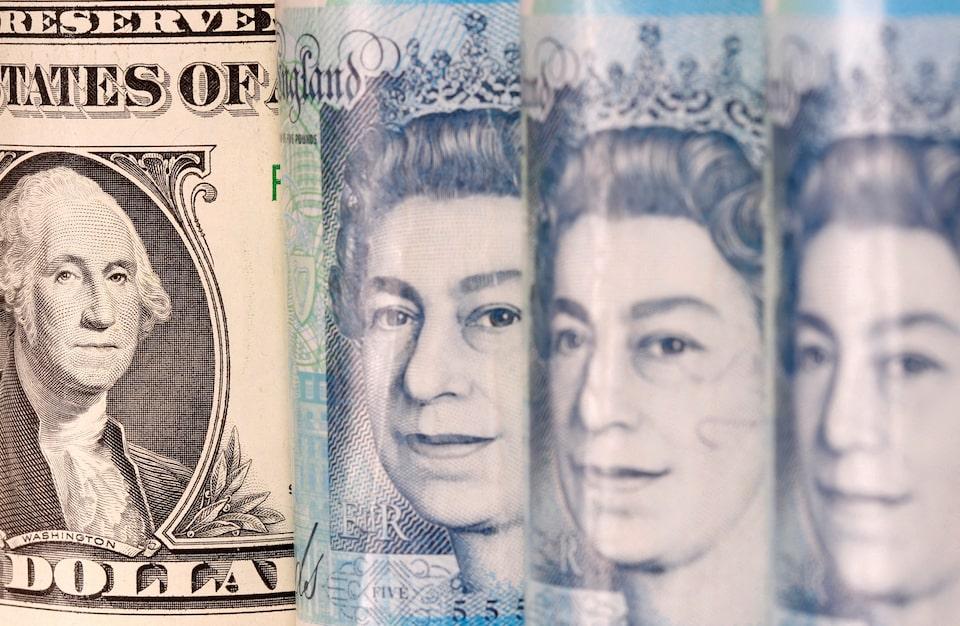
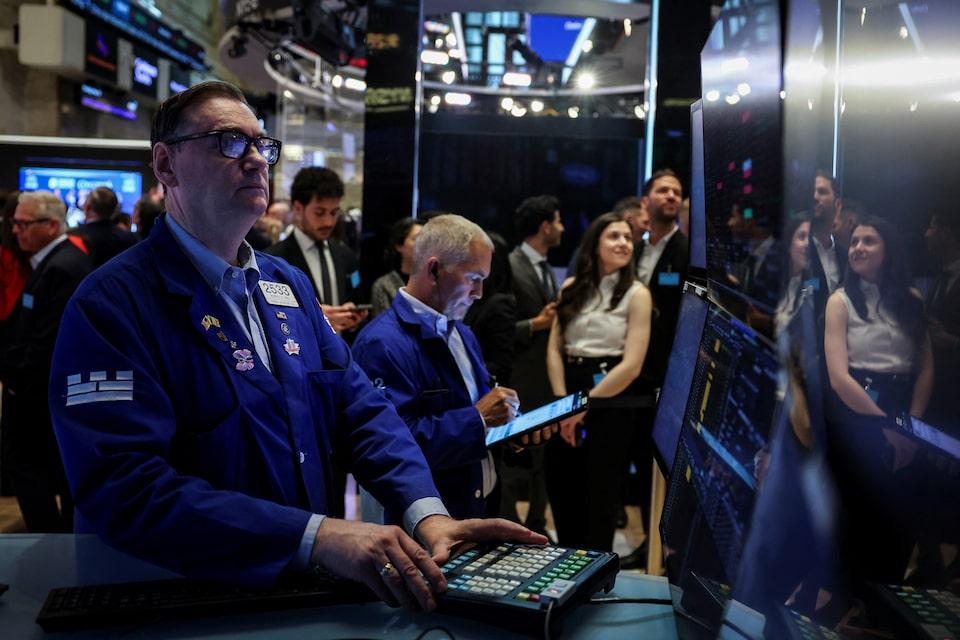
LONDON, May 22 (Reuters) - The British pound dipped slightly against the dollar but remained close to its highest level since 2022 reached the day before as hot inflation and improving relations with Europe and the U.S. continued to support the currency. The pound was last down 0.1% against the dollar at $1.3399, having touched a high of $1.3468 on Wednesday, its strongest level in over three years. Sign up here. Britain has recently looked to improve relations with the U.S. and the European Union, becoming the first nation to sign a deal with the U.S. after President Trump's reciprocal tariffs, and agreeing its biggest reset of trade and defence ties with the EU since Brexit this week. "The trade deals are generally good news for the pound," said ING FX strategist Francesco Pesole. "We still think the pound is in a pretty good position." Sterling was up 0.1% against at 84.2 pence per euro . A downturn in business activity for British firms eased this month, the S&P Global UK Composite Purchasing Managers' Index (PMI) showed on Thursday, as businesses grew a little cheerier about the outlook, including fewer worries about the impact of higher U.S. tariffs. The British currency has also been supported this week by hot inflation data, which might lower the prospect of rates cuts from the Bank of England. The BoE's chief economist Huw Pill said this week that a quarterly pace of cuts was "too rapid" given still strong wage pressures on inflation. "There's a bit of dissent building at the Bank of England," ING's Pesole noted. The British central bank lowered interest rates by a quarter point to 4.25% on May 8 in a three-way split vote, with two members of the Monetary Policy Committee favouring a bigger cut, and two - including Pill - preferring a hold. https://www.reuters.com/world/uk/pound-holds-near-three-year-high-trade-optimism-2025-05-22/