2025-05-22 06:08
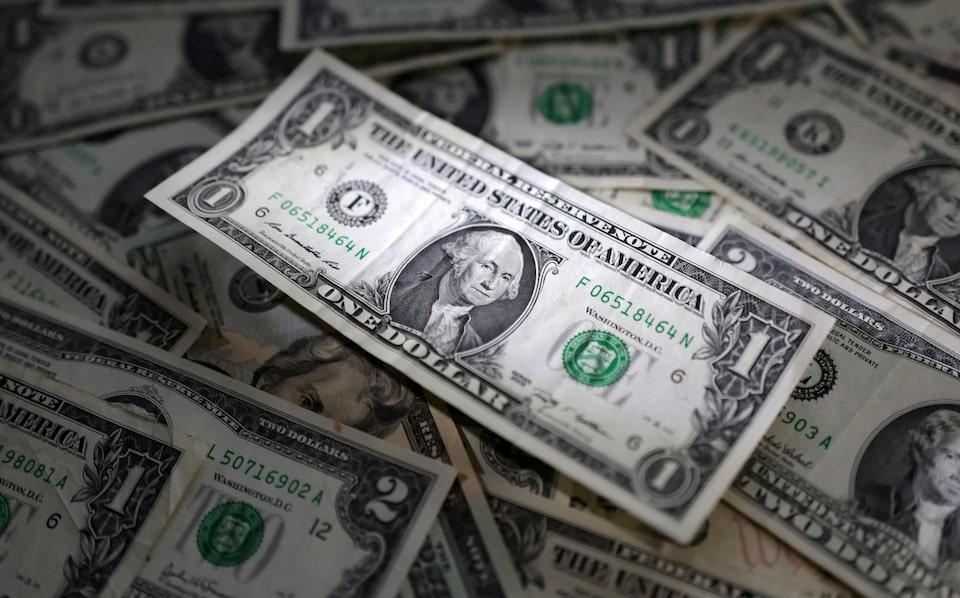
US house passes Trump tax bill Trump bill could add $3.8 trillion to debt over next decade Euro drops on soft data US jobless claims suggest stable labor market so far Bitcoin hits record high NEW YORK, May 22 (Reuters) - The U.S. dollar advanced on Thursday after three days of losses, lifted partly by the passage of President Donald Trump's bill for huge tax and spending cuts by the House of Representatives, as the euro stumbled following data painting a bleak economic picture for the euro zone. Bitcoin , meanwhile, pushed to a new all-time high, as investors sought out alternatives to U.S. assets. Sign up here. Trump's sweeping tax bill has been the market's focus and its passage has been met partly with relief and partly with caution. The bill is set to add to the country's ballooning debt pile. The market is now looking at weeks of debate on it in the Republican-led Senate. The non-partisan Congressional Budget Office estimates the bill will add $3.8 trillion to the $36.2 trillion in U.S. debt over the next decade. In afternoon trading, the dollar edged up 0.1% to 143.75 yen after earlier dropping to 142.80 yen, its weakest level since May 7. The euro fell 0.3% against the dollar to $1.1293, after rising on Wednesday for a third straight session. Euro zone business activity unexpectedly contracted this month, HCOB's preliminary composite Purchasing Managers' Index showed on Thursday. In contrast, U.S. business activity picked up in May due in part to the truce in the trade war between Washington and China. S&P Global's flash U.S. Composite PMI Output Index, which tracks the manufacturing and services sectors, increased to 52.1 this month from 50.6 in April. A reading above 50 indicates expansion in the private sector. Erik Bregar, director, FX & precious metals risk management, at Silver Gold Bull in Toronto, said the dollar got a moderate push higher from the passage of the tax bill, but the greenback was already rallying when the legislation got the U.S. House green light amid the soft European PMI. "Today feels like a bit of a reversal of yesterday's de-dollarization trade. The stronger-than-expected U.S. PMIs helped unwind some of that de-dollarization trade," he added. JOBLESS CLAIMS SHOW STABLE LABOR MARKET A low weekly jobless claims reading also gave the dollar a bit of a lift as the labor market continued to show stability. The weekly report showed unemployment rolls approaching levels last seen in late 2021. Initial claims for state unemployment benefits fell 2,000 to a seasonally adjusted 227,000 for the week ended May 17. Economists polled by Reuters had forecast 230,000 claims for the latest week. Meanwhile, a lacklustre 20-year bond sale on Wednesday reinforced the "Sell America" narrative and weighed on the dollar overnight. The soft auction also put some pressure on Wall Street as well, with traders already jittery after Moody's cut its triple-A U.S. credit rating last week. "It's clear that traders are still leaning much more risk-averse than risk-forward at the moment even with a bit of a risk rally through this month, and as we move toward month-end the dollar's future is far from certain," said Helen Given, director of trading at Monex USA in Washington. In other currency pairs, sterling was flat against the dollar at $1.3433, not far from Wednesday's three-year peak of $1.3468 after hot inflation dampened expectations for rate cuts from the Bank of England. Versus the Swiss franc, the dollar gained 0.5% to 0.8286 francs . The dollar index , which measures the U.S. currency against six peers, rose 0.3% to 99.905, above Wednesday's two-week low of 99.333. Bitcoin climbed as high as $111,965.62, a fresh all-time peak and a 3.4% increase from Wednesday's close. "Investor sentiment has clearly shifted in favor of bitcoin over traditional assets, with capital flows into BTC accelerating sharply," wrote Hina Sattar Joshi, director at TP ICAP – Digital Assets. "This week saw another surge in demand for bitcoin ETFs (exchange traded funds), reinforcing the broader trend." https://www.reuters.com/world/middle-east/dollar-swoons-fiscal-worries-bitcoin-extends-record-rally-2025-05-22/
2025-05-22 06:06
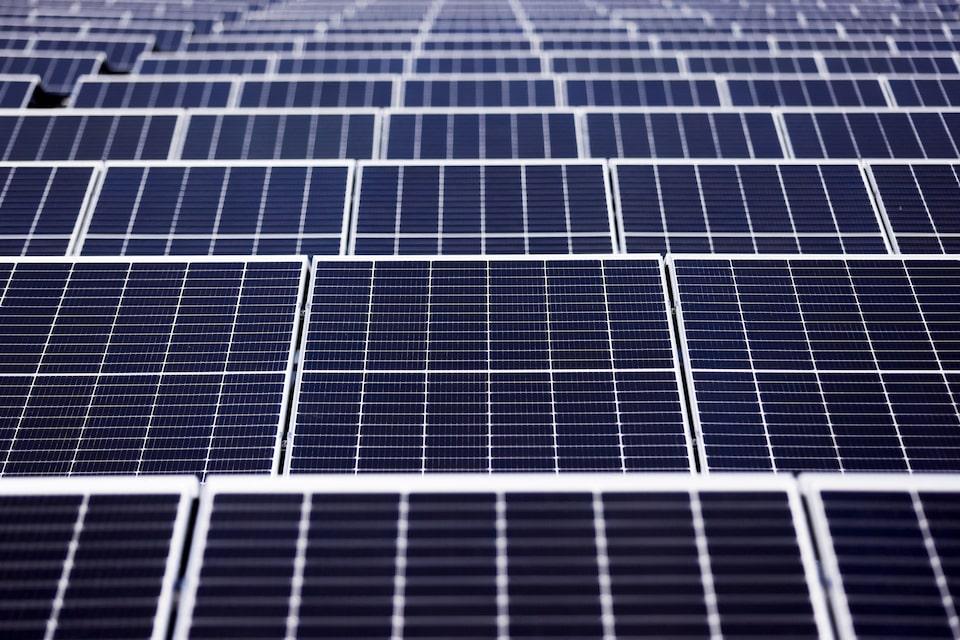
LITTLETON, Colorado, May 22 (Reuters) - Solar farms are set for a record stretch of power sector dominance in Germany after becoming the single largest generation source in the country at the earliest point of the year ever. Solar farms generated more power than all other generation sources in April, according to data compiled by LSEG, which was a month earlier than recorded in 2024 when solar farms became the country's primary power source from May through August. Sign up here. If solar plants remain the single largest power source through August, that would mean that Europe's largest economy would be primarily powered by solar farms for five straight months, with fossil fuels playing only a back-up role. And with Germany's total power needs set to slide in the summer as heating demand stops, the share of clean power in the generation mix could climb to record highs - furthering energy transition progress in the influential country. SOLAR'S SWELL The roughly 11,920 gigawatt hours (GWh) of power generated by Germany's utility-scale solar farms was 31% larger than generated during the same month in 2024, and nearly 60% more than generated in April of 2023. Total generation from solar farms in April also exceeded the 10,600 GWh generated by Germany's coal plants and the 9,634 GWh generated by wind farms, LSEG data shows, and helped cement solar's status as a key power source during spring and summer. Key to solar's expansion has been a 90% rise in solar generation capacity since 2019, with roughly 90 gigawatts of utility-scale solar capacity in place in the country as of 2024, according to data from energy think tank Ember. The roughly 43 GW of solar capacity added since 2019 dwarfs the capacity increases of other power sources over the same period, and compares to 12 GW of wind power and around 5 GW of gas-fired power added during the 2019 to 2024 window. Germany's solar capacity increased by 20% just within 2024 alone, with 15 GW of new capacity put in place last year. That larger footprint in turn helped to boost solar's share of the generation mix to new heights, with the 32% share registered in April up sharply from the 23% share posted during the same month in 2024. Going forward, solar's share of the generation mix will likely continue to set new records in the coming months, with last year's record share of 35% - scored in July - a viable target as soon as next month. COAL CAP AND BATTERY BUFFER As solar farms only generate power during daylight, Germany's power firms must maintain other generation sources at the ready to balance system needs. So far in 2025, coal-fired power plants have been the country's main alternative to renewable supplies, with coal-fired power generation jumping by 44% during the first four months of 2025 from the same period in 2024. Gas-fired power generation also climbed sharply during January to April - by 26% from the year before - to make up for a steep shortfall in output from German wind farms, which was down by around 31% from January to April 2024. During the upcoming summer, coal and gas-fired plants will retain a key role in Germany's overall generation system, especially in the evenings once solar production slumps. However, rapid expansions in utility-scale battery systems will likely act as a cap on fossil fuel generation this summer even when solar production stops. Germany's utilities added just over 6 GWh of battery storage systems in each of the past two years, according to SolarPower Europe, a regional renewable energy association. That battery storage capacity base - the largest in Europe - will allow utilities to store surplus solar power when it is generated during the day, and then discharge it to customers during peak consumption periods in the evening. In turn, that extra power supply from battery systems will help limit the need for fossil fuel power output, and ensure that Germany's power system can make maximum use of the country's continually-growing solar resources. The opinions expressed here are those of the author, a columnist for Reuters. https://www.reuters.com/markets/commodities/solar-shines-germanys-top-electricity-source-april-maguire-2025-05-22/
2025-05-22 05:58
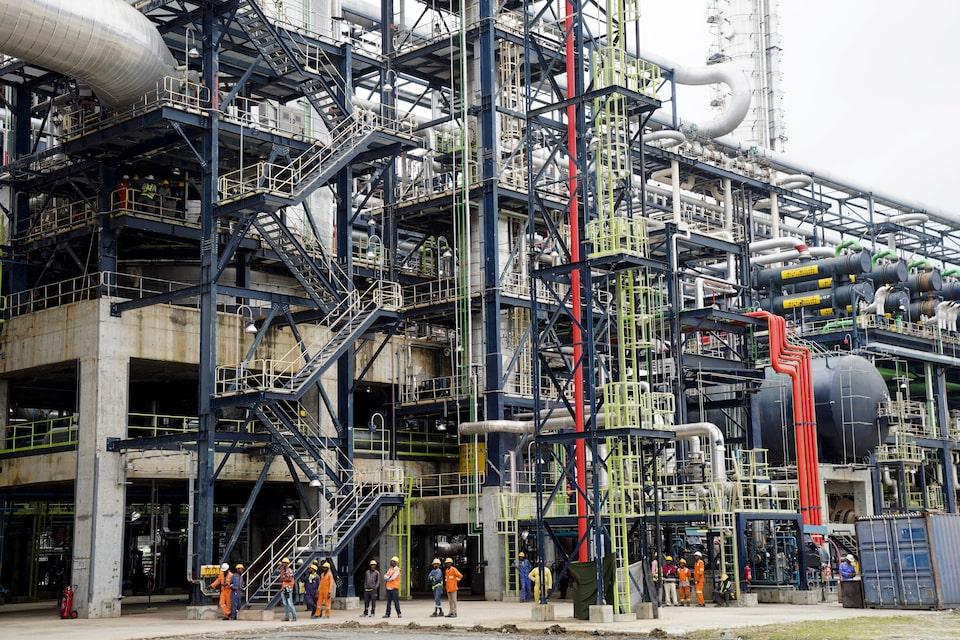
LAGOS, May 22 (Reuters) - The Dangote Petroleum Refinery and Petrochemicals said it will partner with Vinmar Group, an international petrochemicals distribution company, to bring Dangote polypropylene to global markets. Dangote’s $2 billion Petrochemical Plant in Lagos with 830MT tonnes capacity, began producing polypropylene in March, in 25kg bags for the local market. Sign up here. "We’re pleased to partner Vinmar to introduce Dangote Polypropylene to the global markets," said Fatima Aliko Dangote, an executive director at Dangote Group at the launch of the facility on Wednesday. Nigeria currently imports 90% of its annual polypropylene requirements amounting to 250,000 metric tonnes per year. The Dangote facility seeks to not only meet local demand but become a net exporter Fully operational, the facility is set to become Africa’s largest polypropylene production site, producing from two polypropylene units with capacities of 500,000 mt/year and 330,000 mt/year. https://www.reuters.com/business/energy/nigerias-dangote-refinery-agrees-export-polypropylene-with-vinmar-2025-05-22/
2025-05-22 05:16
June rate cut seen largely a done deal Case for pause in July and possibly beyond increasing Global environment likely to generate more inflation ECB will retain bias for easing FRANKFURT, May 22 (Reuters) - The European Central Bank is expected to cut interest rates once again in June but the case is growing for a pause beyond that as the economy is holding up better than feared and an inflation challenge is starting to creep up on the horizon. The ECB has been easing policy quickly for the past year as runaway consumer inflation is now largely tamed and focus has shifted to anaemic economic growth, exacerbated by a global trade war, erratic U.S. policy and deeply rooted inefficiencies at home. Sign up here. The ECB's seven rate cuts in its last eight meetings have given the economy some breathing space and policymakers must now reconcile a divergence between the shorter and longer term outlook. In the coming months, inflation could drop further and even undershoot the ECB's 2% target, rekindling memories of the pre-pandemic decade when the ECB tried and failed to raise price growth back to target. But in the longer run, a jump in government spending, deglobalisation, trade barriers and stress in the labour market from a shrinking working age population are all likely to put upward pressure on prices. Policymakers speaking on and off the record suggest that the discussion is not so much about the June decision since that is already well baked into expectations, but about signals for subsequent months given longer term risks. "Tariffs may be disinflationary in the short run but pose upside risks over the medium term," ECB board member Isabel Schnabel, an outspoken policy hawk said in an explicit call for a pause. "Even if the EU does not retaliate, higher production costs transmitted through global value chains could more than offset the disinflationary pressure coming from lower foreign demand, making tariffs inflationary overall," Schnabel added. Klaas Knot, the longest serving member of the ECB's Governing Council, also warned about longer-term risks. "The negative demand shock is immediate and will lead to lower inflation on the short run," he said. "But the supply shock could lead to higher inflation in the middle to long term." The argument is that trade barriers raise prices for everyone and will lead to more fragmented production, which is inherently more costly. Longer term inflation expectations have been inching up in recent weeks, especially since the U.S. struck a temporary trade deal with China, indicating that investors see inflation dipping first, then rebounding, possibly above 2%. That creates a communication issue for the ECB. Policymakers will be expected by some to provide accommodation if inflation indeed falls below 2% around the turn of the year on lower energy prices, weak growth, a stronger euro and dumping by manufacturers who face a tariff hit in the U.S. PAUSE CASE But the ECB's task is to look past short-term oscillations and focus on the medium term, since policy impacts prices on a 12 to 18 month horizon and is considered largely powerless on the immediate future. "The question is thus whether the ECB will dare to ‘look through’ this period of undershooting, or whether there are greater concerns for the anchoring of inflation expectations as inflation drops lower," Societe Generale said in a note. "We also feel less convinced about the need for a July rate cut given the easing of trade war tensions and resilient data, with an increased possibility that the ECB may choose to pause after June to gather more information," Societe Generale added. Financial investors also see a pause beyond June, anticipating just one final cut toward the end of the year, taking the deposit rate to 1.75%. Although policymakers are not keen to explicitly signal policy, several, including France's Francois Villeroy de Galhau, Finland's Olli Rehn and Belgium's Pierre Wunsch have all sent dovish signals, solidifying bets about June. Others speaking off record say that June is largely a done deal and the real conversation is about July and beyond. They say that a distinct camp is already visible, looking to make clear that a pause is now needed. Even if July is a skip, policymakers are still likely to maintain a bias towards more policy easing later in the year because the trade war has already done damage. "The ECB’s easing bias remains alive and kicking," TS Lombard said. "The evidence points to US tariffs depressing EA growth and inflation, while putting in question the job market celebrated 'resilience' through their hit to corporate profits." https://www.reuters.com/business/finance/case-growing-summer-pause-ecb-easing-cycle-2025-05-22/

2025-05-22 05:05
LAUNCESTON, Australia, May 22 (Reuters) - If there is a law of unintended consequences, then a good example is how commodity markets are adjusting to both the realities and the perceived threats of the tariff war launched by U.S. President Donald Trump. Trump's trade and tariff measures have forced commodity producers, traders and buyers to re-think long-established relationships, adapt to emerging realities and try to predict what may happen. Sign up here. What is becoming clear is that commodity markets are adjusting not only to actual measures imposed by the Trump administration, but also to the possibility of future actions, which has created a desire to limit exposure to the United States. An example of this is seaborne exports of crude oil from Canada, which have shifted away from the United States and towards China, even though Trump backed away from his initial plan to impose a 10% tariff on energy imports from Canada. For the first time ever Canada exported more seaborne crude to China in April than it did to the United States, showing how market dynamics can move amid the uncertainty created by Trump's trade war. Canada's seaborne exports of crude to China were 299,000 barrels per day (bpd) in April, up from 277,000 bpd in March, according to data compiled by commodity analysts Kpler. Seaborne shipments to the United States were 286,000 bpd in April, roughly in line with March's 283,000 bpd but down from the record of 431,000 bpd in September last year. To be sure, the above numbers reflect only oil moved by vessels and don't account for the far larger flows of Canadian crude into the United States via pipeline and rail. Canada sends about 4 million bpd of crude to its southern neighbour via pipelines, and while the volumes have been steady, prices have shifted in Canada's favour, reflecting another unintended consequence of Trump's often chaotic policies. The discount of Western Canadian Select crude to U.S. West Texas Intermediate has narrowed to the lowest in about 4-1/2 years at just over $9 a barrel, dropping from levels closer to $30 as recently as November. This reflects another dynamic that Trump probably didn't expect, as his sanctions on Venezuelan oil, which like Canadian crude is heavy, reduced the amount of this grade available to U.S. refiners. This means that Canadian crude is more in demand in the United States, and U.S. refiners are having to pay more. The rising price for Canadian crude brings into question the view that Canada was far more dependent on the United States than vice versa. It now seems that the United States is actually quite dependent on Canadian crude, especially if Trump has limited the suitable alternatives with sanctions. SEABORNE SHIFT The advantage also seems to be with Canada when it comes to seaborne exports. Canada has lifted its seaborne crude exports since the Trans Mountain pipeline expansion came on line in May last year, which increased its capacity to 890,000 bpd. It has been expected that the bulk of this oil would be shipped to refiners on the U.S. West Coast, and initially that is how it played out. But once Trump returned to the White House in late January and upped both his rhetoric and actions against his northern neighbour and erstwhile close ally, Canada's seaborne oil flows have shifted. Even though Trump backed down on imposing any tariff on energy imports from Canada, the damage has largely been done, with Canadian oil producers keen to develop alternative markets. Hence the interest in China, the world's biggest oil importer, which has also been keen to increase the diversity of its suppliers in a bid to lessen its dependence on oil from the OPEC+ group of exporters. China has also effectively halted importing crude from the United States amid the escalation in tariffs imposed by Washington and Beijing since Trump's return. While those tariffs have been lowered for a 90-day period to allow for talks, China is still imposing a 10% levy on U.S. oil imports, which is high enough to render U.S. oil uncompetitive in China. No U.S. crude is scheduled to arrive in China in May and June, according to Kpler, while as recently as June last year China imported 417,000 bpd from the United States. It's not that China is replacing U.S. crude with Canadian, as they are different grades. It's that China is being dynamic in its oil trade, and is finding willing partners such as Canada. The views expressed here are those of the author, a columnist for Reuters. https://www.reuters.com/markets/commodities/canadas-crude-oil-shift-china-schools-trump-unintended-consequences-russell-2025-05-22/

2025-05-22 04:59
Trump tax bill clears procedural vote in U.S. House Dollar up 0.2% May 22 (Reuters) - Gold slipped on Thursday after hitting a nearly two-week high earlier in the session, hurt by an uptick in the dollar, although worries over the U.S. government's increasing debt burden and fiscal outlook kept prices above $3,300 level. Spot gold was down 0.3% at $3,303.82 an ounce, as of 1020 GMT, after hitting its highest level since May 9 earlier in the session. Sign up here. U.S. gold futures fell 0.3% to $3,304.10. "Selling coming in especially from those looking to book profits and a degree of recovery in the dollar seems to have taken some of the shine off gold," Ross Norman, an independent analyst said. The dollar index (.DXY) , opens new tab edged up 0.2% against its rivals, making greenback-priced bullion more expensive for other currency holders. "There are concerns about the way the U.S. is managing its debt issue and one would expect gold to remain relatively firm if the markets take these tax cuts in a negative way," Norman said. Moody's cut the United States' top sovereign credit rating by one notch last week, citing concerns about its growing $36 trillion debt pile. U.S. Treasury Department's $16 billion sale of 20-year bonds met soft demand from investors on Wednesday, weighing on risk sentiment among investors in the Wall Street. Market participants also worried that the U.S. government debt would swell by trillions of dollars if Congress passes President Donald Trump's proposed tax-cut bill. Gold is often used as a safe store of value during times of political and financial uncertainty. The dollar index (.DXY) , opens new tab hovered near two-week low, making the bullion more attractive for other currency holders. Trump's sweeping tax and spending bill cleared a crucial hurdle on Thursday, as the House of Representatives voted roughly along party lines to begin a debate that should lead to a vote on passage later in the morning. Elsewhere, spot silver fell 0.7% to $33.14 an ounce, platinum dropped 0.7% to $1,068.97 and palladium lost 2% to $1,015.97. https://www.reuters.com/world/india/gold-hits-two-week-high-investors-grow-cautious-amid-us-debt-fears-2025-05-22/