2025-05-21 07:18
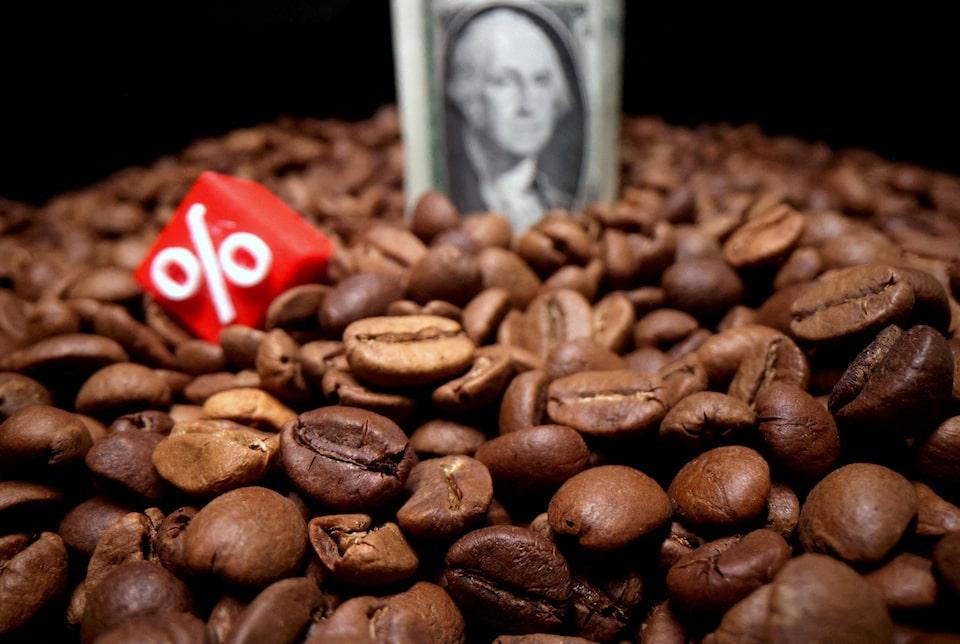
NEW YORK, May 20 (Reuters) - Paramount Coffee Company, one of the largest roasters and distributors of coffee in the United States' Midwest region, has hiked prices due to U.S. tariffs. The National Coffee Association has requested an exemption from 10% tariffs imposed on most goods imported into the U.S. as the United States - the world's largest consumer of coffee - is unable to produce the beans. So far, there has been no decision from the government. Sign up here. The tariffs are only exacerbating pain for the U.S. coffee industry. Prices for beans surged 70% in 2024 and are another 15% this year after bad weather hit production in key countries. "These changes are a direct result of recent government decisions regarding international tariffs on coffee and other imported goods sourced outside the United States," Paramount said in a May 20 email to clients seen by Reuters. "These developments have significantly impacted our costs, making price adjustments necessary," it said. The email did not specify the size of the hikes. Paramount did not immediately respond to a request for comment outside business hours. The industry may also have to grapple with damaging "reciprocal" tariffs that are currently suspended, such as the hefty 46% rate on goods from Vietnam, the world's second-largest producer of coffee. If bilateral talks do not result in a deal, those tariffs could return after July 9. https://www.reuters.com/world/asia-pacific/large-us-midwest-coffee-roaster-hikes-prices-tariffs-hit-2025-05-21/
2025-05-21 07:03
UK annual inflation rate hits 3.5% in April Surge is bigger than economists and Bank of England predicted Huge increase in Easter airfares pushes up services prices Investors push back Bank of England rate cut bets May 21 (Reuters) - Britain suffered a bigger-than-expected inflation surge in April, prompting investors to bet on the Bank of England slowing its already gradual pace of interest rate cuts. The annual inflation rate hit 3.5% in April, its highest reading since January 2024. The increase from 2.6% in March was the largest between two months since 2022 when price growth was rocketing above 10%. Sign up here. A jump in air fares over the Easter holiday was a driver of the sharp climb. A Reuters poll of economists had pointed to a reading of 3.3% in April. The Bank of England earlier this month had projected consumer price inflation of 3.4%. Britain now has the second-highest inflation rate of any major Western European economy, behind the Netherlands. The data will add to unease over the outlook for Britain's economy which grew strongly in early 2025 but is likely to slow. Finance minister Rachel Reeves said she was disappointed. "We are a long way from the double-digit inflation we saw under the previous administration, but I'm determined that we go further and faster to put more money in people's pockets," Reeves said. Sterling first rose against the US dollar after the figures but then weakened. Gilts underperformed against other government bonds. The chance of a BoE rate cut in August was cut to 40% by investors, down from 60% before the inflation data. However, interest rate futures pricing suggested investors saw about 37 basis points of BoE rate cuts by the end of 2025, little changed from Tuesday. Allan Monks, an economist at JP Morgan, said the data called into question the likelihood of a rate cut over the summer. "The surprise will reinforce the BoE's hawkish bias," Monks said in a note to clients. "The door to a June cut appears shut and the likelihood of an August cut (still our base case) has shifted lower." 'AWFUL APRIL' Services price inflation - a key gauge of domestic inflation pressure - leapt to 5.4% in annual terms in April, above all forecasts in the Reuters poll for an increase to 4.8%. It was far above the BoE's prediction of a reading of 5.0% for April. In April alone, services prices rose by 2.2% - the biggest monthly increase in 34 years. The ONS said the timing of the Easter holiday, which took place in April this year, was probably a contributor to the big jump in air fares which surged by 27.5% from March, the second-biggest month-on-month increase for April on record. Analysts at consultancy Pantheon Macroeconomics said not all of the jump in services inflation could be pinned on the higher airfares and their forecast of two more BoE rate cuts this year was now hanging in the balance. Newspapers had billed last month as "Awful April" because of increases in gas, electricity and water prices, alongside higher taxes on employers - all of which are pushing up inflation. The BoE has predicted that inflation will hit 3.7% by September. Some officials at the central bank disagree with its key assumption that the climb in inflation will not have longer-running effects on pricing behaviour. BoE Chief Economist Huw Pill said on Tuesday the pace of interest rate cuts had been too fast given still strong wage pressures on inflation, but his vote this month to keep borrowing costs on hold was likely to prove "a skip" not a halt. A survey of employers published earlier on Wednesday suggested employers were starting to lower their pay increases for staff. The BoE lowered interest rates by a quarter point to 4.25% on May 8 in a three-way split vote, with two members of the Monetary Policy Committee favouring a bigger cut, and two - including Pill - favouring a hold. https://www.reuters.com/world/uk/uk-inflation-jumps-higher-than-expected-35-april-ons-says-2025-05-21/

2025-05-21 07:02
U.S. dollar down 0.6% US economic woes linger despite China trade truce – poll Palladium and platinum trade above $1,000/oz mark May 21 (Reuters) - Gold prices rose for a third straight session on Wednesday and hit a one-week high, helped by a softer dollar and safe-haven demand amid economic and geopolitical uncertainty. Spot gold was up 0.7% at $3,312.77 an ounce, as of 1355 ET (1755 GMT). U.S. gold futures settled 0.9% higher at $3,313.50. Sign up here. The U.S. dollar (.DXY) , opens new tab fell 0.6% against a range of other currencies, making gold less expensive to buy for overseas currency holders. Wall Street's main indexes slipped and government bond yields rose, as investors closely watched a pivotal debate over U.S. President Donald Trump's tax-cut bill that has fanned concerns about the country's growing debt. "We are kind of paused here in mid-range between the high and recent low, waiting for a signal of more trade and tariff deals," said Daniel Pavilonis, senior market strategist at RJO Futures. The outlook for the U.S. economy remains weak despite a temporary cooling of the U.S.-China trade war, a Reuters poll of economists showed. Elsewhere, CNN reported on Tuesday, citing multiple sources, that new intelligence indicates Israel is preparing to strike Iranian nuclear facilities, even as Trump's administration is in talks with Iran over its uranium enrichment program. Gold is known as a safe investment amid economic and geopolitical turmoil. Bullion prices had hit a record high of $3,500.05 last month. "We expect gold's recent price dip will stimulate investment buying, as macroeconomic and geopolitical uncertainty linger," said ANZ in a note. Silver rose 0.8% to $33.32 an ounce. Platinum was up 1.4% at $1,068.16 after hitting its highest since May 2024 earlier. Palladium added 0.8% to $1,021.40, an over six-month peak. China imported its highest amount of platinum in a year last month amid already dwindling stocks, suggesting there could be a shortage of supply, while palladium surged due to easing demand concerns, said Fawad Razaqzada, market analyst at City Index and FOREX.com. https://www.reuters.com/world/india/gold-hits-one-week-high-weaker-dollar-us-fiscal-concerns-2025-05-21/

2025-05-21 06:47
OSLO, May 21 (Reuters) - Wage talks involving some 7,500 oil drilling workers in Norway broke down on Wednesday, employers and three labour unions said, raising the risk of strike action later this year that could disrupt exploration. The talks between the Norwegian Shipowners' Association (NSA) and the Safe, Styrke and DSO labour unions will resume at a later unknown date with a state-appointed mediator. Sign up here. "Unfortunately it was not possible to reach an agreement," NSA lead negotiator Geir Sjoeberg said in a statement. Under Norway's tightly regulated collective bargaining system, workers are only eligible to go on strike if the mediation also fails. Details of the demands and any wage offers have not been disclosed and are normally confidential. A broad-based group of onshore industry workers reached a wage deal with employers in March for a 4.4% pay rise this year, although demands in other sectors could deviate. Strikes by drilling workers could delay expansion projects and the start-up of new fields in Norway, which is a major global exporter of oil and gas, but typically have only a minor impact on daily output. Annual wages on offshore drilling rigs in Norway range from 743,000 to 942,000 Norwegian crowns ($73,328-$92,968) plus overtime and other benefits, according to the labour unions. Companies affected by the talks include Transocean , Saipem (SPMI.MI) , opens new tab, Odfjell Drilling (ODLO.OL) , opens new tab, Archer, Seadrill (SDRL.N) , opens new tab and others, and were represented in the talks by the NSA. A separate group of Norwegian petroleum production workers, who are directly employed by companies such as Equinor and Aker BP, reached a wage agreement earlier this month. ($1 = 10.1325 Norwegian crowns) https://www.reuters.com/sustainability/sustainable-finance-reporting/norway-oil-drilling-labour-unions-seek-wage-mediation-avert-strike-2025-05-21/

2025-05-21 06:41
May 21 (Reuters) - Morgan Stanley turned bullish on most major U.S. assets, upgrading its stance on stocks and Treasuries to "overweight", bolstered by reduced tariff uncertainty, no chance of a recession and the room for further rate cuts. However, the one exception was the dollar, which the Wall Street brokerage expects will continue to remain under pressure due to "a convergence in U.S. rates and growth to peers", it said in a note late on Tuesday. Sign up here. "We expect USD assets to broadly outperform the rest of the world, with the notable exception being the dollar itself ... against a backdrop of a slowing but still expanding global economy," Morgan Stanley said. While it does not expect either a global or U.S. recession, it does estimate that global real GDP growth will drop to 2.5% by the end of this year, from 3.5% in 2024. The Trump administration's tariff salvo this year has weighed on global growth and spurred investors to rotate their U.S. asset holdings into other regions. However, investor sentiment for U.S. assets has revived in the aftermath of a U.S.-China trade deal. Morgan Stanley expects U.S. corporate earnings revisions to bottom in the near term and a weak dollar to lift the income for multinational companies. The brokerage also expects equities to get a boost from easing inflation and further interest rate cuts. As a result, it now expects the benchmark S&P 500 index (.SPX) , opens new tab to hit 6,500 points in the second quarter of 2026, instead of the end of 2025. The index closed at 5940.46 points on Tuesday. It expects the 10-year Treasury yield to be at 3.45% by the second quarter of 2026. The yield ended at 4.481% on Tuesday. However, it projected that the dollar index (.DXY) , opens new tab, already down 8% to 99.76 so far this year, to weaken further. "We now forecast the DXY to fall an additional 9% over the next 12 months to 91, with USD weakness most pronounced against its safe-haven peers – EUR, JPY, and CHF," Morgan Stanley said. The brokerage forecasts EUR/USD at 1.25 and USD/JPY at 130 by the second quarter of 2026. https://www.reuters.com/business/morgan-stanley-upgrades-us-equities-overweight-2025-05-21/

2025-05-21 06:26
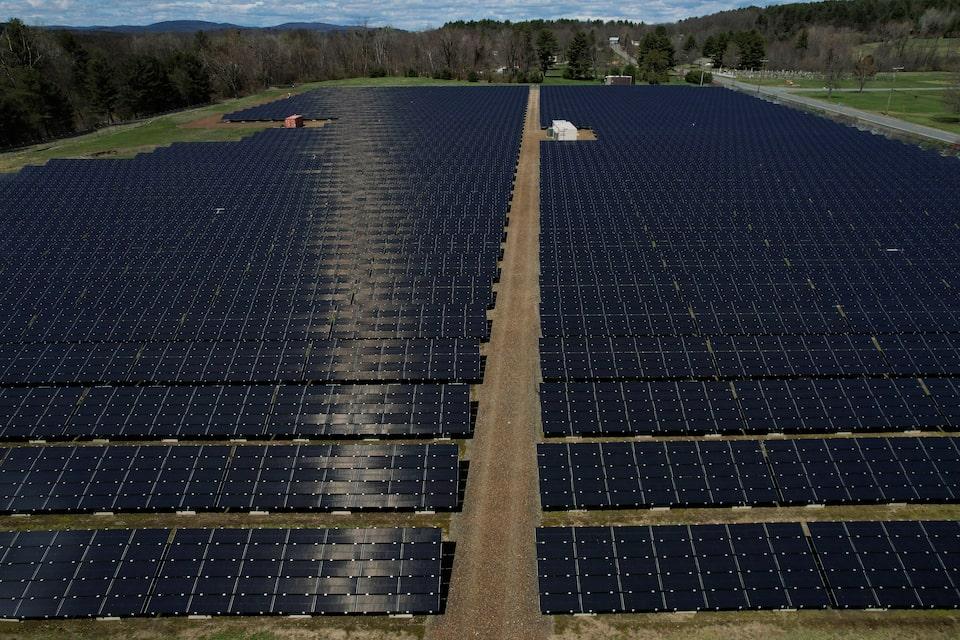
LITTLETON, Colorado, May 21 (Reuters) - Global electricity generation from solar farms is set to exceed output from nuclear reactors for the first time this summer, marking an important milestone in the continuing growth of solar power within global energy systems. As solar farms only generate power during daylight, solar output remains well behind wind, nuclear and hydro systems on an annual basis. Sign up here. But during peak production months solar farms can exceed output from nearly all other clean sources and have already started to surpass global wind output during the northern hemisphere summer from last year. With solar now also set to exceed nuclear production for a spell, that leaves global hydro systems as the only other major clean power source that has yet to be eclipsed briefly by solar farms during the peak solar output period. CAPACITY SURGE Over the past decade, utilities have added more than twice as much solar capacity to generation networks as any other power source, thanks mainly to the relatively low cost and speedy connection times of solar systems. As of 2024, there was 1,866 gigawatts (GW) of utility-scale solar generation capacity embedded in global electricity systems, according to data from energy think tank Ember. That capacity footprint was 10 times more than what was in place in 2014, and was by far the largest capacity growth posted by all major power sources during that period. In the decade since 2014, wind power posted the next largest capacity increase, by a factor of 3.2, while all other generation sources saw a less than doubling in installed capacity. In terms of overall capacity, solar's total capacity was the third-highest among major power generation sources in 2024, trailing coal's 2,174 GW and natural gas' 2,055 GW, but exceeding the 1,283 GW of hydro and 1,132 GW of wind power. OUTPUT IMPACT The steadily rising solar capacity footprint has propelled peak solar electricity generation to new highs each year so far this decade. Utility-scale solar electricity generation has grown by an average of 25% a year since 2020, Ember data shows. But over the first three months of 2025, solar generation was 34% more than was generated during the same months of 2024, thanks to widespread increases in generating capacity in several key regions. If monthly solar generation continues to register around 30% more than the same month in 2024, global solar electricity output should exceed 260 terawatt hours (TWh) per month during June, July and August of this year. Those output totals would likely handily surpass the monthly output from the world's nuclear reactor fleet, which has posted a monthly peak of just under 252 TWh since 2019 and averaged 223 TWh a month in 2024. Solar generation will likely fall back below 250 TWh from September as daylight hours in the northern hemisphere - home to over three-quarters of the world's solar farms - start to drop heading into winter. But during the coming summer, more worldwide electricity supplies will come from solar farms than from nuclear reactors for the first time, establishing yet another benchmark for the solar sector. UTILITY SCALE For utility operators, the steady swell in solar power supplies presents both opportunities and challenges. The intermittent nature of solar farms - which can flood grids with more electricity than needed during peak output periods before stopping production altogether at night - means real-time system balancing with other power sources is required. But the rapidly rising scale of solar generation within national grids is also forcing utilities to modernize their grids to better accommodate swings in renewable supplies and optimize overall power flows over time. The declining cost of battery storage systems is also spurring a growing number of utilities to deploy batteries to store surplus solar power when it is not required, and then dispatch that power when electricity consumption peaks. This "solar-plus-battery" model is in turn allowing utilities to cap the use of fossil fuels in their generation mixes, which can provide cost savings when coal and gas prices rise and also help reduce system emissions. This summer, when solar farms lift output to new records, utilities may also be able to dial back nuclear production during peak solar output periods, and then crank nuclear production up again once solar output falls at night. This could further help utilities curb reliance on fossil fuels while maximizing clean power generation, and set the stage for further growth in solar generation and use in subsequent years. The opinions expressed here are those of the author, a columnist for Reuters. https://www.reuters.com/markets/commodities/world-solar-generation-set-eclipse-nuclear-first-time-maguire-2025-05-21/