2025-05-21 06:26
US stocks end sharply lower after Treasury auction Yields on the 20-year debt rise to highest since November 2023 Tax-cut bill fuels further federal deficit concerns Oil prices end lower; bitcoin hits a record high NEW YORK, May 21 (Reuters) - Major stock indexes and the dollar fell on Wednesday as investors worried about a deteriorating U.S. fiscal outlook and Treasury yields climbed following a poorly received sale of 20-year U.S. bonds. The U.S. Treasury Department saw soft demand for the $16 billion sale of 20-year bonds, which reinforced the view that investors are shying away from U.S. assets. Sign up here. The three major U.S. stock indexes ended down more than 1% each. The dollar also fell broadly. At the same time, concerns continued about U.S. President Donald Trump's efforts to push through a tax-cutting bill that could worsen the debt load by $3 trillion to $5 trillion. Investor sentiment has been fragile since Moody's late last Friday downgraded the United States' credit rating, stoking concerns about the country's $36 trillion debt pile. Republicans are still divided over the details of the tax legislation, which would extend and add to Trump's 2017 tax cuts. There are also concerns about a lack of progress on U.S. trade talks with trading partners pressing Washington to ease or eliminate its tariffs. "There's no doubt the (U.S.) deficit has grown larger," said Tim Ghriskey, senior portfolio strategist at Ingalls & Snyder in New York. "Is there a chance that Trump over his term will bring that down? I would be surprised." "What we're really in is this period that's sort of a waiting game on tariffs," he added. "Negotiations are going on ... we don't really know if progress is being made." The Dow Jones Industrial Average (.DJI) , opens new tab fell 816.80 points, or 1.91%, to 41,860.44, the S&P 500 (.SPX) , opens new tab fell 95.85 points, or 1.61%, to 5,844.61 and the Nasdaq Composite (.IXIC) , opens new tab fell 270.07 points, or 1.41%, to 18,872.64. MSCI's gauge of stocks across the globe (.MIWD00000PUS) , opens new tab fell 7.67 points, or 0.87%, to 873.95. European stocks dipped, with British sportswear retailer JD Sports (JD.L) , opens new tab declining. The pan-European STOXX 600 (.STOXX) , opens new tab index eased 0.04%. After the Treasury auction, yields on the 20-year debt rose to 5.127%, the highest since November 2023. The 30-year bond yield rose 11.5 basis points to 5.0817% from 4.967% late on Tuesday. In the foreign exchange market, the euro was up 0.4% against the dollar to $1.1334, after earlier climbing to a two-week high. The pound hit its highest level since February 2022 after data showed UK consumer inflation flared hotter in April than most economists expected. Also, the yen strengthened against the dollar, which fell 0.6% to 143.62 yen, extending gains derived in part from a steep rise this week in domestic bond yields . Yields on 30-year Japanese government bonds surged to new records on Wednesday in the wake of a poor auction result that raised doubts over coming debt sales in the weeks ahead. Bitcoin , meanwhile, hit a record high, eclipsing its previous high from January. It was last little changed at $108,261.87. Oil prices settled lower, after Oman's foreign minister said a new round of nuclear talks between Iran and the U.S. would take place later this week. Also, the U.S. government released bearish data on crude and fuel supplies. Prices had gained earlier in the session on a CNN report on Tuesday that U.S. intelligence suggests Israel is preparing to strike Iranian nuclear facilities. Brent futures fell 47 cents, or 0.7%, to settle at $64.91 a barrel. U.S. West Texas Intermediate crude fell 46 cents, or 0.7%, to $61.57. Spot gold was up 0.7% at $3,312.77 an ounce following the weaker dollar. Investors were also monitoring the Group of Seven finance ministers' meetings under way in Canada. https://www.reuters.com/world/china/global-markets-wrapup-1-2025-05-21/

2025-05-21 06:21
Onshore oil stock builds have accelerated in recent weeks Floating oil storage has risen sharply too Inventories expected to grow into next year LONDON, May 21 (Reuters) - Inventories of oil stored on land and at sea have risen sharply in recent weeks, an early warning sign of deteriorating market conditions that could put oil prices under pressure for years. Oil prices have dropped to about $65 a barrel from a recent high of $82 in January due to rising concerns about the potential economic impact of U.S. President Donald Trump's trade war and the surprise decision by OPEC+ to ramp up production. Sign up here. Yet, until now, no data has shown a marked drop in oil consumption. Refining profit margins are holding strong and demand continued to grow by nearly one million barrels per day (bpd) in the first quarter of 2025 compared with a year earlier, according to the International Energy Agency. Recent oil storage data, however, suggests conditions have started weakening as inventories are building up around the world. While this trend has multiple causes, both economic and geopolitical, it clearly suggests that demand is not keeping up with supply. In the IEA's latest report published on May 15, it said that total global oil inventories rose for a second consecutive month to 7.7 billion barrels in March. While this is still below the five-year average, the direction of travel appears clear. The energy watchdog expects oil inventories to rise by an average of 720,000 bpd this year and accelerate to 930,000 bpd next year. Meanwhile, analysis of near real-time satellite data by Kayrros showed oil stock building has accelerated in recent weeks. Global onshore inventories of crude oil rose by more than 100 million barrels to 3.127 billion barrels between mid-April and mid-May. That's the highest reading for onshore inventories since the COVID-19 pandemic, with the exception of a seasonal peak in July 2023, according to Kayrros analyst Augustin Prate. Importantly, China, the world's top oil importer, saw storage hit a record high of 1.127 billion barrels in May, the Kayrros data showed. This development may partly reflect a concerted effort by the government and refiners to stockpile while oil prices are low. But the global trend of rising onshore inventories remains bearish nonetheless. OUT TO SEA The recent increase in oil stored in tankers at sea is another negative signal. Storing oil at sea is more expensive than on land, so when floating storage volumes rise, it means producers and refiners are taking longer to find buyers and discharge cargoes, indicating slowing demand or rising supplies, or both. Under extreme market conditions, traders store oil in tankers when onshore tanks have filled up. The volume of crude, condensate oil and refined fuels that has been in floating storage on tankers for seven days or longer has risen over the past month by 14% to more than 160 million barrels, the highest in two years, according to data from analytics firm Kpler. In the case of refined products, volumes have risen to around 86 million barrels, the highest since the depths of the pandemic in late 2020. On the crude side, floating storage reached 74 million barrels this week. Iran and Russia are largely responsible for this figure, accounting for 29 and 11 million barrels, respectively, the Kpler data shows. Rising Iranian stocks could be partly explained by the recent tightening of U.S. sanctions on Iran and several of China's so-called teapot refiners and port operators, as these restrictions led to a sharp drop in buying from China, the biggest importer of Tehran's oil in recent years. And the rise in Russian crude oil in floating storage may reflect the recent drop in oil prices. Western sanctions cap Russian crude at $60 a barrel, but this price becomes a lot less attractive when global benchmarks are only slightly higher. High-frequency data obviously can change quickly, and the full oil demand picture will only be determined once official data is published by the IEA and other government agencies around the world in the coming months. But for now, the apparent acceleration in inventory increases on land and at sea suggests oil demand is falling behind the increases in supply – just as OPEC+ is preparing to increase production even more. If this trend continues, today's oil prices may have to fall quite a bit further before the market rebalances. ** The opinions expressed here are those of the author, a columnist for Reuters. ** Want to receive my column in your inbox every Thursday, along with additional energy insights and trending stories? Sign up for my Power Up newsletter here. https://www.reuters.com/markets/commodities/by-land-sea-rising-oil-stocks-are-bad-news-prices-bousso-2025-05-21/

2025-05-21 06:04
BEIJING, May 20 (Reuters) - (This May 20 story has been corrected to clarify that the forecast refers to LNG, not natural gas, in the headline and paragraph 1) Woodside Energy (WDS.AX) , opens new tab, Australia's top natural gas producer, expects global liquefied natural gas (LNG) demand to increase by 50% from now to 2030, CEO Meg O'Neill said on Tuesday. Sign up here. "The message is very clear, consistent, around the desire for more affordable reliable energy for nations on their journey towards net zero and gas is absolutely a part of the mix," O'Neill said at the World Gas Conference. Customers say they want to lock in liquefied natural gas (LNG) supply into the 2040s, she added. https://www.reuters.com/business/energy/wgc-woodside-expects-global-gas-demand-rise-by-50-now-2030-ceo-says-2025-05-20/

2025-05-21 05:32
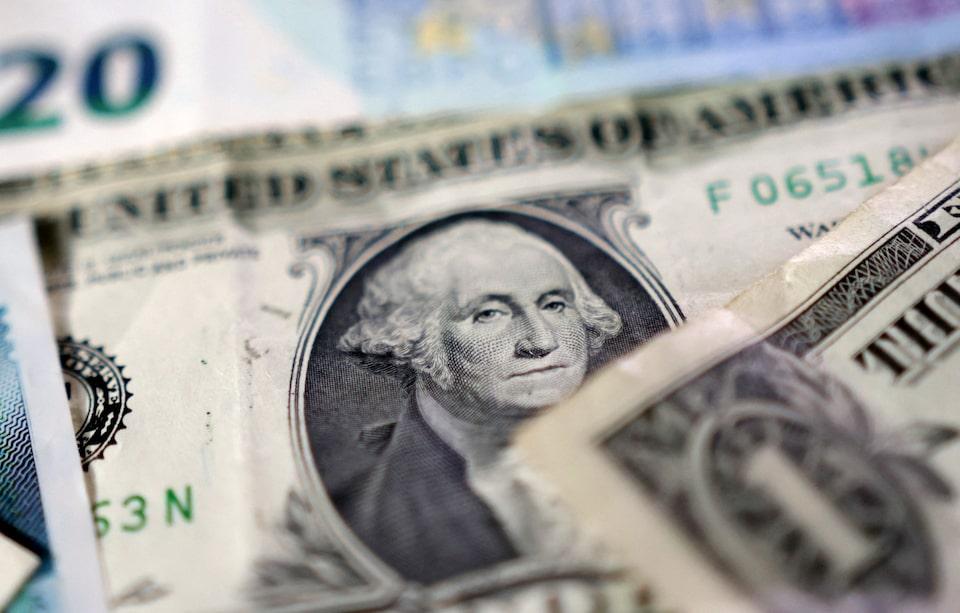
Republican hardliners say bill not cutting spending enough Bessent to talk FX with Japan counterpart on G7 sidelines 'Sell America' investment theme continues to weigh on dollar Soft US 20-year bond auction pressures dollar Bitcoin hits all-time peak NEW YORK, May 21 (Reuters) - The dollar fell against a broad swathe of currencies on Wednesday, undermined by worries about the Trump administration's tax cut and spending bill, as well as a weak 20-year Treasury bond sale that reinforced a growing view that investors are shying away from U.S. assets. Republicans are still divided over the details of the tax legislation. U.S. President Donald Trump met with House Republicans on Tuesday and failed to convince his party's holdouts to back his sweeping tax bill. Republican hardliners continue to argue the bill does not sufficiently cut spending, House Speaker Mike Johnson said. Sign up here. The greenback, meanwhile, extended losses against major currencies such as the euro and yen after a soft sale of $16 billion in 20-year bonds. The bond priced at a record 5.047%, higher than the expected rate at the bid deadline, suggesting investors demanded a premium to take down the bond. U.S. 20-year bond yields hit their highest since November 2023 of 5.127% following the auction. The dollar consequently extended loses against the euro and yen. "The disappointing auction results ... fit the narrative of weakening demand for U.S. assets and a 'sell America' trade amid fiscal concerns," said Kim Rupert, managing director, global fixed income analysis at Action Economics in San Francisco. "And those jitters are being exacerbated by the tax bill going through the House." In afternoon trading, the euro rose 0.4% against the dollar to $1.1334, after earlier climbing to a two-week high. Trump's tax bill would add $3 trillion to $5 trillion to the country's debt, according to nonpartisan analysts. Traders were also wary of U.S. officials potentially angling for a weaker dollar as part of independent trade deals on the sidelines of Group of Seven finance minister meetings underway in Canada. Developments in Trump's global tariff war, which have swung currencies wildly in recent months, have slowed considerably this week, even as the clock ticks to the end of a 90-day tariff respite for U.S. trade partners in the absence of new deals. STILL OPTIMISTIC ON TRADE DEALS? While markets remain optimistic that the White House is eager to get trade flowing again on a sustained basis, talks with close allies, Tokyo and Seoul, appear to have lost momentum. "There's a general reallocation away from U.S. safe-haven assets, ex-equities, partly due to the budget bill," said Eugene Epstein, head of trading and structured products, North America, at Moneycorp in New Jersey. "Even before the bill, we already had an acceleratingly poor debt-to-GDP ratio. Our spending has outpaced growth." The yen strengthened against the dollar, which fell 0.6% to 143.62 yen, extending gains derived in part from a steep rise this week in domestic bond yields . Yields on 30-year Japanese government bonds surged to new records on Wednesday in the wake of a poor auction result that raised doubts over coming debt sales in the weeks ahead. Super-long yields have been on the rise, following Treasury yields higher and as concerns swirled about new fiscal stimulus ahead of a Japanese upper house election slated for July. "Higher Japanese yields narrow the gap with U.S. Treasuries, reducing the incentive to hold the dollar," wrote Forex.com analyst Fawad Razaqzada in emailed comments. "With Japanese 10-year bonds climbing and U.S. yields holding steady, the tide may be turning for dollar/yen. The currency pair which found short-lived relief around 140.00, looks vulnerable again." The yen, along with safe-havens like the Swiss franc and gold, also got a lift after CNN on Tuesday reported that new intelligence gathered by the United States suggests Israel is making preparations to strike Iranian nuclear facilities. Market participants also looked ahead to U.S.-Japan talks, with Japanese Finance Minister Katsunobu Kato later this week. Kato said ahead of an expected meeting with Treasury Secretary Scott Bessent that talks on exchange rates would be based on their shared view that excessive volatility is undesirable. In other currencies, the pound hit its highest since February 2022 after data showed UK consumer inflation flared hotter in April than most economists expected, thereby clipping some of the Bank of England's scope to cut rates quickly. Sterling was last up 0.3% at $1.3425. In cryptocurrencies, bitcoin hit a record high of 109,760.08 , eclipsing the previous high from January. It was last up 0.7% at $107,772. https://www.reuters.com/world/middle-east/dollar-defensive-traders-eye-trump-tax-bill-g7-currency-talks-2025-05-21/
2025-05-21 05:18
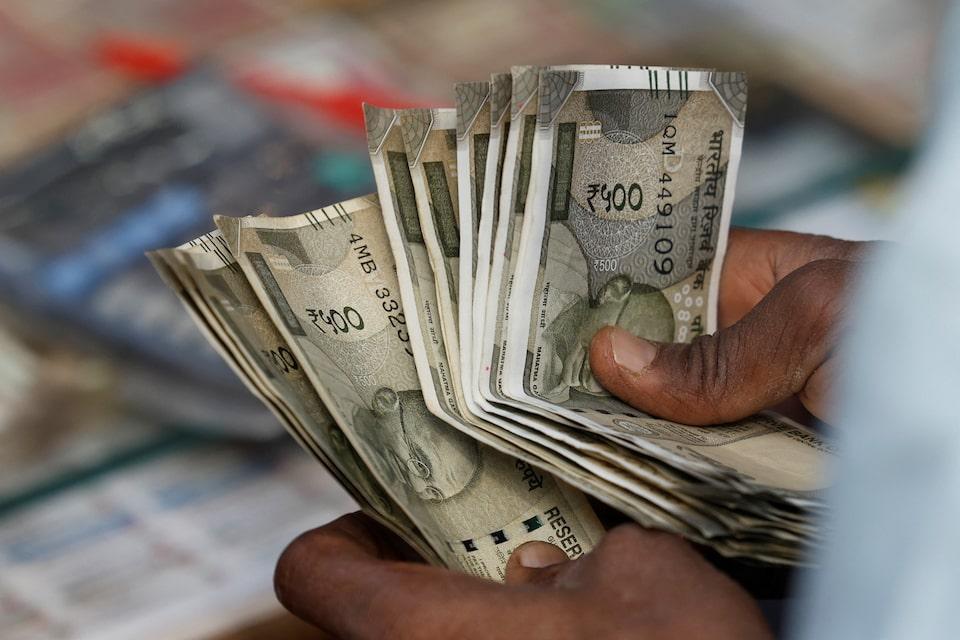
MUMBAI, May 21 (Reuters) - The Indian rupee's muted reaction in the face of a persistent decline in the dollar has stirred up confusion among bankers, with some citing foreign portfolio and corporate payment-related dollar outflows as reasons for the rupee lagging among peers. On the day, most Asian currencies rose between 0.1% to 0.6% versus the U.S. dollar but the rupee was little changed at 85.61. Sign up here. A similar pattern persisted throughout May, with the rupee declining by about 1% on the month so far even as its regional peers gained. The Korean won, for instance, is up 3.6% on the month and the offshore Chinese yuan has risen about 1% as well. There have been persistent outflows that have kept the rupee under pressure, but once they subside, the currency should see a bit of appreciation, Apurva Swarup, vice president at Shinhan Bank India. A senior treasury official at a bank pointed out that foreign portfolio outflows from Indian equities had picked up as well amid a possible reallocation towards Chinese equities, contributing to pressure on the rupee. On the macro-front, there aren't any concerning factors so the price-action seems "flow-dependent," a trader at a state-run bank said. On top of that, key levels like 85.40 and 85.20 have held up repeatedly so the desire to enter long bets on the rupee has diminished, the trader added. In the medium-term, traders expect the rupee to be rangebound while keeping a close eye on developments related to trade negotiations between India and the U.S., which would influence foreign portfolio flows into local equities as well. The dollar, meanwhile, appears to be gripped by a bearish bias on the back of concerns about the fiscal health of the U.S. economy and uncertainty about the future of U.S. trade policies. "There is possibly fading market confidence towards US trade and fiscal policies," MUFG Bank said in a note. On the day, the dollar index was down 0.3% and hovering at a two-week low of 99.6. https://www.reuters.com/world/india/rupees-inert-reaction-dollar-drop-confuses-bankers-outflows-flagged-2025-05-21/
2025-05-21 05:07
PARIS, May 21 (Reuters) - Critical mineral markets are at risk of painful disruptions after becoming more concentrated, particularly in refining and processing, and with the spread of export restrictions, the IEA said in a report on Wednesday. The use of critical minerals has spiked in recent years sparked by energy transition projects such as electric vehicles, battery storage, renewables and grid networks, while the industry has consolidated to a few major players. Sign up here. "Even in a well-supplied market, critical mineral supply chains can be highly vulnerable to supply shocks, be they from extreme weather, a technical failure or trade disruptions," said IEA Executive Director Fatih Birol. "The impact of a supply shock can be far-reaching, bringing higher prices for consumers and reducing industrial competitiveness," he said. The average share of the top three refined material suppliers is projected to decline only marginally by 2035 to 82%, effectively returning to the concentration levels seen in 2020, the IEA said. China, the dominant force in the industry, is expected to continue to grow its refining capabilities at a faster pace than the rest of the world to 2035, and has also added two-thirds of global battery recycling capacity growth since 2020. This high concentration increases the global market's supply shock risk, especially with the expanding number of export control measures on critical minerals, the IEA said. Similar trends are expected in the mining sector, with lower diversification expected for copper, nickel and cobalt, while concentration is expected to ease with the mining of lithium, graphite and rare earths. For copper, the current mine project pipeline points to a potential 30% supply shortfall by 2035 due to declining ore grades, rising capital costs, limited resource discoveries and long lead times, the IEA said. Lithium's rapidly growing demand as an integral part of the energy transition is expected to push the market into deficit by the 2030s, but the prospects for developing new lithium projects are much more favourable than for copper, it said. https://www.reuters.com/sustainability/climate-energy/low-diversity-critical-mineral-markets-could-hurt-industry-iea-says-2025-05-21/