2025-05-20 11:35
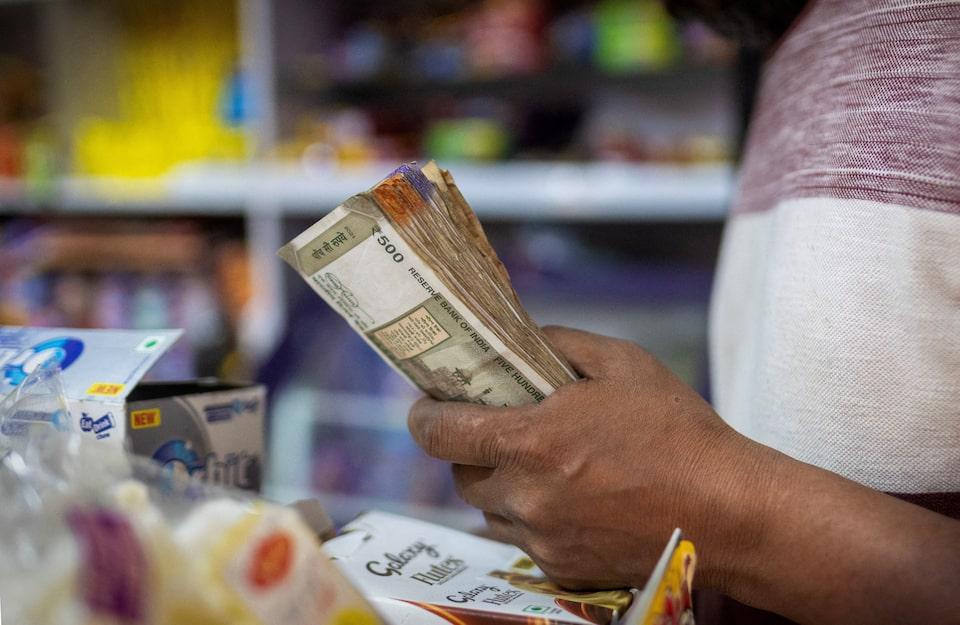
May 20 (Reuters) - Hindalco Industries (HALC.NS) , opens new tab, one of India's largest copper and aluminium producers, reported fourth-quarter profit above analysts' estimates on Tuesday, driven by a surge in commodity prices. Consolidated net profit for the Aditya Birla Group-owned firm rose to 52.83 billion rupees ($618.05 million) for the quarter ended March 31. Analysts had expected, on average, 44.97 billion rupees, as per data compiled by LSEG. Sign up here. The benchmark three-month aluminium and copper rose 17% and 10% on-year, respectively, during the reporting quarter. Higher commodity prices tend to drive up selling prices and margins for mining companies. Hindalco's copper business logged a 9% growth in revenue, with its aluminium upstream and downstream businesses logging a 22% and 23% rise in revenue, respectively. While the company did not disclose its earnings before interest, taxes, depreciation, and amortisation (EBITDA) margin, it "stood at 13.5% in the quarter, from 11.9% a year ago," according to Rajesh Majumdar, an analyst at B&K Securities India. Its unit Novelis (NVL.N) , opens new tab, the world's largest aluminium recycler, reported a 13% rise in quarterly net sales earlier this month, pushing up its parent's revenue 16%. The company accounts for 61% of Hindalco's overall revenue. Novelis' adjusted EBITDA fell 8% year-on-year due to high aluminium scrap prices, but rose 29% sequentially, which analysts see as a positive development for the company. The U.S.-based unit refrained from providing an outlook for margins and volumes for fiscal 2025 due to uncertainty around U.S. President Donald Trump's tariffs. Hindalco forecast positive growth in fiscal 2026 for both the parent and its unit, but CEO Satish Pai tempered it with a warning, in a post-earnings call, that commodity prices are "slightly on the lower side currently" due to global uncertainties, including top consumer China's growth aspects. He also forecast a capex of 75 billion-80 billion rupees of capex in India for fiscal 2026, above the 60 billion rupees capex forecast for fiscal 2025. ($1 = 85.4790 Indian rupees) https://www.reuters.com/world/india/indias-hindalco-beats-quarterly-profit-view-2025-05-20/

2025-05-20 11:13
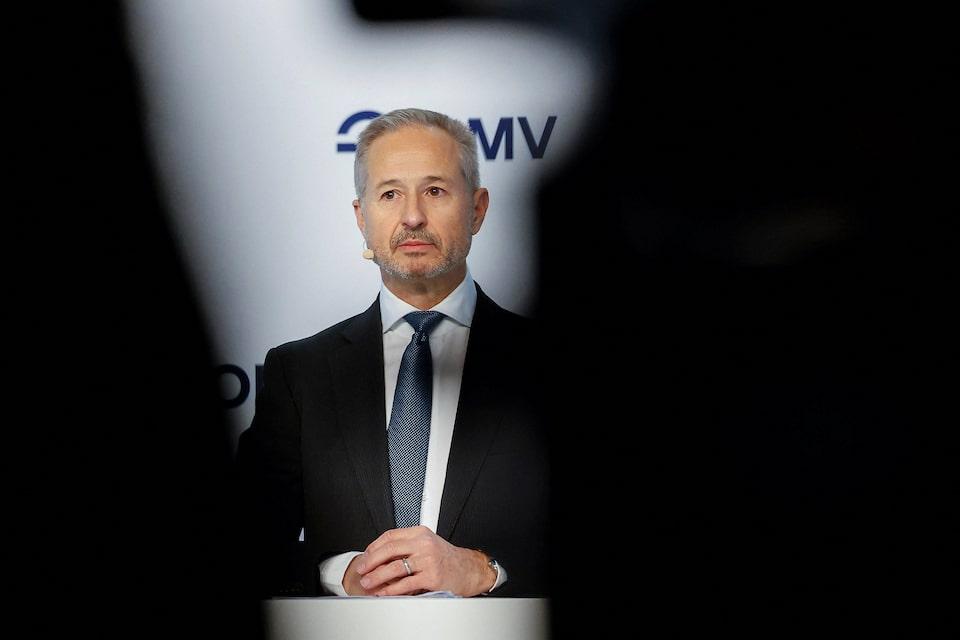
VIENNA, May 20 (Reuters) - Austrian oil and gas group OMV Chief Executive Alfred Stern has decided not to stand for re-election after his term ends on August 31, 2026, the company said on Tuesday in a surprise move which investors said was negative. OMV shares were down some 0.5% by 1030 GMT. Most of Stern's predecessors have served for longer than five years. Sign up here. Stern, 60, has been CEO since September 2021, having previously run the company's Borealis division and steered the Vienna-based company away from fossil fuels towards sustainable fuels and chemicals. He oversaw the merger of Abu Dhabi National Oil Company and OMV's polyolefin businesses in March after two years of negotiation, creating a chemicals powerhouse named Borouge Group International (BOROUGE.AD) , opens new tab, with a $60 billion enterprise value. The merger is expected to close in the first quarter of 2026. It is unclear who will lead the new company but Stern has made clear he is not available. Neither OMV nor Stern gave a specific reason for the move but Supervisory Board Chairman Lutz Feldmann said he deeply regretted the personal decision. "We are losing a CEO who has positioned the OMV Group for the future with a clear, forward-looking vision," he said. Stern thanked the board for the opportunity to lead OMV into a new era and said the company's transformation was on track. "The resignation of Mr. Stern from August 2026 is negative news," said Erste Group in a research note, adding he was the driver of the merger process which created the Borouge Group. "We believe creating BGI is a positive development for OMV shareholders and the resignation is not in relation to this transaction," it added. Critics view the merger as an industrial success but argue the focus may now shift away from the chemical strategy pursued by Stern and towards a profit-oriented energy and investment group, with a much stronger influence from ADNOC. Russia's 2022 invasion of Ukraine posed major challenges to OMV, which had relied on Russia's Gazprom (GAZP.MM) , opens new tab for gas deliveries, as Western countries tried to reduce dependence on Russian energy. In December, OMV terminated its long-standing gas supply contract with Gazprom after the Russian gas giant halted deliveries after a protracted legal battle over contracts. OMV had been one of the few remaining large, long-term buyers of Russian pipeline gas in Europe after Russia's invasion. https://www.reuters.com/business/energy/omv-chief-stern-will-not-stand-another-term-2025-05-20/
2025-05-20 11:02
Some fixed-phone, internet services disrupted in parts of Spain Disruption came three weeks after country's major power outage MADRID, May 20 (Reuters) - Telefonica (TEF.MC) , opens new tab said it had reestablished all services in Spain by early afternoon on Tuesday after disruption to some fixed-phone and internet services for a few hours in parts of the country due to a network update. The outage came three weeks after Spain suffered a catastrophic power blackout on April 28, whose causes are yet to be determined. Sign up here. Emergency service line 112 was also disrupted in some areas of the country, Telefonica said. "All service has been reestablished except for a case or two where teams are working," Telefonica's Operations Director Sergio Sanchez said in a video posted online. Telefonica is the second-largest operator in Spain after Orange's MasOrange, and other large providers' services were not affected. Telefonica's mobile service also appeared to work normally throughout the morning. According to the Downdetector monitoring website, reported disruptions were mostly related to fixed-line internet services. Users reported connection problems in the regions of Aragon, Valencia, Andalusia, Extremadura, the Basque Country and Navarra, as well as parts of Madrid. https://www.reuters.com/markets/commodities/telefonicas-spanish-network-update-causes-partial-communications-outage-2025-05-20/

2025-05-20 10:55
May 20 (Reuters) - Canada's main stock index rose to a record high on Tuesday, led by gains for metal mining shares, as investors shrugged off hotter-than-expected Canadian core inflation data and looked for further progress in the easing of global trade tensions. The Toronto Stock Exchange's S&P/TSX composite index (.GSPTSE) , opens new tab ended up 83.7 points, or 0.3%, at 26,055.63, eclipsing its record closing high on Friday. The market was closed on Monday for the Victoria Day holiday. Sign up here. It was the 10th straight day of gains for the index, the longest daily winning streak since October 2021. Finance leaders from the Group of Seven industrialized democracies will strive for unity on non-tariff issues when they meet in Canada this week, but may have trouble reaching consensus with a Trump administration intent on pushing allies to serve U.S. interests. "All eyes are on the G7 this week," said Michael Constantino, CEO of online investment platform Webull Canada. "Obviously we saw the U.S.-China deal easing some global tensions. I think that the framework might be in place this week when the G7 meets for some favorable results to ease all the trade fears." Canada's annual inflation rate eased to 1.7% in April as energy prices dropped sharply after the removal of a federal consumer carbon tax but two key measures of underlying inflation rose above 3%, reducing expectations for a Bank of Canada interest rate cut next month. The materials group, which includes fertilizer companies and metal mining shares, climbed 3.5% as the price of gold rallied. The consumer staples sector was another standout, adding 1.5%, while technology was a drag, ending 1.4% lower. https://www.reuters.com/markets/europe/tsx-futures-rise-ahead-domestic-inflation-data-2025-05-20/

2025-05-20 10:49
LONDON, May 20 (Reuters) - What matters in U.S. and global markets today By Mike Dolan , opens new tab, Editor-At-Large, Financial Industry and Financial Markets Sign up here. Group of Seven finance chiefs have much to disagree about these days as smouldering tensions on trade and currencies form the backdrop to the their meeting in Canada on Tuesday. I'll get into this and all of the rest of the market news below. Plus, in my column today, I discuss why the market's initial calm over the latest U.S. credit rating downgrade might be misleading. Today's Market Minute * The leaders of Britain, Canada and France threatened "concrete actions" against Israel on Monday if it does not stop a renewed military offensive in Gaza and lift aid restrictions, piling further pressure on Prime Minister Benjamin Netanyahu. * Donald Trump said after his call on Monday with President Vladimir Putin that Russia and Ukraine will immediately start negotiations for a ceasefire, but the Kremlin said the process would take time and the U.S. president indicated he was not ready to join Europe with fresh sanctions to pressure Moscow. * China cut benchmark lending rates for the first time since October on Tuesday, while major state banks lowered deposit rates as authorities work to ease monetary policy to help buffer the economy from the impact of the Sino-U.S. trade war. * The prospect of U.S. import tariffs on copper has been a bonanza for physical metal traders, but the resulting price turbulence has been a big headache for fund managers. Read the latest piece from Reuters’ columnist Andy Home. * The current problem with Chinese economic data is that there is something for everybody. Bears point to slowing factory output in April, weak property prices and investment, soft retail sales and lacklustre growth in electricity generation. But bulls highlight resilient iron ore imports, recovering crude oil arrivals, surging installations of renewable energy and strong electric vehicle production. Find out how to make sense of it all in Clyde Russell’s latest column. An awkward G7 Monday's wobble in U.S. stocks and bonds on the latest U.S. sovereign credit rating cut seemed to calm quickly, but the dollar remained under pressure and bond markets across the G4 were on edge. Debt worries are beginning to rankle more broadly. Japanese long-dated government bonds were the latest victims overnight after a poor auction of 20-year bonds saw 30-year and 40-year JGB yields soar to new record highs above 3% as the 20-year yield hit its highest since 2000. The auction may be an ominous portent for an equivalent U.S. debt sale on Tuesday, where $16 billion of 20-year Treasuries come under the hammer. But market attention may now shift to potential currency discussions at this week's G7 meeting after weeks of speculation that Washington may push Japan and other Asian countries to stop capping their currencies as part of its bilateral trade negotiations. Japan's Finance Minister Katsunobu Kato said on Tuesday that he expects that any discussions about exchange rates with U.S. Treasury Secretary Scott Bessent will be based on their shared view that excessive currency volatility is undesirable. After a previous meeting with Bessent in Washington last month, Kato said the two agreed to continue "constructive" dialogue on currency policy, but did not discuss setting currency targets or a framework to control yen moves. U.S. officials appear keen to keep the trade re-set on the overall agenda and to continue pressuring China. "The Secretary will push the G7 to continue to focus on rebalancing the global economy and addressing unfair economic policies that contribute to imbalances," the spokesperson said. "The G7 must work together to protect our workers and firms from China's unfair practices." With JGB wobbles and the G7 meeting as a backdrop, dollar/yen slipped again on Tuesday. The dollar index (.DXY) , opens new tab nudged down to its lowest in almost 2 weeks. But outside the G7, China's yuan bucked the trend and weakened as the People's Bank of China cut its key lending rates for the first time in seven months, in part to help buffer the economy from the impact of the Sino-U.S. trade war. That helped Chinese stocks (.CSI300) , opens new tab, (.HSI) , opens new tab outperform an otherwise flat-to-postive day for stocks in Asia and Europe, although Wall Street stock futures were in the red again despite Monday's late recovery by the S&P 500 (.SPX) , opens new tab. Also bucking the trend was the Australian dollar , which edged lower after the Reserve Bank of Australia cut benchmark interest rates by 25 basis points and left the door open to further easing in the months ahead. Later on Tuesday, Wall Street will keep a close eye on Home Depot's quarterly update to better assess how big retailers are coping with the tariff shock. Another stream of Federal Reserve speakers are also on the line up today. The message from Monday's heavy dose of Fedspeak was that the central bank is on hold for the foreseeable future. Fed futures pricing now expects no rate cut before September and just two cuts over the remainder of the year thereafter. Be sure to check out today's column, where I discuss why the market's initial calm over the latest U.S. credit downgrade may be deceptive, as credit default swaps reveal deep investor anxieties about America's fiscal health. Chart of the day The United States isn't the only country whose sovereign credit rating is under pressure. Long-dated G4 government borrowing rates over 30-years are climbing. Japan was the latest in the firing line on Tuesday after a poor auction of 20-year bonds. Anxiety is building up about the country's debt-to-GDP ratio, which is already an eye-watering 263%. The Bank of Japan seeks to lift interest rates to handle 'normalizing' inflation, as it also looks to run down its massive holdings of government debt. Japan's 30-year and 40-year government bond yields jumped 17 and 15 basis points, respectively, to hit record highs above 3%. The 30-year JGB yield is now back above those in Germany. Today's events to watch * Canada April consumer prices (8:30 AM EDT) * G7 finance ministers and central bankers meet in Banff in Alberta, Canada * Federal Reserve Board Governor Adriana Kugler, Boston Fed President Susan Collins, St Louis Fed President Alberto Musalem, Atlanta President Raphael Bostic, Richmond Fed chief Thomas Barkin, San Francisco Fed chief Mary Daly and Cleveland Fed boss Beth Hammack all speak * U.S. corporate earnings: Home Depot, Palo Alto Networks, Keysight Opinions expressed are those of the author. They do not reflect the views of Reuters News, which, under the Trust Principles , opens new tab, is committed to integrity, independence, and freedom from bias. https://www.reuters.com/markets/us/global-markets-view-usa-2025-05-20/
2025-05-20 10:15
MUMBAI, May 20 (Reuters) - The Indian rupee weakened on Tuesday as dollar bids from foreign banks, likely on behalf of custodial clients, and a softer Chinese yuan outweighed positive cues from broad weakness in the greenback. The rupee closed at 85.6350 against the U.S. dollar, down about 0.3% on the day. Sign up here. Asian currencies were mixed on the day while the offshore Chinese yuan dipped lower after China cut key benchmark lending rates and corporate seasonal demand for dollars remained high. A fall in local equities also weighed on the rupee, with traders pointing to dollar demand from foreign banks, likely spurred by mild outflows from local stocks. Benchmark Indian equity indexes closed down by about 1% each on the day while the yield on the country's benchmark 10-year bond dipped. The rupee should stabilize in the 84-86 band "aligning with its historical tendency to regain equilibrium after sharp currency movements," analyst at DBS said in a Tuesday note. The local currency had declined to its all-time low of 87.95 in February but has since clawed back losses despite spurts of volatility trigged by shifts in U.S. trade policies and the India-Pakistan conflict. The currency's 1-month implied volatility , a gauge of future expectations, has eased to about 5% after rising above 7% last week when the conflict flared up. Traders reckon that in the near-term currency markets will remain focused on developments arising from trade deal negotiations. The dollar meanwhile, appeared under pressure amid uncertainty over trade policy, concerns about the U.S. fiscal outlook, and fading confidence in the long-held exceptionalism of U.S. assets. Speculators are net short the dollar to the tune of $17.32 billion, close to the most bearish position on the buck since July 2023, according to CFTC data. On the day, the dollar index was down nearly 0.3% at 100.1. https://www.reuters.com/world/china/rupee-slips-along-with-local-stocks-chinese-yuan-even-dollar-softens-2025-05-20/