2025-05-20 07:06
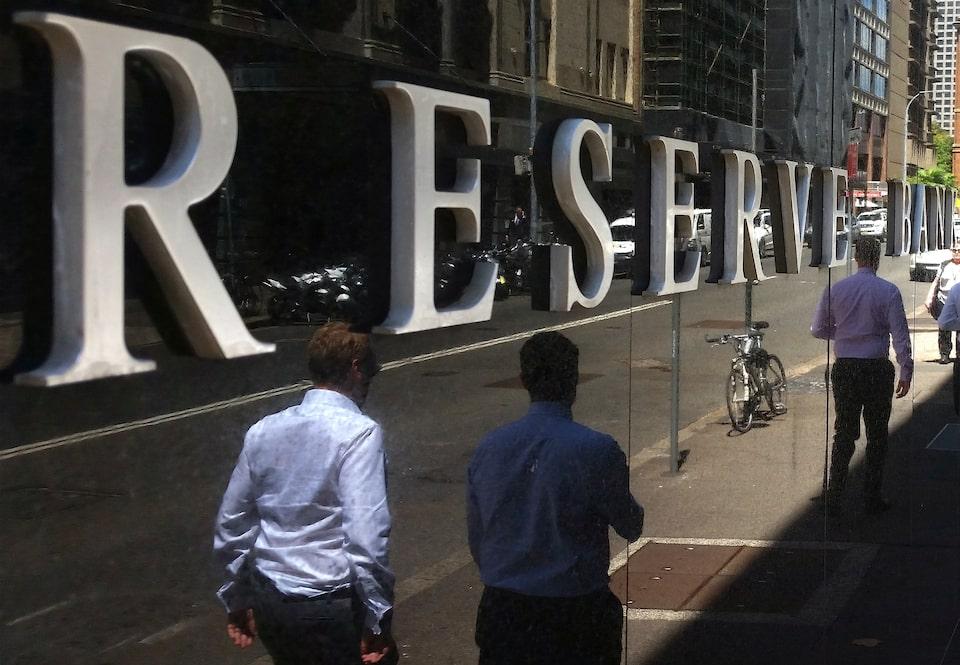
Trump's tariffs impact Australia's economic outlook Governor Bullock signals potential for further rate cuts Swaps imply 60% chance of another rate cut in July RBA sees inflation lower, unemployment higher due to trade tensions SYDNEY, May 20 (Reuters) - Australia's central bank on Tuesday cut interest rates to a two-year low as cooling inflation at home offered scope to counter rising global trade risks, and left the door open to further easing in the months ahead. Wrapping up a two-day policy meeting, the Reserve Bank of Australia cut the cash rate by 25 basis points to 3.85%, saying that upside risks to inflation had diminished as the international developments are set to weigh on the economy. Sign up here. The central bank considered a severe downside scenario for global trade and noted that policy was well placed to respond decisively to such risks. RBA Governor Michele Bullock said at a post-meeting press conference the board weighed holding rates steady and cutting, and also discussed whether it should cut by 50 bps. In contrast to her hawkish tone after the cut in February, Bullock said the situation has changed, noting U.S. President Donald Trump's April 2 tariff announcement on global imports and the still very uncertain outlook. "Does it mean we’re headed into a long series of interest rate cuts? I don’t know at this point and that’s why I think the cautious 25-basis-point cut with a recognition that if we need to move quickly, we can. We have got space." Markets had been fully priced for an easing but the Australian dollar fell 0.5% to $0.6425 and three year bond futures rallied 15 ticks as investors took the dovish comments from Bullock as a greenlight for further cuts. Swaps now imply a 60% probability for another cut in July, while a cut in August has been more than fully priced in. Rates are seen more likely to bottom at 3.1% rather than 3.35%. Since the RBA last met in April, the global landscape has changed drastically. Trump's global trade war has roiled financial markets and upended business plans. Trump has imposed 10% blanket import duties on the rest of the world, and after a tariff showdown with China that threatened a global recession, both agreed to slash sky-high duties on each other's goods for 90 days. Australia is a major exporter of resources to China and tariffs on the world's second-biggest economy could hinder growth there and its demand for commodities such as iron ore. SOFT LANDING At home, the flow of data has been mixed, with the anticipated rebound in consumer spending disappointingly soft. The labour market, however, remained surprisingly strong, with the jobless rate staying low at 4.1% where it has roughly been for over a year now. Headline consumer price inflation held at 2.4% in the first quarter and a key trimmed mean measure of core inflation slowed to 2.9%, taking it back into the RBA's target band of 2% to 3% for the first time since late 2021. "We have managed to get inflation down at the same time as keeping the employment market on a relatively good footing, so I think so far so good,” said Bullock. In its quarterly Statement on Monetary Policy, released on Tuesday, the RBA also said inflation would be lower and unemployment higher due to the cascading effects of global trade tensions, and that was even assuming interest rates were cut as deeply as markets expected. It warned that the drag from Trump's tariffs would lower global growth and prove disinflationary in net terms for Australia. "Optimism on inflation was offset to some extent by uncertainty around the tariffs and the still strong jobs market, but projections on prices and rates allude to a roadmap towards less restrictive policy," said Dwyfor Evans, head of APAC Macro Strategy at State Street Markets. "Some talk of a ‘hawkish cut’ before the decision, but global uncertainty aside, this was a clearer directional message from the RBA than we have seen for some time.” https://www.reuters.com/world/asia-pacific/australias-central-bank-cuts-rates-two-year-low-385-2025-05-20/
2025-05-20 06:57
COPENHAGEN, May 20 (Reuters) - Russia has released a Greek-owned oil tanker which was detained in Russian waters on Sunday after leaving an Estonian port, and the vessel has resumed its journey towards the Dutch port of Rotterdam, Estonian public broadcaster ERR reported on Tuesday. The Liberia-flagged Green Admire appeared to be underway in the Baltic Sea on Tuesday with its destination listed as Rotterdam, a Reuters review of LSEG ship tracking data showed. Sign up here. It had left the Sillamae port in Estonia using a designated navigation channel that crosses Russian territorial waters after which it was detained, the Estonian Foreign Ministry said on Sunday. Estonia's foreign minister has said Russia's action against the Green Admire was likely a response to a campaign by the Estonian navy to inspect tankers used to transport millions of barrels of Russian oil through the Baltic Sea. https://www.reuters.com/world/europe/russia-releases-oil-tanker-baltic-sea-detention-estonian-broadcaster-err-reports-2025-05-20/

2025-05-20 06:53
HONG KONG, May 20 (Reuters) - Temperatures above 40 degrees Celsius (104 degrees Fahrenheit) scorched parts of northern and central China on Tuesday with authorities issuing heat warnings and offering aid to farmers to protect food production. Temperatures in China's northern Hebei province, Henan province, a key wheat-producing region known as China's granary, and the eastern province of Shandong all reached 40 degrees Celsius (104 degrees Fahrenheit) on Tuesday. Sign up here. In Zhengzhou, Henan province and Shahe, Hebei province, the mercury soared to highs of between 41 C (105.8 F) and 42.9 C (109.22 F) on Monday, their highest ever for the month of May, authorities said. The high temperatures are expected to continue until Wednesday, the country's National Meteorological Centre said. China is facing hotter and longer heat waves and more frequent and unpredictable heavy rain as a result of climate change. The country is especially vulnerable to global warming, authorities have said, because of its huge population. Chinese meteorological data show 2024 was the warmest year for the country since comparable records began over six decades ago, the second straight year in which milestones were broken. Last year's warmer weather was accompanied by stronger storms and higher rainfall and led to spikes in power consumption in China, the world's second-largest economy. The National Meteorological Centre on Tuesday issued a yellow warning for high temperatures. The centre has a three-tier, colour warning system for high temperatures, with red being the most severe, followed by orange and yellow. In Zhengzhou, Henan's capital, large sprinkler trucks and sprinklers were used to cool down urban areas, state broadcaster CCTV reported. In Lanling county, in the south of Shandong province, agricultural experts were instructing vegetable farmers to ventilate their plants using sheds and water spraying, CCTV said. In Shanxi, authorities issued an orange heat warning and implemented water spraying to cool down many parts of the northern province, known for its coal production. Cold air moving from west to east will cool much of China's north on Thursday and Friday, with a drop of 6-12 C (11-22 F). In China's southern Jiangxi more than 100 mm (3.94 inches) of rainfall was recorded across much of the province. Last weekend, heavy rains in China's southern Guangdong and Guangxi provinces killed at least six people and disrupted trains and power supply, with alerts issued for severe flooding and geological disasters in parts of the country. https://www.reuters.com/sustainability/climate-energy/north-central-china-hit-by-soaring-heat-2025-05-20/

2025-05-20 06:50
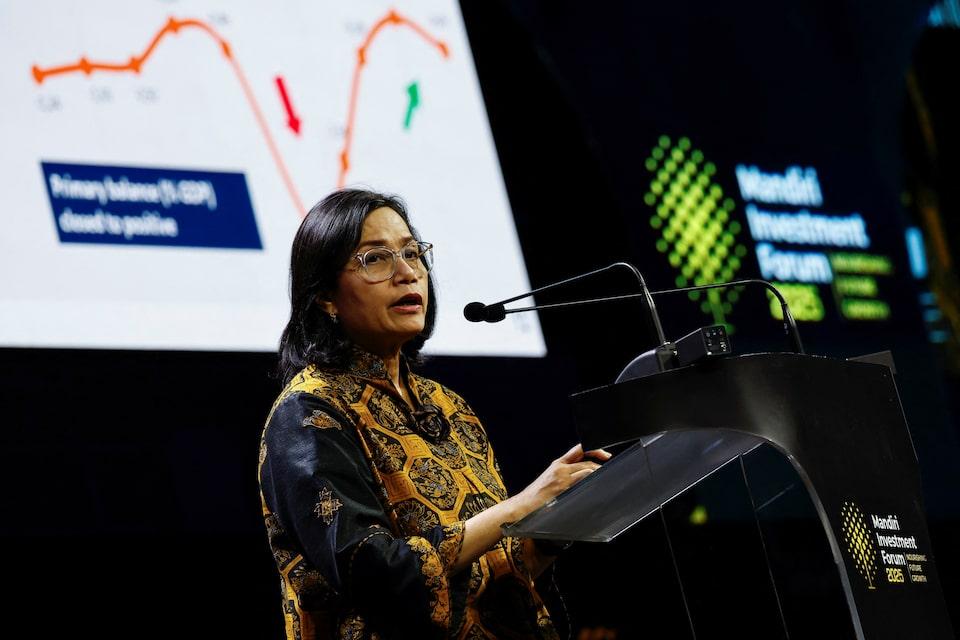
2026 GDP growth seen at 5.2% to 5.8%, versus 5.2% in 2025 'Prudent budget' with deficit at 2.48% to 2.53% of GDP in 2026 Higher spending expected on people's welfare JAKARTA, May 20 (Reuters) - Indonesia's government sees economic growth reaching at least 5.2% next year as it continues to focus on improving food production, energy security and people's wellbeing, its finance minister told parliament on Tuesday. Finance Minister Sri Mulyani Indrawati said economic growth in 2026 would be between 5.2% and 5.8% next year with the bottom end of the range the same as 2025's growth target. Sign up here. "We will reach the target in 2026 by maintaining people's purchasing power... development of natural resources downstream industry and improving the investment climate, as well as human resources," Sri Mulyani said as she outlined the basis of the government's 2026 budget. Still, some analysts were sceptical about the target growth range, saying the focus on welfare was unlikely to boost the economy. "Still the same old story," Jahen Rezki, an analyst from the University of Indonesia, told Reuters. "Minimal or no economic policies we see so far that support development ... We need a lot of investment/financial deepening to be able to grow higher." Spending for health and education in 2026 could be increased by as much as 4% and 5% year-on-year, respectively, Sri Mulyani said, as the government pushes ahead with President Prabowo Subianto's flagship programme of free meals for 83 million students and pregnant women, as well as to build hundreds of schools for poorer communities. The 2026 budget will also focus on improving the defence sector by modernising military hardware and increasing the size of the reserve forces, Sri Mulyani told parliament. Reiterating the government was committed to prudent spending, Sri Mulyani said the deficit would be between 2.48% and 2.53% of GDP, compared with this year's target of 2.53%. Jakarta also assumed a weaker rupiah next year - up to 16,900 a dollar - as a consequence of the ongoing global market uncertainties from U.S. tariffs. The budget will be the first by Prabowo, who wants to lift growth to 8% by 2029, since he took office in October. Indonesia usually formalises its spending plans by the end of the third quarter. https://www.reuters.com/world/asia-pacific/indonesia-says-economic-growth-could-pick-up-next-year-promises-prudent-budget-2025-05-20/
2025-05-20 06:47
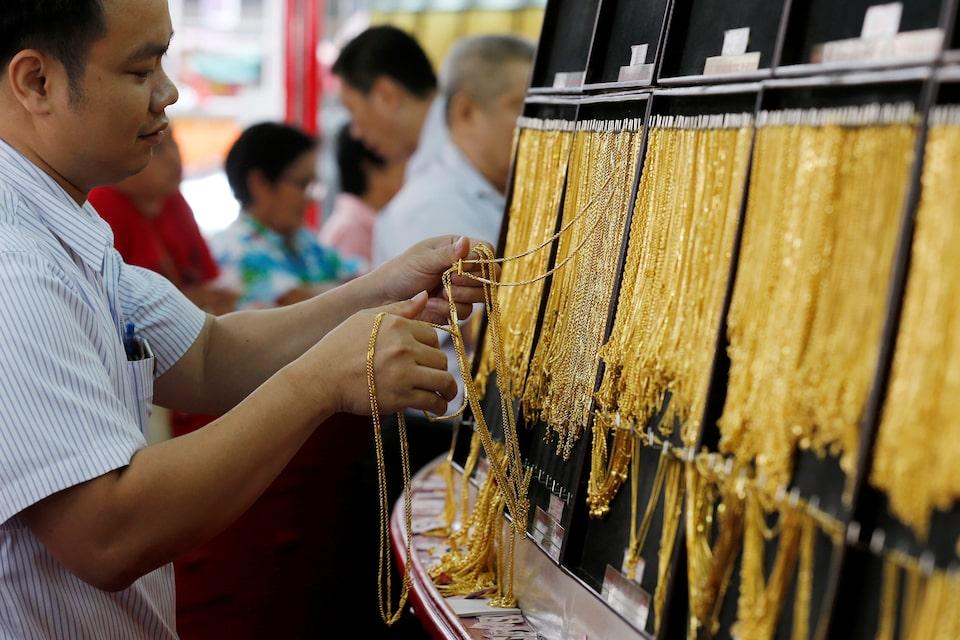
EU, Britain impose sanctions on Russia, call for ceasefire Platinum hits highest since October 2024 Palladium up over 4% May 20 (Reuters) - Gold prices rose more than 1% on Tuesday as the U.S. dollar weakened further and stocks slipped amid uncertainty over U.S. tariff policy and a potential ceasefire between Russia and Ukraine. Spot gold was up 1.7% at $3,284.74 an ounce by 1345 ET (1745 GMT). U.S. gold futures settled 1.6% higher at $3,284.6. Sign up here. The dollar slipped again on Tuesday, weighed down by the Federal Reserve's caution over the economy, having sold off broadly on Monday after ratings agency Moody's downgraded the U.S. sovereign rating, one notch down from "Aaa" to "Aa1" on Friday due to concerns about the nation's growing debt. A softer dollar makes bullion cheaper for buyers holding other currencies. "There's still a level of uncertainty out in the market. Most notably, the Moody's downgrade, weakening dollar have supported the precious metals complex overall," said David Meger, director of metals trading at High Ridge Futures. U.S. stocks eased as investors focused on a critical vote in Washington over U.S. President Donald Trump's sweeping tax cuts. Bullion is considered a safe asset during periods of geopolitical and economic uncertainties. "Gold will have serious resistance at $3,350 with some minor resistance at $3,300. We are trading in the new range of $3,150 to $3,350," said Phillip Streible, chief market strategist at Blue Line Futures. Ongoing tensions between Russia and Ukraine are more of a factor for platinum and palladium, Meger said, as no potential deal could mean a lesser supply on the market coming from Russia. Russia is the world's biggest palladium producer and the second biggest platinum producer. The EU and Britain announced new sanctions against Russia on Tuesday without waiting for the U.S. to join them, a day after President Donald Trump spoke to Vladimir Putin but was unable to extract a promise for a ceasefire in Ukraine. Platinum reached its highest since October 2024, climbing 5% to $1,048.05. Palladium rose 4.2% to $1,015.58, its highest since February 4. Spot silver rose 2.1% to $33.01. https://www.reuters.com/world/india/gold-eases-russia-ukraine-ceasefire-optimism-curbs-safe-haven-demand-2025-05-20/
2025-05-20 06:04
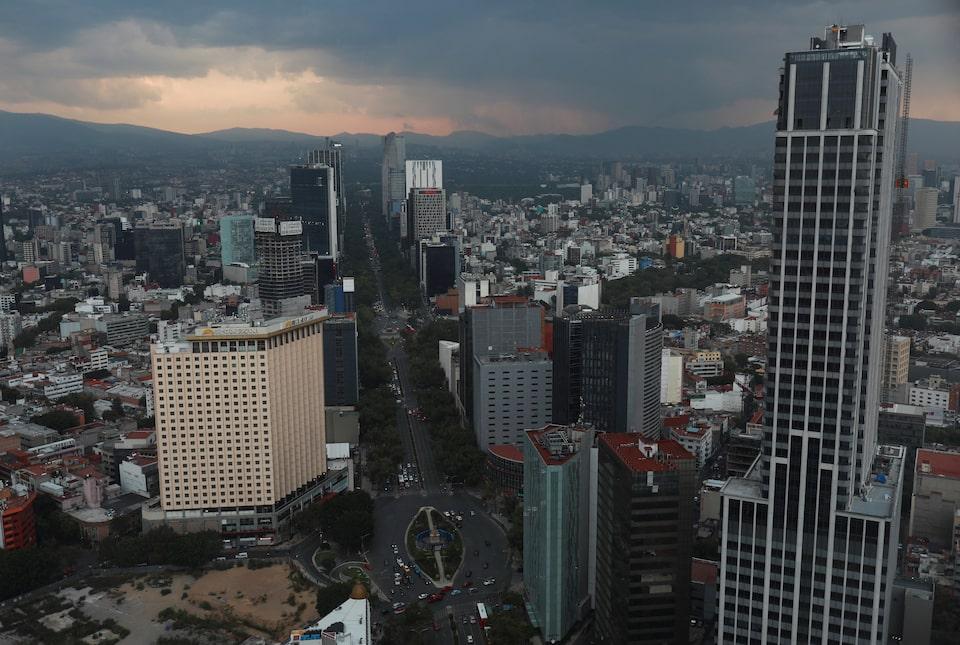
Latin America investment growth rate topped Europe and Southeast Asia in 2024-Endeavor/Glisco Partners report Domestic investors focused more on early-stage startups, while foreign ones on later-stage Capital investments concentrated largely on mature companies rather than early-stage startups MEXICO CITY, May 20 (Reuters) - Capital raised for startups in Latin America grew 26% in 2024 from 2023, more than in Europe, which was up 7%, and Southeast Asia, which shrank 34%, according to a study published on Tuesday. Funding for Latin American startups is also expected to increase in 2025 thanks to a young population, accelerated digitalization and increasingly sophisticated capital, said the report from Mexican entrepreneurship network Endeavor and private equity firm Glisco Partners. Sign up here. Still, the industry faces challenges from low participation of local investment funds in later-stage investments and global volatility, the study said. "2024 was a year for redefinition. Startups that managed to adapt to changes in the market now have more solid and sustainable models," said Alfredo Castellanos, managing partner at Glisco Partners. The report noted domestic investors tended to invest early, while foreign ones did so after companies were more established and scalable. Capital injections in mature companies, rather than brand new ones, are increasingly dominant. Such investments made up 65% of all capital raised in 2024, compared to 46% in 2023. "There are fewer rounds, but more capital," the report said. Through 2025, the report identified three main trends, including the use of venture debt and mixed rounds, which combine risk capital and debt, as alternative ways of investing. Additionally, annual growth in secondary markets - where investors can buy and sell shares from each other rather than directly from the company - was projected to rise 60%, as a way for early-stage investors to secure liquidity. Finally, it found employee stock ownership plans were an increasingly relevant way of attracting and retaining talent, though less than 20% of Latin American startups offered them to employees due to uncertainty surrounding the financial implications. Financial technology firms remained the sector with the highest volume of investment in Mexico, with property technology startups and software companies growing at the fastest rates, according to the report. Mexico and Argentina were two of the big winners in the recovery of venture capital in Latin America in 2024, the study found. Mexico boasted large financing rounds with startups Clip and Justo, which have maintained a "solid flow of investments," according to the study. Uala, an Argentine financial services company, raised $330 million, which amounts to 73% of all capital raised in Argentina, the report said. "The region is advancing toward a more solid ecosystem, but must strengthen its local financing in later stages," it added. https://www.reuters.com/world/americas/investments-latin-american-startups-up-26-2024-rise-again-2025-study-says-2025-05-20/