2025-05-20 06:00
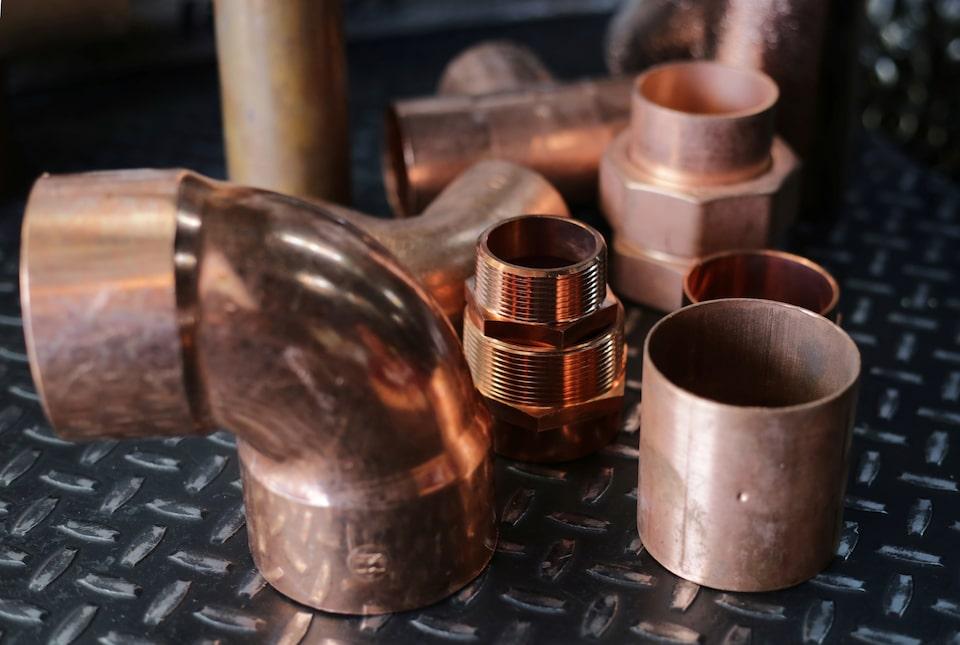
LONDON, May 19 (Reuters) - The prospect of U.S. import tariffs on copper has been a bonanza for physical metal traders, but the resulting price turbulence has been a big headache for fund managers. Ever since U.S. President Donald Trump ordered an investigation into copper imports in February, copper trading has centred on the premium commanded by the CME's U.S. price over the London Metal Exchange's (LME) international price. Sign up here. It's been a highly volatile trade and the transatlantic rift in pricing has undermined Doctor Copper's customary investment role as a proxy for the state of global manufacturing. Many fund managers have simply given up. Both investor positioning and market open interest on the CME copper contract have dropped sharply over the last couple of months. Some, however, have rotated into aluminium as a new forum for expressing a negative view of the current global trade picture. HEADLINE TURBULENCE Fund positioning on the CME copper contract amounted to 134,000 contracts at the start of the year, with money managers fairly evenly split between long and short bets. Total participation has since shrunk to 82,000 contracts, with investors now net long to the tune of 24,780 contracts, according to the latest Commitments of Traders report. Trading activity on the CME's copper contract fell 35% on a year-over-year basis in the January-April period, while market open interest touched a one-year low at the end of last month. That's surprising given that copper has hardly been out of the news since the initiation of the so-called Section 232 investigation into U.S. imports. But the relentless stream of headlines about both the copper tariff and the broader tariff stand-off with China has turned trading of the metal into a wild ride, particularly on the CME contract. Plenty of investors have reduced their exposure, whether voluntarily or otherwise. Funds expecting copper to fall in price due to the impact of trade tariffs on global growth have been particularly hard hit. Money manager short positions have fallen to their lowest levels since November 2022. But bulls are hardly rampant either. The collective investment long position has been flat-lining since the middle of April. ALUMINIUM UNDER THE HAMMER There's no indication that the money leaving the CME has gone to the London copper market. Fund positioning on LME copper is also low amid a sharp reduction in bullish bets and an ongoing decline in bearish bets. Rather, it is aluminium which seems to have caught the attention of money managers looking to express a negative view of the macro picture. Aluminium is insulated from the sort of arbitrage turmoil seen in the copper market because the CME's aluminium contract isn't a U.S. customs-cleared price but rather mirrors the LME's international product. So even though the Trump administration lifted the tariff on aluminium imports to 25% in its early days of office, the tariff trade has been quarantined to the CME's U.S. Midwest physical premium contract. That's enticed funds to lift short positions on LME aluminium to the highest levels since last July. Investors have simultaneously slashed bets on higher aluminium prices, meaning that net fund positioning has flipped from super-bullish as recently as March to neutral. DIVERGENT FORTUNES The rotation of fund money from copper to aluminium helps explain the two metals' recent price divergence. LME three-month copper has largely recovered from its "Liberation Day" tariff meltdown, bouncing back by 17% from the April 7 lows to the current $9,500 per metric ton. The LME aluminium price, by contrast, has staged a much more modest 6% recovery from the April sell-off. Three-month metal is trading around $2,450, down 4% on the start of the year and the second-weakest performer among the LME base metals next to zinc. Aluminium may yet prove to be a rocky ride for bears. LME warehouse inventory is steadily declining, time-spreads have contracted over the last month, and the benchmark cash-to-three-months period was flirting with backwardation last week. Fund managers, however, evidently feel it is still a lot less scary than attempting to ride the copper roller-coaster. The opinions expressed here are those of the author, a columnist for Reuters. https://www.reuters.com/markets/commodities/bearish-funds-flee-turbulent-copper-turn-aluminium-andy-home-2025-05-19/
2025-05-20 05:23
US stocks end lower; S&P 500 snaps 6-day streak of gains Dollar declines while gold rises more than 1% Super-long Japanese government bond prices fall sharply NEW YORK, May 20 (Reuters) - Major stock indexes eased while longer-dated U.S. Treasury yields inched higher on Tuesday, with investors focused on U.S. fiscal concerns as Congress debated a bill for sweeping tax cuts. The S&P 500 snapped a six-day streak of gains. Sign up here. U.S. President Donald Trumppushed his fellow Republicans in Congress to unite behind the bill, but struggled to convince a handful of holdouts on the package, which would extend the 2017 tax cuts from his first term, among other things. Investors worry that the bill will lead to the U.S. budget deficit growing at a faster pace than previously expected. Moody's Investors Service downgraded the U.S. credit rating late on Friday, fanning concerns about the country's debt load. "With the Republican bill still up in the air, there's just enough uncertainty to lead people to be a little bit more cautious and use this recent rally maybe to trim a little bit of their (stock) portfolio," said Rick Meckler, partner at Cherry Lane Investments, a family investment office in New Vernon, New Jersey. The Dow Jones Industrial Average (.DJI) , opens new tab fell 114.83 points, or 0.27%, to 42,677.24. The S&P 500 (.SPX) , opens new tab dropped 23.14 points, or 0.39%, to 5,940.46 and the Nasdaq Composite (.IXIC) , opens new tab slid 72.75 points, or 0.38%, to 19,142.71. Investors are also reassessing the recent rally and considering the potential fallout from the shifts in U.S. tariff policy, Meckler said. Home Depot (HD.N) , opens new tab shares ended down 0.6%, although the home improvement retailer beat Wall Street estimates for first-quarter sales. MSCI's gauge of stocks across the globe (.MIWD00000PUS) , opens new tab fell 0.77 points, or 0.09%, to 881.62. European stocks closed near nine-week highs, with utilities and telecom firms leading gains. The pan-European STOXX 600 (.STOXX) , opens new tab index rose 0.73%. Longer-dated U.S. Treasury yields edged higher amid the U.S. fiscal concerns. The benchmark U.S. 10-year note yield rose 0.2 basis points to 4.477%. The 30-year bond yield gained 2.3 basis points at 4.965%. On Monday, it touched 5.037% in intraday trading, the highest since November 2023. In a sign of broader market nervousness, Japanese super-long government bond yields soared to all-time highs on Tuesday, precipitated by a poor auction of 20-year securities. The Japanese 20-year yield jumped as much as 15 bps to 2.555%, its highest since 2000, and the 30-year yield hit a record high of 3.14%. The dollar declined again, weighed down in part by more cautious remarks about the economy by Federal Reserve officials. Among them, St. Louis Federal Reserve Bank President Alberto Musalem said despite the recent easing in U.S.-China trade tensions, the labor market looks likely to weaken and prices will head higher. Traders expect at least two 25-basis-point rate cuts from the Fed by the end of 2025. The dollar fell against the yen to a roughly two-week low of 144.095 yen, before trading down 0.2% at 144.495 yen , sliding in five of the last six sessions. The Aussie dollar was last down 0.6% at US$0.6416 after the Reserve Bank of Australia cut benchmark interest rates by 25 basis points and left the door open to further easing in the months ahead. In Canada, the annual inflation rate eased to 1.7% in April, above economists' expectations for a 1.6% gain. Oil prices were little changed amid uncertainty in U.S.-Iran negotiations and Russia-Ukraine peace talks. Brent futures slid 16 cents, or 0.2%, to settle at $65.38 a barrel, while U.S. West Texas Intermediate (WTI) crude eased 13 cents, or 0.2%, to settle at $62.56. Gold prices rose more than 1% as the dollar weakened further. Spot gold rose 1.86% to $3,288.96 an ounce. https://www.reuters.com/markets/global-markets-wrapup-1-2025-05-20/
2025-05-20 05:20
Second round of Vietnam-U.S. trade talks run until May 22 in Washington Vietnam seeks deal to avoid 46% tariff that would impact its export-driven growth HANOI, May 20 (Reuters) - Vietnam and the United States have started a second round of trade negotiations in Washington, the Vietnamese government said on Tuesday as it seeks a deal to avoid a threatened 46% tariff rate that could weaken its export-driven growth model. The second round of formal talks for a bilateral trade deal began on Monday and will run until May 22, the trade ministry said in a statement. The first round of talks was held earlier this month. Sign up here. "The two countries had discussions on the overall approach to resolving fundamental issues of mutual concern and accelerating the negotiation process," the ministry said. "Vietnam and the U.S. are also speaking about current policies as a basis for proceeding to next steps." Trade Minister Nguyen Hong Dien is leading the delegation, which includes representatives from sectors such as construction, agriculture and technology, as well as officials from the central bank and finance ministry. Dien also met with his U.S. counterpart Jamieson Greer in South Korea last week, following an APEC meeting. The U.S. has delayed the implementation of the 46% tariff on Vietnam until July, substituting it with a 10% rate. If enforced, the tariff could disrupt Vietnam's growth, given its heavy reliance on exports to the U.S., its largest market. Vietnam, which is a significant regional manufacturing base for many Western companies, recorded a trade surplus of over $123 billion with the U.S. in 2024. In a bid to reduce that surplus, Hanoi has implemented several measures, including curbing shipments of Chinese goods to the U.S. via its territory and increasing its purchases of U.S. goods. Dien also held discussions on nuclear technology with U.S. power company Westinghouse on Monday, the ministry said, after the government last year resumed plans to develop nuclear power plants. Westinghouse did not immediately respond to a request for comment outside of U.S. business hours. In a separate statement, the finance ministry said state energy firm PetroVietnam planned to buy more crude oil from Exxon Mobil (XOM.N) , opens new tab, while the country's rubber and maritime corporations were both looking to establish U.S. facilities. https://www.reuters.com/markets/asia/vietnam-says-second-round-trade-talks-started-washington-2025-05-20/

2025-05-20 05:20
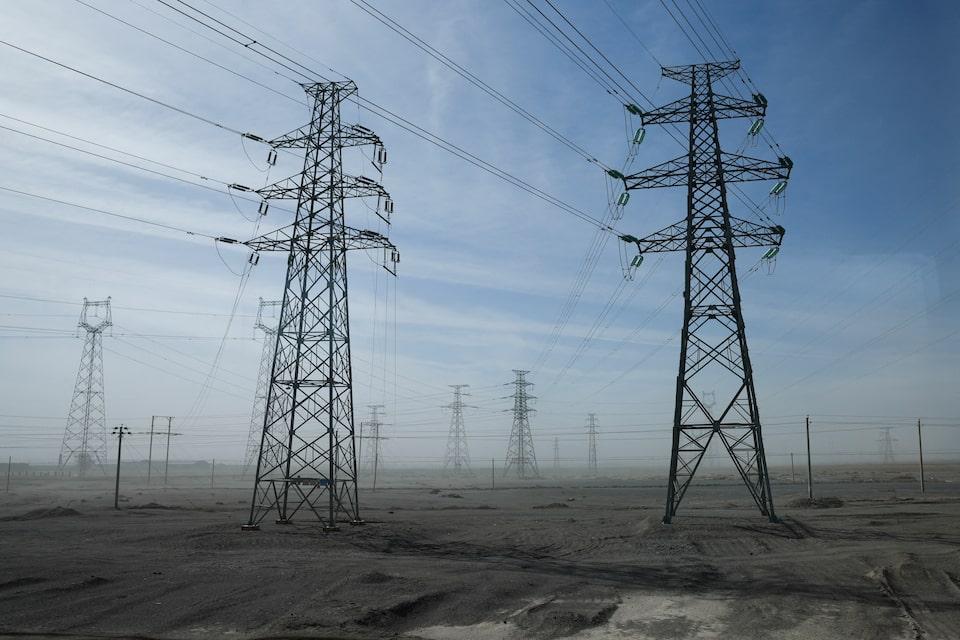
LAUNCESTON, Australia, May 20 (Reuters) - The current problem with the economic data out of China is that there is something for everybody. Want to see a bearish picture and show the world's second-biggest economy is suffering from both the trade war with the United States and its long-running pandemic hangover? Sign up here. Look no further than slowing factory output in April, a negative reading on the key manufacturing index, weak property prices and investment, soft retail sales and lacklustre growth in electricity generation. But if a more bullish outlook is sought, then resilient iron ore imports, recovering crude oil arrivals, surging installations of renewable energy and strong electric vehicle production are available as evidence. The simplistic view would be to say that China is presenting mixed signals currently, and the full impact of the trade war and the subsequent pause of the worst of tariffs, have yet to be felt. But perhaps a deeper understanding of the current state of China's economy and its outlook can be reached by working out which of the indicators are more important and a reflection of the driving forces of growth. Take electricity generation as an example. It should be one of the best indicators of the economy as it shows in real time just how much power is being used, and there is a strong correlation between electricity demand and economic growth. Total power generation rose 0.9% in April to 711.1 billion kilowatt hours (kWh), a deceleration from the 1.8% growth rate in March, according to data released on Monday by the National Bureau of Statistics (NBS). For the first four months of the year, power generation was up a mere 0.1% to 2.98 trillion kWh. The raw numbers suggest China's economy isn't performing well and the easing of the growth rate in April further points to weakness in the manufacturing sector, which makes up nearly two-thirds of power demand. But delving into the detail shows quite a different picture. The most important factor is that the official data excludes small-scale generators, as it only counts companies with at least 20 million yuan ($2.8 million) of annual revenue. It also excludes residential rooftop solar, a sector that has been surging, with data from research firm Rystad Energy showing a record 36 gigawatts (GW) of capacity added in the first quarter of this year. Rystad also said it expects the second quarter to be even stronger, with a potential 94 GW to be added to homes and businesses. The rapid addition of small-scale rooftop generation means there is now a substantial gap between the NBS generation data and the power consumption figures from the National Energy Administration (NEA). For example, NEA data showed power consumption rose 4.8% in March, while NBS figures showed only 1.8% output growth. Electricity generation in the early months of 2025 was also likely lower than usual because of a relatively mild winter, which trimmed power demand for heating. Put together the surge in rooftop solar and the warmer-than-usual winter and suddenly the modest growth in official electricity generation doesn't look that weak at all. MANUFACTURING The surge in renewable generation also helps another part of the economy, namely manufacturing. While China's manufacturing is still export-orientated, the increasing emphasis on electrifying the economy means strong growth in sectors such as solar panels, wind turbines, batteries and electric vehicles. That's part of the reason why China's industrial output rose 6.1% in April from a year earlier, even though the growth rate slowed from 7.7% in March. Like much of China's recent data there are two ways of looking at the factory production numbers. The 6.6% rise in April shows resilience in the face of U.S. tariffs, which reached 145% before the truce reached earlier this month saw them drop to 30% for a 90-day period to allow for talks. Or the slowing of the growth rate in April shows China's manufacturing is starting to struggle and feel the adverse impact of the trade war. The only safe conclusion is that there is still a high degree of uncertainty about China's outlook. The views expressed here are those of the author, a columnist for Reuters. https://www.reuters.com/markets/commodities/chinas-electricity-generation-may-be-like-its-economy-not-soft-it-looks-russell-2025-05-20/
2025-05-20 05:17
SYDNEY, May 20 (Reuters) - The Australian dollar slipped on Tuesday after the country's central bank cut interest rates as expected while highlighting the economic risks from a global trade war, supporting market wagers for further easing ahead. The Reserve Bank of Australia trimmed its cash rate by 25 basis points to a two-year low of 3.85%, citing progress in reducing inflation and global uncertainty caused by U.S. tariffs. The easing was fully priced by markets since the levies were first announced in early April. Sign up here. Investors were still looking for at least two more such cuts this year to take rates to between 3.10% and 3.35%, with the RBA itself noting its new economic forecasts had assumed a total reduction of around 85 basis points from 4.10%. "The RBA delivered a dovish rate cut, weighed down by a cocktail of global and domestic uncertainties," said Saxo Chief Investment Strategist Charu Chanana. "With the RBA sounding increasingly uneasy, the path of least resistance for the Aussie may remain lower, especially if domestic data softens further or global risks flare up again." The Aussie fell 0.5% to $0.6428 , unwinding some of a 0.8% rally the previous session as the U.S. dollar suffered in the wake of a Moody's ratings downgrade. Support lies at $0.6388 and $0.6358, with resistance at $0.6500 and $0.6515. The kiwi dollar dipped 0.2% to $0.5919 , having gained 0.9% overnight. It has support at $0.5850, with resistance around $0.5969 and $0.6022. Three-year Australian bond futures climbed 9 ticks at 96.440, while 10-year yields eased 5 basis points to 4.455%. The RBA also released new forecasts for the economy that showed it expected inflation to be slightly lower, and unemployment higher, even assuming rate cuts of 85 basis points. Core inflation has cooled to a three-year low of 2.9%, taking it back into the RBA's target range of 2% to 3% and a long way from the peak of 6.8% hit in late 2022. Markets are also wagering the Reserve Bank of New Zealand will further cut its cash rate when it meets on May 28. The central bank is expected to trim by a quarter point to 3.25% and, having already slashed rates by a total of 200 basis points, is likely nearing the end of the easing cycle. Investors have rates bottoming at 3.0% or 2.85% by August and remaining there for some time. https://www.reuters.com/world/asia-pacific/australia-dollar-slips-rba-cuts-rates-warns-global-outlook-2025-05-20/
2025-05-20 05:14
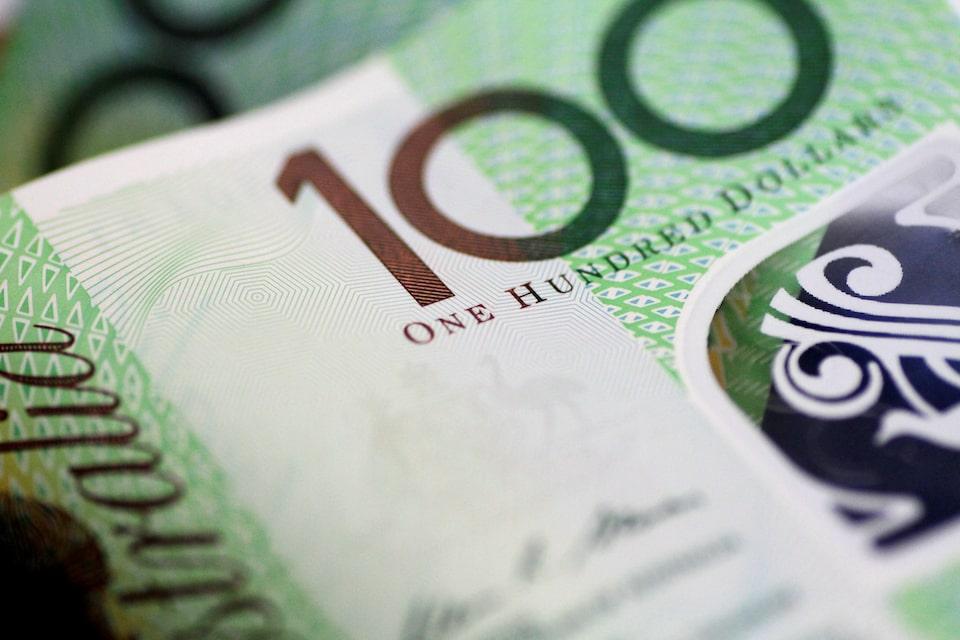
Trump's tariffs impact Australia's economic outlook Governor Bullock signals potential for further rate cuts Swaps imply 60% chance of another rate cut in July RBA sees inflation lower, unemployment higher due to trade tensions SYDNEY, May 20 (Reuters) - Australia's central bank on Tuesday cut interest rates to a two-year low as cooling inflation at home offered scope to counter rising global trade risks, and left the door open to further easing in the months ahead. Wrapping up a two-day policy meeting, the Reserve Bank of Australia cut the cash rate by 25 basis points to 3.85%, saying that upside risks to inflation had diminished as the international developments are set to weigh on the economy. Sign up here. The central bank considered a severe downside scenario for global trade and noted that policy was well placed to respond decisively to such risks. RBA Governor Michele Bullock said at a post-meeting press conference the board weighed holding rates steady and cutting, and also discussed whether it should cut by 50 bps. In contrast to her hawkish tone after the cut in February, Bullock said the situation has changed, noting U.S. President Donald Trump's April 2 tariff announcement on global imports and the still very uncertain outlook. "Does it mean we’re headed into a long series of interest rate cuts? I don’t know at this point and that’s why I think the cautious 25-basis-point cut with a recognition that if we need to move quickly, we can. We have got space." Markets had been fully priced for an easing but the Australian dollar fell 0.5% to $0.6425 and three year bond futures rallied 15 ticks as investors took the dovish comments from Bullock as a greenlight for further cuts. Swaps now imply a 60% probability for another cut in July, while a cut in August has been more than fully priced in. Rates are seen more likely to bottom at 3.1% rather than 3.35%. Since the RBA last met in April, the global landscape has changed drastically. Trump's global trade war has roiled financial markets and upended business plans. Trump has imposed 10% blanket import duties on the rest of the world, and after a tariff showdown with China that threatened a global recession, both agreed to slash sky-high duties on each other's goods for 90 days. Australia is a major exporter of resources to China and tariffs on the world's second-biggest economy could hinder growth there and its demand for commodities such as iron ore. SOFT LANDING At home, the flow of data has been mixed, with the anticipated rebound in consumer spending disappointingly soft. The labour market, however, remained surprisingly strong, with the jobless rate staying low at 4.1% where it has roughly been for over a year now. Headline consumer price inflation held at 2.4% in the first quarter and a key trimmed mean measure of core inflation slowed to 2.9%, taking it back into the RBA's target band of 2% to 3% for the first time since late 2021. "We have managed to get inflation down at the same time as keeping the employment market on a relatively good footing, so I think so far so good,” said Bullock. In its quarterly Statement on Monetary Policy, released on Tuesday, the RBA also said inflation would be lower and unemployment higher due to the cascading effects of global trade tensions, and that was even assuming interest rates were cut as deeply as markets expected. It warned that the drag from Trump's tariffs would lower global growth and prove disinflationary in net terms for Australia. "Optimism on inflation was offset to some extent by uncertainty around the tariffs and the still strong jobs market, but projections on prices and rates allude to a roadmap towards less restrictive policy," said Dwyfor Evans, head of APAC Macro Strategy at State Street Markets. "Some talk of a ‘hawkish cut’ before the decision, but global uncertainty aside, this was a clearer directional message from the RBA than we have seen for some time.” https://www.reuters.com/sustainability/sustainable-finance-reporting/australias-central-bank-cuts-rates-2-year-low-385-2025-05-20/