2025-05-20 05:10
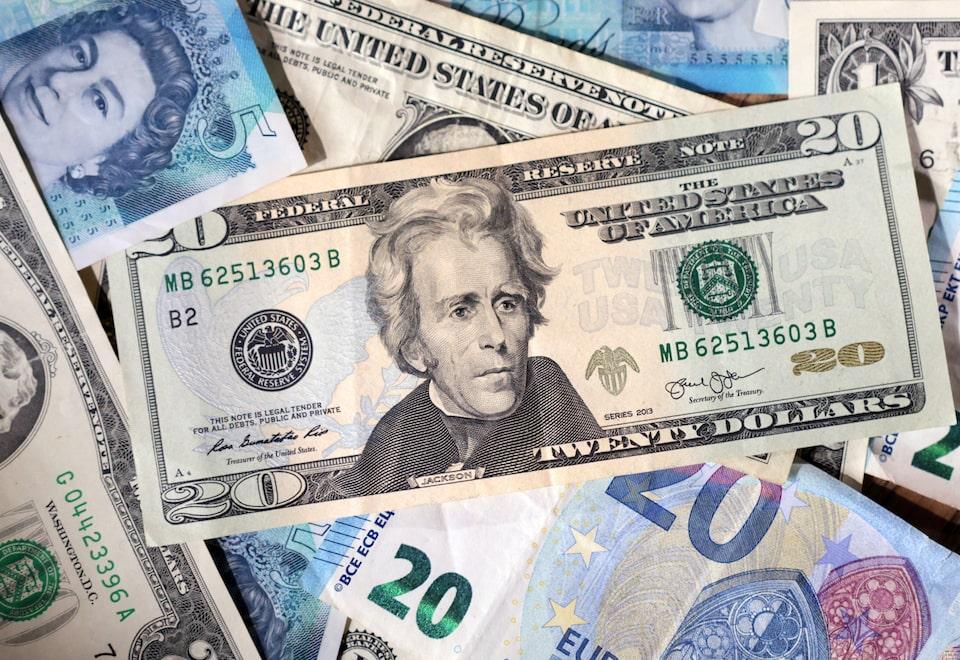
US dollar falls to roughly two-week low vs yen Traders await US-Japan talks at G7 gathering Focus on key House vote this week NEW YORK, May 20 (Reuters) - The U.S. dollar weakened anew on Tuesday, weighed down in part by more cautious remarks about the economy by Federal Reserve officials, even as traders looked ahead to upcoming U.S. talks with Japan that could include discussions on currencies as part of a trade deal. The greenback also was pressured by news President Donald Trump failed to convince Republican holdouts in the House of Representatives to back his sweeping tax bill. Trump met with Republicans on Tuesday to press his fellow party members to support the legislation. Sign up here. The dollar had sold off broadly on Monday after Moody's downgraded the U.S. sovereign credit rating due to deficit concerns on Friday. "The underlying bias is still to sell the dollar. I don't think that bias has changed," said Vassili Serebriakov, FX strategist, at UBS in New York. Fed officials on Tuesday also doubled down on their concerns about the impact of the Trump administration's trade policies on the economy. St. Louis Federal Reserve Bank president Alberto Musalem said despite the recent U.S. and China trade tension easing, the labor market looks likely to weaken and prices to head higher. Cleveland Fed President Beth Hammack told Axios that current trade developments could lead to stagflation , opens new tab, though other policies from the administration could offset that. On Monday other Fed officials talked about the ramifications of the latest downgrade of the U.S. government's credit rating and unsettled market conditions as the Fed continued to navigate a very uncertain economic environment. In afternoon trading, the dollar fell against the yen to a roughly two-week low of 144.095 yen. It was last down 0.2% at 144.495 yen , sliding in five of the last six sessions. Tuesday's sell-off in long-dated Japanese government bonds, which pushed 30-year yields to record highs and those on the 20-year to a nearly 25-year peak, pressured the yen earlier, analysts said. Also on traders' radar were upcoming U.S.-Japan talks, with Japanese Finance Minister Katsunobu Kato saying he expects any meeting with U.S. Treasury Secretary Scott Bessent on exchange rates to be based on their shared view that excessive currency volatility was undesirable. Kato and Bessent are expected to meet on the sidelines of a G7 finance leaders' gathering to be held this week in Canada. Comments from Japan's top trade envoy on Tuesday that Tokyo was firm in its anti-tariff stance pointed to no easy off-ramp in the negotiations in the weeks and months ahead. RBA CUT, U.S. BUDGET PICTURE Elsewhere, the Australian dollar dropped against the U.S. dollar after the Reserve Bank of Australia cut benchmark interest rates by 25 basis points and left the door open to further easing in the months ahead. The Aussie dollar was last down 0.6% at US$0.6416 . The Chinese yuan weakened against the dollar as China cut key benchmark lending rates while corporate seasonal demand for dollars remained high. Market attention is now focused on a key vote planned by the end of the week in the U.S. House of Representatives. Republican leaders in the chamber said they would press forward with the tax bill despite its uncertain prospects. Trump's bill would add $3 trillion to $5 trillion to the country's debt, according to nonpartisan analysts. Ballooning fiscal debt, trade frictions, and weakened confidence have weighed on U.S. assets. The U.S. dollar index has tumbled as much as 10.6% from its January highs, one of the sharpest retreats for a three-month period. It got a breather, however, after Trump paused many of the largest tariffs he announced last month. And in the wake of Trump's tariff turmoil, Britain on Monday agreed to the most significant reset of defence and trade ties with the European Union since Brexit. The pound was last up 0.2% at $1.3387 , having risen 0.6% on Monday. The euro, meanwhile, rose 0.3% against the dollar to $1.1279 , while the Swiss franc strengthened, pushing the dollar down 0.6% at 0.8295 franc. https://www.reuters.com/world/africa/dollar-trades-sideways-before-tax-vote-aussie-holds-gain-before-rba-2025-05-20/
2025-05-20 04:37
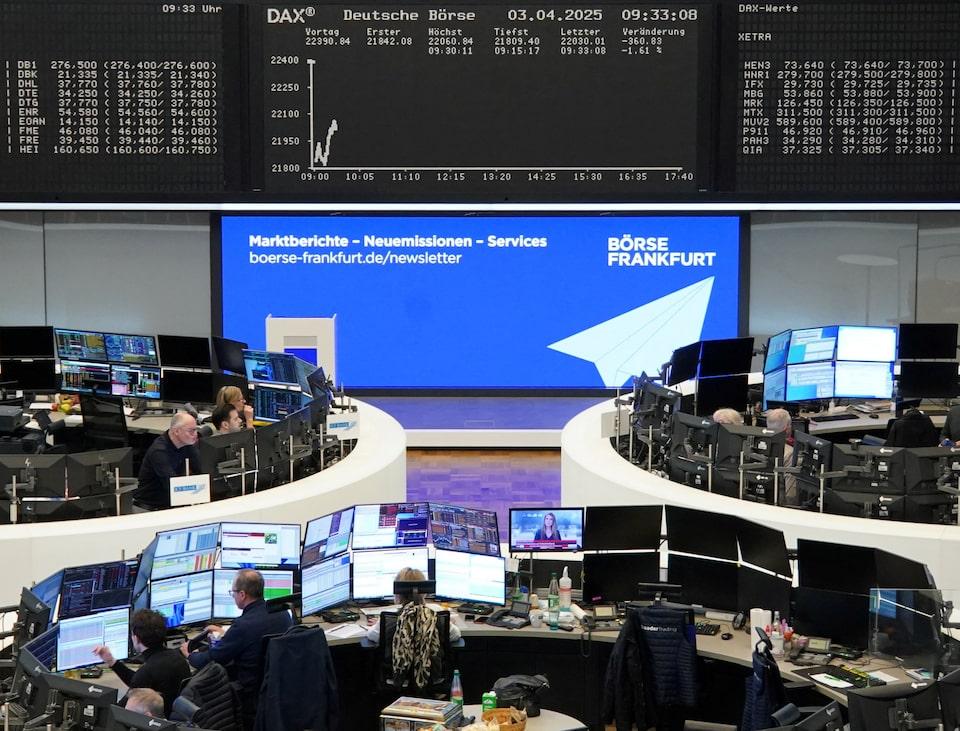
A look at the day ahead in European and global markets from Ankur Banerjee Investors have taken in stride the Moody's U.S. credit rating downgrade and are back pining for trade deals as a distinct lack of agreements from negotiations keep them on edge with the clock ticking on the United States' 90-day pause. Sign up here. U.S. President Donald Trump's so-called reciprocal tariffs will kick in again in early July and negotiators across the globe have been scrambling to firm up trade deals with the world's biggest economy. And yet, successful deals have been scarce. Headlines so far have only added to the tentative mood, with the U.S. Treasury not expecting any deal announcements during a Group of Seven finance leaders meeting this week in Canada. Japan's top trade negotiator said there was no change to Tokyo's stance of demanding the elimination of U.S. tariffs. After an initial selloff in Treasuries on Monday cast a shadow on markets in the wake of Moody's shocking but somehow not totally unexpected decision, markets in Tuesday Asian hours have somewhat steadied. U.S. Treasury yields remain elevated but are not rising rapidly and the U.S. dollar is drifting near recent lows against major rivals but equities are feeling perky. European futures indicate a strong open on Tuesday after a flat close in the previous trading session. With the economic calendar in Europe pretty bare, investors will be fixated on any information about trade deals. Over in Asia, the big news was China cutting key benchmark lending rates for the first time since October on Tuesday. Major state banks also lowered deposit rates as authorities work to ease monetary policy to help buffer the economy. The Australian dollar was little changed in choppy trading after the Reserve Bank of Australia cut interest rates as expected. In the absence of concrete news, geopolitical worry may take the spotlight. Trump said after a call on Monday with Russian President Vladimir Putin that warring neighbours Russia and Ukraine will immediately start negotiations for a ceasefire. But the Kremlin said the process would take time and Trump indicated he was not ready to join Europe with fresh sanctions to pressure Moscow. Key developments that could influence markets on Tuesday: Trying to keep up with the latest tariff news? Our new daily news digest offers a rundown of the top market-moving headlines impacting global trade. Sign up for Tariff Watch here. https://www.reuters.com/markets/europe/global-markets-view-europe-2025-05-20/
2025-05-20 03:01
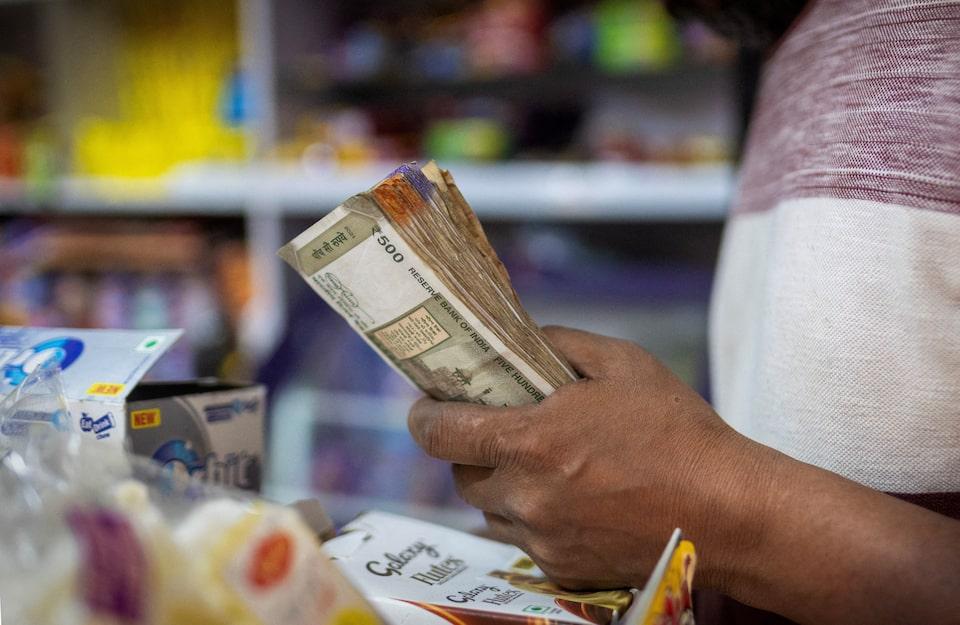
MUMBAI, May 20 (Reuters) - The Indian rupee is expected to open marginally weaker on Tuesday, pressured by the dip in the yuan amid a cut in China's key lending rates. The 1-month non-deliverable forward indicated that the rupee will open at 85.44-85.46 to the U.S. dollar compared with 85.40 in the previous session. Sign up here. Following the volatility triggered by India-Pakistan tensions, the Indian rupee has settled into a relatively narrow range. On Monday, the currency traded within a 25-paisa band. Throughout May, the rupee has moved in a wider range of 83.77 to 85.84, and now appears to have stabilised within an 85 to 86 band, a currency trader at a bank said. "A breakout on either side of 85 to 86 seems unlikely in the near term," a currency trader at a bank said. A move past 86 would likely require a renewed decline in the Chinese yuan, which currently appears improbable, the trader said, adding a break below 85 would need a positive surprise on the U.S.-India trade front. Foreign investor interest in Indian equities and exporter hedging around the 85.50–85.80 level are helping support the rupee, while higher-than-usual dollar demand for immediate payments is weighing, bankers said. CHINA CUTS RATES, YUAN SLIPS The offshore Chinese yuan weakened to 7.2250 against the U.S. dollar, dragging down other Asian currencies. China cut key lending rates on Tuesday for the first time since October — a move that was widely anticipated. The U.S.-China agreement to reduce reciprocal tariffs has lifted sentiment around the yuan, which is up 0.6% so far this month. In contrast, the Indian rupee has underperformed, declining 1.1%. Meanwhile, the 10-year U.S. Treasury yield have returned to levels seen before Moody’s downgrade of the U.S. credit rating. KEY INDICATORS: ** One-month non-deliverable rupee forward at 85.6; onshore one-month forward premium at 15 paise ** Dollar index down at 100.35 ** Brent crude futures down 0.1% at $65.4 per barrel ** Ten-year U.S. note yield at 4.45% ** As per NSDL data, foreign investors bought a net $874.6mln worth of Indian shares on May 16 ** NSDL data shows foreign investors sold a net $14.3mln worth of Indian bonds on May 16 https://www.reuters.com/world/china/rupee-may-weaken-slightly-open-tracking-fall-chinese-yuan-2025-05-20/
2025-05-20 02:48
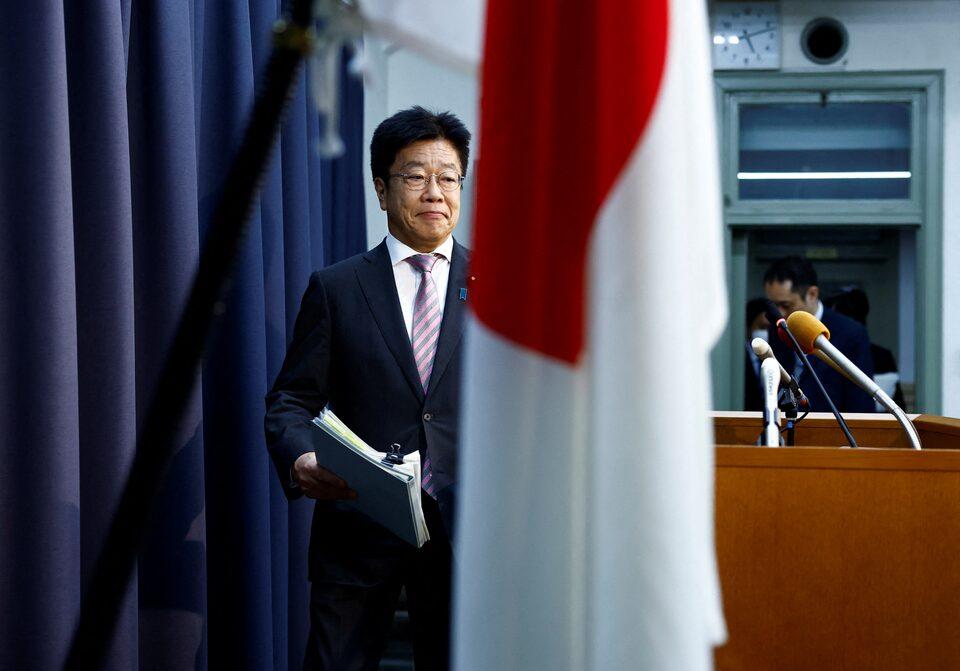
TOKYO, May 20 (Reuters) - Japanese Finance Minister Katsunobu Kato said on Tuesday he expects any bilateral meeting with U.S. Treasury Secretary Scott Bessent on exchange rates to be based on their shared view that excessive currency volatility was undesirable. "In our previous meeting, we confirmed that exchange rates should be set by markets, and that excessive volatility in currency moves has an adverse economic and financial impact," Kato told a news conference. Sign up here. "I expect any meeting with the U.S. Treasury Secretary to be based on this understanding," he said, adding that he hoped to exchange views on various bilateral themes including currency policy. Kato and Bessent are expected to hold a bilateral meeting on the sidelines of a G7 finance leaders' gathering to be held this week in Canada. Kato also said Japan was scrutinising the impact on its economy and markets from Moody's decision last week to downgrade the credit rating of the United States. As Tokyo and Washington proceed with separate bilateral talks on tariffs, the thorny currency rate topic has been set aside for the two finance chiefs to discuss. President Donald Trump's focus on addressing the huge U.S. trade deficit, and his past remarks criticising Japan for intentionally maintaining a weak yen, have led to market expectations that Tokyo will face pressure to strengthen the yen's value against the dollar and give U.S. manufacturers a competitive advantage. After a previous meeting with Bessent in Washington last month, Kato said the two agreed to continue "constructive" dialogue on currency policy, but did not discuss setting currency targets or a framework to control yen moves. https://www.reuters.com/business/japan-us-base-talks-past-fx-agreement-kato-says-2025-05-20/
2025-05-20 01:00
Iran opposes US demand to stop enriching uranium EU and Britain announce new sanctions against Russia Upcoming: US oil inventory data from API and EIA NEW YORK, May 20 (Reuters) - Oil prices were little changed on Tuesday due to uncertainty in U.S.-Iran negotiations and Russia-Ukraine peace talks, while new government data delivered a cautious outlook for top crude-importer China's economy. Brent futures slid 16 cents, or 0.2%, to settle at $65.38 a barrel, while U.S. West Texas Intermediate (WTI) crude slid 13 cents, or 0.2%, to settle at $62.56. Sign up here. Iran's Supreme Leader Ayatollah Ali Khamenei said U.S. demands that Tehran stop enriching uranium are "excessive and outrageous," voicing doubts whether talks on a new nuclear deal will succeed. A deal between Iran and the U.S. would allow Iran to raise oil exports by 300,000 to 400,000 barrels per day if sanctions were eased, StoneX analyst Alex Hodes said. Iran was the third-biggest crude producer in the Organization of the Petroleum Exporting Countries (OPEC) group in 2024 behind Saudi Arabia and Iraq, according to U.S. federal energy data. The European Union and Britain announced new sanctions against Russia without waiting for the U.S. to join them, a day after U.S. President Donald Trump spoke to Russian President Vladimir Putin without winning a promise for a ceasefire in Ukraine. Ukraine wants the Group of Seven (G7) advanced economies to reduce their price cap on Russian seaborne oil to $30 per barrel. The current G7 cap, imposed over Russia's war in Ukraine, is $60. "An immediate resolution of the Russia/Ukraine war does, however, look unlikely. So while it could lead to more oil from Russia into the market, it is out in time and uncertain as Russia is still bound by its obligation to OPEC+," said Bjarne Schieldrop, chief commodities analyst at SEB, a Nordic bank. An agreement to end the war between Russia and Ukraine could allow Moscow to export more oil to the world. Russia is a member of the OPEC+ group of countries, which includes OPEC and other producers. Russia was the world's second-biggest crude producer behind the U.S. in 2024, according to U.S. federal energy data. CHINESE DATA At least seven Federal Reserve officials are scheduled to speak on Tuesday. Traders currently expect the U.S. central bank to deliver at least two 25-basis-point interest rate cuts in 2025, with the first expected in September, according to data compiled by financial services firm LSEG. Central banks like the Fed use interest rates to keep price inflation in check. Lower interest rates can spur economic growth and demand for oil by reducing consumer borrowing costs. Data showing decelerating industrial output growth and retail sales in China piled more pressure on oil prices, with analysts expecting a slowdown in fuel demand from the world's top oil importer. The analysis, however, did not reflect a 90-day pause on tariffs between the U.S. and China, with Goldman Sachs pointing to a pickup in China trade flows late on Monday. In Germany, the biggest economy in Europe, Finance Minister Lars Klingbeil promised swift measures to boost investment amid global trade uncertainty. U.S. OIL INVENTORIES The American Petroleum Institute (API) trade group and the U.S. Energy Information Administration (EIA) are due to release U.S. oil inventory data on Tuesday and Wednesday, respectively. , Analysts forecast energy firms pulled about 1.2 million barrels of oil from U.S. stockpiles during the week ended May 16. If correct, that would be the third decline in four weeks. There was an increase of 1.8 million barrels during the same week last year, with the average decrease at 3.5 million barrels over the past five years (2020-2024). https://www.reuters.com/markets/commodities/oil-prices-rise-signs-faltering-us-iran-nuclear-talks-2025-05-20/
2025-05-19 23:36
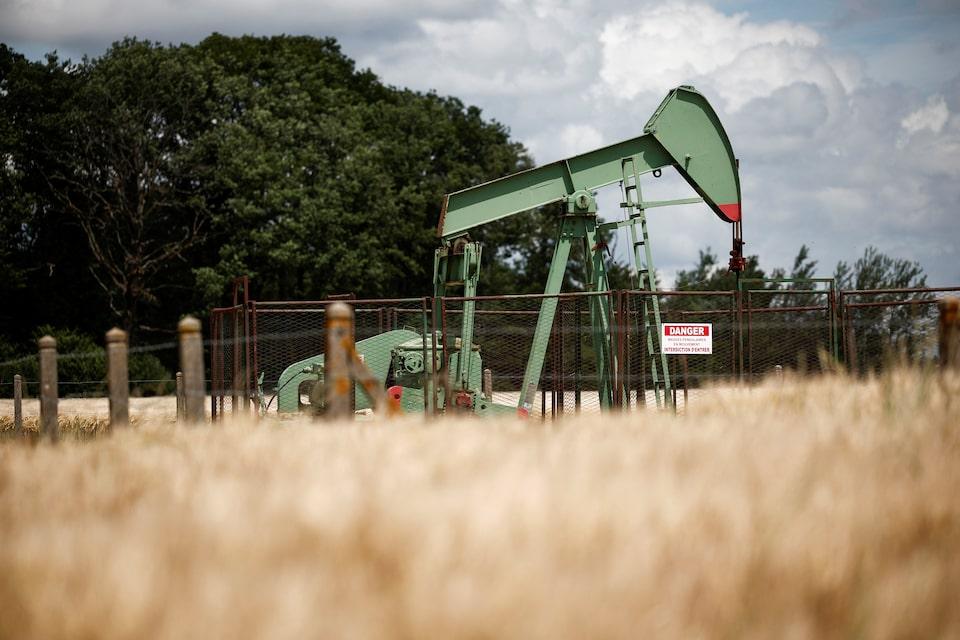
HOUSTON, May 19 (Reuters) - U.S. shale producer Continental Resources has filed a lawsuit against Hess Corp (HES.N) , opens new tab alleging that it was defrauded out of up to $69 million through a series of deals the well operator conducted with its subsidiaries. Continental said that Hess, which operates hundreds of wells in North Dakota, artificially inflated midstream service fees by entering into agreements with its own subsidiaries. Net revenues for hydrocarbons from the wells, in which Continental holds a non-operating working interest, were far below market value due to excessive service fees paid to Hess Midstream Partners, the lawsuit said. Sign up here. "Hess Corp has transferred value from its upstream assets to its midstream assets rather than operate with the best interests of non-operating working interest owners in mind," said the lawsuit filed in a federal court in Houston. Hess Bakken Investments, a Hess subsidiary, operates about 483 producing wells in the Williston Basin in which Continental owns a working interest. Continental is based in Oklahoma City, Oklahoma. Hess Corp has a 38% interest in Hess Midstream, which owns oil, gas and produced water handling assets primarily in the Bakken and Three Forks shale plays, Continental said. As a result, Continental said, it and other non-operating working interest owners in those wells bear a larger financial burden than Hess for midstream fees. Continental has been deprived of about $34 million to $69 million of revenue for oil and gas production, the filing said. Hess Midstream's throughput volumes rose 8% for gas processing, 7% for oil terminaling and 9% for water gathering in the first quarter, compared with the year-ago period, mainly due to higher production, the company said in its earnings report last month. Continental Resources said it does not comment on pending litigation. Hess did not immediately respond to requests for comment. https://www.reuters.com/sustainability/boards-policy-regulation/us-oil-producer-continental-resources-claims-hess-defrauded-it-out-69-million-2025-05-19/