2025-05-19 06:05
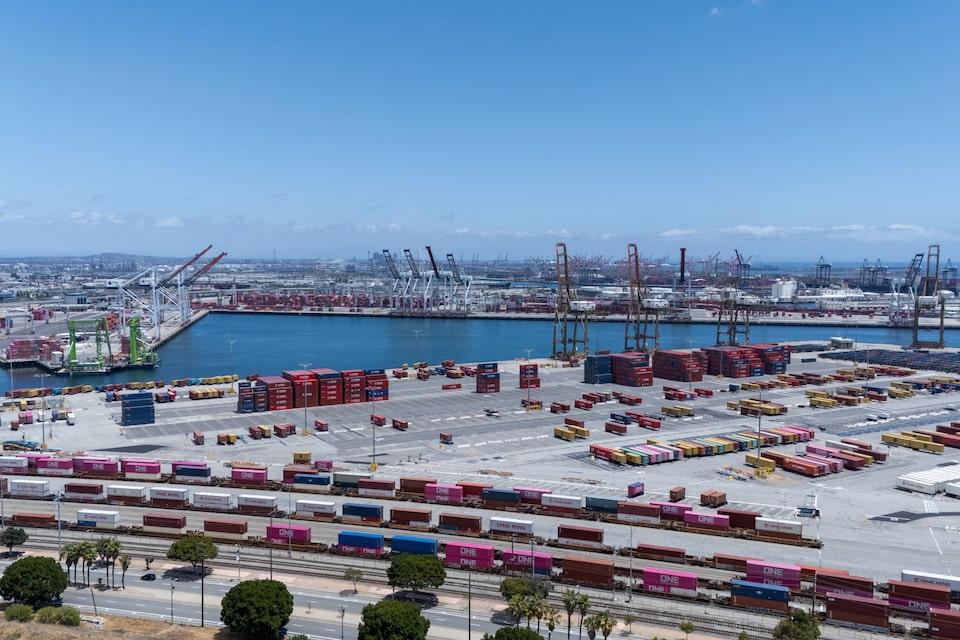
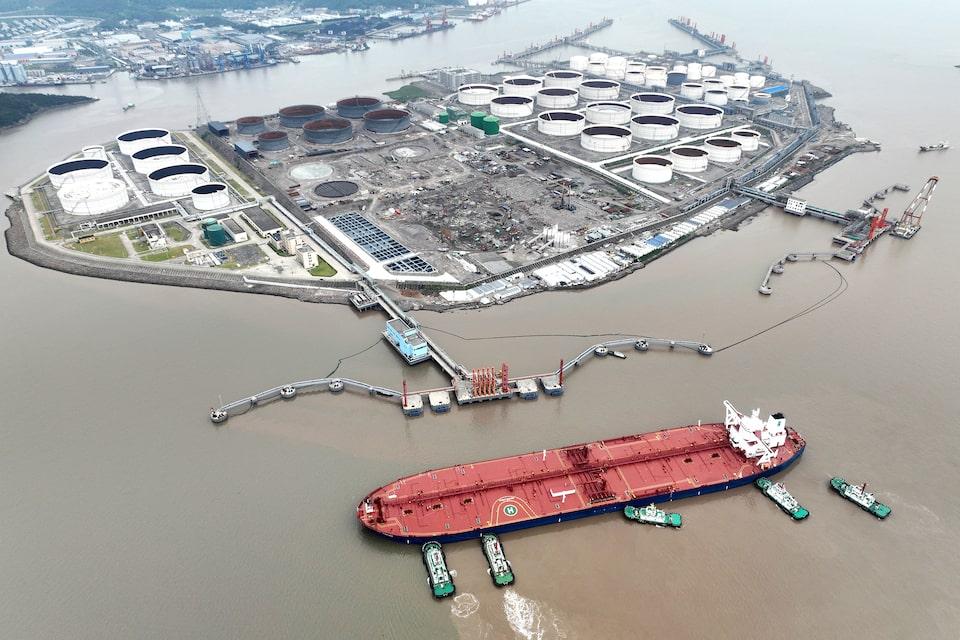
Chinese independent refineries accounted for 77% of Iran 2024 exports Iranian imports are discounted, offering profits uplift Removal of sanctions will undermine teapots' business model LONDON, May 19 - The possible lifting of U.S. sanctions on Iran's oil exports could deal a fatal blow to independent Chinese refineries that have thrived by processing Tehran’s discounted crude, while also putting further downward pressure on oil prices. President Donald Trump has taken a dual-track strategy with Iran, applying a "maximum pressure" campaign of tightening economic sanctions, while simultaneously engaging in direct high-level talks over Tehran’s nuclear programme. Last week, Trump indicated the sides were getting very close to a deal. Sign up here. Of course, nuclear talks between Iran and Western powers have always been extremely complex – full of stops and starts – and Trump’s recent statements surrounding a potential deal include much hedging. But if there is a breakthrough deal, it would almost certainly include a repeal of many U.S. economic restrictions on Iran’s oil industry, which would have a profound impact on global energy markets. Strict U.S. sanctions on Iran’s oil industry have been in place since Trump pulled out of a U.N-backed nuclear deal in 2018. While sanctions have dented Tehran’s exports – the country’s major source of revenue – they have never succeeded in reducing exports to zero, as Trump vowed seven years ago. Iranian exports reached 2.8 million barrels per day (bpd) in May 2018 and hit a low of just 150,000 bpd in May 2020, before steadily recovering to an average of around 1.65 million bpd so far in 2025, according to analytics firm Kpler. Chinese privately owned refineries, commonly known as teapots, have been the main buyers of Iranian crude in recent years, attracted by the heavy discounts. Concentrated in the eastern Shandong province, these small independent refineries have capacity of around 4 million bpd, or roughly one-fifth of China’s total refining capacity. Large volumes of sanctioned crude have made their way into China in recent years through a complex web of shell companies and a so-called "dark fleet" of tankers that transfer oil between different vessels to obscure the origin. The precise total volumes involved in this trade are unclear as official Chinese customs data suggests the country does not import any Iranian oil. However, Kpler, using ship tracking and satellite technology, estimates that China imported 77% of Iran’s 1.6 million bpd of exports last year. So far this year, China’s share averaged around 50%, probably as a result of new U.S. sanctions targeting several Shandong teapot refineries and port operators, a theory supported by the fact that the amount of Iranian crude sitting on ships at sea, instead of being discharged, has reached the highest level since November 2023. If sanctions are loosened, this oil would be sold swiftly. TEMPEST IN A TEAPOT Iranian production could also likely be ramped up quickly. Its oil sector has proven surprisingly resilient in the face of mounting Western sanctions, with crude oil production averaging 3.3 million bpd in 2024, according to OPEC data. Production could be ramped up by 500,000 bpd within six months of lifting sanctions. Not only would the rapid return of Iranian crude to global markets likely put further downward pressure on oil prices that have fallen from a high of $82 a barrel in January to around $65 today, but it would also deal a heavy blow to China’s teapot refineries. These independent outfits typically have very slim profit margins because most run at utilization rates of around 50% or less due to overcapacity in the sector and restrictions on exporting fuels overseas. Plants have faced fierce competition in recent years, and those that have survived have done so largely because they have been able to generate lucrative profits by processing cheap Iranian as well as Venezuelan feedstock. The removal of U.S. sanctions on Iranian crude could therefore undermine their business models, meaning many plants would likely have to sharply pare back operations or, in some cases, shut down entirely. A drop in output from Chinese teapots, in turn, could provide a boost to large state-owned Chinese refineries that will pick up the slack in the domestic market. More broadly, a decline in global refining capacity should boost the sector at a time of increasing uncertainty over demand for fuels such as gasoline and diesel due to the ongoing trade war and energy transition. The return of Iran into global oil markets would create headaches for many – not least Saudi Arabia, which is in the middle of a price war – but the biggest losers would likely be the independent Chinese refiners. And the biggest beneficiary, outside of Iran itself, would be the refining industry – whether or not that’s what Trump has in mind. ** The opinions expressed here are those of the author, a columnist for Reuters. ** Want to receive my column in your inbox every Thursday, along with additional energy insights and trending stories? Sign up for my Power Up newsletter here. https://www.reuters.com/business/energy/lifting-us-sanctions-iran-could-crush-chinas-teapot-oil-refineries-bousso-2025-05-19/

2025-05-19 06:00
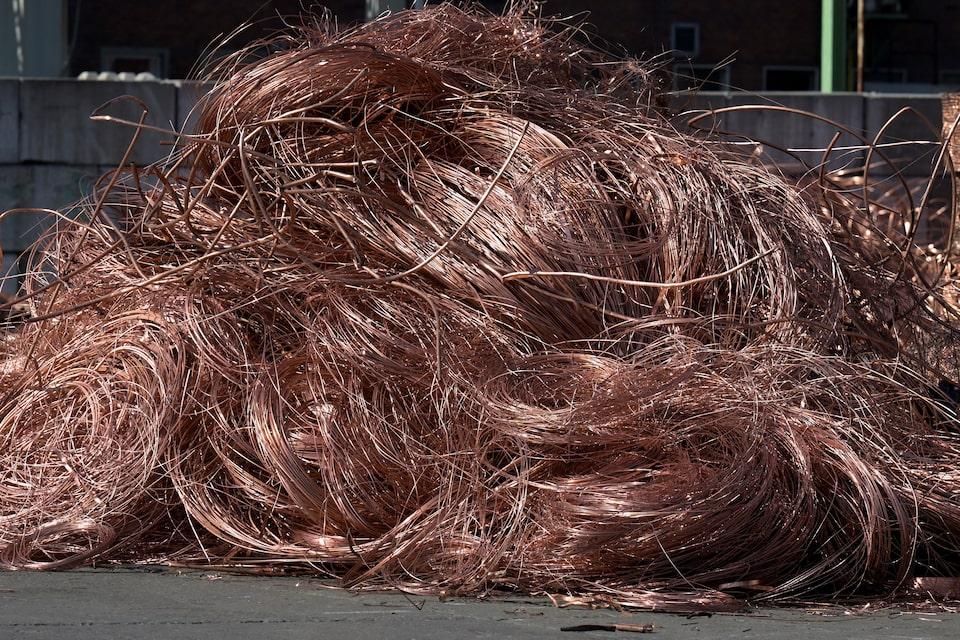
LONDON, May 16 (Reuters) - U.S. President Donald Trump's threatened tariff on copper imports has generated a mass relocation of physical metal, swamping the U.S. market and draining the rest of the world. Ever since the Trump administration announced a so-called Section 232 investigation into U.S. imports of the red metal in February, traders have been rushing to get metal into the country to lock in a potential tariff windfall. Sign up here. The physical response has been so powerful that it has caused the futures arbitrage between the CME contract and the London Metal Exchange (LME) price to collapse. WAITING FOR TRUMP The copper market has been betting that a U.S. tariff will be imposed at a rate of 25%, matching those already in place for both steel and aluminium imports. The tariff trade has been manifest in the premium commanded by the CME's customs-cleared U.S. contract over the international price traded on LME. Just three weeks ago the cash premium was close to $1,600 per metric ton, equivalent to 17% of the LME price. It has since collapsed to $600 per ton, or just 6% of the London price. It's not as if anyone doesn't expect tariffs to come, although the timing remains uncertain. A Section 232 investigation comes with a 270-day deadline, but White House officials have promised a resolution in "Trump time", whatever that means. Rather, the sheer volume of metal arriving in the U.S. and the simultaneous drawdown of LME warehouse stocks is forcing the transatlantic price gap to narrow. METAL ON THE MOVE U.S. imports of refined copper have surged to 40,000 tons per week since late March from 14,000 tons per week before then, according to analysts at Morgan Stanley. Metal has been pouring into CME warehouses over the same period, most of it arriving at New Orleans. CME copper inventory has risen by 81% since the start of the year and is now at an eight-year high of 168,563 short tons (152,919 metric tons). CME time-spreads are in contango, unlike those on the LME, where the benchmark cash-to-three-months spread has shifted to a $30-per ton backwardation as stocks fall. LME copper inventory has slumped to a one-year low of 179,375 tons, with 40% of what remains awaiting physical load-out. The raid on LME stocks has been focused on copper that can be delivered against the CME contract or swapped with consumers for CME brands. That has left LME stocks largely composed of Russian and Chinese copper brands. They accounted for 98% of the 129,200 tons of warranted inventory at the end of April. The U.S. tariff pull has extended as far as China, where Shanghai Futures Exchange inventory has fallen from its Lunar New Year holiday peak of 268,337 tons to 108,142 tons. China's imports of refined copper fell 5% on a year-over-year basis and 20% on a quarter-over-quarter basis in the January-March period as metal was diverted to the U.S. SCRAP FLOWS SLOW The regional imbalances caused by the threat of a U.S. copper tariff have been compounded by the impact on flows of copper scrap from the U.S. to China. China is the main destination for U.S. shipments of recyclable copper, and it imported 441,000 tons last year. That trade has ground to a halt due to uncertainty around both a copper-specific tariff and the bigger reciprocal tariff picture. A growing mountain of refined metal in the U.S. is matched by an accumulating surplus of recyclable copper. The 90-day relaxation of reciprocal tariffs may free up some of this material, but for how long is dependent on whether the two sides can de-escalate their trade dispute. DISTORTED PICTURE It's worth noting that global exchange copper inventory hasn't changed much this year, with stocks hovering around the 500,000-ton level, down just 1,700 tons from the start of January. But there has been a wholesale redistribution of physical metal from the rest of the world to the U.S. This process is still playing out and will likely continue doing so until the Trump administration decides on whether to impose a copper import tariff and at what level. The CME-LME arbitrage should in theory stabilize at the announced tariff rate, but quite evidently that's not going to happen overnight given the rising volume of inventory weighing on the U.S. component of the trade. And the longer it takes for the White House to make up its mind, the higher the U.S. copper mountain is going to grow. The opinions expressed here are those of the author, a columnist for Reuters. https://www.reuters.com/markets/commodities/coppers-us-tariff-premium-crushed-by-wave-imports-andy-home-2025-05-16/
2025-05-19 05:32
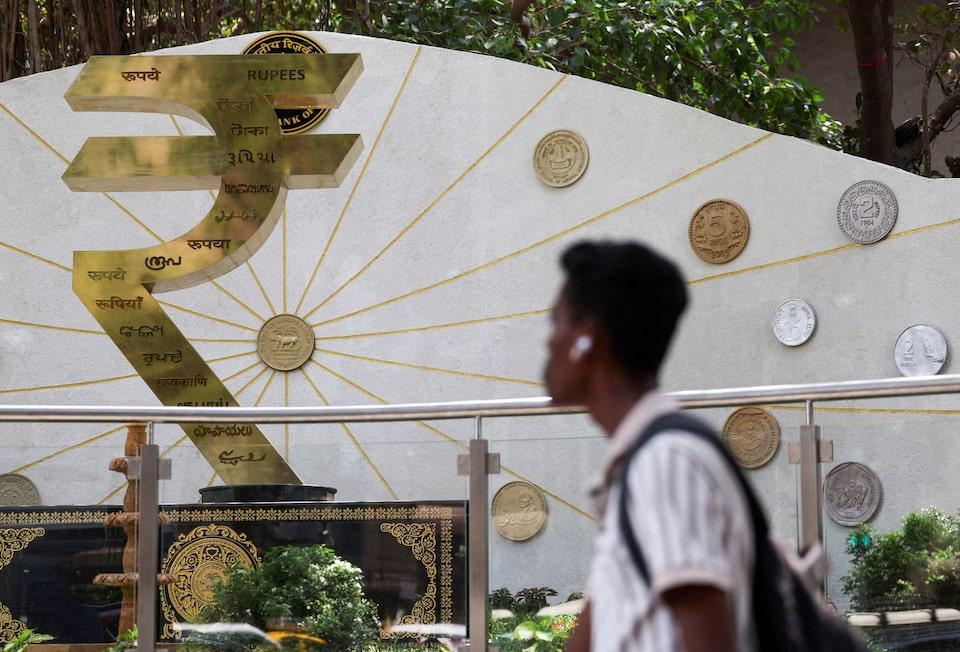
MUMBAI, May 19 (Reuters) - The Indian rupee was little changed on Monday, tracking muted moves in its regional peers, while dollar-rupee far forward premiums dipped on the back of a rise in U.S. bond yields. The rupee was at 85.51 against the U.S. dollar as 10:45 a.m. IST, barely changed from its previous close of 85.5050. Sign up here. Other Asian currencies were mostly steady as well, while the dollar index was little changed at 100.8. U.S. Treasury yields nudged higher after U.S. President Donald Trump's sweeping tax-cut bill was approved by a key congressional committee. Nonpartisan analysts said the bill would add $3 trillion-$5 trillion to the nation's $36.2 trillion in debt over the next decade. On Friday, credit ratings firm Moody's cited the rising debt for the downgrade to its U.S. credit rating. "The dollar could weaken while Asian currencies strengthen given the focus on U.S. fiscal sustainability (all things equal and putting tariffs aside)," MUFG Bank said in a note, referring to the downgrade. Meanwhile, dollar-rupee forward premiums dipped on the back of higher U.S. Treasury yields. The 1-year dollar rupee implied yield fell 3 basis points to 2.06%, while the 1-year U.S. Treasury yield was up 2 bps in Asia trading. India's benchmark equity indexes, the BSE Sensex and Nifty 50, were nearly flat while the yield on the country's benchmark 10-year sovereign bond dipped marginally. Traders expect markets to remain focused on developments regarding a potential India-U.S. trade deal. Meanwhile, remarks from Federal Reserve policymakers peppered through the week may offer cues about the future path of Fed policy rates. Investors are currently pricing in about two rate cuts by the Fed over the rest of 2025. https://www.reuters.com/world/india/indian-rupee-nearly-flat-tracking-muted-asian-peers-forward-premiums-dip-2025-05-19/
2025-05-19 05:13
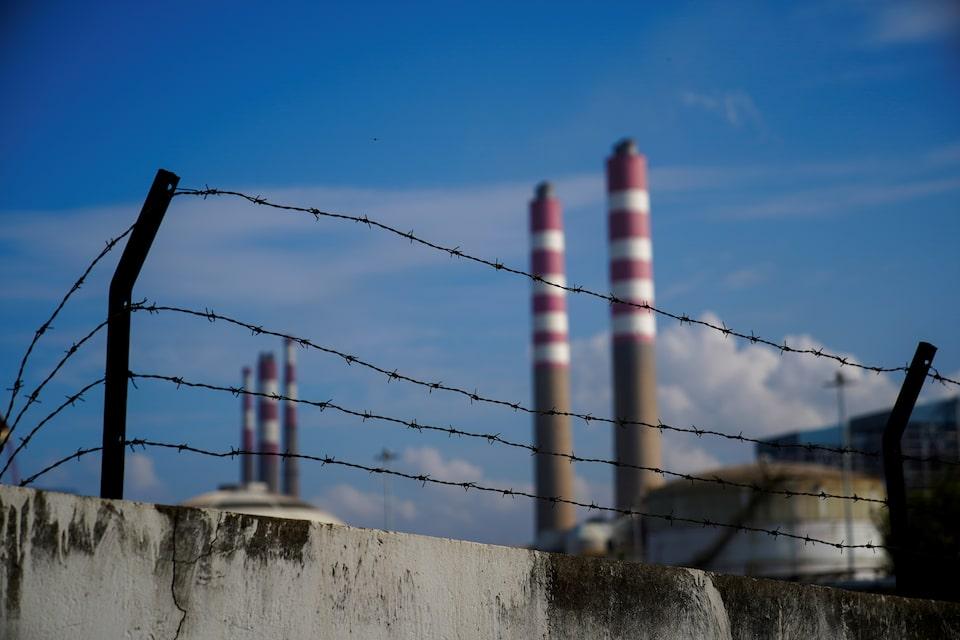
China's mostly coal thermal power output falls 2.3% in April and 4.1% year-to-date: statistics bureau Overall power generation growth slips to 0.9% in April, potentially impacted by trade war Hydro output slips 6.5% in April on drought in dam-rich southern provinces China electricity industry body forecasts 6% consumption growth in 2025, not accounting for trade tensions BEIJING, May 19 (Reuters) - Thermal power generation in China, fuelled mainly by coal, fell 2.3% in April and 4.1% from January to April amid slower overall power output growth, official data showed on Monday, in line with expectations that China's fossil-fuelled electricity could dip in 2025 for the first time in a decade. Total power generation rose 0.9% in April to 711.1 billion kWh, slower than 1.8% in March, data from the National Bureau of Statistics (NBS) showed. Sign up here. "April coincided with escalating trade disputes, which may have impacted manufacturing electricity consumption," LSEG senior research specialist Xuewan Chen said. But she said industry-specific data would be needed to confirm the impact of the U.S.-China trade dispute, which has been dialed back for 90 days after both sides on May 12 agreed to slash their reciprocal tariffs for an initial period. Analysts said slowing factory output growth figures on Monday showed the impact of the trade war on China's industrial sector, which makes up close to 65% of power demand. Above-normal temperatures in most regions in China in April also kept demand for heating capped, contributing to the slower growth, Chen said. The unseasonably warm winter meant power generation for the first four months of the year edged up just 0.1% to 2.98 trillion kWh. Fuller data will be released later in the month by the National Energy Administration (NEA). The NBS figures understate total generation because they do not count some small-scale renewable generators, in line with survey requirements to include only industrial firms with at least 20 million yuan ($2.8 million) of annual revenue from their main operations. Figures from the energy regulator illustrate the discrepancy; for example, NEA reported that power consumption rose 4.8% in March while NBS figures showed 1.8% output growth. Power output and consumption usually grow at a similar rate, analysts say, though there may be discrepancies due to transmission loss and other factors. Industry body, the China Electricity Council, said in its most recent report last month that power consumption was expected to grow 6% year-on-year in 2025, nearing 2024's 6.8% growth level, but added that its forecasts were currently "not considering the impact of the worsening global trade environment". Hydropower, China's second-largest power source, meanwhile fell 6.5% to 78.6 billion kWh in April, the NBS data showed, as parts of Sichuan and Yunnan provinces, where much of China's hydropower capacity is located, have been facing drought conditions, according to state media. In the first four months of the year, hydropower output rose 2.2%. https://www.reuters.com/sustainability/climate-energy/chinas-thermal-power-generation-falls-23-year-on-year-april-2025-05-19/
2025-05-19 05:12
LAUNCESTON, Australia, May 19 (Reuters) - The volume of surplus crude oil in China available for storage surged in April for a second straight month as imports stayed relatively high and refinery processing slipped. China's surplus crude amounted to 1.89 million barrels per day (bpd) last month, the most since June 2023 and up from 1.74 million bpd in March, according to calculations based on official data. Sign up here. The sharp increase in the volume of surplus crude in March and April follows robust purchases by China, the world's biggest crude importer, of cargoes of discounted oil from countries under Western sanctions, mostly Iran and Russia. China does not disclose the volumes of crude flowing into or out of strategic and commercial stockpiles, but an estimate can be made by deducting the amount of oil processed from the total of crude available from imports and domestic output. Refiners processed 14.12 million bpd in April, according to official data released on Monday, down from 14.85 million bpd in March and also 1.4% lower than a year earlier. Crude imports were 11.69 million bpd in April, down from the 19-month high of 12.11 million bpd in March. Domestic production was 4.31 million bpd last month, down slightly from the 14-year high of 4.48 million bpd marked in March. Putting imports and domestic output together gives a total of 16.01 million bpd of crude available to refiners, leaving a surplus of 1.89 million bpd once refinery throughput of 14.12 million bpd is subtracted. For the first four months of the year, surplus crude available rose to 880,000 bpd, up from 580,000 bpd for the first quarter. For the first two months of 2025, China's refiners actually processed about 30,000 bpd more than what was available from crude imports and domestic production, the first time in 18 months that they had drawn on inventories. But the massive surpluses in March and April have reversed the earlier draw. It is worth noting that not all of this surplus crude is likely to have been added to storage, with some being processed in plants not captured by the official data. But even allowing for gaps in the official data, it is clear that in March and April China was importing crude at a far higher rate than it needs to meet its domestic fuel requirements. OPTIONS The question for the market is what is the likely trajectory for China's crude imports and refinery processing in the coming months. The large volume of surplus crude built up in the past months gives refiners more options. China's refineries have a track record of buying surplus crude when they deem prices to be low, but trimming imports when they believe prices have risen too high or too quickly. The rise in imports in March and April was largely a result of refiners buying Iranian and Russian crude, partly because they are discounted to other grades, but also partly due to concerns that U.S. measures to sanction vessels and buyers may prove effective. China's seaborne imports from Russia were 1.38 million bpd in April and 1.22 million bpd in March, the strongest two months since 1.51 million bpd in October last year, according to data compiled by commodity analysts Kpler. Imports from Iran were assessed by Kpler at 743,000 bpd in April, down from 1.39 million bpd in March, which was the highest month since October. It's likely that Chinese refiners will seek to continue to buy Russian and Iranian crude, if they can work around the U.S. sanctions. But if they are restricted in the volumes that they can buy from the two exporters, it also seems that they have enough crude in storage that they won't have to risk pushing prices higher by importing from other suppliers. The views expressed here are those of the author, a columnist for Reuters. https://www.reuters.com/markets/commodities/chinas-surplus-crude-oil-surged-april-refinery-runs-dipped-russell-2025-05-19/
2025-05-19 04:32
A look at the day ahead in European and global markets from Wayne Cole It's been a down day so far in Asia as a miss on China retail sales underlined how far the country would have to travel to shift away from an export-driven economy to one driven by domestic demand. Clearly consumers there aren't feeling the urge to buy, and it's not obvious that Beijing wants that to change. Sign up here. So, President Donald Trump is telling Americans they have to live with fewer dolls and pencils, while pushing trade policies that indirectly pressure Chinese consumers to buy more. U.S. Treasury Secretary Bessent was out Sunday chiding would-be trade partners to offer "good faith" deals or face getting a tariff rate sent by letter. He also implied the U.S. only has time to deal with the top 18 trade partners, and the rest could swing in the breeze. That still leaves the effective tariff for U.S. imports around 13%, the highest since the 1930s and equivalent to a tax rise worth 1.2% of GDP, which Trump is asking Walmart to eat in margins rather than pass on to voting customers. It'll be interesting to see what Target, Lowe's and Home Depot have to say this week about that idea, which smacks of the sort of state price-setting in a Soviet-style command-control economy. Trump needs the revenue from tariffs, in part, to fund his tax cut package, which has finally got through a House of Representatives committee and could be voted on later this week. This sprawling bill is estimated to add between $3 trillion and $5 trillion to the national debt over a decade, and was one reason Moody's last week joined its peers in downgrading the U.S. Ratings really haven't mattered much since the financial crisis, when the subprime debacle tarred the reputation of some agencies and funds abandoned triple-A mandates. Yet the news seems to have struck a nerve with foreign investors already dismayed by the erratic nature of U.S. policy-making, and has Wall Street futures down 1% or more today. Ten-year yields are up around 5 basis points and the dollar is down, albeit modestly. For their part, euro bulls will be relieved by the surprise victory of pro-EU candidate in the Romanian elections, along with wins by centrist parties in Poland and Portugal. Key developments that could influence markets on Monday: - EU final CPI data for April - Fed speakers include Bank of Atlanta President Raphael Bostic, Vice Chair Philip Jefferson, Bank of New York President John Williams, Bank of Dallas President Lorie Logan, Bank of Minneapolis President Neel Kashkari https://www.reuters.com/markets/europe/global-markets-view-europe-2025-05-19/