2026-01-19 18:15
RIO DE JANEIRO, Jan 19 (Reuters) - Swedish investment platform Maha Capital (MAHAa.ST) , opens new tab is seeking approval from the United States to acquire an indirect minority stake in a PDVSA-controlled oil firm, Maha's chairman of the board, Paulo Thiago Mendonca, told Reuters on Friday. The firm has until May to exercise an option for a majority stake in a Novonor (ODBES.UL) subsidiary which owns 40% of PetroUrdaneta, a small oil firm that owns underdeveloped oil fields in Venezuela. Sign up here. If finalized, Maha's deal would mark one of the first entries by a foreign firm into the Venezuelan oil industry after U.S. President Donald Trump encouraged investments following the capture of Venezuelan President Nicolas Maduro in early January. "We are closely following the directions of the United States to see how to move forward," Mendonca said. The onshore fields, which used to produce hundreds of thousands of barrels of oil per day decades ago, are controlled by Venezuelan state-run oil firm PDVSA, which has a 60% stake in PetroUrdaneta. Mendonca said he sees "gigantic" opportunities for oil firms in Venezuela, citing recent remarks by the country's Interim President Delcy Rodriguez, who said she would present a proposal to reform the country's hydrocarbon law, creating conditions for new investments. "Small and medium-sized groups will be the first to enter, because they have speed and an appetite for risk," said Mendonca. UNDERDEVELOPED ASSETS Maha Capital has experience with the oil industry, Mendonca said, citing the company's oil investments in the U.S. and Oman. Maha also used to own shares in Brazil's Brava Energia (BRAV3.SA) , opens new tab but divested them as part of a move to focus on fintech investments. In a turnaround, the Swedish firm controlled by Brazilian fund manager Starboard now plans to invest an undisclosed amount to develop PetroUrdaneta's fields in Maracaibo Basin, in Venezuela's northwestern state of Zulia. PetroUrdaneta's wells produced up to 250,000 barrels of oil per day back in the 1950s, but decades of low investment made production fall to around 1,500 bpd by 2020, according to a Maha presentation. PetroUrdaneta's production could rise to 40,000 barrels of oil equivalent per day with Maha's investments, Mendonca said, with fields still having around 400 million barrels of recoverable oil in reservoirs. "It's a giant field, there's still a lot to extract," Mendonca said. https://www.reuters.com/business/energy/maha-capital-seeks-us-approval-buy-stake-venezuelan-oil-firm-2026-01-19/

2026-01-19 17:37
Chamber warns reforms could deter investment, slow output Proposed changes include scrapping fiscal guarantees, doubling royalties Regulator says reforms will curb abuse, boost state revenue DAKAR, Jan 19 (Reuters) - Ghana’s main mining industry body said on Monday that proposed changes to how the country manages tax and royalty terms risk deterring investment and slowing output. Reuters reported last week that Africa's top gold producer plans to scrap long-term mining investment stability agreements and double royalties under sweeping reforms. Sign up here. The changes, which the country's mining regulator said were intended to boost state revenue and crack down on firms abusing the terms of their licenses, mean that stability agreements with Newmont (NEM.N) , opens new tab, AngloGold Ashanti (AU.N) , opens new tab and Gold Fields (GFIJ.J) , opens new tab will not be renewed. A draft bill expected to go to parliament by March proposes royalties starting at 9% and rising to 12% if gold hits $4,500 per ounce or higher, roughly double the current 3%–5% range. FEARS OF STALLED PROJECTS, LOST JOBS The Chamber of Mines, which represents big mining companies, said in its statement on Monday that it backed the principle of a sliding‑scale royalty system that would allow the state to earn more at higher gold prices. But it warned that the current proposal would push Ghana further up the global effective tax curve, potentially stalling projects and costing jobs. “We understand the rationale behind a sliding scale, but the structure must strike a sweet spot where government secures sustainable revenues while the industry continues to expand and reinvest,” Chief Executive Kenneth Ashigbey said. “The current proposal does not strike that balance.” The chamber didn't offer a counterproposal. Ghana's mining regulator, known as the Minerals Commission, and the Lands and Natural Resources Ministry did not immediately respond to requests for comment. Ghana’s large‑scale miners already pay a 3% growth and sustainability levy on top of the 3-5% flat royalty rate, both levied on gross revenue rather than profit, along with a 35% corporate income tax, 8% dividend tax and the state's 10% free carried interest, the chamber said. Stability and development agreements should be reviewed and improved but not cancelled outright, it said. The chamber said it welcomed ongoing consultations with Ghana's lands and natural resources minister and said a competitive and predictable fiscal regime was essential for sustaining investment. https://www.reuters.com/world/africa/ghanas-mining-reforms-risk-choking-investment-says-industry-body-2026-01-19/

2026-01-19 16:42
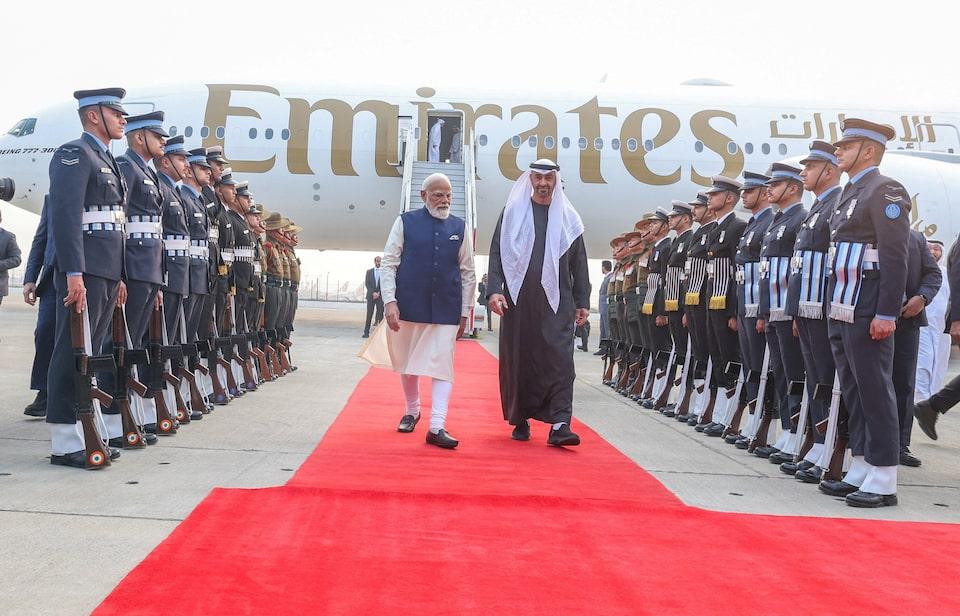
ADNOC Gas signs 10-year LNG deal with India's HPCL UAE, India agree to double two-way trade to $200 bln UAE president visits India, holds talks with PM Modi Both sign letter of intent for defence partnership NEW DELHI/DUBAI, Jan 19 (Reuters) - India signed a $3 billion deal on Monday to buy liquefied natural gas from the United Arab Emirates, making it the UAE's top customer, as the leaders of both countries held talks to strengthen trade and defence ties. The agreement was signed during a very brief two-hour visit to India by UAE President Sheikh Mohammed bin Zayed Al Nahyan for talks with Indian Prime Minister Narendra Modi. They pledged to double bilateral trade to $200 billion in six years and form a strategic defence partnership. Sign up here. Abu Dhabi state firm ADNOC Gas (ADNOCGAS.AD) , opens new tab will supply 0.5 million metric tons of LNG a year to India's Hindustan Petroleum Corp (HPCL.NS) , opens new tab for 10 years, the companies said. ADNOC Gas said the agreement brings the total value of its contracts with India to over $20 billion. "India is now the UAE's largest customer and a very important part of ADNOC Gas' LNG strategy," the company said. The UAE is India's third largest trading partner and Sheikh Mohammed was accompanied by a government delegation that included his defence and foreign ministers. The two sides signed a letter of intent to work towards forming a strategic defence partnership, India's Foreign Secretary Vikram Misri told reporters. India's arch-rival neighbour Pakistan signed a mutual defence agreement with Saudi Arabia last year, and last week a Pakistani minister announced the preparation of a three-way draft defence agreement between Pakistan, Turkey and Saudi Arabia. Saudi Arabia and the United Arab Emirates, after being close allies for years, have increasingly diverged over regional policy, with their rift exposed in Yemen, and they have also had disagreements over oil output. Misri, however, said that the signing of the letter of intent with the UAE does not mean that India will get involved in regional conflicts. "Our involvement on the defence and security front with a country from the region does not necessarily lead to the conclusion that we will get involved in particular ways in the conflicts of the region," he said. https://www.reuters.com/world/india/india-uae-agree-boost-trade-defence-ties-finalise-lng-deal-leaders-meeting-2026-01-19/
2026-01-19 16:14
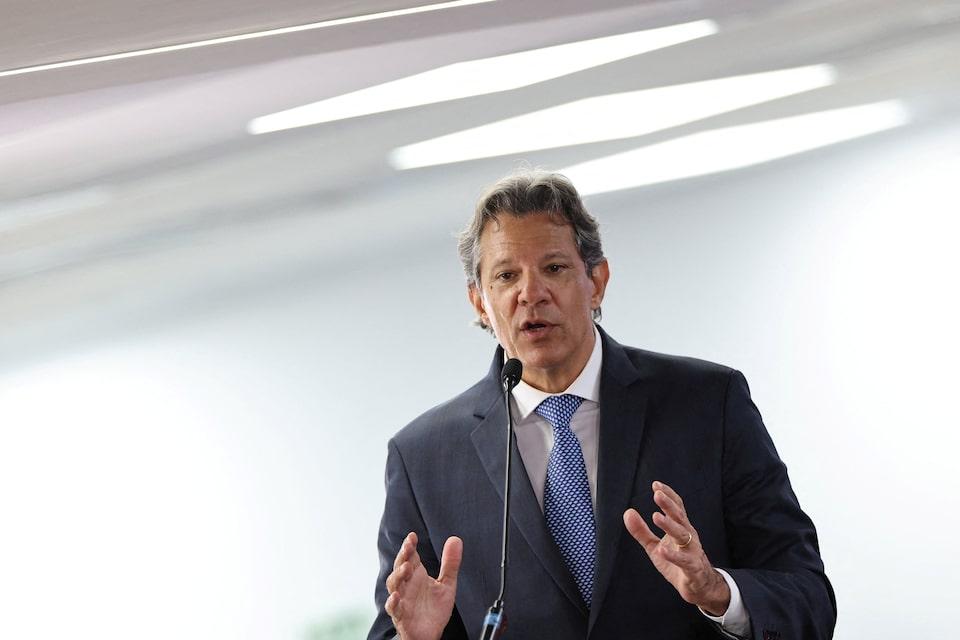
BRASILIA, Jan 19 (Reuters) - Brazil's Finance Minister Fernando Haddad has proposed expanding the central bank's regulatory mandate to allow it to supervise investment funds, a role currently assigned to securities regulator CVM. Speaking in an interview with local news outlet UOL on Monday, Haddad said the proposal is being debated within the government, with discussions involving the central bank, the Management Ministry and the solicitor general's office (AGU). Sign up here. Brazil's federal police have pointed to the use of investment funds with cascading structures in their investigation into alleged irregularities involving Banco Master, which was liquidated by the central bank in November. Haddad said the problems surrounding Banco Master are significant, but stressed that the case does not pose a systemic risk to the country's financial system. CVM, AGU, the central bank and the Management Ministry did not immediately respond to requests for comment. PROBLEMS INHERITED Haddad said that central bank Governor Gabriel Galipolo inherited a series of problems from his predecessor, Roberto Campos Neto, including issues tied to Banco Master, and the unanchoring of inflation expectations, which he said was largely fueled by statements made by central bank's prior leadership. Campos Neto was appointed by former right-wing President Jair Bolsonaro but served during leftist President Luiz Inacio Lula da Silva's first two years in office. Galipolo, a Lula nominee, took over in January 2025. Campos Neto, currently vice chairman at digital lender Nubank (NU.N) , opens new tab, did not immediately respond to a request for comment. ROOM FOR MONETARY EASING Haddad said he believes there is room for the central bank to cut interest rates, which are at a near-20-year high of 15%, unchanged since July in a bid to tame sticky inflation. The finance minister also said the central bank is rebuilding its foreign exchange reserves, which he noted are becoming more diversified. https://www.reuters.com/world/americas/brazils-haddad-proposes-expanding-central-bank-oversight-investment-funds-2026-01-19/
2026-01-19 16:07
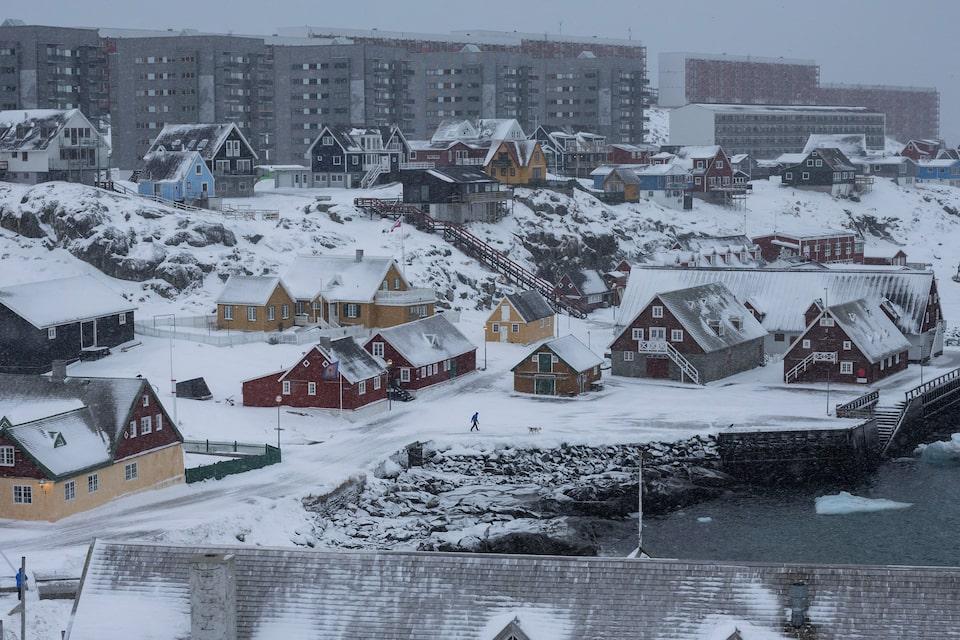
US tariff threat reignites debate over 'sell USA' trades Dollar drops while European currencies rise Investors hope situation will de-escalate LONDON, Jan 19 (Reuters) - U.S. President Donald Trump's renewed tariff threats against European allies amid rising tension over Greenland have revived talk of the 'Sell America' trade that emerged in the aftermath of his sweeping Liberation Day levies last April. Stock markets bore the brunt on Monday of fears that the trade war could re-escalate, with European equities dropping over 1% and U.S. stock futures taking a similar hit that points to weakness following Monday's public holiday. Sign up here. The dollar was on the back foot too, a sign that the world's No.1 reserve currency was also in the crosshairs of Trump's threat on Saturday to increase tariffs on goods from several European countries until the United States is allowed to buy Greenland. They will start with a 10% tariff from February 1, rising to 25% on June 1. The euro bounced from its lowest since late November, along with sterling and Scandinavian currencies. The Swiss franc , a classic safe haven, headed for its largest daily rise against the dollar in a month. "I'm sure that there are a lot of people that are fairly aghast at what happened over the weekend and probably thinking about how they hold their assets," said Francesca Fornasari, head of currency solutions at Insight Investment. She said the dollar could move lower but was also supported by a strong U.S. economy and U.S. shares. And so far, market moves are modest, especially compared to last April's near 2% daily dollar slide following Liberation Day. It's a sign, some analysts said, that markets think Trump will end up de-escalating, as he has done previously. A pending U.S. Supreme Court ruling on the legality of Trump's tariffs and uncertainty on how European capitals will respond also blur the picture. The EU may respond with tariffs against the U.S., but could also implement the so far untested "anti-coercion instrument", which could limit U.S. access to public tenders, investments or banking activity or restrict trade in services. "For the most part so far it would appear to be more noise than signal at this point," said Leonard Kwan, fixed income portfolio manager at T Rowe Price. WILL EUROPEAN INVESTORS DUMP U.S. ASSETS? While deep and liquid U.S. capital markets - the Treasury market alone is worth $30 trillion - make diversification for international investors hard, the U.S. is also vulnerable to foreign outflows, analysts said. European countries are the United States' biggest creditor, owning $8 trillion worth of equities and bonds, almost twice as much as the rest of the world combined, said Deutsche Bank. "In an environment where the geoeconomic stability of the Western alliance is being disrupted existentially, it is not clear why Europeans would be as willing to play this part," Deutsche Bank's global head of FX research George Saravelos wrote. The question is whether European investors would sell and what that would take. ING said that there would be little the EU could do to force European private sector investors to sell dollar assets, it could only try to incentivise investments in euro ones. Analysts noted that the market backdrop is very different to last April, given the dollar has fallen since then and the economic outlook has improved, while it remains difficult to diversify away from the dollar. The greenback, which plunged nearly 10% in 2025 against peers, has stabilised in recent months. Investors have unwound last year's bets against the dollar and hold a modestly bullish position worth just $240 million, meaning sentiment could shift again. "The situation probably needs to escalate a fair bit further before they (European public sector investors) damage their investment performance for political purposes," said Societe Generale's head of FX strategy Kit Juckes. While U.S. stocks had a strong year in 2025, boosted by AI hopes, they lagged global equity markets and 93% of countries in a global MSCI stock index have outperformed the U.S. so far in 2026, Barclays said. It added that appetite to diversify portfolios remains strong among the bank's clients given U.S. risks. "None of this necessarily implies a disorderly rotation, but we believe that it does tilt the balance of risks more towards incremental diversification into international equities," Barclays said. Even if European assets could potentially benefit from shifts away from the U.S., Trump's tariff threats renew uncertainty for Europe's economy. Capital Economics said the countries most exposed to increased U.S. tariffs were the UK and Germany, estimating that a 25% tariff could knock 0.2%–0.3% off their output. Economists warned the full economic impact could be larger given uncertainty and potential EU retaliation. Investment by German firms in the United States nearly halved in February to November 2025 from a year earlier, Reuters reported on Monday, due to trade uncertainty and higher tariffs. "Most investors think this is going to be a good year for the economy. There is over-confidence and therefore some fragility building," said Oliver Blackbourn, multi-asset portfolio manager at Janus Henderson. https://www.reuters.com/world/europe/trumps-europe-tariff-threat-over-greenland-revives-talk-sell-america-trade-2026-01-19/
2026-01-19 15:32
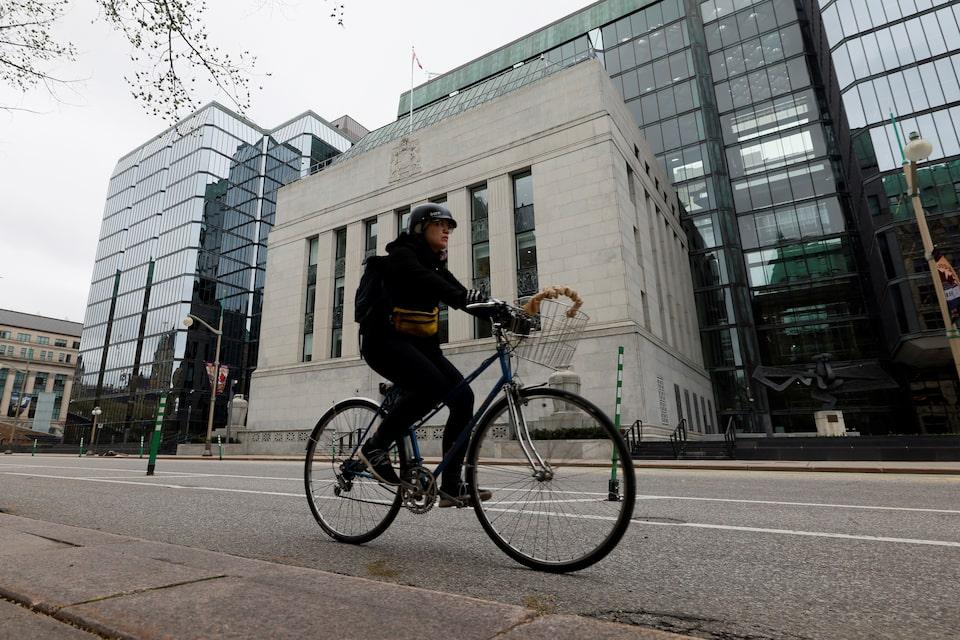
By Promit Mukherjee and David Ljunggren OTTAWA, Jan 19 (Reuters) - Canadian business sentiment remains subdued amid trade tensions with the United States, and firms only expect modest sales growth in the year ahead, a Bank of Canada fourth quarter survey showed on Monday. Sign up here. The quarterly business outlook survey also showed that 21% of firms plan to cut workers in the year ahead, the highest level since the 22% seen in the second quarter of 2016. The data are closely watched by the Bank of Canada and economists to gauge what Canadian firms expect in terms of inflation, sales and hiring. The business outlook indicator, a summary of business activity, prices and costs, and capacity, rose to -1.78 from -2.27 in the third quarter. "Firms report that sales growth has been weak over the past year largely due to the economic effects of trade tensions. They expect sales growth to improve slightly going forward," said the outlook. The share of firms planning or budgeting for a recession in Canada over the next 12 months has eased from 33% to 22%. But despite a slightly improved outlook than the previous quarter, companies are cautious about the future, especially due to continued uncertainty arounf U.S. trade policy. Most firms expect inflation to hover at around 3% over the next two years. "The pass-through of tariff-related costs is no longer putting upward pressure on firms' pricing decisions," the survey noted. The impact of U.S. tariffs on Canada's automotive, steel, aluminum and lumber have hit these sectors hard, but there has been limited evidence of a spillover effect. A separate survey by the central bank on consumer expectations showed Canadians are worried about their jobs and are concerned that they might miss debt payments. Expectations for near-term inflation remain higher than they were before the pandemic but long-term inflation expectations eased below pre-pandemic levels. The survey was conducted between Nov 6 and November 26. ((Reuters Ottawa bureau)) Keywords: CANADA CENBANK/ https://www.reuters.com/world/americas/canada-business-sentiment-remains-subdued-says-bank-canada-survey-2026-01-19/