2025-05-17 15:32
WASHINGTON, May 17 (Reuters) - President Donald Trump on Saturday said in a social media post the U.S. Federal Reserve should cut rates "sooner, rather than later." Trump also criticized the head of the central bank, Jerome Powell. Sign up here. "THE CONSENSUS OF ALMOST EVERYBODY IS THAT, 'THE FED SHOULD CUT RATES SOONER, RATHER THAN LATER,'" Trump said in the post. "Too Late Powell, a man legendary for being Too Late, will probably blow it again - But who knows???" Trump added. https://www.reuters.com/world/us/trump-pushes-us-federal-reserve-rate-cuts-2025-05-17/
2025-05-17 11:42
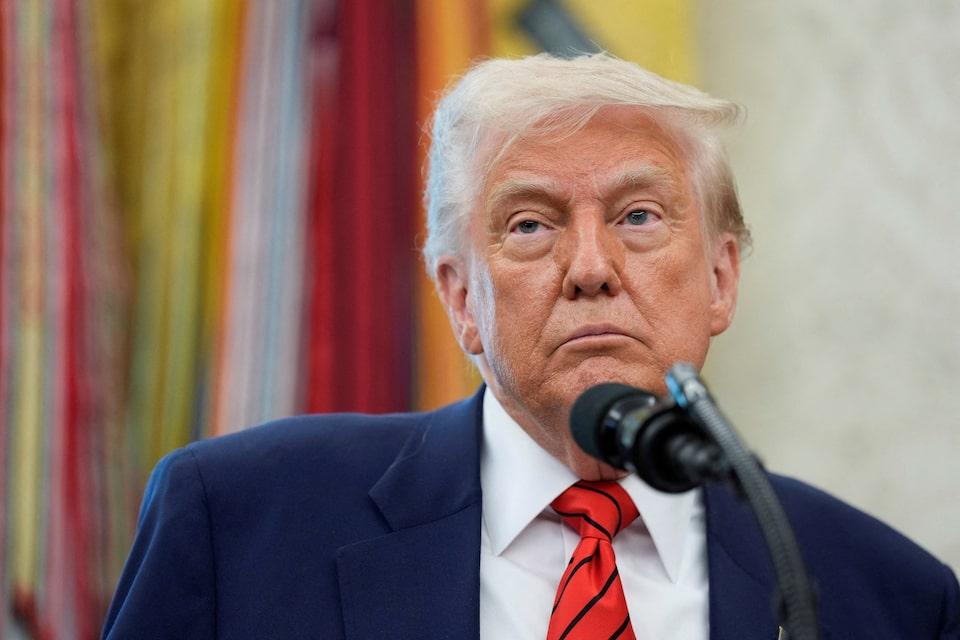
ISTANBUL, May 17 (Reuters) - Turkey has discovered a new reserve of 75 billion cubic metres (bcm) of natural gas during drilling works in the Black Sea, President Tayyip Erdogan said on Saturday. "With this discovery, we will meet the natural gas needs of homes in Turkey for 3.5 years," Erdogan said during an event in Istanbul. Sign up here. The discovery, with an economic value of around $30 billion, was found in the Goktepe-3 well at a depth of 3,500 metres, Erdogan said. Turkey's daily natural gas production at its flagship Sakarya field in the Black Sea has reached around 9.5 million cubic metres, as the country ramps up its energy ambitions both at home and abroad. Turkey, which imports over 90% of its energy needs, is pushing to cut its import bill and boost supply security by developing domestic resources and expanding international partnerships in oil and gas exploration. https://www.reuters.com/business/energy/turkey-discovers-new-75-bcm-natural-gas-reserve-black-sea-erdogan-says-2025-05-17/
2025-05-17 11:39
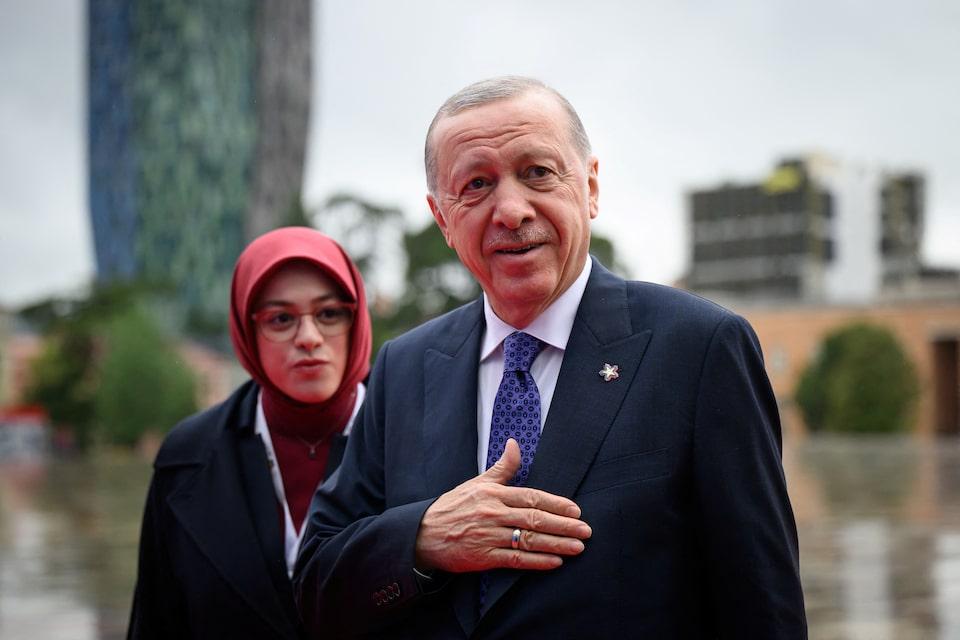
May 17 (Reuters) - French state-owned nuclear fuel company Orano is exploring the sale of its uranium assets in Niger after the breakdown of its relationship with the West African country's military rulers, the Financial Times reported on Saturday, citing people familiar with the matter. The uranium miner said on Tuesday that it had filed a lawsuit with the Niger courts over the "arbitrary arrest, illegal detention and unjust confiscation of property" involving its staff and assets in the country. Sign up here. Orano said it had been unable to contact its mining director in Niger, Ibrahim Courmo, who was taken to the headquarters of the country's external intelligence agency, the General Directorate of External Documentation and Surveillance, sources told Reuters earlier this month. In early December last year Orano said Niger's military-led government, which seized power in a coup in 2023, had taken control of the Somair mine, of which Orano owns about 63%, with the government holding the remaining stake. The company also had a mining permit for its subsidiary Imouraren stripped in June 2024. In a statement to Reuters, Orano said its priority remained the ongoing international arbitration process, adding that "several parties have expressed their interest in the mining assets of the group in Niger and are at liberty to submit offers if they wish to". https://www.reuters.com/business/energy/frances-orano-explores-sale-niger-uranium-assets-ft-reports-2025-05-17/

2025-05-17 10:31
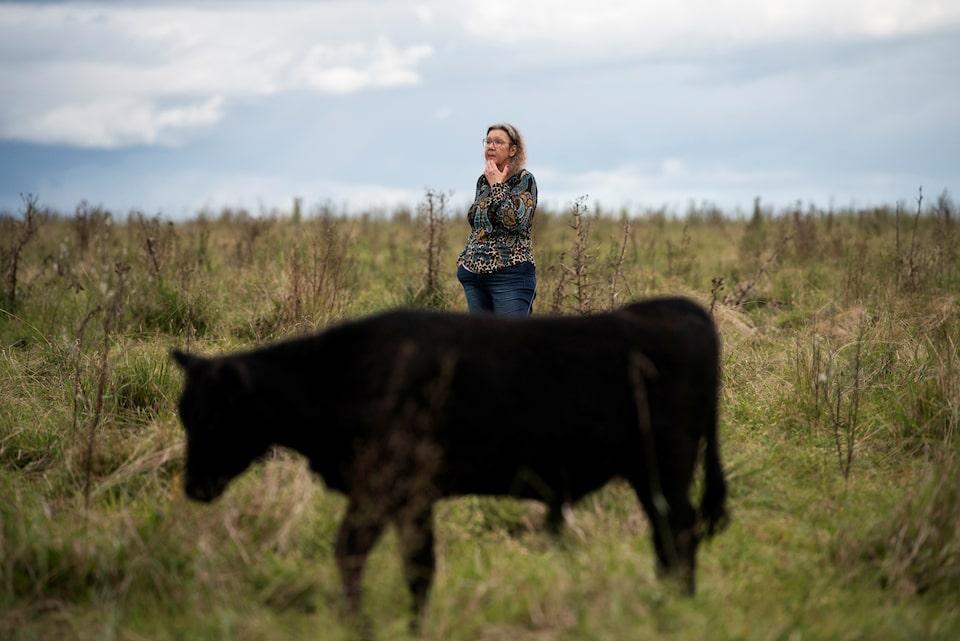
Investors unable to locate cows they bought, losses reach $350 million Cattle registry system failed, lawyers allege lack of control over data Partner in one firm now under investigation killed himself in car crash ARTIGAS, Uruguay, May 17 (Reuters) - Sandra Palleiro is on the hunt for her lost cows. The 60-year-old accountant is standing in a muddy field at the end of a farm track in Uruguay's remote border region with Brazil. She has traveled 600 kilometers (370 miles) from the capital, Montevideo, to find 61 cattle she owns, at least on paper. The missing bovines were part of a "cow bond" scheme that has collapsed, causing one of Uruguay's biggest ever financial scandals. Sign up here. The co-owner of one Uruguayan firm that took money from savers to invest in cows has died by suicide. Three companies have gone bust and are under investigation for fraud. "Hello moo-moo! Could one of you be mine?" Palleiro called out hopefully into a paddock in the border region of Artigas, her jeans caked in mud as she approached a wire fence to get a closer look at the cows. Palleiro - like hundreds of other investors - is unable to find the animals she owns or prove they even exist, making them part of a herd of "phantom cows" that could number over 700,000 head of cattle. So far, the losses have mounted to some $350 million, roiling the stable farming nation, home to just 3.4 million people - but 12 million cows. It has also sent shockwaves through bigger ranching neighbors Argentina and Brazil, which looked to Uruguay's cattle-tracking system as a model and where similar livestock investment schemes operate. In March 2024, Palleiro put her life savings of over $50,000 into the livestock investment scheme offered by a local firm named Conexión Ganadera, lured by promises of fixed 7-10% dollar returns and investment materials with bucolic pictures of brown-and-white Hereford cattle. Savers could own cows directly that would be reared and sold for profit by livestock firms, or take an investment stake in the overall scheme. Palleiro, an urban professional, liked the idea of owning a tangible asset. It seemed a safe bet. She could track the cows via a state-backed online portal - for years an example globally for cattle tracking - which set out breed, age and location. Each cow was supposed to be branded with a symbol assigned by the government and documents listing her assets carried the crest of the agriculture ministry, which oversees the cattle registry. Uruguay's national cattle registry declined to comment on the cases. When she went in search of her cows, Palleiro carried print copies from the cattle registry to see if she could match the 53 tracking numbers linked to this ranch with the tags of the cows staring at her on the opposite side of the fence. Using her smartphone camera, she zoomed in on the tracking numbers pinned to their ears. It soon became clear few of the numbers matched. Then the cows started backing away. She couldn't get close enough. The exercise felt hopeless. "It feels like falling into a nightmare," said Palleiro. TESLA CRASH Three of the biggest firms under investigation for fraud are Conexión Ganadera, República Ganadera and Grupo Larrarte, which between them persuaded nearly 6,000 people or investor pools to buy into the program, investing millions of dollars. Similar investment schemes exist throughout South America, in Argentina, Brazil and Colombia. Many are legitimate. Martín Fablet, a local radio presenter in Montevideo, said he invested several times in Conexión Ganadera and other livestock schemes in Uruguay over the past 12 years: "This system of receiving fixed dollar returns worked fantastically well for at least 11 years. They paid me on time." The first hint of the scandal at Conexión Ganadera came on November 28 last year, when a Tesla Model 3 car crashed at 211 kilometers per hour in the small central Uruguayan city of Florida. Behind the wheel was Gustavo Basso, one of the co-owners of Conexión Ganadera, which had boomed since opening in 1999. Weeks after he drove his car into a parked construction vehicle, investors started reporting their payments from the cattle scheme were late, and by January the company confirmed it was short of nearly $250 million. A coroner concluded in April that Basso had died by suicide. Conexión Ganadera was one of the three funds that started to warn late last year that they were unable to fulfill obligations to investors. They were short of cash, which they blamed on adverse weather (there had been a drought in 2022-23) and tough market conditions. By late January, investors were scrambling to withdraw savings amid reports of fraud. Some filed suits for fraud, leading to bankruptcy proceedings and an official investigation by Uruguay's Prosecutor's Office for Money Laundering Crimes, which remains ongoing. The prosecutor declined to comment to Reuters. Pablo Carrasco of Conexión Ganadera denies fraud allegations. Lawyers representing Conexión Ganadera said they were unable to comment on legal proceedings until testimony was given in court. Grupo Larrarte's lawyer said the firm was fully cooperating with the authorities. República Ganadera did not respond to a Reuters request for comment. 'MAYBE THE COWS WERE FAKES' Politicians, radio hosts, pensioners and even priests are among the thousands now attempting to recover their savings - and their missing 'phantom' cattle, the number of which is proving hard to pin down. An inventory of the biggest firm, Conexión Ganadera, carried out by a bankruptcy trustee estimated that as few as 70,000-80,000 of the 804,604 cattle the company claimed to manage actually existed. In another court case into fraud allegations, Uruguay's Ministry of Agriculture and Livestock (MGAP) said in March that one of Conexión Ganadera's main cattle holding firms, Pasfer, had only 49 of the 3,740 cows that it put up as collateral to secure a loan. "We don't know if the cows were ever bought, whether they're alive or dead," Palleiro said during a drive along country lanes to the Artigas ranch. "Maybe the cows were fakes, or sold, moved somewhere or their tags were changed." Victims want to know how authorities failed to spot the problems despite the cattle registry. Three lawyers for victims said it was possible that the government-issued tags were never attached to the animals because the animals were never purchased, and the investments were used for other purposes. Two other lawyers representing investors in bankruptcy and fraud cases alleged that cows owned by investors were sold off illegally, without their consent. Each company was responsible for applying the tags and in-putting data to the national registry. "The registry reflects what the company provided. The problem is that there was no control over what the company provided," said one of the lawyers, Nicolás Hornes, who represents 98 victims. Hornes said he went to several farms and found that the number of cattle did not match the registry. Two other investors Reuters spoke to told similar stories of trying to find their cows. Uruguay's livestock ministry did not respond to Reuters questions about whether the registry system failed. COMPANIES UNDER INVESTIGATION An executive from Grupo Larrarte, the first firm to receive formal complaints from investors, is already in prison as part of an ongoing criminal investigation, which is separate from bankruptcy proceedings. Jairo Larrarte was placed in preventive detention by a judge in April for alleged crimes of misappropriation, fraud and issuing bad checks. In a response to Reuters, his lawyer Enrique Möller said that his client had fully cooperated with the authorities and that cattle had already been returned to some investors. República Ganadera filed for voluntary bankruptcy in November, which the courts rejected in March because authorities opened an investigation into the company's accounts. Negotiations with creditors continue and the firm said in a March 25 statement that it was "prioritizing the best possible solution" for those affected. The company did not respond to Reuters' requests for comment. There are several open investigations into Conexión Ganadera, the biggest of the three. The company's co-owner, Pablo Carrasco, his wife Ana Iewdiukow and Basso's widow, Daniela Cabral, are being investigated for fraud and embezzlement. In February all three were temporarily barred from leaving Uruguay without court authorization and their passports confiscated. Carrasco's lawyer Jorge Barrera said there would be no comment to the media. SNAKE CHARMER Basso, whose high-speed crash presaged the company's downfall, lived in grand style in the city of Florida, which has a small-town feel, home to 30,000 people surrounded by farmland. Fablet, the local radio presenter, said he met Basso some 50 times over the course of a decade, socially and while covering agriculture events for radio. "(Basso) was a snake charmer," said Fablet, a longtime investor in Conexión Ganadera. "He could never simply lose $250 million... he could've made a loss, but that money must be somewhere." Back at the Artigas farm, Reuters drone footage showed around 80 animals compared to what should have been several hundred belonging to Palleiro and other investors. Farmhands at the ranch explained that more animals were out in other fields. Several mentioned delays to salary payments since the scandal broke and they said there was no easy way of checking which, if any, belonged to Palleiro. Palleiro herself was angered at the way the case was hurting so many hard-working Uruguayans. She had at times taken on three jobs to put together a nest egg for her retirement. "We put in all our savings that cost us a lot of effort," she said with emotion. "Now we want justice." https://www.reuters.com/world/americas/phantom-cows-missing-millions-spark-financial-scandal-uruguay-2025-05-17/
2025-05-17 06:42
May 16 (Reuters) - At least 21 people were killed overnight in Kentucky and Missouri when severe storms that spawned tornadoes ripped across the two states, officials said on Saturday, and the death toll is expected to rise. In Kentucky, Governor Andy Beshear said early on Saturday at least 14 people were killed in his state. Sign up here. “Kentucky, we’re starting today with the tough news that we lost at least 14 of our people to last night’s storms, but sadly, this number is expected to grow as we receive more information,” Beshear said Saturday in a post on social media platform X. At least nine of the fatalities were in Laurel County, about 150 miles south of Louisville, when a tornado touched down just before midnight on Saturday, Sheriff John Root said in a social media post, describing it as "a mass casualty event." There were numerous severe injuries, he said, and a search for survivors was underway. Aerial images posted on social media showed scenes of complete destruction in Laurel County, with entire blocks of houses reduced to splinters, and cars and pickup trucks left battered or crushed in the tornado's wake. In Union County, near the Illinois border 250 miles west of Laurel County, a reported twister leveled mobile homes in the city of Morganfield, according to broadcaster WLKY in Louisville, but there were no immediate reports of casualties in that area. Earlier, officials said a tornado ripped through the Missouri city of St. Louis, killing at least five people and damaging 5,000 properties as it tore off roofs. It also knocked down power lines and swept through a major thoroughfare during rush-hour traffic on Friday, officials said. Five people were killed in St. Louis, and two others in Scott County, in southeastern Missouri, according to officials. "Our city is grieving tonight," St. Louis Mayor Cara Spencer, who was sworn in a month ago, told reporters on Friday night. "The loss of life and the destruction is truly, truly horrendous." St. Louis resident Joan Miller recounted her narrow escape when a tornado struck her brick house. "The wind started, the tree out front was shaking so violently," she said. "And suddenly all the doors shut, the windows flew out from the bedroom ... the entire back of my house ... you can see straight into the alley now." A spokesperson for both St. Louis Children's Hospital and Barnes-Jewish Hospital told NBC News that at least 35 people had been admitted to the facilities, with the children's facility receiving 15 and Barnes-Jewish taking in at least 20, possibly 30, people who were injured as a result of the severe weather. The city imposed a curfew from 9 p.m. to 6 a.m. (0200-1100 GMT) in two police districts where most of the damage took place to prevent injuries from dangerous debris and reduce the potential for looting. The National Weather Service said thunderstorms were widespread across portions of the Mississippi, Tennessee and Ohio Valleys on Friday. At least half a dozen tornadoes touched down in Missouri and neighboring Illinois and other severe weather stretched all the way to the Atlantic Coast, including another tornado in New Jersey. As of Saturday morning, about 334,000 customers were without power, according to poweroutage.us, which tracks electric blackouts across the country. Most of the outages were Missouri, Kentucky and Michigan, where the storm system traveled after causing the destruction in the other states. https://www.reuters.com/business/environment/tornado-kills-5-st-louis-damages-5000-properties-2025-05-17/
2025-05-17 02:21
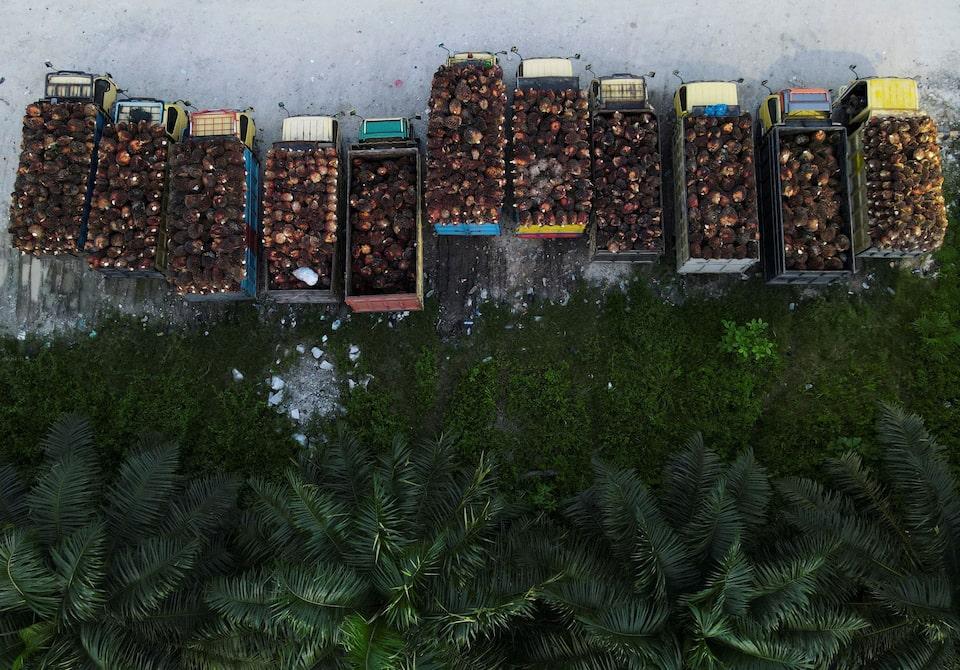
JAKARTA, May 16 (Reuters) - The Indonesia Palm Oil Association, GAPKI, on Friday urged the government to delay a planned hike in the palm oil export levy, warning it could harm competitiveness amid global trade uncertainties due to the U.S. tariffs and geopolitical tension. Indonesia is due to raise its palm oil export levy to between 4.75% and 10% from May 17 to help fund a biodiesel blending mandate as well as a palm oil replanting programme. The levy currently stands at 3% to 7.5%. Sign up here. "The situation is full of uncertainties and it is a big risk to launch a policy that will impact competitiveness of Indonesia's palm oil exports," GAPKI said in a letter addressed to Finance Minister Sri Mulyani Indrawati. A spokesperson for the palm oil fund that collects the levy said GAPKI's request will be discussed at a meeting with government ministries next week. The finance ministry and coordinating ministry of economic affairs did not respond to a request for comment. Indonesia, the world's biggest palm oil producer, is facing proposed U.S. tariffs of 32%, while number two producer Malaysia faces a 24% rate. The tariffs have been put on hold until July. "It is feared that this will make Indonesian palm oil exports increasingly uncompetitive compared to Malaysia, especially for the U.S. market which is currently dominated by Indonesia," the group said. Malaysia charges an export duty of between 3% and 10%, depending on the price of palm oil. For May, the duty has been set at 10%. Sri Mulyani Indrawati said previously that Indonesia would adjust its crude palm oil export tax to reduce the burden on exporters from U.S. tariffs. The tax is separate to the levy. Meanwhile, heightened tension between major palm oil buyers India and Pakistan has sparked concern about reduced demand, GAPKI said. "There is no permanent ceasefire between India and Pakistan yet that had caused buyers from both nations to delay purchase of crude palm oil and its derivatives," the group added. https://www.reuters.com/markets/commodities/indonesia-palm-oil-group-gapki-urges-government-delay-levy-hike-2025-05-16/