2025-05-16 20:59
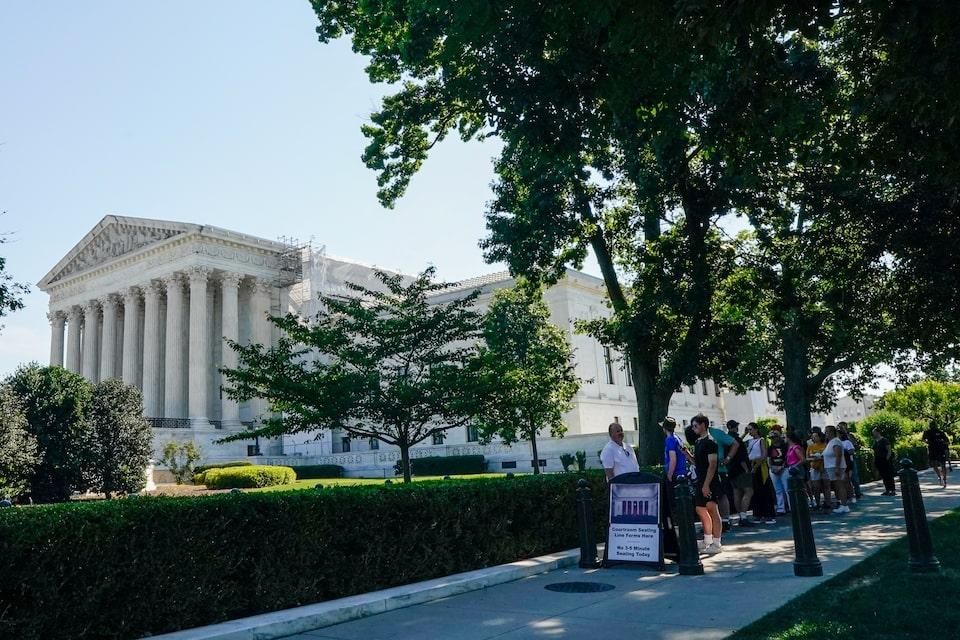
June 18 (Reuters) - The U.S. Supreme Court's current term includes cases involving gender-affirming medical care for transgender minors, birthright citizenship, guns, job discrimination, religious rights, online pornography, preventive healthcare, Planned Parenthood funding, federal regulatory powers on vape products and nuclear waste storage, voting rights and more. Here is a look at some of the cases already argued and decided and still to be decided by the justices. The court also has considered other cases involving President Donald Trump on an emergency basis without hearing arguments. Sign up here. TRANSGENDER RIGHTS The justices on June 18 backed a Republican-backed ban in Tennessee on gender-affirming medical care for transgender minors in a setback for transgender rights. The court decided that the ban does not violate the U.S. Constitution's 14th Amendment promise of equal protection, as challengers to the law had argued. The ruling affirmed a lower court's decision upholding Tennessee's law barring medical treatments such as puberty blockers and hormones for people under age 18 experiencing gender dysphoria. That refers to the significant distress that can result from incongruity between a person's gender identity and the sex they were assigned at birth. WORKPLACE DISCRIMINATION The court on June 5 made it easier for people from majority backgrounds such as white or straight individuals to pursue claims alleging workplace "reverse" discrimination, reviving an Ohio woman's lawsuit claiming she was illegally denied a promotion and demoted because she is heterosexual. The justices threw out a lower court's decision rejecting a civil rights lawsuit by the plaintiff, Marlean Ames, against her employer, Ohio's Department of Youth Services. Ames said she had a gay supervisor when she was passed over for a promotion in favor of a gay woman and demoted, with a pay cut, in favor of a gay man. The Supreme Court decided that federal law and its own precedents make clear that there can be no distinctions between majority-group and minority-group plaintiffs in discrimination cases. BIRTHRIGHT CITIZENSHIP The justices on May 15 heard arguments in Trump's attempt to broadly enforce his executive order to restrict birthright citizenship, a move that would affect thousands of babies born each year as he seeks a major shift in how the U.S. Constitution has long been understood. The court's conservative justices seemed willing to limit the ability of lower courts to issue nationwide, or "universal," injunctions, as federal judges in Maryland, Washington and Massachusetts did to block Trump's directive. Those judges found that Trump's order likely violates the Constitution's 14th Amendment citizenship language. Trump directed federal agencies to refuse to recognize the citizenship of U.S.-born children who do not have at least one parent who is an American citizen or lawful permanent resident, also known as a "green card" holder. RELIGIOUS CHARTER SCHOOL The court on May 22 blocked a bid led by two Catholic dioceses to establish in Oklahoma the first taxpayer-funded religious charter school in the United States in a major case involving religious rights in American education. The justices left intact a lower court's decision that blocked the establishment of St. Isidore of Seville Catholic Virtual School. The ruling was 4-4, with Justice Amy Coney Barrett recusing herself from the case. Oklahoma's top court found that the proposed school would violate the U.S. Constitution's First Amendment limits on government involvement in religion. Set up as alternatives to traditional public schools, charter schools typically operate under private management and often feature small class sizes, innovative teaching styles or a particular academic focus. Charter schools are considered public schools under Oklahoma law and draw funding from the state government. 'GHOST GUNS' The justices on March 26 upheld a federal regulation targeting largely untraceable "ghost guns" imposed by Democratic former President Joe Biden's administration in a crackdown on firearms whose use has proliferated in crimes nationwide. The 7-2 ruling overturned a lower court's decision that the U.S. Bureau of Alcohol, Tobacco, Firearms and Explosives had exceeded its authority in issuing the 2022 rule targeting parts and kits for ghost guns. The court found that the regulation was consistent with a 1968 federal law called the Gun Control Act. MEXICO GUNS LAWSUIT The court on June 5 spared two American gun companies from a lawsuit by Mexico's government accusing them of aiding illegal firearms trafficking to drug cartels and fueling gun violence in the southern neighbor of the United States. The justices overturned a lower court's ruling that had allowed the lawsuit to proceed against firearms maker Smith & Wesson (SWBI.O) , opens new tab and distributor Interstate Arms. The lower court had found that Mexico plausibly alleged that the companies aided and abetted illegal gun sales, harming its government. RELIGIOUS TAX EXEMPTION The justices on June 5 endorsed a bid by an arm of a Catholic diocese in Wisconsin for a religious exemption from the state's unemployment insurance tax in the latest ruling in which they took an expansive view of religious rights. They overturned a lower court's decision that had rejected the tax exemption bid by the Catholic Charities Bureau - a nonprofit corporation operating as the social ministry arm of the Catholic diocese in the city of Superior - and four entities the bureau oversees. The justices concluded that the lower court's interpretation of the state's tax exemption amounted to religious discrimination by treating religious denominations unequally. ONLINE PORNOGRAPHY The justices heard arguments on January 15 over whether a Texas law that requires pornographic websites to verify the age of users in an effort to restrict access to minors violates the First Amendment protections against government infringement of speech. The justices expressed worries over the availability of online pornography but also voiced concern over burdens imposed on adults to view constitutionally protected material. A trade group for the adult entertainment industry appealed a lower court's decision upholding the Republican-led state's age-verification mandate. A ruling is expected by the end of June. LGBT SCHOOL BOOKS The court appeared inclined to rule in favor of Christian and Muslim parents in Maryland seeking to keep their elementary school children out of certain classes when storybooks with LGBT characters are read. The justices heard arguments on April 22 in an appeal by parents with children in public schools in Montgomery County after lower courts declined to order the local school district to let children opt out when these books are read. The parents contend that the school board's policy of prohibiting opt-outs violates the First Amendment protections for free exercise of religion. A ruling is expected by the end of June. OBAMACARE PREVENTIVE CARE MANDATE The court heard arguments on April 21 over the legality of a provision of the Obamacare law, formally called the Affordable Care Act, that helps ensure that health insurers cover preventive care such as cancer screenings at no cost to patients. A lower court determined that the U.S. Preventive Services Task Force, which under Obamacare has a major hand in choosing what services will be covered, is composed of members who were not validly appointed under the Constitution. Its 16 members are appointed by the U.S. secretary of health and human services without Senate confirmation. A ruling is expected by the end of June. PLANNED PARENTHOOD FUNDING The court heard arguments on April 2 in South Carolina's bid to cut off public funding to Planned Parenthood in a case that could bolster efforts by Republican-led states to deprive the reproductive healthcare and abortion provider of public money. The court's conservative justices appeared sympathetic to South Carolina's stance. A lower court barred the Republican-governed state from terminating funding to Planned Parenthood's organization's regional affiliate under the Medicaid health insurance program. A ruling is expected by the end of June. FLAVORED VAPE PRODUCTS The court on April 2 largely backed the U.S. Food and Drug Administration's refusal to let two e-cigarette companies sell flavored vape products that regulators consider a health risk to youths. The justices threw out a lower court's decision that the FDA had failed to follow proper legal procedures under a federal law called the Administrative Procedure Act when it rejected the applications by the companies, Triton Distribution and Vapetasia, to sell these nicotine-containing products. EPA AUTHORITY The court dealt a blow to the Environmental Protection Agency in a 5-4 ruling on March 4 involving a wastewater treatment facility owned by the city of San Francisco that could make it harder for regulators to police water pollution. It ruled that the EPA exceeded its authority under an anti-pollution law by including vague restrictions in a permit issued for the facility, which empties into the Pacific Ocean. The court has limited the EPA's reach in recent years as part of a series of rulings curbing the power federal regulatory agencies. NUCLEAR WASTE STORAGE The court on June 18 threw out a legal challenge by the state of Texas and oil industry interests to the Nuclear Regulatory Commission's licensing of certain nuclear waste storage facilities. It overturned a lower court's decision that had invalidated a license awarded by the NRC to operate an off-site nuclear waste storage facility in western Texas. The NRC is the federal agency that regulates nuclear energy in the United States. UTAH RAILWAY The justices on May 29 handed a setback to environmentalists by allowing federal agencies to limit the scope of their review of the environmental impact of projects they regulate, as the court bolstered a Utah railway project intended to transport crude oil. The justices overturned a lower court's decision that had halted the project and had faulted an environmental impact statement issued by a federal agency called the Surface Transportation Board in approving the railway as too limited in scope. The project was challenged by environmentalists and a Colorado county. TAILPIPE EMISSIONS The justices appeared sympathetic to a bid by fuel producers to challenge California's standards for vehicle emissions and electric cars under a federal air pollution law in a case involving the Democratic-governed state's power to fight greenhouse gases. They heard arguments on April 23 in an appeal by a Valero Energy (VLO.N) , opens new tab subsidiary and fuel industry groups of a lower court's ruling that they lacked the required legal standing to challenge a 2022 U.S. Environmental Protection Agency decision to let California set its own regulations, separate from those of the federal government. A ruling is expected by the end of June. TELECOMMUNICATIONS SERVICES FUND The justices appeared sympathetic to the Federal Communications Commission's defense of the mechanism it uses to fund a multi-billion dollar effort to expand phone and broadband internet access to low-income and rural Americans and other beneficiaries. The court heard arguments on March 26 in an appeal by the FCC and a coalition of interest groups and telecommunications firms of a lower court's decision that found Congress violated the Constitution's vesting of legislative authority in Congress. A ruling is expected by the end of June. LOUISIANA ELECTORAL MAP The justices heard arguments on March 24 in a bid by Louisiana officials and civil rights groups to preserve an electoral map that raised the number of Black-majority congressional districts in the state in a legal challenge by a group of voters who called themselves "non-African American." A panel of three federal judges found that the map laying out Louisiana's six U.S. House of Representatives districts - with two Black-majority districts, up from one previously - likely violated the Constitution's promise of equal protection. A ruling is expected by the end of June. DEATH PENALTY CASE The court on February 25 threw out Oklahoma death row inmate Richard Glossip's conviction for a 1997 murder-for-hire plot and granted him a new trial. The justices in a 5-3 ruling concluded that prosecutors violated their constitutional duty to correct false testimony by their star witness. They reversed a lower court's decision that had upheld Glossip's conviction and had allowed his planned execution to move forward despite his claim that prosecutors wrongly withheld evidence that could help his defense. U.S. TIKTOK BAN The justices on January 17 upheld a law banning TikTok in the United States on national security grounds if its Chinese parent company ByteDance did not sell the short-video app by a deadline set by Congress. The justices ruled 9-0 that the law, passed by Congress last year and signed by Biden, did not violate the Constitution's First Amendment protection against government abridgment of free speech. The justices affirmed a lower court's decision that had upheld the measure. Trump, Biden's successor, subsequently opted not to enforce the law and gave the parties time to try to reach a deal. https://www.reuters.com/world/us/top-cases-now-before-us-supreme-court-2025-01-25/
2025-05-16 20:59
LONDON, May 16 (Reuters) - A former senior employee is suing the hedge fund he worked for, claiming bullying and unfair dismissal, in a case that is being heard by a London employment tribunal. Jacopo Moretti is seeking damages from DL and Partners, its star manager Davide Leone, and four other directors of the hedge fund, which once oversaw as much as $1.5 billion. Sign up here. Moretti, a co-founder and former director at the hedge fund, alleges he was unfairly dismissed and that he was the victim of verbal abuse, harassment and antisemitism, according to court documents. He also claims that reasonable adjustments were not made for a disability linked to his mental health. Leone, the hedge fund and the four other directors deny the claims. A representative for them told Reuters: "The action is based on totally false allegations and his (Moretti's) claims are completely groundless." A representative for Moretti said he was subjected to years of systematic verbal and psychological abuse, gaslighting and discrimination, and had been diagnosed with a disabling psychiatric injury. DL and Partners acknowledged Moretti's status as disabled in May 2023, court documents show. The tribunal will also decide whether disclosures Moretti made directly to Leone and to others at the firm, including the hedge fund's chief lawyer, are covered by whistleblower protections. These disclosures were about the firm's working environment and how it had affected Moretti's health. Britain's Financial Conduct Authority is due to set out in June how it will tackle non-financial misconduct in the industry. The FCA declined to offer an update on the new regulatory changes or comment on the case. The size of damages being sought by Moretti and whether this will include lost earnings will depend on the tribunal judge's decision on each claim. Moretti's earnings from DL and Partners averaged around $2 million a year, court documents show. Unusually, the tribunal has admitted evidence presented by Moretti that includes over 60 hours of covert recordings. Witness statements from DL and Partners and Leone said these recordings were unauthorised. Moretti, who in 2023 received a diagnosis of Post Traumatic Stress Disorder while he was off work, claims he felt threatened by Leone on a number of occasions, the court documents show. In them, Leone is quoted as saying that it would be "very cheap to hire a murderer" and telling Moretti how much an assassin would cost. The defence's response says these remarks were part of a "light-hearted" conversation and taken out of context, and that "in the hedge fund industry, robust exchanges are to be expected". Leone's legal papers describe Moretti's claims of harassment as confused and false, and point to $86 million in investment losses attributed to him from 2021 and into 2022. From this point, Moretti began gathering evidence for a legal case, their documents say. Moretti's representative said his client's investment recommendations were not followed and that he was not responsible for the losses. He also pointed to Moretti's legal filings which describe long working hours and little time off and said Moretti raised repeated "whistleblower" concerns about Leone's behaviours and their impact on his health. Moretti went on leave from the hedge fund from April 2022. The court documents show DL and Partners terminated his employment contract in June 2023. The hedge fund had rejected a grievance raised by Moretti after hiring a law firm to investigate it. The employment tribunal case started in parallel to a High Court case which Moretti brought against the hedge fund and its founder last year. That case has been paused until the tribunal is finished, the documents show. Witness statements for Leone and Moretti point to another tribunal arbitration where Moretti argued he was a shareholding partner in the fund. This was dismissed in August 2024 with Moretti paying costs. The case continues. https://www.reuters.com/sustainability/boards-policy-regulation/former-senior-employee-brings-unfair-dismissal-case-against-london-based-hedge-2025-05-16/

2025-05-16 20:35
ORLANDO, Florida, May 16 (Reuters) - - TRADING DAY Making sense of the forces driving global markets Sign up here. By Jamie McGeever, Markets Columnist If anyone wanted a snapshot of the tight spot the U.S. economy and policymakers are in right now, they got it on Friday via the University of Michigan's latest consumer sentiment and inflation expectations survey. The results were eye-popping: consumer sentiment expectations are now the lowest since 1980 and one-year inflation expectations are the highest since 1981, above 6%. Sentiment surveys are only 'soft' data and there is much debate whether they translate into the 'hard' activity data like retail sales and hiring. Fed Chair Jerome Powell said earlier this month the link between the two in recent years has been "weak" and he has previously downplayed the U-Mich inflation expectations figures. But the direction of travel is getting harder to ignore. Consumers are spooked by President Donald Trump's trade war and fear tariffs will push up prices, forcing them to curtail spending. If this soft data filters into the hard data, the economy could be in the grip of 'stagflation' later this year. This calls into question the sudden optimism that washed across financial markets following the US-China trade truce. It's hard to believe it's been less than a week since the world's two largest economies agreed to reduce reciprocal tariffs and put them on pause for 90 days. The speed with which economists raised their growth forecasts on the detente, and the scale of the rally across financial markets, was pretty remarkable considering the damage from tariffs has yet to be felt and the amount of uncertainty that is still hanging. But markets brushed all that aside and ended a remarkable week on a strong footing. The S&P 500 and Nasdaq rallied 5% and 7%, respectively, to their highest in two months, and the Nasdaq is up 30% since April 7. The Dow's rebound means it has recouped its 'Liberation Day' losses and is now flat for the year. Other markets have moved a lot too. Germany's DAX hit a record high and is also up 30% from the April low, the MSCI World index has risen in 17 of the last 19 sessions, and safe-haven gold fell 4%, its steepest weekly loss this year. The U.S. and European earnings season is drawing to a close, and although some big firms pulled guidance or issued profit warnings due to the tariff uncertainty, results and the outlook were broadly positive. Renewed growth optimism, therefore, would appear to be partly behind the rebound in bond yields. Fed rate cut expectations and projections for further Chinese stimulus have been pared back, pushing up bond yields in both countries and beyond. But U.S. fiscal worries are also brewing, and on Friday Republicans rejected President Donald Trump's tax package because it didn't go far enough on spending cuts. Watch this space. Underscoring how difficult it is to make economic forecasts in these highly uncertain times, this week threw up some big data surprises - unexpectedly strong UK GDP growth in the first quarter, weaker-than-expected GDP in Japan, and the steepest fall in U.S. producer prices since 2009. You wouldn't bet against similar surprises next week. I'd love to hear from you, so please reach out to me with comments at [email protected] , opens new tab. You can also follow me at @ReutersJamie and @reutersjamie.bsky.social. This Week's Key Market Moves Chart of the Week I wrote earlier this week on why the 'Global South' may stand to benefit if the era of 'U.S. exceptionalism' and the world economic order of the last several decades are drawing to an end. The Global South (ex-China) carries all the investment risks associated with emerging markets, but boasts attractive demographics, strong growth rates, and is rich in natural resources. It punches well below its weight in financial market terms, so should investors be increasing their exposure? One chart that surfaced this week suggests that ball is already rolling, at least in equities. What's more, the momentum behind it looks pretty strong too. Is a paradigm shift underway? Here are some of the best things I read this week: What could move markets on Monday? Opinions expressed are those of the author. They do not reflect the views of Reuters News, which, under the Trust Principles , opens new tab, is committed to integrity, independence, and freedom from bias. Trading Day is also sent by email every weekday morning. Think your friend or colleague should know about us? Forward this newsletter to them. They can also sign up here. https://www.reuters.com/markets/global-markets-trading-day-2025-05-16/

2025-05-16 20:31
HOUSTON, May 16 (Reuters) - Oil and gas operators in North Dakota have indicated they plan to drop rigs and frac crews due to weaker oil prices, a move that is likely to impact output in the third largest U.S. oil producer, the state's Department of Mineral Resources said on Friday. Oil producers have started to slow output, dropping rigs, as prices have fallen below $65, the price required to break even. Sign up here. North Dakota breakevens have historically been in the $55 to $60 a barrel range, said Nathan Anderson, director of the state regulator. "We're expecting the rig count to soften just a little bit, and most certainly related to soft prices and a little bit of a volatile price environment that we're in right now," Anderson said. About four or five operators plan to drop rigs either as part of their business plans or due to low prices, Anderson said. The state's rig count is likely to drop to about 27 by August, he added. The rig count stood at 31 on Friday. Two of the 14 frac crews currently operating could also be reduced, Anderson added. https://www.reuters.com/business/energy/north-dakota-oil-producers-plan-drop-rigs-due-weaker-prices-state-regulator-says-2025-05-16/

2025-05-16 18:55
BUENOS AIRES, May 16 (Reuters) - Argentina's state sanitation agency Senasa on Friday ordered a suspension of imports of products and byproducts of avian origin from Brazil, the world's largest chicken exporter that hours earlier confirmed its first outbreak of bird flu on a commercial poultry farm. "After the confirmation from Brazilian authorities, Senasa requested the productive sector strengthen biosecurity measures in its establishments," the agency said in a statement, adding the measures would be in place until Brazil is certified as free of the bird flu. Sign up here. https://www.reuters.com/business/healthcare-pharmaceuticals/argentina-halts-brazil-poultry-imports-after-bird-flu-outbreak-2025-05-16/

2025-05-16 18:38
YENAGOA, Nigeria, May 16 (Reuters) - Nigerian oil firm Renaissance Energy has halted production on one line feeding into the Trans Niger oil pipeline, a major oil artery transporting crude from onshore oilfields to the Bonny export terminal, following an operational incident, it said on Friday. An environmental rights group said on Thursday that the pipeline burst on May 6 and spilled oil into the local B-Dere community in Ogoniland, the second such incident affecting the pipeline in two months. Sign up here. The halted pipeline goes through B-Dere community to join the Trans Niger Pipeline. Nigerian oil consortium Renaissance Group, which now owns Shell's former onshore subsidiary that operates the pipeline, "immediately isolated the pipeline and halted production into the line", Michael Adande, spokesperson for Renaissance said. "With co-operation from the B-Dere community, our experts accessed the site, clamped the pipeline and recovered spilled oil, with clean-up preparations now underway," Adande said. Renaissance said a team of investigators had confirmed that the incident was an operational one. The Trans Niger Pipeline (TNP), with a capacity of around 450,000 barrels per day, is one of two conduits that export Bonny Light crude from Nigeria, Africa's biggest oil producer. https://www.reuters.com/business/energy/nigerias-renaissance-energy-halts-production-into-trans-niger-oil-pipeline-2025-05-16/