2025-05-16 12:27
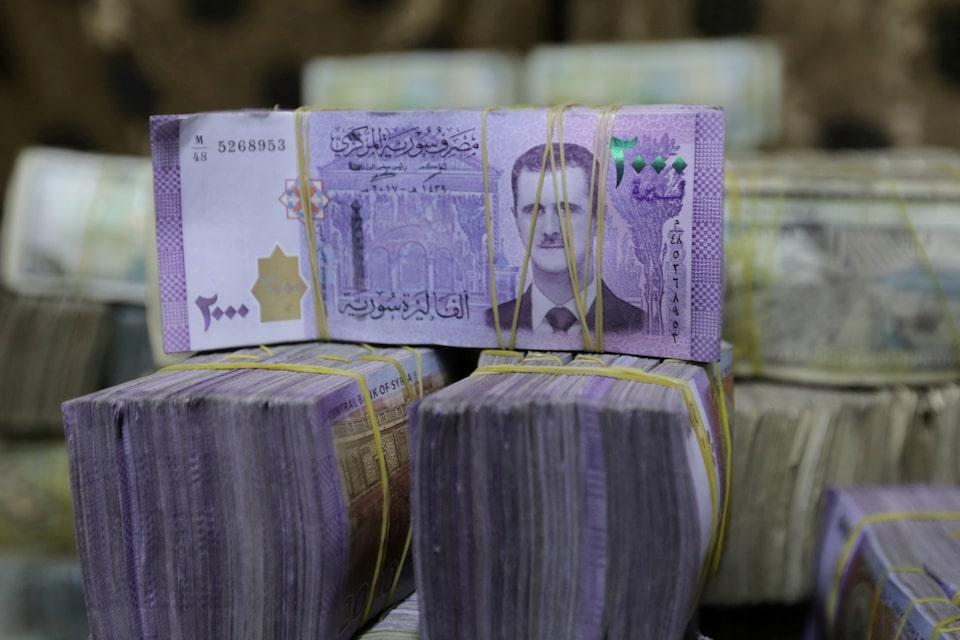
Syria in talks with UAE firm over currency printing, sources say German companies also interested, sources say Syria's new rulers building ties with Gulf Arab, Western states DAMASCUS, May 16 (Reuters) - Syria plans to print a newly-designed currency in the UAE and Germany instead of Russia, three sources said, reflecting rapidly improving ties with Gulf Arab and Western states as a move to loosen U.S. sanctions offers Damascus new opportunities. In another sign of deepening ties between Syria's new rulers and the UAE, Damascus on Thursday signed an $800 million initial deal with the UAE's DP World to develop Tartus port - the first such deal since President Donald Trump's surprise announcement on Tuesday that U.S. sanctions on Syria would be lifted. Sign up here. Syrian authorities began exploring the possibility of printing currency in Germany and the UAE earlier this year and the efforts gained steam after the European Union eased some of its sanctions on Damascus in February. The redesign will remove former Syrian strongman Bashar al-Assad's face from one of the Syrian pound's purple-hued denominations , opens new tab that remains in circulation. Syria's new rulers are trying to move quickly to revamp an economy in tatters after 13 years of war. It has recently been further hampered by a banknote shortage. One of Assad's key backers, Russia, printed Syria's currency during more than a decade of civil war after the EU imposed sanctions that led to the termination of a contract with a European firm. The new rulers in Damascus have maintained ties with Moscow even after Assad fled to Russia last December, receiving several cash shipments in recent months along with fuel and wheat as Russia looks to retain its two military bases in Syria's coastal region. That has caused discomfort among European states seeking to limit Russia's influence amid the war in Ukraine. In February, the EU suspended sanctions on Syria's financial sector, specifically allowing for currency printing. Syrian authorities are in advanced talks on a currency-printing deal with UAE-based company Oumolat, which the country's central bank governor and finance minister visited during a trip to the UAE earlier this month, two Syrian financial sources said. Oumolat did not respond to a request for comment. In Germany, state-backed firm Bundesdruckerei and private company Giesecke+Devrient had shown interest, a Syrian source and a European official said, but it was not clear which might print the currency. A Bundesdruckerei spokesperson said it was not in talks for a currency-printing deal with the Syrian state. Giesecke+Devrient declined to comment. The UAE foreign ministry, the German government and Syrian central bank governor Abdelkader Husriyeh did not respond to requests for comment. Syrian pound notes are in short supply today, though officials and bankers give differing reasons for why this is. Officials say ordinary citizens and also malign actors are hoarding pounds, while bankers say it is Syrian authorities who are keeping the flow to a trickle, partly in an effort to manage the exchange rate. Banks regularly turn away depositors and businesses when they try to access their savings, piling pressure on an economy already being squeezed by new competition from cheap imports. The Syrian pound was trading on Friday at around 10,000 per U.S. dollar on the black market, strengthening from around 15,000 before Assad was toppled. One U.S. dollar was worth just 50 pounds in 2011, before the civil war. https://www.reuters.com/markets/currencies/syria-plans-print-currency-uae-germany-ending-russian-role-2025-05-16/
2025-05-16 11:51
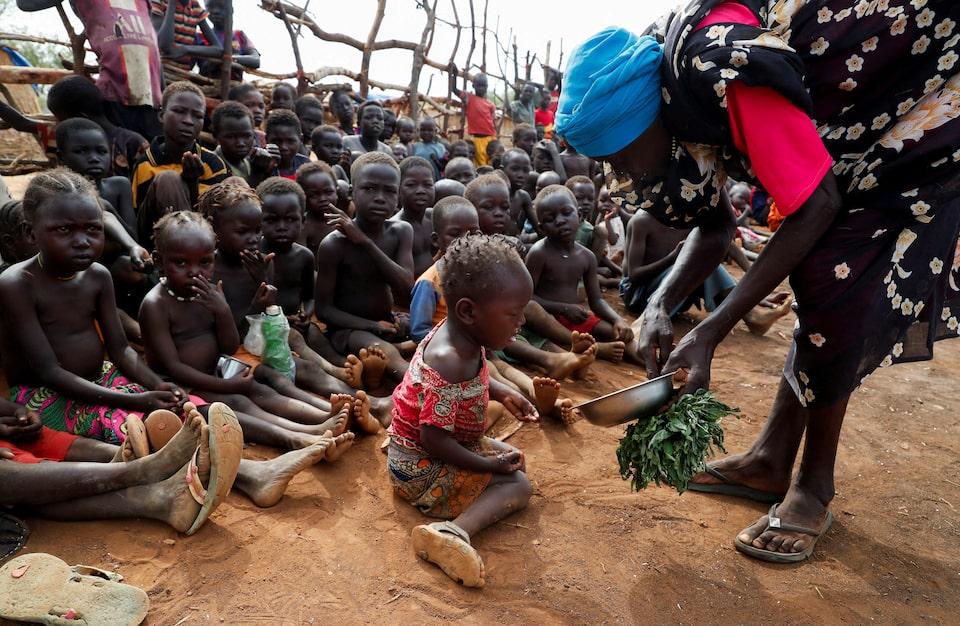
ROME, May 16 (Reuters) - Acute food insecurity and child malnutrition rose for a sixth consecutive year in 2024, affecting more than 295 million people across 53 countries and territories, according to a U.N. report released on Friday. That marked a 5% increase on 2023 levels, with 22.6% of populations in worst-hit regions experiencing crisis-level hunger or worse. Sign up here. "The 2025 Global Report on Food Crises paints a staggering picture," said Rein Paulsen, Director of Emergencies and Resilience at the U.N. Food and Agriculture Organization (FAO). "Conflict, weather extremes and economic shocks are the main drivers, and they often overlap," he added. Looking ahead, the U.N. warned of worsening conditions this year, citing the steepest projected drop in humanitarian food funding since the report's inception -- put at anywhere between 10% to more than 45%. U.S. President Donald Trump has led the way, largely shutting down the U.S. Agency for International Development, which provides aid to the world's needy, cancelling more than 80% of its humanitarian programs. "Millions of hungry people have lost, or will soon lose, the critical lifeline we provide," warned Cindy McCain, the head of the Rome-based World Food Programme. Conflict was the leading cause of hunger, impacting nearly 140 million people across 20 countries in 2024, including areas facing "catastrophic" levels of food insecurity in Gaza, South Sudan, Haiti and Mali. Sudan has confirmed famine conditions. Economic shocks, such as inflation and currency devaluation, helped push 59.4 million people into food crises in 15 countries -- nearly double the levels seen prior to the COVID-19 pandemic -- including Syria and Yemen. Extreme weather, particularly El Nino-induced droughts and floods, shunted 18 countries into crisis, affecting more than 96 million people, especially in Southern Africa, Southern Asia, and the Horn of Africa. The number of people facing famine-like conditions more than doubled to 1.9 million -- the highest since monitoring for the global report began in 2016. Malnutrition among children reached alarming levels, the report said. Nearly 38 million children under five were acutely malnourished across 26 nutrition crises, including in Sudan, Yemen, Mali and Gaza. Forced displacement also exacerbated hunger. Nearly 95 million forcibly displaced people, including refugees and internally displaced persons, lived in countries facing food crises, such as Democratic Republic of Congo, Colombia. Despite the grim overall trend, 2024 saw some progress. In 15 countries, including Ukraine, Kenya and Guatemala, food insecurity eased due to humanitarian aid, improved harvests, easing inflation and a decline in conflict. To break the cycle of hunger, the report called for investment in local food systems. "Evidence shows that supporting local agriculture can help the most people, with dignity, at lower cost," Paulsen said. https://www.reuters.com/sustainability/climate-energy/conflict-climate-drive-record-global-hunger-2024-un-says-2025-05-16/
2025-05-16 11:48
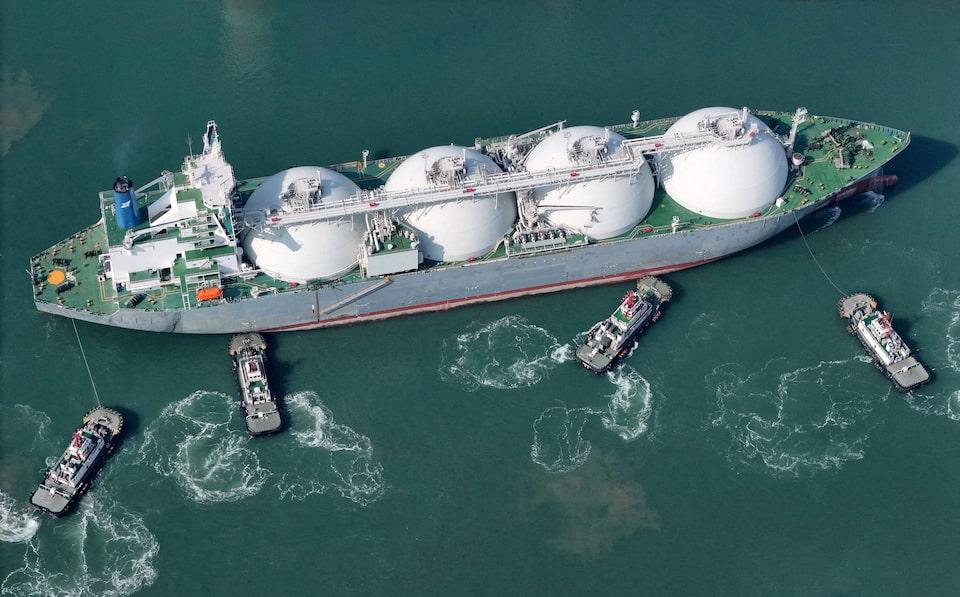
LONDON, May 16 (Reuters) - Asian spot liquefied natural gas (LNG) prices rose slightly for the second week running amid a slight uptick in demand as industrial sentiment improved following a 90-day tariff truce agreed by the United States and China during trade talks. The average LNG price for July delivery into north-east Asia was at $11.75 per million British thermal units (mmBtu), up from $11.50/mmBtu last week, industry sources estimated. Sign up here. "Activity has picked up somewhat and prices have started to trend upwards with some utilities and traders stepping in to pick up June cargos," said Toby Copson, chairman at Davenport Energy Partners. He added that the market was not tight from a fundamental perspective but lower prices have tempted some buyers who need to satisfy their contractual volume obligations. In April, China, the world's largest LNG buyer, recorded its lowest LNG demand since October 2022, and has been reselling U.S.-sourced LNG cargoes to Europe due to a tariff war with the United States. A 90-day tariff truce was agreed by the United States and China during trade talks in Switzerland last weekend. This could unblock some of the two-way trade brought to a standstill by the conflict between the world's two biggest economies. If a final deal between the two powers is agreed, it might spur economic activity in China and support a pick up in gas demand. "While these tariffs are unlikely to have an effect on physical LNG flows, with China's 25% tariff on U.S. LNG still enough of an incentive for Chinese firms to send their U.S. cargoes elsewhere, the positive news supported industrial demand expectations," said Martin Senior, head of LNG pricing at Argus. Go Katayama, LNG and gas analyst at data analytics firm Kpler said that further Asian price upside is possible driven by warmer-than-normal temperatures in Thailand. In Europe, gas prices at the Dutch TTF hub remain range- bound between 34-35 euros per megawatt hour. "While ample supply and subdued demand have kept prices capped, a persistently narrow JKM-TTF spread is prompting renewed price competition with Asia. Upcoming colder weather across Germany and central eastern Europe may nudge TTF prices higher," Kpler's Katayama said. "The outlook remains range-bound due to relaxed EU storage targets and coupming maintenance at key regasification sites like Zeebrugge and Montoir," he added. S&P Global Commodity Insights assessed its daily North West Europe LNG Marker (NWM) price benchmark for cargoes delivered in June on an ex-ship (DES) basis at $10.897/mmBtu on May 15, a $0.63/mmBtu discount to the June gas price at the TTF hub. Argus assessed the price for June delivery at $10.845/mmBtu, while Spark Commodities assessed it at $10.946/mmBtu. The U.S. arbitrage to north-east Asia via the Cape of Good Hope increased this week, marginally pointing to Europe, while the arbitrage via Panama continues to point to Asia, said Spark Commodities analyst Qasim Afghan. In the LNG freight market, Atlantic rates showed their largest week-on-week drop since January and were assessed at $32,500/day on Friday, while Pacific rates remained relatively stable at $22,250/day, Afghan added. https://www.reuters.com/markets/commodities/asian-spot-lng-prices-rise-slightly-us-china-tariff-truce-2025-05-16/
2025-05-16 11:48
Strathcona's bid follows recent asset divestment and acquisition moves MEG's board to review offer, urges shareholders to wait Analysts expect competing offers for MEG May 16 (Reuters) - Canadian oil and gas producer Strathcona (SCR.TO) , opens new tab plans to launch a C$5.93 billion ($4.25 billion) hostile takeover bid for rival MEG Energy (MEG.TO) , opens new tab, aiming to create a large Canadian oil sands company with the heft to compete internationally. The all-cash-and-stock offer, which the company announced late Thursday, would combine two of Canada's largest pure-play thermal oil sands operators and make Strathcona Canada's fifth-largest oil producer. Sign up here. Strathcona is offering 0.62 of a share and C$4.10 in cash for each MEG share, valuing the bid at C$23.27 per share — a 9.3% premium to MEG's last closing price. Some analysts said MEG was unlikely to accept the deal, and larger oil sands players would mount competing offers. The takeover bid is the latest M&A move by Strathcona, which is owned by Calgary-based private equity firm Waterous Energy Fund. Since 2020, Strathcona has become one of the fastest-growing oil companies in North America through a series of acquisitions. Strathcona founder and executive chairman Adam Waterous said in an interview that Canadian oil sands operators must be big to survive, especially as trade tensions with the U.S. — Canada's largest oil export destination — have highlighted the need for the country's energy sector to diversify. "It's going to require big, strong Canadian champions to do that," Waterous said. "This is not a small company game." Strathcona said it made an offer to MEG's board on April 28 and was turned down on Tuesday. Strathcona already has nearly 9% in MEG through market purchases this year. It plans to file its offer formally in the next two weeks and is still open to talks with MEG's board. MEG said on Friday its board will review the offer and urged shareholders not to act for now. The bid came two days after Strathcona announced divestment of its natural-gas operations in Canada's Montney shale formation and purchase of western Canada's largest crude-by-rail terminal. Those deals would turn Strathcona into a pure-play heavy oil company. Waterous has long been bullish on Canada's oil sands, which have long-life reserves that he said make them appealing as U.S. Permian Basin production may plateauing. Strathcona and MEG would have combined production of 295,000 barrels a day, Waterous said, and their assets are a natural fit. He said Strathcona expects to achieve C$175 million in annual cost savings and MEG shareholders would benefit from Strathcona’s significantly lower overhead. But Garey Aitken, head of Canadian equity at Franklin Templeton's ClearBridge Investments, said Strathcona's bid will likely spur one of Canada's larger oil sands companies to launch a superior offer. "With the consolidation that we've seen in the oil sands sector over the years, at some point it seemed MEG would be a logical dance partner for someone," Aitken said. Strathcona said it would fund the cash portion of the deal through a bridge loan. If the deal goes through, MEG shareholders would own 37.8% of the combined company. ($1 = 1.3944 Canadian dollars) https://www.reuters.com/business/energy/canadian-oil-producer-strathcona-initiate-takeover-bid-meg-energy-2025-05-16/

2025-05-16 11:29
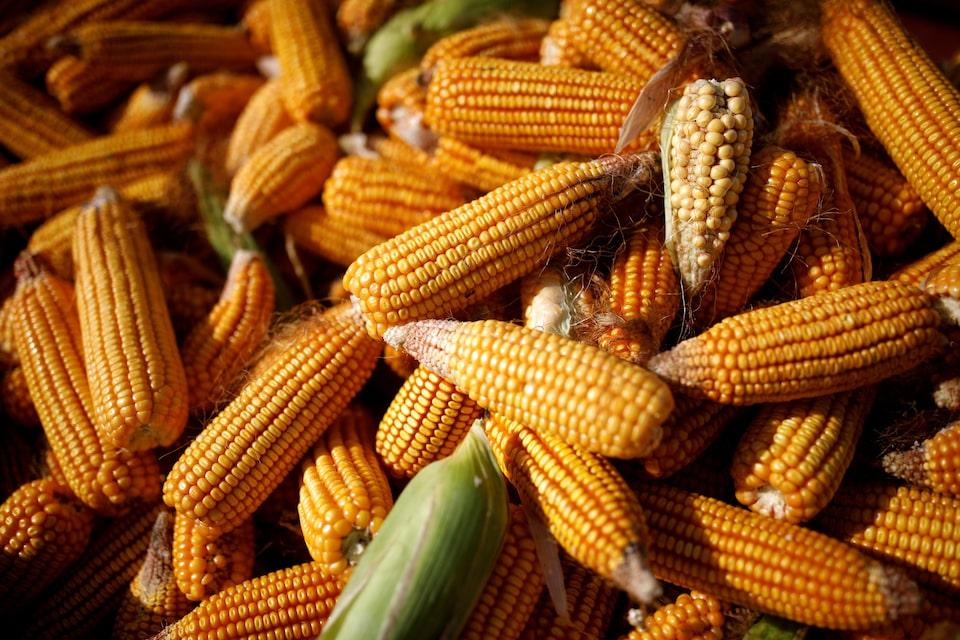
NAPERVILLE, Illinois, May 15 (Reuters) - The U.S. government’s first estimates for the upcoming season are still hot off the press, but industry analysts are already discussing the feasibility of the figures, especially as they pertain to U.S. exports. U.S. corn exports have been on fire in the current 2024-25 marketing year while soybean and wheat shipments have been more modest, yet still respectable. Sign up here. But how are things shaping up so far for 2025-26? A look at new-crop export sales can help paint that picture. For reference, the 2025-26 U.S. marketing years begin on June 1 for wheat, September 1 for corn and soybeans, and October 1 for soybean products. CORN As of May 8, U.S. exporters had sold 2.75 million metric tons of corn for export in 2025-26. That is a three-year high for the date but a bit below the longer-term average. However, that is the second-best volume in at least two decades if excluding China and unknown destinations. China bought virtually no U.S. corn in 2024-25 after having accounted for 31% of American shipments in 2020-21. The U.S. Department of Agriculture this week pegged 2025-26 U.S. corn exports at the second-largest all-time, up 3% on the year. The early sales pace covers about 4% of that target, the same as a year ago. Some analysts doubt U.S. corn exporters can repeat the strong 2024-25 performance as they may face more Brazilian competition. Brazil’s heavily exported second corn crop is set to rise 11% in 2024-25 and harvest will begin in a few weeks. SOYBEANS U.S. soybean export sales for 2025-26 finally sprung to life last week, bringing total bookings to 1 million tons as of May 8. That is slightly better than the year-ago volume but is otherwise the date’s lowest in 20 years. But that doesn’t necessarily doom the upcoming season. Despite the terrible start to 2024-25 sales, USDA’s latest export target for that season is slightly higher than first projected a year ago. The agency predicts 2025-26 U.S. soybean exports down 2% on the year. China might not show up anytime soon given Brazil’s massive export program and trade conflicts between Beijing and Washington. Last year, China made its first new-crop U.S. soybean purchase in July, its latest start since 2005. WHEAT U.S. wheat prices have found competitive levels, and exporters last week made some of their best sales of the last several years. Those were mostly for 2025-26, boosting new-crop bookings to about 3.3 million tons as of May 8. That is the second-largest volume for the date within the last decade, just slightly behind 2021. The year-ago pace of new-crop export sales was also relatively brisk, boosting USDA’s latest 2024-25 export target above initial estimates last year. The agency sees 2025-26 shipments slipping more than 2% from the current levels with top exporter Russia likely to continue its dominance. SOYBEAN MEAL USDA predicts that U.S. soybean meal exports will notch a fourth consecutive record high in 2025-26, rising 3.4% on the year as domestic processing expands. However, global end users are not yet feeling pressured. U.S. meal export sales for 2025-26 totaled just 185,000 tons as of last Thursday, the date’s lowest in 14 years. Top meal exporter Argentina is expected to have a steady offering this year, and its 2024-25 soybean crop outlook was boosted this week. The 2025-26 U.S. soy crop is already set to shrink on the year, so the record meal export forecast could come under threat if acres, yield or both were to slip. SOYBEAN OIL Large volumes of new-crop U.S. soybean oil are not usually sold this far ahead. USDA projects 2025-26 U.S. soybean oil exports falling 29% on the year but remaining well above the barren levels seen two and three years ago. Shifts in the global vegetable oil market can certainly throw a wrench into the forecast. Late last year, Malaysian palm oil futures established a rare premium to Chicago soybean oil. As a result, U.S. bean oil exporters in 2024-25 are expected to ship nearly five times the volume that USDA predicted a year ago. But similar to meal, Argentina is poised for robust bean oil shipments into next year, particularly if competing U.S. or Brazilian supplies fall short. Karen Braun is a market analyst. Views expressed above are her own. https://www.reuters.com/markets/commodities/markets/peek-next-years-us-grain-exports-five-easy-charts-braun-2025-05-15/
2025-05-16 11:26
Brazil exports make up 35% of global chicken trade Outbreak at supplier of Tyson-backed Vibra -sources China, EU protocol: 60-day ban on Brazil chicken imports SAO PAULO, May 16 (Reuters) - Brazil, the world's largest chicken exporter, confirmed its first outbreak of bird flu on a poultry farm on Friday, triggering protocols for a country-wide trade ban from top buyer China and state-wide restrictions for other major consumers. The outbreak in southern Brazil was identified at a farm supplying Vibra Foods, a Brazilian operation backed by Tyson Foods (TSN.N) , opens new tab, according to two people familiar with the matter. Sign up here. Vibra and Tyson did not immediately respond to questions. Vibra has 15 processing plants in Brazil and exports to over 60 countries, according to its website. Brazil exported some $10 billion of chicken meat in 2024, accounting for about 35% of global trade. Much of that came from meat processors BRF (BRFS3.SA) , opens new tab and JBS (JBSS3.SA) , opens new tab, which ship to some 150 countries. China, Japan, Saudi Arabia and the United Arab Emirates are among the main destinations for Brazil's chicken exports. Brazilian Agriculture Minister Carlos Favaro said on Friday that under existing protocols, countries including China, the European Union and South Korea would ban poultry imports from Brazil for 60 days. Argentina said it was suspending imports of all Brazilian poultry products until its neighbor is found free of bird flu. Favaro said newly revised protocols with major buyers such as Japan, UAE and Saudi Arabia provide for restrictions only on shipments from the affected state and, eventually, just the municipality in question. The outbreak occurred in the city of Montenegro in Brazil's southernmost state of Rio Grande do Sul, the farm ministry said. The state accounts for 15% of Brazilian poultry production and exports, national pork and poultry group ABPA said in July 2024. BRF has five processing plants operating in the state. JBS has also invested in local chicken processing plants under its Seara brand. State officials said the outbreak of H5N1 bird flu is already responsible for the death of 17,000 farm chickens, either directly from the disease or due to cautionary culling. Veterinary officials are isolating the area of the outbreak in Montenegro and hunting for more cases in an initial 10 km (6 miles) radius, the state agricultural secretariat said. Favaro, the farm minister, said Brazil was working to contain the outbreak and negotiate a loosening of trade restrictions faster than the two months agreed in protocols. "We can calm the market and consumers, showing that other parts of the country have no risk of outbreak ... and with that, get some flexibility from those countries with a total ban," he said in a telephone interview. Brazil, which exported more than 5 million metric tons of chicken products last year, first confirmed outbreaks of the highly pathogenic avian flu among wild birds in May 2023, but had not registered a case on a commercial farm until Friday. Chicken products shipped by Thursday will not be affected by any trade restrictions, the minister said. US FLOCK DEVASTATED Bird flu has swept through the U.S. poultry industry since 2022, killing around 170 million chickens, turkeys and other birds, while severely affecting production of meat and eggs. Bird flu has also infected nearly 70 people in the U.S., with one death, since 2024. Most of those infections have been among farmworkers exposed to infected poultry or cows. The further spread of the disease raises the risk that bird flu could become more transmissible to humans. By contrast, Argentina was able to isolate a February 2023 outbreak and start resuming exports slowly the next month. "All necessary measures to control the situation were quickly adopted, and the situation is under control and being monitored by government agencies," industry group ABPA said in a statement. JBS referred questions about the outbreak to ABPA. BRF CEO Miguel Gularte told analysts on an earnings call that he was confident Brazilian health protocols were robust and the situation would be quickly overcome. Bird flu is not transmitted through the consumption of poultry meat or eggs, the Agriculture Ministry said in a statement. "The Brazilian and world population can rest assured about the safety of inspected products, and there are no restrictions on their consumption," the ministry said. https://www.reuters.com/business/healthcare-pharmaceuticals/brazil-confirms-first-outbreak-avian-influenza-commercial-farm-2025-05-16/