2025-05-16 09:46
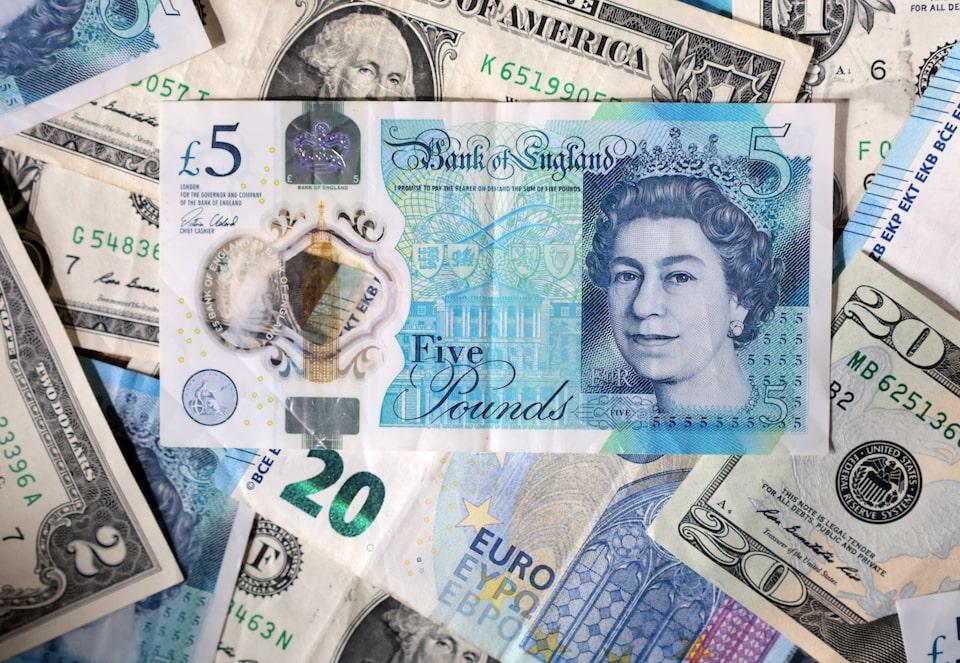
May 16 (Reuters) - Sterling was on track for its fifth straight weekly rise against the euro on Friday, while hovering near its highest levels since early April. President Donald Trump's April 2 announcement of aggressive trade duties triggered a sharp but brief selloff in U.S. assets in the following days, supporting the single currency. Sign up here. The greenback fell on Friday, tracking U.S. Treasury yields, but was set for its fourth weekly rise versus the euro. The euro area's currency rose 0.1% to 84.14 pence but was on track for a weekly fall of 0.51%. It hit 84 pence on Tuesday, its lowest since April 3. Market focus is shifting to a UK-European Union meeting next week after the pound rose on Thursday on strong economic data. "Market participants will be hoping for a 'reset' of sorts in the relationship between Britain and the common bloc in the hope that an accord can be reached that reverses some of the damage done to trade relations," said Matthew Ryan, strategist at global financial services firm Ebury. "Signs of closer alignment between the UK and EU should be bullish for the pound," he added. Britain's foreign minister will host European peers on Monday to discuss support for Ukraine and greater regional defence cooperation in the run-up to Prime Minister Keir Starmer's summit with European Union leaders next week. Meanwhile, analysts are assessing the economic outlook after data showed that British businesses and consumers have remained largely unfazed by worries about the outlook for the economy. ING highlighted that GDP growth slowed in the first quarter of 2025 on a yearly basis, while Schroders noted the British economy was open and prone to suffer from a global slowdown. The pound rose 0.05% to $1.33303 . https://www.reuters.com/world/uk/sterling-track-fifth-weekly-rise-versus-euro-await-uk-eu-meeting-2025-05-16/
2025-05-16 09:16
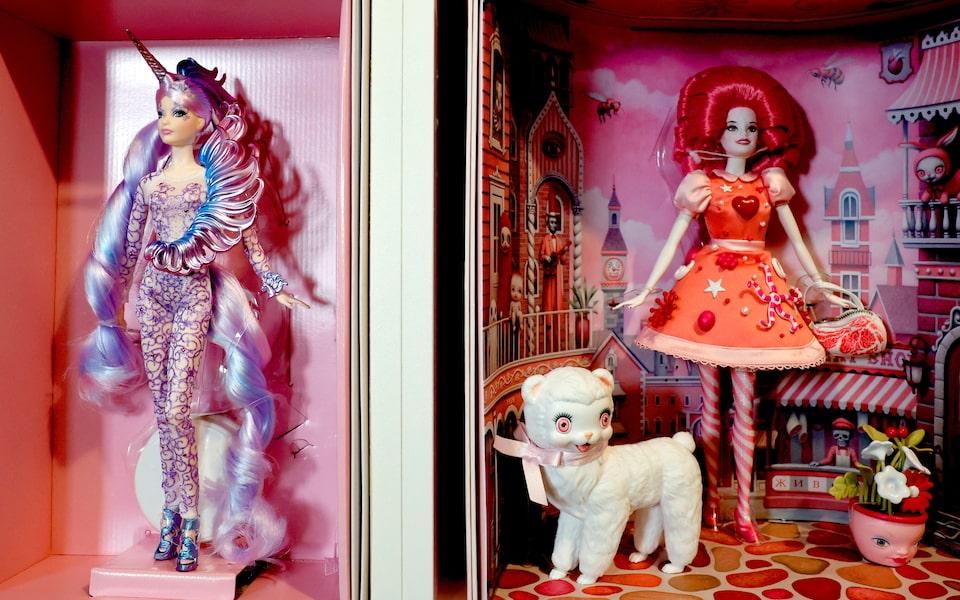
May 16 (Reuters) - Investors are relieved that the United States and China have paused their damaging trade war, stocks are rallying and U.S. shelves may not be empty at Christmas after all - but trade tensions have not disappeared, they have merely receded. Here's your look at the week ahead from Dhara Ranasinghe, Naomi Rovnick and Marc Jones in London, Lewis Krauskopf in New York and Kevin Buckland in Tokyo. Sign up here. 1/ UNITED WE STAND... Markets have (mostly) ignored G7 meetings for years. The May 20-22 gathering of finance ministers and central bank governors from the seven big Western economies in the Canadian mountain town of Banff might change that. First, the tension is palpable, given U.S. President Donald Trump's tariff policy and growing signs of U.S. isolationism. And Trump wants Canada to become the 51st U.S. state, a suggestion that has angered the G7 host, Canada. Also, watch currencies. In addition to the volatility from tariff uncertainty, there's speculation that some will tolerate the strength of their own currencies against the dollar as part of trade negotiations. Taiwan's dollar has surged, South Korea and the U.S. have discussed foreign exchange, and Japan also wants to talk currencies. Meanwhile, the next U.S. Treasury currency manipulator report, which could add extra spice to the meeting, is due any day. 2/ BARBIE'S CHRISTMAS IS SAVED Investors know not to take anything for granted, but signals from China following the 90-day tariff truce have all been pointing in a positive direction. China's rare earths - a critical component for high-tech applications from electric vehicle (EV) motors and smartphones to missile guidance systems - are flowing again. It has also paused some non-tariff barriers on U.S. entities. Washington has also ceded, pulling duties on small packages back to as low as 30%, in a lifeline for Shein and China's other fast-fashion giants. Both sides are now less worried about hyper-inflated Barbie prices in the U.S. this Christmas, as the piles of dolls - and other goods - currently stuck in Chinese warehouses will start to shift. Exports have been the bright spot for China's economy. Monday's retail sales and factory output data will provide some guidance on the health of the domestic economy. 3/ ATTENTION, SHOPPERS Major U.S. retailers' earnings will be in focus, after industry bellwether Walmart (WMT.N) , opens new tab warned it would start raising prices because of tariffs. As first-quarter earnings season winds down, Home Depot (HD.N) , opens new tab, Target (TGT.N) , opens new tab, Lowe's (LOW.N) , opens new tab and TJX Cos (TJX.N) , opens new tab are among those reporting. Investors hope the companies will shed more light on the impact from sweeping tariffs on consumer spending and any other trade-related fallout. Data on Thursday showed U.S. retail sales growth slowed in April as the boost from households front-loading motor vehicle purchases ahead of tariffs faded and households pulled back on other spending. Overall, U.S. corporate profit numbers have topped expectations. About 90% of S&P 500 companies have reported, with earnings set to have climbed 14% from the year-ago period, from an estimate of 8% on April 1, according to LSEG IBES. 4/ BREXIT RESET? Investors anticipate that a UK-EU summit on May 19 will lead to a resetting of Britain's relationship with its biggest trading partner , opens new tab. UK Prime Minister Keir Starmer, of the Labour Party, has lambasted the previous Conservative government's "botched" Brexit deal and wants to remove trade barriers to boost Britain's sluggish economy. Purchasing managers' indices, next due on May 22, have signalled that the dominant services sector is contracting sharply. Consumer price data due on May 21 may also show Britain's tight , opens new tab labour market has kept inflation too high for the Bank of England to rapidly cut rates. For Starmer however, the political risks of renewing EU links might outweigh the potential economic gains, as he grapples with surging support for the eurosceptic Reform Party. 5/ DESPERATE FOR DAN Romania held the deciding round of its presidential election on Sunday, which centrist Bucharest mayor Nicusor Dan won in a shock upset over his hard-right, nationalist rival. The leu strengthened by around 1% against the euro in early trading on Monday, helping repair some of the damage inflicted on May 6, after the first round of voting triggered the currency's biggest fall in 15 years and drove speculation about a loss of the country's investment grade status. There are growing worries of an even deeper political crisis and that much-needed fiscal consolidation won't happen, or at least not quickly enough to avoid a disgruntled European Commission cutting off Bucharest's vital EU funding. Dan hasn't really proposed a credible solution to the key concerns, but analysts had warned that if the eurosceptic nationalist Simion won but failed to form a government, and the EU then turned the taps off, the leu could have found itself as much as 20% weaker. https://www.reuters.com/business/take-five/global-markets-themes-graphic-2025-05-16/
2025-05-16 07:39
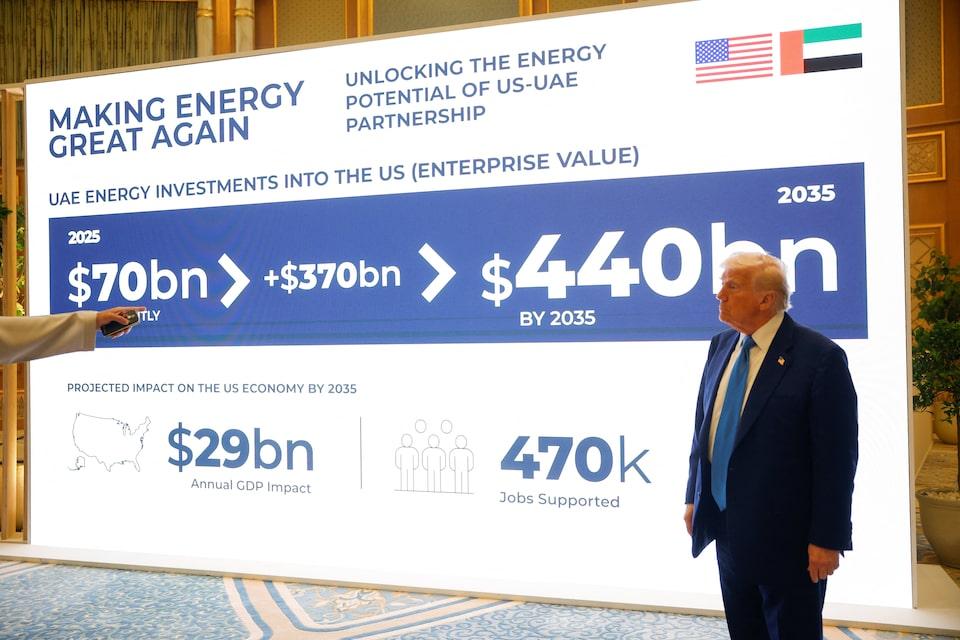
DUBAI, May 16 (Reuters) - Sultan al-Jaber, the head of UAE oil giant ADNOC, said on Friday the Gulf Arab state and the United States plan to spend $440 billion in the energy sector through 2035. The United States is expected to invest $60 billion in United Arab Emirates' energy projects, a panel at the UAE-U.S. economic dialogue announced during U.S. President Donald Trump's visit to the Gulf. Sign up here. Trump on Thursday pledged to strengthen U.S. ties with the UAE, announcing deals with the Gulf state totalling over $200 billion, including a $14.5 billion commitment from Etihad Airways to invest in 28 Boeing aircraft. In March, the UAE committed to a 10-year, $1.4 trillion investment framework in the United States after top UAE officials met Trump, the White House said. The framework will "substantially increase the UAE's existing investments in the U.S. economy" in AI infrastructure, semiconductors, energy, and manufacturing, the White House said in a statement. https://www.reuters.com/business/energy/adnoc-chief-says-uae-us-invest-440-billion-energy-sector-through-2035-2025-05-16/
2025-05-16 07:28
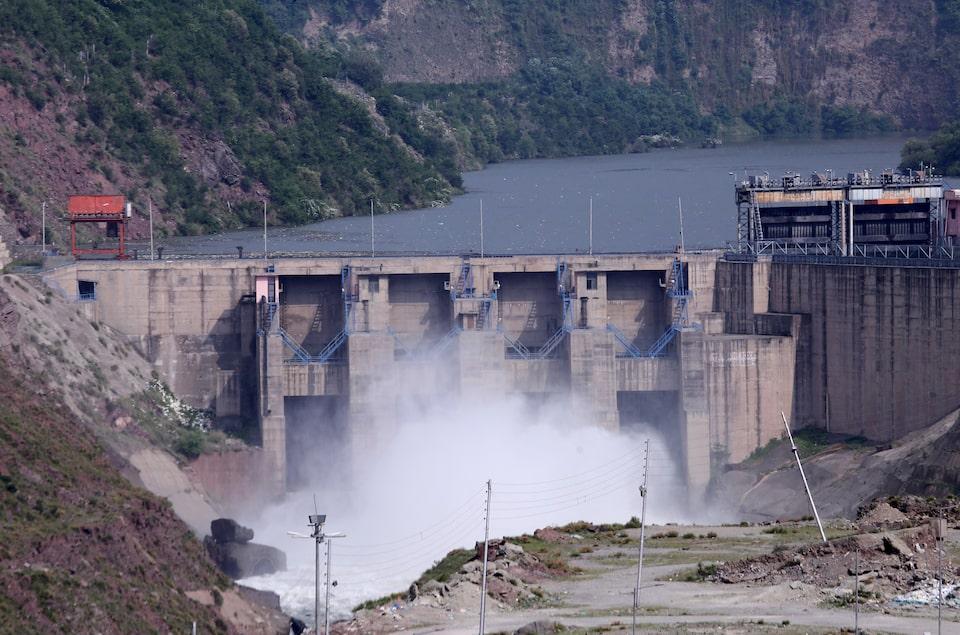
India considering plan to expand canal on Chenab river allocated to Pakistan Delhi weighing other projects that could reduce flow of water into Pakistan, sources and documents indicate India suspended participation in Indus Waters Treaty after Kashmir attack Pakistan views treaty suspension as unlawful, considers water diversion an act of war NEW DELHI/ISLAMABAD, May 16 (Reuters) - India is considering plans to dramatically increase the water it draws from a major river that feeds Pakistani farms downstream, as part of retaliatory action for a deadly April attack on tourists that New Delhi blames on Islamabad, according to four people familiar with the matter. Delhi suspended its participation in the Indus Waters Treaty of 1960, which governs usage of the Indus river system, shortly after 26 civilians in Indian Kashmir were killed in what India called an act of terror. Pakistan has denied involvement in the incident, but the accord has not been revived despite the two nuclear-armed neighbours agreeing a ceasefire last week following the worst fighting between them in decades. Sign up here. After the April 22 attack, Indian Prime Minister Narendra Modi ordered officials to expedite planning and execution of projects on the Chenab, Jhelum and Indus rivers, three bodies of water in the Indus system that are designated primarily for Pakistan's use, six people told Reuters. One of the key plans under discussion involves doubling to 120km the length of the Ranbir canal on the Chenab, which runs through India to Pakistan's agricultural powerhouse of Punjab, two of the people said. The canal was built in the 19th century, long before the treaty was signed. India is permitted to draw a limited amount of water from the Chenab for irrigation, but an expanded canal - which experts said could take years to construct - would allow it to divert 150 cubic meters of water per second, up from about 40 cubic meters currently, the four people said, citing official discussions and documents they had seen. Details of the Indian government's deliberations on expanding Ranbir have not previously been reported. The discussions started last month and continue even after the ceasefire, one of the people said. The Indian ministries responsible for water and foreign affairs, as well as Modi's office, did not respond to Reuters' questions. Indian hydropower giant NHPC, which operates many projects in the Indus system, also did not respond to an email seeking comment. Modi said in a fiery speech this week that "water and blood cannot flow together," though he didn't refer to the treaty. Indian foreign ministry spokesperson Randhir Jaiswal told reporters Tuesday that India "will keep the treaty in abeyance until Pakistan credibly and irrevocably abjures its support for cross-border terrorism". The water and foreign ministries of Pakistan did not respond to requests for comment. Foreign Minister Ishaq Dar told lawmakers this week that the government had written to India arguing that suspending the treaty was unlawful and that Islamabad regarded it as remaining in force. Islamabad said after India suspended the treaty in April that it considered "any attempt to stop or divert the flow of water belonging to Pakistan" to be an "act of war." About 80% of Pakistani farms depend on the Indus system, as do nearly all hydropower projects serving the country of some 250 million. Any efforts by Delhi to build dams, canals or other infrastructure that would withhold or divert significant amount of flow from the Indus system to India "would take years to realize," said water security expert David Michel of the Washington-based Center for Strategic and International Studies. But Pakistan has had a preview of the kind of pressure it could face from India: Water at a key receiving point in Pakistan briefly fell by as much as 90% in early May after India started maintenance work on some Indus projects. SUCCESS THREATENED The Indus system runs through some of the world's most geopolitically tense areas, originating near Lake Mansarovar in Tibet and snaking through India's north and Pakistan's east and southeast, before emptying into the Arabian Sea. The treaty is widely seen as one of the world's most successful water-sharing accords, having survived several major wars and longstanding tensions between India and Pakistan. Islamabad has previously opposed many Indian projects in the Indus system, while Delhi said after the Kashmir attack that it had been trying to renegotiate the treaty since 2023 to account for population increases and its rising need for clean hydroenergy. The treaty restricts India largely to setting up low-impact hydropower projects on the three rivers allocated to Pakistan. Delhi has freedom to utilize the waters of three other rivers - the Sutlej, Beas and Ravi tributaries - as it sees fit. Alongside the plans to expand Ranbir canal, India is also considering projects that would likely reduce the flow of water into Pakistan from rivers allocated to that country, according to two government documents seen by Reuters and interviews with five people familiar with the matter. One document, an undated note prepared by a government company for officials considering irrigation plans, suggests that water from the Indus, Chenab and Jhelum "potentially be distributed into rivers" in three northern Indian states. One of the people said the document, the details of which haven't been previously reported, was created for discussions with power ministry officials after the April 22 attack. Delhi has also created a list of hydropower projects in its Jammu and Kashmir territory that it hopes will expand capacity to 12,000 megawatts, up from the current 3,360 MW. The list, which was created by the power ministry and seen by Reuters, was not dated. A person familiar with the document said it was created before the Kashmir incident but is actively being discussed by government officials. The prospective projects also include dams that can store large volumes of water, in what would be a first for India in the Indus river system, according to two people familiar with the matter. India has identified at least five possible storage projects, four of which are on tributaries of the Chenab and Jhelum, according to the power ministry document. POLITICAL WRANGLING The Himalayan region of Kashmir is claimed by both India and Pakistan, though each controls only parts of the area. The region has been ravaged by an anti-India insurgency for decades, which Delhi has accused Islamabad of fuelling and funding. Pakistan denies the charges. International relations expert Happymon Jacob at Delhi's Jawaharlal Nehru University said that India's new focus on the Indus Waters Treaty reflected an attempt to pressure Pakistan over Kashmir. "With the latest conflict, Delhi may refuse to discuss Kashmir with Pakistan in any format," he said. "Delhi has not only progressively narrowed the scope of bilateral talks but has also curtailed the agenda, focusing only on specific issues like the IWT." Pakistan has said that it is preparing legal action in several international forums, including the World Bank, which facilitated the treaty, as well as the Permanent Court of Arbitration or the International Court of Justice in the Hague. "Water should not be weaponised," Pakistan's Finance Minister Muhammad Aurangzeb told Reuters on Monday. "We don't even want to consider any scenario which ... does not take into account the reinstatement of this treaty." Michel, the U.S.-based expert, said that concern over the treaty's suspension was not limited to Islamabad. "As geopolitical competition across the region deepens, more than a few Indian observers fear that Delhi’s use of water against Islamabad risks licensing Beijing to adopt the same strategy against India," he said. https://www.reuters.com/world/asia-pacific/india-weighs-plan-slash-pakistan-water-supply-with-new-indus-river-project-2025-05-16/
2025-05-16 07:22
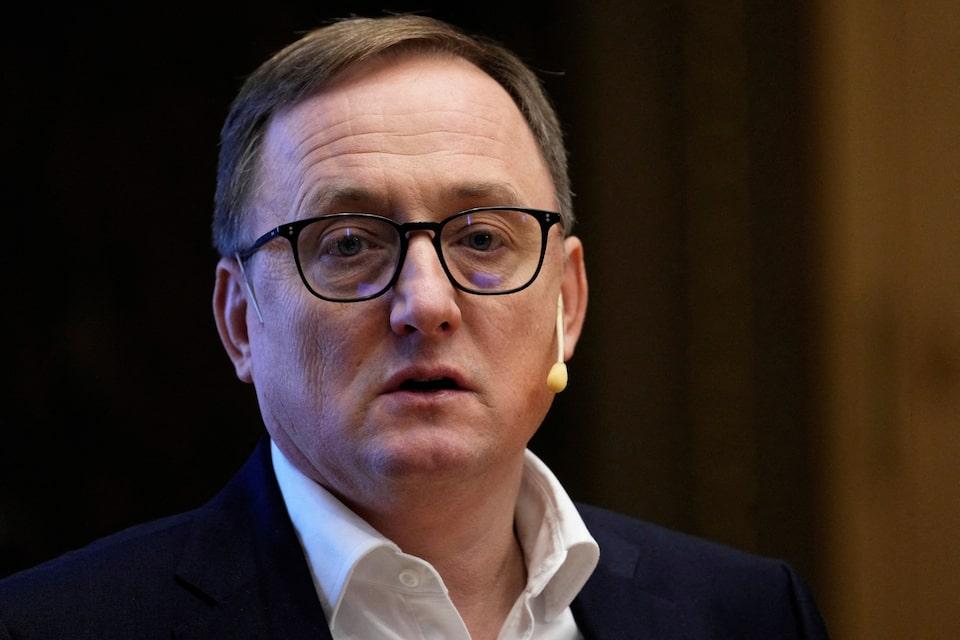
PARIS/FRANKFURT, May 16 (Reuters) - European Central Bank interest rates may be close to bottoming out but uncertainty was high and the environment was prone to sudden changes that could also alter the policy outlook, ECB policymaker Martins Kazaks said on Friday. The ECB has been cutting interest rates quickly over the past year and the debate over where to end the easing cycle is starting to gain prominence as the ECB's "baseline" forecast sees inflation settling around the 2% level. Sign up here. "We are, by and large, within the baseline scenario," Kazaks told CNBC. "And if the baseline scenario holds, then I think we are relatively close to the terminal rate already," he said. "A couple of more cuts may be (possible), but the important thing is to see where the trade talk and the trade story take us, and then of course we'll act," he said. ECB board member Isabel Schnabel has already argued for steady rates while French policymaker Francois Villeroy de Galhau said he saw room for more easing. Markets now see a roughly 90% chance of an ECB rate cut on June 5 but then price only one more easing over the rest of year, suggesting that the ECB's deposit rate could bottom out at 1.75%. An escalation in the global trade war is a key risk but Villeroy said the ECB would not use interest rates to influence the value of the euro, turning a trade war into a currency war. "Unfortunately, there is a risk of trade war, but a currency war would be a situation where each country is actively using its interest rates to try and gain an economic advantage. We are not at that point right now," Villeroy, who also heads the Bank of France, told regional French newspapers in an interview published on Friday. "The current currency moves are more of a reflection on revisions to economic forecasts," Villeroy added. https://www.reuters.com/markets/europe/ecb-may-be-nearing-end-rate-cuts-trade-war-is-risk-policymaker-says-2025-05-16/
2025-05-16 06:42
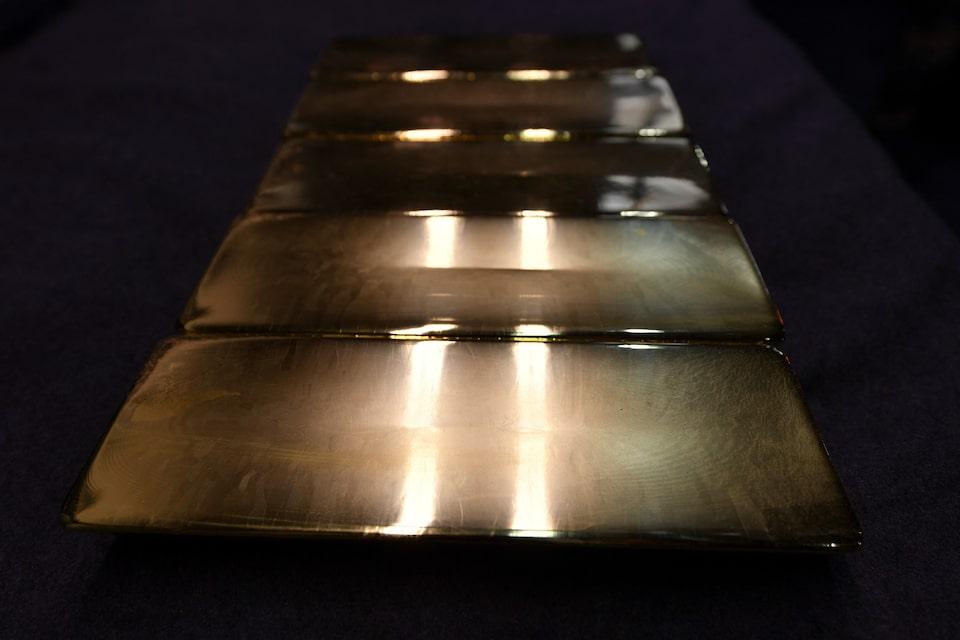
Gold down more than 4% this week Dollar headed for fourth straight weekly gain Silver down close to 2% May 16 (Reuters) - Gold prices dropped more than 2% on Friday and were heading for their worst week in six months, as an overall higher dollar and a temporary U.S.-China trade agreement dented demand for the safe-haven metal among investors. Spot gold was down 1.9% to $3,178.06 an ounce as of 1136 GMT. Bullion has lost more than 4% so far this week and is set for its worst weekly performance since November 2024. Sign up here. U.S. gold futures fell 1.4% to $3,180.90. "We've gone through a week where there have been optimistic signals in terms of trade negotiations and we have seen the dollar appreciate on the course, which is weighing on gold prices," said Nitesh Shah, commodities strategist at WisdomTree. Earlier this week, the U.S. and China agreed to temporarily slash the harsh tit-for-tat tariffs imposed in April, lifting sentiment in the wider financial markets. The dollar index (.DXY) , opens new tab was subdued on the day, but was heading for its fourth straight weekly gain, making gold less attractive for other currency holders. Gold, used as a safe store of value during times of political and financial uncertainty, scaled an all-time high of $3,500.05 per ounce last month, boosted by central bank buying, tariff war fears and strong investment demand. Offering some respite to gold, signs of slowing inflation and weaker-than-expected economic data in the United States this week cemented bets of more Federal Reserve rate cuts this year. Non-yielding gold tends to thrive in a low-rate environment. "On the plus side, gold price dips continue to attract buyers, which shows that the precious metal remains a favoured asset, with the global growth and inflation outlooks still looking rather murky," said Tim Waterer, chief market analyst at KCM Trade. Elsewhere, spot silver dipped 1.8% to $32.08 an ounce, platinum eased 0.5% to $985.1 and palladium lost 1% to $958.24. https://www.reuters.com/markets/commodities/gold-set-worst-week-six-months-trade-calm-dents-appeal-2025-05-16/