2025-05-16 06:42
BANGKOK, May 16 (Reuters) - Lotte Chemical (011170.KS) , opens new tab plans to start operations at its new cracker in Indonesia in the second half of 2025, an executive at Lotte's Malaysia affiliate said on Friday. The new cracker which has the capacity to produce 1 million metric tons per year of ethylene is part of a $3.95 billion project at Cilegon, in Indonesia's Banten province. The facility is starting up at a time when petrochemical companies globally are facing lower margins because of an oversupply from China. Sign up here. To manage its finances, Lotte Chemical reduced its stake in the Indonesia project to 24% from 49% earlier this year after selling the equity to a consortium of five Korean financing companies, Philip Kong, executive vice president, corporate planning at Lotte Chemical Titan (LCT) (LOTT.KL) , opens new tab told Reuters. LCT owns 51% of Lotte Chemical Indonesia. The company is looking to secure naphtha from the Middle East as feedstock for the cracker, he said on the sidelines of the Asia Petrochemical Industry Conference. Lotte can also switch up to 50% of its naphtha feedstock at the Indonesia cracker to natural gas liquids such as liquefied petroleum gas (LPG) and ethane, whichever is cheaper, he added. In Malaysia, LCT has shut one of its crackers since mid-December and is operating the complex at 45%-50% of its capacity, said Kong, who is also the vice president of Malaysian Petrochemicals Association. Local media reported that the company is planning to sell its assets. "The petrochemical industry is now going through a trend of consolidation, mergers and acquisitions, so we are exploring all angles to increase shareholder value," Kong said. https://www.reuters.com/markets/commodities/lotte-chemical-start-operating-indonesia-cracker-h2-2025-2025-05-16/

2025-05-16 06:33
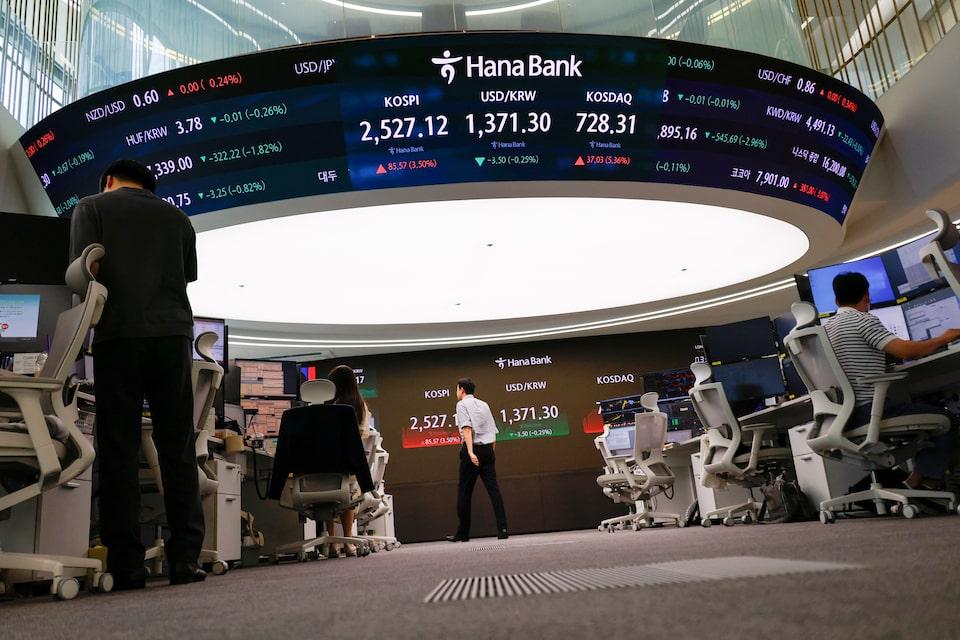
Asian currencies rise amid U.S. trade negotiations China's trade truce impacts Korea, Japan, Taiwan strategies Currency revaluation poses economic and market risks SINGAPORE, May 16 (Reuters) - As the currencies of South Korea, Taiwan and Japan rise, so too is chatter that these economies could use exchange rate revaluation as a carrot in trade talks with U.S. President Donald Trump. While a stronger currency has historically meant a competitive disadvantage for these Asian exporters, revaluation may now be the least costly bargaining chip in their scramble for favourable trading terms with the U.S. Sign up here. The Korean won surged this week after officials there said currency policy was discussed at a meeting they had in Milan with U.S. officials on May 5. That comes just days after U.S.-Taiwan talks triggered an unprecedented 8% surge in the Taiwan dollar . Japan's finance minister is meanwhile seeking to meet U.S. Treasury Secretary Scott Bessent at the G7 meetings in Canada next week to discuss foreign exchange. Market participants have been quick to connect these developments with China's surprise 90-day trade truce with United States on the weekend at Geneva. "This China deal is very bad news for Korea, for Japan, for anybody waiting in the queue, because now they need to offer what China managed to avoid," said Alicia Garcia-Herrero, chief economist for Asia Pacific at Natixis. She believes Taiwan may have agreed to revalue its currency as part of trade negotiations, while China pushed back against such a request. The clock is ticking for export-reliant Asia. Trump's April 2 reciprocal tariffs, ranging from 25% for South Korea to 46% for Vietnam, were suspended for 90 days but could kick in on July 8, unless deals are struck. There is greater urgency for China's immediate neighbours Japan, Korea and Taiwan, which risk being displaced from semiconductor and autos supply chains as China and India expedite negotiations with Trump. China, Japan, South Korea, Singapore, Taiwan and Vietnam are also among the economies on the U.S. Treasury's "monitoring list" for currency practices - something Trump's team could use as a talking point in negotiations. "The Koreans might think, 'well actually a stronger currency is in our interest and so we may as well propose this in these negotiations'," said HSBC's chief Asia economist Fred Neumann. "These currency angles are only coming up in certain negotiations and not in others, maybe because the U.S. is not insisting on it, but it's really the other country that has brought them in as a way to kind of appease U.S. demands." TAIL WAGGING THE DOG Trump and Bessent have both expressed a preference for a strong dollar, though that has done little to squelch suspicion that the U.S. President wants an adjustment lower in the world's top reserve currency, a deal dubbed the Mar-a-Lago accord. "If one country comes out and agrees with the Trump team that they are going to maybe accept a slightly stronger currency, then it sets the tone for the others," said Homin Lee, senior macro strategist at Lombard Odier in Singapore. A weaker dollar could theoretically reduce the burgeoning U.S. trade deficits with the rest of the world. Investors have used that hunch to sell the dollar and U.S. assets in the past few weeks. Taiwan's central bank has repeatedly denied the United States asked Taipei to allow its currency to appreciate during tariff talks with Washington. But one Taiwan source familiar with the matter expects foreign exchange issues will eventually come up in any negotiations. "No one can withstand U.S. pressure," the source said, speaking on condition of anonymity given the sensitivity of the matter. In Asia, analysts also make the case that most Asian currencies are weaker than their long-run trade-and-inflation-adjusted real effective exchange rates, which means they have room to trade higher. Yet, analysts also say the undervaluation of the yen, won, yuan and Taiwan dollar are a result of disinflationary pressures in these economies that make their goods cheaper by the day. "The solution to that problem would be more fiscal stimulus, more encouragement of domestic demand," said BofA strategist Claudio Piron. "You could argue if they appreciate their currencies, it could worsen the problem by creating more disinflation and deflation as well." RISKY BUSINESS Not only is the plan fraught with such economic risks, it could also be unsafe for markets. For one, Asian governments and citizens own tens of trillions in dollars assets that they'd need to sell as the greenback falls. That includes a chunk of the $33 trillion of dollar-based stocks and bonds foreigners held at the end of 2024, and Asia's roughly $7.5 trillion foreign reserves plus a couple of trillions more of dollar deposits retail investors and exporters have accumulated. Equally challenging is the idea that governments can manipulate their currencies, even in Asia's less open markets. HSBC's Neumann reckons currency deals, if any, will not be ironclad and could at most be broad statements of principles on currency management that ultimately don't make too many demands on individual countries. "Nowadays central banks can only lean a little bit against the wind, they can't affect the overall direction of currencies," he said. Tohru Sasaki, chief strategist at Fukuoka Financial Group, says any kind of currency accord, similar to the 1985 Plaza Accord to weaken the dollar, is unlikely. "Some people say 'maybe the U.S. and Japan will agree to see a 10% higher yen against the dollar.' But how can we do it and how can we manage to keep it?" said Sasaki. "So it's something like a dream. In the real world it's impossible." https://www.reuters.com/world/china/why-chinas-neighbours-may-want-currency-deals-with-trump-2025-05-16/
2025-05-16 06:22
LONDON, May 16 (Reuters) - U.S. equity funds received their first inflows in five weeks in the week to Wednesday, Bank of America Global Research said on Friday, as investors returned to U.S. assets when trade tensions started to ease. U.S. equities saw $19.8 billion of inflows, BofA said citing data from EPFR, while European and Japanese stocks attracted inflows for the fifth straight week. Emerging market stocks saw outflows for the third straight week. Sign up here. European equities are on track for $110 billion of inflows this year, added BofA, the largest since 2015. https://www.reuters.com/markets/commodities/global-markets-flows-bofa-urgent-2025-05-16/
2025-05-16 06:09
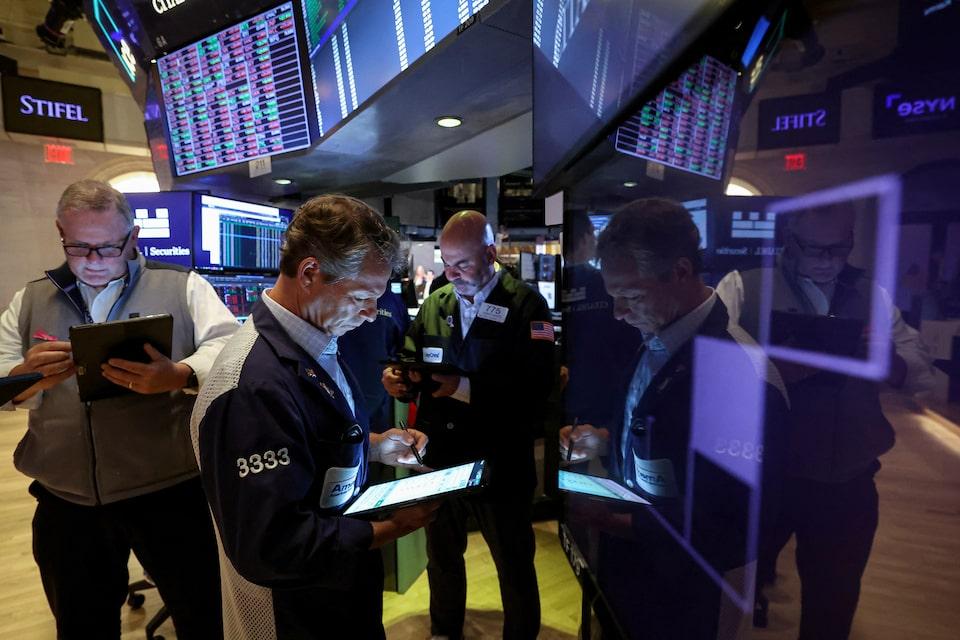
US consumer sentiment slumped in May, survey says European stocks post fifth week of gains Oil steadies after Thursday's drop NEW YORK/SYDNEY, May 16 (Reuters) - Wall Street gained on Friday, as European shares climbed to a fifth straight weekly gain on upbeat earnings that helped sustain the rally sparked by a U.S.-China trade truce. Gold prices were set for their biggest weekly loss since November. Sign up here. Oil futures notched a weekly gain but remain relatively low, further supporting stocks and bonds. MSCI's gauge of stocks across the globe (.MIWD00000PUS) , opens new tab rose 0.5%. U.S. consumer sentiment slumped further in May as one-year inflation expectations surged as households remained concerned about the economic impact of President Donald Trump's aggressive and often erratic trade policy, a University of Michigan survey showed. Yields on U.S. Treasuries fell after data showed weaker housing starts than expected. The Dow Jones Industrial Average (.DJI) , opens new tab rose 331.99 points, or 0.78%, to 42,654.74, the S&P 500 (.SPX) , opens new tab rose 41.45 points, or 0.70%, to 5,958.38 and the Nasdaq Composite (.IXIC) , opens new tab rose 98.78 points, or 0.52%, to 19,211.10. It has largely been a positive week for global equity markets, as investors cheered a tariff truce between the United States and China that greatly reduces the risk of a global recession. "The risk-on mood is still here on markets," said Nabil Milali, strategist Multi-Asset & Overlay at Edmond de Rothschild, also pointing to news that the European Union and the U.S. have agreed to intensify talks on a possible trade agreement, and a better-than-expected earnings season. "The fact that we have more positive surprises is a very good thing for European stocks." The pan-European STOXX 600 (.STOXX) , opens new tab index finished up 0.4%, rounding off a fifth week of gains, as strong corporate results bolstered gains seen on the trade war pause. Earnings in the region have shown resilience, with first-quarter results now expected to increase more than previously thought, LSEG data showed earlier in the week. U.S. import prices unexpectedly rose in April as a surge in the cost of capital goods offset cheaper energy products. "We are in the early stages of a trade transition. As of April, the impacts are unclear; however, we know that uncertainty pushed residential builders off balance," said Jeffrey Roach, Chief Economist for LPL Financial in Charlotte, North Carolina, on import prices and housing and building data. Data showed U.S. single-family housing starts fell 2.1% on a seasonally adjusted basis in April as tariffs on imported materials and high mortgage rates remained obstacles for the housing market. The report helped push yields lower. MSCI's main gauge of Asia-Pacific stocks ex-Japan (.MIAPJ0000PUS) , opens new tab rose more than 3% this week. Oil prices have been choppy this week, rising on the U.S.-China deal, before falling 2% on Thursday on increased supply pressure from an OPEC+ output hike and the prospect of an Iranian nuclear deal. Brent futures settled up 1.4%. U.S. core retail sales were soft and producer prices fell unexpectedly in April, increasing market bets to 57 basis points of easing from the Federal Reserve this year, from 49 bps. "The relief from softer U.S. retail sales and PPI was palpable in the bond market yesterday and overnight," said Kenneth Broux, head of corporate research FX and rates at Societe Generale. "This poured cold water on the (global) bond sell-off and put the brakes on the hawkish repricing of the Fed outlook." The benchmark 10-year Treasury yield fell 1.2 basis points to 4.443%, extending Thursday's drop. Walmart (WMT.N) , opens new tab, the world's largest retailer, said it would have to start raising prices later this month due to the high cost of tariffs. "The relief is just temporary," Edmond de Rothschild's Milali said, as the tariff shock is still "very significant." The dollar edged higher against a basket of currencies . Spot gold fell 1.38% to $3,195.16 an ounce, and U.S. gold futures finished down 1.2%. https://www.reuters.com/markets/global-markets-wrapup-1-2025-05-16/
2025-05-16 05:33
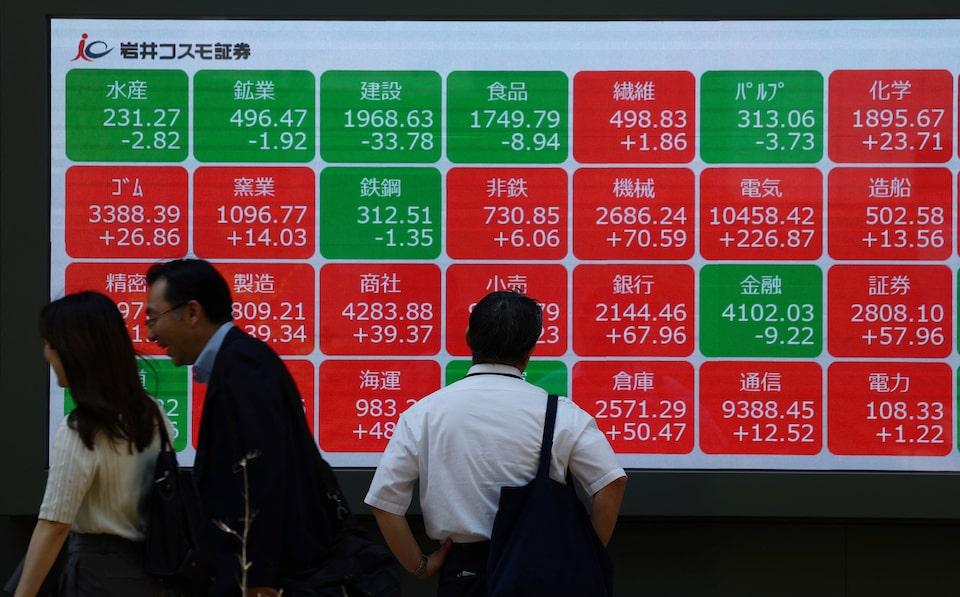
JOHANNESBURG, May 16 (Reuters) - Finance Minister Enoch Godongwana returns to parliament on May 21 for a third try at passing South Africa's budget, after disputes with coalition partners over plans to increase tax scuppered two previous attempts. Godongwana has to plug a 75 billion rand ($4.1 billion) revenue hole created by his decision to backtrack on raising value-added tax (VAT) while trying to stay the course on debt stabilisation. Sign up here. Another failure to pass a budget could eventually see spending throttled on everything from frontline services to support for ailing state-owned companies like power utility Eskom. WHAT HAPPENED SO FAR? South Africa's first two budget attempts collapsed under the kind of coalition turbulence Africa's biggest economy had never witnessed until the African National Congress lost its parliamentary majority in last year's election. The budget set for Feb. 19 was yanked at the last minute when the Democratic Alliance - the second-largest party after the ANC in the broad multiparty government - balked at a two-percentage-point VAT hike. When Godongwana returned on March 12 with a softer proposal to split the VAT hike into two 0.5-point moves over two years the DA took the fight to the courts. Faced with legal proceedings and a potential break-up of the coalition, Godongwana scrapped the hike altogether leaving the 75 billion rand hole over three years. HOW WILL GODONGWANA FILL THE GAP? Godongwana may rely on a mix of spending cuts and hopes that revenue collection will continue to outperform projections. South Africa's tax agency said in April that it had collected 8.8 billion rand more than forecast in the 2024/2025 fiscal year. Jeffrey Schultz, BNP Paribas' Central & Eastern Europe, Middle East and Africa chief economist, is optimistic the National Treasury will stick to its fiscal consolidation targets and ambition to maintain a primary budget surplus over the medium term. WILL BOND ISSUANCE CLIMB? South Africa's domestic fixed income market , opens new tab is a mainstay for foreign investors, who hold 25% of its 5.7 trillion rand in sovereign bonds and Treasury bills. Any increase in amounts auctioned weekly in the domestic bond market would be marginal, said Kim Silberman, macro economist and fixed income strategist at Matrix Fund Managers. "They pre-funded and are ahead of schedule. They are taking more cash into 2025/2026 than they had initially budgeted for," said Silberman. A modest rise from the current 3.75 billion rand of nominal bonds sold weekly would not unsettle investors, but it could put upward pressure on yields, Silberman said. At this week's government bond auction, primary dealers placed orders , opens new tab for almost four times the amount of securities on sale. WILL CONTINGENCY RESERVES BE TAPPED? The Gold and Foreign Exchange Contingency Reserve Account captures valuation gains on South Africa's these holdings and as of April 30 stood at 390 billion rand. The government announced last year in February that it would start drawing from it, which it can do without parliamentary approval, to limit borrowing. In April the central bank's gold holdings jumped nearly 6% month-on-month to 245 billion rand, driven by higher prices of the precious metal. Civil-society groups including the Institute for Economic Justice have urged the Treasury to use the contingency reserves instead of raising tax. WHERE COULD THINGS GO WRONG? The government needs a simple majority to pass the budget, but further disagreements in the ruling coalition could derail a smooth vote. Parliament has 16 working days from when the budget is tabled to approve the fiscal framework and revenue proposals, after which it has to pass two other pieces of legislation: the division of revenue bill and the appropriation bill. The government can spend up to 45% of last year's budget until parliament has passed the new budget. After that, spending would have to be cut. The revamped fiscal framework, which sets overall limits for government spending, will be keenly watched by S&P Global Ratings, which has a positive outlook on South Africa and is scheduled to review its rating on Friday. A credible outcome could secure the first rating upgrade for South Africa in two decades, while the opposite could raise future borrowing costs and dent investor appetite for local assets. ($1 = 18.2452 rand) https://www.reuters.com/world/africa/third-time-lucky-south-africa-needs-plug-41-billion-budget-hole-2025-05-16/
2025-05-16 05:21
MUMBAI, May 16 (Reuters) - Persistent dollar bids from Indian companies and foreign banks weighed on the rupee this week, making it a laggard among Asian peers and blunting the positive impact of a truce between India and Pakistan. The currency hit a peak of 84.6250 in the immediate aftermath of the India-Pakistan ceasefire, but was unable to sustain the gains. Sign up here. Traders said robust dollar-buying from state-run and foreign banks, likely on behalf of their clients, kept the rupee on the back foot. The currency was slightly lower on Friday at 85.66 per U.S. dollar, reversing early gains on outflows spurred by an equity block deal, traders said. The rupee fared worse on the day and week compared to regional peers, including the offshore Chinese yuan, which is up 0.6% week-on-week while the rupee is on course for a decline of more than 0.2%. Asian countries' FX policies featuring in U.S. trade negotiations have been a tailwind for currencies. "From Asian FX markets more broadly, whether any trade deal (with the U.S.) will be struck will be key for the dispersion of outcomes," MUFG said in a note. While uncertainty about a trade deal has contributed to the rupee's underperformance, MUFG reckons that a deal is "more likely than not," given the ongoing bilateral discussions. U.S. President Donald Trump said on Thursday that India had offered a zero-tariff trade deal. India's trade minister will lead a trade delegation to the United States starting May 16 to advance trade negotiations, Reuters reported earlier this week. Dollar-rupee forward premiums were a tad higher on the day as soft U.S. economic data lifted hopes of Federal Reserve rate cuts later this year. The dollar index was a tad down at 100.7. https://www.reuters.com/world/india/rupee-lags-most-asian-peers-client-flows-trump-india-pakistan-truce-2025-05-16/